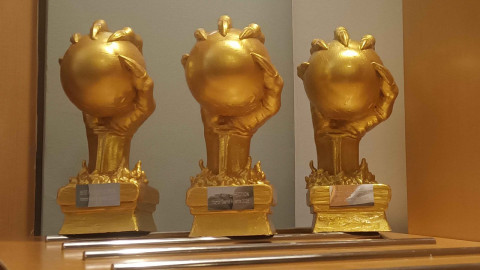
The debut game by a solo developer with zero game development experience has surpassed 200,000 copies sold on Steam within a week of release. That game is 'Slotbound', developed solo over the course of one year by Optima Arch CEO Min Kim. According to Steam figures shared by Kim, 'Slotbound' surpassed 470 million won in revenue within 48 hours of launch. Within a week of release, it recorded total gross revenue of $1,332,409 (approximately 1.8 billion won).
'Slotbound' is a defense game combining slot machines, auto-battlers, and roguelikes. Kim began development on October 17, 2025, and released a Steam demo eight months later. The demo recorded 447 peak concurrent players on its first day and climbed from 29th to 2nd place on Steam's real-time demo player rankings. Eleven months into development, it surpassed 100,000 wishlists. It was self-published without a publisher or outside investment.
What stands out most is how the game was made. Kim revealed that "virtually all of the code was written by AI." Development expenses mostly consisted of subscription fees for two AI coding tool accounts costing around 30,000 won per month, asset purchases, and the Steam registration fee. He sustained himself using savings from his military service. Beyond being a simple indie success, 'Slotbound' serves as a case study in how far generative AI has lowered the barrier to entry for game development.
However, Kim emphasized that AI is merely a tool, and that the creator is ultimately responsible for the fun and quality of the final product.
A 28-Year-Old with No Resume Started with a Single Square

Kim is 28 years old. He lived abroad from a young age and enrolled in a computer science program in the UK, but dropped out after struggling to keep up with coursework. Around age 24, he moved to South Korea on his own. With his entire family living overseas, he lived alone in Korea. Before making games, he played soccer.
"To be honest, I had no resume to speak of," Kim admitted. Having spent much of his life abroad, he had no part-time work experience into his late twenties, making it difficult to find a job.
Behind his decision to develop a game was an old promise. "I was approaching thirty, yet I hadn't accomplished anything," Kim said. "When I moved to Korea at 24, I boldly promised my uncle by marriage that I would buy a home in Seoul before turning thirty. I really wanted to keep that word."
The turning point came with "vibe coding," which his older brother, who studies computer science, introduced to him. At first, hearing the word "coding" made him not even attempt it. Then, deciding to give it a try, he typed a prompt: "Make me a game with a square that moves with WASD," and a working game popped out exactly as requested. "That was the moment I thought, 'This is it,'" Kim recalled. "I'd loved games since I was young and always wanted to make one, but I couldn't because I lacked coding, art skills, and experience. I realized I could finally do it."
A Year Sustained on Military Savings
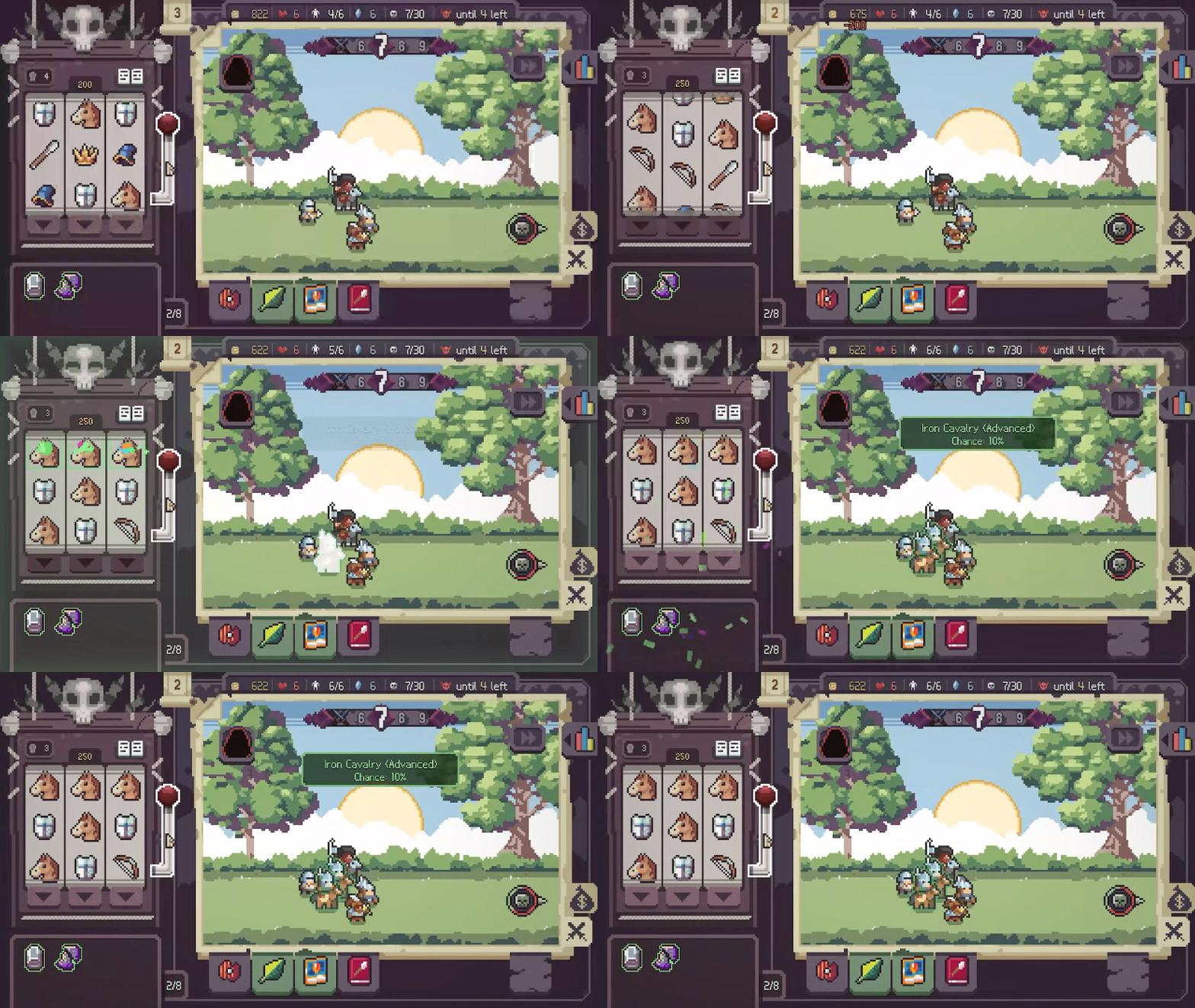
The biggest worry facing his decision was money, as his remaining funds consisted solely of savings from his military service. "I couldn't approach this with the mindset of 'it's my first game, so let's just learn as I go'—I had to make a game that would definitely work," Kim said. Consequently, he spent the most time searching for an idea he could be confident in all the way through, rather than one he might abandon halfway.
During the development period, he relied on his military savings and sold household furniture and clothes to scrape by. He barely scraped together monthly rent each month. He received no external funding from government support programs, institutions, or investors. He applied for the 2026 Indie Game Dev Camp, but was not selected.
The development costs themselves were minimal. Most of the expense went toward subscription fees for two AI tool accounts costing about 30,000 won per month, asset packs, and the Steam registration fee. "Instead, I cut myself off from social life, canceled almost all plans, and poured myself entirely into development," Kim shared.
"Why Doesn't This Exist? This Is It!"
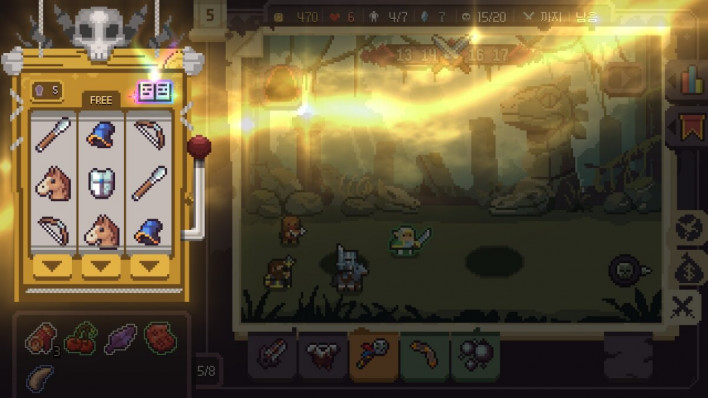
In 'Slotbound', players spin a 3x3 slot machine to summon units. By absorbing or promoting weaker units, players grow their own army to fend off incoming waves of enemies.
The idea came from 'CloverPit', a game Kim cited as his biggest influence. "The moment three symbols aligned, I thought, 'If those were three spears and summoned a Spearman to fight for me, that would be incredibly fun,'" he explained. Assuming such a game must already exist, he searched for one, but existing slot-machine combat games were either 1-on-1 battles or used slots merely to boost attack and defense stats. Kim said, "I thought, 'Why doesn't this exist? This is it!' and started right away."
He used the LÖVE (LÖVE2D) engine and Lua as the programming language. He did not watch lectures or read books. Instead, he learned from scratch by giving tasks to AI one by one—explaining what he wanted in plain language, testing the output himself, and making adjustments. Whenever he needed a feature, he asked the AI step by step to implement it.
He switched AI coding tools over time. In the early stages, he used Copilot, a service bundling multiple AI models, with an account costing about 50,000 won. Later, when OpenAI's Codex came out, he alternated between two Codex accounts costing 30,000 won each. "Since I had no extra funds, whenever one account reached its limit, I switched to the other to maximize efficiency," Kim explained.
Kim stated that "virtually all of the code was written by AI." His role was to decide what to build, test the game by playing it himself, and catch what was wrong.
There was plenty of trial and error. "Back then, AI wasn't as smart as it is now, so fixing one thing often broke another, or the AI would say it was 'done' when it wasn't actually working," Kim said. To combat this, he built up automated tests that checked the entire game whenever a fix was applied. He even created a tool that captured actual game screens to inspect them pixel by pixel. He also maintained documented rules to prevent the AI from repeating the same mistakes.
Kim emphasized, "Ultimately, what I had to master wasn't coding syntax, but 'how to describe problems accurately' and 'how to verify if they were truly fixed.'"
Didn't Hide AI Usage
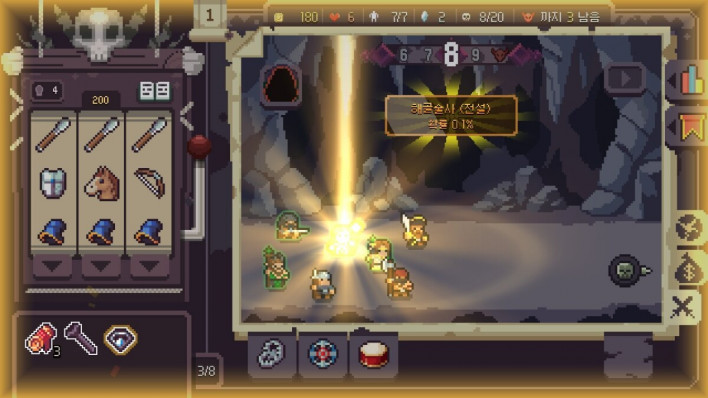
From design to programming, art, balance, localization, building, and launch, Kim handled everything solo. For sound, he initially used basic assets before switching to ElevenLabs, an AI sound service, to generate the exact audio he wanted. Most of the music was created by a user he met on Reddit who offered to compose it for free.
The Steam page for 'Slotbound' includes a disclosure that generative AI was used for certain visual assets and promotional materials. According to Kim, AI was used in multiple areas, including the main menu background art and animations, the in-game shop screen, the Fate Stone screen, in-game stage backgrounds, and visual effects (VFX). Icons and units were all pre-made assets, with additional work drawn manually as needed.
Regarding players' concerns about AI usage, Kim replied, "I completely understand." He added, "The reason I disclosed it transparently is simply because I dislike lying. I believed that even when using AI, love and passion can still go into a product and resonate with players." He continued, "For now, AI is just a tool, and the fun and polish of the final product are ultimately the creator's responsibility."
Kim singled out "when I couldn't trust my own game" as the hardest moment. During development, countless moments made him question whether it was even a real game, leading him to repeatedly delete and rebuild things he had created. Spending long hours fighting alone while virtually cut off from society also brought immense loneliness. Near the end of development, his heart sank when knock-off minigames copying 'Slotbound' appeared twice in China.
What kept him going were the players. "Every piece of feedback from players who tried the demo was confirmation that 'this game is fun,'" Kim said. When copycat games surfaced, a Chinese fan even reported them on his behalf. He added, "As a gamer myself, I think the desire to 'see this game finished to the very end' stayed with me until the finish line."
The Secret: 'A Single Core Fun Factor'
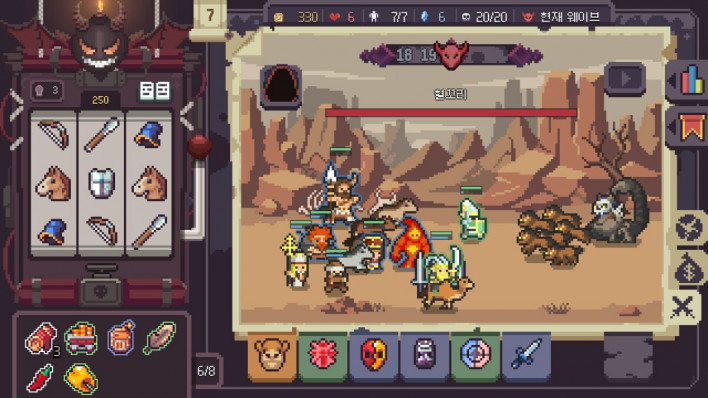
The key tip Kim offers for solo development is focusing on a single core element of fun. For him, the moment of "spinning the slots to create an army" was everything. Anything that compromised that core fun was pushed aside, no matter how good the idea seemed.
Working solo also made automating verification crucial. By implementing automated tests that checked the entire game with every code change, instances of new fixes breaking old features decreased noticeably.
Kim stressed, "What matters most is drive and metacognition about your own game. You have to constantly try to look at your game from a player's perspective." As for managing schedule, stamina, or priorities, he said there wasn't much to talk about. He slept when tired and spent almost all waking hours developing. Rather than setting strict priorities, he built whatever ideas came to mind immediately. He relied heavily on intuition for feedback, while dedicated players who spent long hours on the demo pointed out late-stage balancing issues and shortcomings.
When asked how the demo went viral, Kim answered, "I didn't look closely at analytics, so I'm not entirely sure." However, he noted that response was strongest on YouTube and in China. Interest from Chinese players was particularly high, and even now, about half of the Steam reviews are in Chinese. He added, "Instead of spending time looking at metrics or charts, I was busy fixing bugs and incorporating feedback."
The demo went up to Stage 2. For the full release, he expanded the battlefields to six locations and added Endless Mode, Fate Stones, the Collection, achievements, leaderboards, a second slot machine, and controller support. Since demo feedback was mostly positive, he focused on filling out content and creating a fresh experience distinct from the demo.
Marketing didn't yield much result. During development, he posted on Reddit or Threads whenever he felt like it, but got little traction. Kim said, "The game blew up suddenly after the demo released, so marketing efforts had almost no effect."
He self-published without a publisher. While he received many inquiries from publishers, Kim explained that none offered attractive or game-changing deals. Viewing modern marketing as mostly driven by creators, YouTube Shorts, and Instagram Reels, he decided that the revenue share publishers demanded was too steep. He declined investment for similar reasons. "Having endured such a tough journey so far, sharing equity just to make things easier right now didn't feel right," Kim said. "I launched the game with the mindset of pushing through on my own until the very end."
The base price was set at 12,000 won. As of the 24th, it is selling on Steam for 10,800 won with a 10% launch discount. Kim believed a price point around 10,000 won was appropriate, considering the game offers over 10 hours of playtime and substantial content.
Unexpected Hit: Over 10 Updates in Ten Days
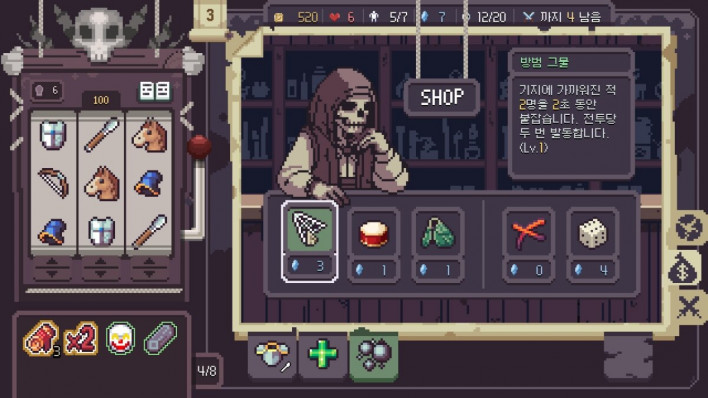
The launch results far exceeded Kim's expectations. "To be honest, I thought of around 100 million won in 24 hours and 500 million won in a week," he said. "I had no idea this many people would play it." The top-selling country is China. Chinese reviews account for roughly half of the total, followed by English and Korean.
With commercial success came a cascade of technical issues. Kim released over 10 updates in the ten days following launch. Problems included unexplained crashes occurring only on specific Intel CPUs, game launch failures on outdated Steam clients, and Windows Security blocking the executable file. Other issues included late-game lag in Endless Mode, leaderboard score tampering, leaderboards failing to open in mainland China, and hotkeys not working due to IME input methods. Kim checks Steam discussions and reviews daily, capturing reported issues and patching them immediately.
The most common topic in reviews was RNG rates. In particular, many players noted that Legendary and Prism units rarely spawned even after playing Endless Mode for a long time. However, Kim did not raise the rates. He explained that handing them out too frequently would diminish the thrill of obtaining them, making it difficult to tweak hastily. He added that if players deliberately combine elements like Cores properly, they can reliably obtain high-tier units.
"I'm Not Someone Who Will Disappear After Making One Game"
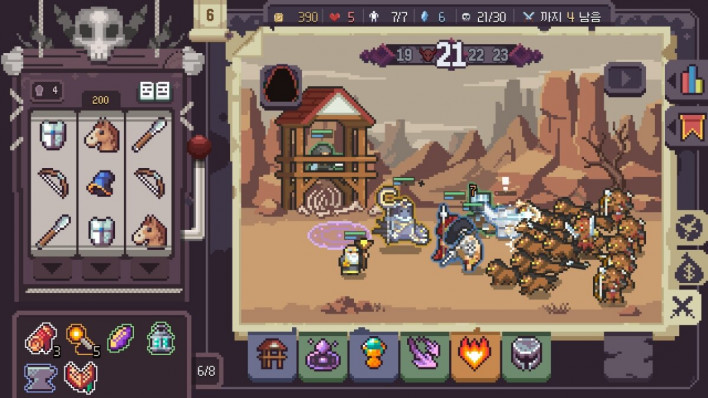
For the time being, 'Slotbound' will continue focusing on bug fixes, balancing, and content updates. It is currently available on Steam for Windows and macOS, with mobile and Nintendo Switch releases under consideration. Kim plans to start developing his next title around early 2027 and intends to work solo for the foreseeable future. "I don't know how much further AI will advance, so I plan to push solo development as far as I possibly can," Kim stated.
Regarding the domestic indie game ecosystem, he stated he does not expect government support. "I'm not someone who lives relying on others," Kim said. "During the hardest moments, I was desperate, but ultimately it was something I could overcome on my own."
However, he pointed out that help is needed when dealing with overseas copyright infringement. When knock-off games appeared on foreign platforms, solo developers had almost no way to respond directly. "If that Chinese fan hadn't reported it for me, I wouldn't have known about it or been able to stop it," he said. He suggested that there should be a support channel to help solo developers navigate procedures like international copyright enforcement or game rating classifications easily. In his view, handling overseas copyright issues for Korean content is an area where the government can meaningfully help. Expressing his hope for Korean indie games to advance further, Kim stated he plans to offer mentoring or consulting within his capacity.
To those looking to make a game without prior development experience, he encouraged them to simply take the leap. "Taking the first step is how it starts. I also started from 'a square moving with WASD,'" Kim said. "Thanks to AI, the entry barrier today is incredibly low." However, he stressed that completing a game to the very end is ultimately up to the human creator. "The most important thing seems to be having a clear vision of the game you want to make, playing it yourself every day, and never giving up," he advised.
Finally, Kim expressed his gratitude to players. "This game didn't succeed because I was special; I made it this far because all of you played and searched for it," he said. "I'm not someone who will disappear after making just one game. I have so many games I want to make in the future, so trust with players is my highest priority." He promised, "I will keep fixing it and making it better."