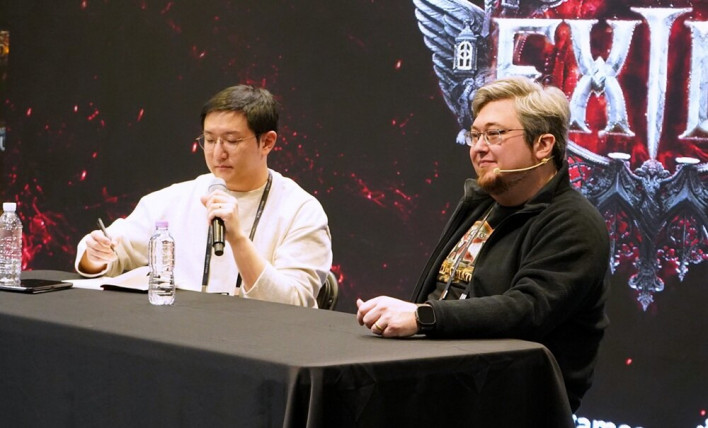
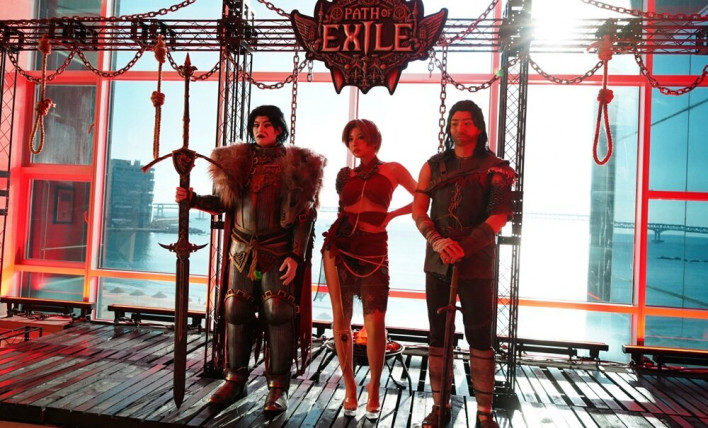
Kakao Games held a media joint interview on November 19 in Busan ahead of the full launch of 'Path of Exile 2' (PoE2). Game Director Jonathan Rogers of Grinding Gear Games (GGG) attended the interview to share the lessons learned during Early Access, key changes in the full launch version, and the future direction of the live service.
Set to launch officially this December, 'PoE2' will complete its main campaign with the addition of Acts 5 and 6, alongside a variety of new content and system overhauls, including the new 'Shadow' class. Notably, substantial changes will be made to character progression, including reworks of over 70 existing items, the addition of over 40 new unique items, and a redesign of the passive tree.
Director Rogers acknowledged that during Early Access, shortcomings were identified in player rewards and combat pacing, explaining that efforts for the full release were focused on resolving these issues. While expressing opposition to a campaign skip feature requested by many players, he also detailed the overall development direction of the game, including one-button builds, monetization models, and strategic elements of the new league.
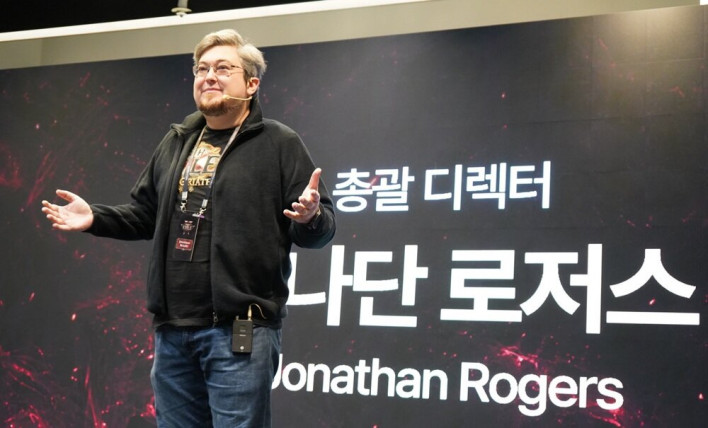
What was the primary player feedback received during Early Access? How have you enhanced or improved the game for full launch?
"There were two main areas we focused on during Early Access. The first was the item system. We received a lot of feedback that players didn't feel a sufficient sense of reward when acquiring items. The second was play speed—opinions were that the overall pacing of the game felt slow.
To address this, we incorporated player feedback through the 0.2 and 0.3 updates by revamping the item system and introducing a sprint mechanic. We realized during Early Access that even aspects we initially considered strengths required far more improvement than anticipated. We learned a great deal from that experience, and for the 1.0 full release, we paid even closer attention to delivering the systems and gameplay players want.
How do you plan to handle the simultaneous live service for 'Path of Exile' and 'Path of Exile 2' going forward?
"From the start, our goal was to continuously operate both games and deliver content for both. Currently, we are preparing to roll out new leagues and updates for each game at roughly four-month intervals. By staggering the update schedules so they don't overlap, we plan to allow players who want to play both titles to fully experience content in each.
Early on, there were shortcomings in preparation and development schedules, which led to various issues. However, we have now restructured our internal development and live operations framework to roll out updates for both games reliably. We intend to maintain this operational stance and support both games for the long term.
The game will transition to free-to-play with full release. What areas did you focus on to expand the new player base, and what performance goals do you hope to achieve after release?
"Our goal is to further expand the player base through the 1.0 full launch and the transition to free-to-play. We have heard that many existing 'Path of Exile' players are also eagerly awaiting the full launch of 'PoE2', so internal expectations are very high.
To speak of specific targets, we want to surpass 1 million players on Steam. Of course, we also expect a substantial number of players on platforms outside Steam. Especially when considering Korean players as well, we believe even more people will enjoy the game.
Acts 5 and 6 of the main story will be added for full release. Even during Early Access, the campaign was quite long, and some voiced fatigue over repeated playthroughs. Are there any improvements made to alleviate this?
"The campaign focuses on enabling first-time players to fully experience the story and world, immersing themselves in it. Therefore, for the initial campaign run, we prepared it to preserve that core story experience and sense of adventure.
However, we are aware that returning players or those re-running the campaign in a new league can feel fatigue from repetitive play. To address this, we introduced features that guide players more clearly to the next area or path they need to take. This improvement aims to help players repeating the campaign progress faster without wasting time finding their way.
The previous Interludes were temporary content, so there were aspects that did not meet the team's intended level of polish. On the other hand, Act 5 being added this time is proper full content built on a brand-new story. We expect players to experience a much higher level of polish and fun compared to the old Interludes.
Among players who have already finished the campaign, there are many requests to allow skipping the campaign when leveling a new character. What is the development team's stance on a campaign skip feature?
"Fundamentally, we are opposed to introducing a campaign skip feature. Instead, we believe it is better to provide ways for players who have already completed the campaign to level subsequent characters faster and more easily. One of those ways is through unique items.
For the full release, we overhauled early-game unique items in particular. We boosted their performance and improved their ease of use so players can feel their impact right from the start of the campaign.
In the full launch version, players will experience around 110 unique items in total. Among these, over 70 are complete reworks of existing items, and over 40 are newly added items. These items are designed to drop during campaign Acts as well, and using them should allow players leveling subsequent characters to push through the campaign much faster and reach the endgame.
The new class 'Shadow' requires a significant amount of button inputs because it relies on stealth and chaining multiple skills. Are there ways to reduce the mechanical burden through support gems or other quality-of-life features?
"While we prepared Stealth as a signature system for the Shadow, using Stealth is not mandatory to play the class. Although ways to enter Stealth are limited, it is entirely possible to construct builds that do not rely on Stealth. For example, dagger-focused builds are designed to play perfectly fine without using Stealth.
Of course, utilizing Stealth enables smoother combat. For instance, using a skill like 'Eclipse' to leverage Darkness effects can extend Stealth duration, allowing players to chain multiple stealth-related skills without having to re-enter Stealth.
Stealth is also a system designed to provide fast-paced combat. Even if it demands relatively high button inputs, we believe players who try it out will find a fresh kind of fun distinct from existing classes.
There were comments that the development team avoids one-button builds. However, once the game officially launches and various builds are researched, builds that repeatedly use a single skill are bound to emerge. What are your thoughts on this?
"It's not that we dislike or actively avoid one-button builds. Rather, we hope that a one-button build is something achieved as a result of overcoming high-difficulty content and growing a character sufficiently.
For example, if a player completes a one-button build capable of defeating endgame Pinnacle bosses and progressing through late-game content, we view that as a meaningful achievement. We believe options should exist to create such builds using various endgame gear and unique items.
Conversely, if a player can effortlessly clear all content with a single-button build starting from the campaign stage, that strays from what we aim for. We believe it is ideal for players to experience diverse skill combinations and combat styles as their character and build evolve, eventually arriving at a one-button build. Therefore, during the campaign phase, we encourage skill synergy and direct combat engagement.
Playing the new 'Duelist' class directly, the swordplay animations felt remarkably detailed. Was there specific reference material or particular effort put into crafting these animations?
"The developer handling character animations actually practices martial arts directly. In the studio, they practice real movements using practice swords and various weapons, record them, and then translate them into in-game animations.
It is very meaningful that the developer is putting their own movements directly into the game. Since their own movements are realized as the character's actions, they are also very excited to show the results to players.
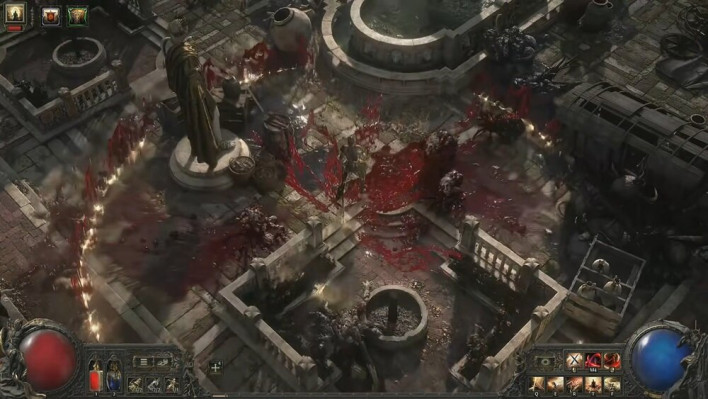
Both the recently revealed Shadow and Duelist lean heavily on melee combat. What elements do the developers consider most important when designing melee characters?
"Personally, I think many players expect melee classes to output higher damage than ranged classes. However, from a developer's perspective, if we simply boost melee damage so they clear content faster than ranged classes, it could break game balance as the vast majority of players flock to melee classes.
Therefore, we believe animations and hit impact matter more for melee classes than raw damage or numerical stats. They need to deliver a satisfying combat experience through how they close the distance with enemies and how their movement feels when attacking. The two classes we revealed this time were developed with a focus on these aspects.
A prime example of a class where we couldn't fully realize these elements was the Warrior. It was the first melee class the team made, and we fell short of delivering enough fun in how it approaches enemies or closes gaps.
Ahead of the 1.0 full launch, we are working on improving these aspects for the Warrior as well so players can experience more satisfying combat. However, since development is still ongoing, it is difficult to say precisely how much of these improvements will make it into the full launch version. We are working hard to implement as much as possible.
The 'PoE' series has maintained a monetization model for over a decade that allows players to enjoy the game at relatively low cost. 'PoE2' has inherited this business model as well—do you believe this approach is sustainable in the long term?
"There are two main reasons behind our decision to keep the business model identical across both games.
First, it is to maintain continuous service and the player base for both games simultaneously. If we were to separate microtransactions or shop items between the two games, we felt it could create internal competition between them. It might force players to favor one title or abandon the other. Therefore, we focused on ensuring that 'PoE' players, 'PoE2' players, and players who play both enjoy the exact same benefits.
Second, it comes down to a long-term business perspective. We view game operations as a marathon, not a sprint. If we only cared about short-term revenue, selling items separately for each game might generate more sales. However, that approach can lead to a structure where revenue can only be sustained by constantly pushing out new products.
We decided it was crucial to give players confidence that whenever they buy an item, its value will be preserved over time. Establishing this direction clearly from the start and keeping it consistent is, in our view, the better choice for the long term.
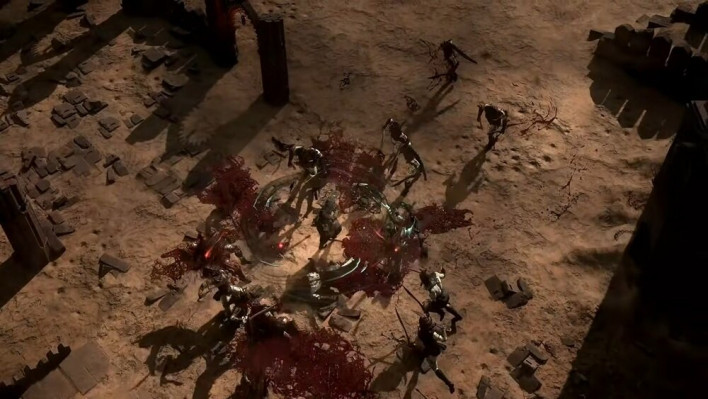
Compared to the beginning of Early Access, what is the biggest change in the full launch version?
"If you compare the Early Access launch to now, the biggest difference is the volume and variety of content. With so many elements added—from skills and Act segments to various league content—it feels fair to say it has virtually become a completely different game.
If comparing to the most recent 0.5 update, I'd say game balance is the biggest change. Since we redesigned progression systems including the passive tree and rebalanced the overall game, we expect the 1.0 full launch version to offer a significantly different gameplay experience than Early Access.
During Early Access, some felt that responses to player feedback and in-game issues were somewhat delayed. Will live operations be able to react more swiftly after full release?
"After full launch, we believe it is vital to secure separate personnel and resources dedicated to live service responses alongside content updates.
In the past, because we were focused on developing new content and preparing the next update, there were times when we couldn't respond quickly to issues arising during live operations. The development team recognizes this as a key area for improvement.
Starting with update 0.5, we improved operations by setting aside dedicated time and resources to quickly address issues that arise immediately after launch. Building on that experience, we plan to proactively secure the necessary workforce and time for live service response after full launch as well. Our goal is to balance new content development with live service support to respond to player feedback and in-game issues more rapidly.
In the new league 'Conquerors of Wraeclast', players can recruit armies and engage in siege warfare. Could you explain the strategic elements in more detail, such as troop recruitment, force deployment, and unit matchups?
"Troops for siege warfare can be recruited by completing various missions during the campaign. About 70 new areas and missions are prepared across all Acts, allowing players to secure new troops and expand their forces through each mission.
In the endgame, troops can be recruited in two main ways. First, building your island and placing recruitment structures automatically generates troops. Separately, while exploring the Atlas, you can encounter new troops directly—similar to the campaign—and recruit them by fulfilling specific conditions.
Each unit type possesses unique attributes and matchup advantages, so considering these when deploying them for battle is crucial. We prepared a UI that makes these matchups and deployment effects intuitively clear. It lets players see at a glance which troops are advantageous to deploy based on the battle situation.
Currently, over 70 different unit types are prepared, and once you build a sufficient army, you can select and deploy the necessary troops for the situation. Furthermore, choosing a specific faction or clan in the endgame unlocks unique units exclusive to that faction.
However, certain powerful special units—such as elephant soldiers—cannot be recruited automatically through your base. They are designed to require direct exploration and recruitment, adding strategic depth to troop recruitment and deployment.
New titles have been appearing in the hack-and-slash genre recently. Compared to competitors, what differentiated experience do you think 'PoE2' alone can provide?
"Above all, we believe creating the best possible game is what matters most. Throughout development, we focus on delivering fun and fresh elements.
For example, we feel the new league being introduced this time represents content rarely seen in the traditional hack-and-slash genre. Through new systems where players recruit and deploy armies, we strive to let players experience fresh excitement they haven't felt before.
We hope that if we consistently deliver high-quality gameplay through new leagues and systems like these, players will trust us and continue to enjoy the game.