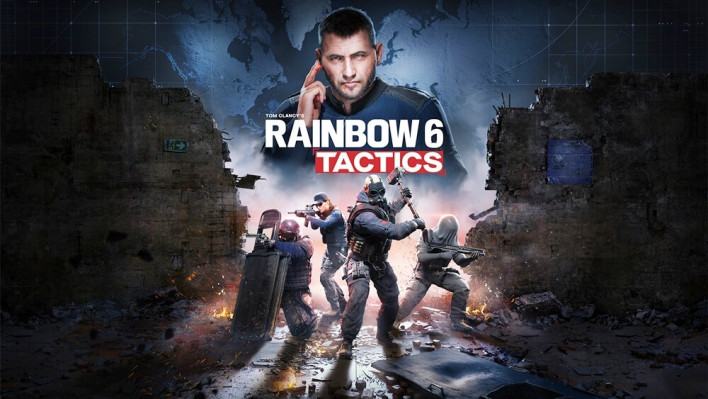
The core of the 'Rainbow Six' series isn't simple gunplay. It lies in scouting enemy positions, securing entry routes, and having operators with different abilities cooperate to accomplish objectives. Ubisoft's upcoming 'Rainbow Six Tactics' attempts to translate this tactical experience into a turn-based game. Instead of real-time engagements, it reinterprets the franchise's identity by letting players take ample time to plan operations and observe the execution.
However, transitioning established gameplay into a new genre brings numerous design questions. Developers must determine which of the more than 70 operators to select, how to implement their unique abilities in a turn-based environment, and how to link mission failure with squad management. There is also the challenge of delivering a complete standalone single-player game while maintaining the tactics familiar to existing 'Siege' players.
Meeting in Osaka, Japan, Kim Fournel, Art Director for 'Rainbow Six Tactics', explained the choices made during development. From the criteria for selecting operators to the risks of the breach system, campaign structure, and the rebuilding of Team Rainbow, we asked him what 'Tactics' inherits from the original series and what changes it seeks to bring.
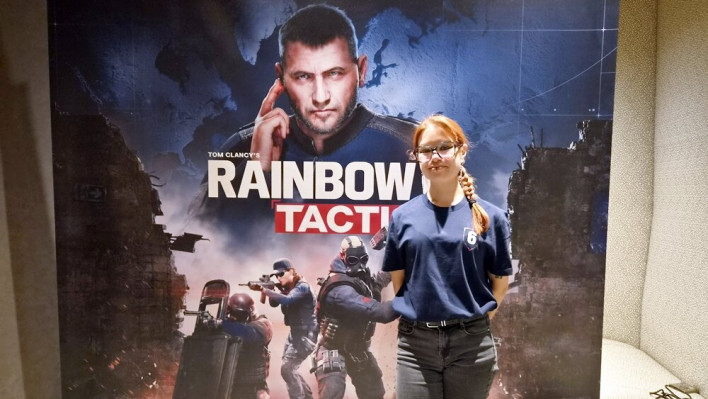
'Rainbow Six Siege' features over 70 operators, but 'Tactics' includes only 15. What were the criteria for choosing operators, and how did you determine their weapons, loadouts, and unique abilities?
"Honestly, that was one of the hardest parts of the project. 'Rainbow Six Siege' has so many operators, so deciding which ones to bring over was no easy task from the start. Above all, it was crucial to select characters suited for the gameplay of 'Tactics'.
What we wanted to create was combat where operators carry out distinct roles and synergize with one another. For instance, you might need an operator to flank the enemy, or someone to engage from a distance. Considering these combinations of roles and abilities, we chose operators best suited for a turn-based game.
Of course, being iconic characters that represent the franchise was also an important criterion. For example, it's hard to imagine a 'Rainbow Six' game without Sledge. Factors like that also influenced the final selection.
In this hands-on demo, we only saw attack missions. Are there also defense missions where existing 'Siege' defender operators can shine?
"When you think about the situations where Team Rainbow is called in, a crisis has usually already occurred. They deploy to respond to an emergency, which is a core identity 'Rainbow Six' has maintained for a long time. Rainbow is fundamentally an organization that acts in emergency situations.
And there is one thing I'd like to clarify. The game features 15 operators, and we have no plans to add new operators later.
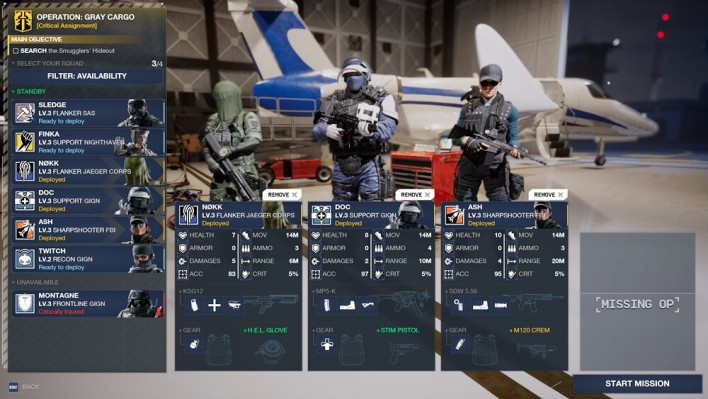
The various menus for checking operator stats, gear, and status were impressive. How do operators progress, and what happens to squad members downed during a mission?
"Each operator has a unique skill tree. Players can choose different build paths as they progress, unlocking special abilities accordingly. In effect, every operator is a unique character with their own distinct features.
Falling in mission doesn't mean permanent death for that operator. We didn't want to kill off established 'Rainbow Six' characters. They are heroes in this universe, and you can't easily kill off heroes. Instead, downed operators are moved to the infirmary to recover.
However, while recovering, that operator cannot be deployed on the roster. So losing a squad member in a mission changes who you can field in the next operation. That is one of the risks players must manage.
The breach phase—planning multiple operators' actions in advance and executing them simultaneously—was impressive. In 'Siege', vertical breaches using trapdoors are as important as horizontal breaches through walls. Is vertical entry also possible in 'Tactics'?
"Vertical mobility and rappelling entries are defining characteristics of 'Rainbow Six'. The dev team is well aware of how much weight these elements hold in the series' identity. However, we will share more details on the specific implementation at a later date.
Even now, players can execute breaches in various ways. The game provides numerous breaching opportunities, such as entering through windows and leveraging different wall types.
Breaching features executing pre-planned actions in real time. Is there a possibility that a breach might fail? Does a planned command always succeed, or can unexpected variables occur?
"The demo was prepared in advance to show the best-case scenario for that map. However, in the actual game, things won't always play out like that.
For example, if you haven't done enough recon, you might not properly identify what enemies are inside a room. Initiating a breach while missing a specific enemy's position is inherently taking a risk.
The moment players hit the breach button, they feel the tension of hoping everything goes according to plan. If you fail to spot an enemy set up on overwatch, you could take unexpected damage from a surprise attack. That outcome will impact subsequent combat as well.
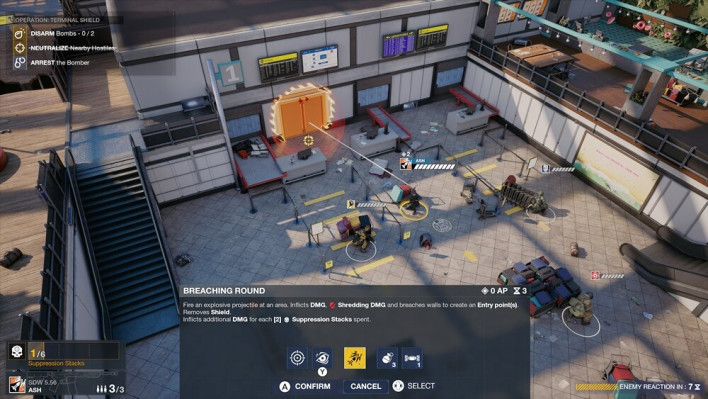
In this demo, we saw standard riflemen and shield-bearing enemies. What kind of organization is the hostile force in 'Tactics', and how diverse are the enemy unit types?
"It's difficult to disclose specific enemy types or numbers right now. However, various enemy types with different abilities will appear, and synergy exists among enemy forces as they combine their abilities.
In a way, it's a mirror structure to the player's roster of operators. Just as players combine operators with different abilities to execute tactics, enemies respond by utilizing their own skills and synergies. These elements will elevate combat difficulty and offer fresh challenges.
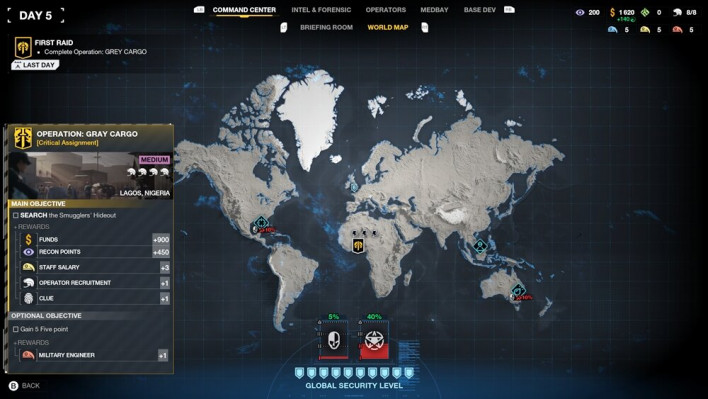
We are also curious about the structure of the single-player campaign. Is it a linear storyline in a fixed order, or can players select missions and alter the sequence? Please also explain the breakdown between main and side missions.
"The game features one central narrative. You follow this story by completing main missions, with various side missions interspersed between them. Side missions offer opportunities to gather new intel or tackle additional challenges.
Depending on which missions players choose and what decisions they make, the gameplay experience will vary. Even on a replay, while the core framework of the story remains the same, the progression flow can change based on chosen missions and choices. Currently, we are preparing around 45 missions. That figure is based on main missions alone; including side missions makes the total count even higher.
We expect 'Tactics' to deepen the narrative around Team Rainbow. Existing operators have rich backstories and personal histories—how deeply will this title explore their individual stories and relationships?
"The story in this game does not focus on specific operators or factions. What we are trying to convey is the Rainbow organization itself.
Therefore, the central narrative focuses on the overarching crisis facing Team Rainbow rather than individual operator personal backstories. We will share more details regarding the specific narrative later.
In the demo, we could see various stats including accuracy. What progression and loadout systems are available to boost operator stats or improve combat efficiency?
"There are various ways to grow operators and deploy them more effectively on the battlefield. Players are provided with multiple options.
You can select different weapon and gear loadouts while utilizing various elements such as gadgets, skills, and Directives. Combining these components lets you create your own builds. Ultimately, the tactical options available on the battlefield depend on the gear and abilities you choose.
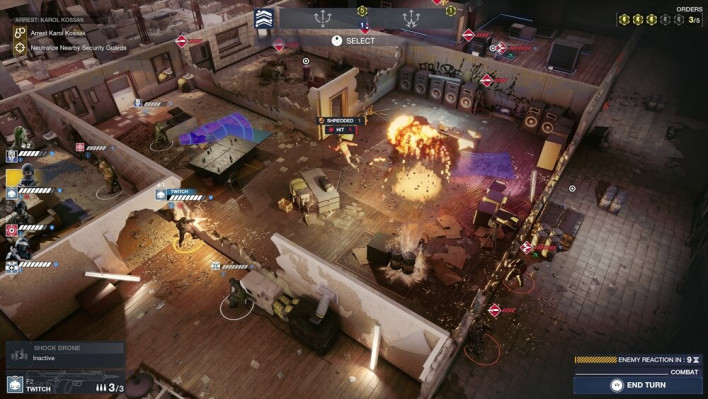
This title touches on rebuilding Team Rainbow. How is this setting reflected in the game's environmental and level design? In particular, are there instances of environmental storytelling without relying on dialogue or text descriptions?
"This title covers not just rebuilding Rainbow, but the story of the entire organization. The headquarters remains Hereford Base. However, because it was destroyed, we reimagined what it would look like rebuilt. While maintaining its status as a site where tragic events unfolded in the past, we wanted to give it a fresh look.
In environmental design, we also focused on ensuring each mission possesses its own distinct identity. Beyond the audio or text delivered during missions, players can understand the situation through details they observe directly in their surroundings. We aim to convey different situations and atmospheres for each mission through space itself.
And finally, we have some great news. 'Rainbow Six Tactics' will be localized into Korean at launch.