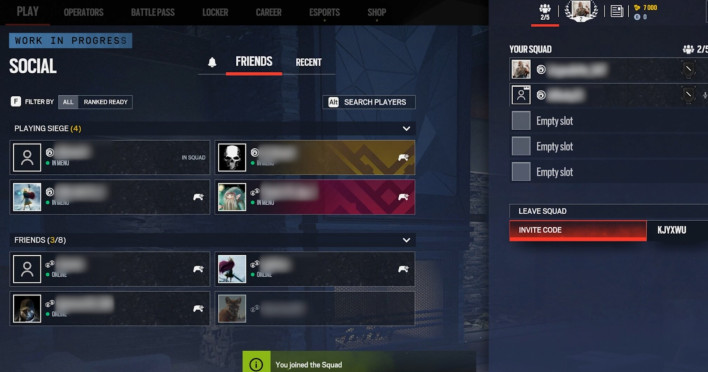
The core of the 'Rainbow Six Siege' Year 11 Season 4 (Y11S4) update, set to arrive on December 1, is Ranked 3.0. A long-requested Solo/Duo queue is being introduced, alongside a complete overhaul of the existing matchmaking system. The goal of this rework is to eliminate the disadvantage solo players faced when matched against 5-stack squads while preventing increased queue times caused by splitting the queues.
However, changing the systems of a game that has been live for 11 years is no simple task. Developers must consider the impact of new content on existing gameplay and reconcile feedback from players with differing demands. The Half Reinforcements, Doc remaster, and new SMG featured this season are the results of such careful consideration. Conversely, the planned Bulletproof Drone was canceled out of concern for maintaining balance with the existing combat environment.
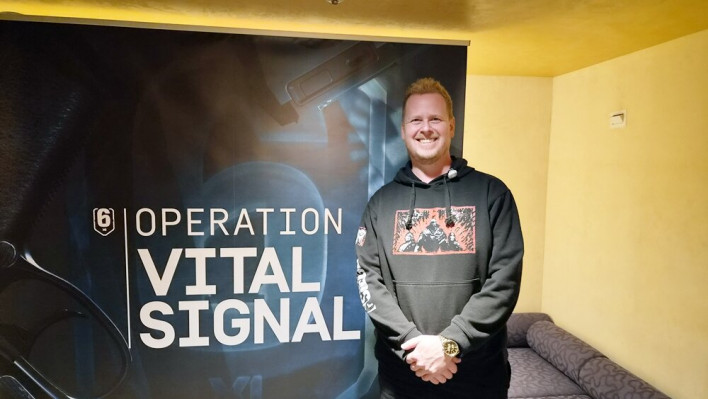
Meeting in Osaka, Japan, Live Content Game Director Christopher Budgen explained these changes from a practical perspective. We spoke with him about the key updates coming in Y11S4 and the future direction of live operations, touching on everything from the newly developed matchmaking technology designed to implement Ranked 3.0 to the balance standards for new gadgets and the challenges of continuously managing content in a long-running game.
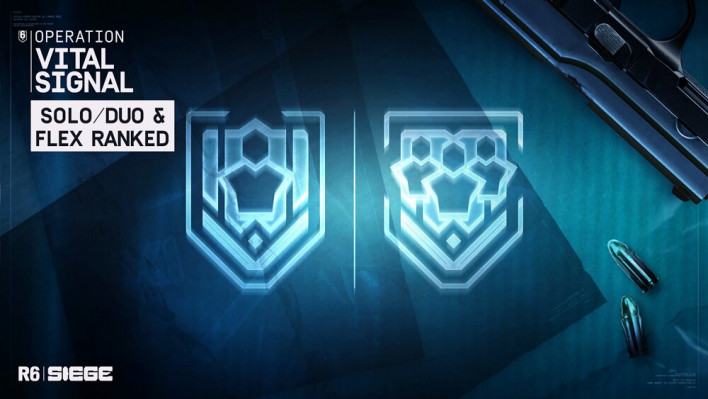
In Ranked 3.0 this season, 4-stack squads were removed and new Solo/Duo and Flex queues were introduced. What was the reason behind completely overhauling the existing matchmaking system, and what is the ultimate goal?
"The Solo/Duo queue is a feature players have been requesting for a long time. We also tried to introduce it years ago, but every time we started development, we had to pause it. Whenever we analyzed the data and ran simulations, solo and duo players made up such a massive portion of the overall matchmaking pool. Splitting them into a separate queue carried a high risk of disrupting the entire matchmaking environment.
However, this time we took a new approach. By pushing the Hostage mode rework to Year 12 Season 1 and deciding to validate it in the Testing Grounds mode before bringing it into the official competitive environment, we freed up room in our development schedule. We used this opportunity to focus on implementing the Solo/Duo queue and developed a new system called 'Cross-Queue Matchmaking.'
Cross-Queue Matchmaking connects two separate queues to a single matchmaker. While distinct Solo/Duo and Flex queues exist, the overall matchmaking situation is managed by one system.
For instance, imagine most solo and duo players enter the Solo/Duo queue. In that scenario, a 3-stack entering the Flex queue might struggle to find the remaining two players. If queue times for 3-stacks get too long, it impacts matchmaking for 5-stacks as well.
The new system detects these situations, and if the matchmaking health begins to deteriorate, it moves some duos from the Solo/Duo queue into the Flex queue. This measure keeps the matchmaking ecosystem stable for both queues.
Of course, because players are being moved to a queue different from what they originally selected, we provide compensation. Duos moved to Flex receive an extra 10 Rank Points regardless of win or loss. At the start of the match, players receive a notification informing them that their queue was changed and that bonus points apply. Winning in Flex thus yields even more Rank Points.
Crucially, even if moved to Flex, matchmaking and progression are still applied based on their original Solo/Duo rank. You can think of it as compensating players for when we cannot provide the exact Solo/Duo match they requested.
Splitting the queues into Solo/Duo and Flex could split the player base and lead to longer matchmaking times. What technical measures were put in place to prevent this?
"The Cross-Queue Matchmaking I described earlier is the key mechanism for maintaining queue health in both pools. However, that alone wasn't enough, so we also completely re-examined how matches are built based on squad compositions.
The previous system judged fairness and suitability to find the most appropriate opponents. Under the new system, we compare possible squad configurations against one another and set explicit rules on which squad sizes can be matched together.
A prime example is matching solo players against 5-stacks. Now, 5-stacks will only be matched against other 5-stacks or squads formed by a 3-stack and a 2-stack. Solo players will no longer face 5-stacks under any circumstances—the system guarantees this.
However, implementing these rules required significant technical work. We had to build Cross-Queue Matchmaking from scratch and verify how many duos needed to be shifted to Flex to maintain reasonable wait times. We ran countless data simulations for this, and implementing the system required considerable time and careful review.
Half Reinforcements are a new gadget that could significantly impact the balance between attackers and defenders. What balance standards did you apply to prevent defenders from becoming overly dominant?
"I agree that Half Reinforcements can bring major changes to game balance. That is why, rather than going straight to live servers, we decided to introduce them first to the Testing Grounds mode. It's crucial for players to try them out firsthand and tell us how they feel. In Testing Grounds, players can participate in surveys via QR code, which we will use to gather user feedback.
Another key consideration was deciding which Operators receive Half Reinforcements. While several Operators including Tachanka and Frost will have access to them, we chose not to give them to Operators who could become excessively powerful when paired with this gadget, like Mira. Deciding which Operators get Half Reinforcements and how they can combine them is a major factor in balancing.
We also placed restrictions on how they are deployed. When a Half Reinforcement is installed, the upper half of the wall is automatically removed. We do not allow a setup where only the bottom is reinforced while leaving the top as a destroyable standard wall.
Defenders gain reinforced cover on the bottom, but in return, they also grant Attackers new sightlines and firing angles. It's not a setup where Defenders benefit unilaterally; rather, both sides gain new tactical options. We designed the balance around these interactions and trade-offs.
Both Doc and Thunderbird receive major support buffs this season. Doc in particular can now heal teammates anywhere on the map. How did you differentiate the two Operators so they fulfill distinct tactical roles?
"The two healer Operators were designed for distinct roles. That is why we gave Thunderbird the ability to clear stun and concussion effects. We wanted to offer tactical strengths that can be leveraged differently from Doc.
During Doc's rework, something we paid special attention to was the somewhat selfish playstyle of existing Doc players. Previously, many players would roam or go for spawn peeks rather than healing teammates. They also tended to use healing abilities on themselves rather than allies, which was far from the expected role of a support Operator.
So we overhauled Doc so he contributes to the team as a true support Operator. Of course, he can still heal himself, but it is less efficient than healing a teammate. We designed it so that self-healing takes longer. Making Operators faithful to their intended roles like this is a major consideration in our balance adjustments.
This season, slug shotguns like the TCSG12 are being nerfed, while a new SMG is being added for three Operators. What was the rationale behind tuning existing weapons while introducing a new weapon, and what is your balancing direction?
"The submachine gun being added this time is a type of weapon never before seen in Siege. It is based on a real-world firearm and comes equipped with a massive 65-round magazine. We believe introducing a weapon like this will be an exciting change for players.
However, when adding a new weapon, we must carefully consider which Operators receive it. At the same time, certain slug shotguns, including the TCSG12, had been exerting an overly dominant influence on the recent meta.
By tuning down the performance of those weapons, we create space for the new weapon to settle into the game. Adjusting existing weapons that were overly strong allows the new 65-round high-capacity SMG to serve as another viable alternative.
The Hostage mode rework and the Operator Mastery system were delayed this season. The concept of 'Seasonal Tax' mentioned during the presentation was striking. How is system tech debt accumulated over 11 years placing a burden on current development, and have development methods changed to address this?
"Game development is hard. A game contains countless interconnected elements, and changing one thing impacts others. Especially in a constantly evolving game like Siege, we must always consider how to maintain overall game health.
We are currently shifting our balancing philosophy as well. Starting from Season 4, we plan to roll out meaningful balance changes that players can feel every three weeks. We've also introduced Targeted Map Updates to partially rework existing maps during seasons without a new map. The game evolves as a whole through continuous map and balance updates.
On top of that, major system overhauls are underway. In Year 11, we focused heavily on improving the competitive environment. Ranked 3.0, Legend Division, and this season's Solo/Duo and Flex queues are all substantial changes.
Because of this, we must evaluate feature implementations very carefully. We must consider whether a feature is something players truly want, whether it actually helps, and above all, whether it fits Siege.
We don't want to release a feature simply because it was promised on a roadmap. Naturally, announced plans are like promises to players, so we try to honor them whenever possible. But if a feature isn't ready or isn't right for the game, we have to make tough decisions. In some cases, delaying a launch is the right call.
While some content was delayed this season, we feel we were able to fill that gap with a major update in the form of Solo/Duo and Flex queues.
Although the Bulletproof Drone was canceled, some players feel Attackers still need new intel gathering methods. Are there plans to introduce other secondary gadgets or new intel systems for Attackers in the future?
"Where secondary gadgets should fit within the game is a question we constantly ponder. Secondary gadgets shouldn't be as powerful as primary gadgets. Primary gadgets represent the core identity and ability of each Operator. Secondary gadgets, on the other hand, can be distributed across multiple Operators and serve as a tool for fine-tuning balance.
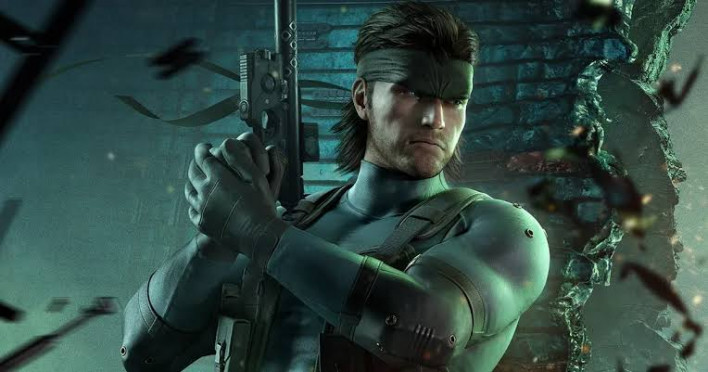
We evaluated various secondary gadgets internally. However, we concluded that the Bulletproof Drone did not align well with the current intel meta. Right now, with Operators like Snake and Dokkaebi on the roster, intel-gathering capabilities are already extremely potent. Adding a Bulletproof Drone on top of that felt inappropriate.
The Bulletproof Drone itself had issues as well. It was large, durable, and loud, requiring significant utility to destroy. In some cases, players had to use explosives like Impact Grenades. While it had a mechanism on the back that could be shot, its core identity was being bulletproof, as the name implies.
Ultimately, the gadget proved too threatening. It wasn't powerful enough to be an Operator's primary gadget, but it was far too strong as a secondary gadget available to multiple Operators. Because it was difficult to find a proper place for it in the current meta, we decided to cancel its release.
Siege is continuing work on modernizing existing maps. Even maps that have already undergone modernization might require further improvements. Are there plans for partial reworks or structural changes on these maps in the future?
"Map modernization work is now nearing its final stages. After this season, there will be only about one map left that requires modernization.
This initiative, which began with 'Siege X', involves adding various environmental elements like gas tanks and fire extinguishers. Once completed, most maps in the game will be modernized.
Now, we are shifting our focus toward Targeted Map Updates. This approach identifies specific spots on each map that players feel are unfair or problematic during actual gameplay and improves them. The rework of 'Bank' this season is a prime example.
Previously, when approaching from Alley, Defenders could cover the entire balcony through the Stock Window. It was quite unfair for Attackers. So we looked into adding cover or encouraging Defenders to split focus between the Stock Window and Top of Square. That approach lies at the heart of Targeted Map Updates.
Bank is a map that was already modernized, but we are moving into a new phase of improving gameplay itself. 'Villa' is another example. It was modernized previously, but we later added a new bomb site in the basement. We keep looking for ways like this to offer fresh tactical dynamics on existing maps.
We also made a promise to players: in seasons without a brand-new map, we will always provide a Targeted Map Update. So going forward, Siege's maps will continuously evolve.

This season brings improvements to the Social Hub and revives various limited-time events. In a long-running live-service game, reducing fatigue among existing players and drawing back lapsed players is a major task. What do you consider most important right now for player retention and return in Siege?
"This is a question the dev team takes very seriously. While the balance changes we've made so far had a major impact on players, we also needed to adjust our operational strategy.
In the past, we ran fine-tuning passes called 'Refinements' in .1 and .3 patches. These mostly targeted pro play or fixed minor issues on specific Operators. However, looking at player feedback, we realized these changes weren't aligned with what the general community expected.
So we adjusted our strategy. Instead of dropping many small tweaks, we shifted toward delivering fewer but more impactful changes that players can clearly feel. That came directly from player feedback.
Additionally, Siege has distinct user segments with very different needs. For new players, just learning map layouts or understanding round win conditions is a challenge. Meanwhile, returning players who haven't played in years have to adapt to updated systems. Pro players and high-skill veterans have different demands again, and we are introducing features like the Legend Division for them.
Ultimately, it comes down to balancing these different user segments. We must carefully evaluate which players we are targeting with our changes, what they need, and how we can support them in continuing their own journey in Siege.