Released 12 years ago in 2014, 'Alien: Isolation' was a monumental title. Creative Assembly (CA), a studio known for meticulously crafting strategy games, suddenly dropped a first-person game—and a horror game at that.
Sharing a home isn't easy even for married couples, so Amanda Ripley's struggle to survive living under the same roof with a Xenomorph that massacres both humans and machinery was a game of exceptional quality. The Xenomorph adapting to the player and the aggressively immersive sound effects received widespread acclaim.
And now in 2026, another unfortunate protagonist is being hunted by the Xenomorph: Blake, an employee of Weyland-Yutani.
While the game is still in development without a confirmed release date, we met with the developers at CA to discuss 'Alien: Isolation 2.'
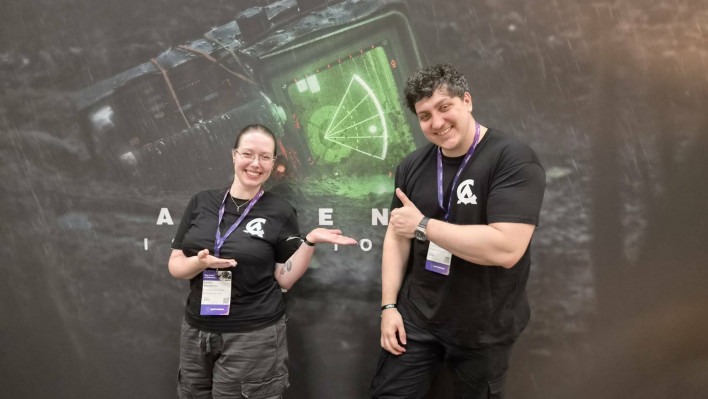
In the original game, you couldn't kill the Xenomorph. Is it still completely unkillable in the sequel?
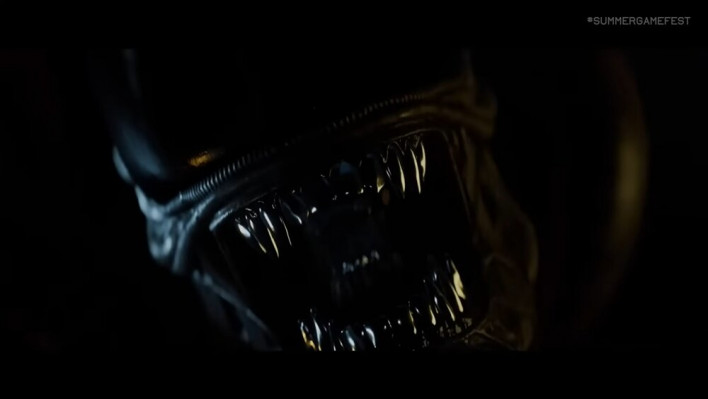
Laura Motterer: Yes. We are focused on maintaining the vision Ridley Scott showed in the 1979 film. Tables won't turn this time either to let players become the hunter. The player is still the hunted, which is the core of the game experience. Since that's what the community loved, we want to stay true to that vision.
Archie Whitehead: I think I would have given the exact same answer.
In the original game, practically a single Xenomorph hunted the player. Is it fundamentally a confrontation against just one Alien again?
Laura Motterer: We believe it's important to maintain that intimate experience of being hunted by a single, perfect predator. We want players to feel the terror of being hunted by that presence across different environments. It's still early in development, so it's hard to share too much right now.
Archie Whitehead: There are many other factors to consider as well. The player is constantly threatened by multiple elements. While the Xenomorph is indeed the main threat, Working Joe androids also return, and players must simultaneously deal with environmental threats like fires, rain, and fog. But speaking strictly of the Xenomorph, we are fundamentally focusing on just one.
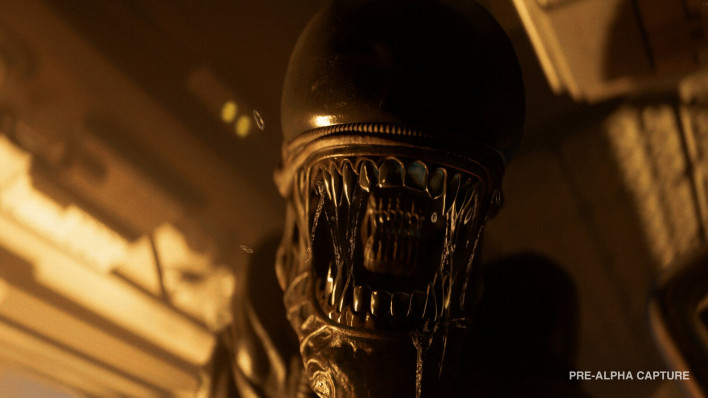
In the original, humans, Working Joes, and the Xenomorph would sometimes fight each other. Have these interactions evolved further in the sequel?
Laura Motterer: We are building upon and expanding the experiences from the first game. What you expected from the original is still there, but we are adding new elements and utilizing those interactions more actively. New ways to interact with the world and with different entities may be introduced. We are maintaining the core structure while pushing it further.
Does Blake being a Weyland-Yutani employee affect actual gameplay?
Archie Whitehead: How other characters in the world react to Blake will reflect the fact that he is a Weyland-Yutani employee. It's difficult to say right now how that will specifically impact gameplay, but it will certainly make a big difference in the story.
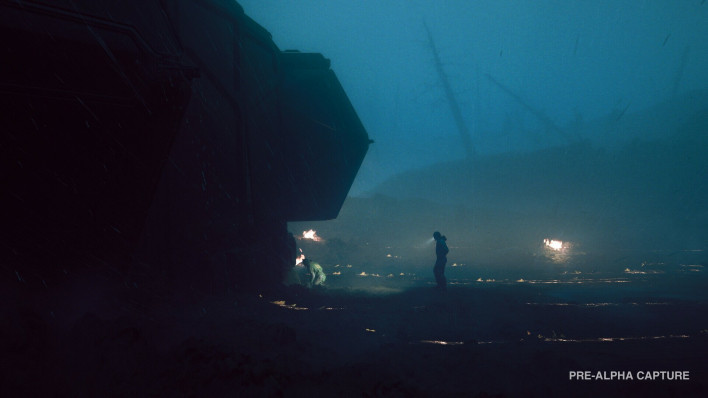
Is Kurosaki Station interconnected with the outdoor areas similar to Sevastopol in the first game?
Laura Motterer: They are connected in a similar manner. Of course, heading outside feels very different. The weather will be harsh to deal with, and the Xenomorph adapts to that environment as well. So it will be a considerably different experience from being indoors.
However, in terms of spatial connectivity, indoor and outdoor areas transition seamlessly. Players will move back and forth between inside and outside, and we are designing the game with that flow in mind. You can expect a naturally seamless experience just like in the previous game.
Can objectives still be tackled in multiple ways like in the first game? Are there even more options?
Archie Whitehead: For example, if the objective is to open a door or restart a generator, there might ultimately be just one lever to pull. But in terms of the overall gameplay experience, absolutely. Systemic gameplay is one of our game's core pillars.
Playstyles can vary greatly from player to player and depending on the difficulty. You might choose different routes, or someone might take significantly more time. Some players spend a lot of time hiding in lockers while others don't. In the end, even if you reach the same outcome, the path to get there can be different.
Laura Motterer: We see this during playtesting as well. Some people think very systematically, sneaking around and playing strategically, while others just dive straight in and somehow pull it off.
Does the Xenomorph still learn and adapt if you repeat the same strategy, as it did in the original?
Archie Whitehead: Yes. The flamethrower was a great example in the previous game. If the player kept using the flamethrower, it could drive the Xenomorph away at first, but it gradually adapted to its effects. Eventually, it wouldn't back down easily and would wait for the flames to die down.
We want to expand on that behavior this time. It's something the gameplay team has discussed: if you repeat the same strategy, the Xenomorph learns from it and won't react as easily as before. For instance, if you throw a noisemaker, it might investigate at first, but over time, the duration it lingers there could shrink. If you keep using it, it might eventually ignore it altogether. Players must constantly adapt their strategies to survive.
Does outdoor weather like rain, fog, and storms actually affect gameplay?
Laura Motterer: Yes. Outdoor weather directly impacts gameplay, and it affects the tools you use too. If you played the prologue, you would have seen flares blowing away in the wind when thrown.
It also affects hearing. If the rain is too heavy, you might not clearly hear a nearby Xenomorph. You might fail to spot a close Xenomorph because of fog or heavy rain. On top of that, the weather constantly changes. It is extremely volatile, so players must continually adapt to surrounding conditions and find the best path forward.
Archie Whitehead: Before joining the project, I played the previous game several times. Back then, I found myself relying on specific audio cues, like the sound of the Xenomorph coming down from a vent. Once you learned the sounds, you knew when to hide.
But this time, we have outdoor environments and weather. There will be moments where you can't hear the Xenomorph entering or leaving an area. It's a brand-new way to terrify the player.
Has the sound design, which was highly acclaimed in the original, been upgraded as well?
Archie Whitehead: Absolutely. The original even won awards for its sound design. You can expect fantastic sound design once again.
Laura Motterer: Our Audio Lead and Audio Director, Sam Cooper and James, both worked on the original game as well. They have a wealth of experience in crafting this kind of audio experience.
Can new players who haven't played the first game still understand the story and systems of the sequel?
Laura Motterer: Yes. Since we are telling a new story alongside a new protagonist, Blake, players will have time to get to know the character and gradually learn how the gameplay mechanics work.
Players already familiar with the original might find the early game much easier to navigate. But we give new players plenty of time to grasp the game's various elements as well—it just takes a little longer to get comfortable.
Does the motion tracker return? Does it work the same way outdoors?
Archie Whitehead: It doesn't appear in the prologue, but it returns in the main game. It's such an iconic piece of gear that we felt it couldn't be left out.
Laura Motterer: It's still too early to talk about how it functions outdoors.
Archie Whitehead: Fundamentally, you can expect a similar look and feel.
Can you use environmental sounds to distract or trick the Xenomorph?
Laura Motterer: Yes. I recall that was possible to some extent in the first game as well.
Archie Whitehead: In the original, there were some elements where you could use the environment to create noise and provoke a reaction from the Xenomorph. Building the environment alongside the level design team this time, I feel there are far more of those elements than before. Players can definitely look forward to using the environment to distract the Alien.
What gameplay element do you think will feel most different in the sequel compared to the original?
Archie Whitehead: I'd say the environments. On one hand, it was challenging because it still needed to feel very familiar. We put a lot of effort into faithfully recreating the feel of the 1979 movie and the original game. In that sense, returning players should feel right at home.
But in the new environments, especially the outdoor spaces, you will definitely encounter new elements to be surprised and terrified by.
Laura Motterer: There are also new tools and new elements to play around with. A new cast of characters and a brand-new story await as well.
Archie Whitehead: All of this exists within the frame of 'a future imagined in 1979.' We want it to feel like it naturally belongs right alongside the 1979 movie and the original game.
What have you prepared to shock players who are already accustomed to the horror of the first game?
Archie Whitehead: Again, outdoor environments play a major role. And we are expanding on every element we had in the first game.
Laura Motterer: Personally, playing the original, I don't think there was ever a moment where I felt the Xenomorph wasn't terrifying anymore. Because it operates systemically, it doesn't repeat the exact same behavior twice and continuously learns from player actions.
This time, since you have to explore new environments, you'll encounter behaviors you didn't experience in the previous game. Stepping outside, everything is wide open and dark, accompanied by wind and fog.
Archie Whitehead: We've talked a lot about weather stripping away player senses. When fog thickens, suddenly you can't see anything. Maybe the Xenomorph can't see the player either, but the player can't see the Xenomorph either. At first, you might think this works in your favor, but over time, you'll realize it doesn't.
Heavy rain and storms are the same. Initially, you might think, "The Xenomorph won't hear me," but conversely, the player can't hear the Xenomorph either. You lose one of the key senses you relied on in the original.
With the addition of outdoor spaces, how did you maintain the claustrophobic feeling signature to the first game?
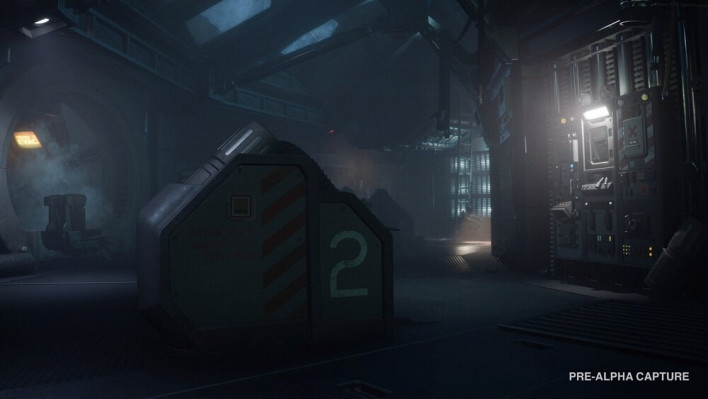
Laura Motterer: Indoor spaces still exist, and we balance indoor and outdoor areas. Even in the prologue, you start outside before transitioning into claustrophobic interior spaces. It's not a game where you stay outdoors the whole time and briefly pop inside. You properly cycle between indoors and outdoors. As a result, the tight, claustrophobic spaces experienced in the first game are very much still present.
Archie Whitehead: I think this structure works wonders for pacing. In claustrophobic spaces, you feel the pressure and dread of being trapped in a tight area with the Xenomorph.
Then when you step outside, you think, "Finally, freedom. It's open and safe." But as weather changes and time passes, you realize you're completely exposed and vulnerable. Ultimately, you'll want to go back inside. We find this cycle extremely compelling and powerful.
If you had to pick just one element you felt fell short in the original and wanted to improve in the sequel?
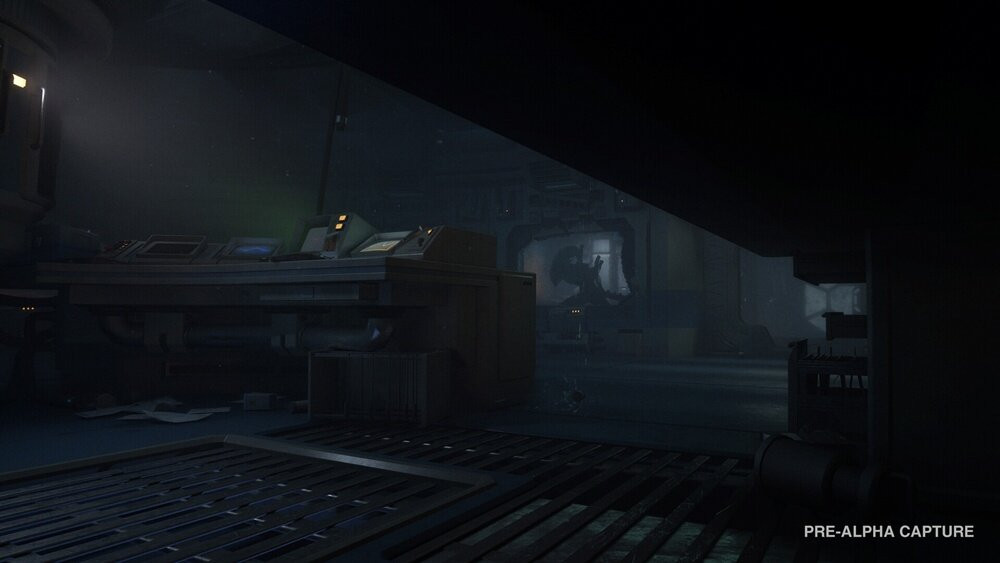
Laura Motterer: For me, it would probably be "a higher level of realism." Technically, we can do so much more now compared to back then. I handle UI elements like screens and CRTs, and recreating even a single CRT display to look as authentic as possible using current technology is a genuinely fun process.
I think the original did a great job, but now we can take it a step further to make it far more realistic, allowing players to immerse themselves even deeper into the world.
Archie Whitehead: Being an environment artist, my answer might sound a bit dry, but it's putting more polygons and textures on screen. While the world of the original was immensely immersive, we can now scatter far more detailed elements and small objects everywhere.
Especially since people now play games on large displays and 4K environments, I think those details matter even more. Retro tech features a lot of small, rounded objects, and the original optimized them exceptionally well for its era—enough to run on the Nintendo Switch. But now, we can reduce that "game-y feel" even further in those areas.
Finally, is there anything you'd like to say to the fans?
Laura Motterer: If you haven't played the first game, it's still a beautiful game to play today. I hope you enjoy playing it and exploring its universe. And please continue to look forward to the sequel as well.