During the 'MapleStory Vibe Camp,' a global game jam held from June 8 to 29 by Nexon's blockchain subsidiary NEXPACE and the AI game creation platform Verse8, 693 games were produced in just three weeks. Among them, five works were selected for the 'The Campfire' category, which boasted the highest overall scores. 'Say Cheese, Yeti!' was one of them.
It was made by one person, and it took four days to complete.
Creator Jung Yu-jin is not a developer. She majored in visual design and has worked in disability support and game QA; she now creates cognitive and leisure content for children and seniors with dementia. She had always had game ideas, but they would consistently stall at the planning or concept video stage because she didn't know how to code.
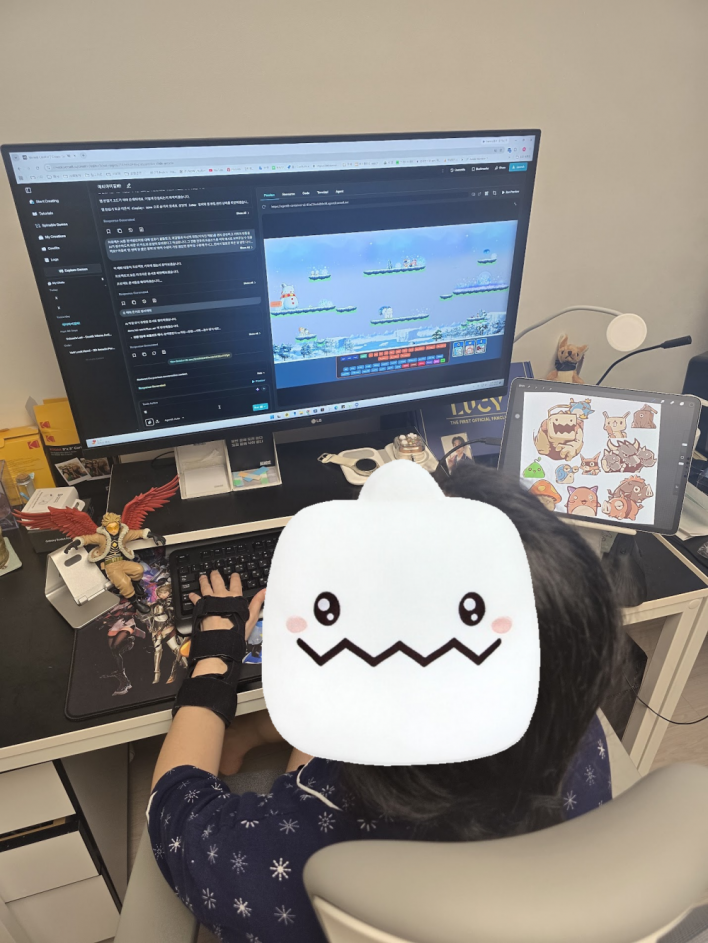
This time was different. While on maternity leave, she used the time after her child fell asleep—from 10 p.m. to 2 or 3 a.m.—as her development window. During the day, she kept her screens away to focus on her child, jotting down priorities in a notebook and even building a map editor before finishing the game itself. She began actual production four days before the deadline.
You have a background in disability welfare facilities, game QA, and content design for seniors with dementia and children. What is the common thread in your interests?
"While majoring in visual design, I worked as a disability support worker during my first and second years. During a leave of absence, I was curious about how game companies actually operated, so I applied for a QA role and worked there for two years. After returning to school, I joined a company as an intern and was eventually hired full-time, where I now create cognitive and leisure content for children and seniors with dementia.
While these careers might seem disparate, looking back, I realize I have always been looking at the same thing: what users find difficult and how to make their experience more comfortable and enjoyable. In QA, I learned how to find defects in others' work and verify it from a user's perspective; in design, I learned how to solve those problems through actual screens and presentation.
The starting point was my time as a disability support worker. I once struggled to explain a game to the person I was assisting; terms like 'drag' or 'item,' which I didn't even think needed explaining, were entirely new concepts to them. That experience didn't necessarily define my target audience, but it did shape my preferences. I grew to love content that is easy to understand at a glance and has no more than three or four rules.
What was the catalyst that moved you from 'I want to make this' to actually doing it, despite having no development experience?
"Because I didn't know how to code, my ideas always ended at the planning, drawing, animation, or concept video stage. There was even a project that reached the prototype phase but was halted due to the collaborating developer's circumstances; that was when I realized that the moment a game leaves my hands, it never gets finished. Discovering Vibe Coding allowed me, for the first time, to see a project through from planning to distribution on my own.
You developed this during your maternity leave, splitting your time around your child's sleep schedule. What was your daily rhythm like?
"My child was eight months old at the time, so my day started at 6–8 a.m. based on when the baby woke up. During the day, I kept the monitor away to avoid exposing my child to screens, instead using a notebook to organize rules, screen flows, and necessary resources—tasks that could be interrupted. I would set up prompts at night to run during the day, then just turn off the monitor. In a sense, the work was running while I was watching my child, so I would check the results in the evening, make corrections, and plan for the next day.
Actual implementation and graphics were done from 10 p.m. to 2 or 3 a.m. after the baby was asleep, averaging four to five hours a day. Three or four times a week, the baby would wake up at night, so I couldn't even use that time fully. If I sat down at night and started wondering, "What should I do first?", that day was essentially lost, so organizing priorities during the day was just as important as the actual development.
How were you able to dive straight in when you only had four days?
"It was an idea I had originally planned to make if I participated in the 'Mechathon' (MapleStory Hackathon). The concept was to bundle ten minigames, one for each monster, based on the theme 'In the beginning, there was a mushroom,' but I had to fold the idea when I couldn't participate.
Then, four days before the deadline, I saw a promotional banner saying, "You can make a game without coding." It described exactly the hurdle I had been stuck on for so long. I was able to dive in immediately because the plan was already in my drawer, and the four-day constraint forced me to condense those ten ideas into one.
Was there any feature you cut that you regret?
"Interaction gimmicks. I had planned for the Yeti to have different reactions whenever it bumped into objects like snowmen or ice sculptures placed on the map. Since the pose and expression at the moment of the photo would change depending on the situation, the results would have been much richer even on the same map, but I cut it entirely to maintain the quality of the core photo-taking mechanic.
What did you see at the offline MapleStory event that made you decide, 'I can translate this into a game'?
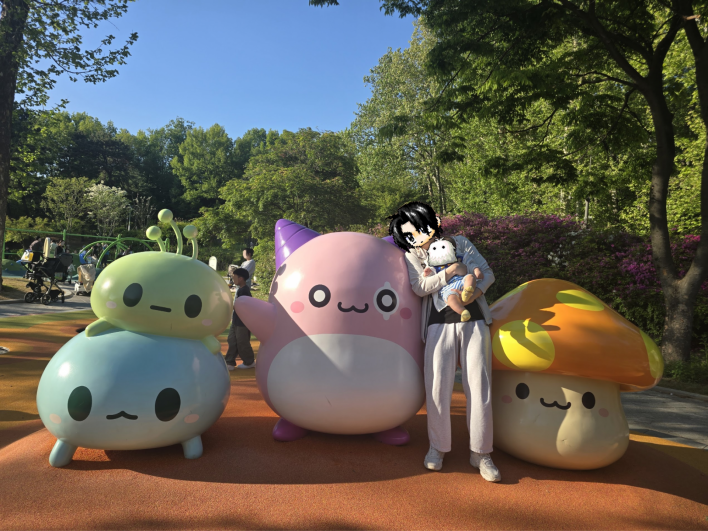
"What impressed me most at the event wasn't the gamers, but the people who didn't know the game. Beyond the age group that enjoys MapleStory, family visitors and passersby were standing in front of 'Henesys Jump King' or 'Ludibrium Minigame' and starting immediately without any explanation. I was particularly impressed by Lotte World's 'Become a Maple Hero.' It was the most popular attraction, and my companions and I enjoyed it immensely.
I realized this worked not because it was an offline event, but because the rules were that simple. I judged that if that were the case, it would work just as well if moved online.
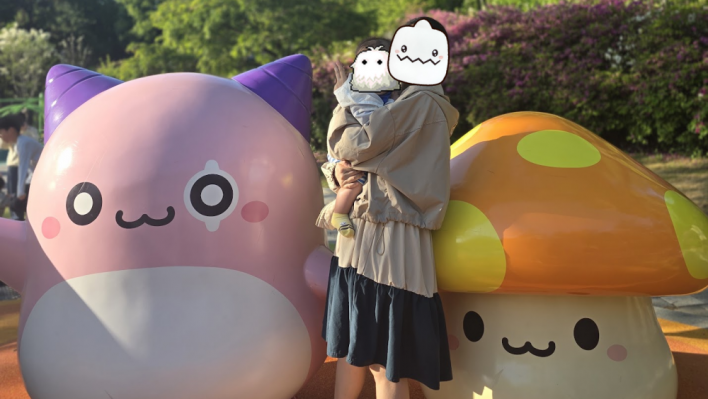
Another thing that stuck with me was seeing people having fun taking pictures in front of giant character statues. From there, I thought of a game where you don't 'control the character,' but rather 'capture the character's moments as a user.' The framework of the rules was borrowed from the 'Center is Me' mode that was temporarily available in Tales Runner, and from games where you take pictures of cats.
Did you have any discarded answers before arriving at the reason 'Why does the Yeti run?'
"That question actually arose because there was no answer in the original work. In the original 'Yeti's Secret,' there is only the relationship where Pepe, who has no sense of direction, rides on the Yeti's back to show the way, but there is no mention of where they are going or why. Initially, I started with 'It's racing because it's running,' and considered reasons like 'to escape from a scary monster' or 'to find a tasty snack.' But a Yeti running because it's being chased or hungry didn't look happy. Eventually, I settled on 'It runs because it wants to be captured in a beautiful photo by someone.'
How did you draw the line between what you took from the original and what you created anew?
"I didn't touch what was in the original; I only filled in the gaps left by the original. I kept the relationship where Pepe rides on the Yeti's back to show the way, but I created the goals and genre that weren't in the original. It was initially a simple race, but I changed it to a time-attack structure where you occupy photo spots within a time limit, and added the photo-taking mechanic on top of that.
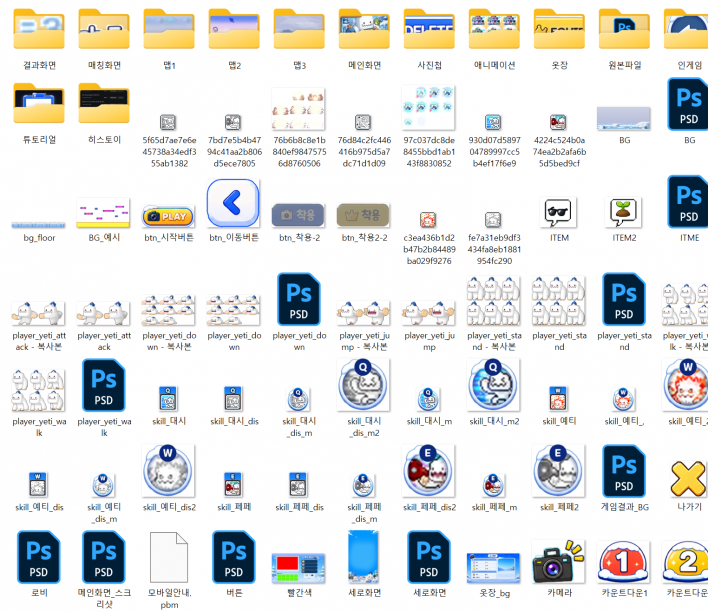
There were also criteria for choosing graphics. The existing Yeti/Pepe graphics didn't fit the cute concept I had in mind, so I brought in the Yeti graphics from the 'Super Yeti x Pink Bean World' event. However, that source didn't have Pepe, so I synthesized Pepe separately.
How did you decide on 10 photos per round? I'm also curious about your map design method.
"The number of photos was calculated backward from the length of a round. I wanted to make a snack game that ends quickly, like what I saw at the event, so I set a short round length and divided it by the shooting interval, which initially resulted in 15 photos. However, when I played it myself, it felt like the round dragged on, so I reduced it to 10.
For the background, I decided on the concept for each map first—such as the Yeti's village, Pepe's village, or the place where Spiegelmann summons aliens. After placing objects suitable for each concept by tile height, I sketched out the camera angles and filled in the empty spots. I retouched the background and objects to be blurry and gray-toned to create a sense of depth. Since the game's result is a photo, it felt more like creating a background to be photographed than building a map.
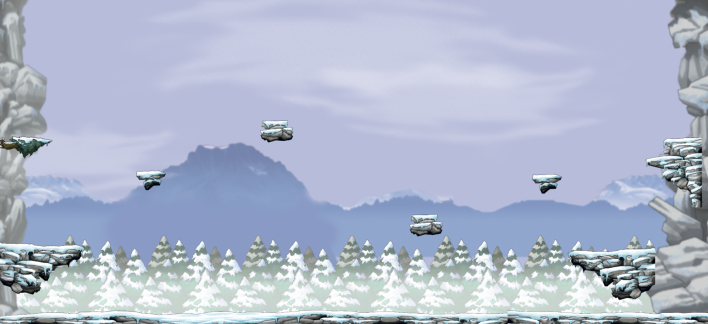
What was your workflow until the first build came out? Do you remember your first prompt?
"The first thing I did after logging in was to put the UI layout and view I had in my head onto the screen. You need a visual framework so the planning doesn't waver. After matching the tone of the artwork by placing characters and tiles on a blank canvas, I added the core loop: 'the character runs.'
The first input wasn't a short prompt, but the entire plan I had written down. The gist was this.
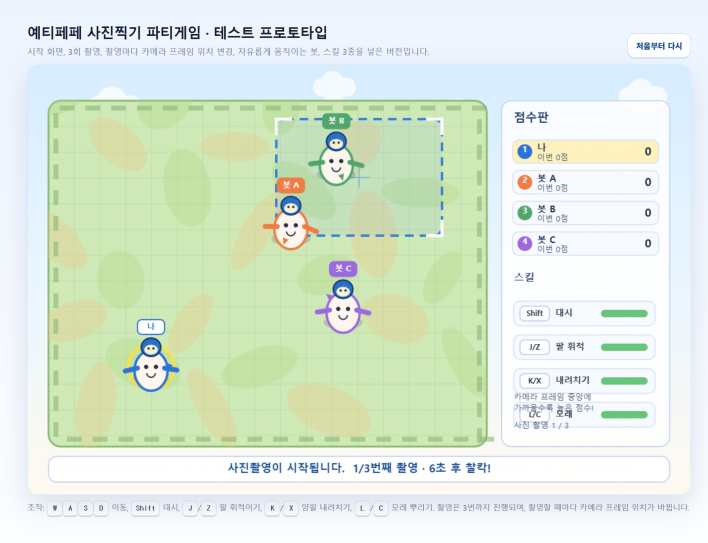
[I want to make a 4-player party game where you control Pepe riding on a Yeti's back. When a camera shooting area appears on the floor, you move to the center within the time limit, and the moment the photo is taken, you get points based on how close you are to the center.]
After that, I changed my approach to having the external AI supplement the plan first, then breaking it down into steps so the development AI could execute it.
However, I didn't make a 4-player battle from the start. I checked one by one: can I control one Yeti, does the camera area appear, do I get points when I'm in the center, and does that screen turn into an actual photo after time passes? After seeing this core loop work, I added skills, then continued with the rest of the screens like score calculation, game over, and the title screen.
I set the direction for graphics and UI and made them myself, while feature implementation was checked in small units through conversations with Verse8. A build where a round ran from start to finish without the design elements came out on the second day.
Looking back, there was a mistake in this sequence. I started with one Yeti, added skills and AI opponents, and only then tried to add multiplayer. But since multiplayer was the most important part of this game, I should have checked if that was possible before diving in.
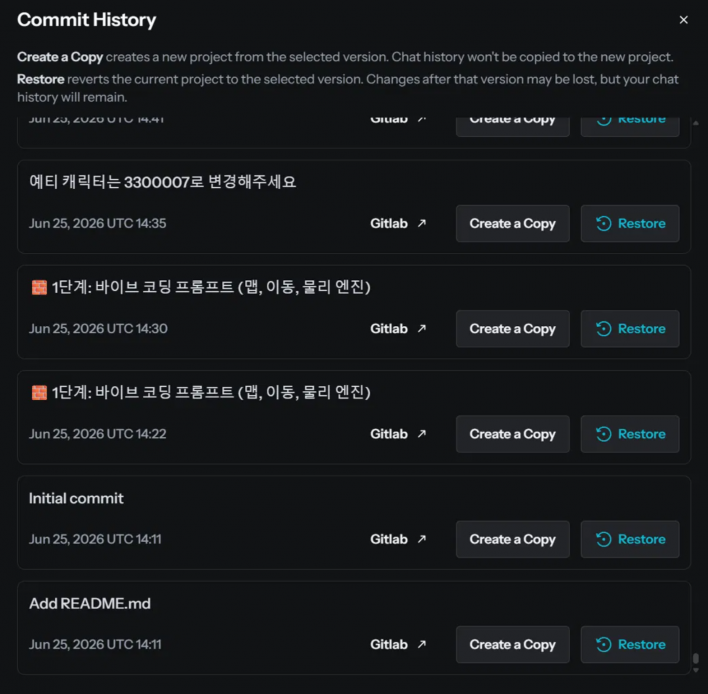
You said you initially used AI like a search engine. Please compare your prompts before and after the change.
"At first, I requested answers directly, like "Make me a party game like this' or "What features does a multiplayer game need?" As a result, the AI suggested a bunch of generic game features, some of which were beyond my time and capabilities, so the results didn't align with my plan.
After changing my approach, I laid out the conditions first.
[I only have 4 days until the deadline. I can do the planning, UI, graphics, and animation myself, but I have no traditional development experience. Don't add new features; just review my plan for missing parts and technical risks.]
Then, the scope of suggestions narrowed to what I could handle. In short, I just changed the order: first, I informed it of the schedule constraints, then I told it what I could do myself without AI, then I delivered the planning content, and finally, I asked it to review whether the plan was technically feasible.
Could you divide the areas that went well at once and those that required many iterations?
"What went well at once were character movement, physics, and the three skills. Things that look like background effects or snow effects also generally came out right the first time, but what gave me trouble was where to place them.
What required an overwhelming number of iterations was the UI. While I could make a map editor to drag and drop, for the UI, I had to type coordinate values into the chat window to see the results. The UI I designed for PC was too small for mobile, so I had to make a separate one for mobile and redo the layout. In my actual logs, there are requests to modify background object positions made in succession within ten minutes. Just looking at the UI, I must have run it dozens of times. I also retouched the graphics myself at least once after generating them with AI.
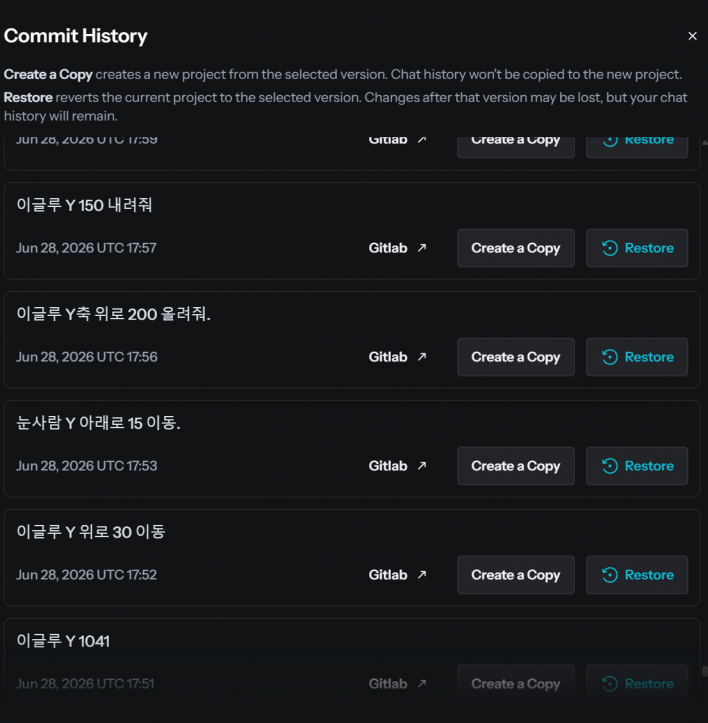
You made a map editor yourself when you needed one prompt per tile. When did you decide to do that?
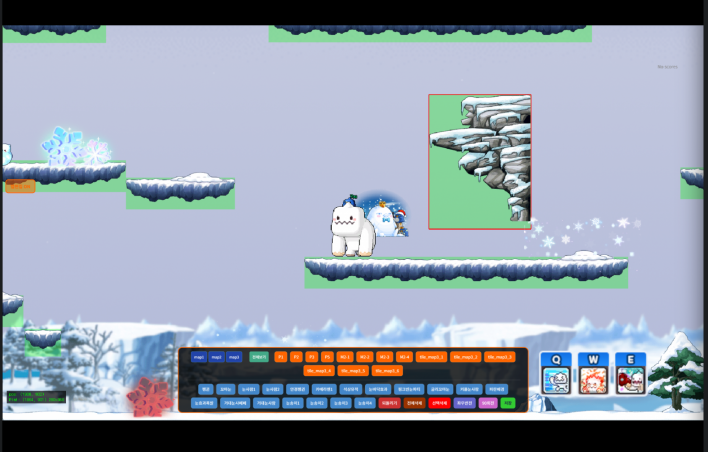
"At first, every time I added an object or changed its position, I explained the coordinates in text and put them into the prompt. But to improve the quality of one map, I had to place dozens of objects and keep making fine adjustments, and each generation took several minutes. I calculated that three types of maps were impossible within four days, and the moment I made that calculation, I decided to make a tool.
I'm someone who has only worked with design tools like Photoshop, so I was used to dragging and dropping directly on the screen and checking the placement with my eyes. So, I asked it to make a 'simple editor that lets me pick assets from an object list, drag them onto the screen, and save their position, size, and rotation' in the same window where I was making the game. In a sense, I made the tool before the game, but it wasn't about making a development tool; it was about trying to bring the workflow I was always used to into this environment.
Please also explain how you extracted and reflected location data as JSON.
"The first editor I made had a problem where it wouldn't reflect changes even after I finished placing objects and clicked save. The cause wasn't visible on the surface, so prompts like "It's not working, fix it" didn't solve it. I had to narrow down where it was breaking one by one through repeated conversations with the AI.
I eventually found out that the placement information remained only on the client and wasn't being saved to the server. I solved it by making it so that when I clicked save, the X/Y coordinates and layer order were extracted as JSON text, and then I pasted that data into the map loading logic of the main game. The fact that you have to find the root cause remains the same even with AI help. As a result, I could adjust the map while looking at the screen without repeating prompts dozens of times, and thanks to that, I completed three types of maps in a short period.
How did you search for and select official IP assets?
"Since the map concept was already set, I started by searching for the Yeti and Pepe, which had the highest priority, selected a few resources that looked good, and structured the presentation and development around them. Then, I made a list of what I needed—characters, background objects, skill effects, collision effects, UI sounds, win/loss presentation—and searched for them by role.
I wanted to use the Yeti skill exactly as it was used in 'Super Yeti x Pink Bean World.' I wanted to include Easter eggs that only those in the know would recognize, like a Maple fan game. What was disappointing was that the search was keyword-centric. If I typed 'Henesys Village' from my memory, results like mushrooms would come up first, and what I actually wanted was mixed in among other results.
What difference does it make in solo production to be able to receive and use sounds and effects immediately?
"It was decisive. Even if I could make the characters and UI myself, making skill effects and sounds of the same quality within four days would have been impossible, and I would have spent all my time just looking for copyright-free sources. Thanks to being able to use all the effects and sounds from the official library, the four-day result could feel like a game within the MapleStory world rather than a temporary prototype.
However, the combination of Pepe riding on the Yeti's head wasn't in the official assets. I downloaded the Yeti's running frames and the Pepe image separately, synthesized them in Photoshop by matching the size, position, and silhouette frame by frame, bundled them into a single sprite sheet, and uploaded them again. Then, I repeatedly checked within the game screen to see if the two looked like they were moving separately during movement and skill actions.
How was it after distributing it and receiving reactions? I'm curious about cases where you made changes based on those reactions.
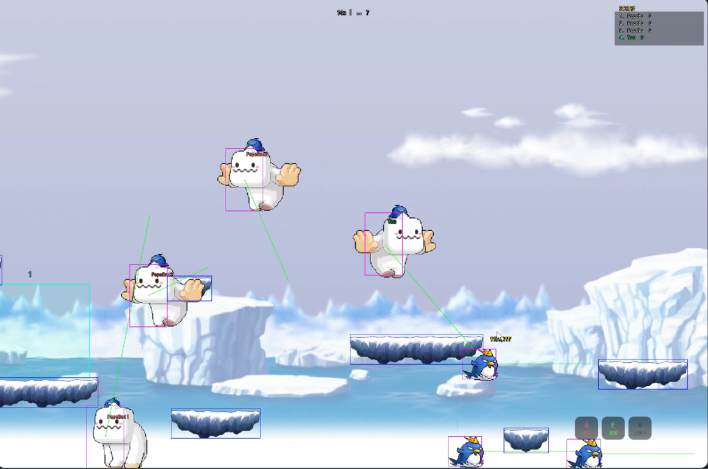
"When I distributed it through Verse8, a link was generated with one button, and the recipient could run it immediately without installation. I posted that link on social media and asked acquaintances for feedback.
My husband is a professional game QA, so he helped a lot with testing. The shutter countdown display was a feature that wasn't there originally, but I added it after a request, and the UI that pops up above the Yeti's head when it goes out of the shutter zone was made through the same process. The shooting countdown was initially 7 seconds, but I received feedback that it was too tight and difficult, so I increased it to 10 seconds. I also adjusted the collision box to be slightly smaller than the visible image after receiving feedback that the obstacle collision detection was too strict.
How did you feel when you received the first reaction from a user you didn't know?
"The first user I didn't know was an acquaintance of an acquaintance. They had almost never played games, and their reaction was "It's cute." I was happy, but at the same time, I felt frustrated. I thought, "This isn't it; there are clearly things to fix, and I could have made it better." That's why I became desperate for cold, honest feedback.
Actually, when I worked in QA, I found it difficult to find and report problems in others' work. I could find them, but when the developer came to my desk and asked about reproduction steps or improvements, I was afraid they might be angry because I was nitpicking. Only after making it myself this time did I understand that it wasn't anger, but attachment to their own work and an attitude of trying to steer it in a better direction.
What was the most helpful piece of feedback?
"The point from the Verse8 review team that the map height was too high. Originally, to get to the second floor, you had to step on a specific tile on the first floor and jump, so the path was fixed. After that feedback, I added a double jump so you could reach it directly. As multiple paths became available, the in-game experience became much more diverse.
You mentioned that your friends competed on 'who looks funnier' rather than winning. Is there anything you want to reflect in the next version?
"After seeing that, I really wanted to include the poses and facial expressions I had cut due to time constraints in the next version.
Could you name one feature of Bus8 that you feel you couldn't have finished without, and one thing you would like to see improved.
"The fact that features are created just through conversation, and the environment where I could repeat that trial and error without cost burden. Since I had no development knowledge, I often repeated the same things in natural language or gave commands in the wrong direction until I got the hang of it. If that hadn't been allowed, I wouldn't have finished it.
What I wish were improved is that you can't manipulate the UI directly on the screen. I solved the map issue by making an editor, but for the UI, I had to type numbers into the chat window until the end, and I couldn't get a feel for how much "20 pixels down" was on the screen, so I kept guessing and checking. Online PVP never worked properly, so I reported it as an official bug, and it's still being fixed.
Was there a moment when your thinking that 'the original work should not be touched' changed?
"My original thought was that since every plan has the planner's intention hidden in it, you shouldn't touch it carelessly. I still use the default wallpaper on my phone. I want to see the intention as it is, because the designer must have gone through countless trials and errors to design the moment you first encounter that device.
So, I felt comfortable when I synthesized Pepe onto the Yeti's head. Only the character design changed, but the settings remained the same. What bothered me was when I attached an answer not in the original to 'Why does the Yeti run?' I felt like I had added a setting, so I wondered if this was okay, and I was worried that people might have a negative reaction because it was different from the original when I showed the prototype to acquaintances. But I changed my mind after seeing people playing and showing off funny photos to each other. Even people who didn't know the original were finding their own fun in it.
What would have been different if you couldn't use official IP assets?
"If I couldn't use official assets, I probably wouldn't have even come up with the idea, so I wouldn't have made it. If I had made it, it would have been an original character, and then I would have had to persuade people why they are playing this game and why this character is running to be photographed. Because Maple has been serviced for a long time, it is naturally embedded in various places and is imprinted on people, so they immediately say, "Oh, this concept?" and move on. I realized this time that the power of IP is that it lets you skip that first hurdle.
You also talked about the sense of disconnection during pregnancy and childcare. How did you get through that period?
"From the latter half of my pregnancy, I had almost no outside activities. My physical condition wasn't good, so I couldn't even imagine going out, and since I didn't have many friends who were married or pregnant around me, there was no one to share stories about this period with, so I stopped meeting people first. My day revolved only around the child, and even though my family and husband were very helpful, I couldn't help but feel my spirits sinking.
So I wanted to try something, anything. Vibe Coding was something that didn't cost money, didn't require leaving the house, and only used the remaining energy I had. It's more accurate to say that it was the only option I could do alongside childcare.
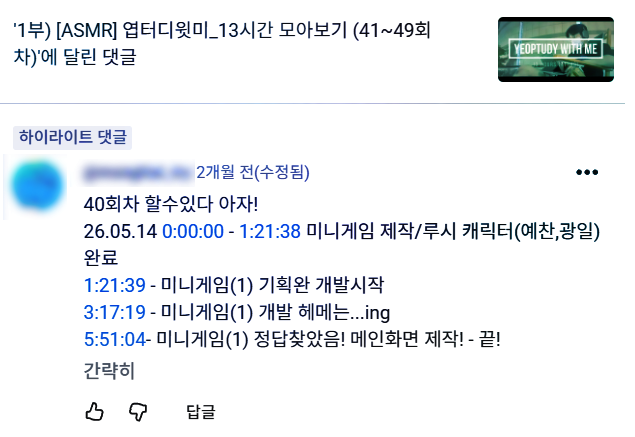
I also needed the sense that I was doing the same thing as someone else, even if I was alone. I wore earphones and worked while playing songs by LUCY, PLAVE, Mrs. GREEN APPLE, and Vocaloid. In particular, LUCY's Choi Sang-yeop hosts a live broadcast called 'Yeoptudy' where he and his fans study on their own. It was hard to match the live time because of childcare, but I developed while playing past videos and consistently leaving comments to verify my participation. I felt like I definitely couldn't do it if I did it alone, so I felt like I could only succeed if I told someone about it like this.
What made me most anxious during that time wasn't loneliness, but the doubt, "Am I still a person who can make something?" So, the news that a stranger had played my game wasn't comfort, but more like confirmation. I also got back in touch with people I hadn't talked to in a long time because I was asking for feedback while making the game, and that was also really good.
Is there anything you want to say to those going through a similar period?
"I want to tell you that going out and meeting people isn't the only answer. You might hear people around you say, 'If you're depressed, go for a walk,' but when I went out without a goal, I just wandered around and came back. These days, you can get plenty of information on the internet, so I hope you try something you've wanted to do, even if it's something very small, according to your situation. It would also be good to leave traces somewhere and look back on what you used to like. Because you were a person who liked something before you were a mother.
I found that if you go all-in on childcare, you actually get trapped. When it was just me and the baby in the room and the baby cried, that crying sound was the scariest sound in the world. But if you don't just focus on that situation and look elsewhere for a moment, the baby is actually quite small compared to the world. I thought I would be even more exhausted by adding childcare because I had to divide my energy when I had a goal, but I actually gained strength by thinking, "I have to put the baby to sleep quickly and work." Of course, I think it's also good to get help from people around you or experts when it's hard to endure alone.
Please tell us your future plans.
"I plan to keep working on 'Say Cheese, Yeti!', but I'm currently struggling with multiplayer issues. The SNS bulletin board for showing off photos and the ranking system remain undeveloped even though I've already made the graphics, and next, I want to add pose and expression changes so that a different photo comes out every round. Since the result saved is a photo, I want to create a structure where just uploading that image becomes both promotion and play. If I'm greedy, I'd also like to try printing out photos played at offline events for people to take home.
I'm also thinking of participating in Season 2 because I want to check my skills one more time. Above all, I want to give credit to my family who actively helped with childcare for four days.
You've already started a new game, right.
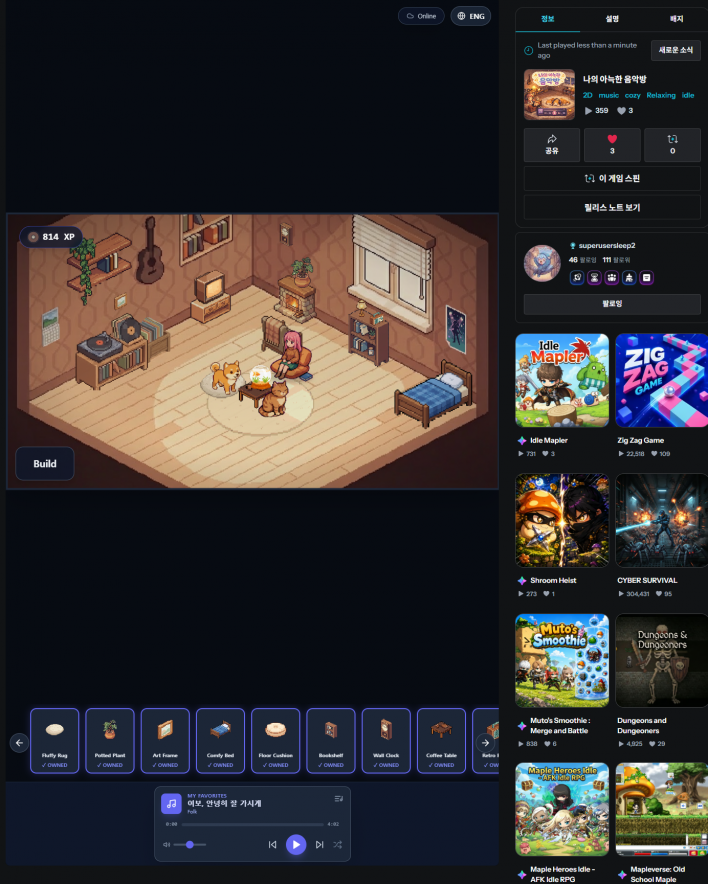
"It's not a Season 2 entry, but a separate project I'm working on, and this time I'm going to try something experimental. The starting point is two things I found regrettable in this game: the fact that multiplayer's fun is halved if there's no one to play with, and the fact that the reason to come back is weak after playing once. So, I'm aiming for something that can be done alone and that people will want to return to. Since there are works in Verse8 that aren't games, I'm also considering expanding it into a form that people open every day, like a Pomodoro app.
If you had to summarize this experience in one sentence?
"For me, development was always an unknown territory, and I had a longing for it as something that belonged to developers. I once tried to learn coding and gave up after just printing 'Hello World.' So, it was really meaningful to finish it with my own hands this time, but after doing that, I saw that promotion is an area that is just as difficult.
It's one mountain after another; I'm drawing comics, making accounts, and trying various things for promotion. Because of my personality, I'm very shy about showing off or expressing things, but even so, I'm trying to do something because there are always things to learn and challenge myself with every day. I was so shy that I didn't even tell people around me that I had made a game until 3 days before the final deadline.
To summarize in one sentence: before I tried it, it was longing; after I tried it, it became curiosity.