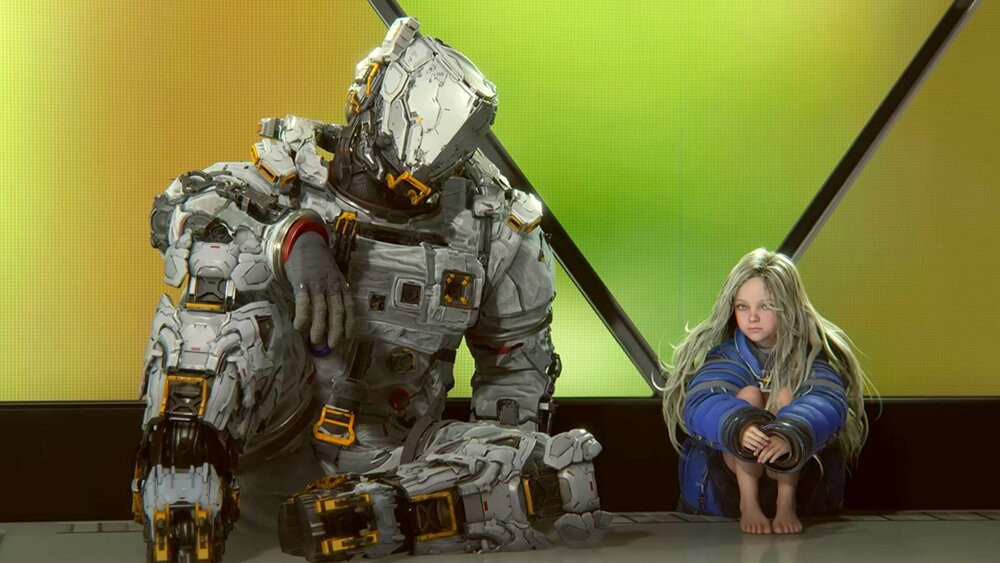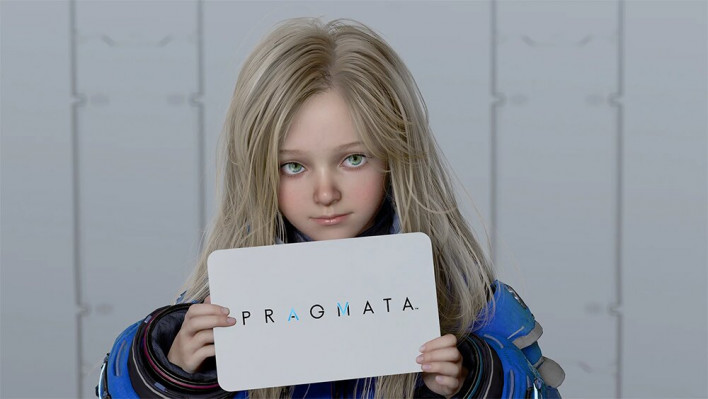
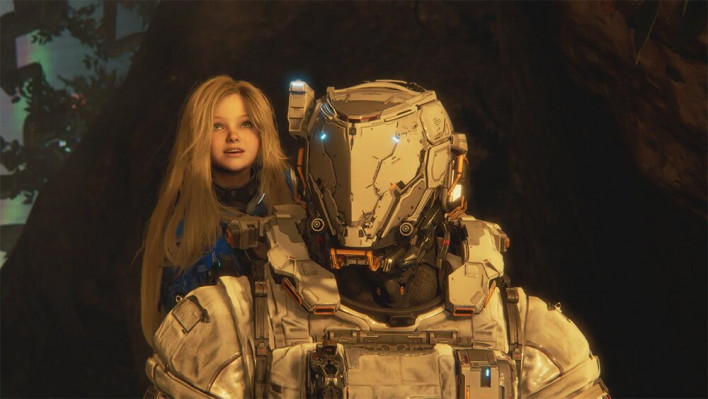
Capcom's new action-adventure game, Pragmata, is set to launch on April 17. The game features Diana, an android who acts like an innocent child, and Hugh, a human who, conversely, behaves almost like a machine.
Since its initial reveal, Pragmata has generated buzz for the charming character of Diana, and following the release of its demo, for its unique blend of puzzle-solving and shooting. Having played the game during a hands-on session in March, I found it to be a truly special experience. It succeeds in weaving puzzles and shooting together in an exquisite, seamless way.
With the launch just a month away, I had the opportunity to interview Director Yohei Cho and Producer Naoto Oyama to clear up some questions from the demo and dive into more detailed information.

Balancing Hacking and Shooting: Avoiding Over-Reliance on Either
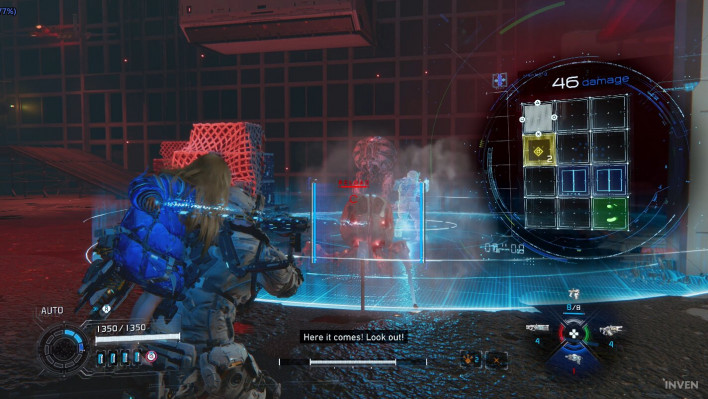
What surprised me most during the demo was the exquisite balance between the hacking puzzles and the shooting mechanics. It never felt like the game leaned too heavily on one or the other. Hacking was required to ensure shooting damage was fully effective, while shooting was necessary to progress through phases to enable further hacking.
Director Yohei Cho explained, "From the early stages of development, we aimed for an experience that didn't favor one side. We consciously designed the flow so that players would naturally want to use both—creating situations where shooting becomes effective only after hacking, or where hacking phases progress through shooting."
The most difficult part of the process was maintaining that balance from the beginning of the game to the end. Through extensive testing, the development team fine-tuned the balance to ensure that players never feel that relying on just one aspect is sufficient.
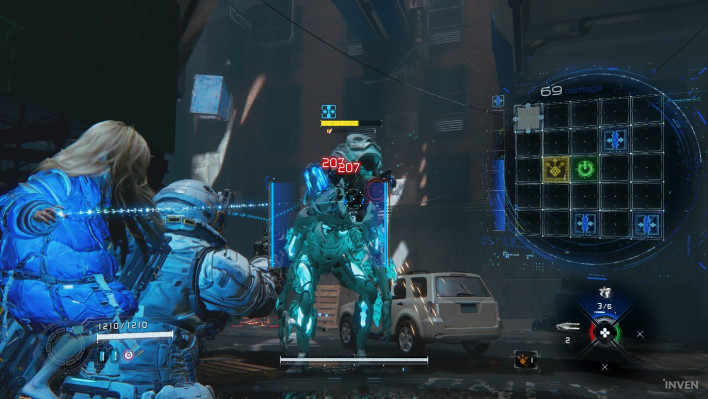
One of the most direct ways this balance was felt was through the enemies' red defensive barriers, which block hacking. Players are forced to use shooting to destroy these obstacles, a process that feels natural rather than forced, reinforcing the necessity of both mechanics.
"We designed enemies with red defensive elements to shake things up just when players feel they've gotten used to the combat," Director Cho explained. "By making previous tactics ineffective, we aimed to provide a fresh challenge that forces players to rethink how they utilize both hacking and shooting." Similar elements designed to keep players on their toes will appear as the game progresses.
Producer Naoto Oyama stated, "For Pragmata, we are mindful of a design that requires players to appropriately switch between hacking and shooting depending on the situation," adding, "We have prepared moments that force players to consider exactly what they should be using at any given time."

On the other hand, since both hacking and shooting are essential, I couldn't help but think that the static nature of hacking might feel a bit frustrating for fans of shooters, while the dynamic nature of shooting might feel a bit overwhelming for those who prefer puzzles.

However, the development process was focused on creating a structure where players can gradually understand and get used to both, rather than demanding a high level of proficiency in both from the start.
Furthermore, the game is designed to allow players to choose where to focus based on their progress, ensuring they can find their own playstyle even if one aspect proves difficult. Producer Naoto Oyama noted, "I believe that process itself is part of the experience."
A Well-Designed Overall System and Structure
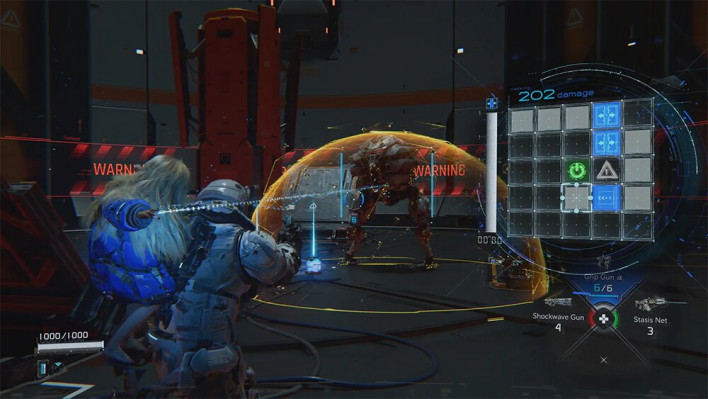
The combat feel, delivered through this well-tuned balance, was excellent. The boss battles were particularly impressive. The process of focusing on and strategizing against a single enemy clearly showcased Pragmata's identity, and the need to utilize environmental objects was also very engaging.
To make these boss battles special, the team designed them to require specific situational judgment and strategy. The focus was on making players think about how to properly combine hacking and shooting while utilizing the surrounding environment. Various types of combat are prepared to ensure boss battles don't become monotonous after launch.

Beyond the combination of puzzles and shooting, Pragmata's level design is also outstanding. During the demo, the timing of introducing new gimmicks, new weapons, unlocking Diana's new functions, and the placement of shelter entrances all felt perfectly paced.
Director Cho emphasized that in level design, he focused on having players experience new elements sequentially rather than overwhelming them all at once. The goal was to build a rhythm that prevents boredom, allowing players to naturally understand the systems and feel motivated to move forward.
He explained, "I think it's important to give players new weapons or options and then create situations where they actually want to test them out. Enemy placement isn't just about increasing difficulty; it's a mechanism to make players think about how to utilize the equipment they currently have."
The overall structure of the game also plays a major role in enhancing immersion. Producer Naoto Oyama stated, "We place importance not only on the scale of the space but also on how it is utilized and its three-dimensional structure. We paid close attention to configuring the environment so that the impression of combat and exploration changes depending on vertical positioning and shifts in the field of view."

The overall gameplay experience will vary significantly depending on the various firearms, hacking nodes, and modular equipment obtained in-game.
Producer Naoto Oyama also remarked, "The core of Pragmata's gameplay is the combination of hacking and shooting," adding, "Players are free to choose how much weight they want to give to each as they progress."
For instance, it is possible to strengthen hacking to increase its effectiveness, or to choose a playstyle centered on shooting. However, the design is predicated on players using both appropriately based on their own judgment, rather than limiting themselves to just one.
The fact that hacking nodes are consumables with very limited quantities is also intended to encourage sound judgment. The process of deciding when to use them becomes part of the gameplay itself. Because they aren't always available, tension is created as players decide when and on which enemy to use them.
Diana and Hugh: The Relationship at the Core
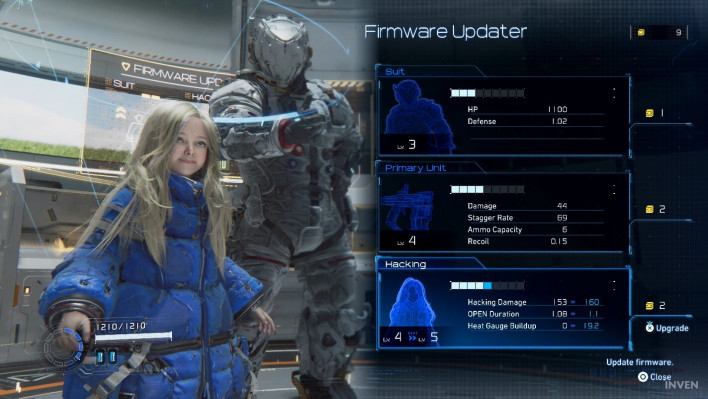
With the reveal of the shelter in this demo, numerous upgrade elements were introduced. Interestingly, there are various ways to upgrade, as the developers wanted to avoid locking players into a single growth path.
Because every player has different interests and preferences for which elements to strengthen, Director Cho designed the game to allow for natural, personalized choices through various upgrade methods. The shelter serves as a vital hub for preparation and reinforcement, with new options opening up as the game progresses.
Producer Oyama also stated that they aimed for a design that isn't fixed to a single growth path, acknowledging that every player's interests and priorities differ.

The mascot of Pragmata and the character receiving the most attention is none other than Diana. As the game progresses, her charm becomes more apparent, but there were moments that made me slightly uneasy as the cute Diana occasionally displayed 'non-human' android traits.
Director Jo Yong-hee said, "We portrayed Diana as having a cute appearance while occasionally showing the inhuman side of an android," adding, "There are many scenes prepared where players can get to know Diana through her relationship with Hugh."
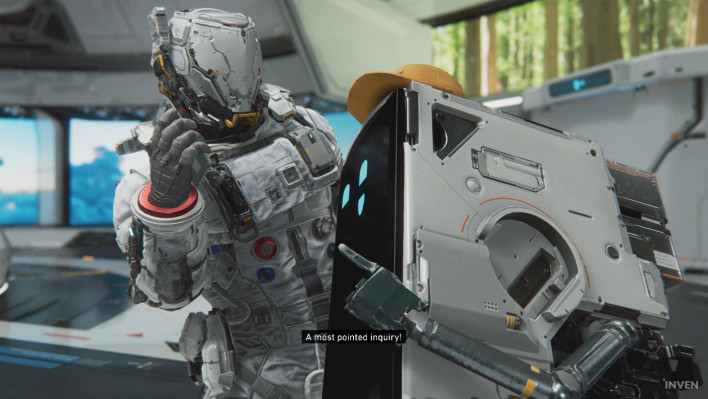
In fact, a wide variety of interactions between Diana and Hugh were present in the demo version. Various types of interactions were prepared, such as Diana giving Hugh drawings, using toys she gifted him, or commenting on recent gameplay progress during conversations.
Their relationship is a major pillar of Pragmata. Director Cho ensured that players could naturally feel the sense of acting together through dialogue and small interactions. "It required meticulous adjustment and repetitive work, and we went through a lot of trial and error to figure out how to express their relationship without stopping the flow of gameplay," he said.
Finally, Producer Naoto Oyama shared a message for Korean fans: "Thank you so much for waiting for such a long time. Pragmata is a game whose fun can only be truly understood by playing it, so I would be delighted if you could experience the unique action and character relationships of this title for yourselves."
Capcom's new action-adventure title, Pragmata, which delivers a unique gameplay feel, will be released on April 17 for PC, PS5, and Xbox Series X|S. The Nintendo Switch 2 version will be available on April 24.