
In early March, Capcom hosted a hands-on preview event for global media at its headquarters in Japan to showcase Pragmata, its new action-adventure IP.
This session allowed us to play from the point immediately following the currently available demo up to a stage boss battle. We also explored the 'Shelter,' where players can upgrade the combat capabilities of Hugh and Diana. Throughout the process, we were able to test core gameplay elements, including hacking, shooting, various weapons, enemies, and hacking nodes.
To start with the conclusion: this game is packed with strengths, including deep immersion, a perfectly balanced mix of puzzles and shooting, and highly engaging boss fights. The Korean dubbing was excellent, and Diana was even cuter than she appeared in the demo—so much so that it was genuinely sad to part ways after such a short time.
※ The demo was played in Korean with Korean voice-overs, but the B-roll footage used in this article is from the English version.
An Exquisite Balance of Puzzle and Shooter
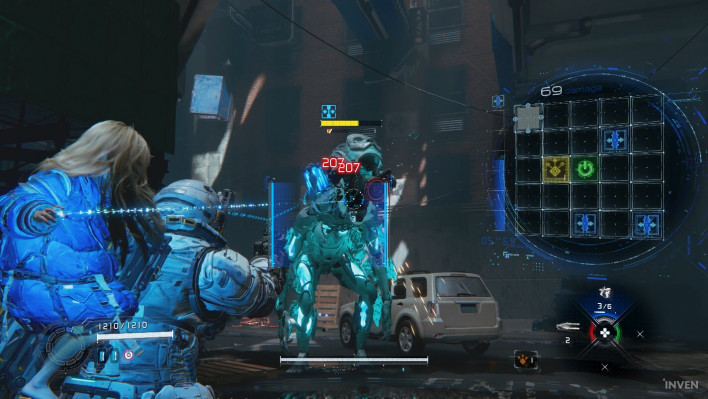

The defining feature of Pragmata is the exquisite synergy between its puzzle elements—specifically hacking—and its shooting mechanics. This characteristic becomes even more pronounced as the game progresses. The balance they have struck between the two is nothing short of brilliant.
You simply cannot defeat enemies with shooting alone, nor with puzzles alone. You must solve puzzles to land effective shots, and conversely, you must use your weapons to destroy gimmicks to solve those puzzles.
When you encounter an enemy, using Diana’s hacking reveals their weak points, allowing you to quickly whittle down their HP with gunfire. However, it doesn't end there. Powerful enemies will deploy countermeasures to shield their weak points, such as barriers or by spawning specific body parts.
When these obstacles appear, the hacking interface becomes blocked, forcing you to destroy them one by one with your weapons. Once cleared, you can resume hacking to expose the weak points and finish the enemy off efficiently. This cycle forms the fundamental rhythm of combat in Pragmata.

Of course, standard enemies encountered in the middle of a map can often be dispatched with basic shooting without needing to hack. If every single enemy required a hacking sequence, the gameplay could easily become exhausting or feel cluttered. Fortunately, standard mobs can be handled relatively easily by utilizing your various weapons effectively.
However, for elite monsters or large groups, hacking becomes essential to utilize nodes. Especially with elite enemies, the aforementioned countermeasures appear in earnest, allowing you to experience the full, authentic combat loop of Pragmata: hack, shoot, and dodge enemy attacks.

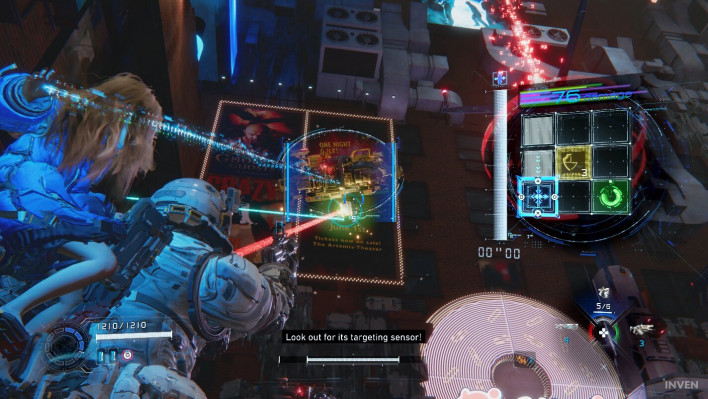
Naturally, the boss battle at the end of the stage best utilized these features. As you attack weak points after hacking, obstacles spawn throughout the area. Because the boss is massive, the battle requires you to climb onto buildings located around the map to aim precisely, clear the puzzle board, and then return to hacking.
In the midst of this, you have to adapt to mechanics that change with every phase while dodging enemy attacks that rain down across the entire map. Even though your hands and eyes are kept busy, the game avoids being excessively 'difficult,' so the combat never feels overwhelming or unreasonable. I suspect this is because the balance of every action required during battle has been finely tuned.

Two elements that flow naturally throughout combat
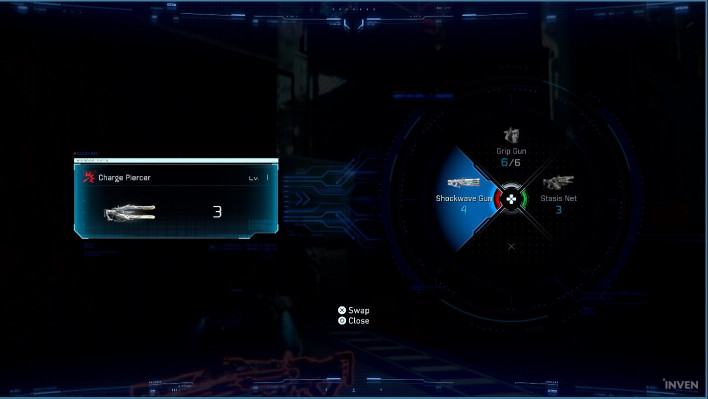

Combat frequently involves many-versus-one scenarios. Past the early stages, you often face a mix of elite and standard mobs. Since your weapon capacity is limited, you cannot rely on just one; you must adapt by using weapons dropped during combat or found throughout the map.
The weapons are well-defined, categorized into Basic, Tactical, Attack, and Defense units. Basic units automatically refill over time, while the others are limited to the amount you carry. They don't auto-refill, but picking them up in the field replenishes them completely.
The other units function exactly as their names suggest. Tactical units are designed for crowd control—slowing or knocking back enemies—making them perfect for setting up hacks or follow-up attacks. Attack units offer much higher damage output than Basic units, while Defense units aid in survival.
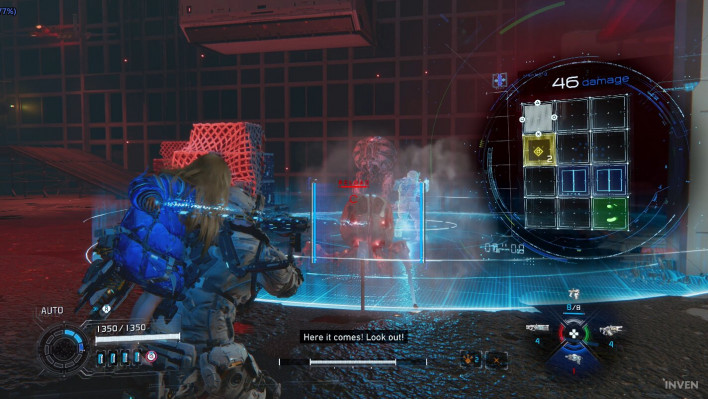
While the ammo count for these units is quite low, they drop frequently enough that, when combined with hacking, you rarely feel short on resources. In boss or elite encounters, units are often scattered across the map or appear continuously during the fight.
This limited usage also plays a major role in maintaining the significance of the hacking puzzle. Since you have a limited number of shots per cycle, you are encouraged to unleash a barrage of attacks at the most opportune moment after a hack. It is truly impressive how well they have combined two seemingly incompatible genres.
The fact that the controller inputs for shooting and hacking are not overly compartmentalized, but rather flow naturally into one another, also plays a huge role in harmonizing these two elements.
From Upgrades to a Sanctuary: The Shelter
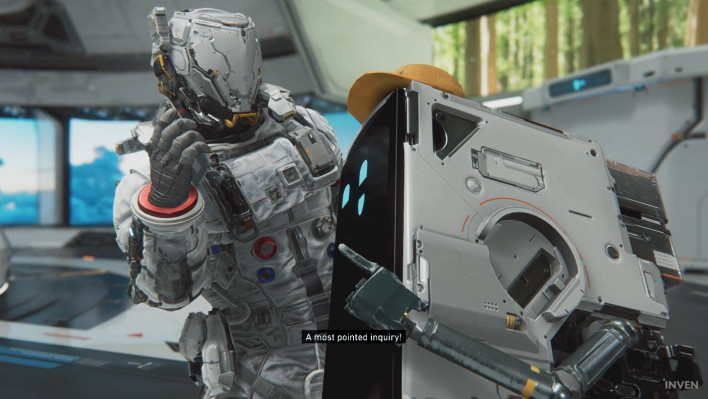
One of the most important features we experienced was the Shelter. Here, you can upgrade and unlock various skills, weapons, hacking nodes, and equipment, or expand functionality based on the Shelter's level. You can also meet the cute Cabin Robot that guards the place.
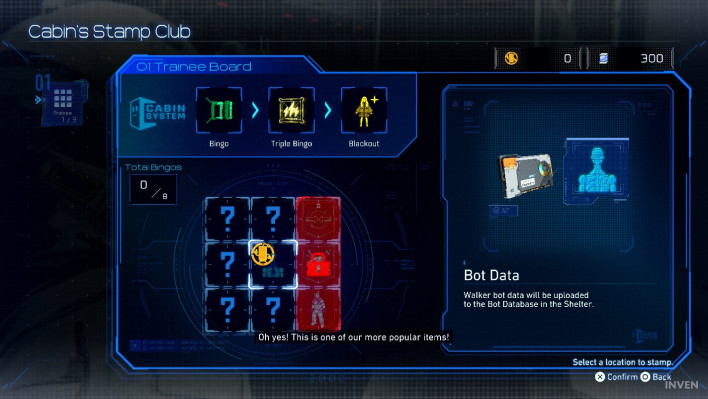
An interesting mechanic is how you use 'Cabin Coins' in the Shelter. Giving gifts to Diana earns you these coins, which are then used to unlock slots on a stamp board. Completing lines on this board grants additional rewards, including new features. It’s a clever way to integrate collection elements into the game's progression system.
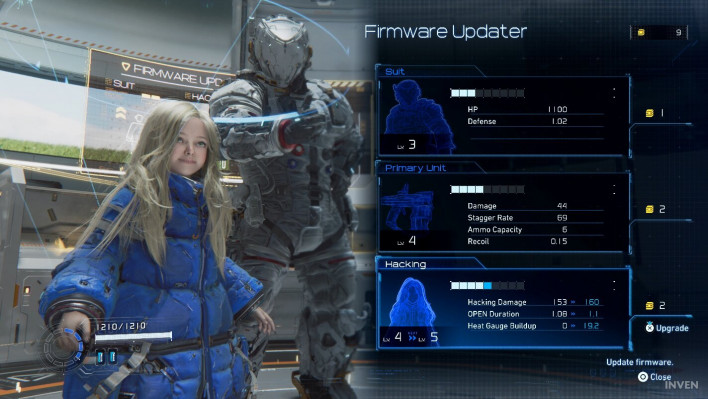
Through enhancements and leveling up in the Shelter, you can unlock entirely new abilities, such as evasion or critical damage boosts. The resources required for these are gathered throughout your gameplay.
The Shelter also allows you to focus your upgrades on either shooting or hacking. While the two are systemically balanced, the player chooses which method to prioritize as their main source of damage through these upgrades.
If your shooting is weak, you can increase hacking damage or choose a build where hacking becomes your primary offensive tool, supported by nodes and modules. In this setup, hacking deals the bulk of the damage, while shooting serves a secondary role, filling in the gaps with various units.
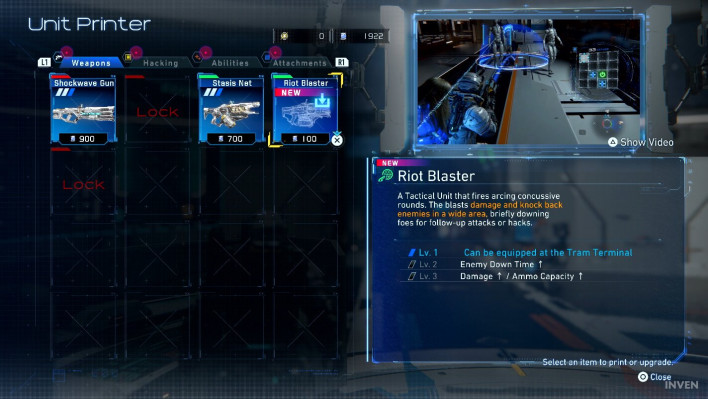
Conversely, you can focus on shooting by equipping relevant modules and upgrading your units. In this case, hacking is used only to maintain status effects, while all damage is dealt through your weapons.
Building and utilizing your own combat style through these upgrades will likely become even more distinct as the game progresses into the later stages.
Diana is simply adorable
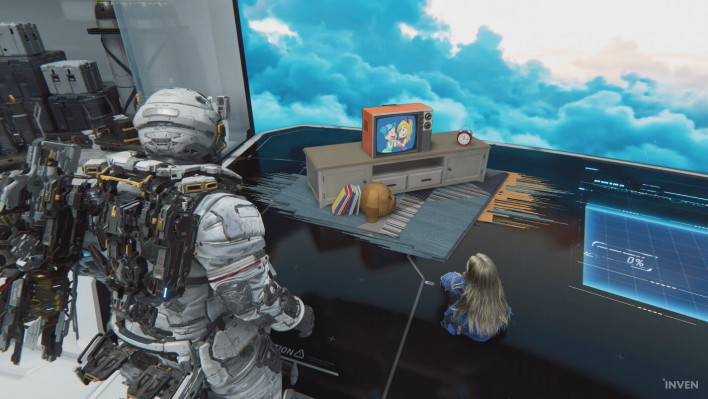
Diana’s character, which is central to Pragmata, becomes more compelling as the game goes on. Every time I interacted with her during the demo, I found myself smiling and whispering to myself about how cute she was.
Occasionally, an exclamation mark appears over Diana on the map, allowing you to teach her about human common sense. The knowledge gained this way can be reviewed later through conversations with her in the Shelter. This process also slowly reveals details about Hugh’s past and the state of the world.
Furthermore, you can use the knowledge you've acquired to gift Diana toys or play areas in the Shelter. These toys can pop up unexpectedly during conversations, providing delightful, unplanned moments.

Diana’s appearance is also rendered in exquisite detail. Her hair strands sway, get messy as she moves, and her head tilts and nods are all incredibly endearing. The fact that you view her from Hugh’s perspective—looking down at her—only maximizes that cuteness.
However, Diana is not portrayed as merely 'cute.' Despite her childlike appearance, she is an android.
This leads to moments where she is innocent, yet at times, displays a chilling, uncanny ignorance or mechanical nature. This is something that will likely be explored more deeply as the story unfolds.
With the release just a month away, Pragmata is, for lack of a better word, a truly 'unique' game.
Usually, puzzles are static—found in hidden objects, treasure chests, or locked doors, and solved in non-combat situations. Shooting, by contrast, is a dynamic element defined by speed, reaction, and action.
Pragmata has managed to place these two seemingly mismatched elements together perfectly. In the midst of dynamic movement and combat, you take a moment to solve a static puzzle, then return to the action. It might feel awkward at first, but after playing for a short while, you become fully immersed and the controls feel second nature.
While the game's style may be polarizing, the gameplay itself is interesting and fresh. Add in the charming character of Diana, a mysterious new world, and full Korean voice-overs, and it is easy to see why the official release of Pragmata is so highly anticipated.
Pragmata launches on April 17 for PS5, Xbox Series X|S, and PC, with the Nintendo Switch 2 version available in Korea starting April 24.