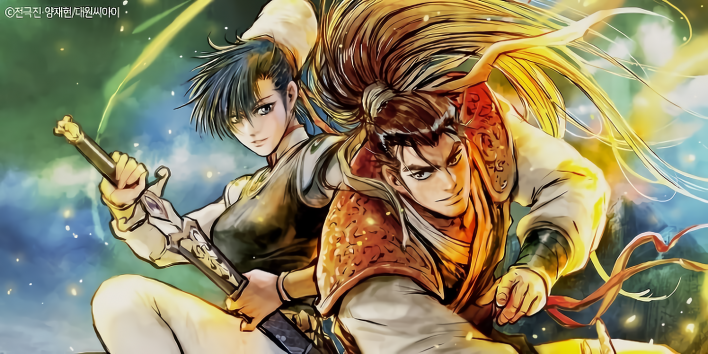
Korea's iconic martial arts manhwa and longest-running serialized comic, 'Ruler of the Land', is approaching its final conclusion.
Beginning serialization in 1994 in Young Champ, 'Ruler of the Land' was sensational in many ways. Back when serious and grave protagonists were the standard of martial arts fiction, the lighthearted, flippant, and somewhat clumsy Han Bi-gwang was truly groundbreaking. Yet beneath that frivolous exterior lay seriousness and a passionate dedication to 'Hyeop' (righteousness)—a combination that hooked fans then and has kept them captivated to this day.
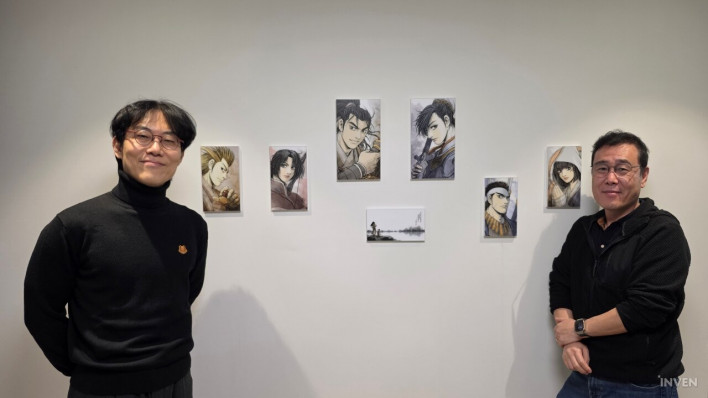
After first discussing its conclusion in 2024, 'Ruler of the Land' is finally preparing to end its journey this year. For longtime fans, hearing about an impending end might sound familiar—the creators have mentioned wrapping up "next year" multiple times in the past. It happened back in 2024 as well, but this time felt noticeably different. Heavier topics like retirement and life after the manhwa came into the conversation. Creators Jeon Geuk-jin and Yang Jae-hyun sat down with us to share the story of ending 'Ruler of the Land' after spending over 30 years of their youth on it, as well as what lies ahead for them.
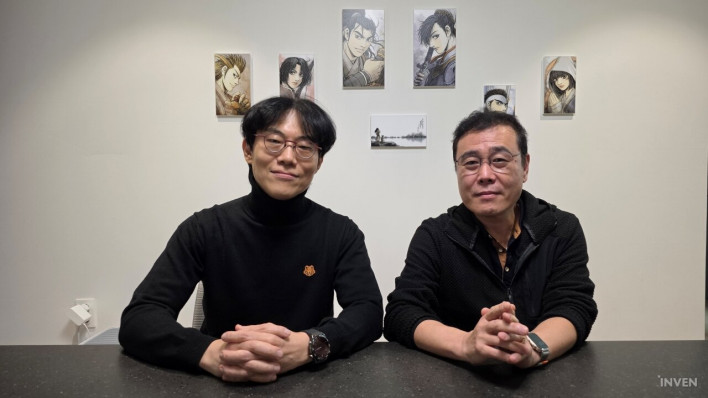
It's been two years since our last interview. How have you been spending your time?
Jeon Geuk-jin = I remember interviewing back then and saying we were finishing soon, so doing another interview two years later to say we're ending again feels a bit embarrassing.
Yang Jae-hyun = We should have finished back then [laughs]. We shouldn't be doing this interview right now. It's quite an awkward situation.
Jeon Geuk-jin = As for how we've been, I'd say we are working hard toward the finale.
You mentioned there isn't much left until the conclusion. How much story remains?
Jeon Geuk-jin = Unless something unexpected happens, it will end next February. It really won't be pushed back any further.
Yang Jae-hyun = The only "unexpected issue" right now would be my physical condition, which isn't great at the moment. I damaged a shoulder ligament, making drawing quite difficult. Still, I'm receiving continuous treatment to get my body through to the deadline. As long as that doesn't get in the way, we should finish on schedule.
You mentioned plans to conclude two years ago. May we ask why it was delayed?
Jeon Geuk-jin = Well, there were so many stories I wanted to tell, but tying them together was difficult, which caused the narrative to drag on. The serialization has lasted over 30 years, right? Over time, you set up plot hooks—thinking, "I want to write about this," "I should write that," "I'll resolve this later." When we reached the final arc, I kept feeling attached to those loose ends. As I tried to resolve every lingering plot thread, the story expanded massively, which is how we arrived here.
There are still elements that haven't appeared, such as the leader of the Western Frontier among the Four Kings Beyond the Borders.
Jeon Geuk-jin = If we tried to cover all of that, it would stretch out to an absurd length. That actually caused a slight difference of opinion with Jae-hyun during the middle stages. For me, there was so much I wanted to show, so I wanted to expand the story further and maybe even wrap up 'Ruler of the Land' after the Sinji arc...
Yang Jae-hyun = From my perspective, I felt like he was planning to make this his lifetime job [laughs].
Jeon Geuk-jin = No, no—I was planning a business to pass down through generations [laughs].
Yang Jae-hyun = From my perspective, the core narrative should focus on Han Bi-gwang and Dam Hwa-rin resolving the main conflict. But I couldn't stand seeing the main story get blurred by side stories. To put it dramatically, it felt like a nuclear bomb was falling right above our heads, but we were spending ten years telling the individual backstories of the people looking up at the bomb. I kept nagging him, saying, "A nuke is literally dropping right now—is this really the priority?"
Jeon Geuk-jin = Even Marcel Proust's masterpiece, 'In Search of Lost Time,' unfolds over a single day if you examine the narrative closely.
Yang Jae-hyun = Hyung, we spent ten years covering three days of story events.
Jeon Geuk-jin = See, time can be viewed differently depending on a person's consciousness and narrative context. While writing, as new characters and backstories are introduced, I naturally want to explore what happened in the world of 'Ruler of the Land' from a writer's perspective. Of course, for effective storytelling, the main protagonist Han Bi-gwang should lead, with supporting characters stepping up under his lead. But there were times when side characters took center stage and made the story stray off course.
Yang Jae-hyun = Whenever the main plot hit a wall, he tried to veer off into another detour, and I stepped in to stop him every time.
When writing a story, there are certainly moments where it feels like it takes on a life of its own beyond the writer's control.
Jeon Geuk-jin = Exactly. When writing, sometimes you get so absorbed in the narrative that it feels like you're not the one writing it anymore. You just roll with that momentum. In our case, we don't have an editor, so Jae-hyun fulfills that role. If I had just gone with my impulses, it would have been endless, but Jae-hyun kept me grounded and guided us to this point.
Yang Jae-hyun = Anyway, that's what happened. That's why I hope people face their core challenges head-on when life gets tough, rather than getting side-tracked.
It sounds like there are still many stories you want to write. Will it really be possible to conclude by 2027 as mentioned?
Yang Jae-hyun = Will it really? Hyung, distrust in you is running very high right now.
Jeon Geuk-jin = It will end. Really. There won't be any more spontaneous additions.
Yang Jae-hyun = Everyone is probably thinking, "It's not over until it's over." People probably think all creators are liars.
The two of you have continued this serialization for over 30 years. Has your perspective on 'Ruler of the Land' changed over time, or do you still feel like you're pouring the same passion into it as back then?
Jeon Geuk-jin = It feels like asking, "Is marriage the same as when you were dating?" If you ask someone married for 30 years, "Is it the same now as when you were dating?" they'd hesitate to say yes. But if you ask, "Does that mean you dislike it?" that's not true either.
At first, it was an unexplored realm with an unknown future ahead of us, so every single step felt fresh and exciting. But after 10, 20, 30 years, it became so familiar. It became a way of life.
Yang Jae-hyun = To add to that, the content we agreed to finish three years ago has actually already ended, and what we're doing now is extra. To put it simply, "our" 'Ruler of the Land' ended three years ago, and now "Jeon Geuk-jin's" 'Ruler of the Land' is wrapping up.
Long-running series often expand in directions different from what was initially planned. In that sense, how close is the ending of 'Ruler of the Land' to what was originally envisioned?
Jeon Geuk-jin = To start with when we first began 'Ruler of the Land,' we only intended to run it for six months. We planned to move on to another project, but by the six-month mark, it had become a work that simply couldn't be ended. So we kept serializing. There were several opportunities to end it along the way. Whenever we felt like wrapping it up, something would come along—a game adaptation, a movie deal, a TV series contract. Strangely, every time we considered ending it "next year," something big broke out. So we kept saying, "We have to continue until then," and that's how we got to where we are today.
So when you started, you had no intention of running it for this long?
Yang Jae-hyun = Right. Initially, we had no plan to run this long, and there was another project we actually wanted to do. In a way, 'Ruler of the Land' was created to prove to the publisher that we could deliver everything they wanted.
Jeon Geuk-jin = It was a testing ground to demonstrate our capabilities.
Yang Jae-hyun = At the time, sci-fi, fantasy, and martial arts were genres publishers desperately wanted to avoid. But we wanted to prove that martial arts—a genre publishers disliked—could be commercially viable. The publisher hadn't even considered it possible, trapped in conventional thinking, but we wanted to prove we could pull it off.
We started with that simple mindset, but as Geuk-jin hyung mentioned, it became a flagship title responsible for driving the publisher's revenue. That led to more detailed planning, and it turned into a work that couldn't be ended. The publisher couldn't let it go either. As a result, the story grew meatier over time, though I believe the core skeleton has remained the same from the beginning.
Jeon Geuk-jin = If you ask how things compare between when we started 'Ruler of the Land' and now, the circumstances are completely different. Back then, we had to prove our existence. We had things we clearly loved, but the publisher kept telling us it wouldn't work and couldn't be published.
That was understandable back then because manga magazines were mainly read by teenagers, while martial arts manhwa mostly came out in rental bookshops (daebonso). Rental bookshop styles were very different from what teen magazine readers consumed, so traditional martial arts manhwa struggled to gain popularity in magazines. We wanted to prove that changing the presentation would change the audience's response.
Of course, that's not to say the rental bookshop style was good or bad. Many of those authors are still consistently publishing work today. They have a solid fanbase and their style has distinct charm and flavor. It's just that the magazine readers we were targeting at the time were different, and we believed we could create a martial arts manhwa tailored to them. Since the publisher was skeptical, we decided to show them—and that's how 'Ruler of the Land' began.
We thought of it as just trying to prove "this style can work too," but the reception after the first chapter was overwhelmingly positive. At the time, the publisher didn't tell us directly, so we assumed it was doing okay, but we later found out it had become an indispensable series, which led to ongoing serialization.
It started with a simple idea, but as serialization progressed, settings piled up and the world expanded, creating its own framework. Then came the ambition to showcase everything within that framework. That led to attachment, and without proper streamlining, it felt like the narrative branched out in all directions.
As the story approaches its conclusion, what elements do you prioritize or feel must be addressed?
Jeon Geuk-jin = Ultimately, 'Ruler of the Land' is a story about various characters and people. I see it as a tale about the world where these people interconnect. Amidst all that, we must ultimately deliver the ending to the story of our two main protagonists, Han Bi-gwang and Dam Hwa-rin. As for the overarching theme, I wanted to convey that diverse people in the Murim (gangho) can live well together if they understand each other a bit more. Given the current situation, they are fighting, but I felt that too is part of human nature. That desire to show everyone's individual circumstances is why the narrative kept scattering.
Yang Jae-hyun = Since I act as editor and producer, I've had ongoing grievances about that. Every story has a theme and direction, and 'Ruler of the Land' is martial arts fiction (wuxia), right? The theme, after all, is achieving 'Hyeop' (righteousness) through 'Mu' (martial power).
While stories of various individuals are important, the narrative must march forward showing how those people unite toward a single goal—righteousness—and how that righteousness is achieved. But right now, the story has strayed from that. I understand his passion, but the priorities got flipped. It was overambitious; the core theme should always come first.
So in the end, are you reining it back in to finish with a story centered on martial power and righteousness?
Yang Jae-hyun =It got scattered in the middle, but we've always been telling a story of martial power and righteousness. Martial arts manhwa and simple action manhwa are two completely different things.
Jeon Geuk-jin = I agree. I view 'wuxia' as a genre that champions justice and humanity in society. 'Ruler of the Land' certainly speaks to that theme. We portrayed a wide array of human figures, but we never intended to defend inhuman or immoral characters.
Serialization began in 1994, so it has been over 30 years. As you prepare the actual final chapters this time, how do you feel?
Jeon Geuk-jin = Having gone through feelings of closure several times before, those emotions have dulled a bit. We kept thinking "this is really the end," but the process got dragged out. At first, I felt a deep sense of emotion thinking, "Wow, ending after 30 years feels profound." But as it kept getting extended, even that emotion turned into a bit of fatigue.
Above all, I just feel constantly sorry to our readers. We kept announcing that it was ending, only to be delayed by two full years now, so I can only offer my deepest apologies again and again.
Yang Jae-hyun = Honestly, the overwhelming feeling is guilt and apology for failing to keep our promise.
In the interview two years ago, you mentioned considering retirement after concluding the series. Do you still feel the same way?
Yang Jae-hyun = For me, drawing any further feels like it would severely wreck my body, so I've mostly let go of the desire to draw directly. However, I still love creating stories, so I'll likely pivot toward producing. I already have projects in planning.
Proving how far I can go as producer Yang Jae-hyun will probably be my goal for the rest of my life. But there's another challenge: when an idea comes to mind, drawing it myself might tire my body, but my mind is at ease. Trying to recruit writers and artists to bring my envisioned concepts to life turns out to be an incredible task. It feels like the hardest part. Now, I have profound respect for every producer in the world.
Jeon Geuk-jin = It's not easy. Working with other people is truly difficult.
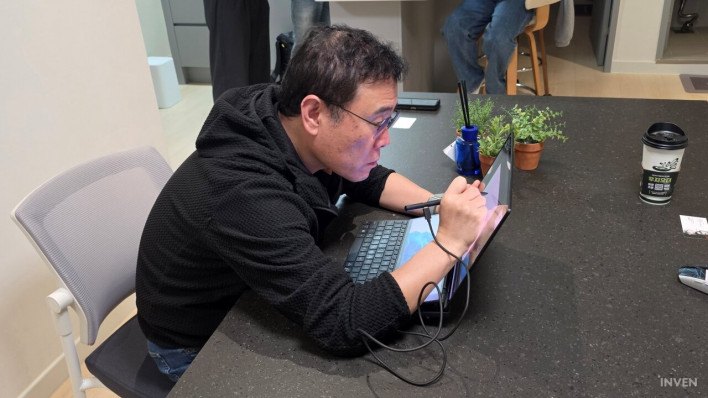
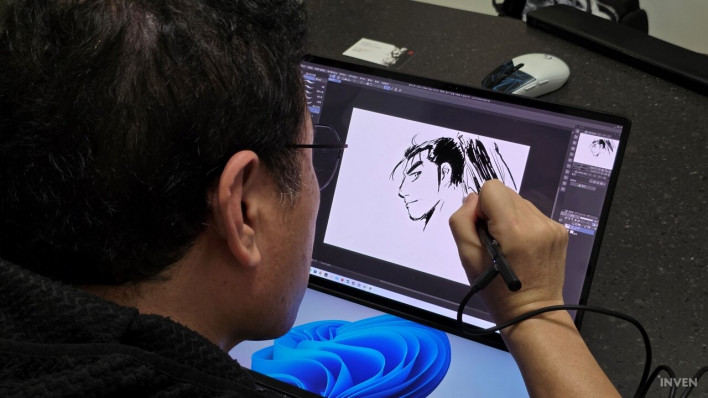
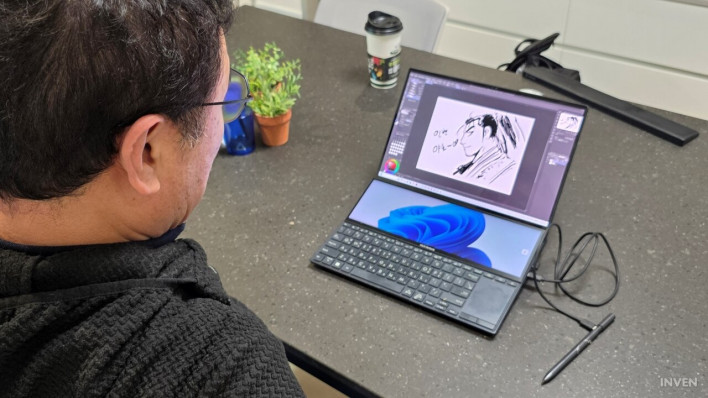
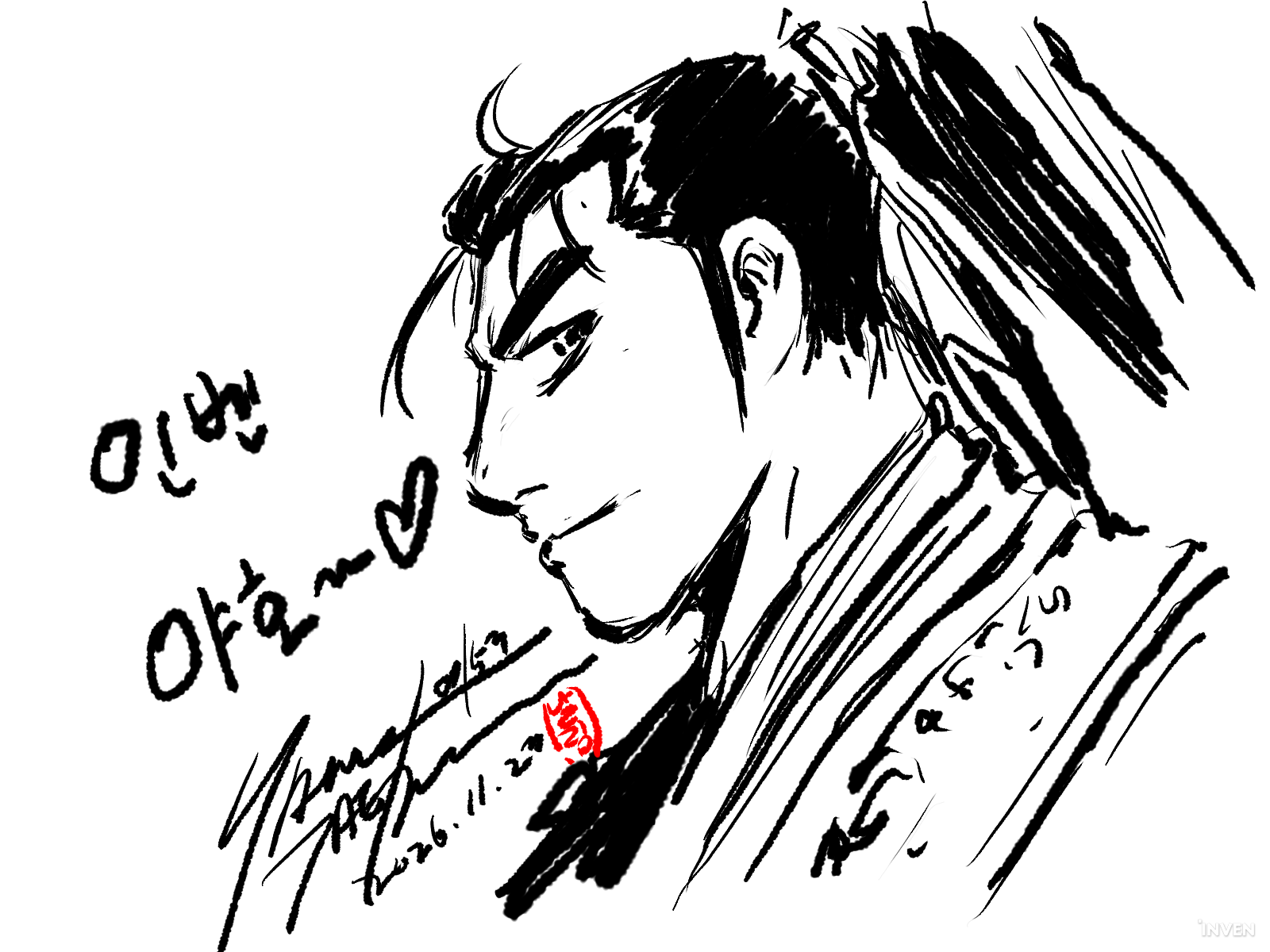
In the previous interview, you expressed interest in producing content to manage the 'Ruler of the Land' IP. Do you have concrete plans?
Yang Jae-hyun = I do have concrete plans. Originally, I wanted to tell the story of the Beast King of the South Forest, but many artists are terrified of it.
Telling the story of the Beast King of the South Forest inevitably requires drawing lots of animals, which means studying animal movement, action dynamics, and more from scratch. Unless artists specialize in drawing animals, most prefer to avoid it. They find drawing human characters hard enough, so adding animal studies feels overwhelming.
Moreover, it's not something the lead artist can handle alone. Nowadays, teams rely heavily on assistants, and assistants would also need training on how to draw animals. Qualified talent like that is scarce. Some suggested using AI for this, but based on our discussions so far, AI technology hadn't reached that level yet. Though who knows about recently.
Also, creators often feel resistance toward using AI directly. There's fear that drawing comics with AI will draw backlash or criticism from readers. That's why I think it might be better if platforms dedicated to AI works emerged—an AI webtoon platform or an AI video platform—where AI-generated works can be explored more freely.
The real issue nowadays stems from people using AI while falsely claiming human authorship. If platforms explicitly gathered AI-assisted webtoons and videos, readers would enter with clear expectations. In such transparent spaces, creators could leverage AI with more innovative concepts. The trouble only arises when work is generated by AI but passed off as human-made drawing or writing.
Jeon Geuk-jin = Ultimately, I view AI as just another tool. But people seem to mistakenly believe that if you feed it an input, a completed work just magically pops out.
To share an old story: back when we first worked on the cover for 'Ruler of the Land,' we scanned the art and colored it in Photoshop. At the time, people criticized us, saying digital art lacked the artist's true devotion because it was created on a computer. Back then, people mistakenly believed computer graphics meant typing "draw this" and having the computer instantly render everything.
Because of that gap in understanding, whenever technology advances, people assume creators are getting a free ride without putting in labor. But working with AI doesn't mean creators aren't putting in effort. It's simply a different medium for expressing what's inside one's head.
We were actually about to ask about AI. Since you brought it up, we'd love to hear more of your thoughts on AI.
Jeon Geuk-jin = Ultimately, when we enjoy a work and respect an author, it's because immense thought, effort, and vision were poured into delivering that final piece.
Do I think a beginner can instantly generate top-quality results using AI? I don't think so. While it might look like something can be whipped up quickly, moving readers and delivering entertainment requires expertise. Because people are still unfamiliar with the technology, they struggle to recognize that value.
In a way, it's because landmark works capable of driving a paradigm shift haven't appeared yet. But such works will emerge in the future, leading to a natural transition. Whether we welcome new tech or resist it, the world has always evolved like this. Looking back, we faced heavy criticism just for coloring with digital graphics, which seems absurd in hindsight, doesn't it?
Yang Jae-hyun = Back then, magazine covers were colored using airbrush guns with colored ink. The consensus was that magazine covers had to be painted that way. But one day, an artist started coloring with markers.
Jeon Geuk-jin = Painting manually took too much time, so they switched to markers.
Yang Jae-hyun = To established illustrators, marker coloring felt like taking an easy way out. But marker work is also laborious, with its own unique aesthetic, right? Established artists rejected it initially. But as more creators adopted it, it became the new standard—and then people resisted the next innovation. It's a continuous cycle of resistance and adaptation; that's just how the world works.
Jeon Geuk-jin = Right. Whenever a new medium emerges, resistance comes first. Over time, it gets accepted naturally, and right now we're just in that transitional phase.
Having experienced 30 years of transformation from analog to digital and now AI, what is the secret to your long-lasting partnership?
Jeon Geuk-jin = That is entirely thanks to Jae-hyun. He is remarkably diligent. Because of his diligence, whenever issues arose, he addressed them proactively.
As I mentioned earlier, I get easily distracted and struggle to stay focused on one thing for long. Jae-hyun quietly and faithfully did his work, keeping me under control whenever I strayed.
Yang Jae-hyun = It's entirely thanks to writer Jeon Geuk-jin. No matter how angry I got or how much I demanded fixes, he absorbed everything like a sponge without listening... and just pushed forward on his own schedule. That's why our partnership survived without breaking up.
Since you'll have to trim down some elements to reach the conclusion, do you plan to explore them later through spin-offs or other projects?
Jeon Geuk-jin = Yes, I have those thoughts. When Jae-hyun first mentioned the story of the Beast King of the South Forest, I thought, "That sounds interesting." There are so many untold stories left within 'Ruler of the Land.' As mentioned earlier, there's the Western Frontier, the North Sea Ice Palace, and characters who disappeared mid-story. When re-reading earlier chapters, I constantly see side stories worth telling.
So I do have an ambition to produce spin-offs down the line. But as Jae-hyun mentioned, rather than drawing it myself, I'd want to produce it with talented creators. Having tried a bit, though, it's extremely difficult. Collaborating with others is tough and doesn't progress as easily as imagined, so I'm unsure how it will play out. Still, we're trying various approaches.
Yang Jae-hyun = Now you see why 'Ruler of the Land' hasn't ended, right? [laughs]
With the conclusion approaching, what advice would you give to aspiring comic artists and writers?
Yang Jae-hyun = As I've repeatedly mentioned in other interviews, many aspiring creators think, "I'll train until I'm truly skilled, and only then will I debut or take the leap."
However, there are stories and art styles that can only be captured at a specific age. Polishing your skills endlessly might refine the surface execution, but the raw, fresh ideas you dreamed of initially end up fading away. So even if you feel unrefined at first, I hope you take on many challenges while you can express that youthful perspective.
If you keep telling yourself, "I'll do it when I grow more and get better," based on my experience in this industry, you might never debut. No matter how much you improve, it will never satisfy your own eyes. Ultimately, judgment belongs to the readers, so you must put your work out there.
With the ending now in sight, what does 'Ruler of the Land' mean to both of you?
Jeon Geuk-jin = 'Ruler of the Land' is life itself to us. I never had a standard corporate job; I debuted before graduating college and have been working exclusively on 'Ruler of the Land' ever since. In a way, 'Ruler of the Land' represents the entire footprint of my life so far.
Yang Jae-hyun = For me personally, 'Ruler of the Land' was light and hope. I had a difficult family background with little light or hope at the time, but 'Ruler of the Land' changed everything. I'm deeply grateful, and I feel it saved many lives, including mine. It allowed me to achieve everything I dreamed of as a youth. It's like a diary containing all our feelings and circumstances from those days, and now it has become our trophy.
Lastly, any final words for the readers?
Jeon Geuk-jin = I am truly sorry for the delay in concluding the series. Although it was delayed due to the various excuses mentioned earlier, it is really ending this time, and we will return with the final conclusion next February.
I can only express my deepest gratitude for all your support over the years. We were able to continue serialization and reach this point because readers were there watching our work. I sincerely thank all the readers who have supported our series for over 30 years.
Yang Jae-hyun = Somehow it became a comic people love to hate-read [laughs]. It turned into a series where so many are waiting for the ending. The readers who have waited for so long feel like old friends to us—wonderful people who stick with us even while grumbling.
Earlier I said 'Ruler of the Land' saved us, but it's really the readers who allowed us to keep living like this. Because readers supported us, we could live this life. With that in mind, we will work hard to deliver a memorable ending that makes everyone look back after reading the final chapter and think, "That was a great story."