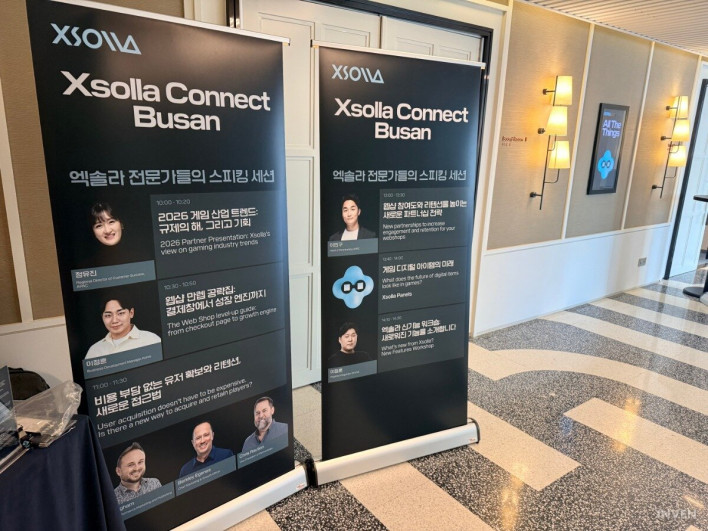
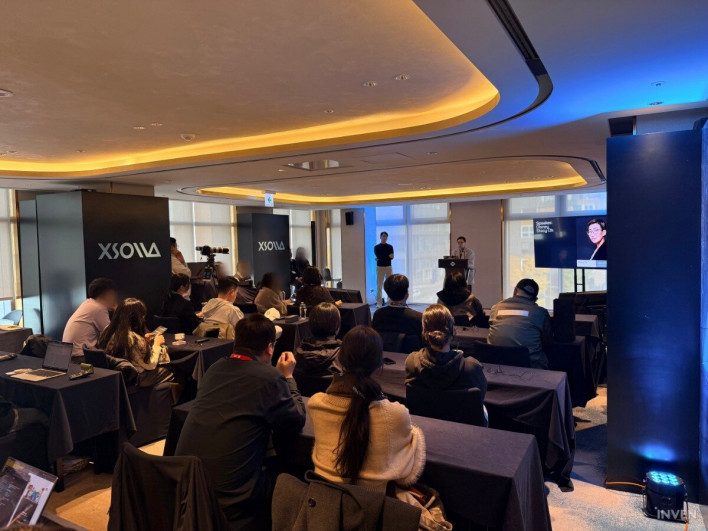
During G-STAR 2026, Xsolla opened its business lounge, 'Xsolla Clubhouse,' at the Grand Josun Busan in Haeundae instead of hosting a traditional exhibition booth at BEXCO. At the mini-conference 'Xsolla Connect Busan 2026' held concurrently on November 20, sessions spanning from morning to afternoon addressed mobile payment regulations, web shop operations, global partnerships, and new features, followed by an evening networking session featuring domestic and international creators such as Ddotty.
Having attended G-STAR every year without fail, Xsolla changed its format this year to consolidate its messaging into a single space. By putting an open environment front and center where anyone can drop in to discuss ideas, the company aims to expand its scope beyond a B2B payment solution provider into a platform that connects developers directly with players.
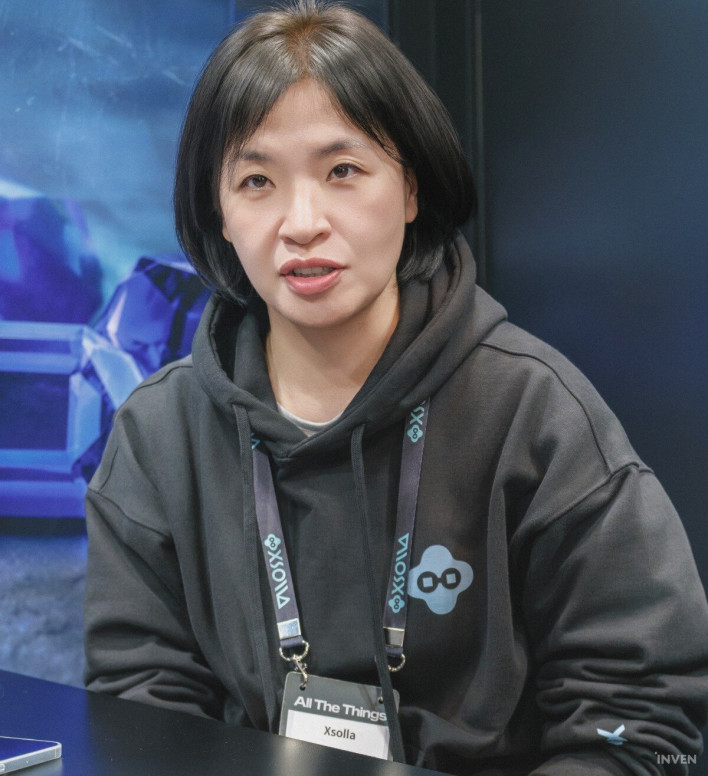
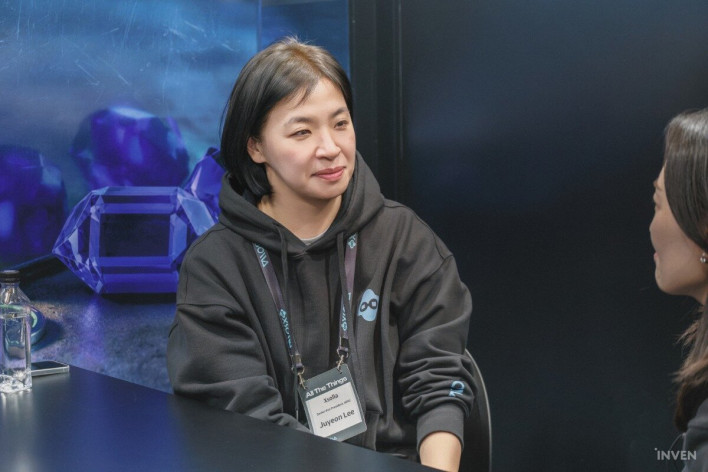
Speaking at the venue, Juyeon Lee, Head of Xsolla APAC, emphasized that companies should leverage rapidly changing mobile regulations as an opportunity to secure user data—the true value of web shops. We spoke with her about the varying attitudes among Korean game developers regarding web shops, the strengths of revenue-sharing creator collaboration tools, and Xsolla's upcoming plans for the Korean market next year.
This Year's Keywords: 'Regulation' and 'Opportunity' Consolidating the message into the Clubhouse amid changing mobile regulations
The first session of Connect Busan was titled '2026 Video Game Industry Trends: A Year of Regulation, and Opportunity.' Could you briefly explain why Xsolla chose 'regulation' and 'opportunity' as its key themes for this year?
Juyeon Lee = This is actually one of the questions I get asked most often. Mobile games represent one of the most widely developed sectors in the industry, and with mobile regulations changing significantly, many people are naturally curious. We also wanted to see how companies take the information we provide to make decisions, and reflect on what has unfolded so far.
Even while we were preparing for this event, regulations shifted dramatically. We wanted to address those changes while showing attendees that coming to us gives them access to these crucial insights, which is why we framed the session this way.
Most of the examples mentioned in today's talks focused on overseas cases, but Korean developers are also expanding globally in large numbers. What key changes are Korean developers feeling most directly in this landscape?
= When Korean developers expand overseas, many think deeply about leverage, especially as strong existing IPs and legacy IPs make big comebacks. Major publishers, in particular, are focusing on building out their own global platforms, aiming to bundle their existing titles into a unified ecosystem.
You often emphasize that Xsolla is not just a payment solution provider, but a growth partner that solves problems alongside developers. How do you feel this direction is taking shape both internally and externally?
= In the past, clients could use our services with minimal discussion because our tools were already well-structured for self-service. Nowadays, the workload has grown, and launching a game on a major platform is no longer the end of the story, so we receive far more inquiries. We meet with partners directly to explain market trends and share how other studios are approaching these challenges.
Starting next year, we plan to actively expand quarterly proposals for major partners—if not monthly—offering suggestions like 'Here are new tools that were released' or 'This strategy might work well for your studio.' We already do this to an extent, but doing it more consistently has shifted the dynamic. Partners now consult us whenever they have questions and build their strategies collaboratively with us.
Are quarterly consultations something game developers request frequently?
= Yes, very frequently. In fact, some of the largest publishers proactively request monthly meetings. Since we cannot discuss technical details every single day, partners tend to request these regular check-ins.
Today features affiliate programs, partnership announcements, a mini-conference, and creator events. What was the motive or goal behind highlighting the Clubhouse rather than a traditional exhibition booth?
= We have attended G-STAR every year without fail. While business meetings are essential for us, side events are equally important. Given the number of side events this year, we wanted to convey our core message from a single dedicated location. So we prepared early to set up one comprehensive space, showcase our messaging throughout, and invite as many attendees as possible.
Additionally, visiting a formal 'Xsolla Booth' might feel intimidating to some guests, so we adopted an open concept where anyone can step in and drop by anytime. This is not exclusive to Korea; we have hosted similar setups at Gamescom and GDC over the past two years. Having seen how well it worked there, we decided to launch it in Korea this year as well.
Since this is the first time doing it in Korea, evaluating the performance and metrics afterward will be key.
= We will analyze the results once we return. We might go back to a booth format or conclude that this clubhouse format is much better; we want to gather that data first. Given how limited venue availability can be, we will need to make a decision early.
The daytime sessions focused heavily on regulations and web shops, while the afternoon introduced new features. How did you organize the session schedule, and what was your objective?
= In practice, we collected various topics from different teams. It is easy for presentations to turn into self-promotional sales pitches, but we wanted to avoid that. Instead, we gathered topics that partners are genuinely curious about and that we can explain better than anyone else.
As a result, we placed dense but high-interest topics in the morning, while structuring the later sessions around practical ideas and suggestions that developers can apply next year.
Directly Connecting Developers and Players From Disney and Game8 Partnerships to Revenue-Sharing Creator Tools
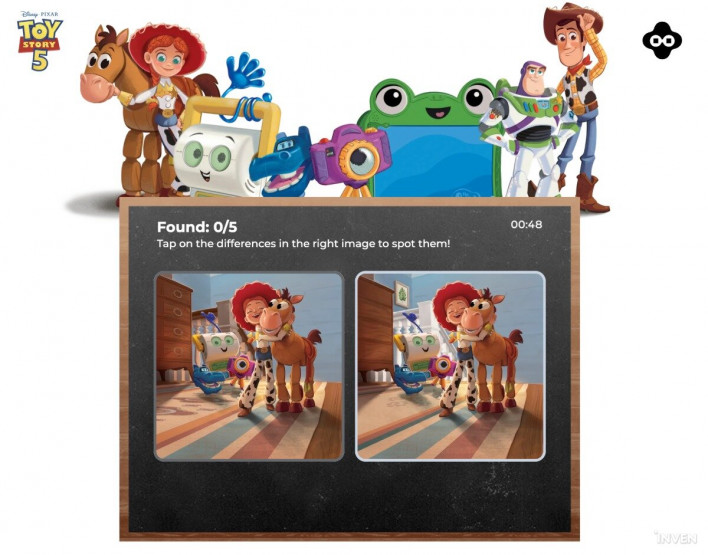
The previous session touched on partnerships, including Disney and Game8. While brief usage examples were shown, what can developers expecting to utilize these partnerships anticipate, and how can they leverage them in practice?
= As mentioned in the session, this is really just the beginning. Fortunately, we were able to launch with one or two major regional partners. Since IP-related integrations involve technical complexities, we are starting with smaller collaborations while determining future directions. For platforms, it comes down to how to engage their user base—connecting those users with gamers or better utilizing existing player bases.
While these initiatives can be viewed as beta stages for now, a significant portion of our business strategy for next year is focused on this area. Whereas we previously provided business-to-business services, we are now creating channels for developers to reach players directly. Although it is still early, we plan to push further in this direction.
So while maintaining your B2B foundation, you are expanding focus toward players directly?
= Yes. B2B remains our core business, so we will continue it steadfastly. Without losing that foundation, we want to expand into areas where we haven't traditionally focused. Working with numerous partners, we want to broaden our reach into areas beyond our existing coverage. We expect to reveal much more next year.
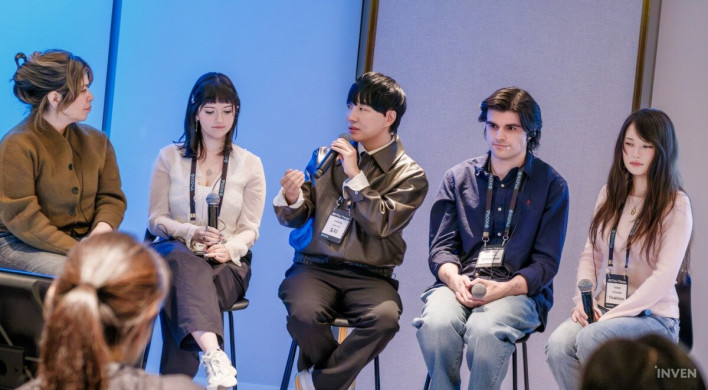
The creator session featured Ddotty alongside several international creators. What was the reason for bringing together speakers from different markets into one panel?
= In truth, we had never grouped them together like this before. Creators are heavily localized by language and region, so opportunities for two distinct cultures or languages to exchange ideas are rare. Top creators in Korea excel locally, while top international creators excel in their own markets. Since Xsolla operates in both, attendees arrived with different regional considerations and concerns.
This is an experiment for us as well, but putting both sides together can yield different responses to the same question. When asking 'How do you view this?', Korea and other regions might hold completely different perspectives or strategies. We wanted participants to experience those contrasting viewpoints firsthand.
Is this your first time organizing an event like this?
= Yes. While we have hosted creator events at international shows like TwitchCon, this is our first time in Korea. Given the massive size of the Korean market and its unique language landscape, hosting a panel aligning both markets together here is a first for us.
Working with creators can drive results, but performance isn't always easily quantifiable. How do you track those metrics and support developers?
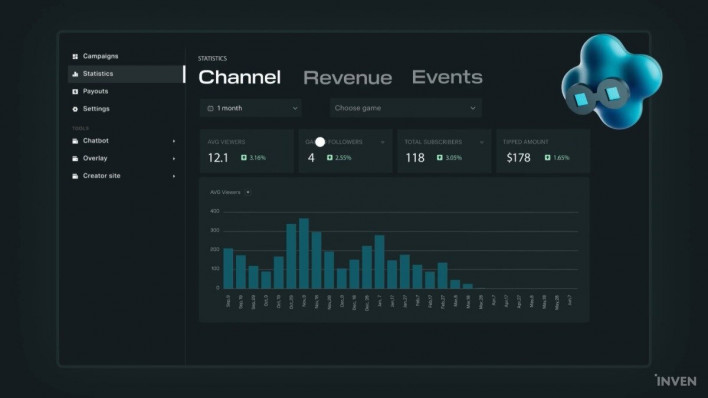
= The team managing this event is the exact team behind our performance tracking tools. We have a tool called XPN (Xsolla Partner Network), which is fully integrated into our ecosystem. It directly connects Xsolla's partner game developers with influencers. Since we work with both sides, we used this tool to streamline common pain points in collaborations and enable full performance tracking within the platform.
It operates on a revenue-share model based on actual sales or promotional impact generated by the influencer. Rather than a flat-fee contract like paying 50 million won for 10 pieces of content, profit is shared between the influencer and partner based on revenue generated by the content. This event serves in part to promote XPN, and all performance metrics can be tracked transparently through our tool.
Since performance can be clearly tracked, it seems indie developers who are uncertain about ROI could easily adopt it as well.
= Exactly. It lowers the barrier to entry. While there are prominent creators like Ddotty with millions of subscribers, there are also micro-influencers. Some creators focus on specific genres or regions where they command dedicated followings. Reaching them individually can be difficult, but because our tool connects developers with them directly, developers can use it with low risk.
Of course, as with all influencer marketing, having strong IP or a well-known title makes things easier. Nonetheless, we built the tool to ensure developers can run campaigns flexibly without requiring large upfront marketing budgets.
Accessible Tools for Indies and Perspectives on Web Shops Advent Calendars, Platform Expansion Support, and Korea's Cautious Stance
Do you also create incentives to encourage creator participation?
= Yes. We continuously promote opportunities to existing creators in our network, and in some cases, we offer credits so developers can co-promote once they reach a certain level of activity. We actively work to provide that level of support.
For example, with our upcoming Christmas tools, we are running promotions tailored for indie developers. Advent calendars have become popular recently—players open one door per day to receive in-game items. We assist in promoting campaigns like these and actively look for new ways to support creators and developers.
While focused on indie developers, we heard Xsolla helps studios expand onto platforms like Steam or Nintendo eShop. How does Xsolla's network play a key role in that regard?
= That can be somewhat limited depending on whether a platform partners with us. For platforms where collaboration is possible, we extend all available support. We always ensure indie developers can easily access and utilize our tools. Features requested by major publishers are fully implemented into our platform, meaning indie studios get access to the exact same enterprise-grade services.
While major companies may receive additional custom engineering, all core features apply in real time within the tool for everyone. Beyond financial or resource assistance, we support indies by co-promoting them on emerging platforms or our own channels, while introducing effective local marketing channels.
You mentioned feature requests from major companies. While you might not be able to disclose everything, could you share an example that led to a successful outcome?
= A classic example we often bring up involves Twitch in its early days when it was primarily a subscription service. Processing recurring subscription payments is technically complex. We built the subscription infrastructure requested by Twitch, and that system is now integrated into our standard toolkit for all partners to use.
Whenever a major game developer asks, 'Can you build this feature?' or 'Can you develop this solution?', those additions are fed back into our platform. If you log into the Xsolla Publisher Account today, features like LiveOps management and item catalog tools are available to all users.
You have emphasized that web shops are not hostile to platform stores, but in-app payment environments are shifting rapidly. How do you view these changes, how are Korean game studios reacting, and what trends are you observing?
= Korean game developers tend to be surprisingly conservative in this area. While many are adopting web shops now, their pace remains cautious compared to global peers. On the other hand, major domestic studios are moving rapidly to build proprietary platforms handling everything from distribution and marketing to item sales.
Broadly speaking, web shops represent an evolution during a transitional phase. With complex regional regulations and difficulties modifying game builds directly, web shops provide a flexible way to navigate regulatory constraints smoothly. Many studios view web shops as the most accessible and trouble-free approach today.
However, future shifts in trends and regulations remain unpredictable. While interest in Korea is at an all-time high, implementation challenges cause some developers to hesitate, sometimes jumping straight to the next operational phase. As a result, we receive countless inquiries, and many companies are refining their strategies accordingly.
The Real Value of Web Shops: User Data over Commission Savings Enabling Easy Trial Runs and Navigating Regional Differences Together
Given that some developers take a conservative stance, how does Xsolla assist them in getting started?
= We offer tools and services that allow developers to test a web shop with minimal effort. Building a custom web shop from scratch consumes significant resources. With our tool, simply inputting a game URL generates a functional web shop immediately. While some major companies build fully custom solutions, most large international studios begin with just a single title. Because our platform is user-friendly, studios launch one title, see positive results, and gradually add more.
Instead of spending endless time researching, actually testing a web shop demonstrates its value quickly. Since taking that first step can be daunting, we provide end-to-end service support. Almost every client who tries it finds it worthwhile. Expanding to additional titles or regions afterwards is effortless—it requires just a single click. We provide these accessible tools so studios can gain hands-on experience and realize the long-term advantages.
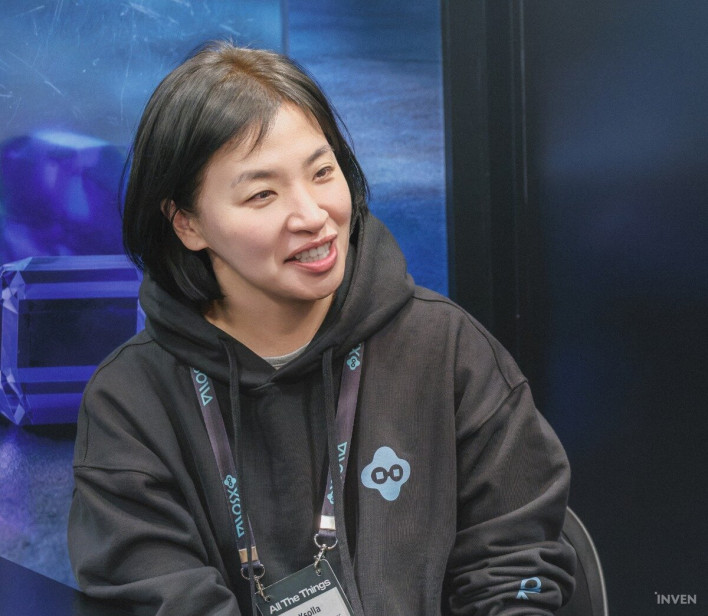
While based in Korea, you also oversee the APAC region, including Southeast Asia, India, and Australia. What key differences or unique characteristics set those regions apart from Korea?
= Southeast Asia has utilized web shops for a long time. Local payment methods are crucial there, whereas major global platforms historically offered only credit cards or PayPal. Because only a small percentage of the population in Southeast Asia holds bank accounts, credit cards were unusable for most users, prompting mobile games to rely on web payment channels early on. Back then, developers operated discreetly out of regulatory caution, though it was legally compliant even then.
As a result, web-based purchasing is deeply familiar to players there, who understand that buying via web shop yields exclusive rewards. In Southeast Asia, web shop revenues often account for a dominant share of total sales, and implementing a web shop is seen as a prerequisite for market entry. India is not quite at that level yet. Because of these regional nuances, Korean developers sometimes struggle when expanding overseas. Leveraging our extensive hands-on experience, we assist partners through those transitions.
So Korean developers can leverage Xsolla's regional insights when expanding into those markets?
= Absolutely.
Regions like Japan are updating laws, and Europe enforces strict regulations. Among your covered regions, where are changes moving fastest, and what should developers keep in mind when entering those markets?
= Korea and Japan have seen the most rapid regulatory shifts. Both remain massive individual markets in terms of revenue and active user bases, so regulatory shifts in these two countries naturally capture the highest level of attention from Korean developers.
= Other regions appear to be adopting a wait-and-see approach, observing global precedents. We monitor these changes closely and update regulatory developments daily, though Korea and Japan command the primary focus.
If platform commission fees drop amid these changes, some developers might feel less inclined to adopt web shops. How do you address this concern, and what key advantages do you emphasize?
= While many perceive web shops primarily as a way to cut platform fees, their greatest advantage is direct ownership of player data. For studios releasing sequential titles, retaining player data enables cross-promotion and community building for future launches. Back in the PC online gaming era, operating on proprietary platforms meant studios naturally owned player data. In mobile, where data was gated by major platforms, web shops empower developers to reclaim player insights and build far more sophisticated marketing strategies.
= Thus, commission savings are only part of the equation. If platform fees drop dramatically, decision-making might become more nuanced, but for companies planning long-term game development across multiple titles, web shops offer distinct strategic advantages. Crucially for major publishers, eliminating reliance on a single platform is the biggest benefit—and likely the primary driver behind global web shop adoption.
Becoming a Familiar Name to Gamers Next Year Expanding Channels to Gather Data and Diversifying into Webtoons and IPs
Beyond web shops, what other strategic directions do you suggest for major publishers?
= Major publishers usually arrive with established strategies, so we advise securing as many distribution and payment channels as possible beyond web shops. No company excels equally in every global market. A publisher might dominate in North America but struggle in Europe, yet establishing local offices and hiring personnel everywhere is impractical.
= We recommend starting with broad global coverage, then analyzing regional performance to identify specific local requirements. To gather actionable data, publishers shouldn't rely on a single channel. They should operate web shops, direct payments, and affiliate programs simultaneously, using aggregated data to drive strategic decisions.
When Xsolla returns to G-STAR next year, what key milestones do you hope to highlight for the Korean market?
= Next year, we hope to build stronger brand recognition among players directly. Within the industry, Xsolla has operated in Korea for 12 to 13 years and globally for 22 years, enjoying high recognition among developers. To general gamers, however, Xsolla remains unfamiliar.
= We hope to increase direct player touchpoints alongside our partners and elevate our brand awareness. While we won't become Disney, we want Xsolla to be a recognizable name that active gamers recognize.
Conversely, what remains a difficult challenge that you aim to tackle next year?
= Industry challenges are always complex, but gaming platforms overall seem to be experiencing a plateau. Many game developers are pondering what steps to take next. We hope to pioneer concrete success stories demonstrating clear forward paths for the industry.
= The most frequent questions we receive nowadays are 'What are you doing next year?' or 'What will we need next year?' Trends evolve rapidly, but clear answers regarding the 'next level' are elusive. We want to co-develop next-tier solutions so developers can naturally transition to their next phase while minimizing external market volatility.
= We also plan to undertake new challenges next year that will directly resonate with Inven readers and gamers. While we cannot share full details just yet, we hope to share exciting news soon.
It certainly feels like Xsolla is expanding across multiple fronts, including platforms and genres.
= We have expanded incrementally, but we intend to scale up significantly next year. While workload will naturally increase, we are taking on unfamiliar challenges. Even at the risk of failure, we want to pursue aggressive initiatives and learn firsthand what is required to connect directly with players.