'The Super Dimension Fortress Macross', which debuted in 1982, holds a unique place in the history of Japanese animation. Featuring the Valkyrie transforming from a fighter jet into a robot, songs echoing through the heart of battle, and a story where contrasting cultures clash and reconcile, the work combined elements that were unfamiliar at the time, leaving a lasting influence on countless anime and games. More than 40 years later, what enables the franchise to continually introduce new titles?
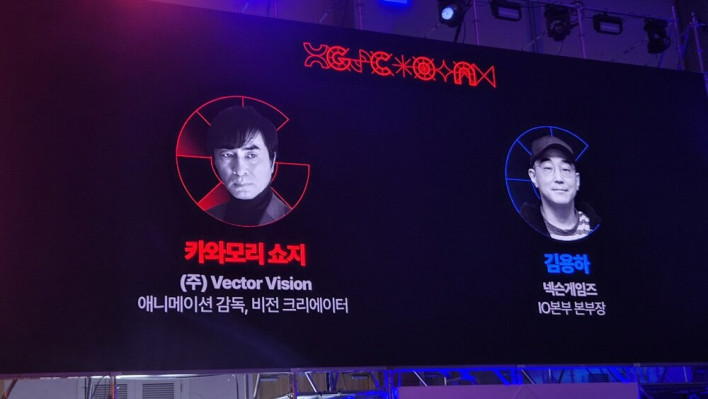
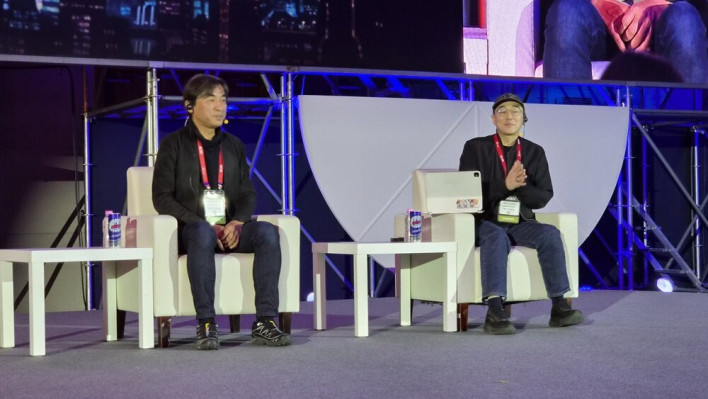
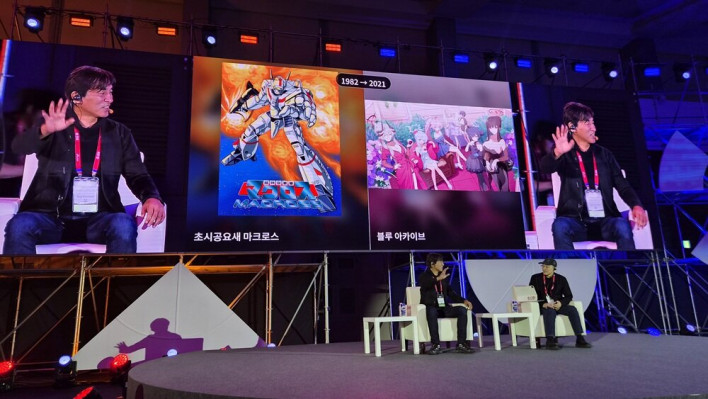
On the 20th, during the Day 2 session of G-CON 2026 held at BEXCO in Busan, a special conversation addressed this very question. Under the theme of "How to Build an Enduring World: Characters and Narratives Spanning Generations," director Shoji Kawamori—renowned for 'Macross' and 'Genesis of Aquarion'—and Yong-ha Kim, Head of Nexon Games' IO Division behind 'Blue Archive', took the stage. Director Kawamori reflected on his 47-year creative journey, introducing his unique world-building and design philosophy, while Head Yong-ha Kim led the discussion from the perspective of a longtime fan and active game developer.
Head Yong-ha Kim notably shared that the inspiration he felt watching 'Macross' as a child influenced his decision to become a game developer. In response, Director Kawamori shared various stories, from his own childhood to the creation of 'Macross', as well as behind-the-scenes design details of 'Armored Core' and 'Pragmata'. In the latter half of the talk, he also discussed the values human creators must uphold in an era of rapid AI advancement and shared his thoughts on new mediums he hopes to tackle in the future.
To understand Director Kawamori's creative world, one must look at his childhood experiences. He was born in Gokayama, a mountain village in Toyama Prefecture, Japan, recalling that in winter, snow would pile up to 2.5 meters, forcing residents to enter and exit houses through second-floor windows instead of the front entrance. This environment instilled in young Kawamori the realization that doors do not necessarily have to be in fixed locations. Later, moving to the port city of Yokohama around the age of three, he encountered technologies he had never seen before—such as electric trains, steam locomotives, and automobiles—and the cultural shock experienced between these two drastically different environments became the prototype for 'Deculture', an iconic phrase representing 'Macross'.
Having been fascinated by machinery and vehicles since childhood, he originally wanted to become someone who designs automobiles, aircraft, or spacecraft himself. However, around the time he deemed the dream of becoming a space engineer difficult due to realistic constraints, he met Studio Nue, a sci-fi creative group. Seeing senior creators who participated in producing titles like 'Space Battleship Yamato' bring space to life through drawings allowed him to discover new possibilities in animation. He recalled his feelings at the time, stating that the fact that one could go to space with just a single pencil and imagination was deeply attractive.
Kawamori, who was drawing at Studio Nue, began working professionally during his second year of university and subsequently built a full-fledged mecha design career by participating in Takara's 'Diaclone' series. At the time, he pondered new structures that strayed from typical humanoid robots, but met responses that non-humanoid designs lacked commercial viability. Ultimately, the development team began discussions to feature humanoid robots while creating a setting distinct from existing works, and through that process, the basic core concept of 'Macross' was completed almost overnight.
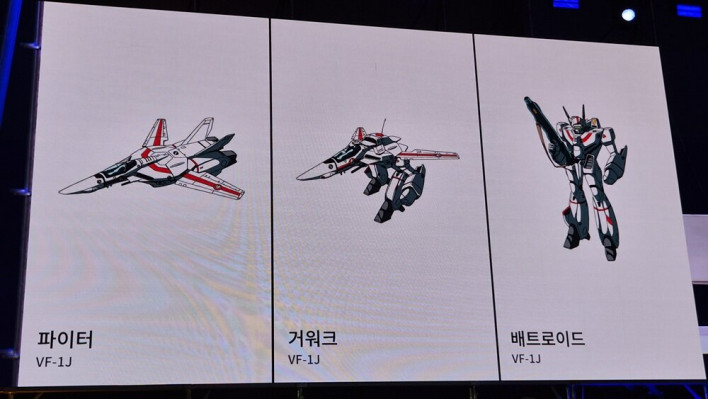
Director Kawamori explained that he started by questioning whether giant humanoid robots could actually be effective weapons on the battlefield. A robot standing 18 meters tall would merely be an easy target for enemy attacks, but if the opponent is a giant, a reason to transform into a humanoid form arises. From there, instead of simply creating a transforming warship, the concept evolved to place a city inside it, and if there is a city, there must be citizens, and if there are citizens, singers can also appear. An anecdote was also shared regarding how a sketch by Haruhiko Mikimoto of a singer at a Chinese restaurant influenced the concrete inclusion of music in the work.
Head Yong-ha Kim said that if he had not encountered 'Macross' in his childhood, 'Blue Archive' might also have turned out differently today. In that Director Kawamori's work influenced a generation of creators, who in turn went on to make new games, this conversation captured the very essence of the panel's topic: creating worlds that are loved across generations.
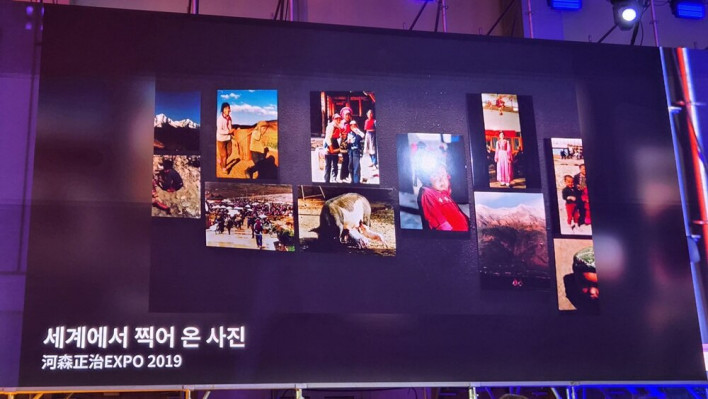
Director Kawamori cited direct experience as the reason he has been able to maintain originality throughout his long creative career. He explained that since childhood, he was never satisfied with assembling model kits identical to what others built, choosing instead to craft new shapes using clay or paper. He also held the belief that watching existing films and making similar movies ultimately leads to merely reproducing the influence of other works. Therefore, he prioritized traveling to unfamiliar places to gain fresh experiences, calling such activities 'Inspiration Hunting' rather than conventional location scouting.
The domain he finds particularly interesting is the realm where no one yet holds a definitive answer. Because machinery is designed by someone, its operating principles can be explained, but nature's ecosystems harbor countless unresolved mysteries. Noting that both mecha and living organisms exist atop physical principles, Director Kawamori revealed that he has explored knowledge across various fields including gravity, energy, and biology. To build a sci-fi universe distinct from the real world, one must first understand how reality operates, and establish new rules based on that foundation.
This philosophy carries over to mecha design. Director Kawamori explained that his definition of 'design' differs somewhat from conventional usage. To him, designing means deciding the structure and concept itself, whereas expressing that through outward appearance corresponds to 'styling'. Thus, depending on the nature of the project, one might allocate 70% to engineering design and 30% to external expression, or conversely minimize engineering elements to focus on visual style. What matters is not how cool it looks, but whether one can explain why it must take that specific form.
'Armored Core' was a prime example. When first commissioned to design a robot with interchangeable parts, Director Kawamori felt that simple modular swapping alone would make it difficult to differentiate from other mecha franchises. Instead, he proposed a structure centered around a core unit to which various components could be attached. He recalled that this design concept became the identity of the franchise and connected directly to the name 'Armored Core'. For 'Eureka Seven', he applied different criteria for each work, such as designing thin limbs so that the concept of a surfing robot could be easily recognized even on a small TV screen.
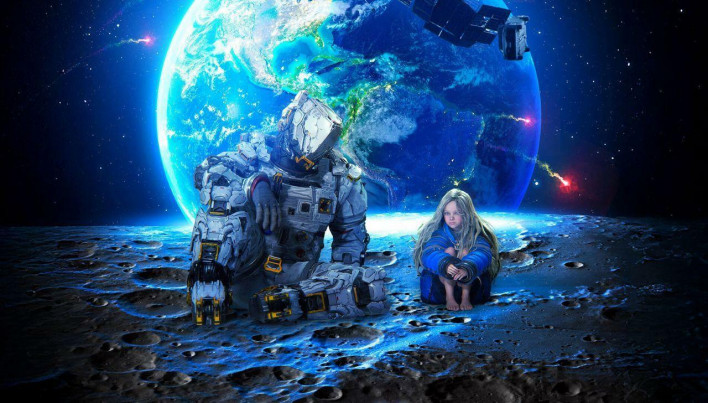
In Capcom's 'Pragmata', which he recently participated in, he deliberated on the balance between realistic engineering design and gameplay. As the title is set on the Moon, he originally wanted to implement movement corresponding to one-sixth of Earth's gravity, but the game system dictated a constraint of maintaining a standard gravitational environment. In response, Director Kawamori suggested a setting where characters wear shoes that magnetically adhere to the ground. While lunar gravity remains as is, a rationale was established within the universe so that characters normally move similarly to Earth.
He remarked with a smile that while half of his work on 'Pragmata' concerned such sci-fi settings, the other half was spent discussing how to make the android girl Diana look cute. He even visited the motion capture studio to offer input on fine physical details, such as suggesting turning a young child's toes slightly inward. He explained that both designing massive world settings and refining a character's subtle gestures are processes that form the identity of a work.
Discussion also turned to methods of building new stories in a long-running franchise. Director Kawamori stated that he fundamentally does not wish to repeat the same type of work in the same medium. After producing the 'Macross' TV anime, he engaged in different mediums such as theatrical films and games, explaining that he turned down proposals to create a new TV series for about 10 years. Simply repeating past formulas for the sake of continuing a series was not an appealing choice for a creator.
The project born out of such deliberation was 'Macross 7'. Director Kawamori's initial idea was a pilot who sings while fighting, but he felt that directly combining singing with combat risked glorifying or propagandizing war. Instead, he chose the polar opposite setting of a pilot who sings but does not participate in battle. This was a direction vastly different from what existing mecha fans expected, and he recalled receiving considerable criticism at the time. However, he believed that to create a fresh work, one must question the rules that legacy fans take for granted.
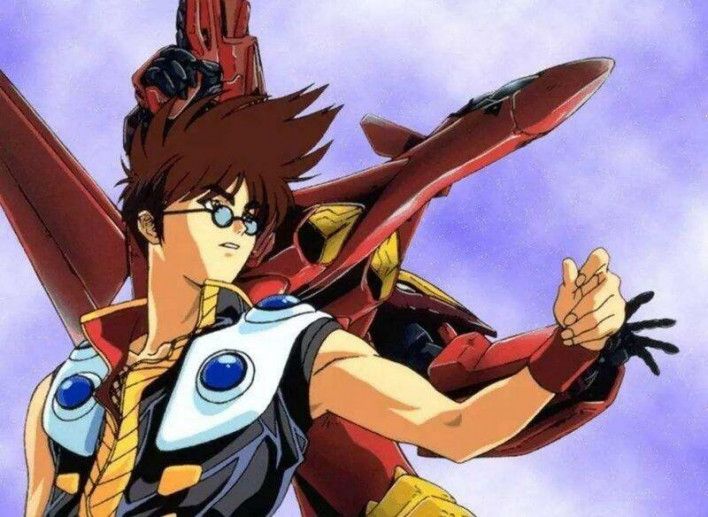
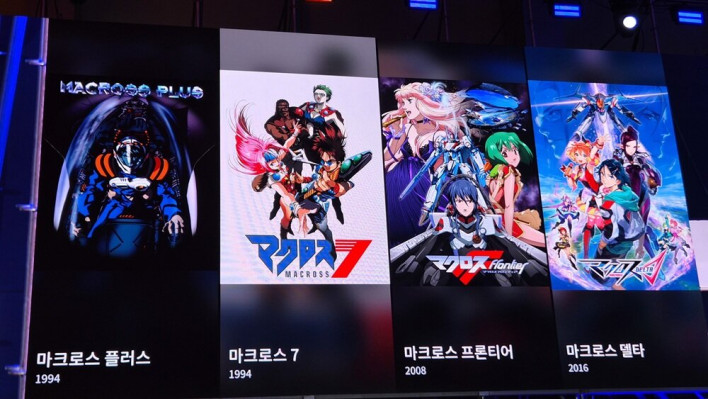
Other entries in the franchise pursued distinct directions as well. In 'Macross Plus', rather than showcasing the entire grand universe, the focus shifted to the relationships among three characters, adopting a structure closer to a Hollywood film. In 'Macross Frontier', celebrating the 25th anniversary of the franchise, elements from previous works were brought together while introducing two songstresses, Sheryl and Ranka. Director Kawamori explained this was because he felt the music culture of the era could no longer be adequately represented by a single singer. Later, taking note of the trend toward idol groups, he produced 'AKB0048', an experience that carried over into the musical composition of 'Macross Delta'.
Nevertheless, the principle Director Kawamori sought to maintain across the entire franchise remained clear: even if individual entries cover different stories, the history of the world must remain connected. However, he does not view events depicted in animation as the sole record of history within that universe. By operating on the premise that the same historical event can be interpreted differently depending on the era and perspective, room was created in subsequent titles to introduce modern sensibilities and expressions.
Regarding the condition for creating an enduring world raised by Head Yong-ha Kim, Director Kawamori's answer ultimately was the coexistence of change and continuity. One should actively introduce new concepts and contemporary sensibilities with each work, while maintaining the unifying link that all these stories rest upon the shared history of the same universe. It was a approach designed to allow new generations to encounter their own 'Macross', while enabling longtime fans to feel they are still experiencing that very same world.
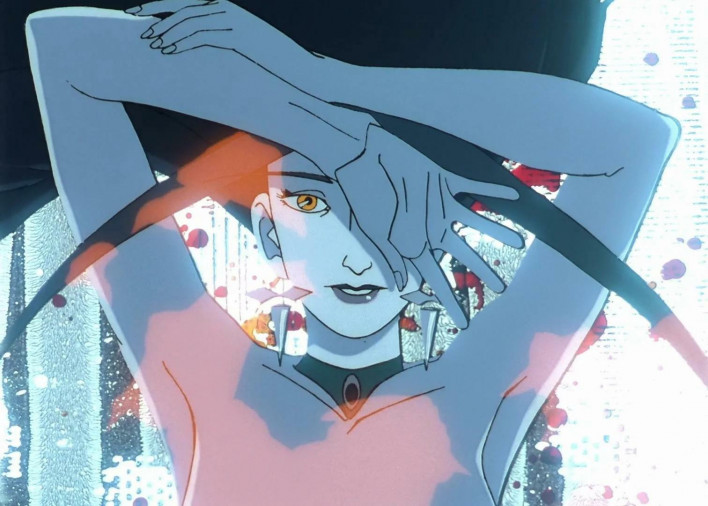
In the latter part of the conversation, discussion turned to creation in the era of artificial intelligence. Head Yong-ha Kim brought up the AI singer Sharon Apple from 'Macross Plus', asking how the AI Director Kawamori imagined in the past compares to AI today. Director Kawamori shared his memory of drawing storyboard scenes where the public went wild over an AI idol, only for animators to laugh and say such a thing could never happen in reality. However, as virtual singers and AI-related technologies rapidly developed afterward, he evaluated that his past imagination became reality much sooner than expected.
He also pointed out that while Sharon Apple was superficially an AI singer, a human was actually intervening behind the scenes. In contrast, modern AI is evolving toward performing tasks without direct human intervention, and he explained that the speed of this evolution has been far faster than he anticipated. What, then, should human creators do in an environment where AI can perform an increasing array of tasks? The answer Director Kawamori offered was the ability to directly experience and feel emotions.
"You can leave what AI can do to AI. The important thing is to think about what AI cannot do. I believe that is experiencing and feeling things directly."
Director Kawamori noted that the text, music, and images learned by AI are ultimately the outward expressions of someone's past experiences. However, he explained that even those expressions do not fully capture every emotion a human felt in their heart while living through that experience. Drawing an analogy that no matter how delicious an apple AI renders, it does not become an actual edible apple, he emphasized that a gap exists between generated expressions and sensations experienced in real life.
He explained that while computers and AI excel at finding correct answers, creation does not necessarily require pursuing a single right answer. This is because looking at the exact same subject still produces different emotions and interpretations depending on who experienced it, where, and when. Therefore, future creators must more actively pursue individuality and diversity born from their own unique experiences. Head Yong-ha Kim expressed agreement that even as AI advances its ability to find correct answers, posing new questions and embedding one's own experiences into a work remain vital roles for human creators.
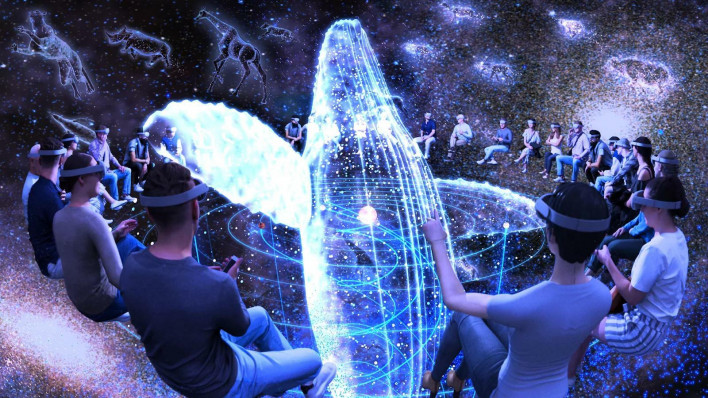
As for domains he wishes to challenge moving forward, Director Kawamori named extended reality (XR) and other new mediums. In mediums using two-dimensional screens like animation or film, a boundary called a frame always exists regardless of size, but actual ecosystems and the universe extend boundlessly beyond such frames. He expressed his ambition to attempt new forms of expression where audiences can directly sense space and world settings beyond merely staring at a fixed screen.
Director Kawamori's creative philosophy, shaped over 47 years across numerous works, ultimately returns to his childhood experiences. It is an attitude of not taking familiar rules for granted, discovering new possibilities in unfamiliar environments, and continuously questioning domains where answers are not yet known. Just as the cultural shock he experienced at age three moving from a snowbound mountain village to the city led to the world of 'Macross', the starting point for the new worlds he will create going forward is expected to lie in human experiences seen and felt directly, rather than in technology itself.