
Bringing the history and culture of another country into a game requires considerations beyond simple reproduction. No matter how elaborately landscapes and architecture are realized, failing to understand the thoughts and emotions of the people who lived within them often results in borrowing only the superficial shell of an unfamiliar culture. Conversely, being overly tied to historical facts and cultural customs makes it difficult to fully exercise the creative freedom inherent to the medium of gaming. How to balance cultural respect with gameplay fun is a shared challenge faced by developers working with historical settings.
On November 20, the first session of Day 2 of G-CON 2026, held at BEXCO in Busan, examined these considerations through real-world game development cases. Titled "Turning Stories of Unfamiliar Lands into Stories for the World," the presentation featured Ariadna Martinez, Senior Writer at Sucker Punch Productions, and Joanna Wang, Art Director, as speakers. In a discussion moderated by author Lee Jong-beom, the developers shared their experiences with cultural authenticity, field research, and the collaboration between narrative and art design while creating Ghost of Tsushima and Ghost of Yōtei.
Both developers emphasized that cultural authenticity does not merely serve to restrict creativity. While climbing was prohibited on torii gates—a religious symbol in Japan—masks used to ward off evil spirits were instead repurposed as a tool to express the identity of villains. An ordinary garden became a space explaining protagonist Atsu's loss and recovery, while the yellow of the ginkgo tree evolved into a visual language threading through the entire narrative. These were prime examples of showing what to respect and what can be reinterpreted when crafting stories set in a different culture.

Art Director Joanna Wang recalled when Sucker Punch first planned a game set in Japan. Although many on the development team were avid fans of Japanese samurai cinema—including the films of Akira Kurosawa—passion for Japanese culture and actually realizing that culture inside a game were separate matters. As a studio based in Seattle, Washington, telling a story from a different culture was a significant burden, and overcoming it required first gaining a deep understanding of that culture.
With the assistance of Sony Japan, Sucker Punch assembled a team of cultural consultants and maintained a close collaborative relationship from the early development of Ghost of Tsushima through Ghost of Yōtei. SIE Producer Ryohei Hatami also played the game during key development stages to provide feedback. Joanna Wang explained that the purpose of this collaboration was not to reproduce historical events as they were. The ultimate goal was to understand and respect the actual culture while creating the team's own fictional story within that framework.
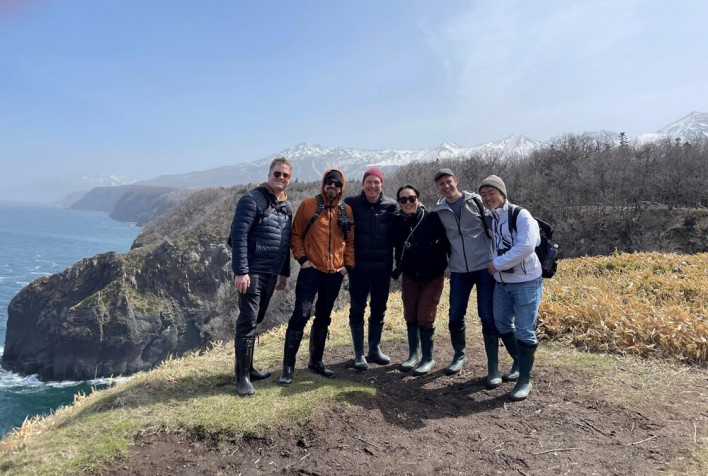
Significant effort was also put into field trips. The development team divided into several groups to visit Japan directly, examining landscapes and architecture as well as touching leaves and eating local food to experience the life and culture of the region. The memories accumulated in this process served as important benchmarks when opinions differed during development. For instance, when visiting an Ainu village, the experience of foraging for plants in the mountains alongside a local advisor's grandmother led directly to the in-game foraging minigame. Everyday experiences, emotions, and memories gave birth to new content.
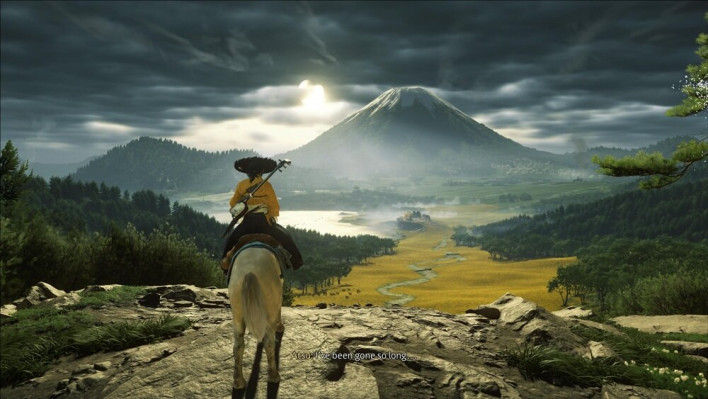
Through this process, the direction the developers set for the world was "The Edge of Japan." Senior Writer Ariadna Martinez explained that while Ghost of Tsushima aimed for the experience of becoming a samurai in a Kurosawa film, Ghost of Yōtei sought the journey of a lonely mercenary wandering the edge of Japan seeking vengeance. This principle also applied when utilizing actual history. In addressing the Battle of Sekigahara, the team focused on the theme of "treachery" rather than the broader scale of the war, linking it to the personal betrayal Atsu experiences to frame the historical event through the protagonist's eyes.
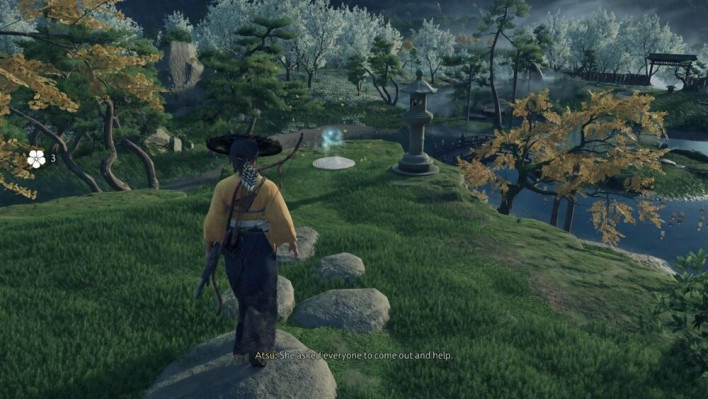
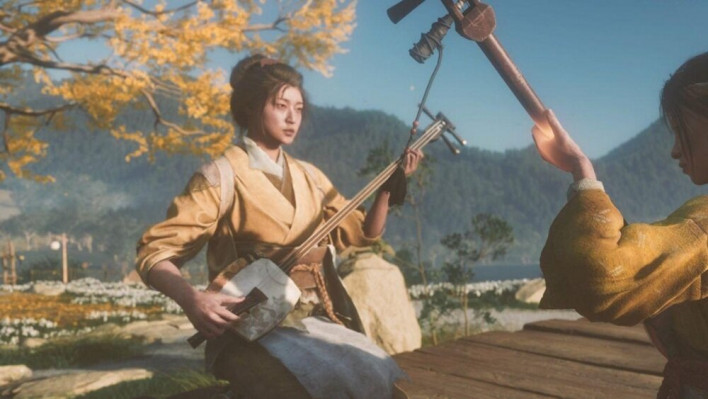
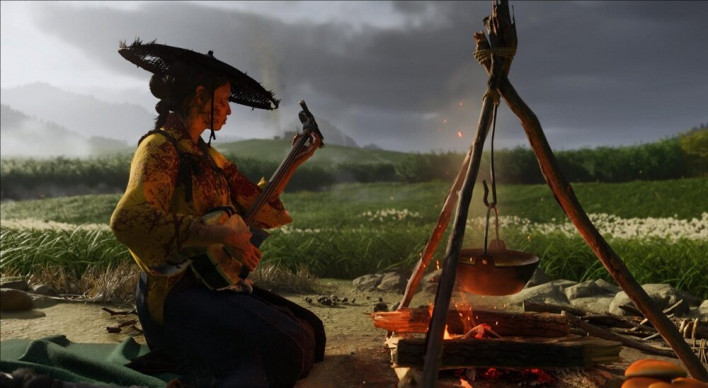
A prime example of how cultural and historical understanding developed into actual in-game narrative was the Japanese garden featured in Ghost of Yōtei. Located in the heart of Ezo, this garden was a space designed to serve multiple functions from the start. The team needed to explain why a Japanese garden existed there, establish a convincing reason why the Yōtei Six would not attack the location, and provide a functional space to teach players how to play the shamisen. To this, Martinez added Atsu's past memories with her parents to convey the protagonist's sense of loss.
What tied these multiple purposes together was an explanation from a Japanese cultural advisor. When Martinez asked about the meaning of a Japanese garden, the advisor responded that creating a garden is an attempt to tame nature while simultaneously realizing that humans cannot fully control nature. The reality that one cannot control everything that happens in life aligned closely with Atsu's predicament, having lost her family and clung to vengeance. Based on this, the development team crafted a backstory involving a shamisen master who tends the garden and Atsu's mother, developing the garden into a space holding family memories.
A scene Martinez was particularly fond of was young Atsu's memory of placing fish eggs into a pond. When young Atsu asks if she can come back to see the fish later, her mother answers that she will be able to see them grow into big fish. However, returning to the present, the fish are already fully grown, and Atsu says she missed seeing them grow up. It is a moment that demonstrates what Atsu lost after losing her family, without relying on dramatic events. Martinez explained that loss is not merely about losing someone, but also about the time you were unable to spend with them.
This approach was also applied to the design of the open world. Martinez explained that in an open world where players experience content in any order, it is difficult to consistently convey the protagonist's emotional arc. To solve this, the team gave each region a unique narrative identity and reflected the emotions Atsu experiences in the main quest across surrounding content as well. For example, in the Ishikari Plain where Atsu reunites with her brother Jubei—whom she thought was dead—complex family dynamics and trauma were set as core themes. The atrocities committed by the Oni's forces were also portrayed around family disruption and threat, allowing players to follow Atsu's emotional journey even as they explore freely.
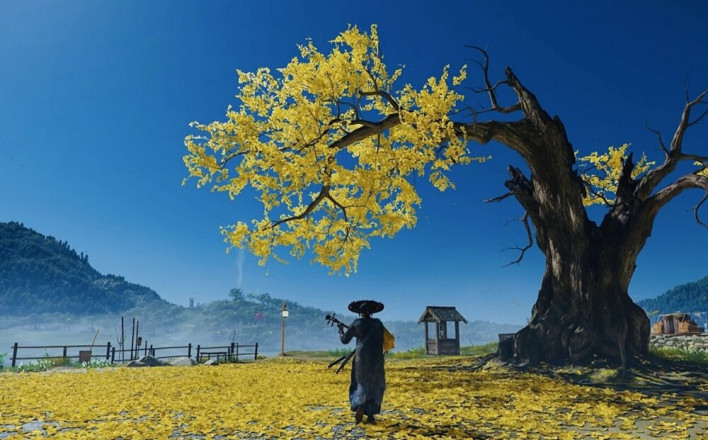
If narrative conveys a character's emotions through story, art plays the role of allowing players to directly see and feel those emotions. Joanna Wang cited the ginkgo tree standing at Atsu's old home as a prime example. On the day young Atsu loses her family, she is stabbed and hung from the tree, while the massive ginkgo tree protecting the home is engulfed in flames. However, when an adult Atsu returns to her hometown, the tree remains without having completely vanished. Although half of it is burnt, yellow leaves still hang from the surviving branches, symbolizing the hope of living on despite carrying deep wounds.
The color yellow also reappears repeatedly in Atsu's attire and key moments throughout the game. Joanna Wang explained that just as Jin Sakai's pivotal moments in Ghost of Tsushima were connected to red Japanese maples, the yellow ginkgo tree serves the same function for Atsu. Atsu's equipment also carries memories of her past—the shamisen symbolizes her mother, and the twin-wolf motif on her katana symbolizes her brother. When using color, the team applied the "60:30:10" color rule and minimalism to strip away unnecessary visual noise. This approach ensures that key colors are not buried by surrounding elements, making the intended message clearer to the player.
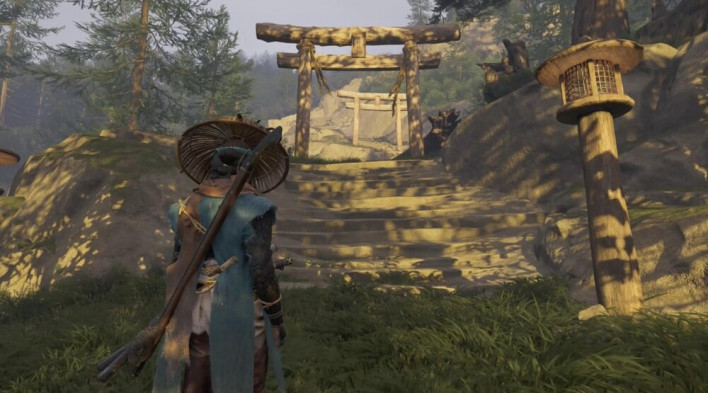
Meanwhile, there were instances where cultural respect directly conflicted with gameplay freedom. Japanese shrines and torii gates were prime examples. As structures easily recognizable from a distance, the development team used torii gates as open-world landmarks and mechanics to encourage exploration. Players follow the torii gates to reach shrines and earn rewards, taking a moment away from fast-paced combat to admire the scenery. However, because they are structures with religious significance, explicit limits were placed on what players could do.
Joanna Wang revealed that despite the shape of torii gates naturally inviting characters to climb onto them, climbing or destroying the structures was not permitted. While standard open-world games might prioritize player freedom, the team decided that respecting symbols with deep cultural significance took precedence. She explained that there are times when cultural considerations outweigh gameplay fun, requiring a process of prioritizing what must be handled with gravity.
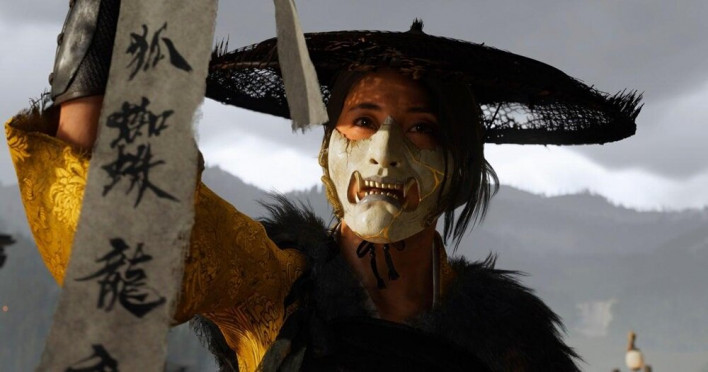
Conversely, there were cases where cultural authenticity created opportunities for new content. The masks of the Oni brigands in the Ishikari Plain subverted their original meaning of protecting people from evil spirits. Having brigands who harm people and spread terror use a symbol of protection in reverse served to highlight their villainy even further. Additionally, the team created the mask merchant character Saburo to allow players to learn the original meaning of the masks. This demonstrated that respecting culture does not necessarily lead to restrictions—it can also serve as the starting point for new characters and stories.
In the latter part of the lecture, the discussion turned to what makes a character relatable to players even across different historical and cultural backgrounds. Martinez cited anger stemming from loss as the reason she deeply empathized with Atsu. Having lost her own mother in real life, she understood Atsu's feelings after losing her family and clinging to vengeance, making the process of expressing those emotions in writing personally meaningful. However, what the development team considered important was not simply how intensely Atsu's anger was expressed.
Martinez sought to show that even a character scarred and clinging to revenge retains their innate humanity. Atsu likes animals, feels compassion for societal outcasts, and cares for children. The character Manjuro, whom players encounter multiple times in the open world, was also created to highlight these traits. Manjuro seeks to rise in status by joining Saito's forces, but Atsu tries to make him realize that he is being used.
Ultimately, Manjuro loses his life after challenging a samurai. Atsu tells the samurai who struck him down that Manjuro only wanted to be someone like him. In a different situation, he might have been encountered merely as a member of an enemy faction, but Atsu understands his plight and feels compassion for him as a human being. Martinez emphasized that depicting a person with multiple multifaceted sides at once is a key method of portraying humanity realistically. Because Atsu possesses mercy and warmth alongside her desire for revenge, players naturally root for her to look beyond vengeance and reclaim her life.
Joanna Wang added the unique characteristic of games as a medium to this point. While movies tell stories to audiences in a fixed order, open-world games allow players to choose which regions to visit, which characters to meet, and in what order to experience content. Even when experiencing the same story of Atsu, the events and emotions that resonate with each player will naturally vary. What the developers hope for is not to deliver a single identical interpretation to every player, but for each person to encounter their own Atsu and remember her journey of transformation.
Ultimately, what the developers of Ghost of Yōtei presented was an answer to how efforts to understand an unfamiliar culture can yield a universal story. Everyday experiences discovered on location became gameplay, the philosophy embedded in a garden evolved into a narrative explaining loss and recovery, and respect for cultural symbols set the boundaries of in-game actions. History and culture shape the world characters inhabit, but the loss, anger, compassion, and recovery experienced within that world are emotions that transcend eras and regions. This is precisely why stories from different cultures can ultimately become stories for the world.