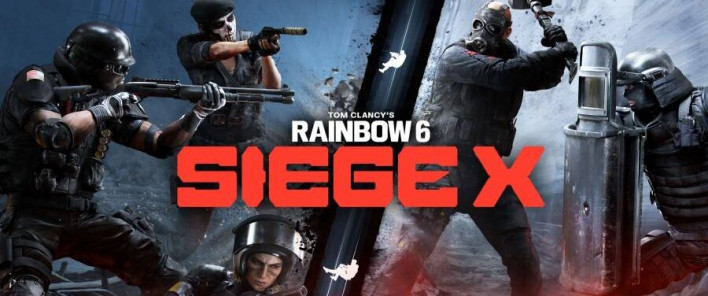
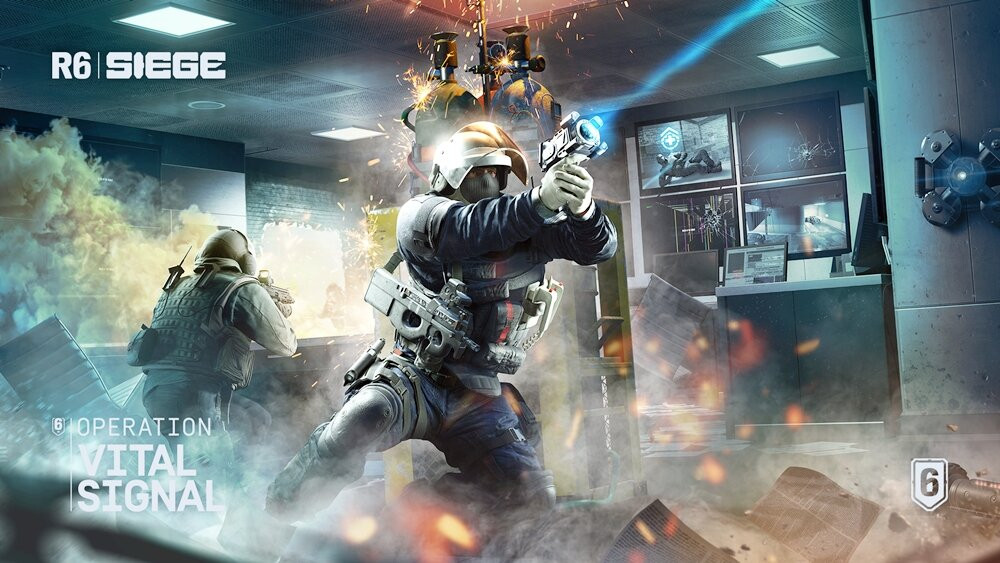
Ubisoft has revealed the key details of the Year 11 Season 4 (Y11S4) update for 'Rainbow Six Siege'. Centered around a Ranked system overhaul and existing Operator remasters, this season promises a wide range of changes, including new tactical gadgets, weapon balance adjustments, map improvements, and limited-time events.
During a media presentation in Osaka, Japan, Ubisoft introduced Y11S4's major content and future operational plans. Live Content Game Director Christopher Budgen and other developers participated in the briefing to explain the design intentions and specific changes behind each update. The centerpiece of this season is Ranked 3.0, introducing a dedicated Solo/Duo Ranked queue that players have long requested. In addition, Doc receives his final remaster, Thunderbird gets an ability overhaul, a new submachine gun (MBZ-19) is added, and experimental Half-Wall Reinforcements are introduced.
The Y11S4 Test Server launches on November 16, with the official update releasing on December 1.
Eliminating Unfair Competition
Ranked 3.0: Separating Solo/Duo and Flex Queues
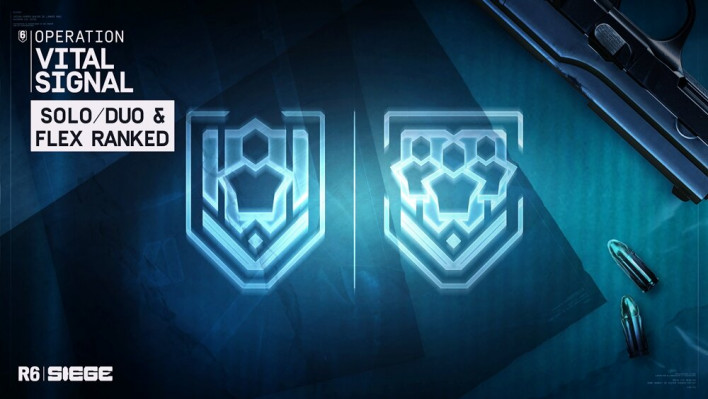
The core of Ranked 3.0 is splitting the existing single Ranked environment into two separate queues: Solo/Duo and Flex. The Solo/Duo queue allows players competing alone or in squads of up to two, while the Flex queue accepts 1-, 2-, 3-, or 5-player squads. Four-player squads remain unsupported in the new system. Because the two queues feature independent rank progression, players can earn distinct ranks in Solo/Duo and Flex, with initial progression seeded based on their rank at the end of Season 3.
To address potential queue time increases caused by splitting the queues, 'Cross-Queue Matchmaking' is also being introduced. While operating the two queues independently, a unified matchmaker manages the overall environment, aiming to maintain stable matchmaking by factoring in region, time zone, and player population distribution. Matchmaking rules based on squad size have also been refined to pit 5-player squads against each other whenever possible, allowing solo and duo players to compete against opponents of similar squad sizes.
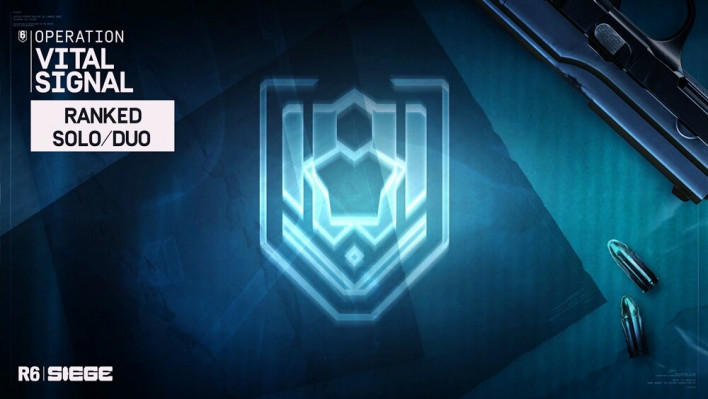
Director Christopher Budgen explained that in the previous Ranked environment, solo players being matched against full 5-player stacks was an undesirable experience. This revamp aims to address such unfair matchmaking and allow players to compete according to their preferred squad size. Ranked 3.0 focuses not merely on adding extra queues, but on solving the structural issues that arise when squads of different sizes compete.
Alongside the Ranked revamp, a new Social Hub will be added. In the Social Hub, players can view Ubisoft Connect friends and platform friends in one place, while also finding recent teammates to send friend requests or form squads. The newly introduced 'Invite by Code' feature allows players to assemble squads using invite codes without having to search for account names. A code hide feature is also provided for streamers and content creators. The developers plan to use this to create an environment where solo players can find new teammates and stay engaged with the community over the long term.
The Era of Healer Operators Begins
Doc and Thunderbird Overhauls, Plus New Submachine Gun MBZ-19
This season brings a remaster for Doc. Shifting away from his conventional healing method via the Stim Pistol, Doc now utilizes a new device: the 'E-Heal Monitor'. Following the remaster, Doc can heal or revive teammates from anywhere on the map without needing line of sight or direct aiming. He can support teammates through walls, making his healing abilities far more flexible than before.
Under the new system, when Doc deploys onto the battlefield, a healing patch is provided to all teammates. Doc accesses these patches via the E-Heal Monitor to trigger remote healing, with the monitor displaying teammates' health statuses and highlighting critically injured allies in red. This allows players to quickly identify teammates needing assistance, while retaining functions for remote revives as well as self-healing and self-reviving.
The developers explained that the original Doc often exposed himself to danger while manually moving or securing line of sight to heal teammates. Having to abandon key defensive positions for healing was also identified as an issue needing improvement. The new Doc breaks free from these constraints, allowing him to function as an anchor Operator who stays at the site while supporting the entire team. To complement this, a Deployable Shield has been added to his secondary gadgets, while his secondary weapon, the Bailiff 410 shotgun (typically used for site setup and soft destruction), is retained.
Director Budgen explained that Doc is the final target of this remaster project. However, he added that improvements to existing Operators will not cease entirely, and further revamps may be conducted if issues arise that do not fit the game's meta or cannot be resolved through standard balance tweaks.
Thunderbird, another Defender healer Operator, also undergoes significant changes. The deployable count for Thunderbird's Kóna Station increases from three to four, and its cooldown is reduced by 5 seconds. In particular, a new cleanse ability for flash and stun effects has been added alongside its traditional health restoration. The new Kóna Station automatically determines priority targets by assessing the status of nearby allies; if both a downed ally and a flashed ally are present simultaneously, it cleanses the status effect of the active ally first so they can continue fighting. The developers explained that this reflects the decision to prioritize maintaining the combat effectiveness of actively engaged allies.
Weapon balancing changes are also being implemented. The new submachine gun, MBZ-19, is introduced and can be used by Thunderbird, Jäger, and Warden. Based on the real-world Bizon platform, the weapon features a unique helical magazine design. Conversely, slug shotguns, which had drawn attention for high performance, are being nerfed. The TCSG12's damage decreases from 75 to 50, while the ACS12 sees reductions in damage and magazine capacity, compensated by an increase in total reserve magazines. This change marks the first phase of slug shotgun rebalancing, with the developers planning further adjustments into Year 12 to ensure the weapon category serves its intended role.
Reinforce Only Halfway
Trial Introduction of Half-Wall Reinforcements and Bank Map Rework
Y11S4 unveils 'Half-Wall Reinforcements', a new gadget capable of reshaping defensive strategies. Half-Wall Reinforcements are a Defender secondary gadget that reinforces only the bottom half of a wall, operating separately from standard reinforcements. Operators equipped with them can place additional defensive structures without consuming the team's standard reinforcement pool. Unlike traditional reinforced walls, the top half remains open, allowing Defenders to hold lower cover while contesting enemies over the top—though Attackers can also exploit the open sightline, preventing it from being a purely one-sided defensive tool.
The developers cited Frost as an example of Half-Wall Reinforcement utility. They explained that it enables tactical combos previously difficult to execute with standard reinforced walls, such as baiting Attackers to vault over the low wall directly into traps. However, Half-Wall Reinforcements will not be added to the live game immediately; instead, they will debut first in the Testing Grounds mode. The dev team plans to gather player feedback in the Testing Grounds and monitor their impact on competitive balance before determining whether and when to officially implement them.
Map adjustments also continue. This season's Targeted Map Update focuses on 'Bank', with the primary area of revision being the Back Alley where Attackers enter. Previously, Attackers approaching this zone were vulnerable to angles from multiple directions; after the update, they will have additional cover to utilize. The update aims specifically to improve survivability for Attackers approaching from Stock Room and Square, while reducing the effectiveness of Defenders holding static window angles.
Referencing the previous season's bomb site alterations on 'Villa', the development team explained that Targeted Map Updates can range from simple cover additions to major objective site relocations. Changes applied to Bank and Villa are intended to be permanent, and Ubisoft plans to deliver updates resolving specific map issues during seasons without new map releases. In tandem, modernization work for 'Yacht', 'Favela', and 'Tower' is underway. Applying updated visual elements and destructible environment assets to legacy maps, this work represents the final phase of the ongoing map modernization project.
Modernization Wraps Up, Turning to 'Content Expansion' Next Year
DOOM Collaboration, Return of Popular Events, and 4 New Operators per Year Announced
Fan-favorite events make their return this season. First, 'Grand Larceny' returns after a long hiatus, allowing players to experience far more destructive vertical gameplay than standard Siege. Developers explained that floor-blocking steel beams on the Hereford Base map have been removed, enabling floor destruction and breaches into lower levels from diverse positions. Along with this, 'Freeze For All' and a 3v3 mode return, bringing the total to four limited-time offerings during the season when including the Testing Grounds.
Collaborations with other franchises are also lined up. A crossover with 'DOOM' takes place this season, with related cosmetic items debuting alongside an in-game shop overhaul. For the winter season, a 'Daily Winter Rewards' event will run from December 1 to January 15, 2027, allowing players who log in 20 times during the period to earn all 20 rewards.
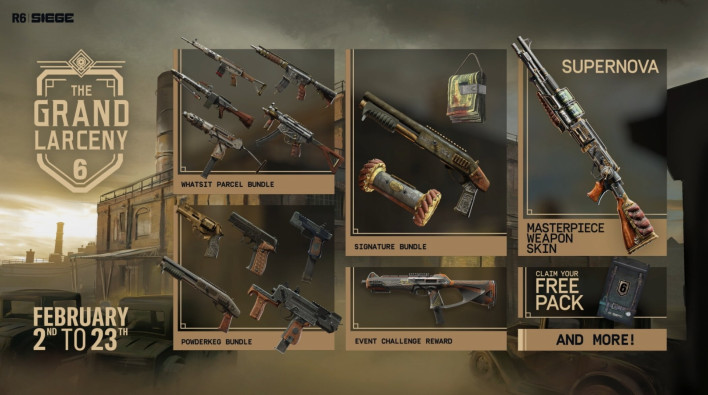
The rewards include the return of 'Celebration Packs' after a long absence. These packs grant a chance to acquire classic fan-favorite cosmetics from the Gold Dust and Glacier collections. Notably, the T-5 SMG receives the first-ever animated Glacier skin, offering a new chase item even for legacy collectors. Additionally, a multi-pack opening feature for up to 10 packs at once will be added, and in-game shop navigation and catalog layout will be improved.
Meanwhile, the dev team announced a slight shift in balance update strategy starting this season. While maintaining the existing 3-week patch cadence, patches that previously focused on minor stat tweaks will place greater emphasis on impactful adjustments that players can directly feel in gameplay. Roadmap changes were also confirmed. The Hostage competitive mode overhaul originally scheduled for Y11S4 has been delayed to Year 12 Season 1's Testing Grounds, while the bulletproof drone being developed as a new Attacker secondary gadget has been canceled. The developers determined during production that it posed balance issues capable of compromising competitive fairness.
Operator Mastery has also been dropped from this year's development roadmap. Director Budgen referred to the compounding maintenance workload created by introducing new systems each season as a "Seasonal Tax." If this burden accumulates, it can limit the team's ability to produce new content or respond to player demands. The dev team stressed their policy of prioritizing long-term game health and competitive integrity over forcing out new features.
Furthermore, Ubisoft announced plans to add one new Operator per season in Year 12, totaling four new Operators across the year. Concluding a chapter of existing Operator remasters, the team plans to pivot back to expanding content centered around brand-new Operators. Y11S4 hits the Test Server on November 16 before releasing as a live update on December 1.