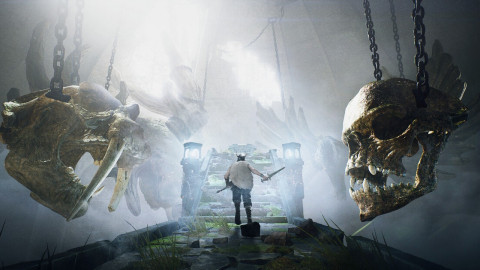
Shuhei Yoshida recalled that at this year's Busan Indie Connect Festival (BIC), he found a Korean action game he liked but could not fully enjoy due to the language barrier. Although the trailer had caught his attention, he struggled to understand the controls and rules in a playable demo available only in Korean. He advised that developers need to provide English support right from the demo stage to convey the fun of their gameplay to overseas publishers and media. Alongside this, he emphasized controller support, considering the play preferences of global users who enjoy games with a gamepad.
We met Yoshida at the Console Game Developers Conference 2026 held at the SKY31 Convention in Lotte World Tower, Seoul, on the 9th. The former head of Sony Interactive Entertainment (SIE)'s Indies Initiative and current founder of Yosp as well as advisor to indie publishers and developers was scheduled to moderate the final panel discussion on the global track that day. In the interview conducted prior to the panel discussion, we asked about the growth of Korean console and indie games, the potential of AI tools, and how creators can make their games stand out among new releases.
Yoshida noted that AI could compensate for limited development resources and language support, but emphasized that creating new ideas and gameplay remains the responsibility of creators. His interest in Korean games went beyond blockbuster console titles, extending to the indie games he encountered at BIC and the support ecosystem backing developers.
What message did you want to share with Korean developers at this event?
" Shuhei Yoshida: This time, I served as the moderator for the panel discussion. Since five wonderful console game creators are participating, my role is to draw out their wisdom. I want to elicit advice that will be helpful to Korean developers from the experiences of people who have created games like 'Tekken', 'Danganronpa', 'Stellar Blade', 'RimWorld', and 'Cyberpunk'.
There are already many developers in Korea capable of making great games. However, I want to ask the panelists what the console market is like for those who have primarily developed PC or mobile games until now, how console players differ from PC players, and what needs to be approached differently during development.
Which recent Korean console and indie games have caught your attention, and how do you view the Korean game industry?
" I believe Neowiz's 'Lies of P' had a massive impact on the Korean game industry. I don't know the exact context in which the game was created. However, since Neowiz wasn't among the top five major developers in Korea, they might have taken on the challenge of console games earlier than others to forge their own path. I think the shockwave and influence on the Korean gaming industry when 'Lies of P' became a global hit were immense.
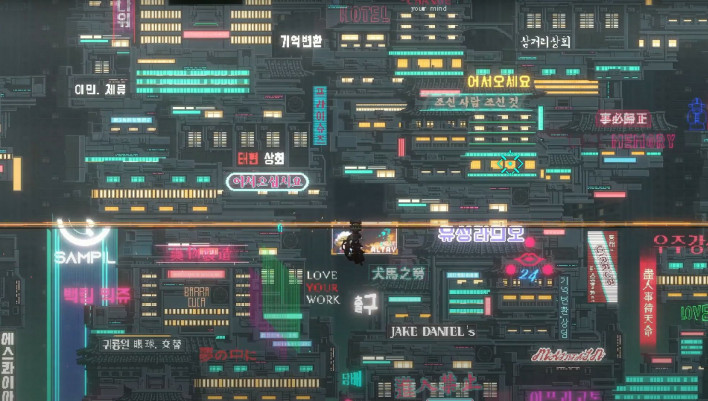
I love indie games very much, so I'm always paying attention to them. 'SANABI', which came out of Korea, was also published by Neowiz and received high acclaim globally. I go to BIC every year, and every time I attend, I encounter truly great games. Recently, 'Master of Piece' and 'INTERSCAPE', which won the Gold Award in the indie game category at this year's Tokyo Game Show, caught my eye.
I have also long been a fan of games by SOMI, who has been active since before indie games were being made in Korea as prolifically as they are now. I think 'No Case Should Remain Unsolved' is a truly wonderful work.
In this way, major Korean hits are emerging in large-scale console games, leading from 'Lies of P' to 'Stellar Blade', while excellent titles are also being developed in the indie scene every year. There is support from the Korean government, and the number of developers receiving high praise—like winners of the Global Indie Game Development Contest (GIGDC)—is growing, which I think is wonderful.
Even if major game companies don't make small-scale games themselves, the fact that companies like KRAFTON and Nexon invest in indie developers, fund them, and support the community to establish an ecosystem is also positive for the Korean game industry as a whole.
With indie titles flooding the market, how do you see the advancement of AI tools affecting creators?
" AI tools are extremely powerful. For indie developers who lack development resources, skillfully using these tools to improve quality or accomplish tasks they couldn't do alone is a huge help.
Of course, with so many games being released, the odds of hitting a success might have decreased overall. However, for creators who already have the capacity to make good games, AI tools can shorten development that would take 5 years down to 3, express visuals that were previously impossible, or enable multilingual localization that was cost-prohibitive. Using such tools, they can make their games stand out among countless titles and increase their chances of success.
Even if developers create good games, it's an environment where they can easily get buried. How can creators showcase the potential of unique titles and get noticed?
" Creating a good game depends on the creator's creativity. Whether or not you use AI tools, the task of generating new game ideas remains human. After that, you have to think about how to let people know about the game you've built.
Using AI makes it easy to create visually clean graphics, so it's hard to differentiate purely through appearances. What matters is conveying the fun of actual gameplay to players. You can submit to offline events so players and media can play demos directly, or seek out publishers to leverage their marketing and PR capabilities. Submitting actively to awards to build awareness through wins is another approach.
In particular, I want to emphasize to Korean developers to prepare English support right from the early stages. Users around the world are watching social media. Using AI translation is fine, so support English in addition to Korean—and Chinese if possible—provide multilingual descriptions on Steam store pages, and promote your game directly on social media. You need to actively make an effort to catch the eye of global publishers and media.
Even at BIC this year, I discovered a cool action game, but because it was only in Korean, it was difficult to understand the controls and rules. The trailer looked awesome, so I wanted to try it myself, but I couldn't play it properly due to the language barrier. If overseas publishers come looking for good games but can't play them due to lack of language support, developers could miss out on big opportunities. It is crucial to prepare playable demos with language toggles for English, Chinese, Japanese, and more.
When submitting demos to Steam Next Fest or showcases, I believe controller support is also essential. Not only console players, but many PC players and publishers also prefer to play with a gamepad. While keyboard and mouse are the default in Korea, developers must keep in mind that many users in the global market play games exclusively with a controller.

When trying to make a game myself, I found myself imitating familiar titles and struggling to come up with new ideas. What advice would you give to developers facing a creative block?
" When you're making a game for the first time, imitating other games for practice is a good experience. However, if your goal is a commercial game that gets reviewed, noticed, and sold to people, that's a different story. If you release a similar game in a genre that already has highly polished, popular titles, players won't welcome it.
You need to dig deep and ponder what new ideas and gameplay only you can create, rather than looking at other games or other creators. Whether using AI tools or not, this is an essential challenge that every creator faces.
From Opening Ceremony to Five Lectures, Panel, and Game Demos
Q&A Sharing Platform Criteria, Optimization, and Porting Experiences
Early English/Controller Support and the Role of AI and Creativity
Quest Design Starting from Emotion and Purpose
Walls, Autonomous Living, and Tactical Combat Retained from Failed Prototypes
Verification Process Fixing Ammo Scarcity and Combat Signals
Understanding a Long-standing IP Through Pricing, Distribution, and Community