Elon Musk has publicly satirized comments made by OpenAI CEO Sam Altman, who characterized memory (RAM) usage on personal PCs as inefficient. With growing demand for memory from the artificial intelligence (AI) industry driving up prices for consumer products, public criticism surrounding Altman's remarks has been spreading.
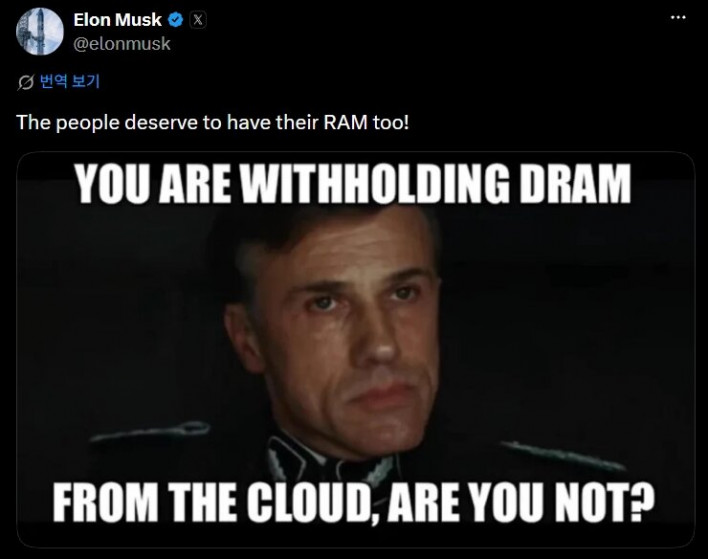
On November 1, Musk posted on his X (formerly Twitter) account: "The people deserve to have their RAM too!" Attached to the post was a meme utilizing a scene from the movie 'Inglourious Basterds', featuring an interrogation asking, "You are withholding DRAM from the cloud, are you not?" The meme satirized a climate where keeping memory in a personal PC is treated as if it were a wrongdoing.
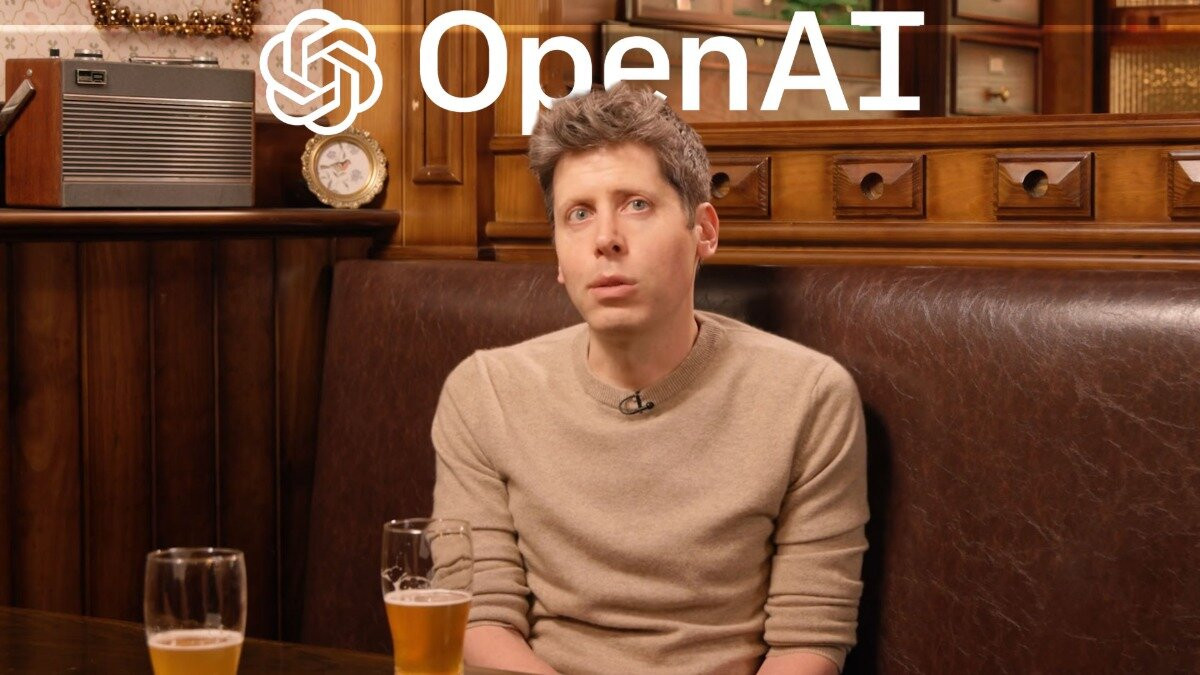
The controversy originated from Altman's remarks on the podcast 'Cheeky Pint,' released on October 29. Discussing the potential of 'local AI'—running open-source AI models directly on personal computers—Altman expressed the view that distributing scarce memory resources across individual PCs is inefficient.
Altman stated, "From a global resource allocation perspective, actually, it's quite terrible to have everybody have a bunch of the world's limited supply of DRAM sitting in their own computer and being used 5% of the time." He went on to argue that in a supply-constrained environment, utilization should be maximized through the cloud, explaining that concentrating memory usage in data centers rather than personal PCs is more advantageous in terms of resource utilization.
However, these comments triggered pushback from everyday PC users. On social media and online communities, criticism mounted over whether it was appropriate to fault individual consumers' memory usage when AI companies themselves had driven up memory demand to build massive data centers. One user responded, "It's only 64GB, but you can take it from my cold, dead hands," while another criticized tech executives for consuming resources for their own businesses while shifting the blame onto the general public.
Behind this debate lies an actual supply shortage and price surge in the memory market. Market research firm TrendForce projected in a September report that conventional DRAM contract prices would rise 10 to 15% quarter-over-quarter in Q4 2026. This is because major manufacturers are prioritizing their production capacity for server products as demand for AI server memory increases.
In particular, the supply situation for PC DRAM is expected to remain difficult to improve next year. TrendForce highlighted the possibility that PC DRAM supply could decrease in 2027 as memory manufacturers shift more production capacity toward server products. Indeed, PC DRAM contract and spot prices continued their upward trend through late October.
Ultimately, this dispute is escalating beyond a mere war of words between tech executives into a broader issue of resource allocation driven by the rapid growth of the AI industry. While Altman emphasized the efficiency of utilizing limited memory, consumers already feeling the strain of rising personal hardware prices perceive it as a demand that they surrender even their own computing resources to the AI industry.