Warning signs are emerging in Vietnam's PC service and esports ecosystem for PUBG: BATTLEGROUNDS.
First, the ongoing PUBG Vietnam Series 2026 Phase 2 (PVS) vanished from the official PUBG Esports tournament schedule, followed by the consecutive deactivation of PUBG's official social media channels operating in Vietnam. Although this unfolded shortly after the recent PUBG Asia Stars 2026 controversy involving Vietnamese players, separate concerns have re-emerged locally regarding PC PUBG operating in Vietnam without an official service license.
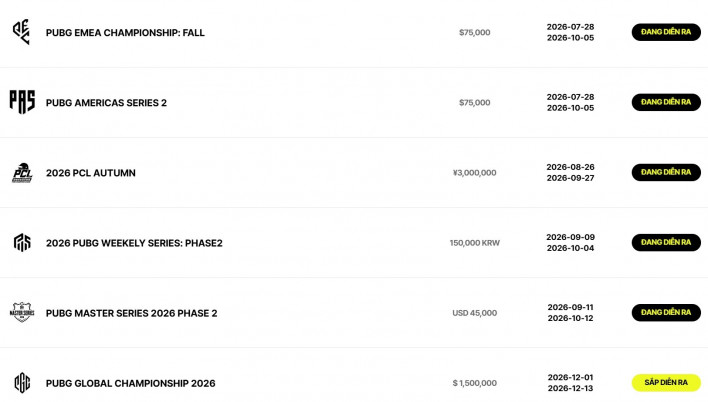
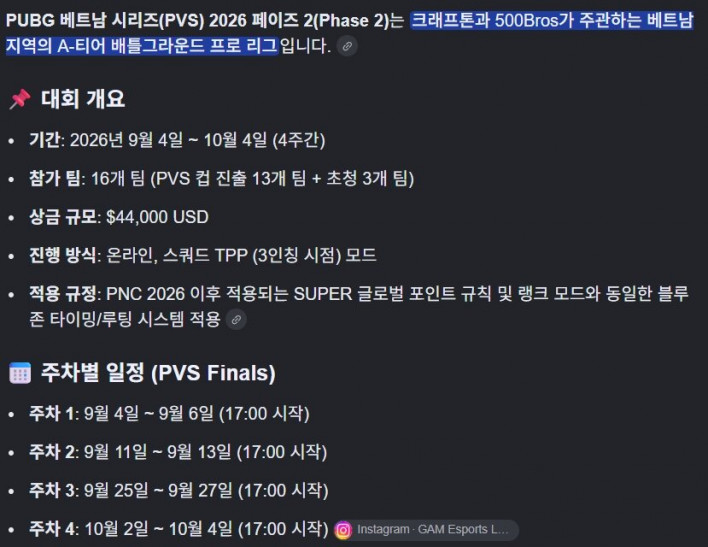
PVS is the top regional esports tournament for PUBG in Vietnam. This year's Phase 2 was scheduled to run from September 4 to October 4, with roughly half of the schedule already completed. However, on September 23, PVS Phase 2 disappeared from the tournament schedule on the official PUBG Esports website. While cached pages on search engines still list PVS as an ongoing event, the latest live page confirms the tournament has been removed.
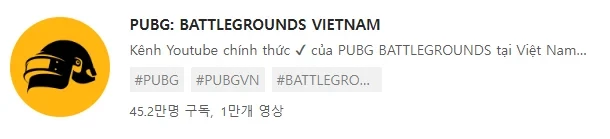
It is not just the tournament that has vanished. The "PUBG: BATTLEGROUNDS VIETNAM" YouTube channel, along with the official Instagram and Facebook pages operated by Krafton as local official channels in Vietnam, have also been deactivated. Past PUBG Esports announcements for international broadcasts explicitly listed these YouTube and Facebook channels as Vietnam's official outlets. Notably, before suspending its activity, the official Vietnamese Facebook page directed users to visit the official global website, PUBG.COM, for future game-related information.
Timing-wise, this coincides with the controversy over Vietnamese players accessing external information during matches at the recent PUBG Asia Stars 2026. Following an investigation, Krafton acknowledged that Himass and TanVuu accessed external information during gameplay and issued penalties, including permanent account bans and permanent disqualification from official PUBG esports competitions. Amid ongoing backlash from the Vietnamese PUBG community, changes to PVS and local official channels rapidly followed. However, Krafton has not stated that the removal of PVS or the deactivation of Vietnamese channels were actions taken as a direct result of that incident.
At the same time, a more fundamental issue has been raised in Vietnam. Local media outlet VietNamNet reported that the PC version of PUBG: BATTLEGROUNDS is operating in Vietnam without official release authorization. The only PUBG title legally licensed for operation in Vietnam is PUBG Mobile, operated by VNGGames, whereas the PC version—offered globally via Steam and other platforms—has not gone through local official licensing procedures.
Until now, Vietnamese players have accessed PC PUBG through global platforms such as Steam and the Epic Games Store. Although there was no dedicated local publisher or separate Vietnamese client, players could connect to global servers, allowing official esports events, including PVS, to run consistently on this foundation. In essence, the ecosystem grew with the game's official local publishing and its regional esports operations remaining functionally separate.
In fact, PVS was operated independently from the game's publishing within Vietnam. While PVS was integrated into Krafton's official competitive circuit, local esports agency 500Bros handled tournament production and management. 500Bros has been involved in producing PVS since 2020 and continued as the tournament organizer in subsequent seasons. In other words, even without Krafton directly publishing the PC version in Vietnam, a structure remained in place to host dedicated esports tournaments through a local partner.
The tournament format aligned with this arrangement. PVS has been conducted online for several recent seasons, with 500Bros specifying the format as "Online" for PVS 2023. Tournament records for 2024 and 2025 similarly list events as online competitions. Without servicing a separate Vietnamese game client or maintaining a permanent large-scale offline venue, organizers were able to build a regional league around the global PC title. However, operating tournaments in this manner does not resolve local licensing and regulatory requirements for game services.
Under Vietnamese law, games distributed via foreign platforms are not exempt from local regulations. Vietnam's online gaming laws require business qualifications and individual game release approvals for operating certain types of games, applying these rules even when foreign operators provide cross-border services to Vietnamese users. Merely offering a global version on Steam does not grant an exemption from local licensing rules.
Vietnamese authorities have repeatedly raised this issue in the past. The government has continuously taken issue with foreign games distributed without authorization on platforms such as the App Store, Google Play, and Steam. In 2024, after demanding compliance from Valve, access to the Steam store and payment features was blocked on certain local ISPs. However, because those actions did not completely block already-installed games from launching or cut off access to foreign servers, foreign titles including PUBG continued to be played in Vietnam.
Recently, the possibility of structural changes to this setup has emerged. Citing local sources, VietNamNet reported that Vietnamese authorities are considering measures to block unlicensed PC PUBG more comprehensively. Combined with the removal of PVS from the official tournament schedule and the deactivation of the official Vietnamese YouTube, Instagram, and Facebook channels within a short period, concerns are growing locally that both the PC service and regional PUBG esports operations in Vietnam could be halted entirely.
To date, neither Krafton nor Vietnamese authorities have officially announced the shutdown of PVS or the withdrawal of PC PUBG from Vietnam. It remains unconfirmed whether the changes to PVS and official channels are directly linked to the player controversy at PUBG Asia Stars 2026 or stem from local licensing and regulatory issues. Nevertheless, it is clear that Vietnam's PC PUBG ecosystem—which grew for years on global platforms without formal local publishing—is facing significant disruption across both game operations and esports.