In 2030, 'StarCraft' will be released. Four years might seem like a long time, but it really isn't. After all, 'Diablo IV' took four years after its announcement, and 'Diablo III' took four years as well. While 2030 might slip further back, looking at Blizzard's current determination, it seems likely to come out roughly on schedule.
Ever since the RTS 'StarCraft' first debuted, almost every man in South Korea has likely felt the desire to lower the camera angle and experience its world from a more microscopic perspective. The desire to control a single unit from a first-person or third-person perspective was so strong that when the 'Aliens vs. Predator' FPS came out, people who didn't want to explain the game would simply gloss over it by saying it was 'like StarCraft.' And people actually understood what they meant.
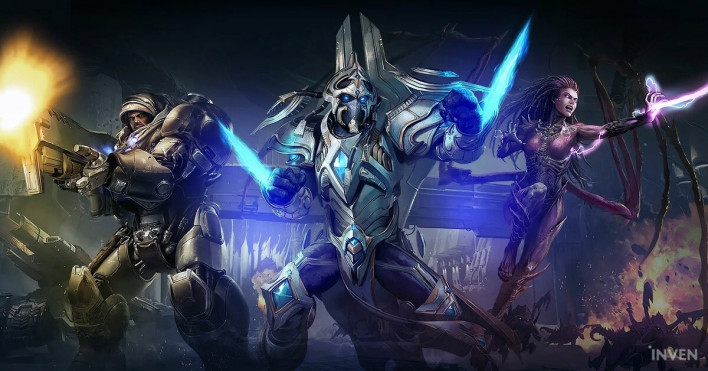
What is interesting is the setting of this game. The late 25th to early 26th century—the era we typically think of when we think of StarCraft, where Raynor, Kerrigan, and Artanis clashed and cooperated—is already in the past. Set 70 years after the End War against Amon, the Koprulu sector in the year 2575 AD serves as the backdrop for the StarCraft shooter.
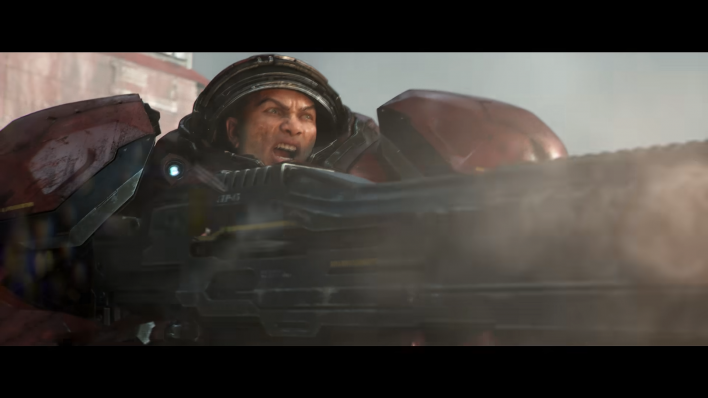
In the teaser footage released previously, we saw a Dominion Marine. Prepared with rigorous training and powerful equipment, the Marine steps out of the Barracks full of confidence, only to be crushed in an instant by a swarming Zerg horde. The suit is recovered and sent through a recycling process, leaving only the Marine's dog tag behind.
What raises questions here is 'who' they are fighting, 'why,' and 'how.'
At the end of the long narrative arc of StarCraft II, the Terrans, Zerg, and Protoss achieved an uneasy yet mutually agreed-upon peace. After a prolonged period of internal strife, the Terrans reorganized into the Dominion under Valerian, while the Protoss formed a unified faction known as the Daelaam through a process of division and cooperation. Following Kerrigan's ascension, the Zerg forces fell under the command of Broodmother Zagara, and all three factions had joined forces against Amon.
What happened over the course of those 70 years, and what possibilities have been created? By analyzing various media released after the conclusion of StarCraft's narrative arc, we intend to examine this lore and predict what StarCraft in the year 2575 will look like.
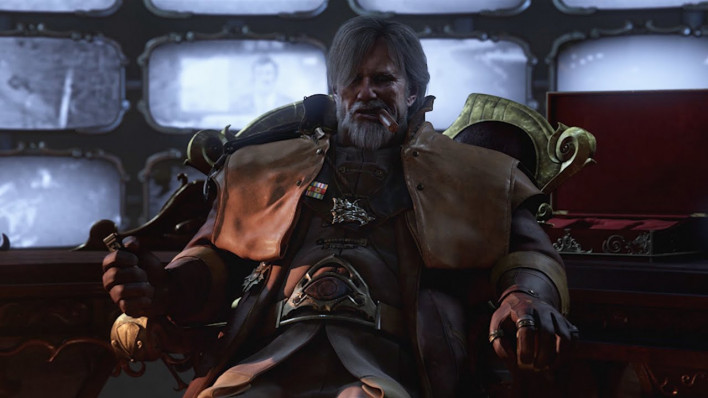
Through the Brood War and the End War (the war against Amon in StarCraft II), the Terrans experienced extreme political upheaval. First came the Terran Confederacy, which seized hegemony over the Koprulu sector through the Guild Wars; then the Sons of Korhal, who rebelled against the Confederacy, took power; and Arcturus Mengsk, who led the Sons of Korhal, established the Terran Dominion to become humanity's core military power.
Later, through the events of StarCraft and StarCraft II, Arcturus Mengsk was killed by Kerrigan, and his son, Valerian Mengsk, inherited the throne. Joining hands with Jim Raynor, he took control of the government and ushered in a new era for the Dominion. At this point, since the Protoss and Zerg were temporary allies who had survived the End War together, the three races entered a period of post-armistice peace.
The Protoss experienced even greater turmoil than the Terrans. The Zerg invasion of Aiur caused the collapse of the Khalai Conclave, forcing Aiur refugees to flee to Shakuras—the stronghold of the despised Nerazim faction—where they began an uneasy coexistence. Only in StarCraft II, after severing their connection to the Khala, did most Protoss unite into a single faction called the Daelaam, centered on the Khalai and Nerazim.
However, cultural conflicts remained between the Nerazim of Shakuras and the Khalai Protoss. Factions within the Daelaam Protoss sought to restore the Khala, while the Tal'darim refused to join altogether, charting their own independent course.
The Zerg were equally unstable. While Broodmother Zagara absorbed the Queen of Blades' forces left behind by Kerrigan, numerous small feral Zerg groups still existed in the wild. Furthermore, Broodmother Niadra, whom Kerrigan had previously planted with the goal of hunting Protoss, continued to hunt Protoss even as of the short story comic 'Shadow Wars.'
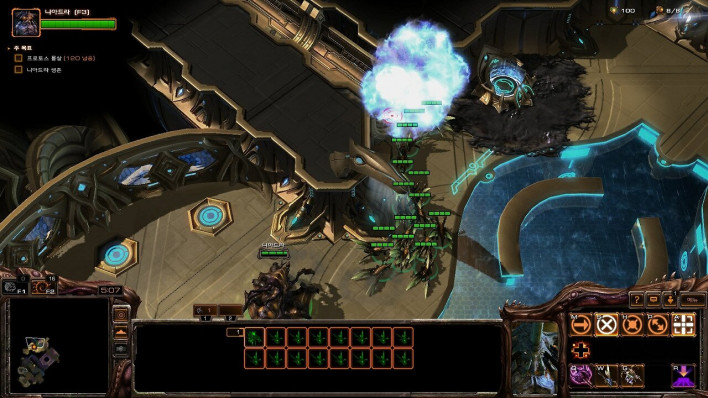
The issue lies in those 70 years.
For the Protoss, 70 years is not a long time, so their political landscape may not have changed significantly. As for the Zerg, individual units lack independent thought, and the intentions of the commanding Broodmothers are paramount, so 70 years is unlikely to have brought about meaningful change either. However, for the Terrans, 70 years is more than enough time for a government to flip 180 degrees.
According to the leaked synopsis for the StarCraft shooter, during the peace that lasted over 50 years after the End War, the Terran population more than tripled, ultimately leading to severe food shortages. Searching for scarce resources, the Terrans began encroaching into Zerg and Protoss territories established by existing treaties. When the two races guarding their borders attacked human settlements, calls for retaliation grew within the Dominion.
However, Valerian Mengsk refused to retaliate in order to honor the interspecies treaties. Taking advantage of this, a political group championing the ideology of his father Arcturus Mengsk—the 'New Sons of Korhal'—rapidly rose to power. Ultimately, Valerian was ousted from power roughly 20 years before the start of the game, and those who seized control of the Dominion pushed a 'Dominion First' agenda, launching aggressive colonial expansion into Zerg and Protoss territories—which forms the main thrust of the leaked narrative.
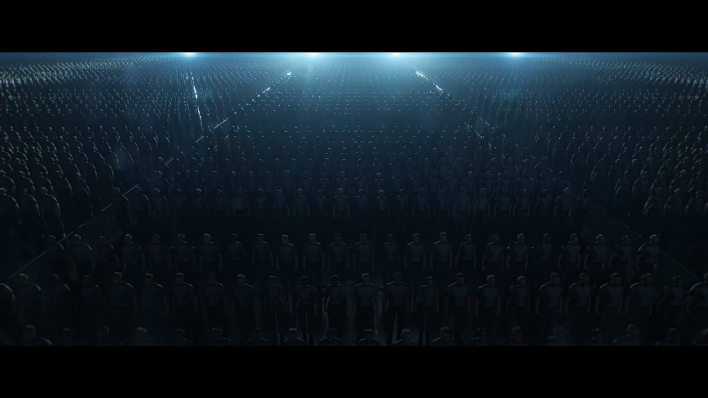
This also implies that the StarCraft shooter could tell a story going beyond minor local skirmishes and military friction post-End War, opening the curtain on 'another Great War.' From the perspective of a Dominion that does not shy away from military action, the Zerg factions and the Daelaam Protoss coexisting in the Koprulu sector could both be potential enemies. This means that rather than a story like StarCraft II where the three races join forces against an absolute evil, a second all-out war among the three races fighting over limited resources is far more likely.
Of course, there is also a good chance that another story lies hidden behind all this. References in the secret transmission logs published on the official website to 'Roxara,' 'Theta Squadron,' and unidentified cargo only heighten these suspicions. Since Roxara was a location where Zerg Changelings were researched in a previous short story, it is entirely possible that the 'incidents' Valerian failed to respond to were manipulated by internal Terran factions to shape public opinion.
Game director Dan Hay also previously mentioned that StarCraft's background is grounded in a complex political landscape and friction among the three factions. While the exact details remain to be seen, the StarCraft we meet in 2030 is likely to depict high-level schemes, conspiracies, and friction rather than a simple cosmic power struggle between three forces.
So much for the setting; now let's dive into the game itself.
Although the revealed video showed only limited information, it is safe to assume that the primary setting will be a single planet. As the original StarCraft is a space opera of sorts, the possibility of featuring multiple planets cannot be ruled out completely; however, for open-world game design, building multiple environments on a single planet delivers far better immersion. Given that director Dan Hay has crafted open-world shooters multiple times, the battlefield for the StarCraft shooter is likely to be condensed into one, or at most two, planets.
And among the countless planets in the Koprulu sector, the candidate considered most likely to serve as the game's setting is Roxara. What is interesting about Roxara is that, despite never actually appearing in a game, it carries a suspiciously detailed body of lore attached to it.

The planet Roxara first appeared in 2009 in the short story comic 'Fear the Reaper,' featured in StarCraft: Frontline. In the story, Roxara is described as a planet made up of 'gentle plains and rolling hills.' By 2503 AD, during the interwar period between the Brood War and the End War, Terran civilians had already settled there. It was not a core Dominion world or strategic stronghold, but a small colonial world on the fringe.
What is interesting is that this planet has a much longer history than one might expect. According to the lore, Roxara was one of the planets visited in ancient times by the Xel'Naga, who left relics behind, and the Protoss settled there as well. Roxara also has a close connection to a hugely important event in Protoss history: the Aeon of Strife.
The Aeon of Strife was a prolonged civil war among the Protoss that erupted after the Xel'Naga deemed the Protoss a 'failed experiment' and departed. Devastated by disappointment and despair over losing their creator, the Protoss attacked the Xel'Naga, and following their departure, the tribes began blaming one another, triggering a long civil war. The Protoss were driven to the brink of extinction by this war until Khas created the Khala and overhauled Protoss society, bringing the conflict to a close.
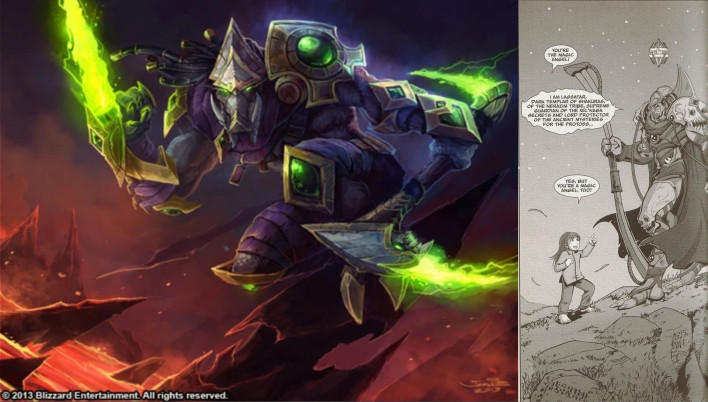
Roxara served as a Protoss colony before the Aeon of Strife, and Protoss naturally inhabited it. Traces of the Protoss civil war fought during the Aeon of Strife remain on Roxara, and even after the Protoss abandoned the planet, their marks endured. In 'Fear the Reaper,' the Nerazim Dark Templar Rhas'ktahr visits Roxara in search of a remaining Xel'Naga relic and discovers it with the help of a young Terran girl named Tippy. This means that even after the Brood War, the Protoss remained aware of the planet Roxara.
Furthermore, Roxara has a moon.
Roxara's moon, featured in the official short story 'Changeling,' is a desolate mining world rich in mineral resources, which sparked mining rights disputes between the Terran Dominion and the Kel-Morian Combine after the Brood War. At that time, the Dominion dispatched 'Zeta Squad' to a location on the moon called Vinyon's Point. Nominally, it was to inspect nuclear weapons held by Kel-Morian operatives—and the dispatched personnel believed as much—but the true objective was entirely different.
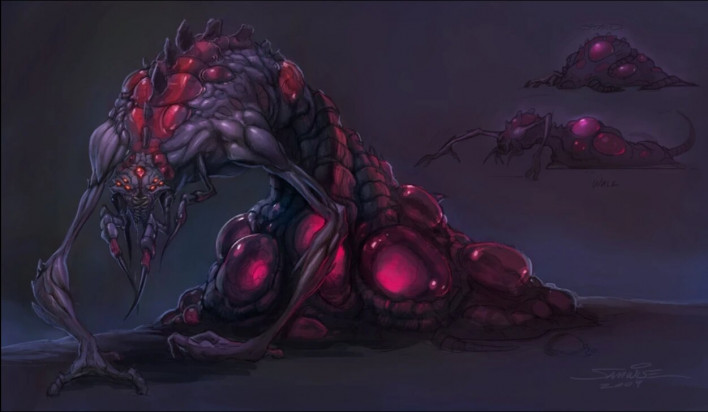
The truth was that Roxara's moon was a testing ground for the Dominion's 'Changelings.' In StarCraft II, the Changeling is a Zerg scouting unit spawned by Overseers that can disguise itself as a Marine or Zealot to infiltrate enemy lines undetected. While detectors cannot reveal them, they are not too difficult to spot if one pays close attention. At any rate, on Roxara's moon, the members of Zeta Squad were unaware that they were test subjects, and all died during the experiment.
And very recently, this moon of Roxara was mentioned once again on the official StarCraft website. Secret transmissions revealed through an ARG noted that 'Theta Squadron' was heading to Roxara's moon and that a freighter had arrived ahead of them carrying an item 'pivotal to research,' without offering further details. In addition, anomalies were observed, such as life signs being detected despite the facility showing zero registered personnel.
From this, one can strongly speculate that the primary setting for the StarCraft shooter is Roxara's moon, as well as Roxara itself. The one unexplained point is that there is no clear evidence of feral Zerg or Zagara's hives existing on Roxara; however, it is entirely plausible that the Zerg noticed this during the Changeling tests and set their sights on Roxara, or that the hawkish Dominion regime used Psi Emitters to lure feral Zerg swarms to manufacture a pretext through a staged incident.
Given these circumstances, Roxara and its moon stand out as far more likely candidates to serve as the backdrop for the StarCraft shooter than any other planet.
Having speculated on the game's setting, let's step further in and predict how the gameplay might unfold. According to statements by Director Dan Hay, the game's protagonist is simply 'a single Marine.' Not a hero with transcendent combat power like James Raynor or Tychus Findlay, but just a raw Marine with 40 hit points and 6 attack power.
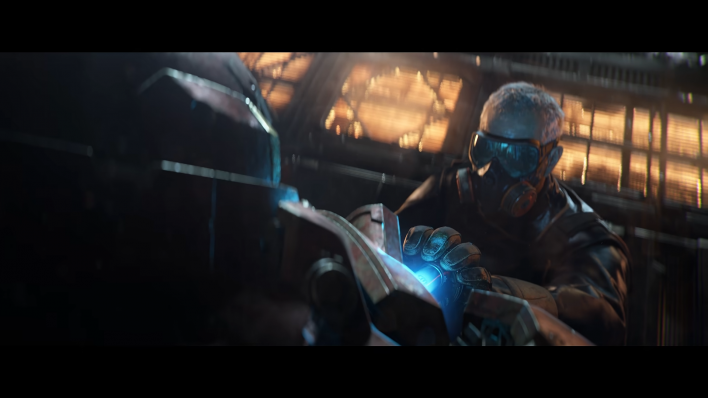
However, we can spot a few returning elements and changes in the footage. As shown when a Dominion mechanic services the armor, the 'Stimpack' is definitely present. Whether it is the standard Stimpack that drains health to boost response times or an elite Marine spec that restores health while boosting responsiveness, it is undeniably included.
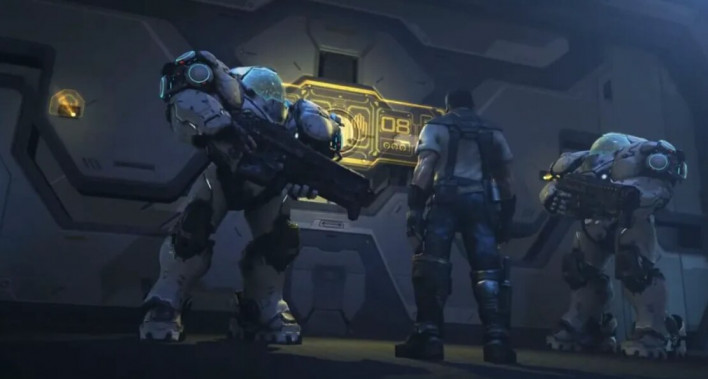
What is intriguing is Private Holt's gaze as he looks up at the fully serviced CMC Powered Suit—the suit's height is massive. It appears nearly 3 meters tall, whereas CMC suits during StarCraft I and II were described as being around 2 to 2.3 meters tall. In 70 years, the Dominion's primary powered suit has grown nearly a full meter taller.
This was also mentioned in Dan Hay's interview, where he stated that the CMC suit stands 3 meters tall and weighs 454 kg (1,000 lbs). At that size, it could practically go toe-to-toe in a fistfight with a Protoss Zealot, and crush a Zergling underfoot. Of course, that is just physical size—given a Zergling's reaction speed and offensive power capable of shredding CMC suits, actually doing so won't be that easy.
This design likely keeps in mind the 'suit modularity' mentioned by Dan Hay. In an interview, Hay revealed that once players acquire the suit, they can explore the open world to obtain various components and upgrade it. While he did not confirm this system as final, leaving room for change, if developed as planned, players will be able to upgrade the suit along diverse paths.
For example, players could trade defense for mobility and equip cloaking modules to play like a Ghost; add heavy armor parts and a plasma perdition flamethrower to operate like a Firebat; attach Punisher Grenades to play like a Marauder; or add jump packs to create a flying Marine like a Reaper.
Further evidence for this 'upgrading' system came from Inven's interview at BlizzCon 2026, where Dan Hay made it clear that if a combat encounter feels too difficult, players can explore the open world to become stronger before trying again. Whatever form it takes, the protagonist Marine clearly has room for continuous growth.
When it comes to 'weapons,' rather than countless weapons with randomized stats like in Borderlands, an ideal design would build on weapon 'archetypes' by adding attachments to expand utility. The universe of StarCraft is not one where individual adventurers or mercenaries run rampant, but one where organized military factions clash.
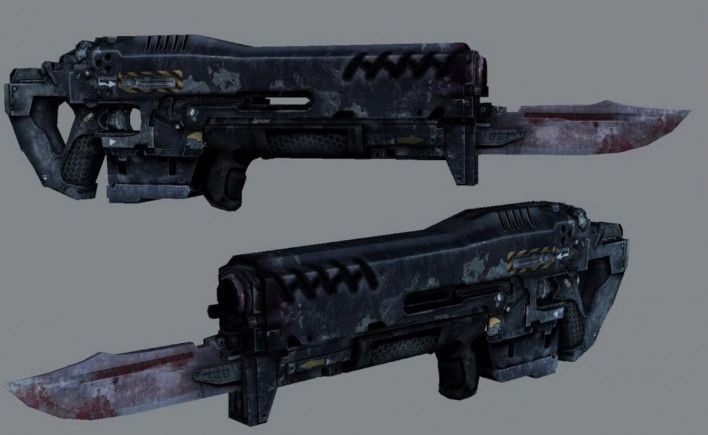
Naturally, the main gear used in the game will likely consist of standard-issue military equipment rather than custom master-crafted firearms. Adding attachments to standard issue is certainly feasible—as Rory Swann has demonstrated repeatedly—but having a hidden backcountry gunsmith suddenly hand over a +10 Gauss Rifle would feel out of place.
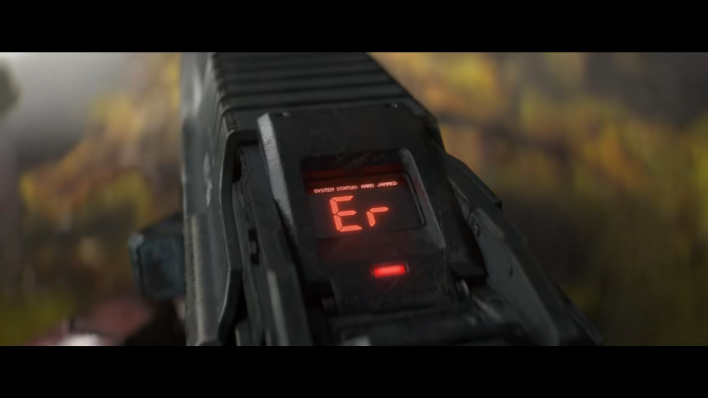
Separately, since Private Holt's demise in the video was caused by a Gauss Rifle misfeed, it appears that the standard armament still uses the StarCraft II-spec Gauss Rifle. Glancing back through the Field Manual on my bookshelf, I found a note stating that even during StarCraft II, Gauss Rifles used conventional gunpowder alongside Gauss technology, leading to frequent feeding jams, and advised keeping ammunition dry.
This brings up the question of the relationship with the Protoss and Zerg featured in the game. Positioned as a narrative-driven complete game rather than a live-service title, the StarCraft shooter cannot afford simple designs for its hostile factions. The Protoss and Zerg carry far too much presence to be treated merely as endlessly spawning mobs that drop crafting materials.
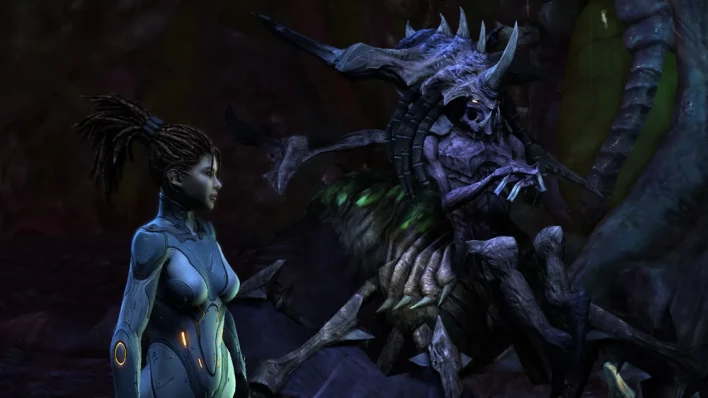
Therefore, depending on the situation, there is a possibility that the protagonist could cooperate to some extent with the Protoss, or even the Zerg. If the Protoss dispatched troops to Roxara, and assuming there is a conspiracy behind the Zerg's appearance, the three races already fought side-by-side in the End War, and Broodmother Zagara—who inherited the main Zerg Swarm after the Queen of Blades—is lore-wise remarkably peace-minded.
Zagara's personality can be seen in the official StarCraft novel 'StarCraft: Evolution,' where she uses Xel'Naga essence to create a new living creature called the 'Adostra' in an effort to restore ecosystems on desolate worlds. Furthermore, she invites Artanis and Valerian, proposing that they use this creature for interspecies reconstruction.
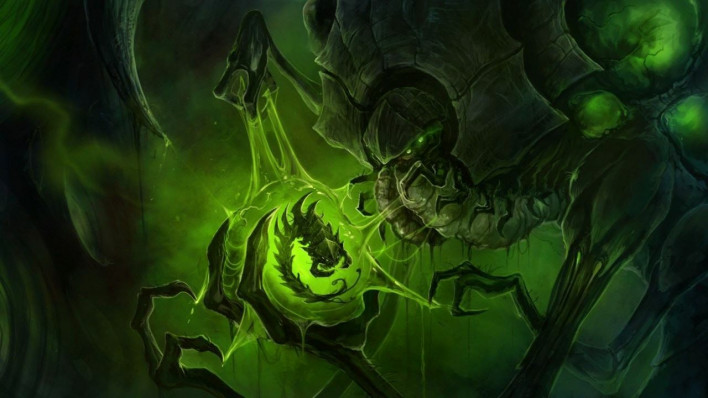
Of course, Abathur, who rejected Zagara's path, remains deeply hostile toward the Terrans and Protoss, creating a new experimental Zerg organism called the 'Chitha' (or Psyolisk) to provoke conflict among the three races. In the novel, once this conspiracy is thwarted, peaceful negotiations among the three races begin, showing that Zagara is surprisingly earnest about keeping the peace.
Interestingly, both the 'Chitha' created by Abathur and the Changelings tested on Roxara's moon share the trait of being irregular Zerg tools designed to sow chaos inside enemy ranks. The Chitha takes the concept of absorbing and utilizing essence from other organisms to an extreme, which Abathur uses to trigger interspecies clashes. If the Zerg forces appearing in the video are lured by Psi Emitters, or belong to Abathur's hardline faction, the protagonist could potentially build a friendly relationship with Zagara's peace-minded faction instead.
Of course, we still have a long way to go. Given that an announcement was made and footage was produced, it is unlikely to be vaporware, and development has probably been underway for a few years. Yet everything speculated so far remains merely a strong possibility, and things could turn out completely differently. We might end up with something entirely different from what we thought or imagined.
Even so, this speculation itself is pure fun. After all, it's 'StarCraft'—not just any game. It is the only video game to surpass the iconic status of traditional Yut Nori and become a cultural staple in South Korea, known by everyone from youth to older generations thanks to its long history, standing alongside Taekwondo as a national sport.
While that long history has made it a nostalgic 'boomer game' that younger generations might not fully grasp, for those in their 30s and 40s, StarCraft is a topic that never fails to spark joy. That is why, even as many debate and express anxiety over the vague target year of 2030, anticipation and imagination keep running high.
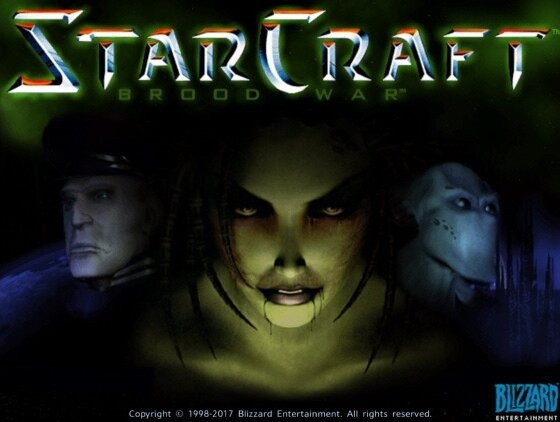
Back in February of this year, I wrote a feature article imagining a 'StarCraft shooter.' While I had a degree of confidence since it was based on compelling evidence, I did not predict that it would be a single-player open-world shooter without live-service elements.
Was I disappointed? Not at all. This has its own reasons to be excited about. Looking down at a pouring swarm of Zerglings, a Zealot charging right in front of your eyes, and the tension of being a Marine facing all of that with 40 HP, 6 attack power, a CMC suit, and a Gauss Rifle—this is the vision of StarCraft dreamed about for as long as anyone can remember.
There is still plenty of time before 2030. In the meantime, the lore, the systems, and what we see now can all change. Still, every time new details are revealed, we will likely keep peering into this world and imagining what comes next.
After all, I'm certainly not the only one imagining it.