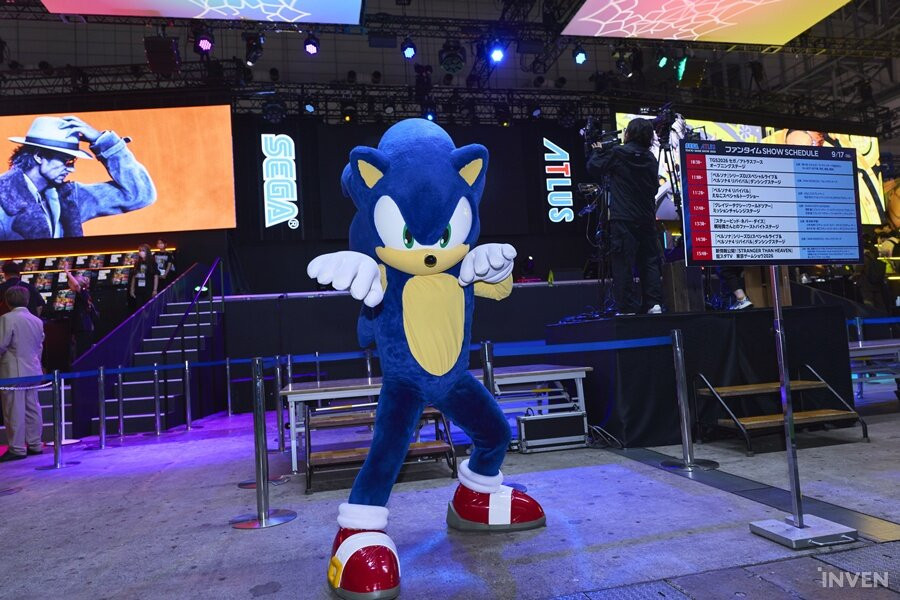
In South Korea, where the franchise is also remembered for the intro tune of the American animated series—'Sonic, Sonic, Sonic the Hedgehog'—the 'Sonic the Hedgehog' series marks its 35th anniversary this year. Over these 35 long years, Sonic has undergone countless transformations to keep pace with changing times.
Comparing Sonic's age to a person's life journey, when he first appeared in the world, he was the star of a side-scrolling platformer boasting speed unmatched by anyone else. Later, with 1998's 'Sonic Adventure', the franchise expanded into 3D, ushering in the era of 'Modern Sonic', and enjoyed a new golden age with consecutive hits in the Adventure series. It was truly the prime of Sonic's youth.
However, things changed starting in the mid-2000s. Games like 'Shadow the Hedgehog', which featured Shadow as the protagonist, and the ambitious reboot 'Sonic the Hedgehog' suffered back-to-back critical pans, followed by disappointing receptions for titles like 'Sonic Unleashed' and 'Sonic Lost World'. It was a time more bitter for Sonic than any other.
Fortunately, Classic Sonic continued to keep the flame alive, showing potential for a rebound. Entering the 2010s, 'Sonic Colors' and 'Sonic Generations' earned strong reviews, laying the groundwork for a comeback, and in 2022, 'Sonic Frontiers' demonstrated new possibilities for the series. Coupled with the positive reception of 'Sonic Racing Crossworld' released in 2025, Sonic is once again building a strong presence across its respective domains: Classic, Modern, and Racing.
Having gone through numerous changes over 35 years and endured tough times along the way, what was the driving force that sustained the Sonic series through this long journey? Beyond its 35th anniversary, what direction will Sonic take in the future? On site at TGS 2026, we sat down with Sonic Series Executive Producer Takashi Iizuka and Sonic Creative Director Kazuyuki Hoshino to hear about the past 35 years and the future of the Sonic series.
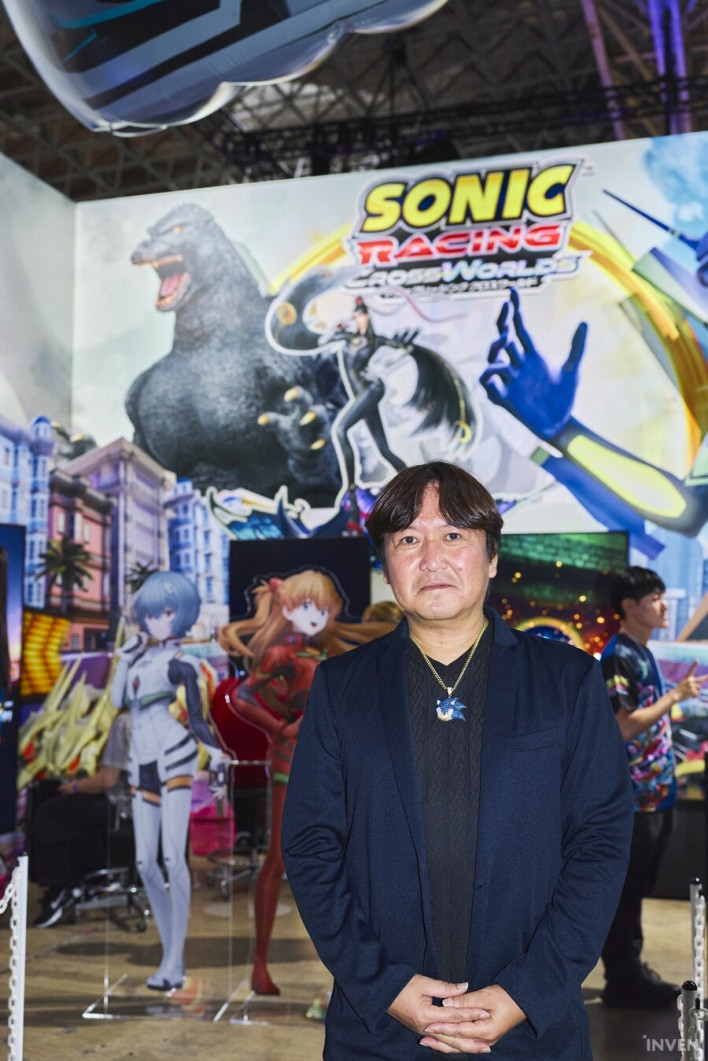
Sonic has reached its 35th anniversary. Looking back on the past 35 years, what is the most memorable moment for you?
Iizuka: A lot has happened over 35 years, and there are many memorable moments. Most recently, when the Sonic movie premiered in Hollywood stands out. As a game creator, walking the red carpet alongside Hollywood actors was a truly special experience.
Hoshino: During my career as a game creator, I relocated to the US twice. The first time I moved to the US, I started a new life, started a family, and had children, reaching major turning points in my life. I was able to gain so many experiences during my 35 years as a developer.
What do you think was the driving force that allowed the Sonic series to continue over such a long 35-year period?
Iizuka: While you could say we reached the 35th anniversary starting from the first title released in 1991, Sonic has released new titles almost every single year. The fact that we could continuously deliver new works and safely reach this 35th anniversary is, above all, thanks to the support and encouragement of our fans. I am truly grateful.
Historically, Sonic was a series that was particularly popular in North America and English-speaking regions, but I am personally proud and grateful that it continues to grow in Korea and Japan as well, building new fan bases and brand presence.
Hoshino: I'd like to thank the fans once again for supporting us up to this 35th anniversary. I believe many people have recently discovered Sonic as well. While Sonic has evolved to adapt to the times, there are also aspects that have remained unchanged. We want to continue showing new sides of Sonic that fit the era moving forward.
If you personally had to pick three titles that defined the golden age of the Sonic series, what would they be?
Iizuka: If both of us picked three, that would be six titles, which feels like too many, so I'll name just one (laughs). For me, 'Sonic Adventure', released in 1998, is the most memorable. Sonic, which had always been made in 2D, shifted into 3D for the first time, and there were many changes, such as characters gaining spoken dialogue.
At the time, we revealed the game on a grand stage in Tokyo that could accommodate about 5,000 people, and it was such a huge event that we held presentation sessions three times. I consider that the starting point of what Modern Sonic is today.
Hoshino: It's really hard to choose just one. Sonic 1 holds special meaning as the game where everything began, but personally, 'Sonic Adventure 2' also stands out to me. It received incredible support from fans and served as the origin story for Shadow.
As developers, starting anew in the unfamiliar environment of the United States felt like beginning from scratch, and everyone worked extremely hard and embraced the challenge. I think it was a truly brilliant era.
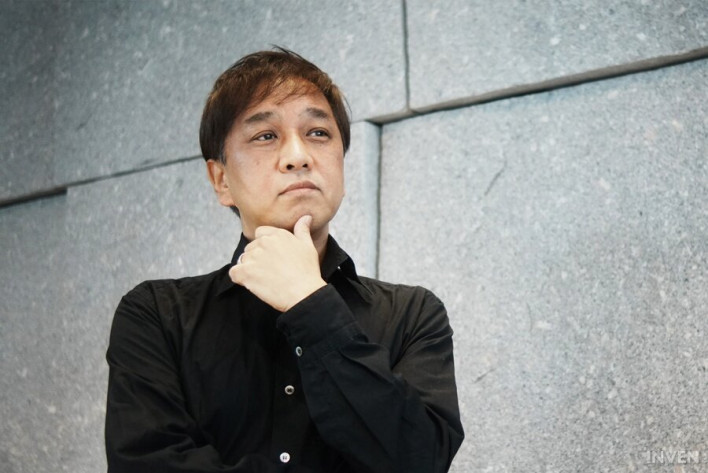
A year has passed since the release of 'Sonic Racing Crossworld'. Collaborations with various IPs have continued—is there a specific collaboration that stands out as the most memorable?
Iizuka: I still remember when we first announced the Minecraft collaboration at Summer Game Fest last year; the fans cheered so loudly.
Since then, we've had so many collaborations, including PAC-MAN, Indiana Jones, and Teenage Mutant Ninja Turtles. When those collaborations launched, a great number of inactive players who had taken a break from Sonic Racing came back.
I hope collaborations like Godzilla will similarly bring back returning players and attract new ones.
It feels like few games have had as turbulent a history as Sonic. The franchise reached the top in the past, but there were also slumps. What do you think was the driving force that sustained the franchise despite those ups and downs?
Iizuka: As you said, it really has been a turbulent 35 years. We gained massive popularity during the Mega Drive era, but there were certainly periods when sales struggled.
There was a time when I moved to LA with the mission of reviving Sonic. At that time, Sonic's popularity was declining, and even fans were turning away. That was when I decided to move to Los Angeles.
I believe Sonic's ability to grow again today is truly thanks to the support and passion of our fans. In particular, 'Sonic Mania' served as the sign harbinger of Sonic's revival from its slump.
'Sonic Mania', which we co-developed with an indie studio formed by Sonic fans, reignited the fandom and served as a turning point that brought back fans who had been drifting away. Since then, with various media like the movies being released, Sonic was able to grow once again. Ultimately, we were able to persevere thanks to the fans. We will continue to walk forward alongside our fans.
Hoshino: What supported us through the hardest times was truly our fans. I believe the driving force that keeps Sonic moving forward is the fans. I want to continue walking together with our fans in the future.
While we have also tried various new things to match the times, I think the unique core elements of Sonic that remained constant, along with its unchanging message, were also important driving forces.
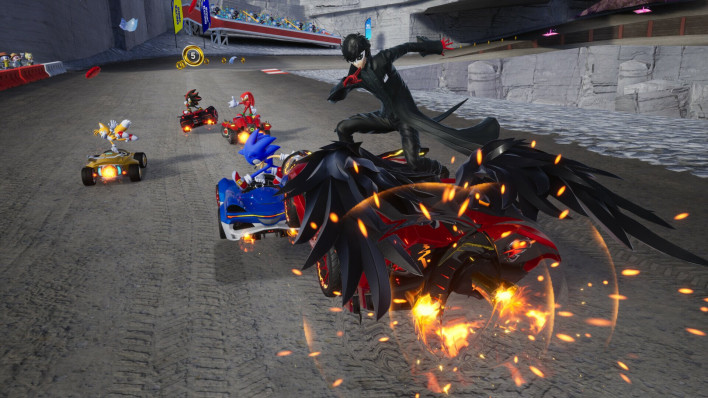
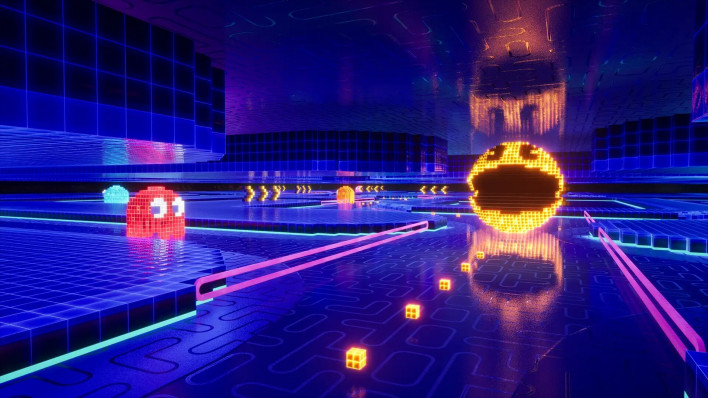
When collaborating with other IPs like Minecraft or Godzilla, what is the most important aspect you consider?
Iizuka: We value elements that appeal to fans of the original IP. Taking Minecraft as an example, we leverage its block-based world, or with the PAC-MAN collaboration, racing inside a maze—we try to blend the defining characteristics of the original work into Sonic Racing.
We design collaborations that fans of the original franchises can love and enjoy, and personally, every single IP collaboration is memorable and precious to me.
The Season Pass 2 lineup for 'Sonic Racing Crossworld' generated significant buzz. Both Godzilla and Evangelion are IPs with close historical ties to SEGA—did those ties influence your decision to select these two franchises?
Iizuka: You certainly know your history! But no, that didn't particularly influence our decision (laughs). Above all, the current development team belongs to a younger generation, so I doubt they even know about those past connections you mentioned.
When choosing collaboration IPs, we first consider how well the worldviews blend together when brought into the world of Sonic Racing. Next, we look at global brand recognition.
Evangelion and Godzilla originated in Japan but have huge global fanbases, which is why we felt they were great fits for 'Sonic Racing Crossworld'.
What form will the collaborations and updates take in Season 2?
Iizuka: It will follow the same format as Season 1. In Season 1, we offered a paid update pass accessible over a one-year period, featuring a total of six collaborations.
Season 2 will proceed in the same manner. Beyond Evangelion and Godzilla, four more collaborations are planned, alongside matching tracks, vehicles, and more. Please look forward to the announcements coming next month.
Additionally, in Season 2, we are preparing free character updates so players can enjoy new content even if they don't buy the Season Pass. Even without purchasing the pass, you can continue enjoying 'Sonic Racing Crossworld' through ongoing updates, so please don't worry.
If you have any concepts or features you'd like to attempt in the next title, could you share a subtle hint with us?
Iizuka: Of course, we are always working on new titles. Even now, we have unannounced projects in development and underway.
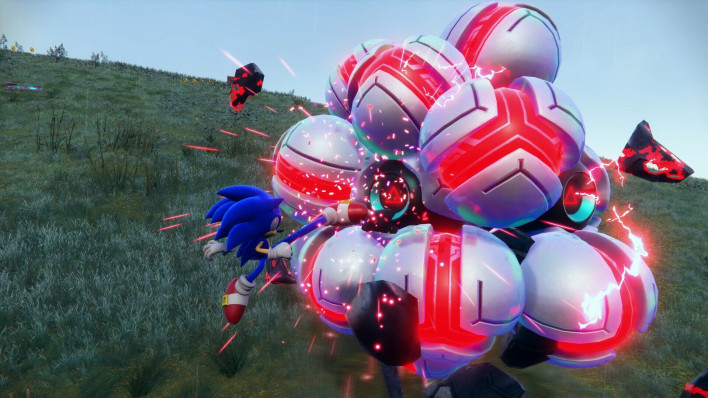
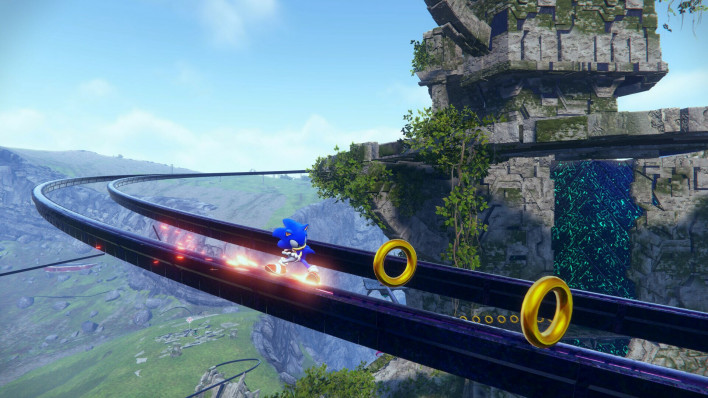
As I mentioned around the release of 'Sonic Frontiers', I consider it a foundation for 3D Sonic titles. In particular, elements built around open-zone spaces are aspects that could influence future Sonic titles, and we are currently developing with that in mind.
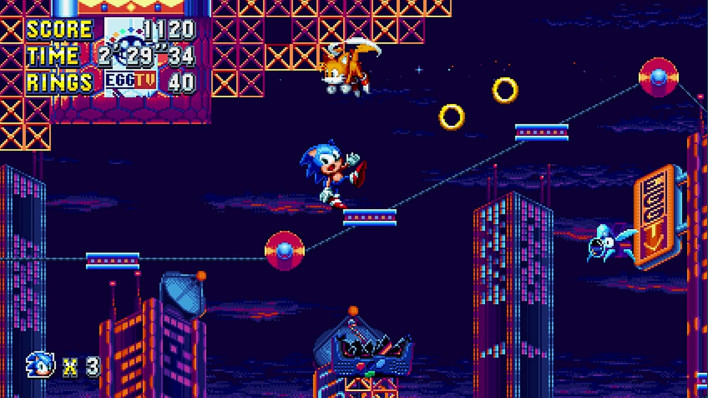
To add to that, we consider 2D Sonic based on Classic Sonic, 3D-based Modern Sonic, and racing games as the three major pillars of the Sonic franchise.
Right now, we aim to thoroughly satisfy the demand for racing games through 'Sonic Racing'. Of course, we also plan to continue evolving both Classic Sonic and Modern Sonic going forward.
However, it's difficult to say that all three genres hold exact equal standing as pillars. The core center among them is 3D-based Modern Sonic. 2D Sonic and racing can be seen as elements supporting that center.
While 2D Sonic and 3D Sonic feature the same characters, they are completely different games with distinct play styles and difficulty levels. If either were to disappear, a beloved branch of the series would vanish, which would disappoint fans. That's why we cherish all three domains and want to keep evolving them.
With the movies achieving consecutive box office hits, how do you plan to expand the Sonic IP beyond games in the future?
Iizuka: Three Sonic movies have been released so far, and the fourth movie is scheduled to release in North America next year. We are truly grateful for the positive reception the Sonic movies received in Korea. In particular, Korea is a market with high interest in cinema within Asia, so I hope Korean fans look forward to the fourth film as well.
However, I believe the core of the Sonic IP is ultimately the games. If the core foundation of games weakens, other forms of content will naturally weaken as well. Therefore, making great games remains our top priority.
Alongside that, we are promoting Sonic through various media such as movies and Netflix animated series. We want to introduce Sonic to people in regions where accessing games might be difficult, building Sonic fans worldwide.
Hoshino: To add to that, I once attended a fan meeting in Seoul, where I felt the intense passion of Korean fans firsthand. I was particularly amazed when everyone sang along together during the trailer presentation.
In Korea, we also consistently notice strong demand among female fans for character merchandise. Beyond merch, we are constantly thinking about various non-game experiences like movies for fans to enjoy.
On another note, we were originally planning to hold a Sonic Drone Show in Odaiba on the 21st, but unfortunately, it couldn't be carried out properly due to a typhoon, which was disappointing.
Within the Sonic fandom, there is significant interest in remakes of classic legacy titles. Are there any plans or considerations currently underway?
Iizuka: Lately, we have been getting a lot of questions from fans about remakes.
First of all, Sonic Team works within a limited headcount to handle various development projects for fans. Remaking older titles requires upgrading graphics and quality-of-life features, and that work demands just as much manpower and resources as developing a brand-new game.
So for now, rather than reviving past titles, we want to focus on upcoming new games to deliver fresh and novel experiences to fans. However, we are well aware that fan demand is extremely high. If the opportunity arises, we would love to bring back classic titles in the future.
Recently, during SEGA earnings reports and statements, officials mentioned that 'the new Sonic title will be a challenging project in many ways,' creating a buzz. Being called 'challenging' leads some to speculate about a mature Sonic game or a major genre shift. What can you tell us?
Iizuka: I'm not sure where that information originated, but we have made no official comments regarding unannounced titles.
We continuously take on new challenges with every title. The Sonic series doesn't have many numbered sequels, and avoiding uniform numbering across titles reflects our intention to try new things each time. Moving forward, we will maintain an ambitious, adventurous attitude in developing all our titles.
2023's April Fools' release 'The Murder of Sonic the Hedgehog' received critical acclaim despite being a mini-game format. Can fans expect similar side spin-off games to be released from time to time?
Iizuka: 'The Murder of Sonic the Hedgehog' was not created by the core game development team. While brainstorming April Fools' Day ideas for fans, as we do every year, we thought it would be fun to actually release an idea we joked about—it started as a social media event.
If we attempted the exact same approach again, since it's already been done once, it wouldn't have the same impact. That said, it doesn't diminish the advantage that Sonic can expand in various directions through spin-offs like this.
Recently, we also had content like 'The Chaotix Case Files'. Through content like this, characters who didn't get as much spotlight in the mainline games had a chance to appeal to fans on social media. We are continuing to explore various ways for fans to enjoy the Sonic IP.
Sonic is broadly categorized into side-scrolling Classic Sonic and adventure-style Modern Sonic, but with the recent success of 'Sonic Frontiers', it feels as though Classic Sonic's presence has shrunk. What is the sentiment internally?
Iizuka: I consider all three to be pillars supporting the Sonic series. Of course, differences naturally exist. It's true that Modern Sonic has the greatest influence. However, I don't believe Modern Sonic alone can hold up the entire Sonic series. From that perspective, it's closer to Classic Sonic and Racing Sonic supporting the central pillar of Modern Sonic.
In that sense, every part of the Sonic series is precious to us as a development team. We will continue to develop all three pillars without change.
What are the core elements and development direction you consider most vital in the Sonic series?
Iizuka: The most crucial element is, without question, the speed of the Sonic series. Delivering an exhilarating experience of Sonic's speed is our top priority.
The next most important aspect is whether there is an innovative idea. It's a factor we always prioritize when starting a project, and it's also why there aren't many numbered titles in the Sonic series.
For example, 'Sonic Generations' allowed players to play as both Modern Sonic and Classic Sonic, while in 'Sonic Colors', Color Powers served as a core gameplay element.
Like this, we place great importance on creating new gameplay experiences for each title. So if I had to pick the second most important element after speed, it would be innovation.
Hoshino: From a brand perspective, just as the line from 'Sonic Frontiers' goes—'If you don't run, nothing changes'—we want Sonic to reach out and give courage to people who are struggling or hesitant to take a step forward. I believe that is the essence of Sonic.
We can also talk about Sonic's identity from a design perspective. In Japan, there is a saying that a name defines one's identity. Sonic is visually a spiky hedgehog, and in Japanese, the word for 'spiky' also connotes having distinct individuality or standing out.
In that sense, Sonic's spiky appearance is an element that embodies the character's charm and identity.
Does Sonic's distinct gaming syntax, such as its sense of speed, act as a constraint when tackling new genres?
Iizuka: We haven't really felt that way. For instance, Sonic has the classic rule that as long as you hold at least one Ring, you won't die.
We try to incorporate these signature Sonic rules and grammar that fans are accustomed to into the game whenever possible. However, if a rule is difficult to apply directly to a given genre, we adapt and modify it to fit that genre.
Because of that, we have never felt that Sonic's unique rules and language acted as a shackle during development.
Finally, on the occasion of the 35th anniversary, is there anything you would like to say to Korean fans?
Hoshino: Thanks to your immense support and love, Sonic continues to grow little by little even today. Thanks to our fans, many exciting opportunities keep coming our way as well.
We want to repay the love we've received by presenting various projects that you can enjoy. Please continue to look forward to what's ahead.
Iizuka: I am truly grateful to the fans who have supported us all the way to this 35th anniversary. In particular, we can feel the Korean gaming media and fan community expanding rapidly, growing into a fandom that leads the Asian region.
We especially feel that the Sonic fan community in Korea has grown even larger since the release of the Sonic movies. We will work hard to live up to our fans' expectations accordingly. Please continue to give us your support. Thank you.