'Miresi: Invisible Future' (hereafter Miresi), a new collectible RPG developed by Control9 and published by Smilegate, returned to the Tokyo Game Show (TGS) this year following its appearance last year. The move aims to showcase the game directly in Japan—where anime-style subculture games have long enjoyed passionate support—and gauge the reactions of local players.
Revisiting 'Miresi' after a year revealed progress on multiple fronts. The work to bring Art Director Hyulla's (Kim Hyung-seop) signature artwork into 3D has advanced significantly, with noticeable improvements in fine details such as facial expressions, body proportions, and lighting. Its hybrid real-time/turn-based combat system was also refined to fix the pacing and hit feedback issues raised during previous playtests. Additionally, new features were added, including the Councilor's Office for character interaction and a Figure System to capture memorable moments during battle.
What challenges did the development team tackle over the past year, and how has 'Miresi' evolved? What drove them to attend TGS for two consecutive years, and what are their achievements so far alongside the hurdles that remain? We met with co-CEOs Soon-gu Cho (PD) and Se-woong Kwon (CD), as well as Art Director Kim Hyung-seop (AD), to discuss the current state and future direction of 'Miresi'.
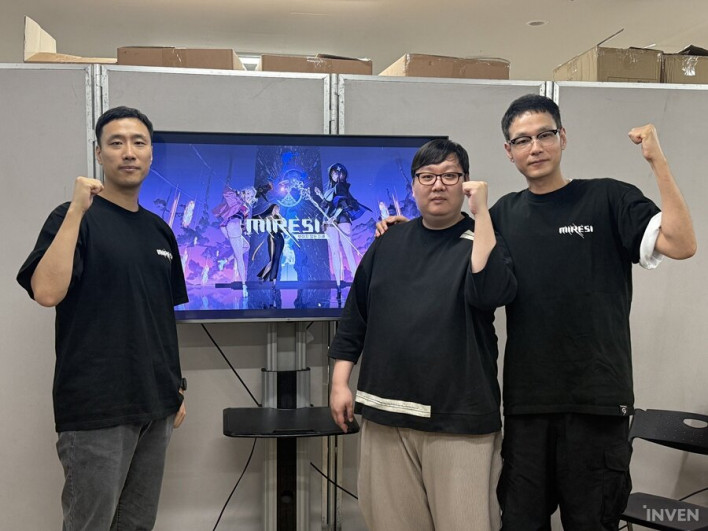
Before we begin the interview, please introduce yourselves and 'Miresi'.
Kim Hyung-seop: I am Kim Hyung-seop, the Art Director for 'Miresi'. Rather than explaining the game overall, I oversee the art direction as AD, so I would actually love to hear what impression the art in this 'Miresi' build made on you.
Soon-gu Cho: First, thank you for taking the time and showing interest in our game. I'm Soon-gu Cho, leading the 'Miresi' project. We really enjoy taking on new challenges. Whenever a good idea comes up, we have a drive to bring it to life, and 'Miresi' is a project that fully embodies that ambition.
Se-woong Kwon: I'm Se-woong Kwon, the Creative Director for 'Miresi'. I mainly oversee combat design and work to ensure that any new creative ideas presented across the game connect organically and harmoniously with the combat system.
Compared to the build shown at last year's TGS, what changes were made in this current build?
Soon-gu Cho: First off, we made extensive revisions to the 3D modeling, which received the most feedback last year. We paid closer attention to the details of faces and expressions. In particular, we refined fine details like certain body proportions and glutes.
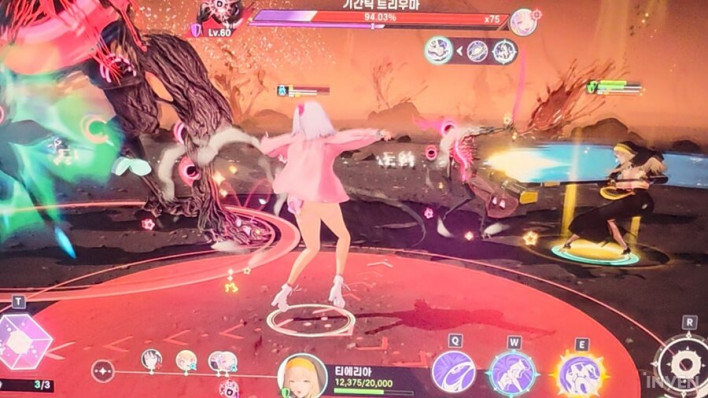

There was also feedback that combat felt a bit slow or draggy. To address that, we went through multiple stages of testing before settling on the current combat tempo. Others noted that impact feedback was lacking, so in this build, we upgraded visual effects and sound across the board so that every hit feels more satisfying.
Improvements were made in many other areas as well. For example, when it became the player's turn, there was sometimes confusion about whether it was actually their turn. While it was fine under normal circumstances, players reported finding it hard to tell when they got back-to-back turns, so we improved that indicator.
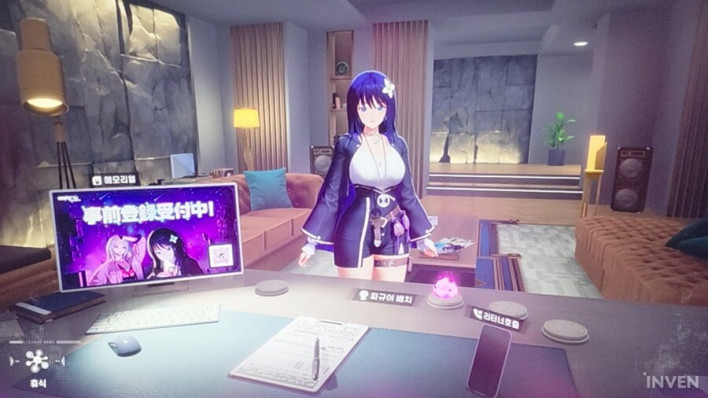
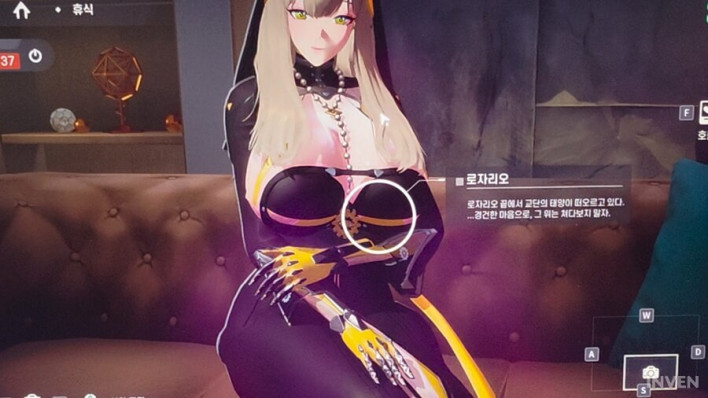
We also updated the UI and introduced a new Councilor's Office system in this build. In games like this, character interaction and social elements are critical, and we wrestled with how best to present them. The Councilor's Office where the player resides is essentially our answer to that question. There are many other updates, but I'll stop here so I don't ramble on.
Could you explain why the open-world elements were removed, and elaborate on the role of the newly added Councilor's Office?
Soon-gu Cho: I want to clarify one thing first: 'Miresi' was never an open-world game to begin with. As you can see from the map size, it isn't huge. The open-world-like content you mentioned was previously used as a space where characters could rest. Since it wasn't in this build, people might wonder if it was cut. But we didn't remove it. Rather, we had shown it temporarily to demonstrate one way space could be utilized, and we are currently developing a different format to present it.
As for the Councilor's Office, since the protagonist's role is that of a Councilor, we created a dedicated space that fits the concept.
In the Councilor's Office, you can summon other characters as aides who assist you, allowing you to engage in various activities together. You can share personal conversations or trigger story scenarios. It functions as a hub for character interactions and diverse activities. Since it serves as the protagonist's quarters, we plan to continually expand it over time.
You added a new Figure feature this time. What was the intention behind designing it?
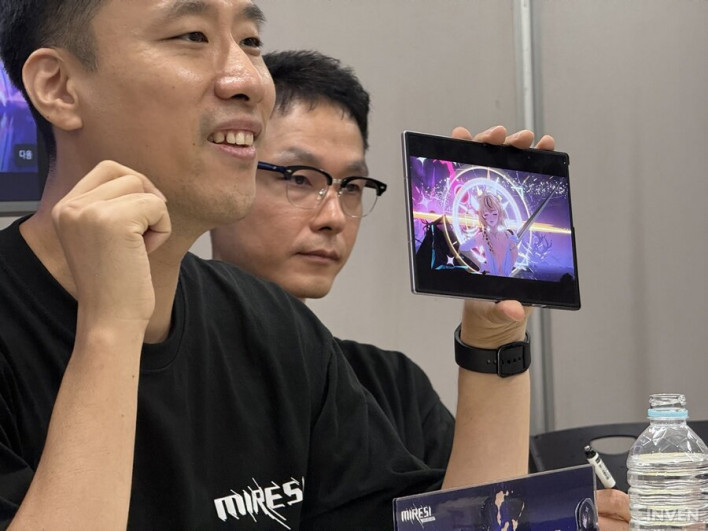
Soon-gu Cho: It started with the Diorama system. While playing our game, there are moments when visually striking scenes naturally occur. What I'm showing you right now is a screenshot I took of one of those moments. While taking it, I thought it would be great to build an in-game system that lets players preserve those moments directly.
At first, we thought of a standard screenshot capture mode, but since so many other games already do that, we looked for a unique twist—and that was the Diorama system. Because 'Miresi' is a 3D game, we thought saving the entire scene as a 3D diorama that players could reload and view anytime would be much better.
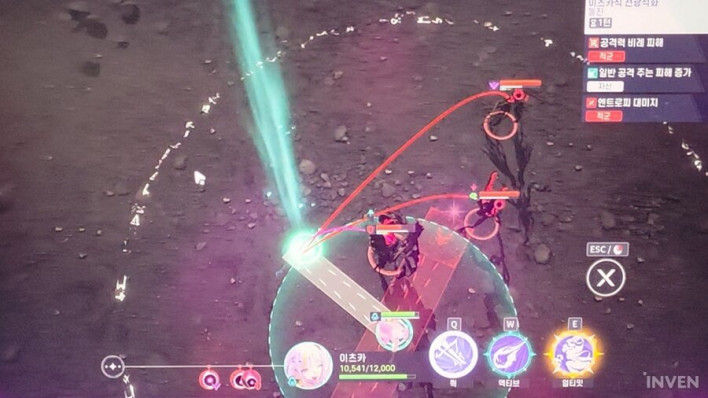
Building a system to capture scenes like that wasn't as easy as it sounds, though. In 'Miresi', real-time combat pauses the moment a turn arrives, making it hard for players to predict the exact instant time will freeze. It might stop during your attack or right when you take a hit. So we put a lot of work into character facial expressions so they look cool and attractive no matter when combat pauses.
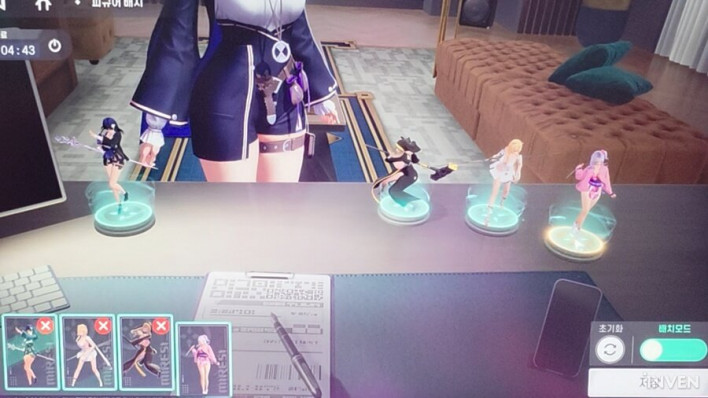
Then it hit me: instead of just a diorama, why not preserve that exact moment as a figure?
What if players could capture a cool or unique frame and place it right on their desk? That idea took shape and evolved into the Figure System we have today. Right now, it lets you place your created figure on a desk, but we plan to add display cabinets down the line so you can show them off.
Taking it a step further, one player might make a figure out of an attack animation while another creates one from a hit reaction, staging full custom scenes. We're continuing R&D on this to turn it into content that players will enjoy even more.
Right now, only the character can be turned into a figure, which feels a bit plain. Do you plan to expand it to include background scenes or visual effects?
Soon-gu Cho: Absolutely. It's just at a stage where further R&D is required. From a technical standpoint, visual effects vary greatly—some are attached directly to the character mesh, while others spawn at specific positional coordinates during hit triggers or special conditions. Handling all those coordinate values in a static figure isn't as straightforward as it sounds.
Effect scale is another consideration. Some effects are small, while others involve massive explosions. If they're meant to fit inside display cabinets, size boundaries are necessary. Working out how to scale those effects properly presents several challenges. So for now, our R&D prioritizes visual effects that attach directly to the character model.
Movement skills and time pauses seem to push players toward manual combat. While fun, it could get exhausting over long sessions. How do you plan to balance auto-battle and manual combat?
Se-woong Kwon: I'll save the balance specifics for last and start by explaining why we combined real-time and turn-based mechanics.
In traditional turn-based combat, when you attack, the enemy must take the hit unless RNG mechanics like hit chance intervene, and vice versa when the enemy attacks. We brainstormed ways to break out of that rigid format, which led us to fuse real-time and turn-based systems.
By layering turn mechanics onto a real-time base, reaching the required AP for your turn felt fresh. It gives you a sense that your turn is guaranteed through a time stop. However, because the booth demo was a tutorial designed to constantly deliver instructions, it paused frequently, which likely created that impression.
To answer your core question: 'Miresi' does not force manual play. Carefully calculating every single move is rewarding, but having to do that for every stage would tire players out. While we designed this combat system, 'Miresi' remains a character collectible RPG. As your characters grow stronger through progression, you can breeze through lower-power stages. Naturally, auto-play will be fully supported.
Even so, we plan to distinguish between content designed for manual play and content that isn't. For competitive content like Raids or the Tower of Infinity, we intentionally structure stages so that tactical execution is required.
Soon-gu Cho: To put it simply, the game is designed so that you switch to manual control when hitting a roadblock. You can auto-play through standard progression, but when you reach a stage you can't clear on auto, that's where manual strategy comes in.
We deliberately tuned it with that balance in mind. If your combat power matches the recommended level, you might barely scrape through on auto or easily succeed with minimal manual input. Conversely, even if your power falls far short of the recommendation, clever play lets you overcome the gap.
Still, we're glad you found it engaging despite the current build having a limited roster and unpolished balance. As more characters and content are added, the experience will become even more enjoyable.
Are you considering PvP content that utilizes this real-time turn-based combat?
Soon-gu Cho: Of course. We've been developing PvP since early on, and internal playtests have been a lot of fun.
However, offering real-time PvP rather than standard turn-based PvP in an anime subculture game can be time-consuming, and performance gaps driven by meta picks or strategic depth can cause significant friction. Since PvP is a major feature, we don't want it to cause player stress. For now, we're considering modes where players can enjoy it together, similar to Celestial Battle.
Se-woong Kwon: To add to that, we intentionally tuned PvE difficulty to be somewhat challenging. This was to encourage testing different builds, such as determining which skills or stances to upgrade to overcome specific stages.
Aside from that, we are naturally testing PvP, though it remains purely experimental for now—mainly to verify if combat functions properly in player-versus-player setups. Surprisingly, it runs well, producing moments akin to team fights in MOBAs. On your turn, anticipating the opponent's move can trigger a trap you set up, leading into a devastating follow-up strike.
The 3D models seem to be closing the gap with AD Kim Hyung-seop's original artwork. Still, something feels slightly missing. From the AD's perspective, what is the final hurdle, and how high do you plan to push the quality?
Kim Hyung-seop: Up until now, our main focus was recreating the distinct shading of my 2D art style as faithfully as possible in 3D. We dedicated much of our R&D this past year to solving that challenge.
I think those efforts were somewhat visible. As for the slight gap that remains, if I had to pinpoint it, it likely comes down to color tone.
Making colors look overall vibrant and capturing that uniquely clear color palette is crucial—something heavily showcased in the original concept art. Right now, we don't have complete control over that aspect in 3D yet.
So that's the hurdle we want to solve next. Model tweaks will also continue alongside adjustments to shading and lighting. Major 3D titles, including major games from China, continually evolve before launch, at launch, and post-release. I expect we will follow a similar path.
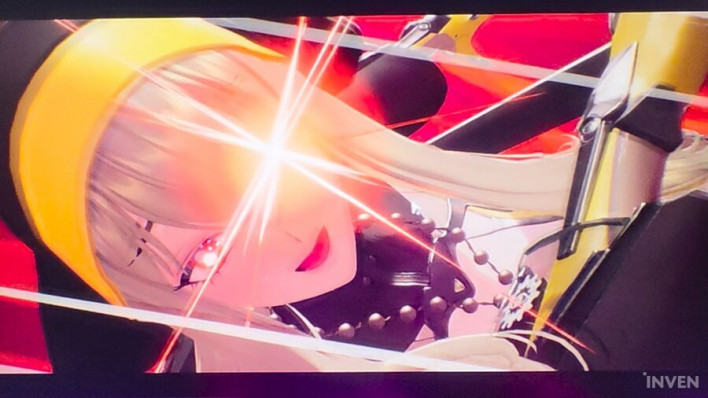
Soon-gu Cho: Internally, we also recognize areas that need work. Examples include finer hair detailing, material rendering, skin textures, and Hyulla's signature eye rendering. His eye designs have a cosmic, captivating depth, and we are working hard to capture that look in 3D.
Regarding modeling, certain poses emphasize the glutes, which can cause mesh distortion around joints or hips in 3D models. We are working to refine those technical details. Beyond that, we plan to assign higher polygon counts to areas players look at most, enhancing visual detail and fidelity.
What sets 'Miresi' apart from other anime subculture games?
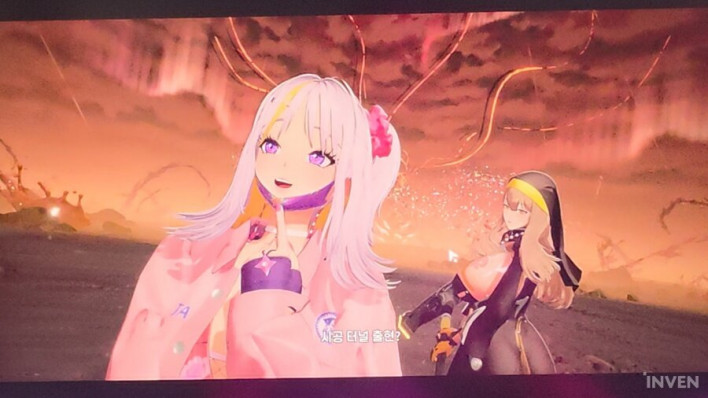
Soon-gu Cho: First is the character art. The distinct aesthetic that sets it apart from typical subculture titles—specifically artist Hyulla's art style—is our primary differentiator.
Second is the combat system. Fusing our original combat system with the subculture genre is a key feature. For instance, when time freezes for a character, players can freely examine them in-game. Even in action games, zooming in or rotating the camera around a character during mid-battle pauses is rare, and it is almost unheard of in turn-based games.
In our game, every turn presents a fresh scene, which players can preserve as a figure at any time. Seamlessly weaving the density and detail Hyulla strives for into our world building is another core focus.
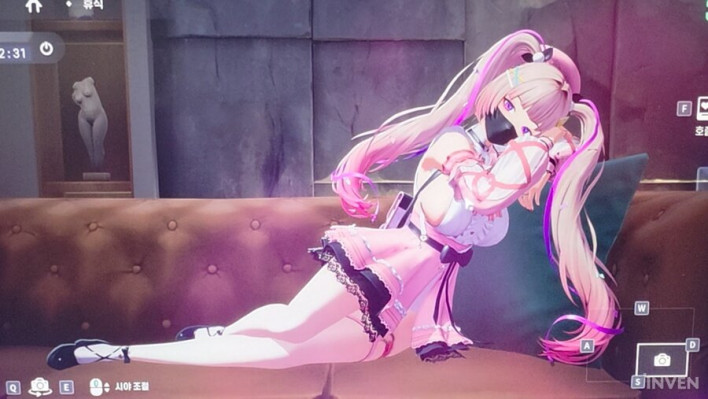
We also place high importance on each character's narrative. Interactions between players and characters evolve based on affection levels. Just as people start off cautious before growing comfortable with time, shifts in relationships are reflected through expressions, dialogue tone, and posture.
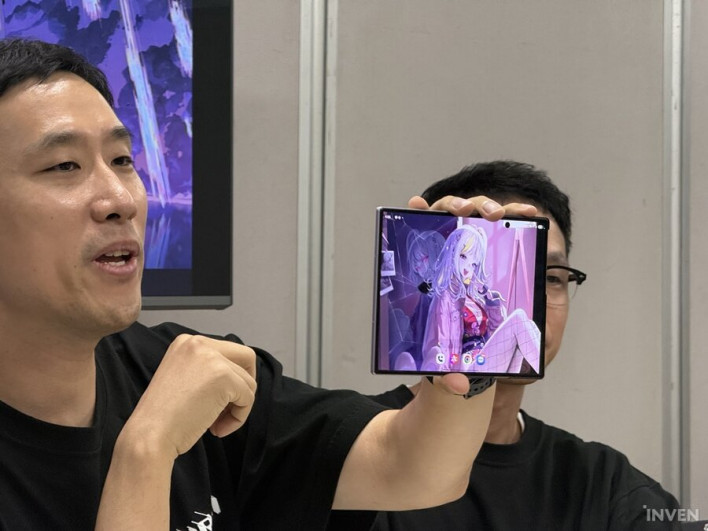
Another standout feature is the Memento system. Each character has special illustrations embedded with their backstory, which players can inspect from multiple angles using an Orbit Camera feature. Down the road, we are exploring ways for players to convert these illustrations into mobile phone wallpapers.
Going further, we are considering formats where activating an illustration triggers character voiceovers, BGM, and visual effects to depict the character's past story.
We want to push boundaries across illustrations, 3D graphics, combat, and beyond. Rather than competing purely on quantity, we want to deliver top quality while continuously refining how best to showcase Hyulla's art.
What motivated you to implement drag controls? Also, with subculture games increasingly experimenting to differentiate combat, do you see this as an industry trend?
Soon-gu Cho: Addressing drag controls first, since this demo build was run on PC rather than mobile, we judged that drag controls would feel more intuitive on PC. The actual mobile version will offer controls optimized for mobile platforms.
Unlike last year, we also implemented PC hotkeys for this build. Players who prefer using only a mouse can stick to drag controls, while those playing at internet cafes or home setups can use keybindings for faster, smoother gameplay.
As for the second question, I view it as an evolution of collectible RPGs rather than just subculture games. From the start, we said we wanted to create our own genre. At the time, the market was flooded with reskinned clones, so we initiated R&D to forge our own subgenre, leading to the combat system we have today.
Many recent subculture titles focus heavily on action RPG mechanics. In that landscape, we sought to differentiate ourselves through combat design as well as art style. Ultimately, even if stories revolve around saving the world, how you save it makes all the difference—and core gaming enjoyment stems from combat. That's why we focused so heavily on it.
What are your thoughts on concerns that drag controls could cause player fatigue over long sessions?
Se-woong Kwon: To touch on what we mentioned earlier, 'Miresi' is a progression-based game where character combat power scales over time.
When replaying a boss you've already defeated, even though combat combines real-time and turn-based elements, the underlying structure remains straightforward. If team composition and positioning dictate victory, auto-combat can handle the clear easily.
In other words, we won't demand repetitive manual controls for farming content you have already cleared.
Nevertheless, to ensure new control schemes don't cause discomfort, we will continue refining control options throughout remaining development.
How are you approaching graphics optimization and support for low-to-mid spec hardware?
Soon-gu Cho: We haven't reached the optimization phase for graphics quality yet. However, we have engine programmers and technical artists specializing in optimization, so we feel confident in this area.
By launch, we will need to define minimum system requirements. Our goal is to ensure the game runs smoothly without stutter on specified minimum specs.
Naturally, visual discrepancies will exist between ultra settings on PC and minimum specs. How effectively we bridge that gap will be something we balance going forward.
How do you plan to appeal to gamers who aren't familiar with anime subculture games?
Soon-gu Cho: We consider those players part of our target audience as well. In my view, visual art is the initial hook for any game. Whether a game looks striking, beautiful, or appealing at first glance matters greatly, so we aim to draw players in through Hyulla's art style.
Second are players who may not care for subculture themes but love core gaming—especially deep combat mechanics. We believe 'Miresi' can deliver a satisfying experience to that audience as well.
In particular, players who enjoy strategy or games that emphasize tactical thinking over raw twitch reflexes should find 'Miresi' intriguing. Many console gamers enjoy tactical depth, so we hope to attract interest from that demographic as well.
What was the reason for establishing the protagonist as a Councilor?
Soon-gu Cho: Narratively, choosing the Councilor role served several purposes—it wasn't a casual decision. In a councilor's office, those assisting you are aides, and we saw a natural fit for that dynamic when building player-character relationships in a subculture RPG.
Additionally, given the wide variety of titles used for protagonists in other games, we wanted a unique title that wouldn't overlap with existing titles.
Se-woong Kwon: Fundamentally, our world centers around time. Time is a core theme in combat as well, and we wanted to weave it throughout the entire game. With time as our theme, time-related incidents and anomalies naturally arise.
The protagonist is a Councilor belonging to the Spacetime Council. Because there is a council, this person is a Councilor. What the Spacetime Council does and what temporal secrets it hides will unfold through the narrative in the future.
The simplest explanation is that being a Councilor means being a member of the Spacetime Council tasked with resolving temporal anomalies and crises.
With multiple artists working together, do you have internal design guidelines to maintain consistency in art style?
Kim Hyung-seop: Because my art style is quite distinct, we boiled down key techniques into internal guidelines for team production. For faces, unlike standard subculture art, we place heavy emphasis on detailed eyeliner, lips, pupil render, and eyebrows. Facial proportions vary across subculture art, but many lean toward feline features. My style renders characters looking slightly more mature by comparison.
Body proportions are another area of focus. We have specific criteria for shaping wrists, ankles, and leg contours.
Based on lecture materials I compiled in the past, I summarized key points for rendering eye shapes and continually share guidance on design direction.
For example, when designing revealing elements, our primary goal isn't skin exposure for its own sake, but expressing the character's background, personality, and fine details. Within that framework, we determine how to highlight charming traits or revealing elements effectively before moving forward.
Most subculture games feature team building in some form, and 'Miresi' seems similar. However, team building often leads to must-have meta characters. How do you plan to handle power balance in that regard?
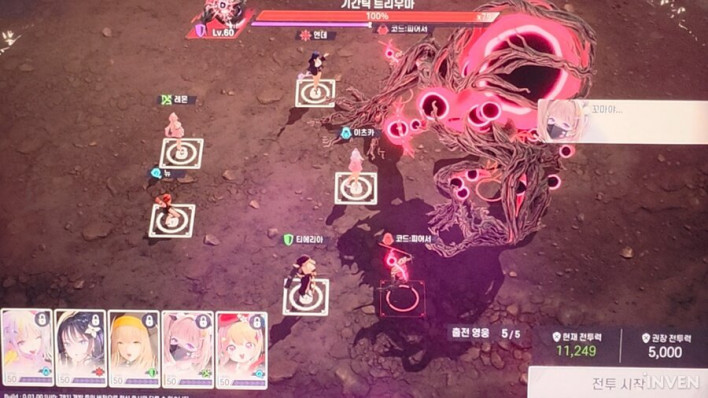
Soon-gu Cho: When testing difficult hurdle stages internally, if we give 10 players the exact same lineup of 5 characters, we get 10 completely different clearing strategies. 'Miresi' allows for a wide variety of tactical solutions using the same party.
Rather than a single mandatory solution, there are general recommended directions, with many viable strategies within them. As the character roster expands, those strategic permutations will grow exponentially.
Certain characters will naturally be strong. However, we are building a framework where players can combine diverse characters and team compositions to invent clearing strategies even we couldn't anticipate.
Our top balance priority is preventing any single character from becoming an all-in-one complete package. We assign internal values to each module and stat.
For example, gaining an instant turn or resurrecting are powerful abilities, so they carry high point values. If a character's total budget is 100, an ability like that might cost 30 points, reducing the budget available for other kits. Balancing this way prevents any single unit from becoming mandatory across all scenarios.
Se-woong Kwon: Beyond numerical balance, looking at structural design, strategies that work in other games generally apply here as well.
The difference emerges when combat power is evenly matched. If your power overwhelmingly outmatches a boss, clearing it isn't an issue; but when power levels are close, you must carefully strategize.
A key characteristic of 'Miresi' is that you can only designate directions up to a certain degree. Target skills don't guarantee immediate, deterministic hits and outcomes.
So even if a guide online says "target that character at this exact timing," slightly altering the angle can change the outcome dramatically. This design grants players a high degree of tactical freedom.
Consequently, simply copying a single guide is unlikely to force a rigid requirement for a specific character at a specific moment.
What were the criteria for choosing the characters featured in this demo, and do you personally have any favorite characters?
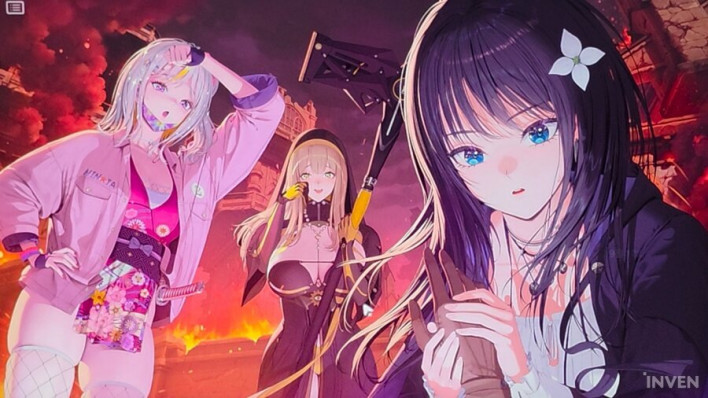
Kim Hyung-seop: Breaking it down by feature: Ende has my favorite face design, Tieria has my favorite physique, and Itsuka has my favorite personality. Ah, not just because I designed them, mind you!
How far along is the game's overall completion? Also, what is the target release window?
Soon-gu Cho: We have established the core direction and defined all the necessary components for the game. We are working hard to prepare for upcoming tests, whether CBT or OBT. However, test formats and schedules will be announced after coordinating with our business team.
Finally, do you have a message for the players?
Soon-gu Cho: What I'd like to tell players is similar to what I said at the start: 'Miresi' is taking on many bold, new challenges.
Taking on new challenges doesn't mean launching something novel and just telling players, "It's new, give it a try." Delivering an experience that is both innovative and fun is our core foundation and guiding vision.
We will continue pushing boundaries, working tirelessly to ensure players find the experience thoroughly rewarding. Please look forward to 'Miresi' and give us your warm support.