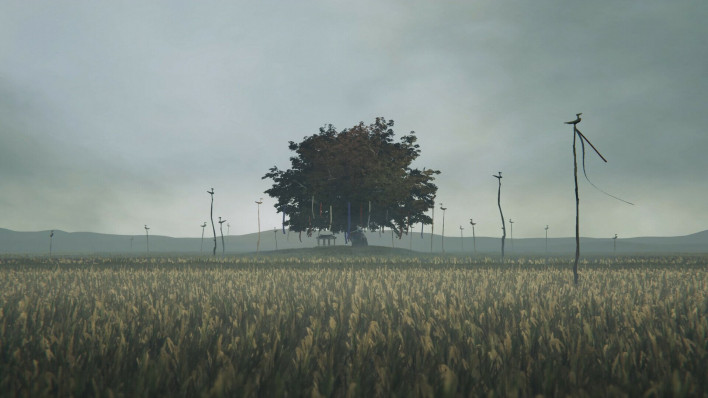
Unidentified entities appearing in urban legends instill a vague sense of fear in people while simultaneously sparking a strange curiosity. As peculiar settings are added to stories that feel like they could actually exist, they make us wonder at some point, "Could this really be real?" This is likely why urban fantasy based on urban legends enjoys enduring popularity.
Games themed around these unknown entities generally split in two directions: either depicting horror where players must survive against mysterious beings, or taking an action-oriented approach where players face them head-on.
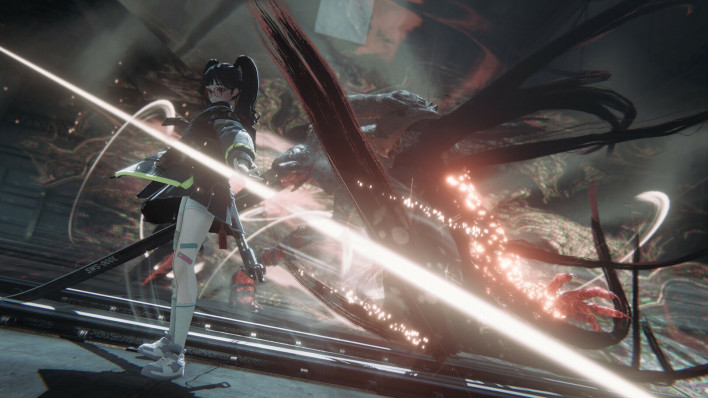
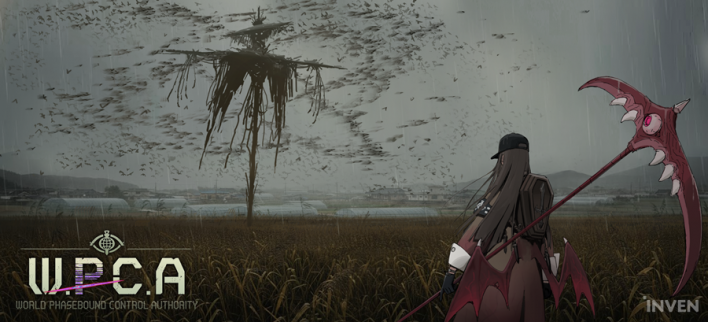
5minlab's upcoming title 'WPCA: World Phasebound Control Authority' (hereafter 'WPCA') takes the latter path. In the game's world, supernatural entities that threaten reality—known as 'Phasebounds'—exist, and players take on the role of a 'Containment Agent' belonging to the Seoul Branch of the World Phasebound Control Authority, tasked with hunting down and defeating Phasebounds that have escaped containment.
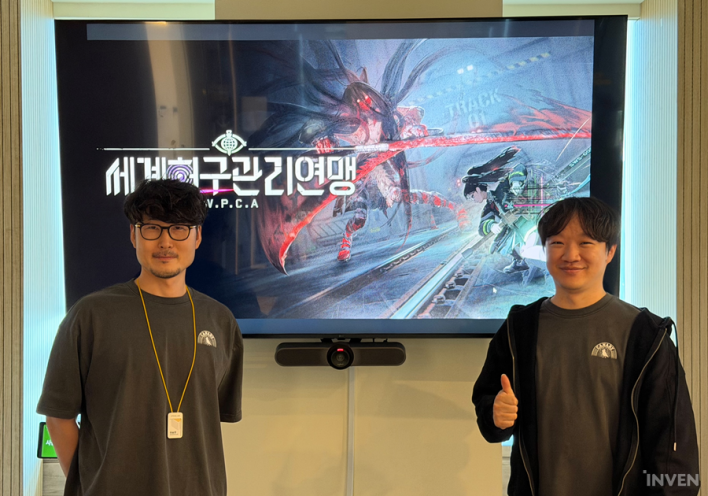
From its genre to its tone, the game differs in many ways from 5minlab's previous works. How is 5minlab bringing these mysterious entities from urban legends into a game? We met with 5minlab Producer Seung-chan Lee and Creative Director Sung-in Ji to hear about 'WPCA'.
Please give us a brief introduction first.
Seung-chan Lee: I'm serving as the Producer and Art Director for 'WPCA.'
Sung-in Ji: I've handled combat design at 5minlab for a long time, and I'm currently the Creative Director for 'WPCA.'
Before diving into details, could you briefly introduce the game's concept and setting?
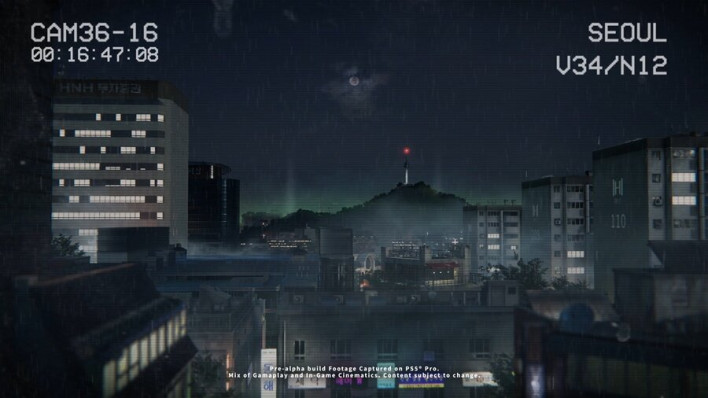
Seung-chan Lee: The game is set in a world where supernatural entities that threaten reality, known as Phasebounds, exist. The stage is Korea within this world, where players become a 'Containment Agent' belonging to the Seoul Branch of the World Phasebound Control Authority, which manages Phasebounds, tasked with tracking down and defeating Phasebounds. We plan to include a wide variety of content, from investigating incidents related to Phasebounds to battle content fighting and defeating them.
The concept of hunting and containing supernatural entities in reality brings works like SCP to mind. It seems almost inevitable that you were inspired by them. Where did you draw inspiration from, and what led to the development of 'WPCA'?
Seung-chan Lee: Given how influential they are, I think it's actually harder not to be influenced by 'containment fiction' like SCP (laughs). In that sense, it was only natural for us to be inspired. We have quite a few fans on our team, and CD Sung-in Ji sitting next to me loves it immensely.
Honestly, I wasn't that knowledgeable about it at first. You could say I only knew of its existence, like 'Ah, so there's a genre called containment fiction.' But as I researched materials while developing 'WPCA,' I came to appreciate the charm of containment fiction.
When it comes to why we started developing 'WPCA,' I think it comes down to two main reasons. First, this is my fourth attempt working on a project with CD Sung-in Ji. People hearing this might think, 'That many?' But because 5minlab is structured to try out many projects and pivot or cancel them, we've experienced several failures in that regard.
Anyway, after working on various projects and observing our developers, I realized we needed something that developers could pour their energy into. How should I put it? Casual games are great, of course, but there was a need to create a game on a larger scale. In that sense, we started developing 'WPCA' out of a desire to build a game with high quality and scale that artists and developers could truly pour their passion into.
I previously co-developed 'Smash Legends' with CD Sung-in Ji, and working with him back then made me realize just how passionate he is about action. He's a developer who is genuinely dedicated not just to playing action games, but to making them as well. Naturally, when developing 'WPCA,' I brought CD Sung-in Ji on board. That's how a team named Iron Canary was formed, and full-scale development began.
Though Iron Canary started that way, our first outcome didn't receive very favorable feedback. It was a Musou-style hack-and-slash game, but the reaction during the internal presentation was lukewarm. Seeing that, I thought we needed to pivot quickly. I believed it would be nearly impossible to satisfy gamers if we couldn't even satisfy our own colleagues.
After that first shift, we changed our team name to Bronze Canary, and once it became an official project, we renamed it to Canary. With that milestone, development on 'WPCA' truly got on track.
You're billing it as a stylish hunting action game. Could you describe in detail what structure you're planning in terms of content and play loop?
Sung-in Ji: Basically, it stays faithful to the play loop of the hunting action genre. There's a hub acting as a town where you set up your build or receive quests before heading out to hunt a Phasebound. After fighting the Phasebound, you return to town to gear up, research new setups, or craft equipment. If you're missing materials during this process, you head back out to hunt the Phasebound that drops those materials.
One key distinction is that we're trying to minimize field exploration while heading out to hunt Phasebounds. This relates partly to my personal preference. Personally, I don't really enjoy wandering around exploring maps when I'm on my way to hunt monsters. Therefore, 'WPCA' features various bosses in a boss rush concept, focusing squarely on battles against them.
Of course, we recognize that in titles featuring supernatural entities like 'WPCA,' the fun of digging into lore is also important. We plan to handle these lore-related exploration elements within the Authority building, which serves as our main hub. Simply put, you can wander around a tall, vertical Authority building to delve into lore, while combat remains separated and focused purely on Phasebounds.
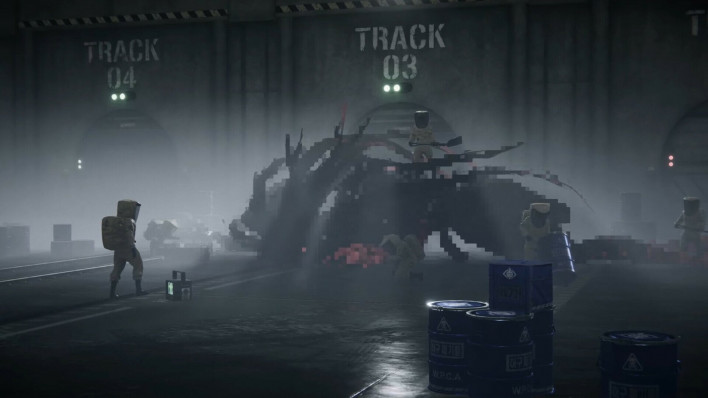
You mentioned it's a boss rush style. Are there no mob enemies at all?
Sung-in Ji: It's not a structure where you fight through regular mobs to reach a boss. I think this aligns with most other containment fiction works as well. Just as containment fiction focuses on a specific containment target and its procedures, 'WPCA' aims to deliver dense combat content by concentrating on each individual Phasebound boss.
That said, it doesn't mean there are zero regular mobs. Even when they appear, it will be something like a puppet-master boss controlling several minion puppets. They function strictly as part of a boss pattern.
You shifted from a Musou genre to a hunting action genre. Were there any difficulties during this process?
Sung-in Ji: Actually, there weren't really 'difficulties' per se. Aside from both being action games, their genre traits and fun factors are entirely different, so we basically rebuilt everything from scratch (laughs). But on the other hand, I felt relieved that we made the pivot. Honestly, when we were making a Musou game, I had many doubts. As a developer, I need to find it fun first, but I was asking myself, 'Do I really love this genre and feel excited making it?'
So I came to the conclusion that hunting action would be better, pivoted, and arrived where we are today. Personally, I consider it a very satisfying change and am enjoying development.
We'd also like to hear why you chose urban fantasy containment fiction for the worldbuilding.
Seung-chan Lee: Personally speaking, looking at recent content, I feel that if something isn't immediately intuitive to understand, it isn't easily accepted by audiences.
In that sense, whether 'WPCA' had an easy-to-understand setting was crucial for us. The first thing I checked was whether there were fans within the development team. I believed that team members must understand and love the setting to build a great game. Fortunately, as mentioned earlier, CD Sung-in Ji and quite a few others on the dev team showed enthusiasm and interest.
Of course, that alone wasn't enough. The most important thing was whether it would resonate with gamers—the general public. While pondering that, a specific moment gave me confidence. I stumbled upon content introducing elementary school bestsellers, and there was a containment fiction comic aimed at elementary school kids.
Looking into it further, I found a lot of fan-created games and YouTube content targeted at elementary students. Seeing that made me confident that this kind of setting would grow even more popular and mainstream, so we proceeded with confidence to build the world of 'WPCA.'
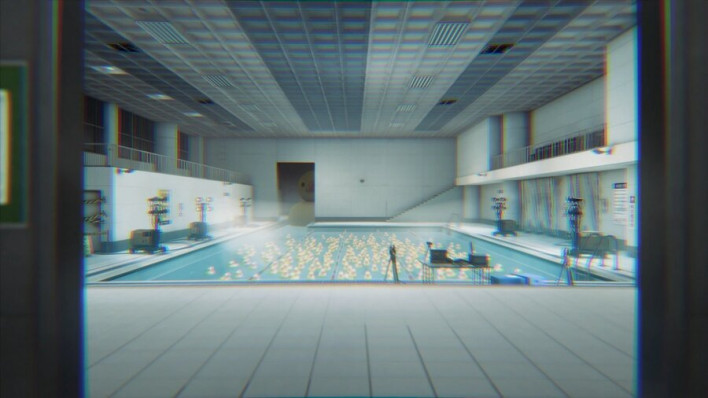
Since it's a boss rush, there might be concerns that it could feel too repetitive or that content will be consumed too quickly.
Sung-in Ji: As a hunting action game, boss rush is our core content, but we don't plan to offer only that. While boss rush is the main content, we're preparing 'Authority content'—side quests focused on exploration and uncovering lore—to balance the pacing between combat and exploration.
Of course, repeatedly hunting Phasebounds is an inherent part of the genre. Even in iconic hunting action titles, players frequently hunt the same monster over and over to acquire desired rare materials or gear. 'WPCA' will similarly encourage natural replayability as players grind for specific crafting materials or repeat hunts until they roll their desired stats on gear with random option stats, helping them complete their ideal build.
Ultimately, whether this repetitive play feels tedious or not depends on how diverse the builds can be and how satisfying it feels to complete a build. On top of that, the fun of boss fights—combat itself—is crucial. If combat is enjoyable, build options are varied, and the outcomes are diverse, the drawback of repeating boss rush won't feel nearly as prominent.
We recognize that content consumption in boss rush models is naturally very fast, so to address that, we plan to provide diverse builds and design enough grinding required to reach them.
The biggest point of differentiation from existing hunting games seems to be stylish action. However, stylish action feels somewhat different in tone from traditional hunting action. Could you explain why you incorporated stylish action, as well as any other points of differentiation?
Sung-in Ji: To be honest, I didn't overthink points of differentiation when designing the action (laughs). Looking back at the many projects we ran and canceled, it felt like the projects where we agonized deeply over 'differentiation' were actually the ones that got canceled more often.
So when Bronze Canary was canceled, I realized, 'I shouldn't overthink differentiation.' Instead, it felt more important to combine what I love and feel confident in, and focus on executing it well. That naturally led us to integrate stylish action.
In that regard, I personally love stylish action, and I believe any combat designer wanting to make this style of action must play the 'Devil May Cry' series, as it serves as the bible of stylish action.
At the same time, being a stylish hunting action game, its play style will differ from traditional hunting action. Taking Monster Hunter as an example, reading boss patterns is more important than raw reaction speed. It's like the boss poses a question—a pattern—and the player provides the answer: 'If it attacks with its front leg, dodging to the right is safe.'
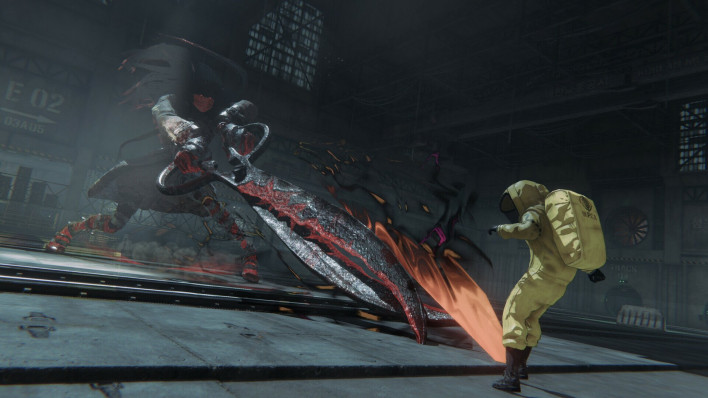
Since 'WPCA' champions stylish action, we plan to let players react more proactively in those situations. Accordingly, the focus of the action centers heavily around the player. Through fixed camera angles and cinematic presentations, we want players to feel that sense of accomplishment, like 'Whoa, that action move was incredible.'
Of course, because it is still a hunting action game, relying purely on reflexes to solve every problem wouldn't fit our design direction. Ignoring boss patterns and dodging every attack would undermine the core of the hunting action genre, so we're developing the game to retain its identity as a hunting action title while offering stylish action mechanics.

While gameplay fun is crucial, lore and story are equally important in containment fiction. It's often the factor deciding whether a game remains a simple hunting title or becomes one backed by a robust universe. How are you preparing the game's story?
Seung-chan Lee: We completely agree with that, so internally we're striving to establish a solid lore foundation and storyline.
From a roadmap perspective, until recently we focused more on establishing the world setting and overall tone rather than narrative. Now that those are reasonably set, we're at the stage of designing and testing how to layer the narrative on top.
In my opinion, you sometimes see players diving deep into lore analysis for certain works. I think that's proof of how well-crafted the worldbuilding is. Because the rules and settings are consistent and solid, players can unleash their imagination and analyze them. It's an element that fosters deep attachment to a game, so we are working hard to maintain that consistency.
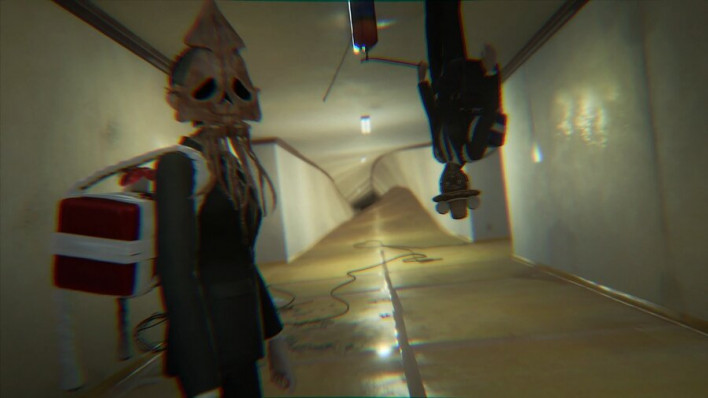
As an aside, inside the dev team we're already playing around with internal memes. Most commonly, whenever an inexplicable bug or problem occurs during development, people joke, "A Phasebound is behind this," and send custom emojis we made.

You mentioned focusing on story. Do you have a dedicated scenario writer?
Seung-chan Lee: 5minlab has an internal IP team dedicated to narrative work. Currently, one member from the IP team handles the story full-time, and we're considering adding more people in the future.
Meanwhile, since the world setting itself can accommodate diverse concepts, dev team members outside scenario writing also brainstorm various ideas for Phasebounds—some quite bizarre. We gather these ideas to create Phasebounds and flesh out the story.
Sung-in Ji: We're also considering setting rules and standards so that users can freely create fan creations within them, much like other containment fiction works. And if possible, we think hosting a Phasebound contest based on that would be great.
It's still far in the future, but something like adapting a winning user's Phasebound into an actual in-game boss. I hope we can make that happen someday.

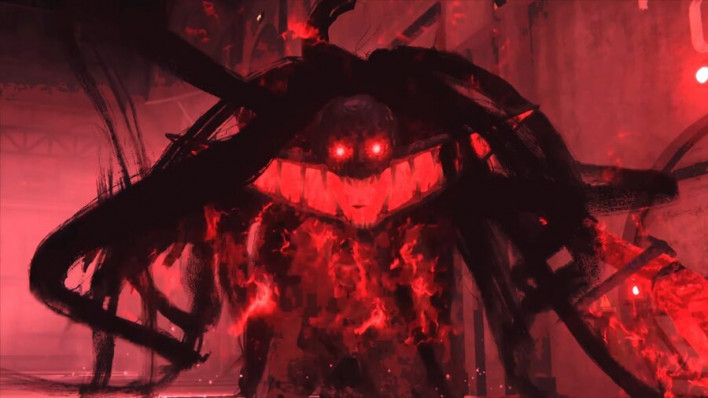
In the video, we saw a Phasebound seemingly inspired by the Red Mask (Kuchisake-onna). What other monsters will appear, and what criteria did you use to pick from countless urban legend monsters? Also, since it's specified as the Seoul Branch, will only Asian Phasebounds appear?
Seung-chan Lee: We have plenty of ideas for monsters we want to turn into Phasebounds. They range from the Jangsan Tiger (Jangsanbeom), familiar from Korean urban folklore, to Phasebounds based on King Midas.
So far, our selection criteria leaned heavily toward functional aspects. Since the team was newly formed, we recycled many existing monster assets by overhauling their visual designs and swapping animations.
As an aside, featuring the Red Mask in the video was very intentional. You could say it set the benchmark. By having the Red Mask appear, it made viewers instantly get, 'Ah, so this is what kind of game this is.' I remember we quickly decided on everything from creating the Red Mask to including it in the trailer.
Although the setting is Korea, Phasebounds aren't strictly limited to Korean or Asian urban legends. We're considering 'invasive' Phasebounds that make you think, 'Wait, this urban legend came all the way here?'
Still, because it's set in Korea, we are prioritizing monsters from Asian urban legends familiar to us. Fortunately, Korean cultural elements have gained global resonance lately, and overseas audiences seem to receive them with intrigue rather than rejection. That has reduced our worries about whether this will appeal globally.
Sung-in Ji: Personally, I think sticking strictly to Korean elements just because it's set in Korea would feel too plain, so we plan to introduce a wide variety of Phasebounds.
It seems you're aiming for a fairly large-scale game. When did development start, and how large is the development team? Also, are you targeting a live-service model?
Seung-chan Lee: Honestly, since this was a genre we hadn't tackled before, the risks were high and there was a lot to learn, so we initially started as a small-scale project. Naturally, if a team grows too fast, risk increases as well.
That's how the project began, but observing the reaction after releasing the video, I realized expectations differed from what I thought. Our team started with 9 people last September and grew to about 30 now, exactly one year later, but players generally perceived it as a very large-scale game. So we find ourselves pondering deeply about various aspects (laughs).
Regarding the business model, it's still a bit early to give a definitive answer. Since business strategy is involved, we will reveal details once our direction is finalized.
You mentioned it's not a structure where players clear regular mobs to reach a boss. Does that mean after accepting a mission and deploying, the boss fight begins right away?
Sung-in Ji: Within the dev team, there's naturally a desire to make exploration and movement smooth yet deep. However, at this stage, we are concentrating more on boss combat—increasing the number of Phasebound bosses and making their patterns more varied. Since it's only been a year since forming the team, please understand that many aspects are still being contemplated.
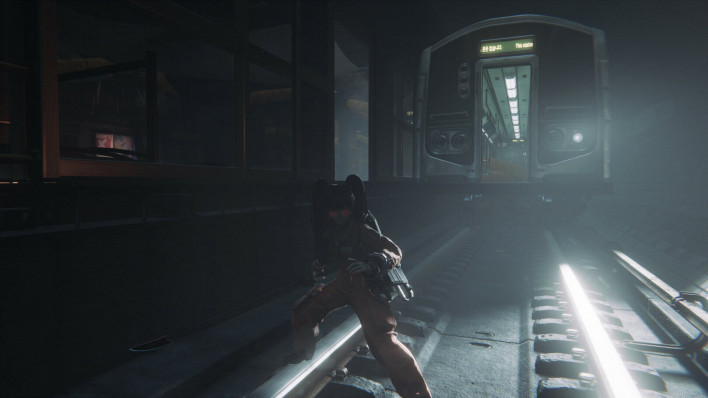
Roughly how many Phasebound bosses are you targeting?
Seung-chan Lee: We think we need at least 20 types at official launch. We know that more is better, of course, but considering our remaining time and productivity, this seems to be the realistic target.
Of course, simply inflating the count is possible, but what matters more is the quality of each individual Phasebound. In that sense, we're realizing once again how challenging it is to reach quality that satisfies our internal standards. We plan to continue adding more post-launch as well.
Sung-in Ji: The count is important, but having a reason to fight them is just as vital. Instead of repeatedly hunting the exact same boss, crafting specific gear will require materials from major Phasebounds and various other Phasebounds. We are designing the gameplay loop to naturally encourage hunting a variety of Phasebounds.
In the video, we saw three types of weapons: sword, gun, and gauntlets. Is that all of them, and what differences exist in play style or mechanics between weapon types?
Sung-in Ji: In hunting action games, weapon differences ultimately come down to resource consumption, range, and overall damage potential. We designed each weapon based on those factors.
Among candidates, the sword was chosen fastest without a second thought. The sword in 'WPCA' is called the Trigger Blade. It features a scabbard fitted with a trigger and cartridge—essentially, pulling the trigger while unsheathing uses gunpowder propulsion to perform an explosive iaijutsu strike. Those in the know might recognize it, as it drew heavy inspiration from Jetstream Sam's weapon in 'Metal Gear Rising: Revengeance.'


The gauntlet is actually a pile driver weapon. It has extensive combos, but consumes weapon resources rapidly and has the shortest reach. However, played skillfully, you can dodge enemy attacks by a razor-thin margin while driving a powerful stake into the target, letting you savor that pure sense of style.
The gun weapon consists of three firearms: Gatling gun, shotgun, and sniper rifle. Simply put, you carry all three and switch depending on the situation: shotgun at close range, sniper rifle at long range, and unloading with the Gatling gun during burst damage opportunities.
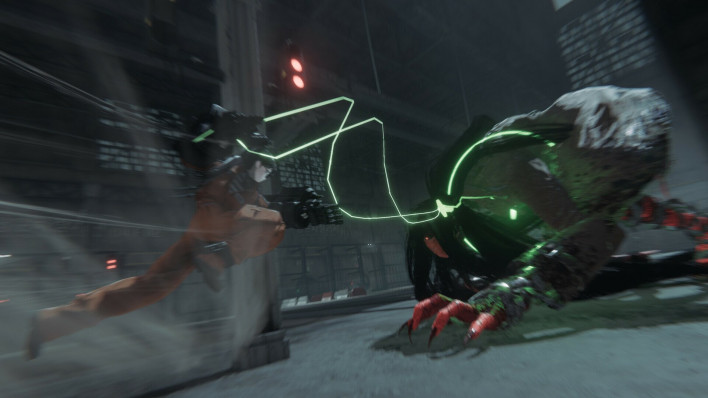
For the sniper rifle, it's inspired by Operation Yashima from 'Neon Genesis Evangelion.' In the anime, all of Japan's electrical power is funneled into a Positron Rifle to fire a single shot, so I asked the dev team to craft it into a weapon boasting that kind of devastating single hit.
Since you carry three sub-weapons, builds are versatile. You can create an all-rounder setup, a close-range build focused on the shotgun, or a heavy single-hit build centered on the sniper rifle.
We are targeting five weapon types in total, with 'coolness' as our top priority criterion. As an aside, a shield is among the candidates, and we're brainstorming ways to give it a distinct appeal different from traditional shields.
If completion percentage puts Early Access at about 70% and official release at 100%, where does 'WPCA' currently stand?
Seung-chan Lee: By my measure, it's around 20%. I feel the dev team for 'WPCA' isn't fully formed yet. When we started, we had 9 people, grew to 15 early this year, and now reached 30. Although staffing has stabilized somewhat, we still have a long way to go, so it's hard to say completion is high.
Until recently, we focused on mechanics validation and visual tone. Now, we've established a 1- to 2-hour play loop covering story progression, fighting Phasebounds, and crafting equipment. Internally, feedback on this loop has been largely positive and fun, so moving forward we plan to expand content while raising overall quality.
In stylish action games, playable characters are often designed with realistic 8-head proportions, whereas 'WPCA' felt somewhat cute. Was that intentional?
Seung-chan Lee: Having worked on casual art for a long time, I personally prefer cute proportions. But that's just my personal leaning, and similar feedback arose internally: 'We need to go further,' 'We should increase character proportions.' So we have now elongated character proportions. The previous trailer featured pre-improvement models, so it might not have shown that, but future videos will showcase what players expect.
Monster design, on the other hand, was somewhat intentional. Given supernatural Phasebound entities and containment fiction, one might expect more grotesque visuals, but I felt purely disgusting designs would divide opinions too sharply. So we maintain the sinister nuance without going to extremes. That said, if context fits, slightly more grotesque Phasebounds could appear.
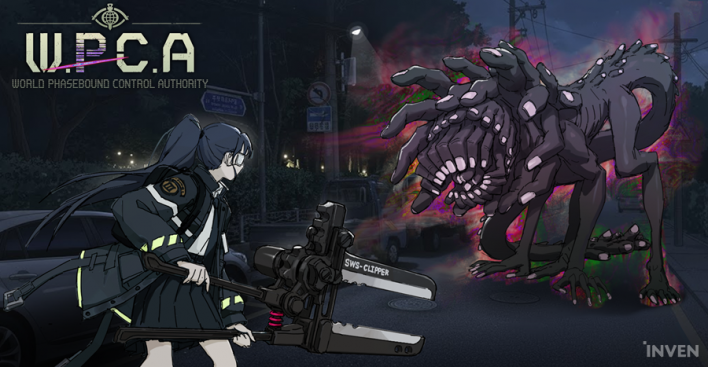
Sung-in Ji: Of course, making things purely grotesque isn't impossible. But we need to consider if that fits our genre. Since this is an action game where players fight back rather than a horror game where they run from monsters, please understand that we moderated the tone accordingly.
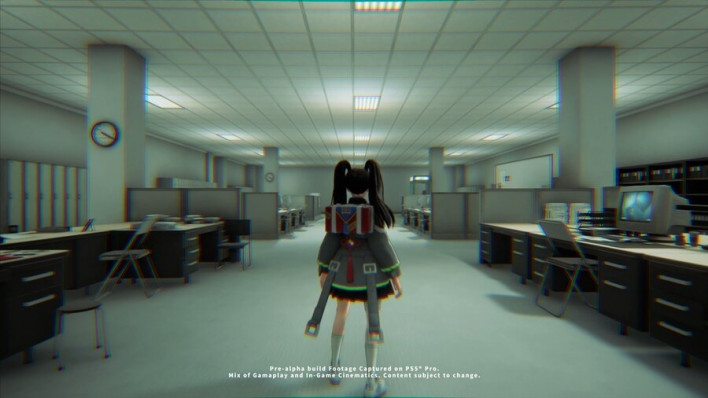
Compared to modern titles, the graphics might feel somewhat unrefined. At a glance, it might look unfinished.
Seung-chan Lee: To be frank, it is unfinished. Shortly after building the team, we got the chance to appear at State of Play, and we had many doubts. We wondered if participating with so many unpolished areas was right, or if it would only leave a negative first impression. In the end, we concluded that even worrying about that was a luxury—it was too great an opportunity to pass up.
So we prepared the trailer as best we could, and naturally reactions were mixed. There was positive feedback praising the fresh concept, but also negative opinions regarding graphics. Rather than viewing that negatively, we see it as player expectations, and it motivated us to build a game that meets those expectations.
Lastly, a word for players looking forward to 'WPCA'?
Sung-in Ji: We are pouring our all into making this game, so please look forward to it. As someone who personally loves action games, I will work hard to create a title that satisfies me as well as players.
Seung-chan Lee: 'WPCA' is aiming for a release in Q3 or Q4 of 2028. With roughly two years remaining, we will communicate with players via Discord and other channels during the remaining time to craft the game into what players hope to see.
Furthermore, despite rushing to reveal it at State of Play, player interest reaffirmed that a solid audience for containment fiction exists. We are working diligently to satisfy those fans. In the future, we plan to hold a closed alpha test to verify whether our game delivers genuine fun and appeal to players. Details will be announced on Discord in October, so please stay tuned.