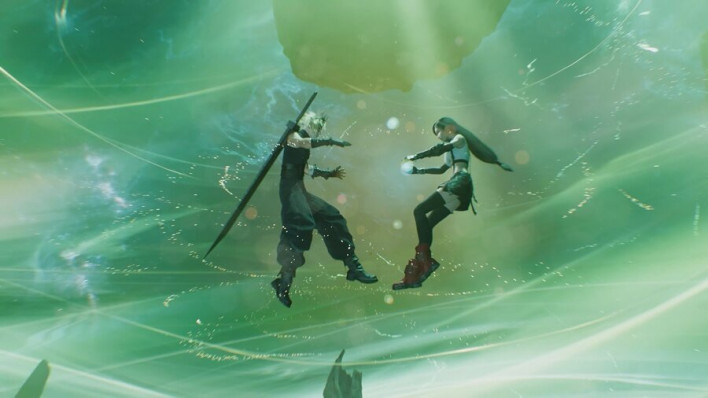
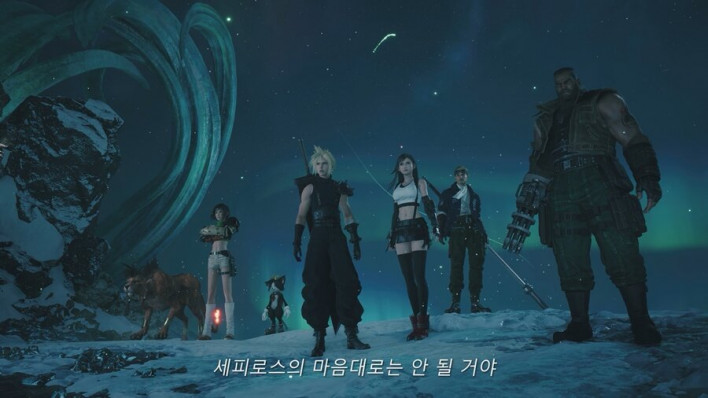
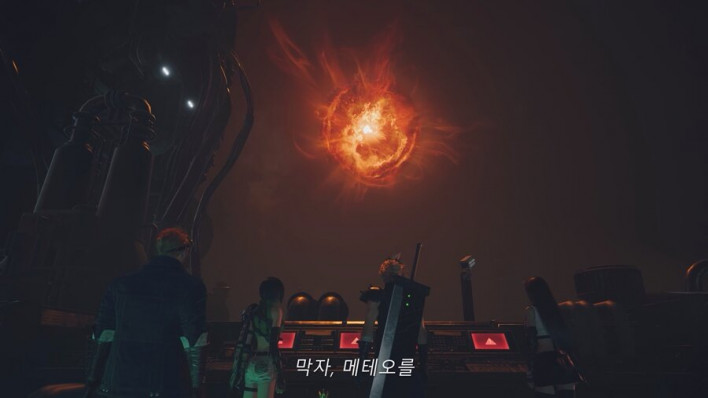
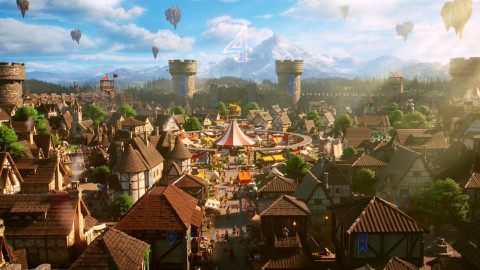
It has been 11 years since the announcement of the "Final Fantasy VII Remake" project in 2015, and 6 years since the release of "Final Fantasy VII Remake," which marked its official start. "Final Fantasy VII Revelation" (hereafter "FF7 Revelation"), set to crown the climax of the remake trilogy, is preparing for its launch in spring 2027.
Although "FF7 Revelation" has finally unveiled itself following "Remake" and "Rebirth," fan sentiment is not filled entirely with pure anticipation. This is not because the game lacks fun or polish, but because the story moves in directions that differ from the original in many ways. While following the main narrative arc of the original, there are a fair number of differences in the details.
The biggest change is undoubtedly the existence of alternate timelines. Just as in the original, the mainline Zack ultimately died, but for some reason, he is alive and well in another timeline. In this alternate world, however, Aerith does not exist. As the stories unfolding across these different timelines began to intertwine throughout the Remake series, the narrative grew even more complex.
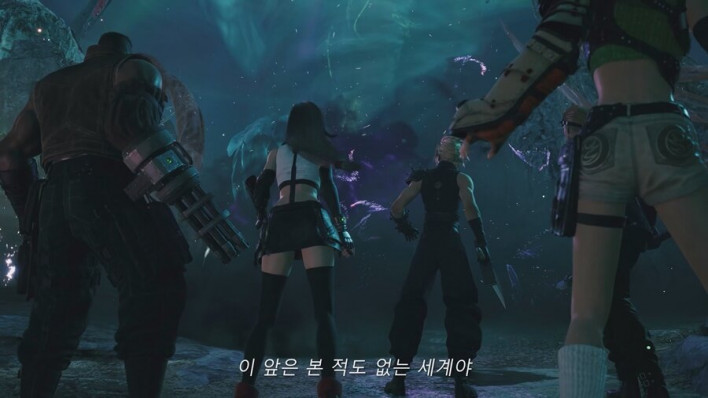
Diverse opinions continue to circulate in the community surrounding these narrative developments. Why did alternate timelines appear, are they merely parallel worlds, and what changes will they bring to the main story? With countless questions remaining, fans are turning their attention to "FF7 Revelation" to provide the answers.
Even the title carries deep significance. "FF7 Revelation" features "Revelation," signifying the unveiling of hidden truths. Fans are naturally curious about what story will unfold in this grand finale to the trilogy, and how much of the truth long shrouded in mystery will be brought to light. Another point of interest is what rich content will be offered following the previous installments.
We sat down with Producer Yoshinori Kitase and Director Naoki Hamaguchi of the Final Fantasy VII Remake series to talk about the story, content, and how they are preparing "FF7 Revelation" as the final chapter of the trilogy.
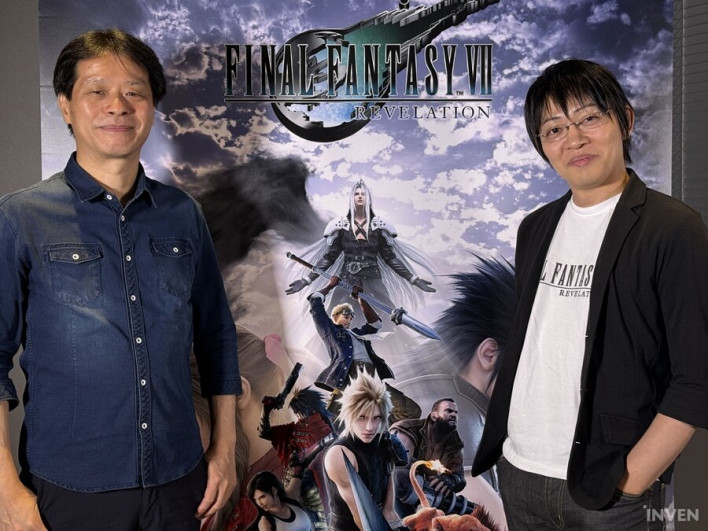
It has been six years since Final Fantasy VII Remake was released. With "FF7 Revelation" scheduled for release in spring 2027, the Remake series that spanned nearly seven years is finally coming to an end. Though it hasn't launched yet, how do you feel?
Kitase: From when we announced the Remake series in 2015 up to now, I feel that everyone—including the development team and myself—has poured everything into the FF7 Remake project. "FF7 Revelation," which marks the finale, will be released next spring. While I feel extremely satisfied that this is the final entry in the trilogy, I am already excited and eager to see what players think and how they will react.
Hamaguchi: Speaking of my feelings, I think there may never be another project where we create a trilogy for a AAA title of this scale in the future. In fact, there were a lot of difficulties throughout the development period. In particular, because there was an original game with an established ending, we struggled a lot with how to meet the expectations of media and players while continuing to realize what we wanted to achieve.
The most important thing was indeed that. Across Remake, Rebirth, and Revelation, we had to continually evolve the title while making it something that gives players food for thought and speculation. I think we focused heavily on making it that kind of experience.
In that sense, I believe "FF7 Revelation" as it is today exists entirely thanks to the players. I feel we were able to reach this point because players kept paying close attention to it, and as a developer, I feel incredibly lucky.
It's a personal philosophy of mine that game development isn't truly complete until the game reaches the players, so I am already looking forward to everyone's reactions.
In the original game, the latter half following Aerith's death was relatively short. On the other hand, "FF7 Revelation" needs to have substantial volume as the concluding title of a trilogy. Could you share what parts were expanded, whether any parts were condensed, and what the criteria were for those decisions?
Hamaguchi: Story-wise, we never had the mindset of condensing the original. Because we believe players hold fond memories of every single section, we focused instead on including all parts and expanding them even further.
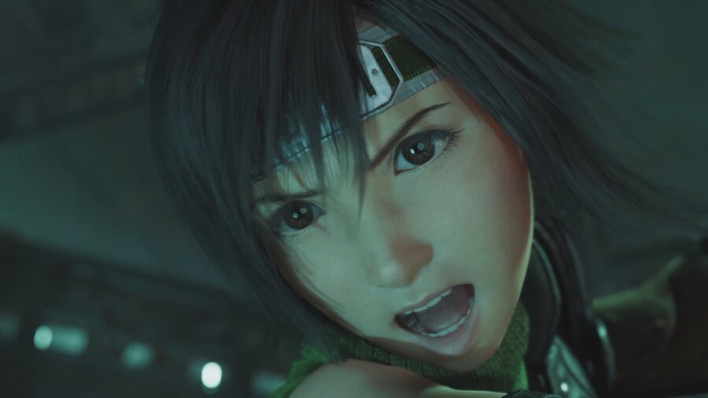
Regarding characters, Yuffie and Vincent are great examples. In the original, they weren't main characters, but in the Remake series, their status evolved into main, playable characters. In "FF7 Revelation," I think players will find a lot to resonate with when they see things like Yuffie's role within the rivalry between Shinra and Wutai.
On the other hand, certain locations or events that should have appeared earlier based on the original game were placed in "FF7 Revelation" after considering narrative pacing. Rocket Town is a prime example. Originally, it was an area that should have appeared before "FF7 Revelation," but it ended up appearing in "FF7 Revelation." By shifting the timing and presentation like this, we aimed to further expand upon the expressions present in the original.
Finally, regarding overall volume, just like the previous title Rebirth, players can expect over 35 hours of gameplay if they focus solely on the main story. We built it so that even as a standalone RPG—not just a part of a trilogy—it offers rich content and a complete narrative, which I am personally very satisfied with.
You previously mentioned that the subtitle Revelation signifies that all the hidden truths will be revealed. Does this mean that the various questions raised throughout the FF7 Remake series will all be resolved in this entry?
Hamaguchi: Since the game isn't out yet, I can't reveal details about the story or the ending, but I believe we have included everything we wanted to convey.
Meanwhile, from an entertainment standpoint, whether players take the conclusion at face value or view it as an ending open to interpretation is something I hope players will judge for themselves after playing.
Zack had a significant role in Rebirth, and you mentioned it will be even larger this time. Will Zack's segments proceed from a separate perspective as in the previous game, or will he join Cloud's party in the main story?
Hamaguchi: At this point, that is very difficult to answer. Because he plays a crucial role, speaking on it could be a spoiler, so I cannot say much yet. However, since so many players and media outlets are curious about this, I will share what I can.
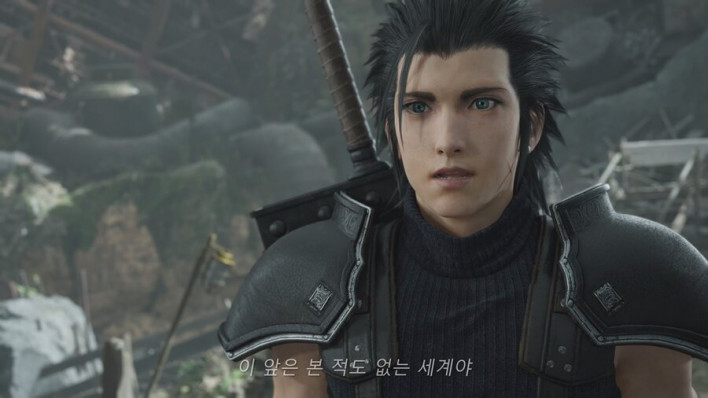
As you mentioned, one of the biggest differences from the original involves Zack. As the world evolved from the original to the Remake series, Zack's role gained added elements. This was because his perspective served as the vehicle for conveying these changes to players.
While I cannot reveal detailed specifics, in "FF7 Revelation," which serves as the culmination of the trilogy, there are substantially more segments where you play as Zack, and his prominence has grown. As such, I think it will be a great experience for fans of Zack.
One thing I can mention is that in Rebirth, Zack mostly followed along with the story. In "FF7 Revelation," Zack grows as a character, so I can say that players will experience something on an even grander scale regarding Zack compared to the previous game.
In Revelation, the Final Fantasy series' iconic Job system has been introduced in the form of "Wear." In previous Remake entries, character individuality naturally translated into combat styles—such as Barret handling ranged attacks and Tifa specializing in fast melee combat. What led to going beyond that approach and introducing the Wear system?
Hamaguchi: In Remake and Rebirth, the game system was fundamentally designed to follow Cloud's perspective, with Cloud as the main protagonist. Of course, Cloud remains the protagonist in "FF7 Revelation" as well, but because he is the protagonist, party composition and overall focus were inevitably centered around Cloud.
In "FF7 Revelation," we made a conscious effort to balance the focus among each character equally. Under the previous system, rather than freely forming a party with characters you liked, players were somewhat forced to build parties based on roles—thinking "I need this role, so I have to include this character." To shake up this formulaic party building and lift the role restrictions tied to specific characters, we introduced Wear. This allows characters to perform various roles so players can compose their party around their favorite characters.
In the demo build, there were only four Wears available per character. It seems like the number could have been increased; why did you limit it to four? Also, how did you balance team composition freedom with preserving each character's unique identity?
Hamaguchi: First, regarding how Wear came about: alongside the reasons I mentioned earlier, after discussing with Battle Director Endo, we decided to incorporate the traditional Job system of the Final Fantasy series into this title. It wasn't set at four from the very beginning. Given how diverse the Job system typically is in Final Fantasy, we initially intended for that kind of variety as well.
The challenge was that "FF7 Revelation" is an open-world action RPG. In other action games, there is usually only one playable character, or two or three at most. But our game features seven main characters, so we realized that adding even one single Job (Wear) incurred massive development costs. Adding just one required creating matching implementations for all seven characters.
So during the planning phase, we even considered keeping the outfits mostly the same and adding distinct accessories to improve visual clarity instead. However, we concluded that in this day and age, changing Jobs without an outfit change—just swapping an accessory—would not meet fans' expectations.
Rather than doing that, we decided quite early on that it would be better to create distinct outfits for each and assign solid roles to the Wears to give them distinct identities, which led to the current design. There is also a reason we called them "Wear." Calling them "Jobs" might create the impression of a massive, vast roster of options, so using "Wear" helped set appropriate expectations and differentiate the feature.
Ultimately, rather than adding more Wears, we limited the number to four and ensured clear differentiation between them. As a system that offers players freedom of choice while maintaining distinct character identities, I personally find it very satisfying.
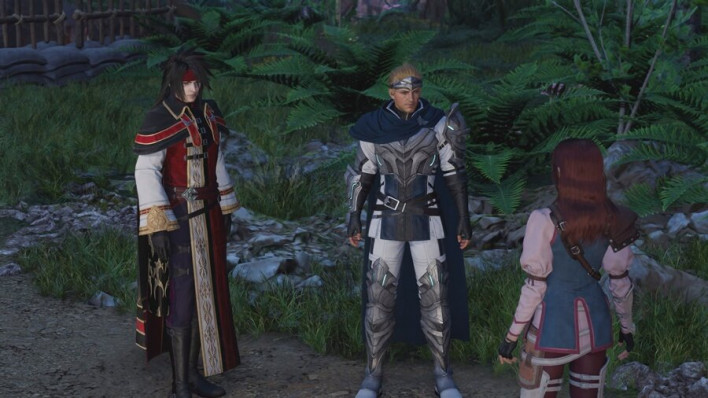
In Final Fantasy VII Remake Intergrade, Deepground and the Tsviets from the spin-off Dirge of Cerberus made an appearance, but their absence in Rebirth caught some fans by surprise. Is there a possibility that they will appear again in "FF7 Revelation"?
Hamaguchi: Since this ties directly into the story, it's hard to confirm or deny right here (laughs). So I will share what I can within the bounds of what I can discuss at this point.
In fact, seeing discussions among many media outlets and fans, whether the ending of "FF7 Revelation" connects to Advent Children is a major subject of debate. In that sense, regarding questions about whether it connects to Dirge of Cerberus or other spin-off works, rather than answering directly with "it connects" or "it doesn't connect," we explain it overall as a new Final Fantasy VII that encompasses these spin-off settings and lore.
It was in that context that Deepground and the Tsviets from Dirge of Cerberus appeared in FF7 Remake Intergrade. To conclude, I will say that "FF7 Revelation," as the final entry, is being developed as a game that properly incorporates these spin-off settings and lore.
Cid, who joins as a companion, was an homage to the Dragoon job in the original game. In the Remake project, it was notable that he was designed around air combos. This mechanism is quite different from existing characters; were there any difficulties in implementing it? Also, in the original game, his ultimate Limit Break called down the Highwind for a bombardment—will that be implemented as well?
Hamaguchi: As you noted, Cid was indeed designed as an aerial combat specialist. In terms of attacker roles, if Red XIII is a ground attacker, we designed Cid as an aerial attacker. So he was created to excel at aerial combos and hitting enemies in midair.
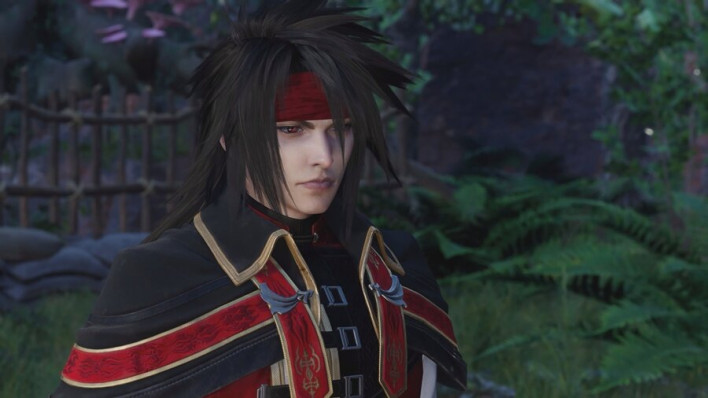
As an aside, we gave Cid very strong specs, but most media outlets asked far more questions about Vincent. As you know, Vincent can transform back and forth between human and beast forms and is just so cool, which is probably why. Even so, I'm just grateful you asked about Cid (laughs).
Ah, and regarding Cid's final Limit Break, it hasn't been revealed yet so it's hard to speak on it, but given that there are battles against Weapons, I can say we built it to deliver a very exciting experience, including the Highwind.
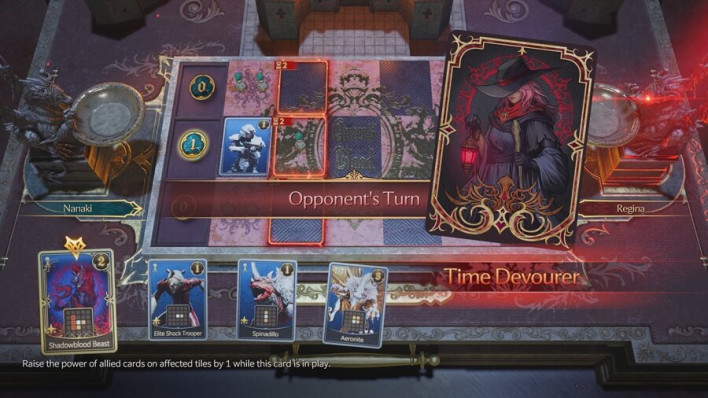
The Final Fantasy VII Remake series is also known for its diverse minigames. Just like Fort Condor and Queen's Blood in Rebirth, could you introduce any minigames in "FF7 Revelation" that you put special effort into?
Hamaguchi: If there's a minigame all FF7 fans are looking forward to, it must be snowboarding. It was included in this demo build, though I think quite a few people couldn't play it. That's because it was built with substantial volume, offering different experiences depending on which route you select.
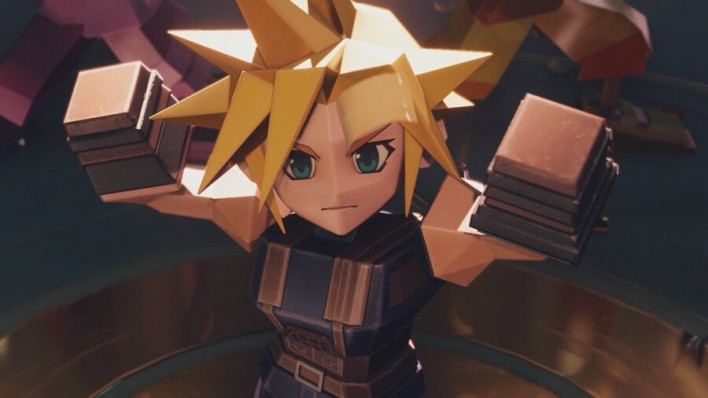
Personally, my favorite part of this demo build is a side quest at the Gold Saucer where the low-poly characters from 3D Battler have taken over the location. While visiting under those circumstances, players can enjoy minigames like Chocobo Racing and snowboarding. Looking at it this way, people might think these minigames are only playable at the Gold Saucer, but they also have a somewhat surprising role in the main story, so I really hope players try them out.
Meanwhile, we received various feedback from fans regarding minigames. A prominent point was whether there were too many minigames in Rebirth. Creating a wide variety of minigames was entirely my decision, as I believed that variety is one of the key charms of FF7. So we prepared a wide variety of minigames this time as well. However, we are aware that quite a few players feel "I really don't want to play minigames" or "I do them, but it's tedious." So we implemented two improvements for those players.
First, just like in combat, we added minigame difficulty options. This allows players to complete them more easily. And for players who feel that even that isn't enough and simply want to bypass them, we added an outright skip feature. So for those who worry there might be too many minigames, please rest assured that minigames in "FF7 Revelation" are not that harsh, and look upon them warmly.
In addition, an event that fans have been anticipating since the previous entries has also been turned into a minigame in "FF7 Revelation." That is the scene where Tifa and Scarlet slap each other. It has been implemented as a minigame with great presentation and gameplay mechanics, so please look forward to it.
In Vincent's case, as I recall, Beast Form was a Limit Break in the original game, but this time it has changed so that he can freely transform and revert as a standard ability. You must have had to balance it so that neither human nor Beast Form is strictly superior—how did you balance this?
Hamaguchi: His basic positioning is similar to Yuffie's. In Yuffie's case, players alternate between two main modes: physical attacks while holding her throwing star and ninjutsu (magic) attacks after throwing it.
Vincent is quite similar. Fundamentally, Vincent deals physical damage in both human state and Beast Form, but he resembles Yuffie in that he can freely swap between melee and ranged modes. On top of that, as you mentioned, in "FF7 Revelation" he can freely shift into Beast Form at any time via abilities.
Fighting while swapping modes like this feels so exhilarating and fun that I often put him in my party alongside Yuffie. I believe fans will experience that same fun when they play it themselves.

Mounted combat, if you will—mounted Chocobo combat functionality has been added, but in the demo build, it unfortunately didn't feel particularly necessary. Could you tell us the intention behind this and where it is meant to be used?
Hamaguchi: Basically, we didn't add it with the intention of having players fight extremely difficult enemies while riding a Chocobo. Since combat heavily relies on each character's stats and abilities, there won't be battles where you are forced to fight tough bosses mounted on a Chocobo.
Rather, it's best viewed as a feature added to complement combat pacing. As you know, in the previous game Rebirth, you could travel around on Chocobos. However, whenever you entered combat in Rebirth, you had to dismount the Chocobo to fight, which we felt wasn't great for pacing. And once combat ended, you had to mount the Chocobo again. Therefore, in "FF7 Revelation," we allowed combat to take place while mounted on a Chocobo to maintain that sense of rhythm and flow.
If I leave it at that, people might think Chocobo combat has limited utility, but as you progress through the game, Chocobo abilities expand, unlocking more elements to enjoy, so I think this will become another enjoyable aspect of the game.
By the way, we've received questions from various media outlets so far, but I think this was the first question about mounted Chocobo combat. I think it was a very insightful question.
Lastly, do you have a message for Korean players?
Kitase: As a developer of the original game, I want to leave a message for original fans. As the finale of FF7, I believe this entry includes everything you wanted to see and play, so please look forward to it. Also, since "FF7 Revelation" is the conclusion of the trilogy, if anyone thought "I'll play it after the full trilogy is released," now is a fantastic time to purchase Remake, Rebirth, and Revelation together. The bundle is priced very affordably, so I hope you purchase it and enjoy the story straight through from part one.
Hamaguchi: I remember visiting Korea for a launch event when FF7 Rebirth was released. The Korean market is extremely important to us. At this point it is in the planning stages so I cannot share specific details, but if possible, Kitase-san and I would love to visit Korea together for a community event. We know how passionate and supportive the Korean community is, so we would be immensely grateful for your continued support.