OpenAI and Com2uS hosted 'OpenAI Game Builders Seoul' last August at 'Graphic by Daeshin' in Seoul. Marking OpenAI's first game development hackathon powered by its AI coding agent 'Codex', the event brought together 40 teams that passed the online qualifiers alongside first-generation Korean developers as mentors.
The setup of the event itself revealed the nature of this hackathon. Developers who pioneered the mobile game market during the feature phone era—when a single game was constrained to just 24 KB—stood before creators building complete games in five hours. Separated by 25 years, the two generations gathered on the same stage around a single question: "In an era where creation has become easier, where does the value of a game come from?"
Why OpenAI Chose Seoul as Its First Host Location
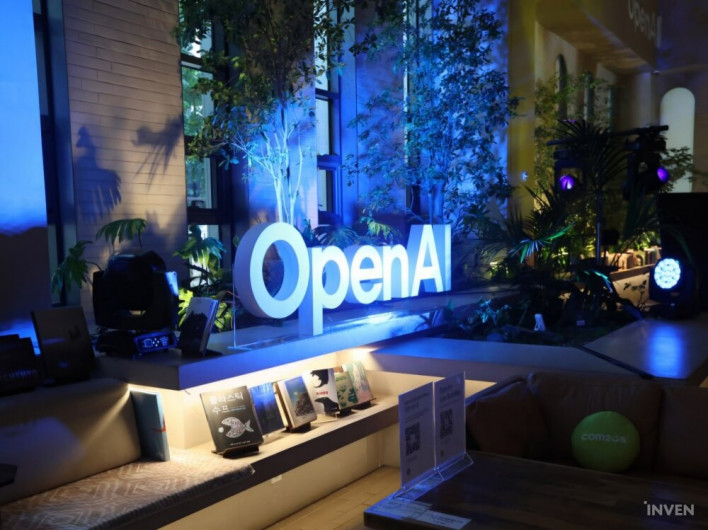
The event opened with a video welcoming address by Oliver Jay, International Managing Director at OpenAI. Highlighting the significance of bringing together developers who drove the growth of Korea's gaming industry and new builders of the AI era, Jay noted that the cycle from ideation to realization is shrinking. He stated, "I hope Korean developers actively leverage AI to boldly challenge new gameplay possibilities."
Explaining the choice of host location, he added, "Korea possesses both world-class game development prowess and a dynamic developer community, making it the most perfect place to demonstrate new possibilities where AI and gaming converge."
At the venue, first-generation developers, including Nexsus Advisor Song Jae-kyung, participated as mentors to review team projects and share their expertise. Organizing the hackathon, Com2uS provided participants with plugins built on 'Hive', its backend service platform developed over 25 years of operating global live services.
Song Jae-kyung: "Coding Throughput Up 8x—AI Is Not a Tool, but a Participant"
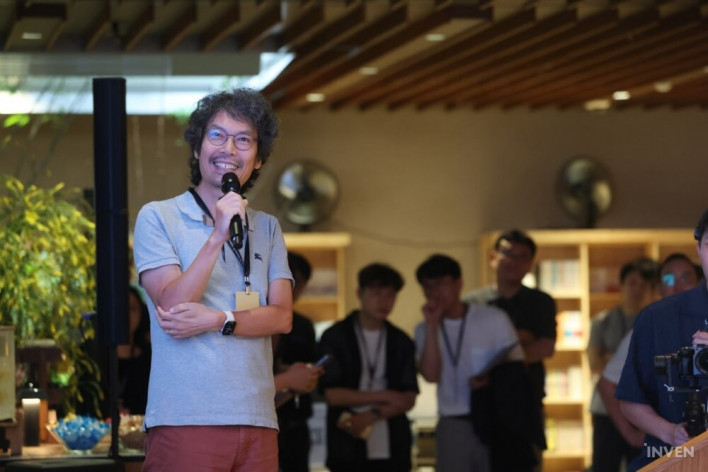
Taking the stage as the first keynote speaker, Nexsus Advisor Song Jae-kyung shared insights from 'OpenMMO', a solo development project built using a generative AI pipeline. He also displayed development screens published on GitHub.
Song revealed that coding throughput increased more than eightfold after adopting Codex. The weight of his presentation lay in how he conceptualized AI. He defined AI not merely as a development assistance tool, but as a 'new participant (agent)' capable of reasoning and acting autonomously within the game. He went on to propose a game ecosystem model where humans and AI interact under the same set of rules.
It was a shift in perspective, moving AI from a speed-boosting tool to a core agent shaping game content—a concept particularly striking coming from a veteran developer who has long worked on MMORPG design.
Song Byung-joon: "In the 24 KB Era or Now, the Question Remains the Same"
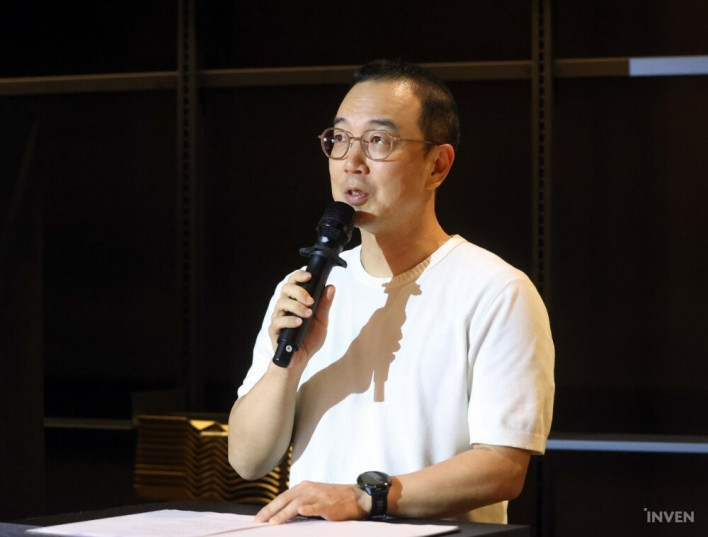
In his opening keynote, Com2uS Chairman Song Byung-joon looked back on the feature phone development environment of the early 2000s—an era of black-and-white screens and 24 KB storage limits, where developers squeezed every line of code. Since then, mobile phones have evolved to run blockbuster titles tens of gigabytes in size, and dev tools have shifted from manually writing code line by line to implementing features through conversation with AI.
Chairman Song said, "Now, by conversing with AI, you can translate ideas into code, run them instantly, and iterate on the fly," noting that an 'era of democratized creation' has arrived where anyone can turn an idea into a game. He explained that while realizing ideas used to require significant time and labor, the arrival of AI is fundamentally transforming how games are built.
At the same time, he pointed out an unchanging pillar. "Whether in the feature phone era fighting against extreme constraints, or today when concepts can be built in an instant with AI, there is a core element that never changes," Song emphasized. "No matter how much the technological environment shifts, the fundamental question a developer must ask remains: 'What fun will this deliver?'"
Just as the new technology called 'mobile' reshaped the gaming landscape 25 years ago, he expressed high hopes for how far AI will expand the industry.
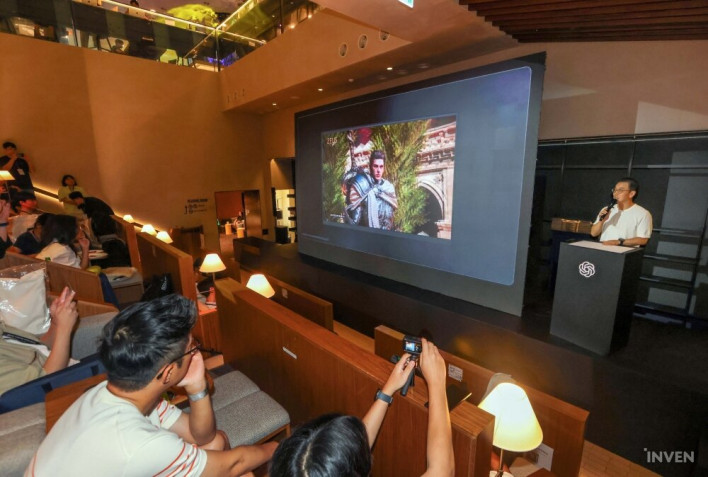
Song remarked, "Just as game creation has become easier thanks to AI, the way completed projects are presented to players must also evolve." His view is that as the freedom to build expands, the process of launching into global markets should become equally accessible.
At this junction, Com2uS introduced its next-generation backend platform, 'Hive Axyl'. Chairman Song expressed his hope that "ideas sparked at this event will become actual games that meet players around the world," adding that the platform encapsulates 25 years of accumulated live service expertise.
While collaboration with AI has expanded the scope of production a solo developer can handle, backend infrastructure—spanning account systems, payments, push notifications, data analytics, and server operations once a game is finished—remains a barrier. This is the context behind Com2uS Platform introducing AI plugins based on Hive.
Hive Axyl is designed to automatically integrate essential game infrastructure—such as login, security, payments, and user analytics—using simple natural language prompts. When a developer requests needed backend features from Codex, the AI implements the SDK code, while operators manage settings and change histories through a unified console.
According to the company, Hive has been implemented in over 250 games worldwide, accumulating 900 million players. Com2uS Platform plans to make it available so solo creators and small teams can use it tailored to their project scale, with Hive Axyl set for an official release in September.
Choi Seok-won, CEO of Com2uS Platform, stated, "Hive Axyl will be a solution that expands the freedom to bring games to the world, all the way through launch and live service."
"Beyond Personalization of Consumption to Personalization of Creation"
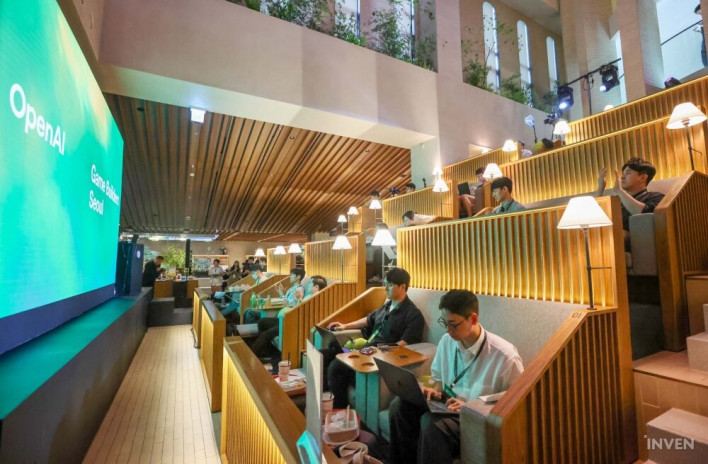
Prior to the track competitions, expert lectures were held. The first speaker, Park Sang-jun, Director of Com2uS AX Hub, presented on the topic 'BUILD FOR ONE. BUILT BY ONE.'
Park assessed that just as the media market has fragmented around individual user preferences centered on YouTube, the gaming market is also entering an era of 'personalized creation'. With the advent of generative AI, fans who used to enjoy derivative secondary works are transitioning into creators handling graphics and code directly, shifting personalization from consumption to 'personalization of creation'.
He cited 'MECCHA CHAMELEON' as an example. Built by just two people using AI tools in two months, the game reached No. 1 on Steam's global bestseller list after launch. He explained that a project that in the past might have stalled in the design phase became a hit title when empowered by AI.
Kim Dae-hwon: "AI Is Merely Wings—Human Intelligence Completes the Value"
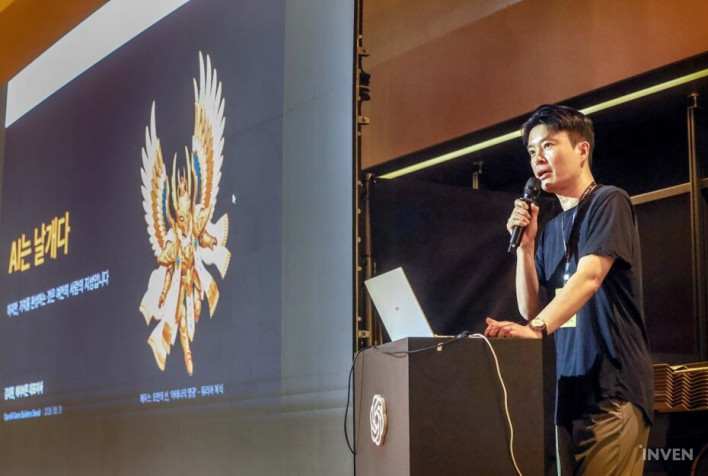
Kim Dae-hwon, CEO of AButton, delivered a talk titled 'AI Is Wings'. Kim noted that in the past, the main barrier to game development was not ideas, but 'implementation cost'. With the emergence of AI, the time required to test an idea in a playable state has drastically reduced.
His presentation then pivoted. He pointed out that as AI tools become democratized and allow anyone to create, the volume of output has surged, leading to a limitation where creations increasingly resemble one another. He emphasized that being easy to build alone is no longer enough to earn recognition; differentiation through originality and polish—while using the same tools—becomes the true value of a game.
Kim asserted that deciding how to use the time saved by AI, verifying the fun players will experience, and polishing the final quality are tasks that belong to 'human intelligence'. AI is merely wings that offer developers broader choices and speed; what truly completes value is the developer's vision and choices.
A common thread running through the speakers' presentations was the shift in bottleneck. As the long-standing barrier of implementation cost lowered, the remaining challenge split into two directions: differentiation, as noted by CEO Kim Dae-hwon, and distribution and service, as highlighted by Chairman Song Byung-joon.
The setup of Com2uS organizing the hackathon alongside its backend platform directly targets the latter. OpenAI provides the creation tools, while Com2uS handles the pipeline connecting completed games to commercial live service. This can be read as an effort to redeploy 25 years of assets built from mobile game publishing and live service toward the AI-era developer pool. Whether solo developers and small teams actually adopt it following Hive Axyl's September release will serve as the first test of this strategy.
3-Minute Pitching and a 5-Hour Live Hackathon
The event was structured into two tracks. The 40 finalist teams participated in Track 1, featuring '3-Minute Pitching' to introduce their pre-submitted entries, and Track 2, a live hackathon where they built a game within five hours based on a theme revealed on site.
During the 3-minute pitches, participants presented the design intent and key features of their online qualifier entries. Demonstrating how Codex was utilized alongside live gameplay, they explained core fun elements such as narrative, character design, and AI interaction.
The theme for Track 2 was revealed on site as 'Go Limitless–Surprise Me.' Within the time limit, participants completed everything from planning, development, execution, to debugging, submitting playable games. They spent their time issuing natural language prompts to Codex, playing the builds themselves, refining game rules, and balancing difficulty. The time saved by AI was effectively redirected from the burden of writing code into designing fun.
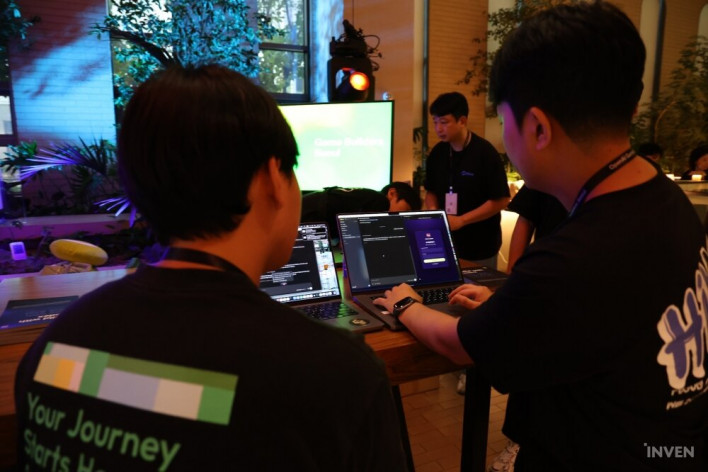
At the Com2uS Platform 'Hive' booth set up on site, demonstrations of Hive Axyl's key features took place. Participants observed backend infrastructure—including login, user analytics, security, and payments—operating through simple natural language commands, assessing its potential for real service application.
In the Track 1 awards evaluating online qualifier submissions, Neural Break's 'The Tale of Ravelen: Winter Line' won the Grand Prize by unanimous decision of the judges. First Place was awarded to NullByte's 'Lighthouse Island Sea Tale', and Second Place went to HAP's 'HAP'. Including 5 Honorable Mention teams, eight teams received $50,000 worth of OpenAI credits and one-year subscriptions to ChatGPT Pro.
In Track 2, which was conducted based on the on-site theme, three teams—Umai Studio's 'AFTER CLEAR - Dungeon Cleanup Crew', NullByte's 'OUT OF FRAME', and MKKPLAY's 'Is There Anywhere to Plug In Code Here?'—were selected as top entries and received one-year subscriptions to ChatGPT Pro.