Artificial intelligence has now moved beyond simple calculations or information retrieval and entered the realm of human creation. In just a few seconds, it draws pictures, composes music, suggests ideas, and writes text. It is no longer surprising to see it instantly generate results that would have taken a human decades of honing skills in the past.
The games industry is no different. Moving beyond merely how to utilize AI in the development process, we must now talk about an era where human-made content and AI-generated content compete in the same market. If even "creativity," once thought to be an exclusively human domain, is being caught up to by machines, a single question naturally arises.
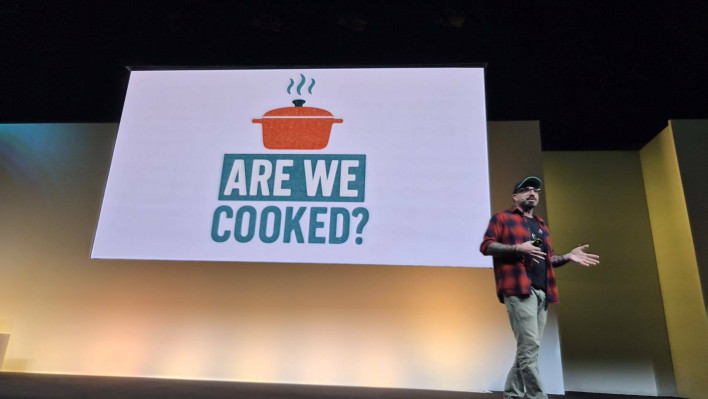
"Are we cooked?"
This is the question posed on the gamescom dev stage by Fawzi Mesmar, Creative Director at Ubisoft. Mesmar is a veteran developer with over 23 years of experience in game development, having worked at King and DICE before currently serving as Creative Director for Beyond Good and Evil 2 at Ubisoft. He has taught game design and creativity, and in 2024 published the book 'Demystifying Creativity: On Originality in Game Development', which explores creativity and originality.
At gamescom dev held in Cologne, Germany on the 26th, Mesmar delivered a presentation titled 'Creativity in the Age of AI: Practicing Creative Sobriety'. Instead of asking whether AI will replace human creativity, the talk broke human creativity down into several elements to compare them with AI and explore what competitive edge humans can still retain.
And his answer was neither a simple "yes" nor "no."
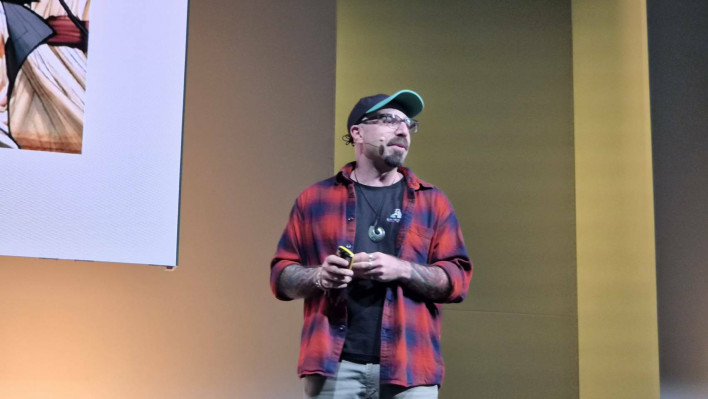
In chess, art, and ideas… in certain areas, humans have already lost
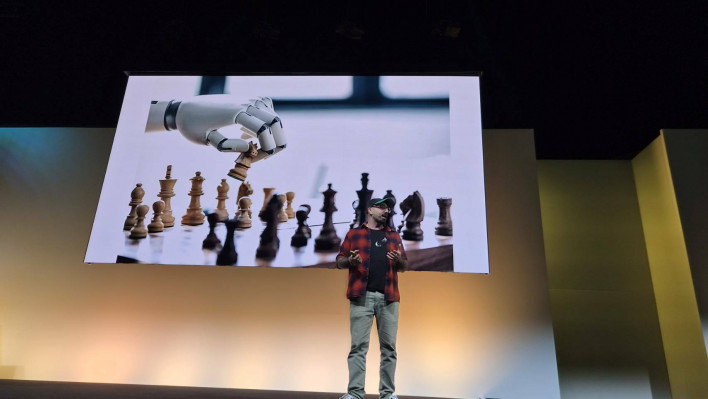
There is no need to turn a blind eye to what AI does better than humans. Mesmar cited 'Creative Proficiency' as the first element of creativity. This refers to the mechanical and technical skills needed to express oneself, such as in music, dance, or art. Robots can already move faster than humans and play complex music that is difficult for humans to perform. In chess and Go, AI surpassed top human players long ago.
So, are humans finished in this regard? Mesmar's answer was "Yes and no." While we may concede ground to machines in technical proficiency, what people actually want to see are human victories, failures, and the struggles that occur in between. Not many people want to sit and watch two AI programs play a game of perfect chess for hours. When we look at competition and mastery, what we care about is still the human experience.
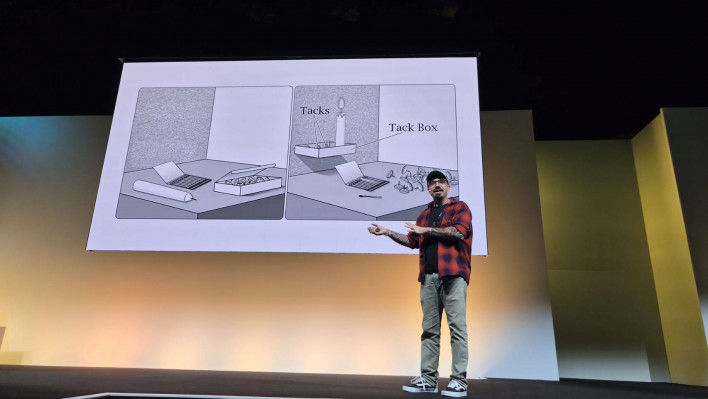
AI also clearly holds an advantage in problem-solving. Mesmar cited German psychologist Karl Duncker's famous 'Candle Problem' as an example. Given a candle, a box of matches, and a box of thumbtacks, and asked to attach the candle to a wall so wax won't drip on the table, many people fail to recognize the box containing the thumbtacks itself as a tool to solve the problem. This is due to 'functional fixedness'—viewing objects only through their intended functions.
AI is relatively free from such fixedness. If an element exists within data, AI can quickly identify things that humans miss due to their own biases. However, there are limits here as well. What to define as the problem and which data to use to solve it are still decisions that humans must make. Mesmar saw this as a space where humans still hold an edge.
The situation is similar in creation. Humans utilize 'analogical thinking' to discover solutions in completely different fields. Just as Nike designer Tinker Hatfield was inspired by the exposed external structure of the Centre Pompidou in Paris to design the Air Max, exposing its internal air cushioning, new ideas are born when seemingly unrelated experiences connect. The Last of Us similarly developed the idea of a human-infecting fungus from Ophiocordyceps, which infects insects and controls their behavior.
However, AI can now forge these connections rapidly. Mesmar explained that when he asked an AI for an idea that could trigger a real-world zombie outbreak, it immediately suggested fungal parasites. When asked for material in nature to create zombies, it even pitched ideas like a 'coral zombie' by connecting coral to humans. Creating multi-step logical connections within existing data is an area where AI already excels.
There is data AI hasn't learned: 'myself'
The concept Mesmar brought up here is 'Creative Sobriety,' which was also the title of his talk.
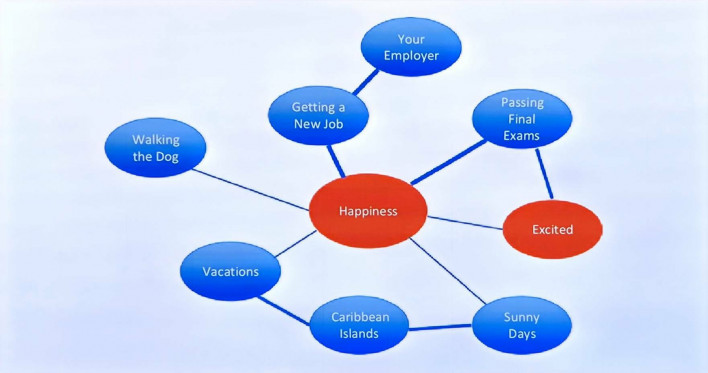
Inside a human mind, there is an 'associative network' where countless concepts and experiences are interconnected. For example, thinking of the word 'color' leads to 'white,' white to milk, milk to cows, cows to horses, and horses to unicorns. The closer the connected concepts are, the easier they are to recall, and as the connections grow farther apart, the likelihood of generating a more original idea increases.
Mesmar described what anyone can easily think of at the first connection as 'Inevitable Ideas.' Inevitable ideas aren't inherently bad; the fact that anyone can think of them means they can be brought to market quickly. The problem is that in the age of AI, it becomes difficult for humans to compete in this domain.
"If your idea is 'purple' and there's no purple in the world yet, you need to start making it right now. Because even at this very moment, there are probably five people in their garages making purple."
AI can produce these inevitable ideas at a speed incomparable to humans. Creative sobriety, as defined by Mesmar, begins with consciously observing which step of association your idea stems from. Originality is ultimately **an idea that is statistically unlikely for someone else to think of**, and only by understanding where you are can you consciously move further away.
So how can we go further than AI? Mesmar's answer is surprisingly simple: start from data that AI cannot learn.
That data is your own life.
Everyone has their own experiences, memories, and perspectives on the world. What events you experienced, what feelings they left you with, and why they moved you can never be completely identical to anyone else's. Mesmar shared a personal example of kayaking in New Zealand, being surrounded by orcas, and getting rescued with the help of a local drug dealer. The connections formed from such experiences exist solely within one's own associative network.
To illustrate this, he also shared a story about a friend's failure. After watching Netflix's 'Squid Game', the friend thought adapting it into a video game would make a fortune. He proceeded with development, recreating the games from the show, but by the time he finished, thousands of 'Squid Game' clones had already flooded the market.
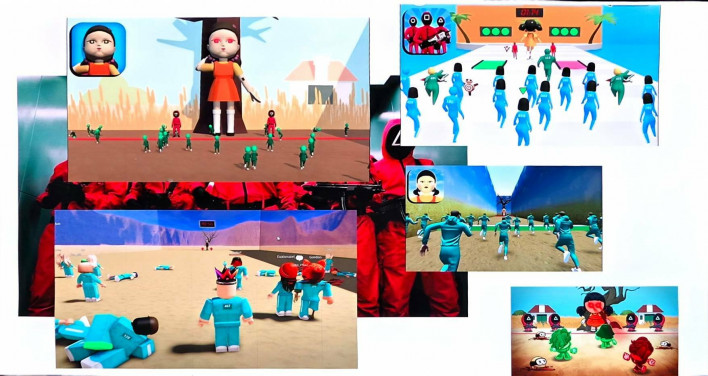
Mesmar pointed out that the problem was that his friend watched 'Squid Game' and immediately decided to 'make Squid Game.' If millions of people watched the same show, countless game developers were among them, and the likelihood of arriving at the same connection is high. Instead, he should have asked himself, 'Why did this show move me?' and 'What part of my life did it connect with?'
"We shouldn't just recreate what the world showed us, but create based on how the world moved us. Because creating what we directly saw is something AI can do very easily."
Ultimately, the age of AI demands a higher level of originality from humans than before. In the past, even ideas anyone could think of could be competitive if brought to market quickly, but once AI begins producing them at an overwhelming speed, humans can no longer compete on speed.
"That is why we aren't cooked yet. Rather, we are under pressure to be more original than ever. We must be more honest about who we are and create something out of data that AI can never learn."
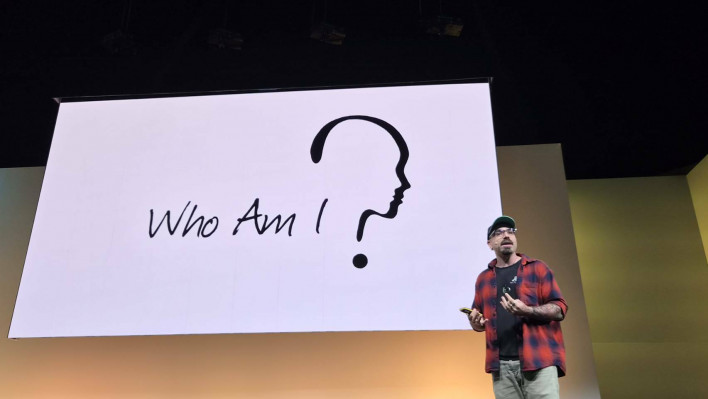
AI can create, but it cannot take 'creative responsibility'
Mesmar took things a step further. Creativity is important to humans not merely to produce better ideas than AI, but because human creations spark thoughts and creations in others, sometimes exerting influence far into the future.
The figure he cited as an example was Albert Einstein. Becoming fascinated by invisible forces as a child through a compass, Einstein studied mathematics and physics, and while working at a patent office, was exposed to numerous new ideas of his time. Yet his groundbreaking work was not born from existing knowledge alone. He imagined what the world would look like if he were riding on a light particle at the speed of light—adding his own imagination to the accumulated knowledge of humanity.
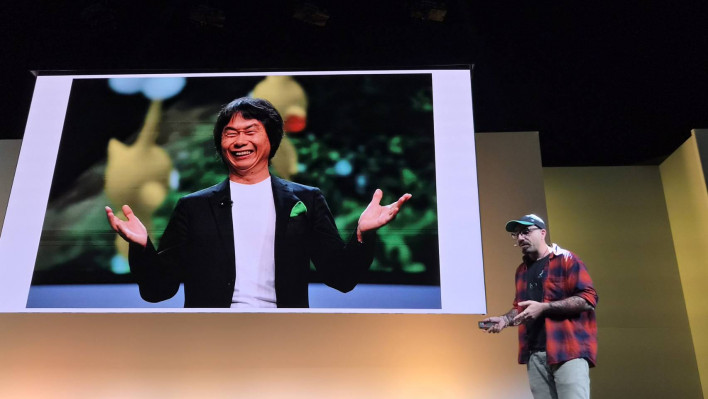
The same applies to gaming. Mesmar brought up the 1983 North American video game crash, explaining that while the industry faced an existential crisis at the time, games created by developers including Nintendo and Shigeru Miyamoto had a profound impact on the industry moving forward. And he did not stop at comparing Einstein and Miyamoto.
"You might think I just compared Miyamoto and Einstein. But I will go one step further: I am comparing both of them to you."
What he wanted to emphasize was the universality of creation and the accompanying 'Creative Responsibility.' Something a creator puts into the world can influence someone they never anticipated, becoming a seed for that person to create something new in turn. No one knows how a single game someone makes today might inspire someone decades from now.
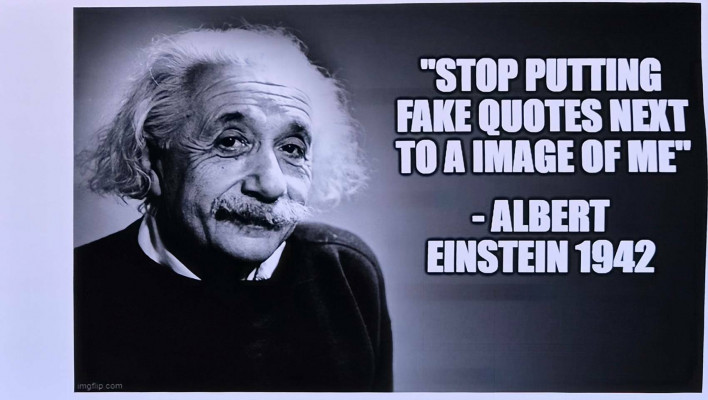
Mesmar likened this to "planting seeds for trees whose shade we will never sit in." A creator's responsibility is to infuse current society, beliefs, and experiences into creative work, leaving them in the world so that someone, someday, might discover them and create something else.
And this was the clearest line he drew between AI and humans.
"AI cannot own its voice. It cannot be censored, it cannot be taken to court, and it cannot personally defend the lived experiences embedded in the art it creates."
AI can produce outputs, but it lacks a life to explain why it made them. Humans, on the other hand, channel their experiences, beliefs, and the era they live in into their work, bearing full responsibility for the results brought forth into the world.
Because of this, Mesmar views AI as a "tool of expression"—much like Photoshop, a game engine, or a musical instrument. What matters is not what the tool can make, but what the person using it is trying to express. Creators must ask themselves what parts of their experiences to channel into their work, what cannot be replicated by others, and whether they can be honest and vulnerable enough to put a piece of themselves out into the world to be judged.
The volume of content AI generates is likely to grow at a pace humans will never be able to match in the future. Mesmar did not deny this. However, he viewed it as a challenge rather than an "existential threat" to human creators.
"I hope you embrace your responsibility as creators. Be honest with yourselves, stay true to the era you live in and the things that move you. The work you create should reflect yourself, your perspective, and how the world has impacted you."
That was the ultimate meaning of 'Creative Sobriety' according to Mesmar. Rather than creating more or faster than AI, it means being conscious of where your ideas come from, breaking away from the same connections others make, and diving deeper into your own experiences.
Let's return to the initial question. In the midst of AI advancement, are we cooked?
Mesmar's answer ultimately comes close to "Not yet." However, in an era where machines spew out obvious ideas far faster than humans, humans must become even more human than before.
Rather than recreating the world AI has learned, create based on how that world moved "you." That was his conclusion on how human creations will survive amid the flood of AI-generated content.