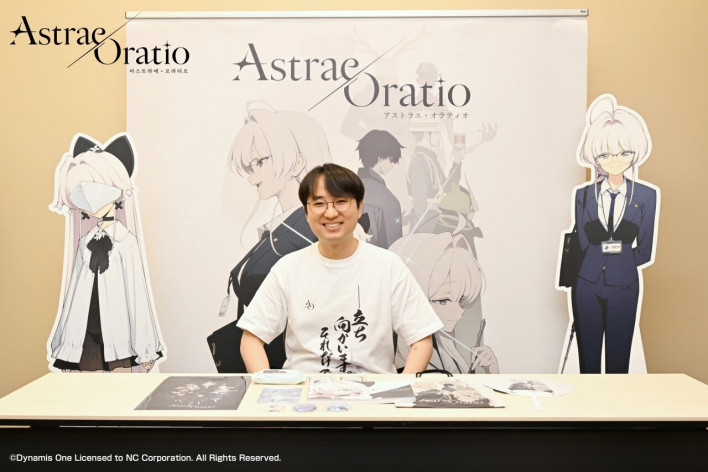
NC’s new anime-style subculture RPG, 'Astrae Oratio', successfully wrapped up its participation at Comic Market in Japan. Participating in this Comic Market, NC set up a booth decorated with representative visuals of Astrae Oratio and showcased various merchandise, including a teaser artbook.
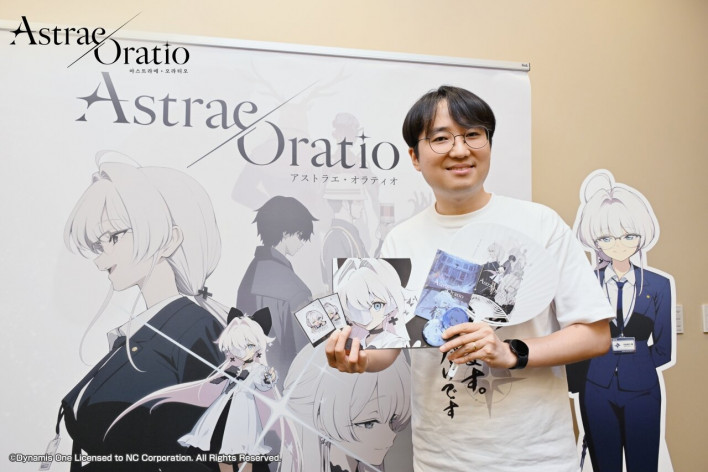
Despite the game not having officially released yet, it attracted significant attention from local subculture fans, with the artbook selling out completely. On-site, an interview was also held with Art Director In Kim, who oversees the art for Astrae Oratio.
Please give us a brief introduction. What role do you play in the development of Astrae Oratio?
“I am In Kim, the Art Director for Astrae Oratio. As a concept artist, I work under the pen name 'hwansang'. I am delighted to greet players through Astrae Oratio. I look forward to your support.
Could you introduce the overall art direction and core visual concept for this title?
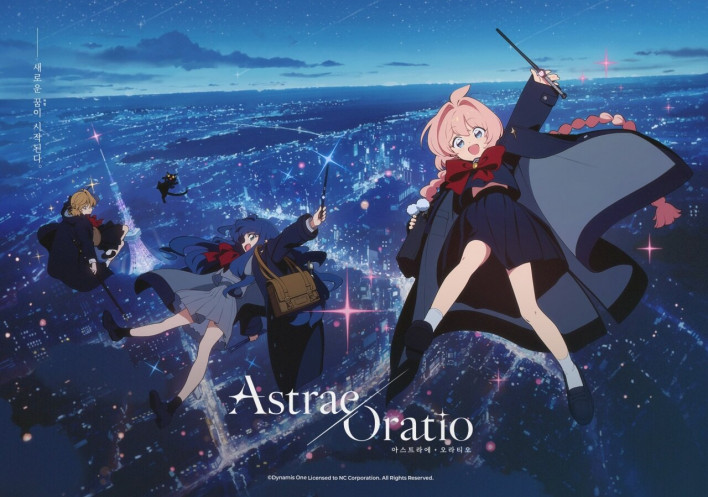
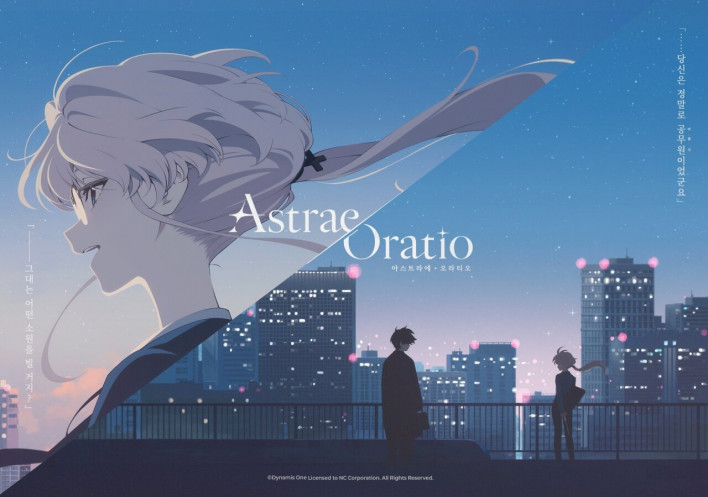
“Our visual keyword is 'lyrical analog'. With core themes of magic and Shindenki, we wanted to capture the exact texture of the era when Shindenki was popular.
We put a lot of thought into delivering widely used subject matter in a fresh and new way, but concluded that rather than forcing twists on the material, it would be better to bring out the classic charm inherent to the genre. I believe 'analog' is the word that best captures that classic appeal.
Because I found the lyrical sensibility in the prologue written by Scenario Director Isaku-san so captivating, I combined that sensibility with the texture of 'analog' to establish 'lyrical analog' as our core keyword. Specifically, our goal is to recreate 'the nostalgia for analog retained as good memories' in line with modern trends.
To achieve this, our core principle was to create a world and characters that feel genuinely real rather than plausibly embellished. We approach it with the mindset that the world and characters are already breathing and living prior to the work itself, and hope to convey that feeling naturally and authentically.
You set keywords such as 'magic', 'Shindenki', and 'administration' as core themes of the game. What visual symbols are used to express them?
“The concept of 'magic' carries too strong a sense of fantasy to blend naturally into everyday life right from the start. We took an approach where something foreign subtly mixes into ordinary everyday landscapes that people see in real life, while citizens remain unaware of it.
For example, a house overgrown with lush vegetation sandwiched between urban skyscrapers, or a character dressed as a witch standing casually in a crowd without nearby citizens noticing—we want to start and expand the world from lighthearted moments of fun that spark curiosity, making people ask, 'What is going on here?'
Personally, I felt that the imagery of 'Shindenki' was strongly associated with the crisp atmosphere of winter rather than summer, as well as the contrast between day and night. Therefore, we set the color tone centered on blue to convey the cold feel of winter air. However, to keep it from becoming too dark, we balanced it by mixing in spring pinks and greens. To visually convey the contrast between day and night as well, we apply black-and-white contrast to graphic design and layout partitioning.
I believe 'administration' is one of Astrae Oratio's unique charms that, when layered over familiar concepts like magic, delivers a distinct character. To reflect this in the art, we are focusing on depicting maps and landmarks, which are the most direct visual elements representing 'administration'.
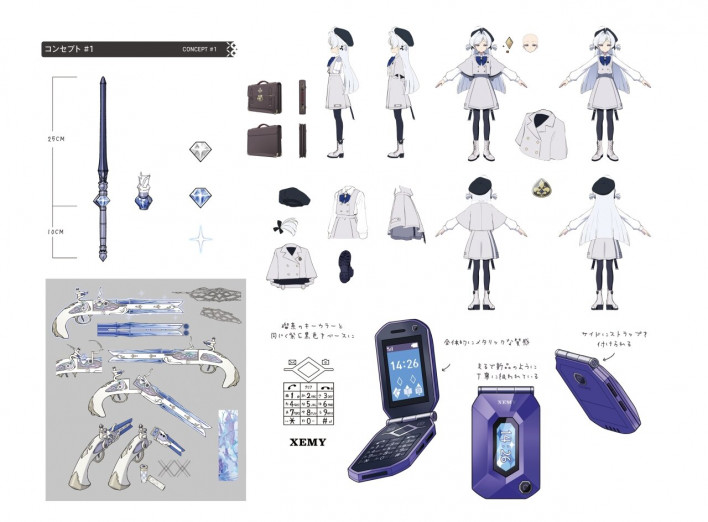
In addition, we sought to convey the sensibility of a bureaucratic system by adding suits, neat documents, and analog props such as ID cards, personal seals, desk nameplates, and business cards.
Could you explain the reason behind setting the time and space to ''89 Tokyo' and how that setting is expressed visually?
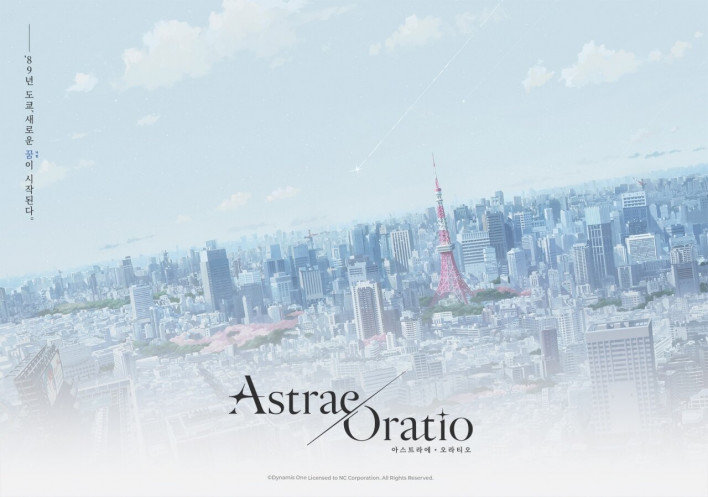
“With Shindenki and magic as core themes, we thought Japan and Tokyo could serve as the central setting. As for the era, we had already thoroughly explored near-future visuals through previous projects, and there are already many titles on the market set in the near future or Western settings. So, we wanted to explore 'nostalgia' as a fresh attempt. Since my fellow developers shared the same vision, we settled on this time and place as our setting.
After establishing the spatiotemporal setting, we have been working to present visuals aligned with modern trends, centered around the core visual keyword of 'lyrical analog'.
For visuals based on real locations or existing landmarks shown in Astrae Oratio, such as the Rainbow Bridge and Tokyo Tower, we are enhancing fidelity through on-site research. The scenario and background art teams are putting in a lot of effort in that process as well. Personally, I have also taken several walking research trips through Minato Ward, which serves as the heart of the story.
Compared to various projects you previously managed, is there an art style that particularly stands out in this title?
“If previous projects pursued highly character-driven designs—like those seen in anime such as 'K-On!', 'Lucky Star', and 'Laid-Back Camp'—or the thin, crisp lines of the digital era, in this project we are striving to express a rich, textured art style with a human touch, reminiscent of the transition period from cel animation to digital, to better fit the analog and retro backdrop and theme.
During development, DoReMi took charge of the overall design and direction of the art style. Through discussions with colleagues like DoReMi and feev99, who handles background art, we were able to establish Astrae Oratio's unique art feel as it stands today. We hope players feel that 'texture' in the visuals they encounter while playing Astrae Oratio.
What made you decide to participate in Comic Market even though the game has not been released yet?
“Participating in Comic Market is Astrae Oratio's first offline event. We view it as a landmark occasion where we can communicate what Astrae Oratio aims for and how we plan to connect with fans going forward. We hope to continue engaging with players through tangible creations they can touch, read, and experience in person.
On a personal note, I have been visiting Comic Market regularly for a long time, so I am thrilled to participate this time with an official corporate booth for a project I am actively developing. Having created something inspired by Japanese otaku subculture, I really wanted to share and enjoy that work right in its birthplace, Japan.
What was the intent behind planning the 'Teaser Artbook', the main item at this Comic Market, and what are its features?
“The artbook was originally created not for public release, but as a guidebook to synchronize vision among fellow developers and collaborating departments. However, after our official game teasing began, we felt that rather than keeping it internal, we wanted to share it with fans following the game with interest, which led us to prepare it as a proper artbook.
We hope players treat this artbook like a movie program or brochure. Our wish is for them to enjoy it as a lighthearted introduction to understand the world and characters before Astrae Oratio's main narrative unfolds.
Finally, do you have a message for the fans who are looking forward to and waiting for Astrae Oratio?
“The entire Astrae Oratio development team is giving its all to prepare the game. As a fan myself before being a developer, I believe Astrae Oratio is a project filled with heart-fluttering visuals and stories. I sincerely look forward to the day when we can share the charm and joy of this game with all of you.