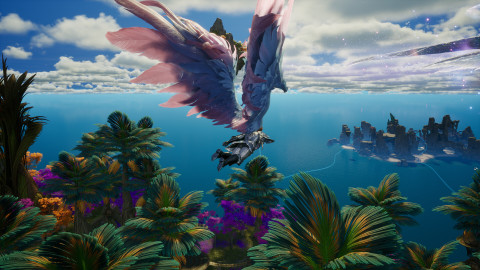
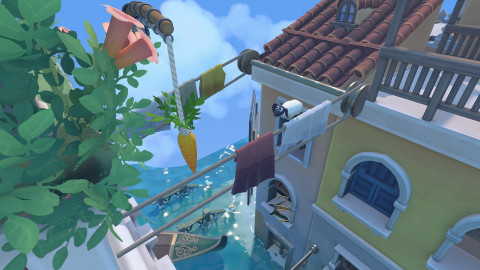
With the 2026 Aichi-Nagoya Asian Games just two months away, one name stands out on the esports national team coaching roster: Jung Myung-hoon. He is tasked with leading three distinct titles—Gran Turismo 7, eFootball, and Puyo Puyo Champions—each with entirely different genres, control schemes, and mechanics.
This is not Jung’s first international multi-sport event. In 2009, he competed as a StarCraft national representative at the 3rd Asian Indoor Games in Hanoi, where he won a silver medal. Seventeen years later, he returns to wear the Taegeuk mark as a coach. We met with him ahead of the games to discuss his preparations and mindset.
"The moment I got the call, it hit me"... Responsibility outweighs excitement
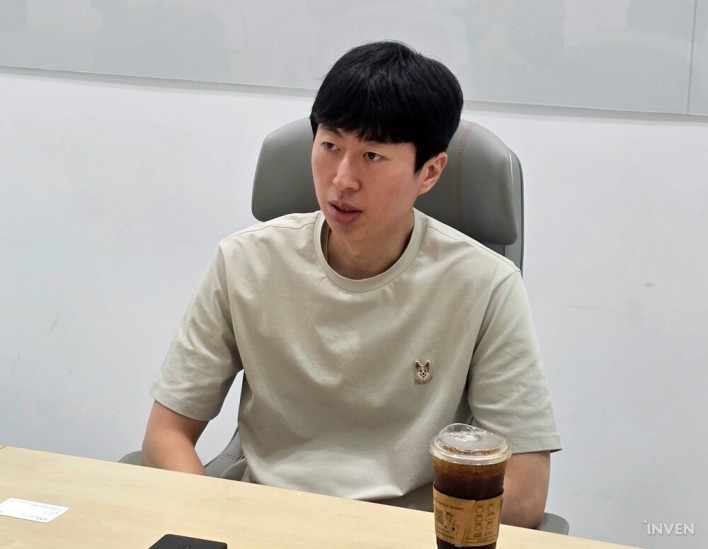
"It was a rare opportunity I really wanted to take, but once it became official, the sense of responsibility and pressure was overwhelming. Those feelings hit me harder than the excitement." He remembers clearly when the pressure set in: when he received the acceptance call, and later, when he put on the uniform featuring the Korean flag for his profile shoot.
How did his feelings compare to 17 years ago? Jung replied, "It feels similar."
The 2009 Hanoi Asian Indoor Games took place when esports was just beginning to establish itself as a medal event in international multi-sport competitions. The Indoor Asian Games, which launched in Bangkok in 2005, first adopted esports as an official medal event at the 2007 Macau Games, followed by Hanoi. It was a time when esports was just knocking on the door of institutional sports, long before the current systems were in place. Jung reached the finals in StarCraft at that event, taking home silver after a loss to Lee Young-ho.
"Back then, it felt like a demonstration event that was just being introduced. Even though the conditions were very poor, putting on the uniform and attending the press conference gave me a sense of responsibility. That hasn't changed. A lot of time has passed, but I still think the environment for these specific esports titles remains challenging, whether it's the venues or other factors."
How has his experience as a player become an asset now.
"Even though it wasn't a massive event in terms of scale, I remember it vividly. The weight of being a national representative was real. Now that I'm going as a coach, my goal is to win medals as both a player and a coach. Having experienced it myself, I have a lot to share with the players, and I think that helps."
Jung cites his international experience and five years of coaching staff experience as his greatest strengths. He pointed to the knowledge gained from competing in everything from grassroots to major tournaments during his time as a StarCraft II pro, as well as the "ability to view players from multiple perspectives" he developed through coaching.
Before taking the coaching position, he spent his hiatus uploading StarCraft lecture videos to YouTube. While some fans hoped for a return to professional play, he says he had no set plans.
"I was in a period of deciding what to do while taking a break. YouTube was just a temporary hobby. Then this great opportunity came along, and I decided to commit to it this year. It’s an opportunity that might never come again, so I didn't have to think twice."
Three distinct genres... "The players know best"
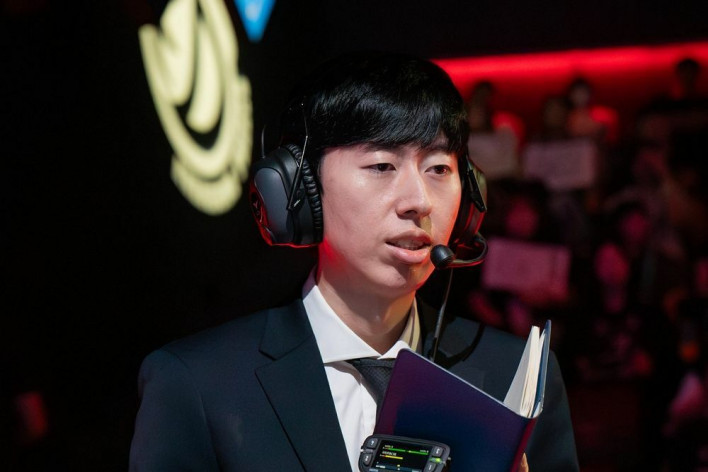
It is hard to find common ground among the three titles Jung manages: racing, soccer, and puzzles. Naturally, he faced significant challenges in defining his role.
"It’s true that I had many concerns at first. But since all three are individual events and the games themselves are intuitive, adapting wasn't too difficult. Ultimately, the players know the games best, so I’m focusing on having frequent conversations with them to help improve their gameplay and mental state."
His perspective on the three events was clear: they are all Japanese games where Japan holds a strong advantage, and they are titles that incorporate more 'game-like elements' than realistic soccer or racing simulations. His assessment is that this reality demands even greater effort.
His approach varies by title. eFootball and Puyo Puyo are accessible, so he plays them frequently and even enters tournaments to prepare. Gran Turismo, however, requires specific equipment and setups, so he visits racing cafes to hone his feel for the game.
His method of involvement in training also differs by title.
eFootball is the title he is most deeply involved in. When players share scrim videos against international opponents, they watch them together and exchange feedback.
Puyo Puyo proved to be an unexpected hurdle. "It looks very easy, but it's an incredibly profound game," he noted. He is now consulting with external experts to analyze the game together.
For Gran Turismo, since the specific tracks and rules haven't been released yet, he is focusing on repetitive racing to improve lap times.
"Racing is a battle against yourself. Other events involve competing against an opponent, but in racing, you have to overcome it on your own, so I’m focusing heavily on that aspect."
"A gold medal won't be easy"... But the goal is medals for all three
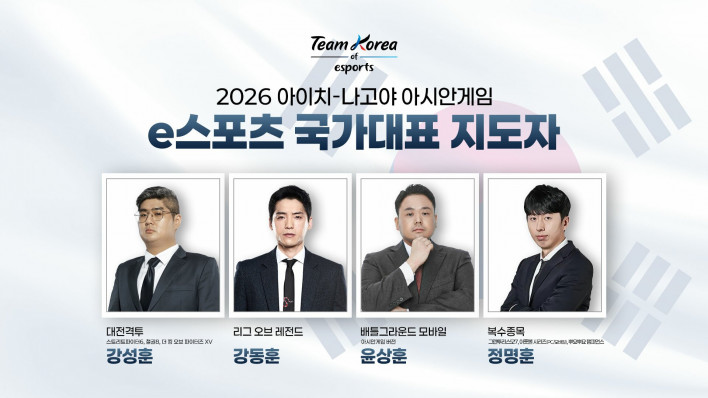
When asked about the most anticipated topic—medal prospects—Jung did not mince words.
"Honestly, it’s not an easy situation to reach for gold. These are games where Japan is very strong, and especially in eFootball, there are too many other countries that are very good besides Japan."
However, his goal was clear.
"I can't guarantee the color of the medals, but I am preparing with the goal of winning medals in all three events."
He has already witnessed the gap with Japan once before at the '2026 Esports Championship East Asia (ECA 2026)' held in Jinju last April. Originally starting as a Korea - China - Japan tournament in 2021, it expanded to include all of Asia last year. This year, it was the largest ever, with seven countries participating, including Korea, China, Japan, Vietnam, Thailand, the Philippines, and Mongolia. As many of the players likely to compete in the Aichi-Nagoya Asian Games participated, it served as a de facto prelude to the Asian Games.
"I think there was a gap in Jinju, and it served as a good lesson. It was a valuable experience before the Asian Games. Since then, we’ve been preparing very hard, and recently, our scrim results and performance have improved significantly. It’s true that a gap still exists, but we are preparing to compete as closely as possible."
He identified Puyo Puyo and Gran Turismo as titles where performance can fluctuate significantly based on condition.
"These games require so much split-second concentration and mental fortitude that once you lose your focus, the game can become very difficult."
He is preparing countermeasures. He encourages players of both titles to engage in regular concentration-strengthening exercises and physical training, with plans to formalize this during the training camp. He particularly emphasized aerobic exercise.
"Since many of these events require short-term concentration, I believe you need good baseline stamina. I think aerobic exercise is more helpful than strength training."
Jung admits he rarely did aerobic exercise during his own playing days. It is a realization he came to after retiring and working as a coach.
During his playing days, his routine was image training.
"From the day before the match, I would immerse myself 100% and do a lot of image training. On the day of the match, I would practice mind control by meditating, even if only for a short time."
His method is specific: he imagines everything from the moment he leaves for the venue to the moment he receives the 'GG' from his opponent, and even the post-match interview.
"They say that if you immerse yourself deeply enough in your imagination, your brain gets tricked into thinking it's reality. I did that often, and many times, things actually happened just as I imagined. It seemed to be effective."
"I will prepare to be worthy of the expectations"
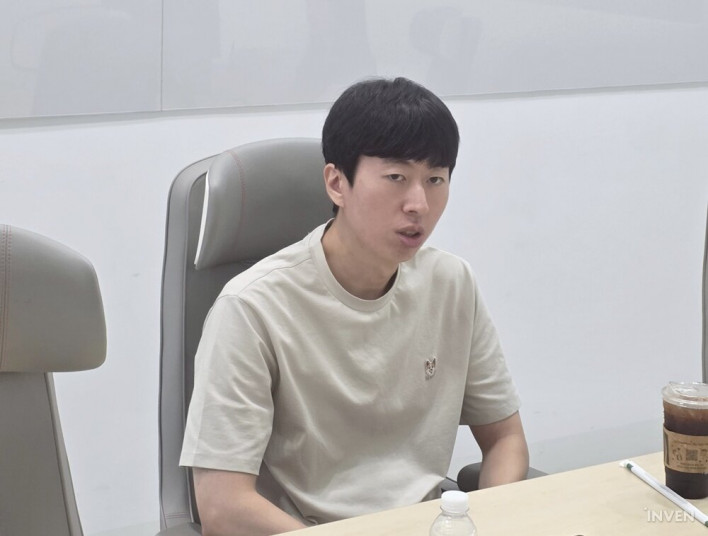
"Regardless of the medal color, I hope we can all smile together by winning medals in all three events. The players are investing so much time into these 'non-mainstream' titles. I hope they get rewarded for it."
Jung is keenly aware of the level of attention his assigned titles will receive.
"Since these are non-mainstream events, I don't think they will get as much attention as others, unless we win gold. Still, if those who read this interview could offer even a word of encouragement to the players, it would be a huge source of strength.
This Asian Games will be the third to include esports, if you count demonstration events. The number of titles has increased, so I hope people take a lot of interest. We will prepare hard to be worthy of that attention. If we achieve good results, I hope you will celebrate with us."