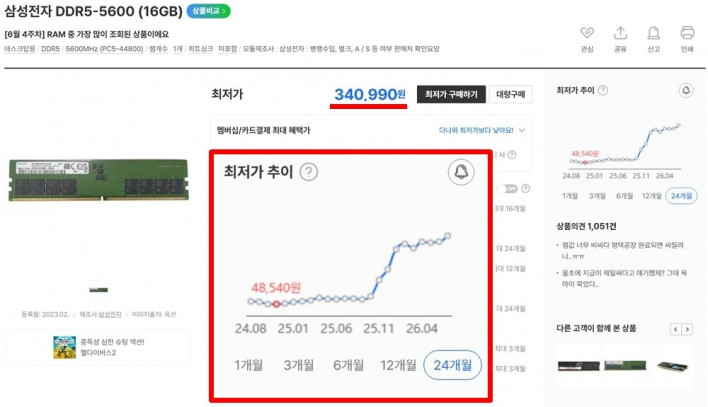
The current state of the PC market is enough to make anyone sigh. Demand for key components like graphics cards, memory, and SSDs has skyrocketed globally across all sectors, and supply simply cannot keep up, causing prices to soar. A prime example is DDR5 16GB memory for consumer PCs. A component that hovered around 50k to ₩60k in 2024 has recently surged to as much as ₩340k. Since a dual-channel configuration typically requires two sticks, this means memory that used to cost ₩120k now sets you back ₩680k.
As a result, gamers are hesitant to open their wallets, and it has become routine to hold onto existing computers, telling themselves that "upgrading now is a loss." However, this mindset is often shaken by external factors rather than just psychology. What if you find a game you really want to play but your specs can't handle it? Or, in a worst-case scenario, what if your computer suddenly dies? Even under these harsh conditions, there is no guarantee that you won't eventually be forced to buy a new machine.
The price of a computer built with these inflated individual components is no joke. In the past, you could put together a system capable of playing most games for the low-to-mid ₩1 million range, but now, even ₩2 million barely gets you a decent build. It has become an era where spending ₩3 million is easy if you keep nudging the grade up, thinking, "Should I just spend another 100k or ₩200k."
However, if you look at the pre-built PC market lately, you'll occasionally see deals that catch your eye. Pre-built PCs with fairly decent CPU and GPU tiers have started appearing, making you think, "Oh? This price for these specs isn't bad, is it."
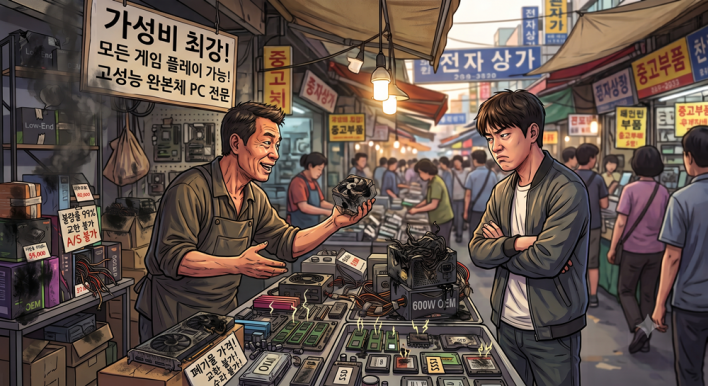
While the thought that "today is the cheapest it will be for the next few years" might make your hand reach for the checkout button, I urge you to look at the product details page more closely. There is a trap cleverly hidden there. A "Low-Tier PC Alert" has been issued for the current PC market.
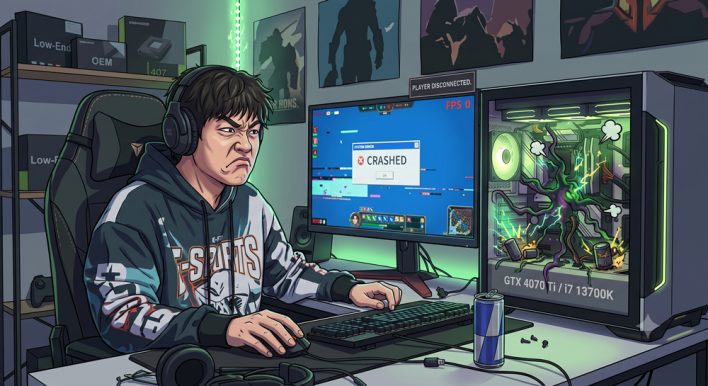
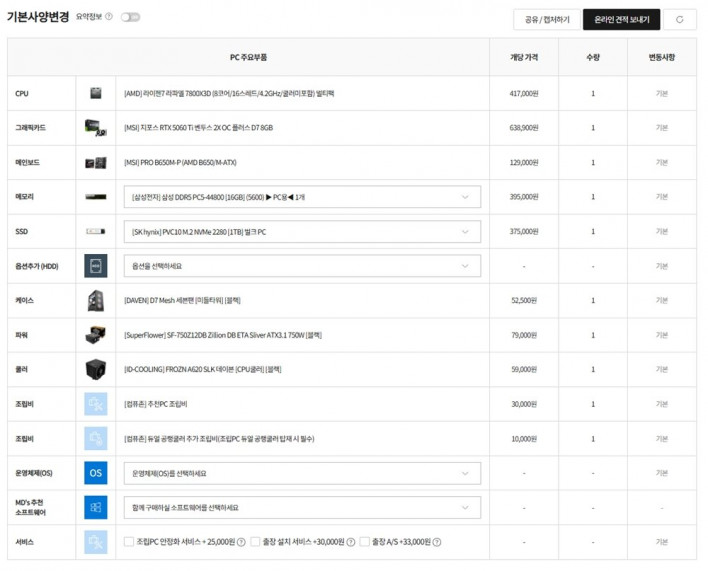
If you look at the details page of popular, budget-friendly pre-built PCs, you'll notice something strange. While it's hard to hide the CPU, it can be done if they really try. Take the Ryzen 4th Gen CPU, for example. At first glance, it might look good, and many are still capable, but technically, it is based on the Zen 3 architecture, which is nearly six years old.
The same goes for graphics cards. Most low-end PCs only list the numbering, such as RTX 5,060, without providing any information about the brand or the specific product line.
While it is true that the CPU and graphics card are the core components of any PC, it is ironic that in so-called 'low-tier PCs,' these are often the only parts worth bragging about. The true nature of a low-tier PC is defined by its motherboard, power supply, SSD, and memory. In the industry, this practice is often referred to as 'bundling low-quality parts' or 'holding customers hostage with major components.
Some might ask, "They lowered the price by using cheaper parts to make it more accessible to consumers. Is that a problem?" However, for those who are well-versed in computers—who understand the current overheating of the PC component market and the limitations of cheap parts, and who are buying them for temporary use despite the risks—this likely isn't a major issue.
Buying something while knowing the facts and buying it while ignorant are two entirely different things. The biggest victims are average gamers who aren't usually interested in computers and are making a big decision to purchase a low-tier PC..
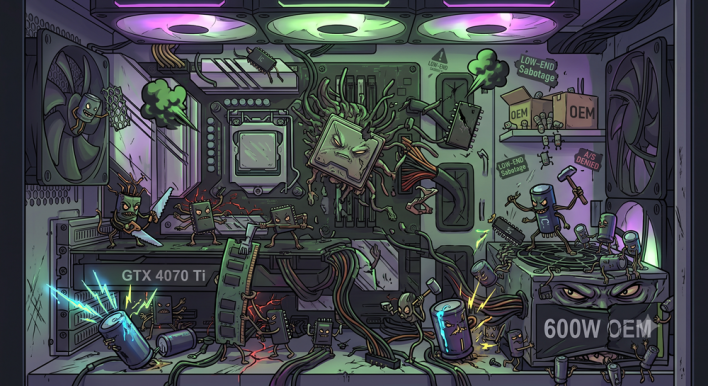
The problems with low-tier parts are diverse, but it's not just about them being different from the listed specs or having poor durability. The biggest risk begins with the after-sales service (A/S) process when a problem arises.
For an average gamer, when a computer suddenly slows down or won't turn on, it's not easy to even identify which part is the culprit. Furthermore, nameless low-tier parts often have unclear distributors or complicated A/S procedures, which can turn your entire PC into a pile of scrap metal after a single breakdown.
This isn't just about bundling cheap parts. You should think of it as a form of inventory clearance—parts that don't sell well individually because they are low-tier, so they are bundled to get rid of them. Perhaps one day, a policy will emerge that says, "Having a problem? We'll send you a new part," because even the seller won't be able to resolve the A/S. Even if that happens, the burden falls entirely on the average gamer who bought the computer with their own money but is left unable to play games while waiting for parts to be replaced.
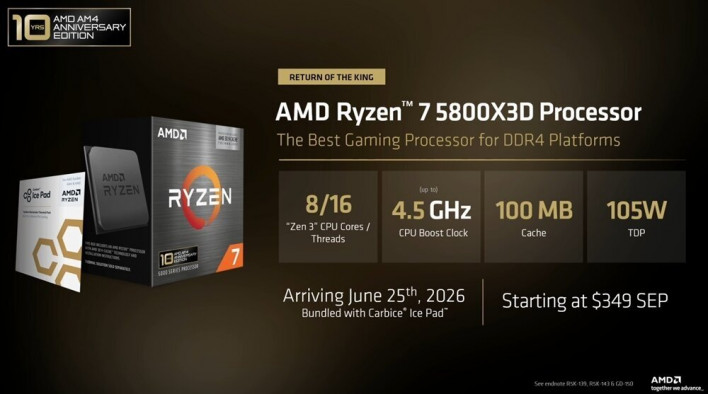
The component market is in a very bad state. This phenomenon is even more bizarre when looking at memory. Beyond the latest DDR5, demand for outdated DDR4 and even DDR2 memory—which is considered a relic overseas—has surged, leading to a strange phenomenon where prices have skyrocketed by up to 60% compared to cost. In the case of DDR4, with AMD announcing the revival of the 5800X3D, it has established itself as a truly excellent choice, not just a secondary option to DDR5. Since PCs armed with the latest standard components are too expensive, a desperate struggle is taking place globally to replace only the bare minimum of old PC components to keep them running.
Ultimately, the wisest time to buy is not when others say it's cheap, but when you truly need a PC. The phrase "I'll buy it when the price drops a bit more" is a luxury reserved only for users who already have a perfectly functional computer to use right now.
Gamers looking to spend big on a new gaming PC should not be fooled by attractive price tags. Checking the brands of the individual components hidden behind the CPU and graphics card names is the only way to protect your wallet and your peace of mind from the 'low-tier PC' trap.