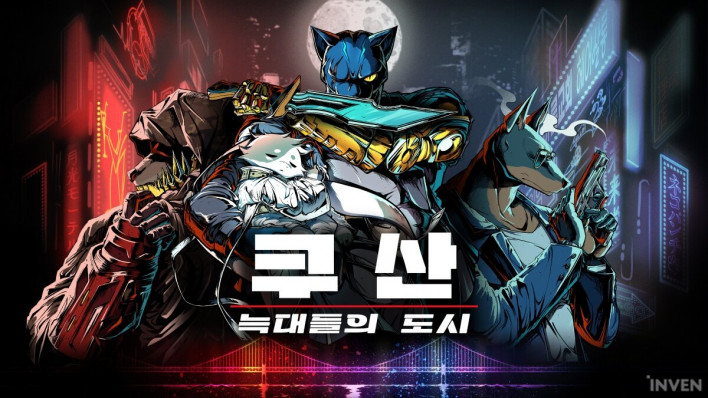
Everyone has that one game they love so much they think, 'I want to make something like this.' Some even go on to make games by following in those footsteps or imitating them. However, it is no small feat to quietly hold onto that passion for eight years, refining and honing it into something entirely new. The small Korean studio CIRCLEfromDOT is doing exactly that.
Development began in 2018, with 'Hotline Miami' serving as the starting point. But it wasn't just something to imitate; it was a benchmark for gauging the game's fun and the tension of development. Through that idea, the game expanded into a 'Cyborg John Wick in Hotline Miami,' a neon-noir city called Kusan, and began to develop its own unique identity.
Now, having moved beyond the goal of mere completion, CIRCLEfromDOT is in the final stages of polishing, hoping that anyone who plays it will feel it is a 'game worth the money.' We spoke directly with the developers about 'Kusan: City of Wolves,' which is set for release on July 30.
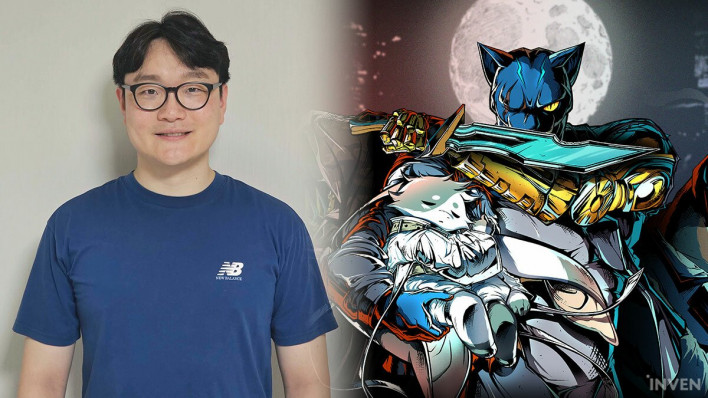
eight Years of Development, and a 'Cyborg John Wick in Hotline Miami'
I heard CIRCLEfromDOT was founded in 2018. That means 'Kusan: City of Wolves' is being released after about eight years of work, which must be a unique feeling. How are you and the studio feeling now, with the launch just around the corner?
"To be honest, rather than feeling happy, I still feel a great deal of tension. Since it’s a project we’ve been working on for so long, the closer we get to the release, the more I keep thinking, 'If I just fix this a little more, it could be even better.'
Right now, we are focusing on final improvements based on as much playtesting and feedback as possible. The team atmosphere is similar. We are all exhausted, but at the same time, we are holding on until the end because we want to show the game in the best possible state to those who have waited so long for it.
How did CIRCLEfromDOT and the development of Kusan begin? Was Kusan the goal from the very start?
"It started with four friends. Two of us are still here today. Rather than thinking about creating a massive project from the start, we were more driven by the desire to 'make a game that we think we can make, that we are allowed to make, and above all, that we want to make.' That was the concept that became Kusan.
Actually, the name 'Kusan' was chosen quite lightly at first. But as we developed the world and characters, it eventually became the center of the game and remained until the end.
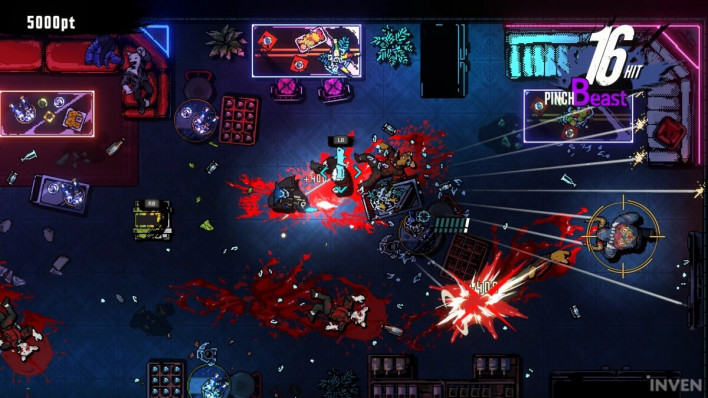
Both when you first revealed the game and in your recent community posts, you haven't hidden your respect and homage to Hotline Miami. To what extent did that work actually influence the development of your game?
"It was our starting point and benchmark. After much trial and error, the initial concept we arrived at was, 'What if a Cyborg John Wick were deployed in Hotline Miami?' Even after that, we continued to use Hotline Miami as our standard while making the game.
We constantly pondered what the core of this genre is, what must be kept, and how far we could vary it while maintaining that tension and rhythm. Whenever we made something that didn't feel fun, we would play Hotline Miami again and think, "Why is this fun, and why is what we made still lacking."
In terms of core gameplay, it really was a textbook reference for us.
The term 'homage' itself expresses both respect and a will for differentiation. There must have been efforts to bring out Kusan's unique characteristics; could you summarize the core values that only Kusan possesses?
"I think Kusan's core value is the experience of anyone being able to become a 'Cyborg John Wick.' John Wick prepares before entering the battlefield and survives by constantly improvising during combat. We wanted to implement that fantasy within the flow of Hotline Miami-style hardcore top-down action. The essence of Kusan is the sensation of grasping the stage, choosing weapons, reading the enemies' positions and movements, and then, once combat begins, quickly chaining punches, knives, guns, and the 'War Hand' to break through the situation.
Whether that intended sensation is well-conveyed to players will be confirmed through feedback after release, but at least that was the direction we held onto most importantly throughout the development process.

The basic gameplay is based on a top-down perspective where you eliminate enemies in succession without getting hit. It provides a familiar experience through fast-paced action and repeated play via retries upon death. Nevertheless, you are also seeking differentiation from similar games, such as the 'War Hand' prosthetic's ranged attacks like the charge punch, the 'Quantum Knife' throwing weapon, and firearms held from the start of the stage. What was the core goal of these various action elements?
"As I mentioned earlier, our goal of creating a 'cyborg John Wick' served as the benchmark for all our action elements. For instance, the 'Quantum Knife' was inspired by the action scenes in 'John Wick' that left a strong impression on me—specifically, the moments where he neutralizes an enemy in front of him with one hand while simultaneously taking out another in a different direction. The Quantum Knife is our attempt to abstract that kind of moment into a gameplay mechanic.
Unlike typical melee attacks or firearms, the Quantum Knife can be used while performing other actions and can quickly target nearby enemies. So, I wanted to make it possible to play in a way where you punch an enemy in front of you while throwing a knife at an enemy behind you, or shoot an enemy on the right while keeping an enemy on the left in check.
Ultimately, the goal of the various action elements was not just to add many skills, but to give the player the sensation of dominating the battlefield more spectacularly and flexibly. I would be grateful if players could find other 'Cyborg John Wick'-like elements for themselves while playing the game.
Beyond simple attacks, there are action-heavy elements like using the War Hand to nullify gunfire. Hotline Miami-style games are characterized by strategic, puzzle-like gameplay; what do you think is the clear differentiator that action elements like parrying will bring?
"As you said, Hotline Miami-style games have a strong puzzle-like nature. The fun of judging which enemy to deal with first, which path to move along, and which weapon to use is important.
That part is important in Kusan, too. However, we wanted to add a more easily understandable action fantasy to it. The elements of blocking attacks with the War Hand and deflecting bullets allow the player to not just avoid threats, but to turn those threats back into their own flow of attack.
We thought these elements were differentiators that would make Kusan feel a bit more mainstream and more like an action game. We wanted to make a game that you solve like a puzzle, but once mastered, you can push through like a scene from an action movie.

Designing Hardcore Top - Down Action - From War Hand to Boss Battles
As mentioned, since it's a genre with strong puzzle elements, level design is also important. What was the most important part you considered in stage design?
"The most important thing was the balance between unfairness and challenging difficulty.
Kusan is a difficult game. However, when players die, I didn't want them to feel like it was "unavoidable." Instead, I wanted them to think, "I should take out that enemy first next time," "I should try entering from a different direction," or "I need to be more careful with that timing."
The next priority was ensuring a variety of strategies are possible. Rather than forcing a single 'correct' way to play, I wanted players to be able to attempt different approaches based on their weapon usage and skill builds. This is an area we have continuously refined through playtesting.
The quantity and scale of stages are also important. How are you approaching the conception of each stage and the overall clear strategy?
"In the beginning, we placed 'buildup stages' where players can learn the basic rules and combat rhythm. Afterward, we tried to constantly vary enemy placement, terrain, and combat situations so that it wouldn't feel repetitive despite the countless deaths and retries.
We studied a lot about why Hotline Miami doesn't feel boring even when repeating short stages. At the same time, we wanted to capture the feeling of 'John Wick's battlefield' in Kusan. We wanted to create a flow where every time a player clears a room and moves to the next space, they are thrown into a slightly more dangerous and spectacular situation.
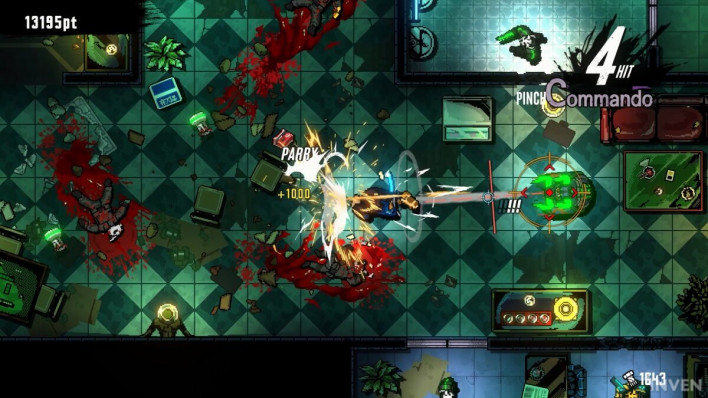
I think AI reaction is also an important factor in determining the game's difficulty and play direction. How sensitively does the AI actually detect player actions? I'm also curious about what level of difficulty you are aiming for.
"AI and difficulty were among the things we adjusted the most until the very end. If enemies are too dull, the tension drops; conversely, if they are too fast and accurate, players might feel it's unfair. So, we are aiming for a "challenging difficulty that doesn't break your will" by constantly adjusting enemy reaction speed, detection range, and attack timing.
Kusan isn't a game that's easy to clear, but I hope it's one that anyone can eventually beat if they put in the effort and take the time to understand it. I believe it's crucial to maintain a strong sense of internal motivation—that feeling of "I can do it if I just try a little more"—to help players persevere through that process.
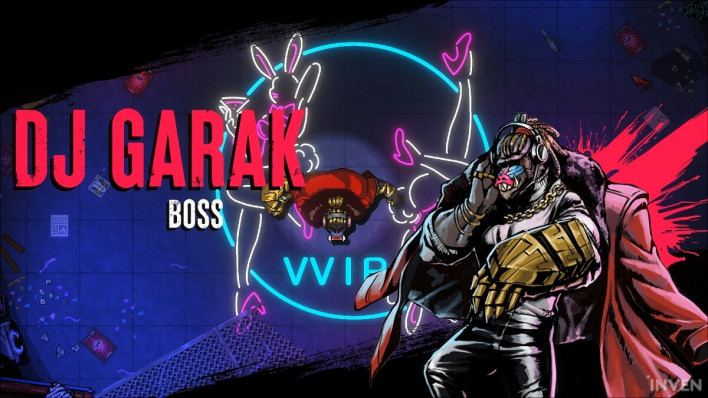
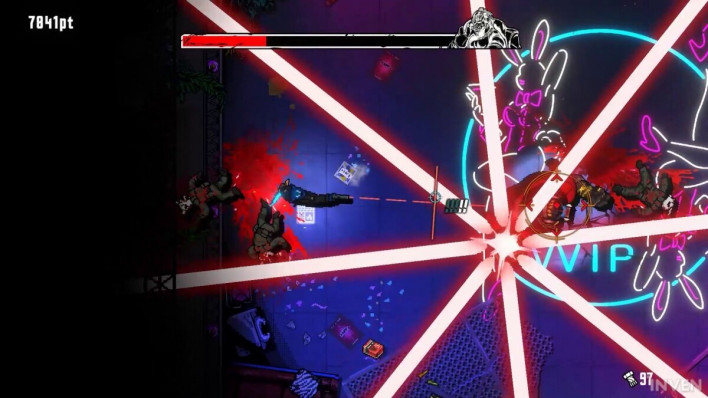
I believe boss battles are the best way for Kusan to showcase its action-oriented gameplay. Could you introduce the characteristics of the boss battles and how each one offers a different atmosphere for players to enjoy.
"For boss battles, we were inspired a lot by the boss battles in Sekiro. The intense back-and-forth, the approach using various means, and the patterns that make you realize your own mistakes when you die—thinking, "Ah, I shouldn't have made that judgment just now"—were impressive.
Kusan's boss battles aimed for that same feeling. We wanted to create highly focused combat that differs from regular stages by utilizing the War Hand, Quantum Knife, firearms, and terrain all at once.
We also put a lot of effort into delivering catharsis at the end of that intense fight. I would be very grateful if you could check the details by playing it yourself.
In the case of boss battles, since you generally fall with a simple hit, I think difficulty adjustment is important. Are you thinking of a different play style compared to regular stage clears?
"If it's important to quickly grasp and clear out multiple enemies in regular stages, in boss battles, the intense back-and-forth with a single strong opponent is what matters.
John Wick also bleeds, gets thrown to the floor, and gets hit by cars when he meets a strong opponent, but he fights to the end. We wanted to capture that sense of persistent combat in Kusan's boss battles as well.
Also, for players who have deeply understood the game, we made it so they can clear bosses much faster and more stylishly in their own way. We are also constantly refining the direction and feedback so that such advanced clears don't look like mere coincidences or bugs, but are accepted as intended play.
In the case of twin-stick shooters where you control attack direction and movement separately, there are many evaluations that pad controls are relatively more difficult than keyboard + mouse controls. As it is being released on multiple platforms, I think you must have had concerns about this; how is it in reality?
"Because we had multi-platform release in mind from the beginning, we supported controller aiming from the early stages of development.
The twin-stick shooter method can feel more difficult to control with a pad compared to keyboard + mouse. So, we conducted several playtests and consistently improved the controller feel. I think it has reached a satisfactory level in the recent demo, and negative feedback regarding controller controls has decreased significantly in surveys.
However, Kusan has some aim assist to help with stylish play, but there were some who didn't want this. So, we prepared it so that you can adjust aim assist-related options to fit your play style in the official version.
Neon Noir - The Atmosphere and Aesthetics of the City of Kusan
The city of Kusan, which serves as the game's background, is set in a near-future, blood-red Eastern port city. Rather than depicting one specific region as it is, it has an exotic and sometimes complex atmosphere. Korean advertisements and phrases were also depicted impressively. Were there any real cities you referred to or atmospheres you aimed for to create the city?
"Busan, where our company is located, was the starting point. It started from the imagination of what kind of city it would become if a war broke out in the near-future Busan, war supplies were left abandoned after the armistice, and those supplies flowed into the underworld, gathering money and greed.
However, I thought that if it only felt too Korean, it might feel unfamiliar to overseas users. So, we also referred to the night streets of other Asian cities like Hong Kong and Tokyo, and the images of East Asian neon cities seen in movies and photos.
As a result, Kusan became a port city that mixes the sentiments of various Asian cities and near-future imagination, starting from Busan, rather than a space that moved one specific city as it is.
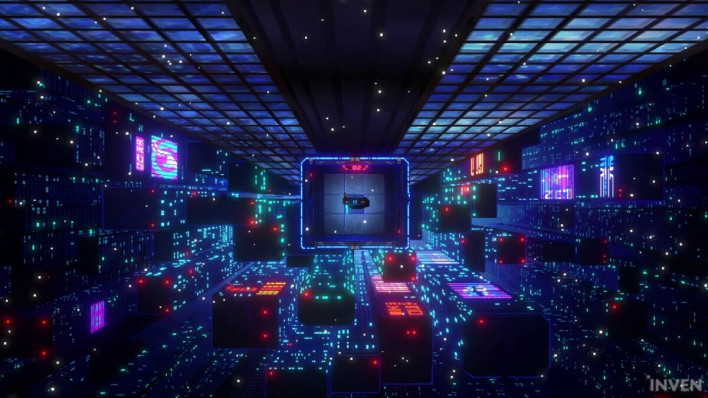
The graphic novel-style story direction and gloomy atmosphere reveal a quite decadent vibe. It seems to be the reason why you describe the game as neon noir amidst cyberpunk colors. I'm curious about the direction of neon noir the developers are pursuing and how you tried to reveal that in the game.
"Visually, we wanted the feeling of placing intense colors of light on top of the dark sentiment of black-and-white noir. It was an image of a dark and heavy world where neon spreads sharply within it.
Narratively, we placed a protagonist with ambiguous boundaries between good and evil at the center, like a typical noir, and placed exaggerated and colorful characters like in a comic book. So, in our own way, we accepted this as neon—that is, a new noir—and made it.
While maintaining neon colors here and there, it also maintains much more serious colors. Through this, I get a weighty feeling that fits noir. How did you consider and develop parts that affect gameplay, such as overall art direction and visibility?
"Considering the game's theme, we referred to various movies, photo books, and graphic novels. Especially because there was a strong focal point like John Wick, the direction of colors, lighting, and atmosphere to pursue was relatively clear.
However, in the process of actually implementing that on the game screen, many experiments and repetitions were needed. Kusan is a game where atmosphere is important, but at the same time, it is an action game that requires quick judgment. So, we tried to balance it so that while bringing the noir atmosphere to life with lighting and colors, the player, enemies, bullets, and dangerous elements are read as much as possible. The balance between atmosphere and visibility was one of the most difficult parts throughout development.
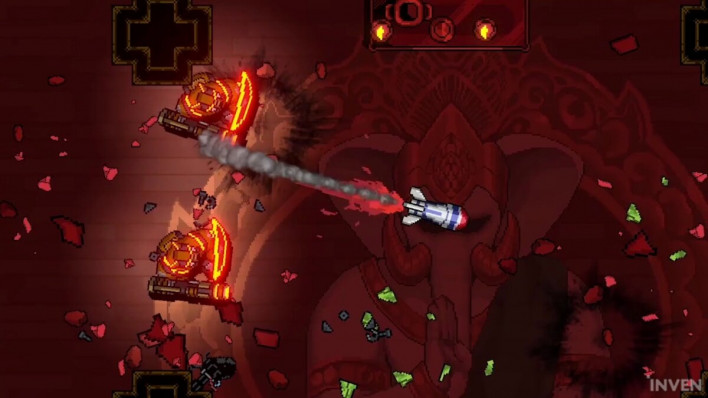
Objects have a strong pixel art feel, but backgrounds or lighting effects have a smoother feel, and it was implemented in high resolution overall. Were there any technical challenges or difficulties? Also, what was the sensibility you wanted to obtain by implementing a pixel art atmosphere with such high resolution?
"While maintaining the rough sense of pixel art, I wanted to give it a more sophisticated and urban feel. Rather than a completely retro screen, we aimed for "sophisticated retro" where pixel art and modern lighting and effects are mixed.
Since we used a lot of lighting to bring the atmosphere to life, the programmer suffered a lot in terms of optimization. At the same time, the artist also did a lot of experiments to create that atmosphere.
As a result, I think this method fit well in creating Kusan's own neon noir atmosphere. I feel fortunate that there are many people who look at it favorably.
How did you come up with the direction of the story cutscenes? Also, what were the parts you wanted to emphasize or convey with this direction?
"The influence of Max Payne, released in 2001, was significant. The rough-touch cutscenes that appear in the middle of missions and the protagonist's low-pitched narration were very impressive. In Kusan, we also wanted to capture the characters' expressions, thoughts, and emotions more concretely through cutscenes like comics or graphic novels. Rather than cutting the flow with long videos in the middle of fast-paced action, I thought a method of conveying the story with strong images and cut compositions suited Kusan.
However, at first, there was a feeling that gameplay and cutscenes were a bit separated. So, we went through many adjustments so that the connection between the game and cutscenes felt natural.

In repeated play, game music, such as music or sound effects that will be stuck in the player's mind, is also an important element. In particular, Loptimist, who left a big mark on the scene, participated in the composition; how did you come to work together? I'm also curious about how you coordinated opinions with each other to emphasize the game atmosphere during work.
"Around 2018, I contacted him bluntly via Instagram DM. I said, "I want to make a game like this, and I want to use your songs." I thought it was impossible because there was no reply for about a month, but he replied later. It turned out he didn't know messages had arrived because he didn't use the DM function well. After that, the contract proceeded relatively quickly.
Since Loptimist has been active for a long time, he already possessed a lot of songs, and he shared those songs generously. Every time we made a stage, we listened to those songs and chose the song that best fit the atmosphere of the scene.
I think music played a very big role in creating Kusan's dark and strong city atmosphere.
Violence, the City of Wolves, and the Characters Within
Hotline Miami 1 and 2 were games with different textures that showed the approach and interpretation of violence itself, and violence and its results from various angles, respectively. Kusan also continues its unique violence in terms of in-game gore and the way enemies are subdued. At the same time, how is the violence interpreted by Kusan and the depiction of it in the game carried out?
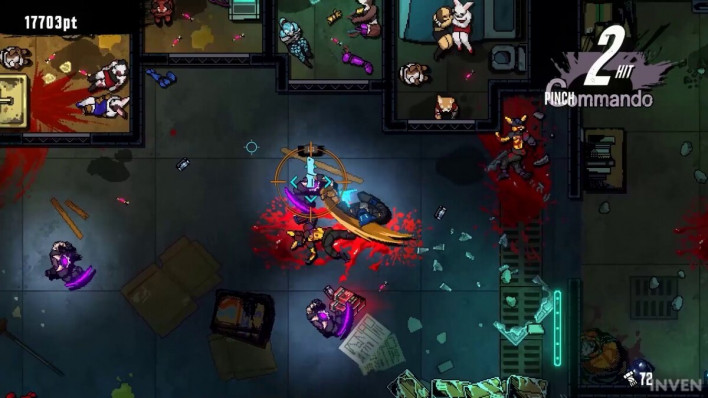
"Regarding this, we tried to treat 'violence' as a manifestation of a fantasy that cannot be achieved in reality, in a slightly lighter and more cheerful way, completely the opposite.
In Quentin Tarantino's movies, there is violence where blood splatters exaggeratedly and is expressed with a cinematic and cartoonish texture rather than being realistic. I felt that such expression was genre-like, exhilarating, and a kind of pleasantness.
In Kusan, most violence depictions aimed for that direction. When a player breaks through a difficult situation and subdues an enemy, we hoped it would be accepted as a reward and catharsis of an action game rather than unpleasant, realistic violence.
The protagonist, Jin, is depicted as a retired soldier and a person suffering from war trauma. How will this depiction blend with Kusan's violence and story?
"Jin is a character who can wield relentless violence, but at the same time, he is not a person free from that violence. He suffered pain from the war, and the motivation and longing derived from that experience make the game and story move forward. Also, Kusan's major conflicts are deeply connected to that past.
From the player's perspective, Jin might look like a very strong and skilled person, but Jin in the story is already a person with many wounds. The process of such a person entering the middle of violence again is an important part of Kusan's narrative.
Since the gameplay itself has a strong impression, it seems that interest will be focused more on gameplay than the narrative part before release. In reality, it seems that a fairly large-scale story will be drawn through the meeting with a girl who can blow up the whole city with a mental explosion. What are the parts you want to emphasize in terms of narrative or story that you couldn't show in the demo or test version?
"After the demo, the identity of the final boss and more various characters begin to be revealed in earnest. It can be seen as a section corresponding to the adventure part after the introduction. In that process, we can show more of the chemistry between various characters, not just the relationship between Jin and Haru. There is Haru's cute appearance, and there is also the dark side of an unexpected character.
In the demo, the first impression of action must have looked strong. In the whole game, I hope you also enjoy the relationships between characters surrounding that action and the city's conflicts.
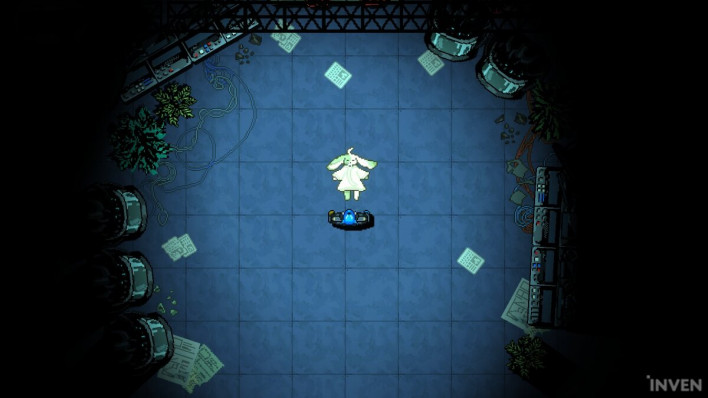
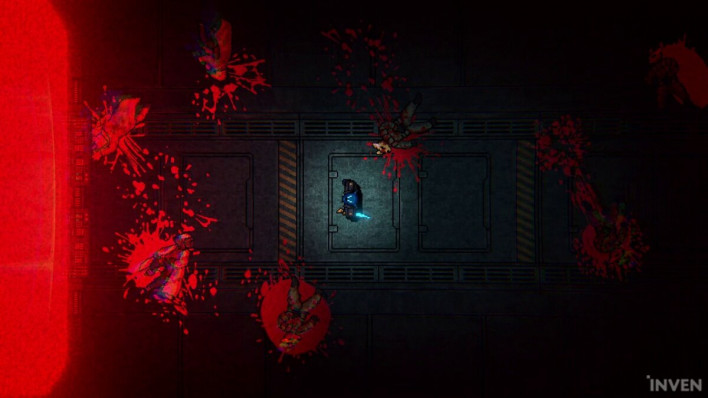
Various characters appear, and unique character depictions or character traits are also emphasized. How did you capture the character traits of the characters? Also, who is the character you have special affection for, and what is the reason?
"If I were to pick a character I have special affection for, it's the final boss and Nemo.
The final boss is a character created by thinking about what kind of person becomes when someone's justice is driven into an extreme situation and it hardens into a wrong belief. I got motifs from characters like General Hummel in 'The Rock.' I wanted to make him a cool character until the end, but at the same time, it was adjusted by receiving feedback within the team so that it wouldn't look like he was simply glorified at the last moment.
Nemo is a character I really enjoyed working on. I made him by mixing various unique references into an image like John Wick's weapon sommelier. Various homage elements such as posing like JoJo or hiding in a box are also included. I hope players also enjoy his unique ideology and actions.
Various characters are depicted as animals. What is the reason for drawing characters as animals?
"At first, I thought it would help to depict violence a bit more lightly and genre-like. If it had been expressed as realistic human characters, the impression of violence might have come across much more directly and heavily.
Animal characters also had the advantage of showing each character's personality or impression more intuitively. It also fit well in making the whole city feel like a kind of jungle. In the initial design, we referred to Caravan Palace's 'Lone Digger' music video. The influence still remains deep in some actual characters.
What is the meaning of the city of Kusan and the subtitle 'City of Wolves'? Is it a polysemous expression that also means the world where the above animals live?
"As revealed in the early demo, there are not many characters favorable to the protagonist Jin in Kusan. Even Ain, who gives requests, is a character whose ambiguity as to whether he is a complete ally or enemy is unclear. The subtitle 'City of Wolves' took its meaning from the French idiom 'the hour between dog and wolf.' It means the time when you cannot tell whether the animal seen beyond the twilight at sunset is a dog favorable to me or a wolf trying to bite me.
Kusan is such a city. Even if they look like they are together on the outside, you cannot tell who is an ally and who is an enemy. To capture that sense of distrust and survival, we attached the subtitle 'City of Wolves.'
Small Team's Choices, Ahead of the July 30 Release
In terms of the game, elements to enjoy the game for a long time in various ways will also be needed; are there any measures to increase replayability? I'm also curious if there are hidden elements or story branches.
"I think Kusan's replayability comes from the process of pursuing higher scores and better play.
I thought players would challenge themselves many times to get higher ranks and records, and for those people, we prepared various skill builds. Many action gamers like to dig into their own methods to the end, and I hope they share their builds with each other after clearing in Kusan and play again in a different way than before.
Because the play sensation changes quite a bit depending on the build, I think you can feel like you are playing a different game even on the same stage.
After release, we have plans for speedrun and hard mode updates. In the longer term, although a large-scale expansion including cutscenes is difficult, we are also considering content like additional side quests.
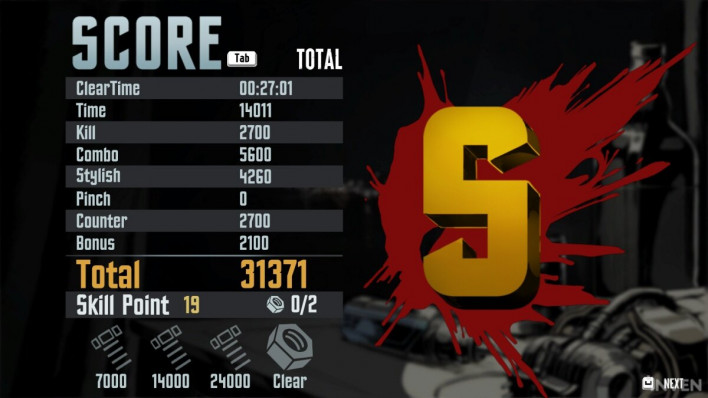
The revealed development team is four people; have you been together since the beginning of development? I'm also curious if there were any difficulties in workload or work coordination according to roles while filling the quantity and quality of content, and how you solved them.
"Yes. Even the person who joined the latest has been together for almost 6 full years. Since all 4 of us were new to game development, the first few years really required a lot of trial and error and study. Since it's a small team, one person didn't just do their own role, but we had to constantly understand and adjust to each other's areas.
Also, we were at the Busan Global Game Center for the first six years with the support of Busan City. We were able to learn a lot while interacting with other developers there. Looking back, I think that was very great luck, and thanks to that, we were able to continue development until now.
Kusan is released on various platforms including PC, PS5, XSX|S, and Nintendo Switch. It is being released on various platforms simultaneously, which is rare among domestic indie game companies releasing their debut work; what were the difficulties with this? I'm also curious about your thoughts on multi-platform release and how you are overcoming technical difficulties.
"Fortunately, with the help and introduction of nearby developers, we were able to secure a Switch development kit from the beginning of development. In 2023, we were also able to secure a PS5 development kit and test kit through a meeting with Shuhei Yoshida, who was working at Sony at the time, at G-STAR. Afterward, through a contract with publisher PQube, we were connected to the Xbox side and received a development kit to proceed with porting.
The most difficult part was the physical time it took for debugging and testing. The process of making a build for each platform, testing it, and modifying it again is all different. Because fast action games like Kusan require very important input feel, performance, and stability, even small problems can feel big.
In the beginning, we tried to do the porting ourselves until the end, but after discussing with the publisher, we switched to a direction of collaborating with a professional porting team. As a result, I think it was a good judgment.
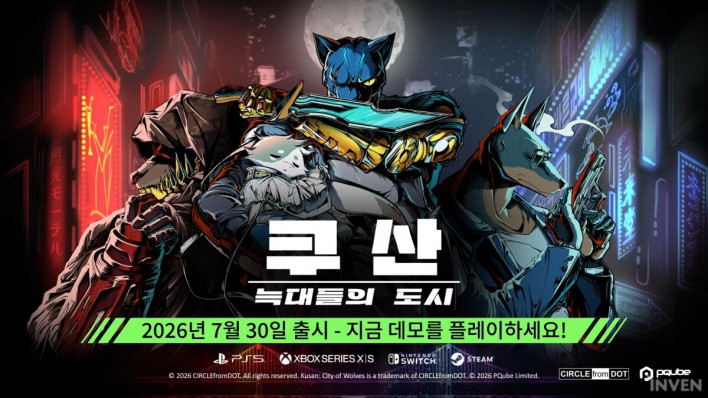
Although PQube services games globally, it is also famous as a publisher that introduces indie games, especially Asian-developed works, to the Western world. How did you come to introduce the game with PQube for the first time?
"It's a bit blurry now exactly what the occasion was that we first got to know them, but PQube showed a consistent willingness to collaborate for quite a long time. Since we were also in the position of proceeding with a publishing contract for the first time, we had many worries while talking with various publishers. However, the place that showed the most consistent and strong passion during the about two years of conversation was PQube.
After listening to various cases and worrying about it, I eventually thought that the side that wants to do this game the most would be able to do it the best. That's how we proceeded with the contract, and we are very satisfied with the current form of collaboration.
PQube's publishing director Andy Pearson revealed at the time of the partnership announcement that he had been playing the game since the first demo, showing his anticipation for the release. How was the actual internal reaction from the publisher?
"They always looked at it very favorably. It was to the extent that we even wondered, 'Is it okay for them to look at it this favorably?' Since we always exchanged very honest and sharp feedback internally, there were many moments where we hurt each other. However, the publisher side kept believing in the game's potential and gave us a lot of courage.
The closer it gets to release, the more our tension grows, and personally, I suffer from chronic indigestion, but PQube sees the game positively and keeps showing confidence that it can go well. That point is a great strength to the development team.
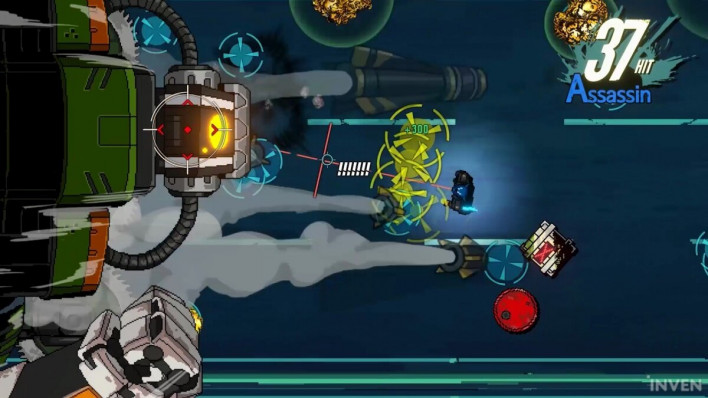
In addition to the publishing process, you introduced the game in various ways, including tests at various game events, Steam Next Fest, and demo releases. How are you analyzing domestic and overseas feedback? Also, were there any parts where you felt a temperature difference in feedback between Korean users and overseas users? Also, in what way are you reflecting these various feedbacks?
"We are reading all feedback one by one directly and analyzing them by grouping them into major categories.
An interesting point was that the reaction between domestic users and overseas users was not as significantly different as I thought. Parts that work here often work there, and parts that become problems here often become problems there. Eventually, I felt that genre-like fun and inconvenience are conveyed quite universally.
Looking at feedback, there are many cases where users suggest solutions immediately. There are times when I am tempted by such suggestions, but first, I try to remind myself what the experience we intended was. And rather than simply reflecting the suggestions as they are, I try to analyze the fundamental cause of why such feedback came out.
It takes time to reflect, but looking at survey satisfaction or playtest results, there is a feeling that it is getting better, so I think we are going in the right direction.
Looking at the trailer when we exhibited at the Banggusuk Indie Game Show 2021 in the past, the current gameplay sensation or art-like characteristics remain intact. After that, quite a long polishing continued, and finally, the game is released this year. Looking back now, what was the core of the game built at first, and what was the part you focused on and wanted to strengthen in the subsequent development process?
"At first, the thought of 'let's make Hotline Miami a bit cooler and more sophisticated' was big. At the time, because I didn't know much about game development, I spent a lot of time on trial and error and study without knowing in what form to concretize it.
However, that vague goal remained, and as knowledge and experience accumulated little by little, a more concrete goal called 'Cyborg John Wick in Hotline Miami' was created.
Afterward, we repeated many experiments on how to depict this 'John Wick' and 'Cyborg' sensation in the game. Elements like War Hand, Quantum Knife, firearms, parrying, and skill builds are all results that came out in that direction.
I hope players feel the sensation of a stylish hardcore top-down shooter through Kusan.
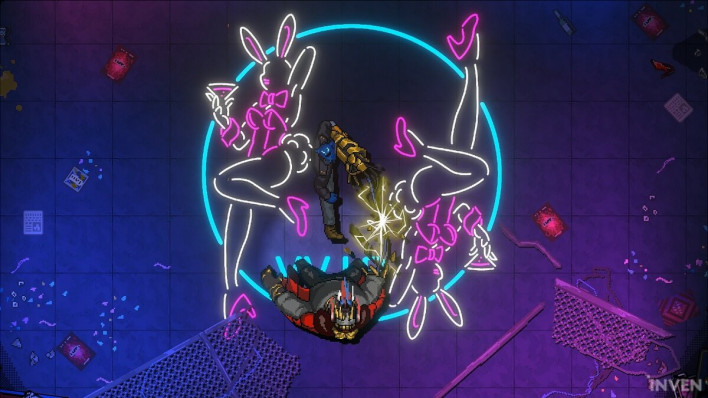
Ahead of the release, what kind of game do you want Kusan to be remembered as by fans? Also, I ask for stories that will raise fans' expectations or stories you want to ask for.
"Personally, I like Hideo Kojima the most, and as a game creator, I try to maintain an attitude like the late Satoru Iwata. Also, when making a game, I try to always remember Shigeru Miyamoto's perspective, that is, the thought of making a product that customers can be satisfied with.
In that sense, the first goal is to make a game where the amount players paid is not a waste. And a slightly higher-level goal is that I hope your hearts were happy while playing this game. Someday, I want to make a game that remains as a memory in someone's heart, like Monster Hunter, God of War, or Metal Gear Solid, which I enjoyed.
First of all, I hope this 'Kusan: City of Wolves' is remembered as an intense and satisfying game, like seasoned fried chicken. Thank you for reading the long interview. I ask for a lot of interest until the release date of July 30.