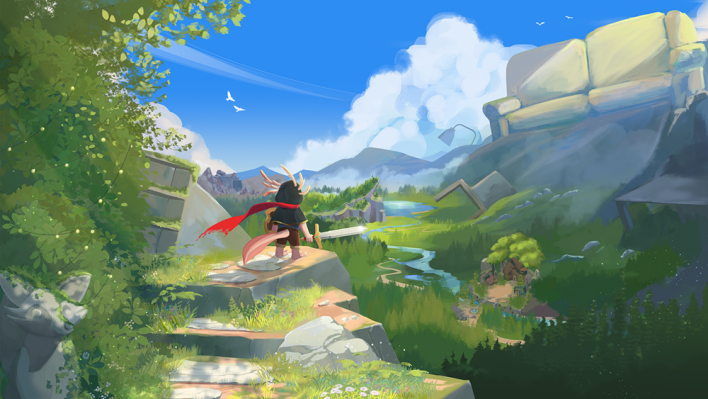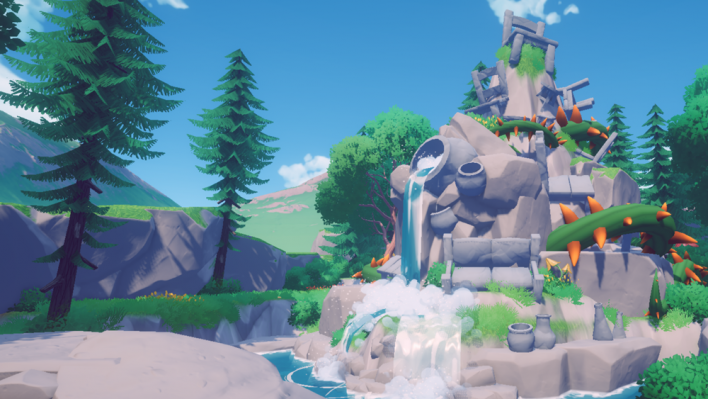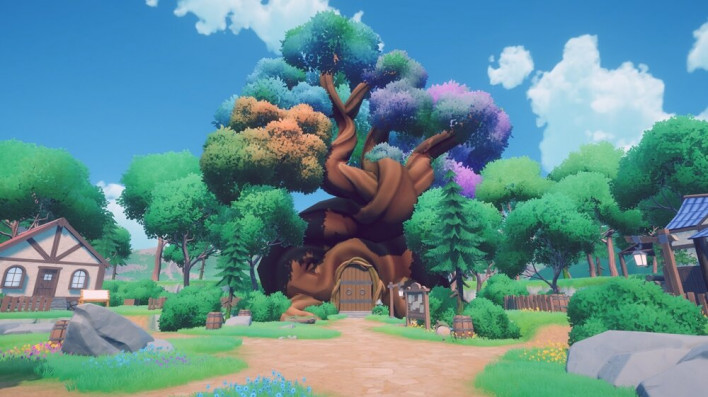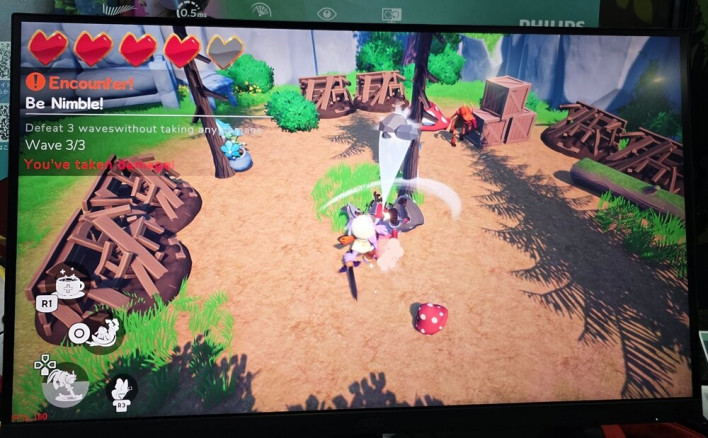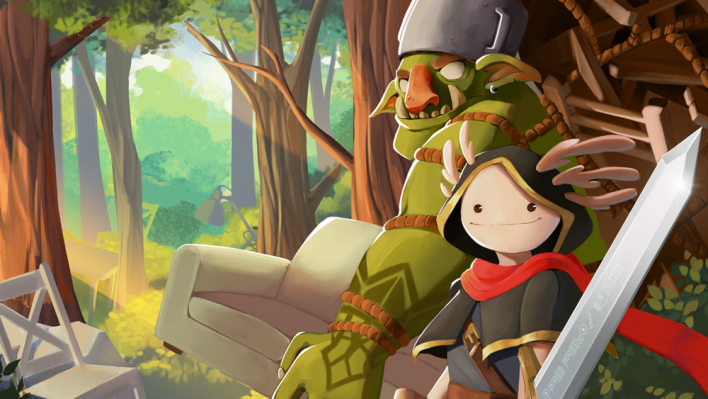
At the global indie game festival 'BitSummit' held in Kyoto, Japan, one new title stood out for its unique concept, drawing a steady stream of visitors. The game is 'Dungeons and Dining Tables,' presented by Catalyst Games, a four-person indie development team from Southern Australia.
While 'Dungeons and Dining Tables' boasts the visuals of a peaceful, fairy-tale-style housing game, its core mechanics follow the conventions of hack-and-slash and farming games. The game's unique loop centers on exploring dungeons to collect furniture, which, when placed in the player's home, provides real-time boosts to character stats.
The game successfully concluded its Kickstarter crowdfunding campaign last April, reaching 65% of its goal in just two weeks and ultimately surpassing it to hit 101%. Notably, a stretch goal was unlocked to develop a 'Pillow Forts Dungeon' filled with quilts and pillows, promising the warm and witty charm characteristic of indie games.
Beyond visual coziness, the team also put significant effort into auditory details. By integrating the FMOD audio system, they created a seamless transition: peaceful, orchestral music plays while in the village, but as the player enters a house and begins interior decorating, the background music smoothly layers into a cozy, jazz-style track. INVEN met with Creative Director Aiden Gyory, who is leading the project, to hear more about the game.
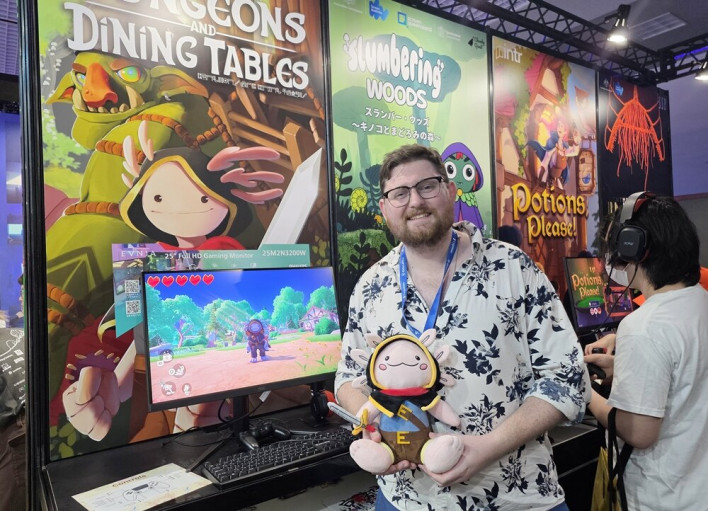
Q. Could you provide a brief introduction to the game for Korean gamers.
"'Dungeons and Dining Tables' is a cozy action RPG. Players explore randomly generated dungeons to collect various furniture pieces, which they can bring home to decorate their space freely. A unique feature is that the more cozy and beautiful you make your home, the more your character's stats are enhanced in real-time.
Q. What is the background behind combining the two distinct genres of 'dungeon exploration' and 'housing'.
"The idea first came to me about two and a half years ago during the COVID-19 pandemic. While in isolation, I was playing Nintendo's 'Animal Crossing' day and night, while simultaneously engrossed in item farming in 'Diablo.' It suddenly occurred to me: what if I combined these two genres to create a game that offers the healing elements of decorating a house with cute characters, while also providing the authentic farming fun of a hack-and-slash dungeon crawler? That was the starting point of this project.
Q. The protagonist character is very impressive. It seems to be based on the amphibian commonly known as the 'axolotl.'
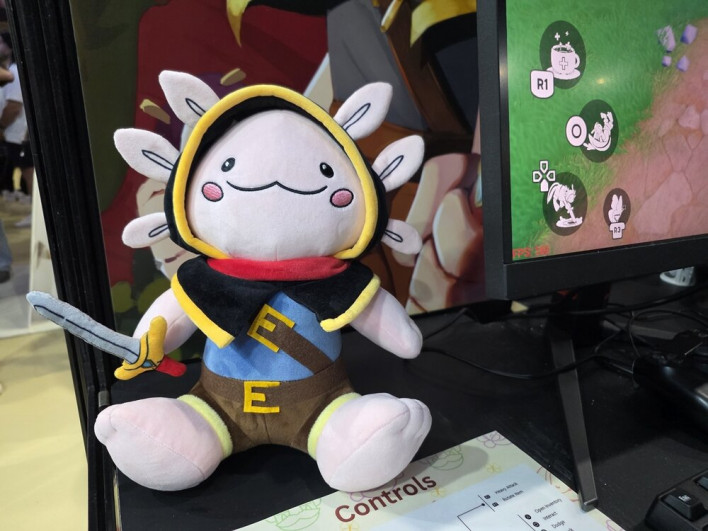
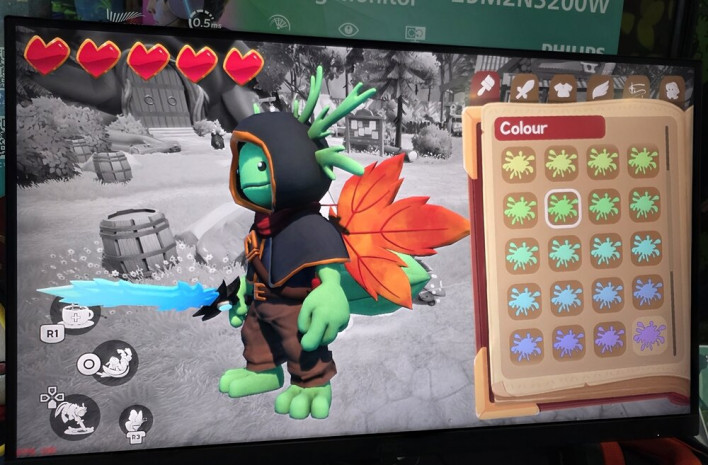
"Yes, that's correct. The protagonist is the 'Axolotl,' an endangered species from Mexico. We wanted to build a unique visual identity by leveraging its inherently cute appearance. It goes beyond just looks; users can customize the character's skin color, weapons, and outfits to their liking. You can even add cute butterfly wings, set the footstep effects that appear when moving, and fine-tune the color of your pet companion.
Actually, in the early development stages, the protagonist was a 'fox,' a character type common in adventure games. However, after internal testing, many felt the visuals were a bit plain and boring, so we changed the character to an axolotl, which has a unique head shape and plenty of personality. We created the concept art, finished the in-game modeling, and exhibited it at 'PAX' in Australia. Interestingly, six other indie games featuring axolotls were announced on the global market at the same time. Seeing that phenomenon gave us confidence that users are genuinely drawn to this creature.
Q. The system where the character gets stronger as you decorate your house is both intuitive and unique. How exactly do the abilities increase?
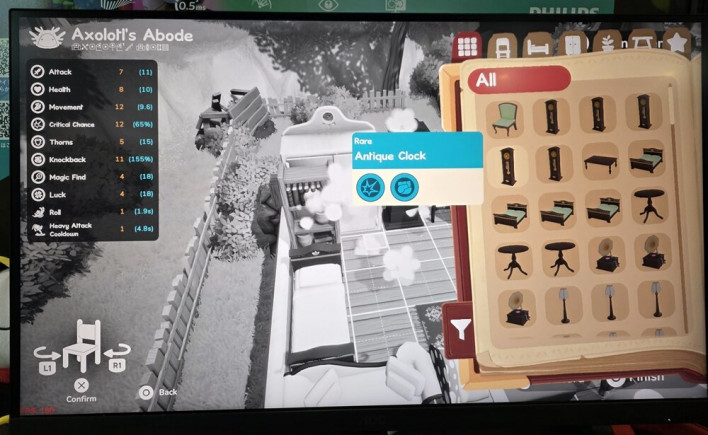
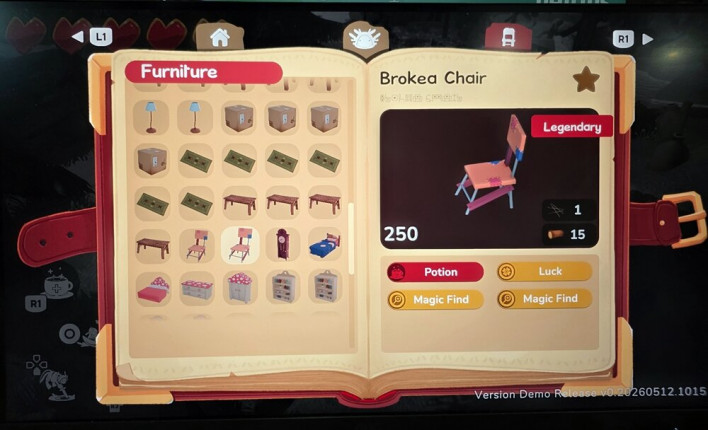
"Many users at our BitSummit booth played the demo and decorated their homes in various ways. Each piece of furniture collected in a dungeon and placed in the house has a unique buff icon. For example, certain furniture increases attack power, while others boost critical damage, movement speed, or maximum health. When you place these items in your home, you can see the character's stats change in real-time, such as the number of hearts (health) in the top-left corner increasing immediately.
Q. Is it mandatory to fight in dungeons to obtain furniture?
"Yes, that's right. In this demo version, you can experience the 'Forest Dungeon,' and the difficulty is divided into three levels, from easy to hard. Every time you enter a dungeon, the entire map structure is generated randomly through 'procedural generation,' so players explore a new environment every time.
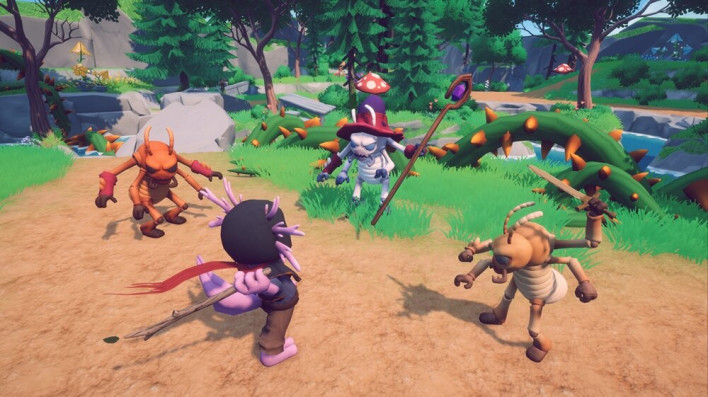
Inside the dungeon, you will battle unique monsters, such as 'termites' that are set to eat wooden furniture. You can easily check your overall character stats and your inventory list—including mushroom furniture sets, rugs, and chests—through the menu at any time.
Q. Please introduce the boss monsters you encounter at the end of the dungeons and the associated village system.
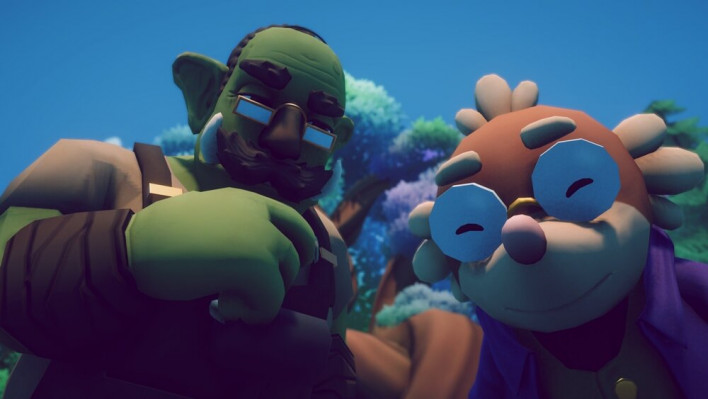
"In the full build, there will be a total of 5 to 6 villager (NPC) characters. To bring them to the village, you must defeat the boss in their respective linked dungeon. Once rescued, these characters move to the player's village to live together, and as you build intimacy with them, unique narrative arcs unfold, resolving their tragic pasts or personal concerns.
For example, the boss in the demo version, the 'Couch Troll,' is a strange creature that loots furniture from the village and carries it on its back. It uses the giant sofa it stole as a weapon, employing threatening attack patterns. If you defeat this boss, you can obtain the furniture the troll was carrying as a reward.
Q. What other systems are there for utilizing the furniture you've acquired?
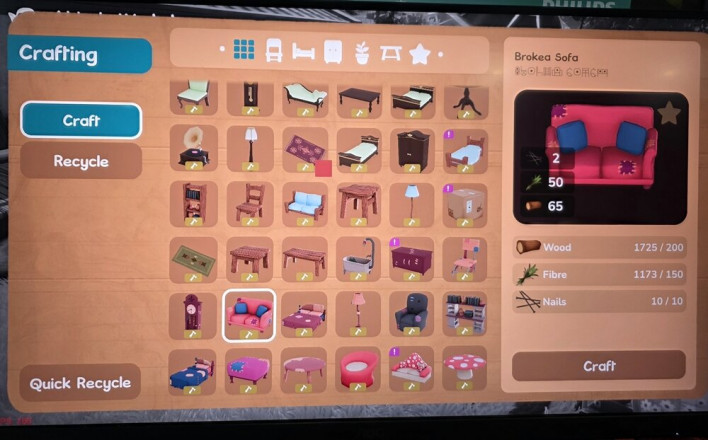
"Among the NPCs rescued from dungeons is 'Aldo,' a furniture craftsman. Once Aldo settles in the village, users can fully utilize furniture processing services. If you have furniture like a standard floor lamp that you got in a dungeon but doesn't fit your interior concept or has lackluster performance, you can use Aldo's 'Recycle' system to dismantle it and extract raw materials.
You can then collect these materials to craft entirely new, rare sofas or furniture in the crafting menu. The farming, crafting, and housing systems are organically connected; for instance, if you remove furniture from your house and put it back into your inventory, the movement speed buff provided by that item disappears, and your character slows down again.
Q. What is the planned content volume or expected playtime for the official release?
"We expect the core story, which follows the main quest line to rescue all the villagers and conclude their narratives, to take around 10 hours. However, as mentioned, all dungeon stages are randomly generated, and the types and performance of furniture dropped vary completely by environment theme, such as the Forest Dungeon and the future Desert Dungeon. If you consider the replayability factor of repeatedly exploring dungeons to complete specific furniture sets, I am confident that the actual replay value is nearly infinite.
Q. Will this game be released as a strictly single-player game? Are there any plans for platform expansion.
"Yes, based on the current development build, we are focusing on building a high-quality single-player environment. This is partly because we are a small indie team of four core members. If we secure enough community feedback and a sufficient user base after the official release, we are open to positively considering the introduction of a multiplayer mode where players can trade furniture or visit each other's houses.
We are primarily targeting Steam (PC) for the initial release, but we are already in the planning stages for console lineups, including Nintendo Switch, Xbox, and PlayStation. For consoles, we are putting our final efforts into optimization to ensure the game runs smoothly without frame drops, even on first-generation Nintendo Switch hardware.
Q. It caught my eye that the Steam page lists support for not only Korean subtitles but also 'Korean voice acting.' I'm curious about the specific form of this voice support.
"First, regarding Korean subtitles, we will definitely support them fully in the official version. The demo version shown at BitSummit is the same as the one currently available on Steam, which only includes English, Japanese, Chinese, and Portuguese, but we plan to add a multi-language pack including Korean in the near future.
As for voice support, it is not in the form of professional voice acting in specific national languages. We have adopted a method similar to Nintendo's 'Animal Crossing' series, where characters communicate in their own unique, fictional language. Instead of professional voice acting, all characters are directed to make cute mumbling sounds that fit the situation during dialogue, maximizing the cozy, indie-game-specific charm.
Q. Could you share the specific release schedule and a word for Korean gamers.
"We are currently distributing an official free demo version via Steam that anyone can download and enjoy without restrictions. I hope you will try it out to see if the game's direction aligns with your preferences.
We are doing our best to launch in Steam Early Access in time for 'PAX Australia,' a major game show held in Australia this October, and we plan to conduct a full global release, including consoles, early next year. We promise 100% Korean localization for the official version so that Korean gamers can fully immerse themselves in the story.
Our communication channels, such as Discord, are always open, so please feel free to provide feedback. For a small indie team like ours, adding the game to your Steam wishlist is a huge source of motivation and support. We ask for your interest and encouragement. Thank you!