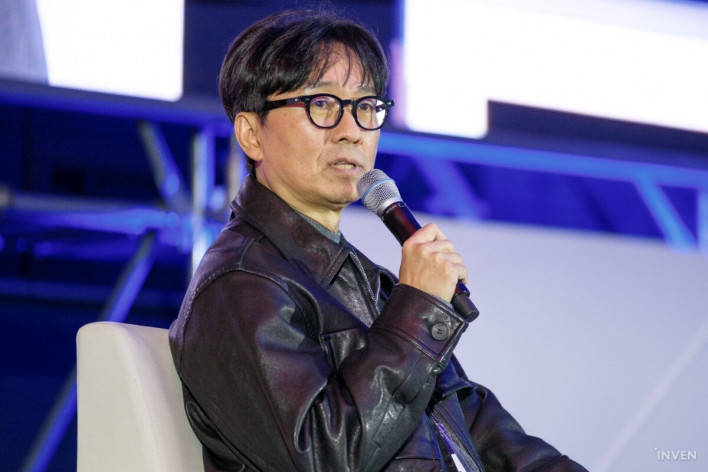
In an era where AI pours out sentences, two film directors took the stage at the G-STAR 2026 Conference: Director Jang Hang-jun of 'The King's Warden' and Director Lee Byeong-heon of 'Extreme Job' and 'Be Melodramatic'.
There was a single topic: how to craft dialogue that captures the nuances and context of real speech in the AI era. Drawing from their own experiences and philosophies, the two directors shared their methods—from building characters starting from the soles of their shoes to writing lines while tipsy on wine.
Below is an unedited transcript of the discussion moderated by Cine21 Head of Digital Content Bureau Seong-hun Kim, preserving the natural cadence and raw flavor of their spoken words.
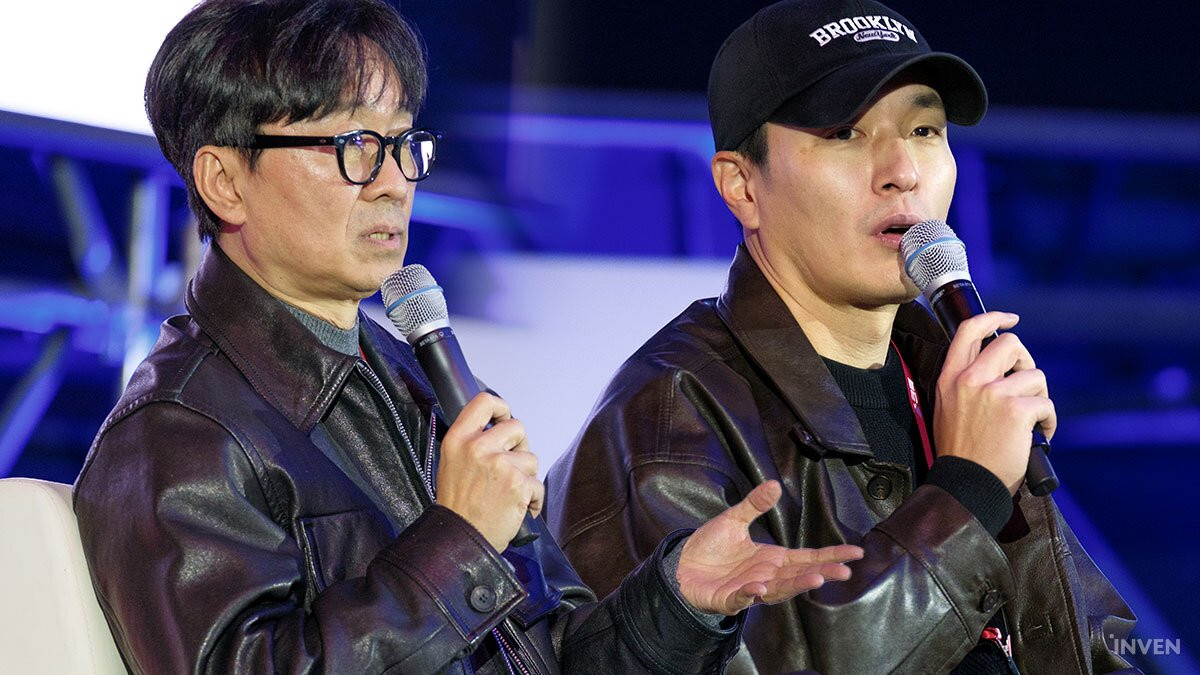
Great Dialogue Starts with Shoes Heels, Belts, and Colloquial Speech Instead of Desk-bound Character Sheets
Whether in games, films, or TV dramas, the purpose of dialogue is clear: to explain who a character is, describe what is happening to them, and sometimes advance the narrative. In an era where games and films inspire each other—much like Director Hideo Kojima's work—we'd like to hear how you contemplate dialogue when writing screenplays and directing on set. First, could you greet the game industry professionals, students, and fans visiting G-STAR?
Director Lee Byeong-heon (hereafter Lee)= Hello. I am Lee Byeong-heon, and I make films and dramas. Honestly, I'm a bit more nervous than I expected. I think I would feel less nervous if the ceiling were a bit lower, but right now I feel like I'm walking into the CSAT exam room, wondering if I should even be here... I was worried whether I would have anything meaningful to say. At any rate, I'll do my best to talk within our given time. Nice to meet you.
Director Jang Hang-jun (hereafter Jang)= Hello. I am Jang Hang-jun, husband of writer Kim Eun-hee, a world-renowned master born in Korea. Nice to meet you. It is a great honor to visit Busan after a long time and attend G-STAR today. I am delighted to meet so many game industry professionals and gaming fans. I expect many questions today, and I will do my best to answer them sincerely based on what I know and have experienced to make this a meaningful time. Thank you.
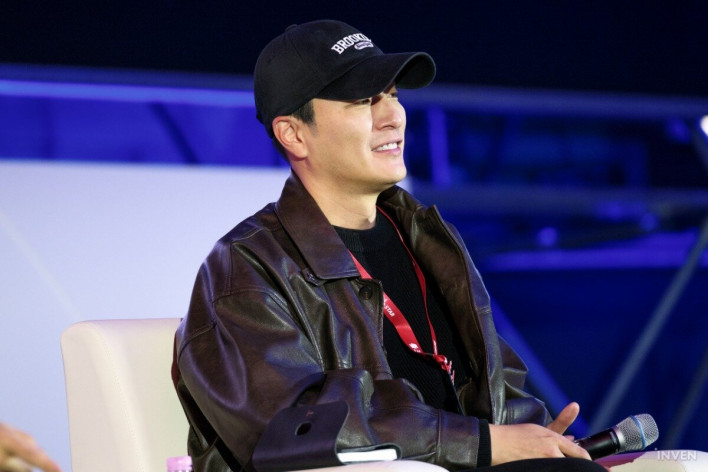
Dialogue is more than simple sentences. Depending on context, the same line can convey different nuances, and the same word can carry different meanings. Director Jang Hang-jun showed a story in 'The King's Warden' where two characters of different statuses and circumstances build trust through conversations and shared thoughts, while Director Lee Byeong-heon showed in 'Be Melodramatic' and 'What a Man Wants' how witty back-and-forth bantering reveals characters and drives the narrative forward. It might sound like a grand or difficult question, but what do you two consider to be "good dialogue"?
Jang= What I think about first when writing dialogue—and I assume it's the same for all of you—is that the character is the most important element. When defining a character, we often sit at a desk and write down settings like their age, gender, occupation, what kind of parents they grew up under, their siblings, personality type, whether they like to dress up or not, and so on. But I actually think that approach has considerable limitations.
So in my case, to visualize a very concrete image, after writing down the character basics, I ask: "What kind of shoes is this person wearing?" Yes, I start from the feet. Are they wearing dress shoes or sneakers? If dress shoes, what color are they? Are they brand-name, luxury, knockoffs, or unbranded retail? Is the heel worn down a lot? When was the last time these shoes were polished, and when were they bought? If sneakers, what color? Do they have laces? When were they last washed, and when were they purchased? Then I move to whether they're wearing socks or stockings inside... and gradually work my way up.
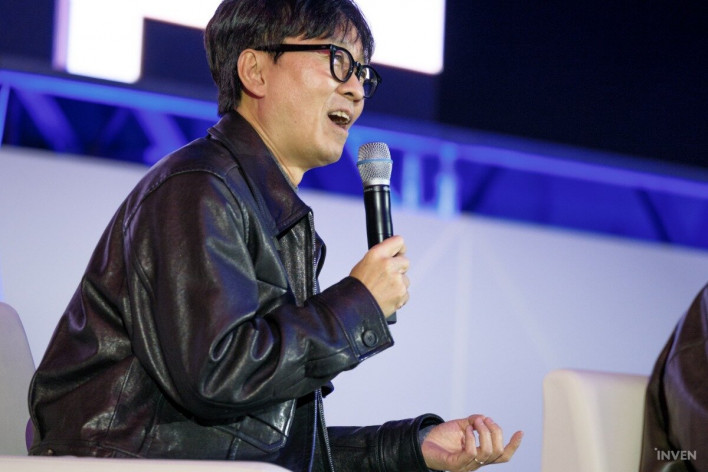
Once you move up to the pants, there's a lot to consider. Earlier, Director Lee Byeong-heon said, "Ah, it's hard to fill the talk time," but honestly, having just me here is more than enough. So now we've reached the pants. Are the hems frayed or not? Are they jeans or suit pants? Are the socks underneath short or long? Going further up, men have belts, right? Is the belt luxury or not? Was it ordered online, or is it a counterfeit? You can already envision a character who wears knockoffs.
And you keep going up step by step. After reaching the top: Do they have facial hair? Is it trimmed or just unkempt? How is their skin condition? Do they wear glasses? And finally, do they still have a full head of hair or has it flown away? Once you complete all that, a vague character you had sketched out in writing at your desk becomes a vivid, distinct person in your head. What would that person's voice sound like? From there, you just find their voice—whether it's thin, raspy, or crisp and clear.
That's why the dialogue I love most is dialogue closest to natural spoken language. In everyday life, we don't use formal connectors like "However," "Therefore," or "As for me..." In fact, if a stenographer transcribed Koreans' real-life conversations verbatim, many sentences wouldn't make sense grammatically. There are so many sentences that would be very awkward to teach at a Korean language institute. Like: "Uh, so water, water, what about the water?" "Yeah." "Hey, did you drink water?" "Last time... you know, last time. Ah damn, I almost got into big trouble last time." The Korean learned at a language institute and the Korean we use in real life are fundamentally different.
So I first draw that complete image of the character, and then write the script using that character's spoken speech patterns. Even on set, I tell the actors, "Change it into your own words," as naturally as possible. That's how I bring dialogue to life.
We'll follow up later on how written, literary dialogue transforms through an actor's performance to become richer or different from the creator's intent. Director Lee Byeong-heon, what do you think makes a good line of dialogue?
Lee= Right. It feels like everything was already covered just now. Long lines like that aren't good lines (laughs). I can't definitively declare what is "good," but looking at my personal taste, I prefer dialogue that seems like casual everyday chatter—trivial stories, minor arguments, light banter—yet never forgets the character's traits and the theme of the story. Lines where you think, "Oh, that sounds like just a joke," but when written down, you realize, "Ah, it actually connects to the main theme. The writer really thought about this." I love dialogue that gives you that feeling.
Looking at the individual sentences, dialogue from both directors isn't overly grand or loaded with heavy meaning; it's how people talk every day. Since people don't speak in complete sentences with rigid subjects, objects, and predicates, audiences digest the lines effortlessly. Let's dig a bit deeper. 'The King's Warden' is a story about King Danjong and Eom Heung-do spending time together and building a relationship. Audiences know the historical outcome before watching, yet as the relationship between the two deepens, even ordinary words and actions carry increasing weight. When designing these two characters, from what moment did you calculate that the audience would become fully invested?
Jang= For King Danjong, when shaping the character with Park Ji-hoon, appearance was the most important thing first. Under the premise that his UV exposure would have been completely different from the villagers in the rural countryside of Yeongwol where Yoo Hae-jin's character lives, I wanted an actor who could look the pale-skinned and frailest, but who possessed underlying energy. That's why I cast Park Ji-hoon. He lost a massive amount of weight, and he couldn't lose it through exercise. If he exercised, he would gain muscle, which wouldn't work, so he lost weight by consuming only a minimal amount of calories.
I thought, "If I can't convince the audience in Danjong's first scene—the scene where he encounters Han Myeong-hoe—then this character fails." And after arriving in the rural village of Gwangcheon-gol, he maintains that demeanor until the tiger hunt scene, which I felt was a crucial turning point for Danjong. Before that point, Danjong has almost no lines and is practically rendered mute. From then on, he begins asking questions actively and engaging in conversation. As he physically regains his appetite and recovers his will to live, his volume of dialogue, attitude toward people, and gaze become active, looking people straight in the eye when speaking.
Eom Heung-do, played by Yoo Hae-jin, is the exact opposite. In the beginning, he has an enormous amount of dialogue. Yoo Hae-jin's screen time and lines are overwhelming early on. However, the moment he comes to recognize Danjong as a true king and as a son-like figure—a pseudo father-son dynamic—Eom Heung-do actually becomes quiet. We worked to create contrast between the characters and track their shifting emotions in that way.
Then the key must have been how effectively you conveyed all that information to the audience early on?
Jang= Exactly. Even though it's Korean history, some locals might not know it precisely, and foreign viewers especially wouldn't know who King Danjong was or anything about this history, so providing essential information was crucial. I just wanted them to grasp that a deposed young king had been exiled. I wrote the narrative hoping that those who know the history would feel the sadness starting halfway through, and those who don't know the history would feel it toward the end.
The Rhythm of Dialogue and the Actor's Voice 95% from the Script, the Rest Handled by the Actor
I'd like to ask Director Lee Byeong-heon a slightly different question. 'Be Melodramatic,' 'What a Man Wants,' and 'Extreme Job' are fundamentally rooted in comedy, but beyond the dialogue coming alive through actors' delivery, its rhythm remains consistent from start to finish. Since film is also an art of editing, one often feels that the flow of cuts combined with the rhythm of spoken lines determines the pacing of a movie. Do you intend that rhythm right from the writing stage, or do you calibrate it after casting during rehearsals, on set, or in post-production through editing rhythm?
Lee= Looking at the completed work, while tweaks are made on set and during post-production, 95% of it is fully designed in the script. It's just my personal opinion, but if more than 5% gets modified during shooting or post-production, I feel the script was flawed. So I design it meticulously... I sound like someone who's really good at this (laughs).
But I write a lot. I write extensively, test lines out myself, and pare them down. When working on a script, I take a somewhat brute-force approach: if I have to write page 52 today, I review and revise all 51 preceding pages before moving to page 52. So there's a tremendous amount of revision. Even after finishing the whole script, I try out everything at home and say, "This might be too difficult for an actor," "This drags out the rhythm," or "This isn't entertaining." Because I do so many revisions, there are actually far fewer ad-libs on set than people might think.
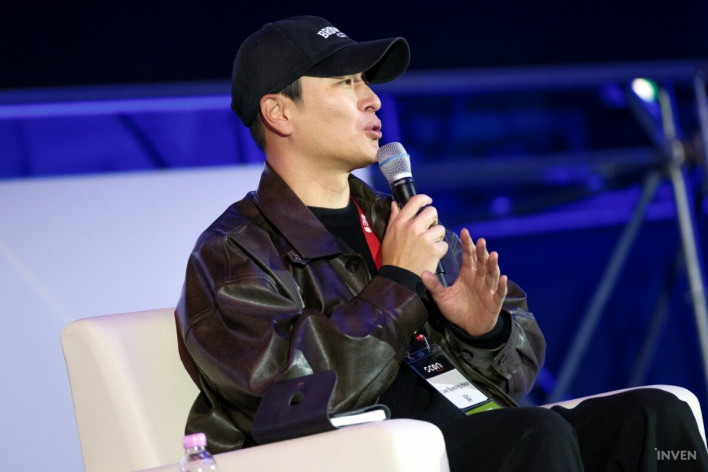
Then during pre-production, you must have to communicate extensively with the actors to explain the overall pace, rhythm, and general flow of the project?
Lee= To a certain extent, yes. Early on, when working on films like 'Twenty,' I would fully explain those details and converse with actors. But with 'Be Melodramatic,' the actors delivered lines so fast on their own—without me asking—that we ended up short on runtime and had to do reshoots. I feel like actors handle a lot more on their own nowadays.
Hearing Director Lee Byeong-heon's thoughts, is there anything Director Jang Hang-jun would like to add?
Jang= I completely agree. If actors handle it on their own, it's so convenient—you get a free ride. But ultimately, what directing comes down to is selecting people who possess the capability to handle it on their own. Casting itself is a crucial aspect of directing: assessing their ability to digest dialogue, interpret characters, or offering a fresh proposal that brings out a side of the actor the world hasn't seen yet. I believe the tone of the dialogue is already set the moment casting happens. For instance, the moment Director Lee cast Ahn Jae-hong in 'Be Melodramatic,' Ahn Jae-hong's tone was set right then.
And like Director Lee, I keep reading lines aloud while writing the script to test whether it sounds like speech or written prose. I hate when it reads like prose. Written prose isn't spoken word; prose is written at a desk. Things inevitably change on set, but if there's mutual agreement and shared understanding with the actors regarding the character, I tend to give actors a lot of freedom.
And if actors say they want to try an ad-lib, I take them quietly to a corner and tell them, "No." "Why not? Because it's not funny." If it's good, I say, "Hey, that's great, don't tell anyone, just do it by yourself." Because if everyone knows, it's not fun. I don't think the co-star should know what's coming either. That's how I tend to handle it.
A single story features countless characters, from leads to extras. When determining a character's speech style, various elements such as background, occupation, personality, and age serve as criteria. Which of these do you prioritize first?
Lee= I think deciding what kind of story or film is most important comes first, and then personality follows. Taking 'Extreme Job' as an example, character personality came first. The occupation of police officers was already fixed. Before the action, I viewed that movie as a character piece driven by the banter and ensemble of five people, so the personalities were crafted in detail, piece by piece, as mentioned earlier.
As a result, Detective Ma ended up running a Suwon Wang-galbi restaurant, while someone like Young-ho is grounded and comes from a UDT background—scouted to make the narcotics squad an exceptional team, as explained later—with a somewhat rough demeanor. Personality is formed, relationships develop, and then incidents are attached. It follows that order, but I don't think one thing is universally most important; the sequence is determined once you define "what kind of story this movie is."
How about Director Jang Hang-jun?
Jang= I share similar concerns as Director Lee, but I don't believe there is a specific speech pattern inherent to an occupation in daily life. There might be workplace jargon, but among police officers, there are all types of police officers because their backgrounds and personalities differ.
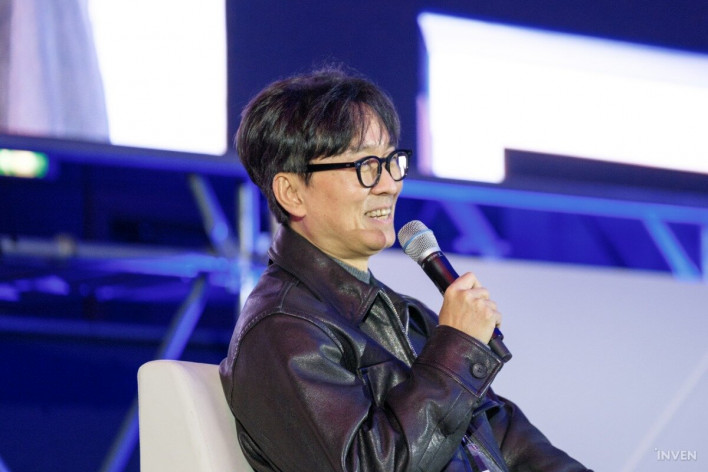
For example, we all attended middle and high school. Are teachers' personalities uniformly identical? No. They vary wildly from one extreme to another. In movies, teacher characters are often depicted as abusive teachers asking, "What does your father do?" because that physical teacher serves as a villain and leaves an impact. But just as with teachers, the same goes for police officers and everyone else. When you actually meet professionals, you often think, "Oh, I expected this person to be rigid, but they're not." Rather, we often find charm in traits contrasting with their professional roles—unpredictability. That's why I think human beings are fascinating creatures.
And in my case, when writing the screenplay and casting, I meet with the actor multiple times. Like all directors, I discuss the character at length and watch all their previous works. In doing so, I unconsciously memorize their speech patterns. So when revising the script after casting, I try to write in a speech style comfortable for that actor. That way, the actor accepts the lines naturally without feeling alienated from their own voice. Thus, even if I give actors freedom to improvise or alter lines, they rarely change them dramatically because the lines were written with a deep understanding of who they are. I talk with actors a lot and shape characters around them.
Because an actor has their own interpretation of a character's speech style, which might sound even more fitting when heard out loud?
Jang= Yes. But I believe a director speaks through the screenplay—explaining through the script. The script is our blueprint: "This house will be built like this; the windows are here, the sun rises in the east and sets over there, so it'll get sunlight all day." Explaining these things verbally is important, but we discuss them more specifically using what's in the screenplay. Over drinks, of course.
Have there been cases where an actor interpreted a line in their own way, delivering it more richly or effectively than originally intended when writing?
Lee= I'll keep my answer concise, but I hope you know that while it might look relatively short, it's not from a lack of sincerity.
Yes. Taking actors as an example, there are countless instances where it gets enriched. When reading the script for 'Be Melodramatic,' I laughed the hardest, all because of Ahn Jae-hong. And the actor who brought a completely unexpected speech tone was Son Suk-ku. He played Director Yah, Sang-soo, and I had no idea he would deliver lines with that speech pattern... How should I put it? I had prepared extensively for that meeting. It was a difficult character, so I wondered how to bring him to life. If the actor played him too simply, I wanted to help construct a speech style. I went in thoroughly prepared, but I didn't say a single word or give a single direction. I thought, "Wow, such a world exists!" I was stunned and felt it was like a miracle, wondering, "How can someone act like that?"
More recently, actor Ryu Seung-ryong in 'Chicken Nugget'... it's an absurd storyline, where a daughter turns into a chicken nugget. I told him, "This makes no sense anyway. It's somewhat experimental, something I can try while I'm riding high. So I'd like you to play it somewhat cartoonishly." But the moment I saw him perform, it was instantly a cartoon. It came out so rich, far beyond what I had envisioned. I've had a few experiences like that, and facing those moments as a director feels truly gratifying.
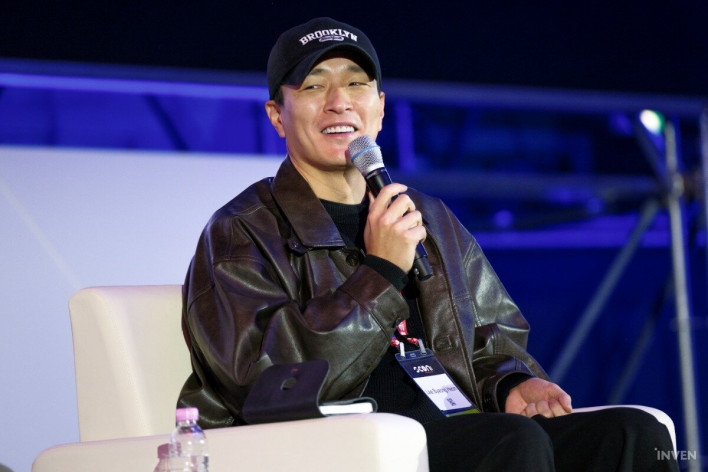
Filmmaking is a collaborative effort where multiple people put their heads together and make decisions on the fly based on set conditions. Director Jang Hang-jun, you must have experienced many such moments on set as well?
Jang= Actually, I rarely get surprised on set. That's because group table reads before shooting often feel formal. Since they can be a bit formulaic, I don't do table reads that way; instead, I hold one-on-one reads with each actor in my room, just the two of us, from start to finish. I explain the scenes, show location photos, and explain that we'll be shooting in places like this. Because no matter how much you practice at home, the set is an unfamiliar environment. I explain details to help them adjust, saying, "Music like this will play in the background," while continuing reads with that actor. If I don't quite like a run-through, we do it again the next day, the day after, whenever free time comes up, again and again. So before stepping onto set, I already know exactly how the actors will perform.
Actors like Park Ji-hoon, Yoo Ji-tae, and Jeon Mi-do had extensive reads with me, as did other actors. For Yoo Hae-jin, instead of table reads, we went scene by scene, turning pages one by one, discussing "the mood of this scene, what not to forget here, and the emotion I want brought out." Because Yoo Hae-jin is a longtime friend of mine, I know he has a unique quality. How should I describe it... he brings it out fully on set. He truly delivers on set. His acting skills and talent are so outstanding that there's no need to verify them, and when we talked about the character I envisioned, it wasn't different at all. That's because at a certain point, I wrote the character specifically with Yoo Hae-jin in mind. I wrote it while visualizing him from the script preparation stage, so as I wrote, the speech patterns in the script naturally became "Yoo Hae-jin-ified."
And anyone looking at him would agree he looks like a commoner living in a remote mountain village during the Joseon Dynasty. People even say things like, "He looks like he ripped out of a history textbook." If you look at late Joseon photos in history textbooks, our ancestors all looked like that. We've been heavily modified since then. At any rate, hearing Yoo Hae-jin's lines on set in the exact tone I had imagined gave me an electrifying thrill. As Director Lee Byeong-heon mentioned earlier, I felt, "I have nothing left to do. I didn't expect this actor to internalize it so perfectly."
Don't Aim for Catchphrases, Don't Hand Over the Ending From "Is This Galbi or Fried Chicken?" to "Ruined by My Own Hand"
Whether in games, movies, or TV dramas, one common trait of beloved works is that lines of dialogue become catchphrases. 'Extreme Job' spawned many famous lines that became memes, and lines spoken by Danjong in 'The King's Warden' were widely talked about. When writing them, you likely didn't anticipate they would become memes or catchphrases, but they ultimately serve as hooks that define a character's identity. What goes through your mind when writing such lines?
Lee= First of all, I don't think many people can start out intentionally deciding, "This will be the hook." It seems to take shape as you write—almost as if your hands create it rather than your conscious mind deciding it. When a line like that comes out, it feels great that day and the drinks taste better. I doubt anyone starts writing with a fixed goal to make a catchphrase. Yes, for me...
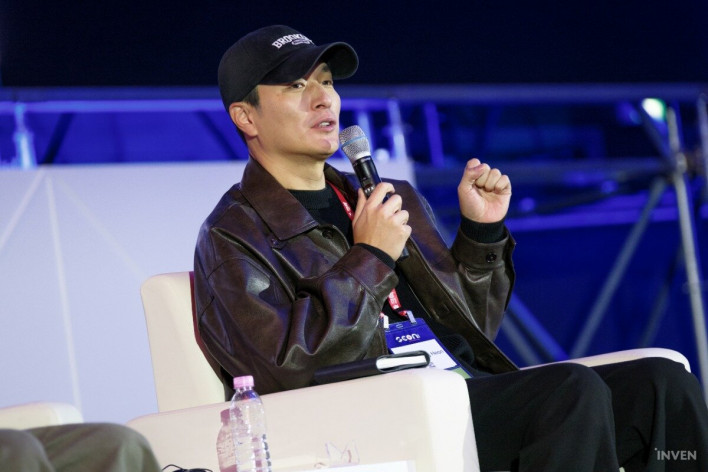
Jang= You keep leaving me speechless! He's such an outstanding director. No, it's the same for me. I doubt any creator writes a line expecting it to become a trend. Truthfully, when we make a movie or drama, we have no idea how it will turn out—none at all. We can't predict it. And when editing scenes or laying down music in post-production, we expect the audience to feel a certain emotion, but quite often, after watching the piece, the public shows reactions we never anticipated.
As someone once said, "A film is a living organism." Yes, from the moment it is created, it evolves and divides inside the minds and hearts of the public. Yes. And sometimes it dies quickly. So when writing dialogue... well, there are moments like that. When you were stuck or had written a cliché line, but then wrote something and thought, "Hey, this is good, this is really good." Then I shut the script, close my laptop, and go out for a drink.
Which line was like that in 'The King's Warden'?
Jang= Ah, one line from 'The King's Warden' was like that. Danjong and Eom Heung-do are traveling, then Danjong sets off on his own while Eom Heung-do goes to the magistrate's office to report him. But Eom Heung-do can't bring himself to report Danjong and follows him again, appearing before him. Danjong says, "I don't want to lose the people I cherish and love anymore." Originally, the next line was, "Then I will become such a person for you," and they would go together. But ugh, that dialogue felt so cheesy and dissatisfying.
So Eom Heung-do asks, "Am I among them as well?" and as Danjong turns around, he says, "You said you don't want to lose the people you cherish. Am I among them as well?" Then Danjong replies with a question: "Are you not? You are that kind of person to me, so am I not that kind of person to you?" There's that exchange.
Didn't many audience members wipe away tears during that scene?
Jang= Yes, yes. So in a way, going to the magistrate's office to report him would have ended everything. But facing the dilemma of "Should I report him to survive, or follow the justice of this pitiful young king despite the danger?"—if you were standing in the emotional shoes of people facing such human anguish at the end of their road, wouldn't you say something like that? Yes.
So there too, when we speak... as I mentioned earlier, nobody speaks in rigid grammatical structures like 5-period or 4-period syntax. No, nobody does. I'm not great at English, but when I visit New York, there are so many expressions that make no sense grammatically. What I mean is, in Korean we say, "Hey, are you crazy? Why did you pretend not to know me?" rather than, "To pretend not to know me, are you crazy?" So you pose the question first and invert the core meaning behind it. Even if it doesn't fit formal grammar, I think that's how a good line came out.
I'd like to ask Director Lee Byeong-heon the same question. Among 'What a Man Wants,' 'Extreme Job,' and 'Be Melodramatic,' was there a line that you didn't intend as a hit, but seeing the public react with "Wow!" made you think, "That line turned out really well"?
Lee= First of all, because the volume of dialogue I've written is so vast... I don't know if I should put it this way, but whether a line receives praise, becomes widely known, or turns into a catchphrase depends heavily on box-office success. Lines from 'Extreme Job'—like "Never before has there been a taste like this. Is this galbi or fried chicken?"—I never expected that to become such a craze either. It spread because it rode on the coattails of that kind of mega-hit success.
With 'Be Melodramatic,' the volume of dialogue itself was so enormous that many clips circulated online as memes. It's embarrassing to brag with my own mouth that "this line is good" or "that line is good," but there were certainly agonizing moments. I like drinking, but I didn't have time to go out, so I'd pour a glass of wine and write all night. But I was already tipsy, and because of the wine, the lines looked amazingly good to me.
Toward the end, there was a scene where Han Ji-eun's character, Han-joo, sits at a bar with Gong Myung's character and channels his ex-girlfriend, telling him the words he wanted to hear about his love story—it was quite a long monologue. It needed to be rich with emotion, sound somewhat like an aphorism, and fit the character well. I remember writing that while drinking, only to erase it all the next day and rewrite it. After trying several times... ultimately, that evaluation comes from the audience and viewers, but reflecting on it myself, I felt a sense of satisfaction with dialogue born from that process.
Even though games and movies are different mediums, the core role of dialogue is fundamentally identical. When playing 'Red Dead Redemption 2' at home, poignant lines uttered by Arthur Morgan become catchphrases in gaming communities, and players/viewers cherish those lines for a long time. As 'The Witcher' developers mentioned in the morning session, modern games frequently offer narrative structures where players choose the story and ending. Conversely, movie audiences generally accept the story carefully crafted by the director. Although film isn't inherent to that format, if audiences could choose between two or three endings for your movies, to what extent would you allow audience choice?
Lee= Something like *TV Theater of Life*... But if you choose to adopt such a format, setting limits on that allowance seems meaningless. If someone dislikes it, they simply don't have to choose. However, I personally dislike seeing blood, overly explicit content, or sensational elements intervening, so I might ask to tone those down. Yes, that's how I feel. Once choice is allowed, I don't think I would impose severe restrictions.
Because that also falls within the range an auteur can permit?
Lee= I feel that the choice itself already implies as much, yes.
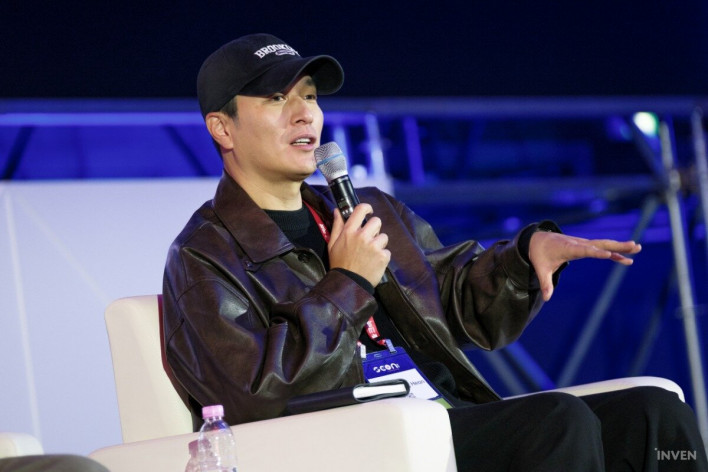
How about Director Jang Hang-jun?
Jang= If allowing choice means letting the audience decide, I would not allow it. I want to do this myself... The very reason I chose this profession was the mindset: "Whether it succeeds or flops, let me ruin it with my own hands." For the audience to decide that? No, I can't imagine it. And letting audiences decide the most crucial part—especially the ending? That's not a vote, and it wouldn't be an easy choice to leave to them, so even if it flops, I'd rather do it myself... yes.
However, there is something like this. In our industry, as Director Lee knows well, once film editing reaches a certain stage, we hold blind test screenings. We recruit people, pay them a small fee, and they enter the theater without knowing what movie or title they're watching. They watch the new film, and when it ends, survey forms are handed out. They rate scene by scene: Scene 1 score, Scene 2 score, and so on. "Which scene was the most entertaining?" "Which character was the least likable?" We collect survey responses from hundreds of people—which is common practice for many commercial films. Naturally, those feedback surveys influence the final edit.
Yes, that exists, but fundamentally we filmed a story that was tightly structured, and I wouldn't want to leave the conclusion to people who don't know the full narrative.
What Remains in the AI Era The Creator's Story, Taste, and "Stop!"
One final question. In the opening, we touched on AI's impact on the game industry, but the film industry is also reducing cost and time using AI in VFX and post-production. Even in pre-production, directors, actors, and technical staff use AI for previz work to simulate ahead of time. As AI advances at an astonishing pace, what must creators never lose sight of when crafting great characters, narratives, and dialogue?
Lee= That's something everyone thinks about a lot these days—especially creators. What's most important and must never be lost, something I try to maintain myself, is the creator's own story. Also, the emotions experienced, felt, and pondered when encountering fine arts—be it writing, fine art, or music—are immensely important.
Why a creator's story matters is that when we look at an artwork—say, a piece of fine art—and it has an "AI" stamp at the bottom, we don't think about the creator's personal journey. But when it says "Lee Byeong-heon," we appreciate that artwork along with the creator's backstory. That's something AI simply doesn't have. Just as a famous chef or renowned restaurant is valued higher if they have a story, I think it's vital for creators not to lose their own story and to keep building it.
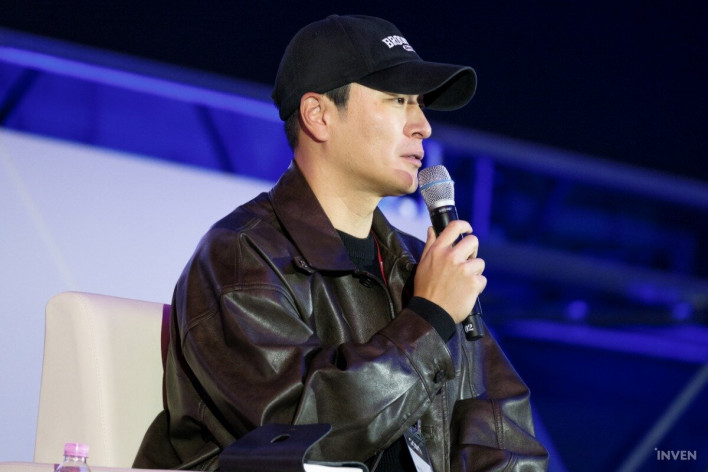
I think everyone here shares a similar sentiment. What about Director Jang Hang-jun?
Jang= Honestly, AI is advancing so terrifyingly fast that I feel scared. Truly, deeply scared. Every time you wake up, things change, and soon it will be hard to distinguish what's real footage and what's AI-generated footage. In fact, jobs specializing in distinguishing them might emerge. Manipulation will become effortlessly possible... Even recently, there were reports of cheating using AI glasses, and when I searched Coupang, tons of cheap AI glasses were on sale.
I have a lot of fear regarding technology advancing at a speed humans cannot handle. For example, cars should be designed to run at speeds we can control; if a car travels so fast that we can't even perceive obstacles appearing ahead, does that truly benefit humanity? Even if we go faster, reach destinations quicker, and handle far more tasks per day, will that actually make us happy? If we handle around 20 tasks a day now, but enter an era 10 years later where we handle over 200 tasks a day, will the quality of our lives really improve?
Also, I recently saw AI animations produced by a certain company. It was scary and mind-blowing. They cut production timelines dramatically while employing only one-tenth of the staff. It was absurdly innovative. The designs and visual storytelling... well, the narrative itself was slightly clunky, but wow, if a proper writer were attached, it would be a nearly perfect animation. In other words, in studios we love like Studio Ghibli, Pixar, or Disney, I believe 90% of staff will be laid off within 10 years. Yes, I think it'll be the same across all industries. I believe AI development has reached a pace beyond our control.
Regardless, while operators or designers might disappear—that part is certain, they definitely will—creators might survive until the end. That's because someone has to issue prompts and refine outputs according to personal taste. For example, art directors... I'm actually preparing a small AI animation project myself, which is why I speak from experience when I say it's terrifying. Art directors and cinematographers will still be needed because camera angles, narrative direction, and dialogue delivery completely shift depending on a creator's perspective and individual interpretation. It comes down to a matter of taste, not simply whether something is well-made, boring, or polished.
A person who inputs that taste and makes final calls is absolutely necessary. However, as I mentioned, the jobs of countless technicians and people exercising creative skills are at risk. That's why when I think of AI, I feel... not so great. I honestly wish scientific technology would just stop. It's giving me a headache as it is. That's all.