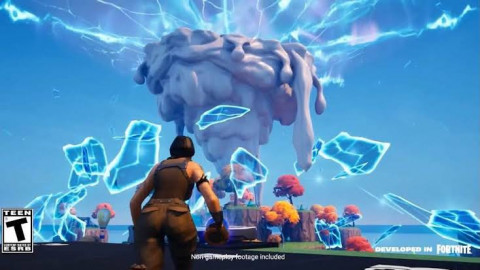
Playing Call of Duty: Modern Warfare 2 in a browser, running World of Warcraft on an iPhone, and running The Legend of Zelda on a Mac without a separate emulator.
Until recently, these ports would have been jaw-dropping, but in just a few weeks, the novelty of such cross-platform porting has faded significantly. Wake up after a single night, and online communities are flooded with endless news of games running on unexpected platforms. The emulator scene is no different.
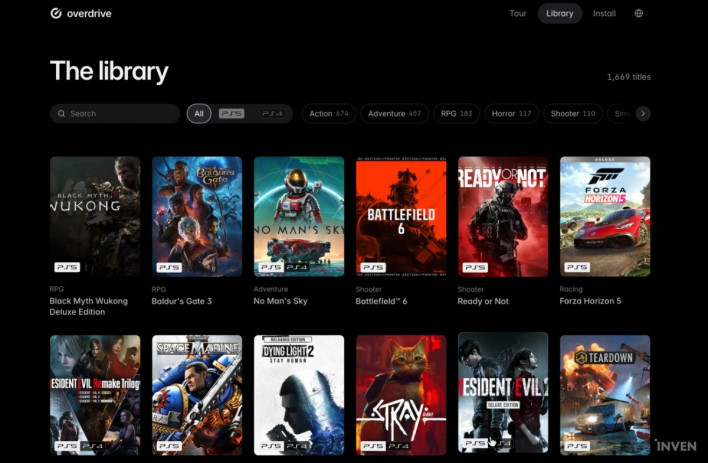
In late 2025, concerns grew for the PS5 after the leak of the key bootrom at the lowest level of the device's boot process. The jailbreak community, which had gone quiet after little progress followed, suddenly began buzzing in recent months with information released by accelerating developers. On top of that, physical PS2/3 discs are running on the PS5, and homebrew apps that easily grant access to download a library of over 1,000 games on jailbroken PS5s are running rampant.

Of course, grouping native porting—which strips down and reconstructs the core of a game—together with jailbreaking and emulators that simulate another device's hardware in software is not strictly accurate. However, the industry today seems to have reached a point where such distinctions no longer matter. This "deconstruction of games" ties together countless events and shifts across the industry into a single overarching wave.
And perhaps,
the greatest turning point in the history of gaming as a mediumis what we are witnessing right now.
PS5 Unsealed Flood of Homebrew Once the Floodgates Opened
The leak of the PS5 bootrom key in late 2025 seemed to signal the end of PS5 security. Bootrom is the lowest-level code on a console. Embedded directly into the chip, it is the first code to execute upon powering on, handling bootloader and firmware verification. The bootrom key is the cryptographic key used to verify the bootrom. In other words, having the bootrom key is the crucial key that allows anyone to decrypt and analyze the relevant code.
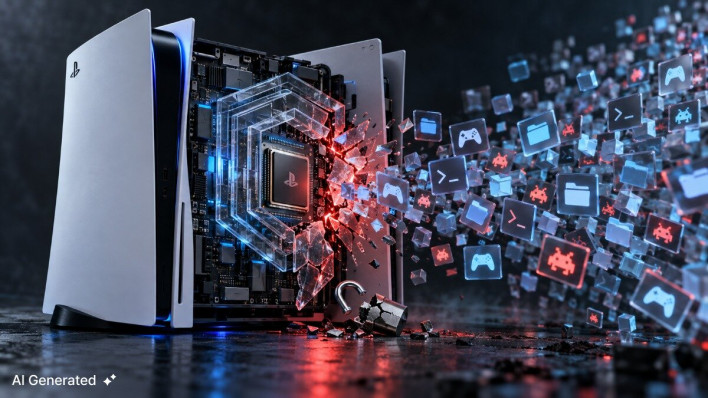
And because it is baked into the chip during manufacturing, it cannot be fixed through software methods like firmware updates. In short, the key leak means that unless the console generation undergoes a hardware revision, it retains a permanent security vulnerability. It also established an analysis environment based on this foundation. However, initial development progress fell short of expectations. In particular, building the exploit chain—the process of chaining vulnerabilities step-by-step to achieve jailbreak privileges—took a long time.
The first public exploit around June took 50 minutes just to execute. But the arrival of the jailbreak tool Relapse changed everything. Released in late September, Relapse achieved exploitation in seconds, taking at most under a minute. And once the PS5 was breached, a flood of unofficial programs and homebrew began proliferating rapidly.
And behind this process was AI.
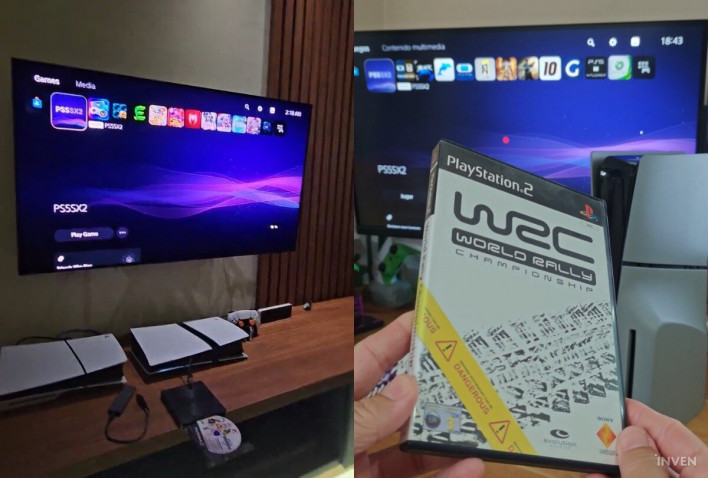
The various stages of jailbreaking and homebrew required an understanding of console firmware, which differs from PC architecture. Yet this cycle is accelerating rapidly. While Relapse developers did not explicitly state they used AI, it would be harder to believe AI was not involved given the explosive surge in development speed. Meanwhile, PS5SX2—which enables physical PS2 discs to run on the PS5—officially declared that it received assistance from AI.
In particular, the rapid advancement of AI models is bringing a revolution in speed to the decompilation process. Executable files consist of binaries executed by machines. Decompiling them back into source code readable by humans is considered a highly difficult, tedious, and complex endeavor. Since jailbreak, emulator, and porting developers rarely engage in commercial ventures, they have essentially been repeating unpaid labor.
However, the story changed as AI took over this tedious labor. Tremendous speedups occurred across many areas, from analyzing game behavior and extracting information to researching vulnerabilities. Furthermore, because the output yields source code that is easy for humans to edit, analyze, and rewrite, additional development work began picking up speed as well.
Cheaper, Faster, and Easier How AI Lowered the Barrier to Reverse Engineering
In particular, the release of Claude's Opus 5.5 in September accelerated the development speed of homebrew and emulators. After the public release of Relapse on September 29, an early version of PS5SX2—which runs PS2 games on PS5—was unveiled, followed by a surge of game launcher management tools. Notably, on October 9, an unofficial library store emerged that provides access to play over 1,600 PS4 games. By mid-October, reports surfaced that experimental builds of a PS3 emulator were actively running.
Homebrew development and evolution are progressing at a pace unimaginable in past development environments.
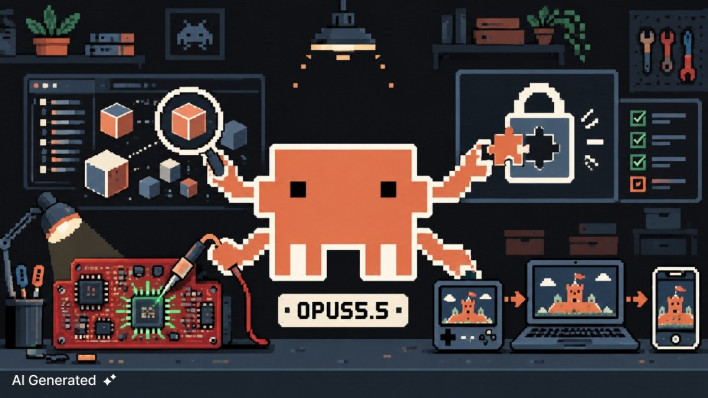
In fact, Opus 5 demonstrated performance comparable in some areas to Fable 5, a model whose high capabilities sparked enough concern to prompt direct US government intervention to halt its service. Opus 5.5 significantly enhanced coding and agent capabilities over Opus 5. On Terminal-Bench 4.0, which measures task performance in actual terminal environments, its score improved from 52.3% to 66.4%. Additionally, operational costs were reduced by nearly 40% in terms of per-token pricing and efficiency.
As AI demonstrated a level of capability that humans cannot match, costs dropped, speeds increased, and at the same time, tasks became far easier.
Ultimately, jailbreaking, emulation, decompilation, and porting are distinct technologies pointing toward the same destination: the collapse of barriers that once locked games to specific platforms. This is the first chapter in the deconstruction of games.
Arguments persist that human verification of code remains necessary following AI output, while many contend that substantial work can now be accomplished through natural language instructions without specialized expertise. Looking beyond jailbreaks and emulators to the influx of porting cases, one can clearly feel how dramatically the difficulty barrier has fallen.
Porting involves making a game run on a platform other than the one for which it was originally released. Naturally, it requires addressing numerous considerations, including hardware differences across platforms and decompilation tasks. As a result, fan ports rarely stemmed from just one or two individuals, requiring instead specialized collaboration spanning tens of months or even years. Cases were common—such as Transport Tycoon, RollerCoaster Tycoon, or ScummVM, which re-implemented classic adventure game engines—where post-release development continued for over a decade rather than ending with a mere project release.
However, the landscape of recent porting is different. Hideo Kojima's Silent Hills P.T., which previously had only superficial imitations, was revived through a native port rather than emulation, featuring DLSS/FSR upscaling, ray tracing, frame generation, and even photo mode. Grand Theft Auto V was executed in a web browser using WebAssembly and WebGPU. Beyond these, porting efforts spanning various eras and platforms continue, including The Legend of Zelda: Link's Awakening and The Simpsons Wrestling.
And these are just a few examples; projects that would have taken years in the past are pouring out almost daily. Many of these projects explicitly credit AI assistance or disclose that the majority of the code was written by AI.
Since Opus 5.5, the performance of models below Opus—such as GPT-6 Sol and Sonnet 5.5—has risen significantly, making AI decompilation even cheaper and more efficient.
Furthermore, the emergence of the open-source tool Reverse Engineer Anything (REA), which surged in popularity in October, has further lowered the barrier for anyone to perform reverse engineering—from decompilation to app and firmware analysis. Previously, AI reverse engineering required the AI to analyze code directly or write scripts, which was inherently slow and yielded unreliable results.
However, REA operates by connecting specialized reverse engineering tools like Ghidra via Model Context Protocol (MCP). By allowing AI to directly control software that is proven in performance but requires expert knowledge, REA enables analysis through simple natural language prompts, even if the user does not know how to operate the tools.
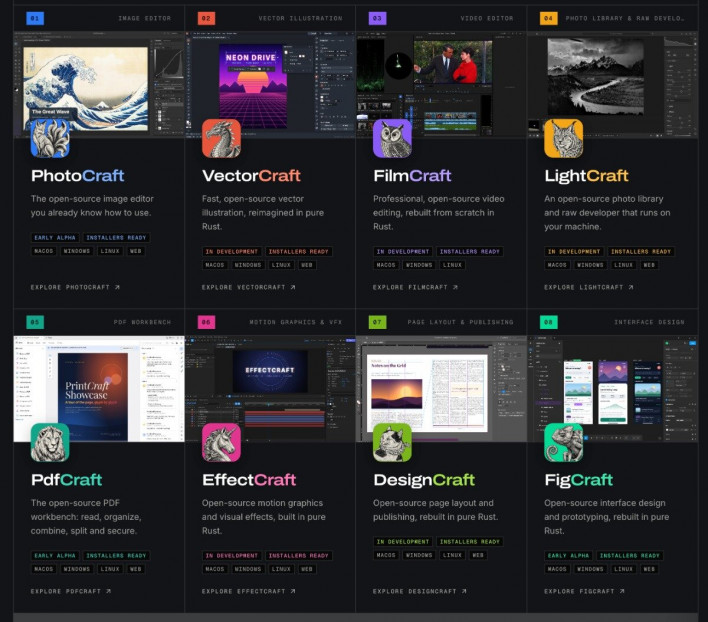
This proliferation of reverse engineering is accelerating open-source releases not only for games but also for Adobe products like Photoshop and other subscription service apps. Anyone with the intent can now easily recreate existing games and applications without technical expertise.
A Broken Psychological Barrier How the Ownership Debate Shifted Perspectives
Both PS5 jailbreaking and game porting utilize existing game and console assets, raising concerns regarding copyright law, DMCA, and license violations. Developers who released these projects revealed virtually no personal information, and user consensus largely viewed such projects as illegal.
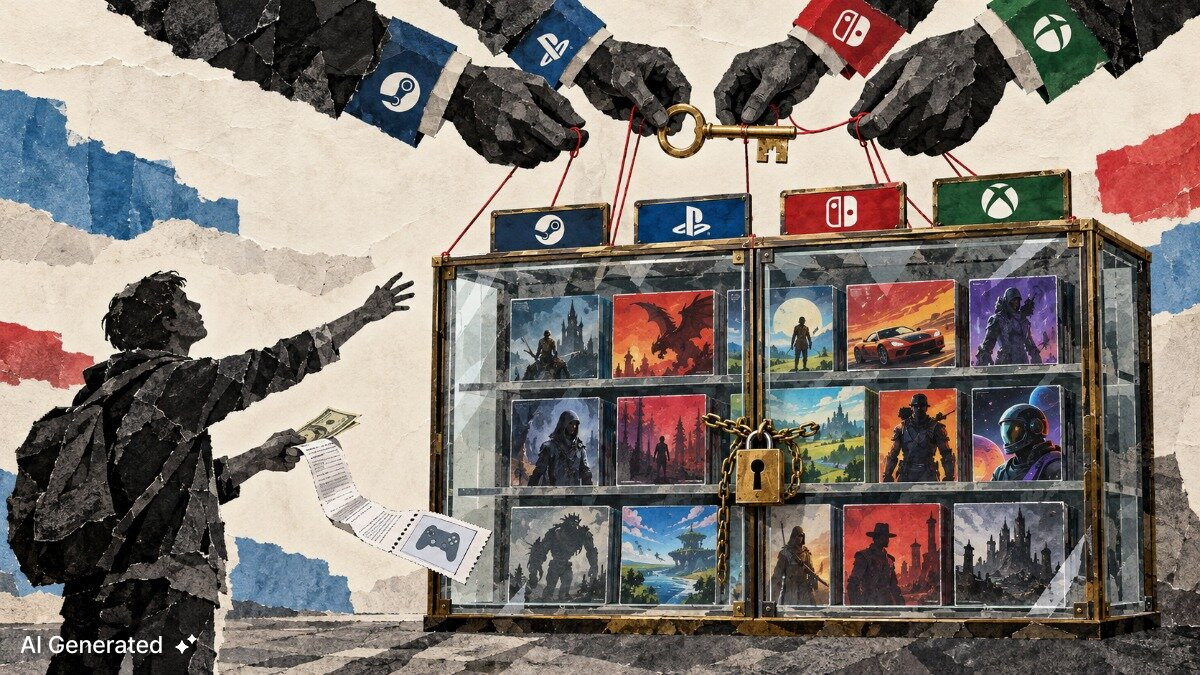
However, the narrative shifted as discussions around game ownership gained traction. Most platforms selling digital games—including Steam, PlayStation Store, Nintendo eShop, and Xbox Store—operate on a model where they sell usage licenses rather than transferring full ownership of the game. Users buy the right to play, not the content itself. If an account is banned, access to the entire library can be lost. When services shut down, games can become unplayable.
Of course, the likelihood of major platform holders abruptly closing shop is practically low. However, the story differs for the consoles and online services on which games run. Following the closure of the Wii Shop Channel in 2019, re-downloading previously purchased games was blocked alongside new purchases. While Nintendo subsequently stated that re-downloads would remain available after ending new purchases on the 3DS and Wii U eShops, it offered no indefinite guarantee. Backlash against Sony was even stronger: after announcing the closure of the PS3, PSP, and PS Vita stores in 2021, user pushback forced Sony to close only the PSP store. The closure of the remaining two stores continues under a revised schedule.
Compounding user frustration was Sony's content removal notice. Sony announced that 551 movies and TV episodes would be permanently deleted due to the expiration of licensing agreements with production companies. Content that users had paid for with their own money was being wiped away. In 2023, Ubisoft's *The Crew* shut down its servers, rendering even single-player gameplay impossible and reigniting the debate over digital ownership.
Sony's announcement regarding the cessation of disc production triggered backlash against the loss of tangible game ownership itself. In July, Sony announced it would stop producing physical discs for new PlayStation titles starting in January 2028. While factors like declining physical sales and higher profitability from digital distribution were cited, fan outrage was overwhelming. Consequently, doubts deepened around purchasing digital games and the concept of game ownership altogether.
In fact, reports indicated that search volume for "PS5 jailbreak" surged by anywhere from 20% up to 90% within 24 hours of the announcement, depending on the outlet. In online communities where user verification is not required, a growing view framed backups, homebrew, and emulators as viable alternatives.
Naturally, Sony's announcement does not mean every user is flocking to jailbreak apps or turning to open-source ports. At the core of this market shift is the cost reduction driven by AI. What has changed, however, is the public perception. Where nine out of ten people would previously condemn such efforts as illegal, psychological resistance has clearly softened.
As platform controls tighten, efforts to bypass or replicate them using AI as a tool will only grow, alongside an expanding audience willing to accept them. The deconstruction of games is being driven not just by technology, but by a growing consensus that deconstructing them is acceptable.
An Era Where a Single Demo Becomes a Clone How Game Developers Are Responding
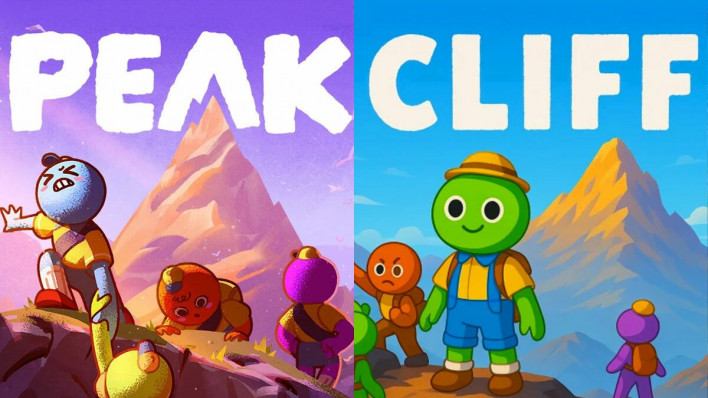
A viral sentiment recently spread across overseas online communities: never reveal a game before it is finished. The rationale was that someone would copy the idea and build a Roblox clone to monetize it before the original developer could earn a cent. This is no mere meme. When near-identical clones flooded Roblox following the success of last year's hit *PEAK*, the developers stated they would rather players pirate their game than play "microtransaction-riddled Roblox slop."
This reflects more than concerns over monetization; it is a lament over how effortlessly a creator's effort and ideas can be copied by others. And with the expansion of reverse engineering, this problem is no longer confined to Roblox.
Revealing a game is no longer just a promotional opportunity to showcase a title to fans and customers. Releasing a demo can quickly lead to core mechanics being reverse-engineered and cloned. For small studios where original ideas matter more than graphical fidelity, releasing even a teaser video can result in clones that surpass what the original developer has implemented.
For this reason, many indie developers are now avoiding public demos in favor of closed testing, or postponing any public game reveals until full launch.
Major game publishers view the situation differently. With the livelihoods of hundreds or thousands of employees hanging on one or two AAA titles, they take proactive measures at earlier stages. Activision took down decompilation project videos of Call of Duty: Modern Warfare 2, while Bethesda swiftly initiated legal action against a fan-made AI-assisted Fallout porting project.

However, game companies themselves are not immune to using AI. According to a 2026 survey by the Computer Entertainment Supplier's Association (CESA) in Japan, 85.8% of Japanese game developers utilize generative AI, with 63% using it daily. This includes developers at major companies such as Capcom, Sega, Konami, Square Enix, Level-5, and Sony.
The boundary between AI-generated and human-created content—as well as between straightforward clones and clean-room open-source code built from scratch—is growing increasingly blurred. Takedown notices and cease-and-desist demands cannot stop files ported in mere hours from circulating online or wipe code already installed on user devices.
In response, Xbox introduced a strategy aimed at finding solutions that benefit players. Xbox Labs views reverse engineering and code reconstruction as inevitable phenomena, proactively researching and proposing solutions that embrace these shifts.
The Gap Between Creation Time and Destruction Time
How Far Will the Deconstruction of Games Go?
Even in the few days spent writing this article, numerous game ports have surfaced. As if in competition, a new tool was used yesterday to port yet another game, while PS5 games are running on PC beyond mere emulation via compatibility layers that perform like native software. For PS2, clean-room implementations created without using genuine BIOS code are now emerging.
And this issue is not unique to games. As the reverse-engineering craze spread, numerous projects targeted Adobe design products like Photoshop, Lightroom, Illustrator, and Premiere. As copyright concerns mounted, alternative programs emerged that offer near-identical functionality without using any original source code.
An era has arrived where anyone with the time and money for analysis can clone games and applications. And soon, even the time constraint may vanish.
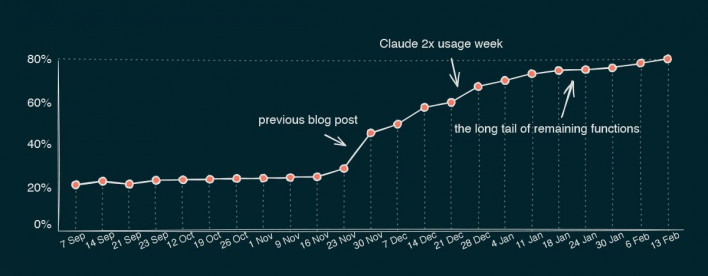
Developer Chris Lewis published a post comparing the actual time spent decompiling a game. The Nintendo 64 game *Snowboard Kids 2* initially began with a human-led, AI-assisted approach, remaining stuck at a 25% code match rate over approximately 1 year and 3 months. However, after shifting the workflow to Claude Opus 4.5 in November 2025, the match rate rapidly rose to 45% in roughly two weeks. A plateau followed, and reaching a 100% match rate on May 17 took a total of 596 days.
However, when he tackled the *Snowboard Kids* port from the start within an agentic environment, he achieved a 100% match rate in just under 83 days. Although the function counts differed—2,145 versus 2,995 functions—the per-function time spent was approximately 5 times faster. At the time, Opus 4.5 scored 59.3% on Terminal-Bench 2.0. Opus 5, released about half a year later, recorded 89.1% on Terminal-Bench 2.1. The same Opus 5 scored 52.3% on the more difficult Terminal-Bench 4.0, while Opus 5.5, released about two months later, scored 66.4%.
Terminal-Bench scores do not directly represent reverse-engineering capabilities. However, it is clear that the ability to replicate behavior without copying original source code—and to operate tools without human intervention—is advancing at an unprecedented speed.
Perhaps a future where a game built by developers is cloned in a single day—or even hours—and distributed online at zero cost is not far off. In that future, platform barriers disappear. Xbox Game Pass already runs on PS5, PS5 software runs on Xbox, and Nintendo Switch games run on Mac.

Game companies will inevitably seek solutions. Not every publisher can embrace AI-driven recreation like Xbox Labs, and Xbox itself may abandon its current initiative if it fails to build a viable business model. Publishers might transition toward cloud-only gaming where users own no code at all, or move aggressively beyond licensing toward rental models. Console makers might launch proprietary operating systems for PC or dedicated PC game stores as countermeasures. Yet as game companies become more hostile toward users, consumer resistance to AI-driven content may diminish even further.
Still, we must question whether leaving everything to AI is the right direction. Separate from function match rates, instances are not uncommon where AI applications fail to properly ensure features and compatibility during re-compilation or porting, drawing user dissatisfaction at commercial stages. Furthermore, with AI unable to fully replace human creativity, discussions must address the extent to which human creators should be protected.
A world where game copyrights can no longer be defended, leaving every game open source—that future may arrive much sooner than expected. And the deconstruction of games driving toward it is unfolding simultaneously across three layers: technology, human sentiment, and the industry itself.