Link, the protagonist of The Legend of Zelda, is widely considered one of Nintendo's defining flagship characters alongside Mario. In particular, the immersive experience delivered by 'The Legend of Zelda: Breath of the Wild' elevated the series' popularity by several notches, naturally sparking renewed interest in Link from earlier timelines as well.
Among those earlier titles is 'The Legend of Zelda: Ocarina of Time', which officially ushered in the 3D Zelda era. It is especially renowned for having a profound influence not only on modern Legend of Zelda entries, but on countless 3D open-world action-adventure games today.
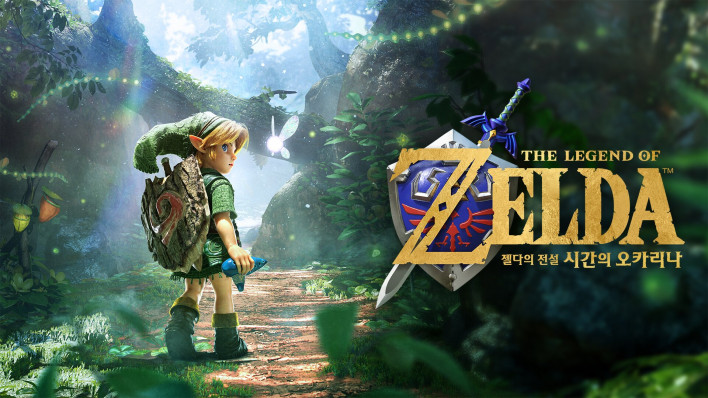
Even when played today, the game's unique charm and design leave players in awe. At the same time, however, it remains a very old game. Given that newer Legend of Zelda titles have delivered far vast open worlds and captivating visuals, players have had to lower their visual expectations significantly. After all, the last remake available to play, 'The Legend of Zelda: Ocarina of Time 3D', was released on the handheld Nintendo 3DS—specifically back in 2012 in South Korea.
Reborn in 2026 for the Nintendo Switch 2, 'The Legend of Zelda: Ocarina of Time' may well be the perfect project for returning to the roots of 3D Legend of Zelda games. And having had the chance to play the game a bit early, that expectation proved to be entirely justified. In fact, with less than a month remaining until release, the wait now feels torturously long, only intensifying the urge to play it again.
From Uncanny Detachment to a Believable Space Harmony Between Stylized Characters and Realistic Environments
This hands-on demo consisted of three main segments: Link awakening after the initial opening sequence to receive the Great Deku Tree's summons; leaving Kokiri Forest to cross Hyrule Field and reach Hyrule Castle; and controlling Adult Link to tackle the Forest Temple.
The first playable section begins with the Great Deku Tree sending the fairy Navi to Link. Following the Great Deku Tree's narrative, Navi seeks out the sleeping Link and flits around him, whereupon Link awakens to mark the true beginning of the game.
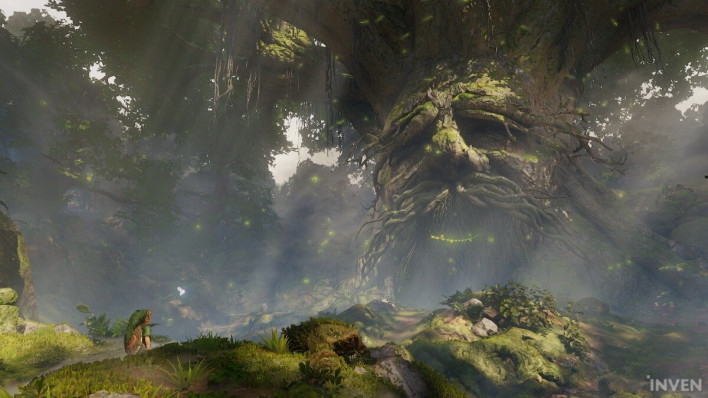
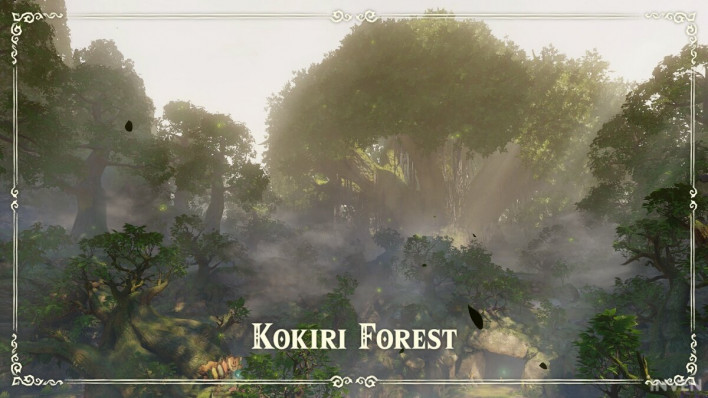
Kokiri Forest and the Inside the Great Deku Tree dungeon serve as the starting area of 'The Legend of Zelda: Ocarina of Time'. At the same time, this section functions akin to a tutorial, introducing and utilizing various mechanics that players will use throughout the adventure. As such, it is a space where players learn the controls and core gameplay loop.
Yet before one even settles into the tutorial, the dramatic transformations in this long-awaited return to the game's world spark pure astonishment. Although the 'The Legend of Zelda 40th Anniversary Direct' previously showcased visual updates tailored for hardware, seeing the graphics displayed on an actual TV screen proved far more beautiful and enchanting.
The grass beneath Link's feet, the stonework embedded in walls, trees blocking paths, and transparent, shimmering water effects boasting top-tier visuals—not just in comparison to the original Nintendo 64 and 3DS versions, but against any title on Nintendo Switch 2.
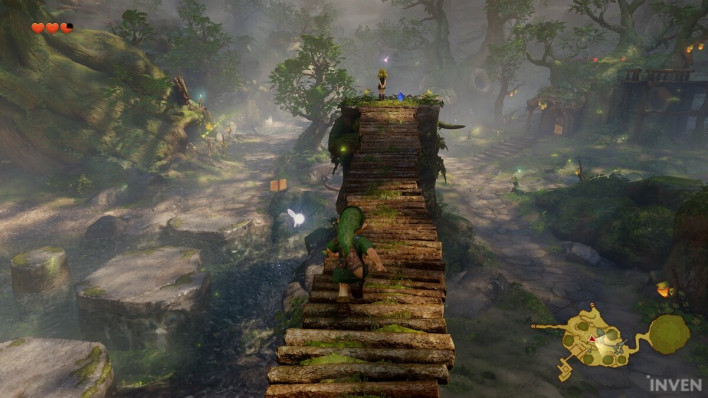
In particular, details like clothing dripping wet after taking a dip—and then gradually restoring to its dry color as it dries—add immensely to the immersion. Furthermore, the lighting effects are outstanding; rays of light filtering between trees and casting soft shadows over surrounding objects create a living, breathing world.
This in turn reinforces immersion in the world of 'The Legend of Zelda: Ocarina of Time'. While characters retain their signature stylized designs, they now feature realistic facial expressions. Coupled with added detail, the realistically rendered environments and objects soften any potential visual dissonance, transforming the setting into a truly believable world.
While Nintendo Switch-era Legend of Zelda games certainly delivered attractive presentations, they admittedly lacked a sense of realism in their landscapes. This remake successfully achieves that missing touch.
Granted, 'The Legend of Zelda: Ocarina of Time' is not a seamless open world spanning a vast land. Yet when evaluating each contained area individually, the game boasts some of the finest visual presentation on Nintendo Switch 2.
Looking at the bigger picture, it pushes the graphical boundaries of what Nintendo Switch 2 can achieve, raising expectations for future visual advancements on the platform; at the same time, the sheer enjoyment this title offers right now is impossible to overlook.
A Single Jump, A Single Expression: Transforming Ocarina of Time Agency and Cinematic Freedom Granted by Dashing and Free Jumping
Alongside the breathtaking visual overhaul, the core game structure and dungeon exploration featured in the demo remain faithful to the original. From Mido blocking Link as he responds to the Great Deku Tree's call, to searching for the Kokiri Sword and buying the Deku Shield due to Mido's spite before entering Inside the Great Deku Tree—anyone who remembers playing the original will progress without much trouble.
At the same time, players will notice numerous updates right from the beginning. The most prominent changes are jumping and dashing. Pressing the X button jumps, while holding the A button executes a dash. In addition to analog stick sensitivity allowing players to walk or run at varying speeds, traversal across areas has become much faster. For those who recall spamming rolls to travel quickly, now you can simply hold down the button and sprint.
Jumping—which previously only occurred automatically at ledges or during Z-targeting—has been assigned to a dedicated button, enabling more proactive and precise movement. While a dedicated jump button is standard in modern action games, here it allows puzzle-solving and dungeon progression to be approached in fresh ways.
Hand-in-hand with these action changes are the upgraded animations and subtle facial expressions. Character and enemy movements are exceptionally fluid and natural. The first character to demonstrate this is Mido, who blocks Link's path; whereas in the original he merely acted petty, his harsher expressions and body language now vividly convey his underlying inferiority complex toward Link.
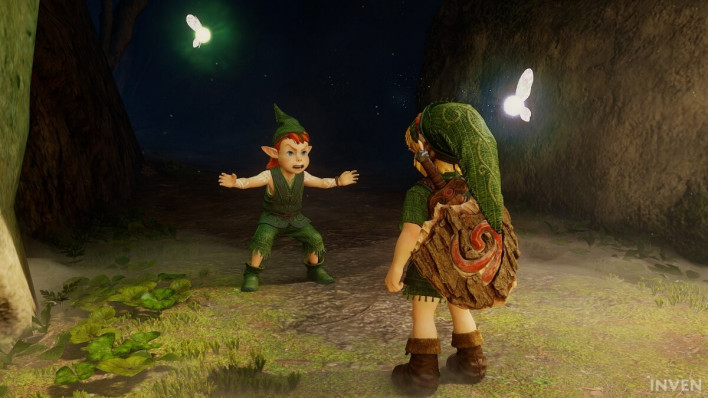
In particular, Link's farewell to Saria when departing Kokiri Forest was depicted in the original by simply walking backward. This time, richer facial expressions and hesitant animations portray Link's emotions with far greater depth. This is a moment best experienced firsthand when the game launches.
Throughout most of the series, Link remains silent. Consequently, this evolution in cinematics and animation—combined with modernized graphics—allows newcomers without nostalgia to immerse themselves fully in what feels like a modern title.
Z-Targeting Retained, Action Made Intuitive Exploration Reimagined Through Jumping and Dungeon Design
The journey through Kokiri Forest mostly matches the original. The layout remains similar, featuring the Kokiri child explaining Z-targeting, the child offering tips along the path to obtain the Kokiri Sword, the shop, and lifting/throwing rocks.
Yet subtle twists have been introduced. The path to retrieve the Kokiri Sword now requires climbing a ladder and using jump. Rather than being a purely graphical update, the overall structure is preserved while placing stronger emphasis on the tutorial aspect—allowing players to test new actions naturally within an expanded village layout.
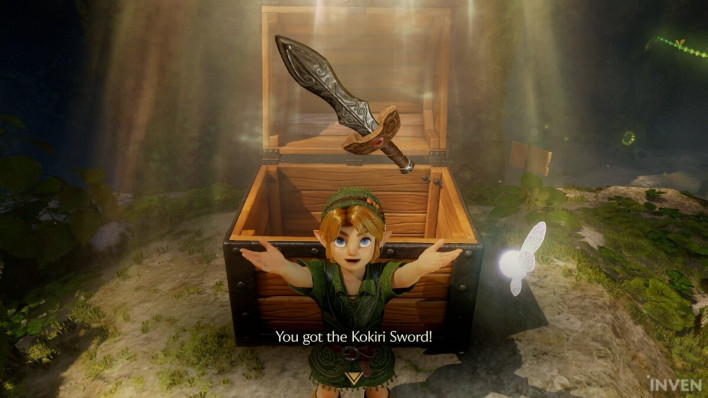
As a result, Inside the Great Deku Tree—the true testing ground for dungeon exploration and combat—guides players by balancing continuity with the original and testing new mechanics.
Overall action elements, paired with the iconic Z-targeting system, faithfully recreate the feel of the original. Sending Navi to lock onto an enemy shifts the camera angle and emphasizes focus. This maintains a combat style centered on deliberate duels with individual foes, contrasting sharply with clearing hordes across open fields.
In contrast, actions previously tied solely to the A button—such as backflips, side hops, and jump attacks—are now mapped in conjunction with the jump button. By separating jump and attack into dedicated inputs, the remake offers a more intuitive feel that modern action game fans will easily acclimate to, while still allowing single-button shortcuts where applicable.
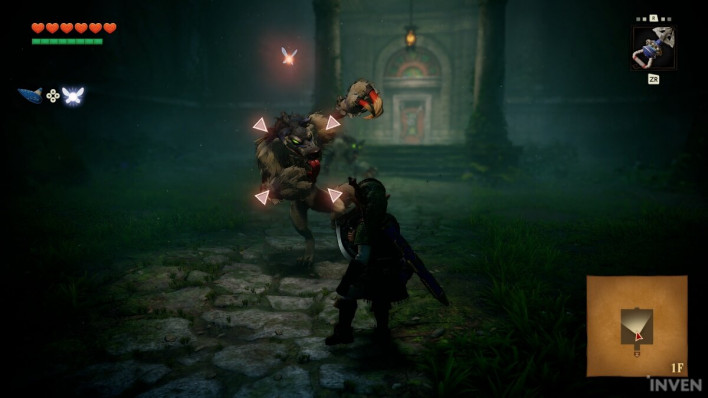
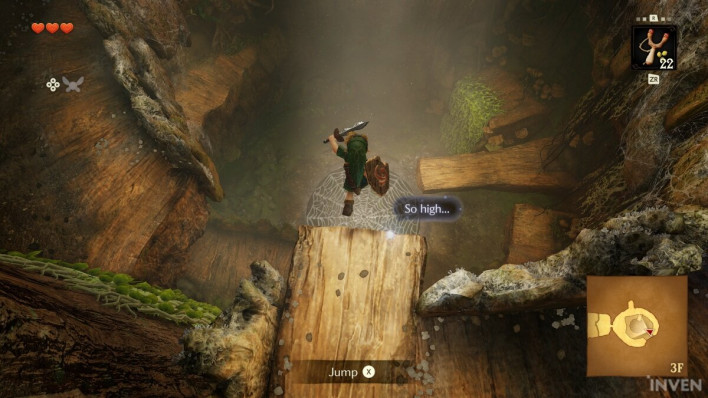
Exploration inside the Great Deku Tree was playable up to the moment Link leaps onto the cobweb from the top floor to reach the next area. The room layouts, item locations, and enemy types match the original. However, because environmental scale relative to Link has expanded, slight adjustments can be felt.
For instance, in the original version's room where the Compass is found, players could step on a switch and jump across two rising platforms directly to the treasure chest. In the remake, players must navigate a total of three platforms—including one rising on the left—to reach the chest. This change appears to stem from platforms being larger and more clearly rendered, as well as the manual jump mechanics giving players greater direct control.
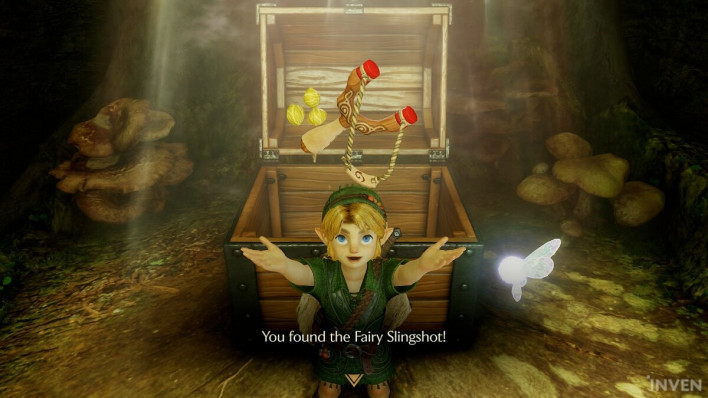
Certain enemy mechanics have also been refined. For instance, hitting a Skulltula's carapace with a sword causes it to spin, exposing its weak spot for a direct attack. Additionally, ranged weapons like the Fairy Slingshot can now target enemies while Z-targeting.
Overall, these changes demonstrate a thoughtful refinement across multiple fronts—active utilization of action elements, quality-of-life polish on frustrating spots, and encouragement of more varied, challenging techniques.
NPCs in Their Familiar Spots, Towns Expanded into a Single Space A Different Charm from Fog-Shrouded Kokiri Forest
After clearing that brief opening section, players get to behold Hyrule Castle. The expansive Hyrule Field looks as breathtaking and vast as shown in trailers. Rendering everything from the grass under Link's feet to distant vistas offers a stark contrast to the misty, soft-focus distance of Kokiri Forest.
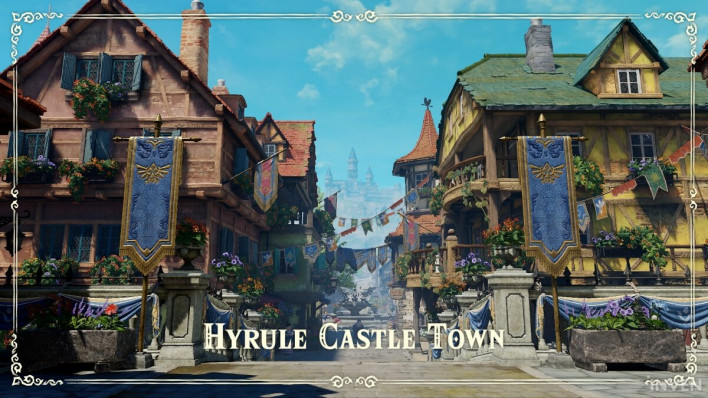
Hyrule Castle Market is where the shift to a fully free-camera perspective is felt most acutely. In the original, Market Town was partitioned into separate sub-areas, each depicted with fixed camera angles. It felt less like a cohesive town and more like a collection of fragmented hubs—compact yet intricate.
By contrast, the remake presents the town as a single continuous space, allowing seamless exploration. Without loading screen transitions, players can wander freely and appreciate the richly detailed environment. In particular, the textured stone walls and fine architectural details make it hard to believe this is the same location.
Yet alongside these enhancements, familiar characters and details return to invoke warm nostalgia. Original NPCs—such as the brothers giving hints about secret grottos near Hyrule Castle, the dancing couple, and the woman walking her dog—greet Link in their exact original spots.
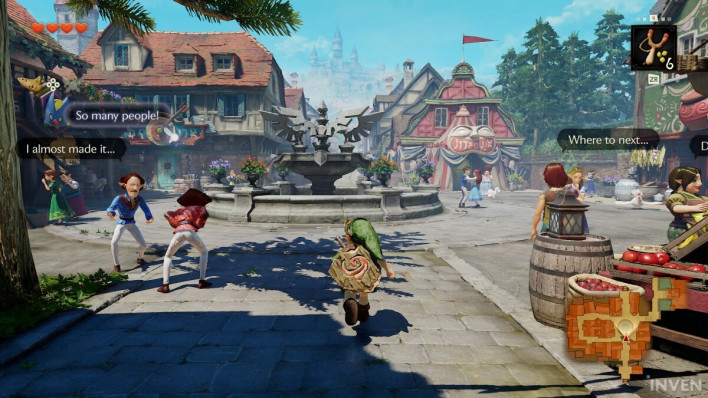
Shops stand in their original locations as well. The Shooting Gallery mini-game using the Fairy Slingshot cost 20 Rupees per attempt in the original, whereas in this preview build it cost 10 Rupees. While that allows for more attempts, a lower price doesn't change the fact that failing still wastes money, so I didn't throw cash away.
Past Walkthroughs, Present Link Temples Rooted in the Original, Layered with Fresh Variations
Following the brief exploration of Hyrule Castle, the remaining hour of the demo focused on clearing the Forest Temple as Adult Link.
As decade-old memories resurfaced, I was able to navigate the Forest Temple to completion. Though my memory wasn't flawless and caused a bit of wandering in certain sections, looking back, the original walkthrough strategies held true. Just like Inside the Great Deku Tree, the temple's overarching puzzle structure remains faithful to the original experience.
Of course, it isn't a carbon copy. Differences in character proportions and environmental scale create structural variations, while subtle mechanical tweaks refresh the overall feel. Furthermore, while the fundamental puzzle layouts remain intact, changes to object interactions and puzzle approaches add a novel layer of challenge.
The most impactful addition is undeniably jumping. Controlling Adult Link—who can use the Hookshot to zip toward targets—in tandem with manual jumping opens up traversal routes previously impossible. While climbing over ledges doesn't radically break the linear progression inherent to Ocarina of Time, it allows players to manipulate objects and navigate terrain in ways previously unavailable, tackling the dungeon from fresh angles.
Lighting is another major factor. Unlike the N64 era's limitations with specular lighting and reflections, this remake showcases lighting techniques fit for modern platforms. A realistic approach to light and shadow—keeping dark areas genuinely dark and bright areas lit—heightens the temple's eerie atmosphere and exploration appeal. Shadows obscure ambushing enemies, drawing players into the screen, while hidden clues masked by darkness encourage deeper environmental investigation.
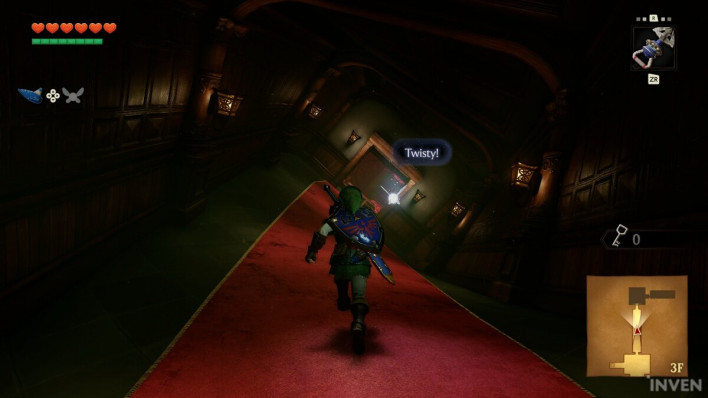
The twisted hallway sequence, which was striking even back in the day, takes on an even more mystical atmosphere thanks to enhanced detail and lighting. This attention to detail extends to the encounter with the Poe Sisters who steal the temple's flames. Landing a clean hit after discerning a fleeing Poe's pattern ignites flame animations that transcend hitting a block of polygons, making players feel as though they are pursuing real foes. When only the final Poe remains, new animations depicting her rage upon realizing her sisters have fallen convey raw emotion without a single line of dialogue.
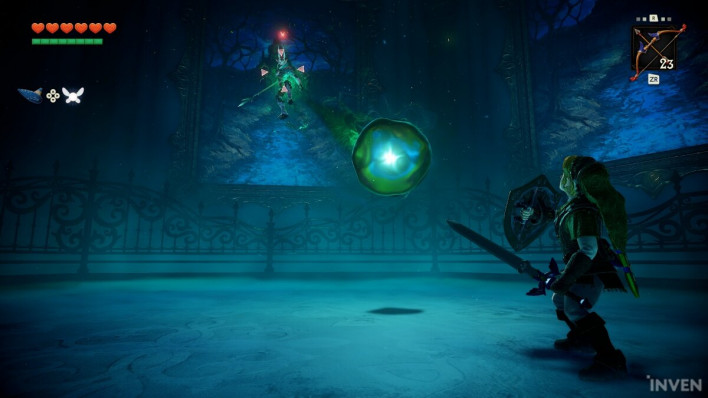
The preview concluded with a boss battle against Phantom Ganon. The confrontation setup and his pattern of riding between paintings persist from the original, along with the classic mechanics required to defeat him.
A Title Marking the True Beginning of the Nintendo Switch 2 Leaving the Rest to Be Experienced Firsthand
Specific combat mechanics and detailed dungeon walkthrough steps from the demo are best left unspooled, preserving the thrill for players upon full release. Veterans who played on Nintendo 64 or Nintendo 3DS will appreciate discovering how much has evolved, while first-time players can experience firsthand why 'The Legend of Zelda: Ocarina of Time', alongside 'Super Mario 64', is credited with laying the groundwork for modern action-adventure gaming.
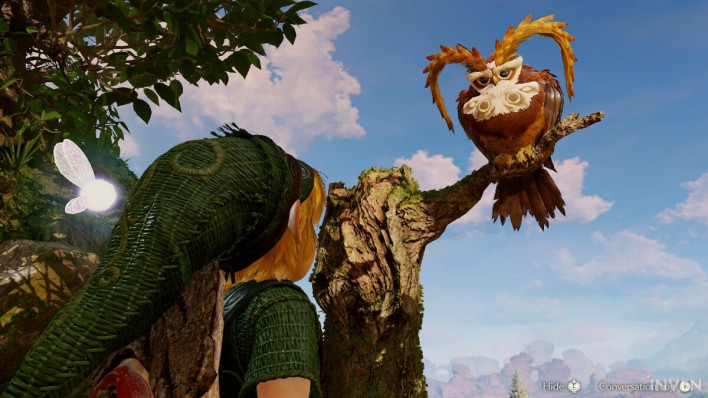
Generally, preview events for highly anticipated titles can be a mixed bag; sampling a fraction of the excitement beforehand risks diluting the eventual impact when playing the full game.
Yet this brief two-hour preview only served to heighten anticipation for the full launch. Suffice it to say that I immediately booted up the original Nintendo 64 version of The Legend of Zelda: Ocarina of Time via Nintendo Classics as soon as I returned.
In less than a year and a half since the Nintendo Switch 2 launched, Nintendo has rapidly built out its exclusive lineup. This remake of 'The Legend of Zelda: Ocarina of Time' stands poised to be a defining release marking the console's true prime. It delivers impressive quality on multiple fronts, making its November 5 release date something to look forward to all the more.