PC digital storefront Steam has rewritten its all-time record, surpassing 43.5 million concurrent users.
According to Steam tracking site SteamDB, peak concurrent users reached 43,505,724 on the 11th. This marks an increase of approximately 820,000 players over the previous record of 42,686,616 set in March, setting a new peak in roughly seven months.
This upward trend has continued for several years. Steam passed 20 million concurrent users in March 2020 during the spread of COVID-19, then broke through 30 million in October 2022 and 40 million in March of last year. On the 11th, the number of users actively playing a game also reached approximately 14.46 million. The in-game player base has more than doubled since March 2020, when active players stood at roughly 6.2 million alongside the 20 million concurrent milestone.
The key to understanding Steam's expansion lies in the games hosted on the platform. Competitive titles played for years, newly launched hits, and playtests gathering players ahead of official releases all coexist in the same ecosystem. It is a structure where players who log in to play one game naturally discover their next one.
New Hits Stack Up Beside Evergreen Titles
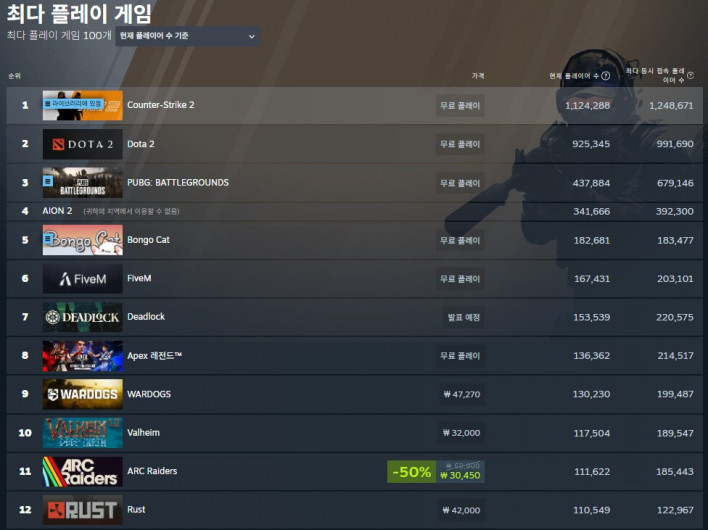
According to Valve's statistics on the 12th, 'Counter-Strike 2' ranked first with a peak daily concurrent player count of approximately 1.4 million. 'Dota 2' followed with around 1.03 million, and 'PUBG: BATTLEGROUNDS' recorded roughly 710,000. Competitive titles that have been in service for years continue to hold top spots on Steam.
Ongoing matches with friends, the satisfaction of skill progression, and fresh content updates keep players returning long after launch. Steam has built up a deep catalog of games that sustain this long-term engagement—titles that give users a reason to launch the platform even on days when they have no plans to buy a new release.
Alongside these mainstays, new blockbuster hits emerge. 'WARDOGS', which entered Early Access last month, recorded a peak concurrent player count of approximately 430,000 on September 13. Valve's in-development title 'Deadlock' also broke its own record with roughly 260,000 players on the 9th. 'Deadlock' assembled an audience of this scale while still in a playtest phase that requires an invite from an existing participant.
Individual games go through distinct popularity cycles. Initial release hype may fade, while new updates can bring players streaming back. On Steam, titles with vastly different popularity cycles operate side by side. The strength of the platform lies in how established hits maintain steady activity even while new releases take center stage.
From One Game to the Next... Steam's Virtuous Cycle
The pipeline through which blockbuster titles bring in players who then move on to other games is evident in data published by Valve. In its 2024 year-in-review, Valve examined 20 major releases from 2023. Across those titles, 1.7 million accounts made their first purchase or registered their first game key on Steam.
Tracking this cohort from January 2024 through early March 2025, Valve found that these players spent over 141 million hours playing games other than the initial title they purchased or registered. Their first purchase or key redemption served as an entry point to exploring other titles on the same platform.
This case illustrates the lingering impact hit games have on the platform. When a new game attracts users, titles from other developers gain an opportunity to reach those same players. For users who purchased or registered their first game, Steam's existing library becomes their next choice. New and legacy titles take turns giving players reason to return to Steam at different moments.
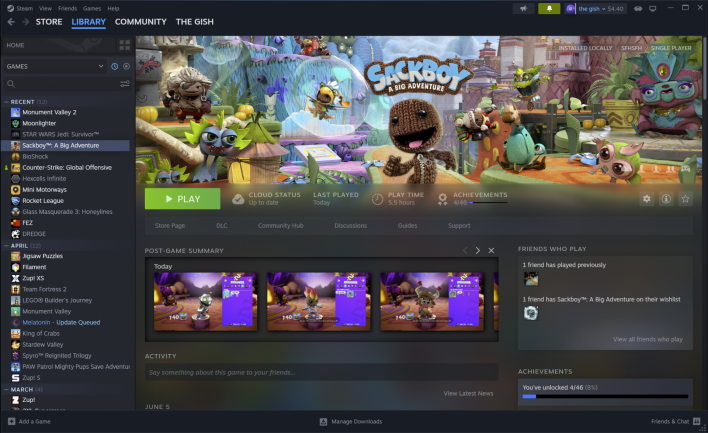
Even when players switch games, their purchased titles and friend lists remain tied to the same account. Within game hubs, they can catch up on update news and engage with other players. For cloud-supported games, save data seamlessly carries over even when switching PCs. These accumulated games, social connections, and familiar user experiences give players lasting reasons to return to Steam.
Steam leverages this user activity to help players discover their next game. In its 2025 year-in-review, Valve explained that the Discovery Queue recommends games based on past play history, wishlisted titles, and what friends are playing. Games players already enjoy and titles they have expressed interest in become the raw material for future recommendations.
This structure carries immense significance for developers as well. Launching a new game on Steam means presenting it directly to an audience already actively playing PC games. Built-in pathways guide players toward new titles based on their favorite genres and their friends' activities.
From Demos to Early Access... A Stage for New Games
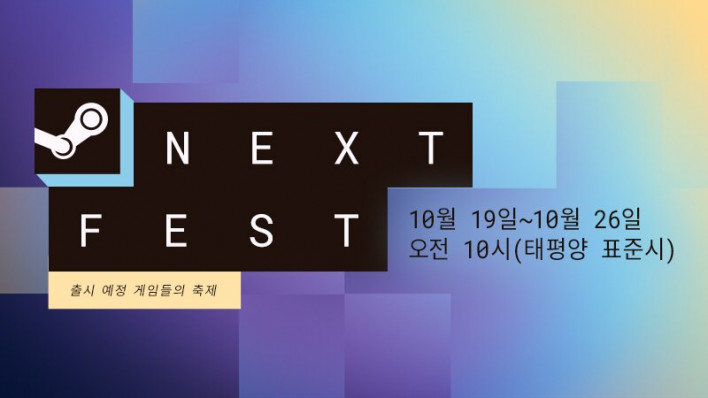
The connection between new games and players begins well before official launch. On Steam, trying out demos, wishlisting favorite titles, and participating in playtests are all seamlessly connected to the main store page. Developers can connect with players who have tested the game and those eagerly waiting for it long before release.
Steam Playtest allows developers to accept sign-ups directly from the main store page while controlling participant numbers. Developers can observe how actual players engage with the game, while participants can wishlist or follow the full release from that same page. Interest generated during testing feeds directly into anticipation for the official launch.
Through Early Access, games in active development are sold and played simultaneously. Players enjoy the game in its current state and leave feedback, which developers use to guide ongoing work. As seen with 'WARDOGS', the journey to full release becomes an opportunity to build a direct connection with players.
Steam Next Fest expands these touchpoints by gathering unreleased titles in one place. Users can handpick and play multiple demos to discover their next game, giving developers a chance to translate promotional trailer hype into hands-on gameplay experience.
Mechanisms exist to sustain interest as well. When a wishlisted game launches, Steam sends email and mobile notifications to alert users. Developers can also notify wishlisters when a demo is released. This eliminates the need for players to remember titles and track release dates manually. Discovery, hands-on play, anticipation, and purchase flow seamlessly within a single storefront.
Steam's Dominance Set to Continue for the Foreseeable Future
The Epic Games Store has pursued Steam by offering free game giveaways and developer-friendly revenue splits. However, no clear challenger has emerged to shake Steam's dominance in the PC gaming market. Giving players a reason to visit a rival store once is fundamentally different from convincing them to switch their primary platform.
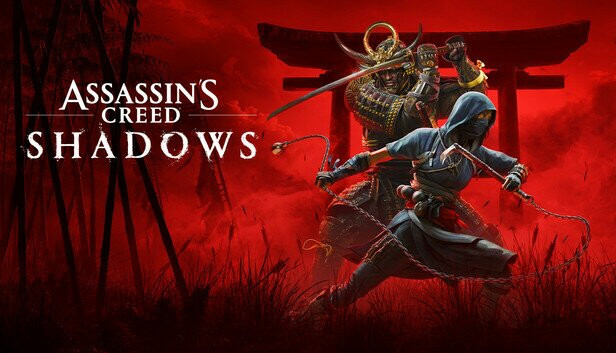
The weight of Steam is also clear in the decisions of major publishers. Ubisoft, which maintains its own proprietary store, returned to day-one Steam releases starting with 'Assassin's Creed Shadows' last year. Even for companies with independent distribution channels, Steam's player base remains an indispensable audience when debuting new titles.
The hurdle competitors must overcome is the foundation players have built over time: accumulated libraries, friend networks, and familiar user habits. Games purchased over years remain in their libraries, and finding people to play with—or discovering their next game—happens seamlessly within Steam. Sales or a handful of new releases alone are rarely enough to reshape these deeply ingrained habits overnight.
Furthermore, Steam continues to add new blockbusters on top of its existing user base. Even as rivals attempt to gather titles and players, the target they must catch continues to expand. The new record of 43.5 million concurrent users demonstrates that this momentum is actively ongoing. Considering the current structure where accumulated titles, an established user base, and fresh hit releases reinforce one another, Steam's dominance is poised to continue for the foreseeable future.