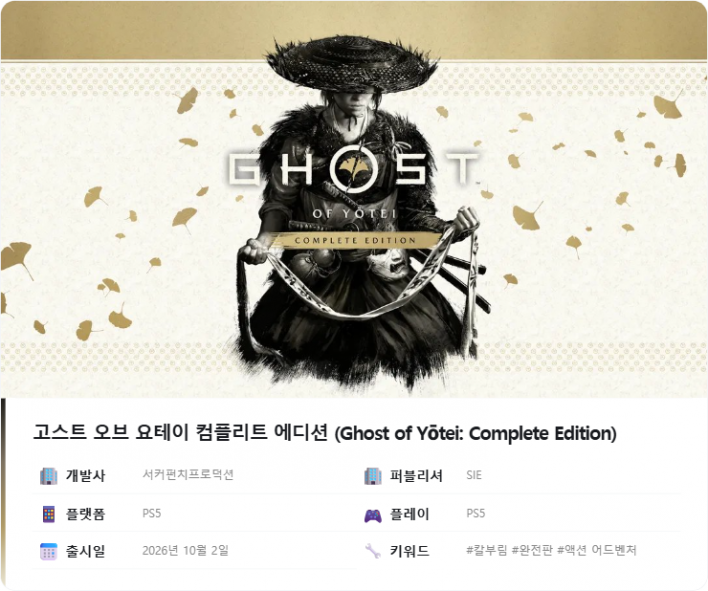
Ghost of Yōtei has returned with the Complete Edition, bringing the Echoes of Sekigahara story expansion and the new Most Wanted roguelike mode.
The Complete Edition introduces a new region: the Ashoro Foothills. There, Atsu reunites with Nagato, a former ally from her time at Sekigahara, while taking on the Vipers—a gang led by The Snake, one of the Yōtei Six and the first target Atsu eliminated.
While the story expansion illuminates Atsu's past and builds a deeper connection to the main campaign, Most Wanted operates as a distinct standalone mode, much like Legends. It serves as endgame content tailored for players who have completed both the base game and the expansion. By featuring two contrasting styles of content, the release aims to complement their respective weaknesses while heightening overall immersion.
With the original game launching on October 2, 2025, Ghost of Yōtei Complete Edition (hereafter Yōtei Complete Edition) arrives as a definitive package exactly one year later. Can Yōtei Complete Edition entice players back to Hokkaido? One thing is certain: Yōtei remains Yōtei. While evaluations may vary depending on personal expectations, the distinct fun unique to Yōtei is indisputable.
Echoes of Sekigahara Not Sekigahara Itself, but an Echo Returning From It
Expansions typically bring two major categories of changes: narrative and gameplay mechanics. Echoes of Sekigahara is no exception. On the mechanics side, three major new elements have been introduced.
First is a new class of weaponry: Heavy Weapons. However, they differ from standard choices like dual blades or the kusarigama. They cannot be equipped permanently and feature limited uses, requiring you to scavenge them from fallen foes or the environment.
Described like this, it might sound similar to picking up and throwing enemy weapons in the base game. However, the mechanics function differently. As the set usage count implies, rather than being single-use throwables, Heavy Weapons can be wielded for multiple strikes in battle.
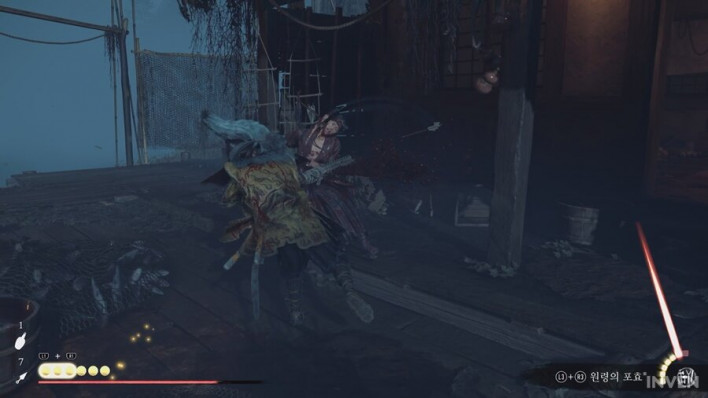
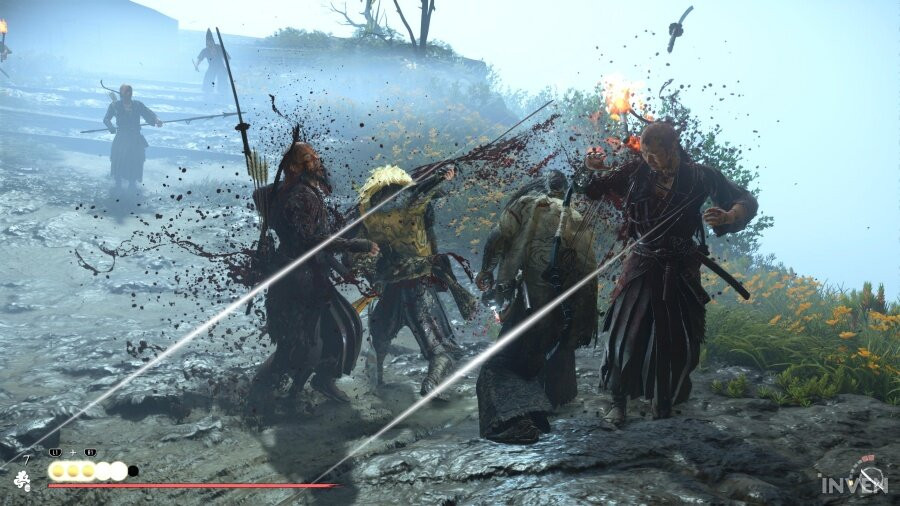
The true value of Heavy Weapons becomes clear when fighting newly added heavily armored enemies. Foes clad in heavy armor sustain virtually no damage from standard weapons. To inflict meaningful damage, you must strip away their armor first, which is where Heavy Weapons come in. A few strikes with a Heavy Weapon will break off their heavy armor instantly.
Since you must pick up nearby weapons, a Heavy Weapon may not always be readily available depending on the situation. However, lacking one doesn't leave you helpless, as explosive arrows can also be used to shatter heavy armor.

Heavy Weapons aren't restricted to stripping armor, either. Because enemies cannot block their attacks, standard foes can be eliminated in just one or two hits. Furthermore, unlocking associated skills increases their usage count and makes them even more devastating. While standard weapons emphasize refined swordplay built around stance advantages, Heavy Weapons break out of that framework to deliver raw, satisfying power with every swing.
The introduction of status effect mechanics is another eye-catching addition. In the base game, getting hit by an arrow merely dealt damage. In the story expansion, however, certain arrows lodge directly into your body. This is no mere visual flair; it acts as an active status effect. As long as an arrow remains embedded, you cannot use Spirit points to heal, forcing you to pull it out manually.
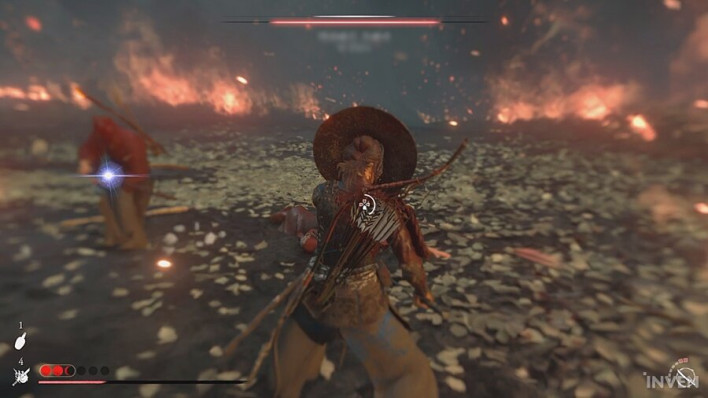
Naturally, enemies won't wait politely while you extract it. Since pulling out an arrow takes time, a single misstep in a chaotic melee or high-stakes boss fight can prove fatal. The meteor hammer works in a similar vein. Used by enemies or scavenged by the player, it binds targets and leaves them incapacitated. Failing to break free quickly leaves you completely defenseless.
While preserving existing combat mechanics, these status effects bring a distinct layer to Echoes of Sekigahara, re-injecting tension for players already accustomed to base-game combat. Nevertheless, a minor sense of disappointment remains: as the underlying combat loop is largely unchanged, the perceived scale of innovation feels somewhat limited.
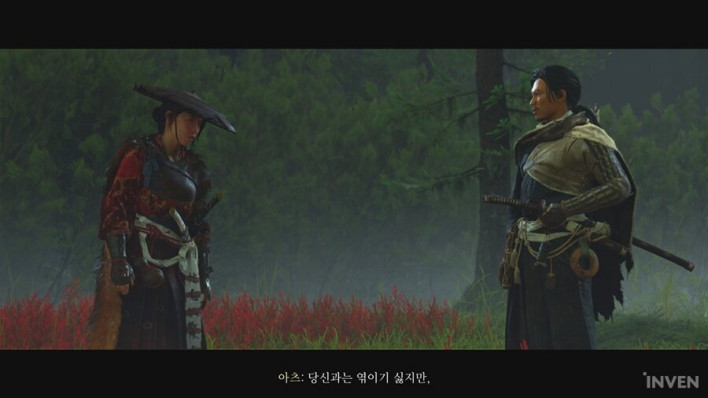
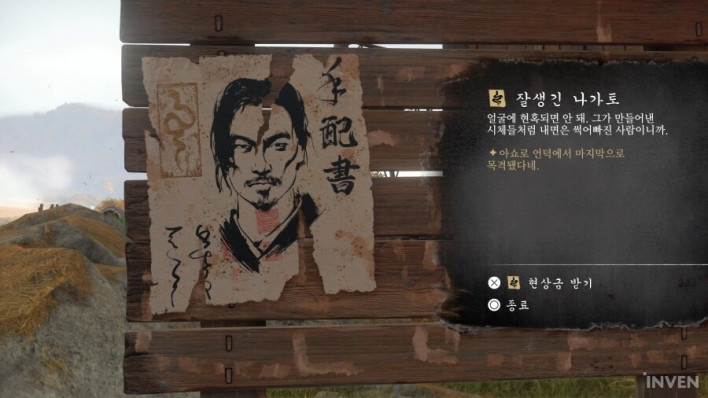
Echoes of Sekigahara takes place not after Atsu finishes her revenge, but during her ongoing pursuit of the Yōtei Six. Traveling to the Ashoro Foothills, Atsu encounters Nagato—a living echo of her past. Together, they embark on a journey to liberate the Ashoro Foothills from the Vipers.
Up to this point, the plot structure mirrors how other regions unfold in the main game. The key distinction lies in Nagato and the keyword "Sekigahara." Reconnecting with Nagato triggers Atsu to revisit her memories. Through these flashbacks, players get a closer look at Atsu's humanity—not as a vengeance-obsessed Ghost, but as the conflicted individual she was before taking on that persona.
Specific story details will be kept to a minimum to avoid spoilers. Instead, let's consider the thematic meaning behind the title Echoes of Sekigahara. An echo is the reflection of a sound. The core element here is "reflection"—for an echo to exist, there must be an original sound to bounce back.
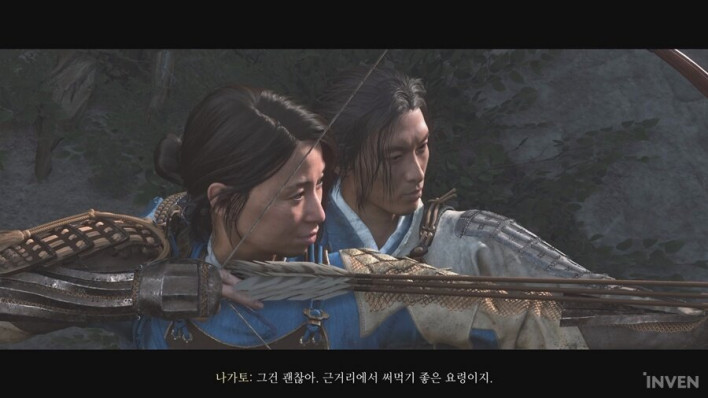
Returning to our earlier discussion, Echoes of Sekigahara begins when Atsu receives word of Nagato, who fought alongside her at Sekigahara. Thus, Nagato is more than just a new ally introduced in a new region. He returns carrying the weight and aftermath of what Atsu experienced at Sekigahara—making him, in essence, an "echo" returned from that battle.
Of course, "echo" does not refer solely to Nagato. The concept is also used in the sense of self-reflection—an inner voice, if you will. Just as a sound projected outward bounces back to your ears, one's past actions and life choices can create deep inner reverberations, leaving behind realization and emotional resonance.
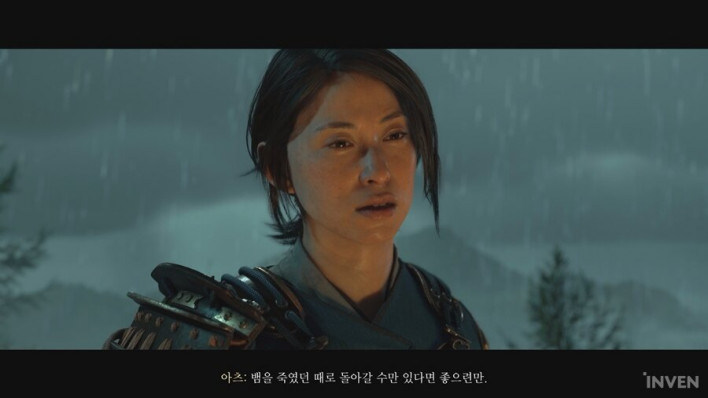
This applies equally to Atsu and Nagato. By encountering Nagato—the echo returning from Sekigahara—both he and Atsu take time to reflect on their shared past. This is precisely why the expansion's subtitle focuses on "Echoes" rather than the Ashoro Foothills or Sekigahara itself.

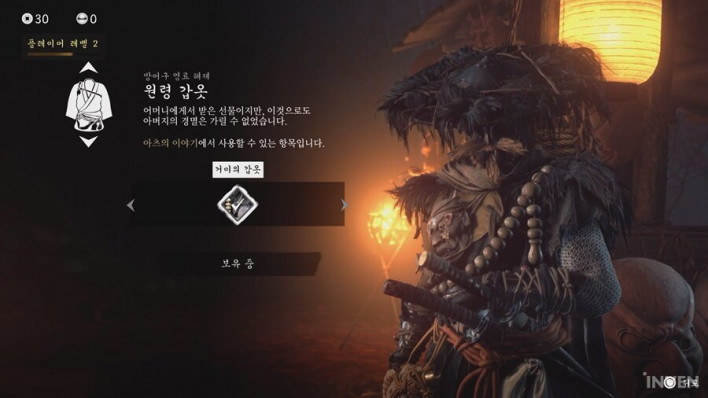
Meanwhile, the visual and narrative presentation has reached new heights. As their name implies, the Vipers who occupy the Ashoro Foothills go beyond terrorizing civilians. They are portrayed as an unnatural force that rejects ecological harmony, recklessly poaching and skinning local wildlife.
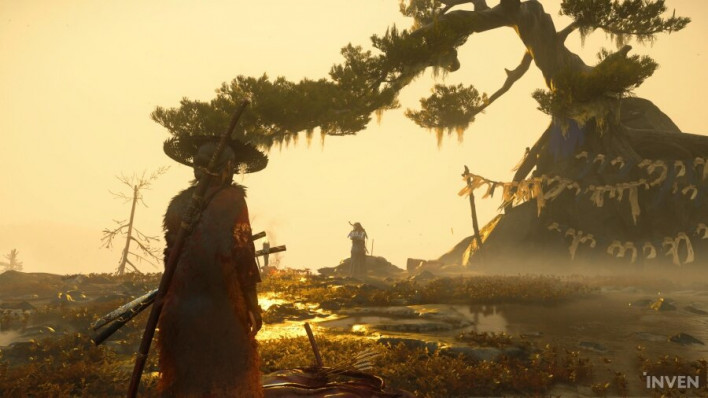
Naturally, while they run amok, the Ashoro Foothills are shrouded in a thick fog that creates a suffocating atmosphere. It isn't just dense fog; the sky looks murky and washed-out, making the region itself feel diseased.
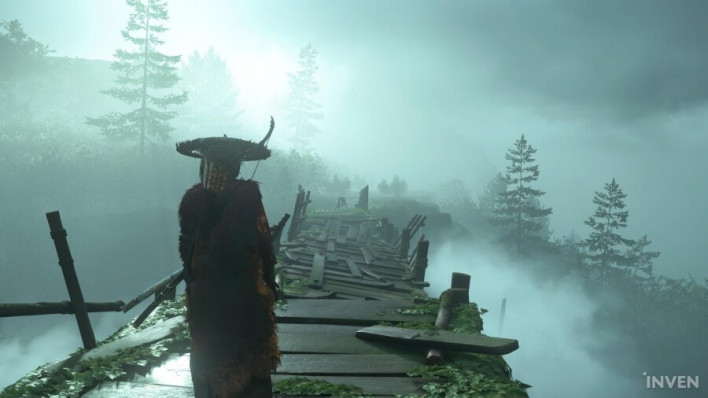
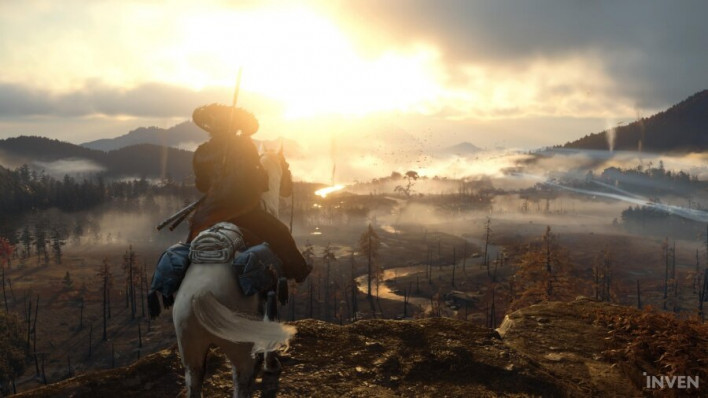
Yet this atmosphere transforms as you dismantle the Vipers one by one and reclaim the Ashoro Foothills. As the fog gradually clears, the environment shifts into a vibrant landscape, as if nature is healing itself. It is a visual mise-en-scène that effectively reinforces Atsu's journey in liberating the Ashoro Foothills from the Vipers.
Most Wanted A Roguelike Mode Offering Fresh Excitement
Beyond the story expansion, Yōtei Complete Edition adds a new gameplay mode: Most Wanted. Unlike Legends, which was released for free as a co-op multiplayer mode, Most Wanted sets itself apart as a purely single-player experience.

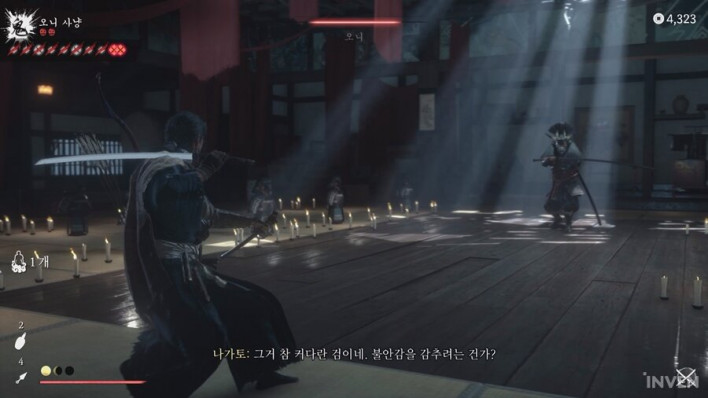
In short, Most Wanted is a roguelike combat survival mode grounded in the mechanics of the Ghost series. Players select one of four playable hunters—Atsu, Oyuki, Nagato, or Jin Sakai—to take into battle. Each hunter brings unique characteristics, from visual appearance to dedicated skills and default weapons.
Of course, not all hunters are unlocked right away. Only Atsu is accessible initially, with other hunters unlocking sequentially as you spend Mon, the mode's permanent currency. Mon is earned by defeating enemies or clearing waves, and persists regardless of whether a run succeeds or fails. Using accumulated Mon, players can learn skills, upgrade weapons, and purchase charms to customize their characters.
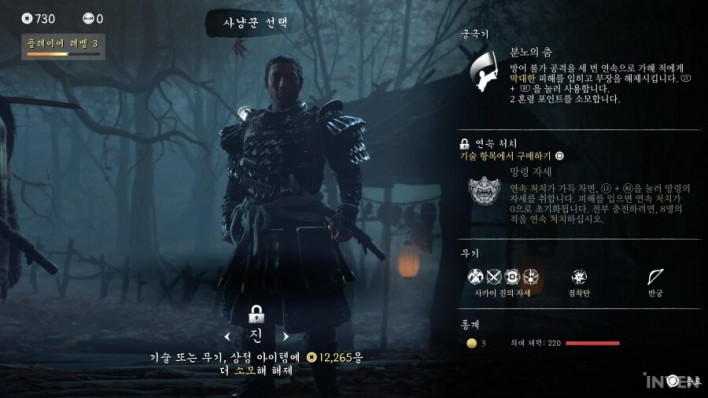
Each hunter offers a distinct playstyle. To be clear, the fundamental combat mechanics remain identical across all characters; rather, their default weapons and abilities grant them different areas of specialization. For instance, Atsu is a versatile all-rounder focused on melee combat, Oyuki is an assassin-style fighter wielding a kusarigama, and Nagato is a ranged specialist proficient with the bow.
Jin Sakai, who generated considerable buzz, retains the stance-switching combat style from Ghost of Tsushima. While other characters face restrictions on their starting arsenal, Jin Sakai stands out as a true all-rounder capable of countering any enemy type from the start. As the final unlockable character, his performance feels noticeably superior.
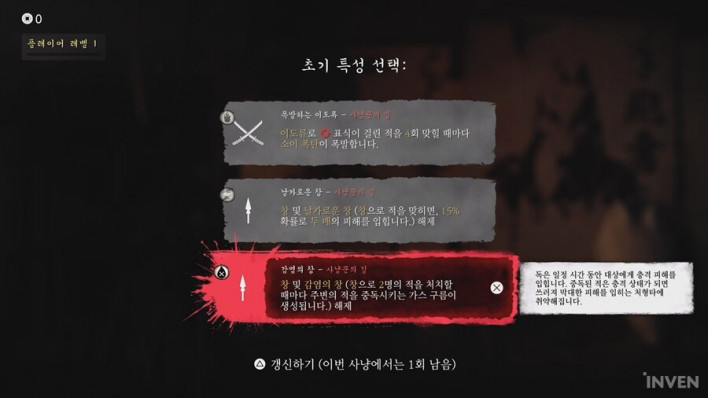
True to its roguelike nature, initial runs feel tough due to minimal skill upgrades, unenhanced equipment, and few equipped charms. Furthermore, characters other than Jin Sakai start with only two default weapons, placing them at an matchup disadvantage against certain enemy types. Wielding weapons outside their default kit requires equipping specific charms or picking perks during runs that unlock those weapons.
As a result, selecting perks offered between cleared waves is crucial. Having just one or two perks early on doesn't feel like much, but once three or four dual-blade enhancement perks stack up, you can brute-force your way past weapon matchup disadvantages through pure perk synergy.
Importantly, perks that unlock gear and perks that upgrade gear are distinct. For example, if an incendiary bomb enhancement perk appears when you haven't unlocked incendiary bombs yet, that perk choice is effectively wasted.
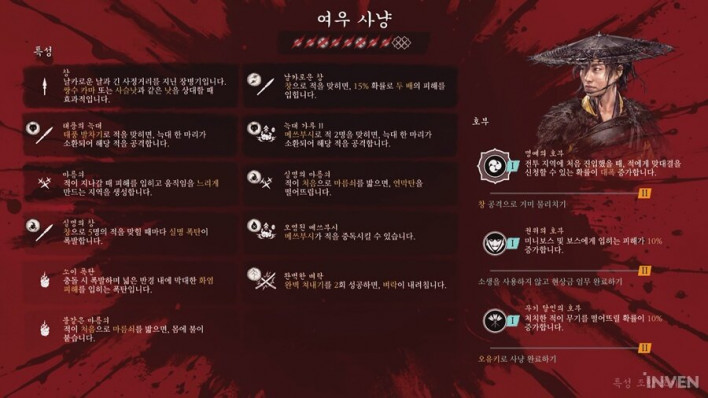

Rather than simply increasing health or attack power, perks function by adding special mechanics. For instance, hitting a marked enemy four times might detonate a flash bomb, or killing two enemies might trigger an incendiary bomb. Other perks trigger on heavy charged attacks or call down lightning nearby during jump attacks. With proper composition, you can create a bomb-heavy build that triggers back-to-back flash and incendiary explosions during boss fights.
Defeating one of the Yōtei Six as the final boss of a wave returns you to the lobby. The gameplay loop thereafter follows standard roguelike conventions: you spend permanent currency on persistent upgrades and challenge increasingly difficult encounters. It faithfully adheres to the core roguelike structure of gradually building character power through repeated attempts.
While Most Wanted delivers a distinct brand of single-player enjoyment compared to the main game, it also leaves notable disappointments—chief among them being a lack of depth. Even setting aside that Legends was offered for free, it boasted an impressive volume of content, complete with its own storyline and co-op gameplay that rivaled the base game in some respects. With intricate boss mechanics added to the mix, it left players asking, "They gave this away for free?"
In contrast, Most Wanted feels decidedly casual. This isn't merely because it is single-player. While Legends featured a dedicated storyline, Most Wanted has no such element. You simply select a target boss before starting, complete the session, and return to the lobby—that is virtually all there is to it.
Does it compensate by focusing intensely on combat depth? That, too, is questionable. In a roguelike, players expect that assembling a completed build through perk selection will unleash explosive potential, letting them steamroll enemies. In Most Wanted, however, crafting such varied or game-breaking builds proved difficult. For instance, with a ranged specialist like Nagato, one might hope to build an infinite-arrow or one-shot sniper setup, but achieving builds that dramatic is practically impossible.
Furthermore, one cannot overlook that this mode is bundled inside paid DLC via the Complete Edition. Even if Echoes of Sekigahara is the primary content and Most Wanted is secondary, the contrast with Legends—which delivered immense content despite being free—makes its shortcomings hard to ignore. It leaves one wishing Sucker Punch had at least woven in a dedicated narrative, much like Legends did.
Complete Edition A Slightly Flawed, Yet Still Endlessly Fun Definitive Package
In summary, Ghost of Yōtei Complete Edition takes the base game half a step further. Packed with both the Echoes of Sekigahara story expansion and the Most Wanted roguelike mode, it is a thoroughly solid release. When taking Legends into account as well—even though it exists separately from the Complete Edition—the content package could hardly be more complete.
Although it is disappointing that Most Wanted—what could have been a standout ace in the hole—feels more casual than expected, Yōtei is still Yōtei. The story expansion solidifies Atsu's character by building a strong narrative bridge to the main campaign, and Most Wanted, despite its limitations, still offers clear endgame replayability for players seeking a single-player mode.
Above all, players should note that at present, there is no indication of Ghost of Yōtei coming to PC. Up until now, players might have waited with the mindset of buying it when it eventually released on PC, but that prospect has vanished. So if you've been waiting until now, don't miss out on Yōtei Complete Edition. The tale of Atsu the Ghost—its beginning and end—is all contained right here.