※ This article is coverage of '35 Years of Speed: The Sonic Art Exhibit' written by InvenGlobal reporter John Popko.
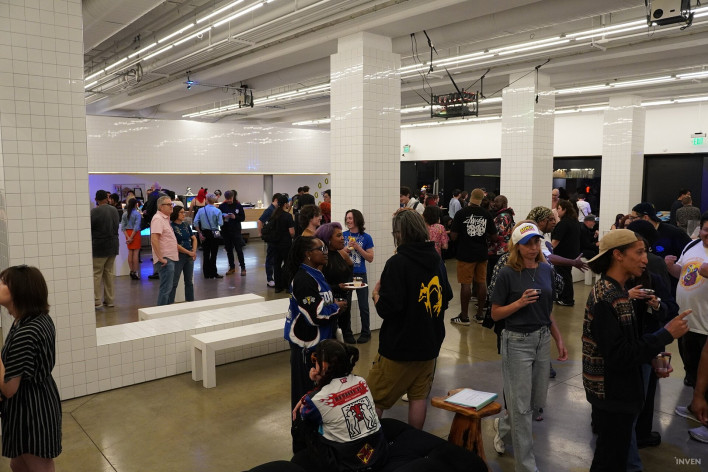
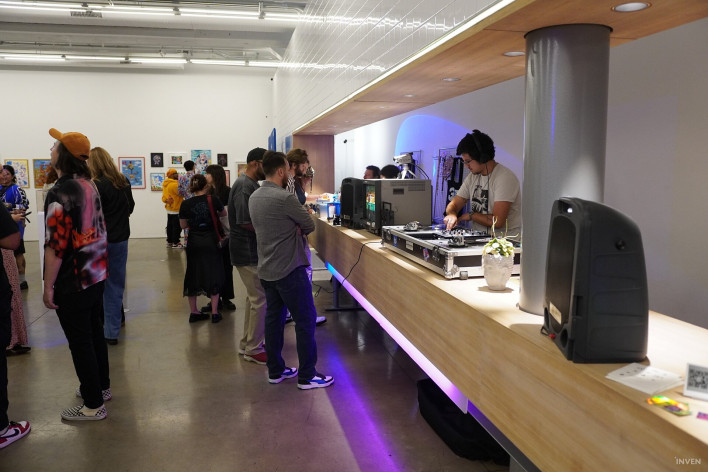
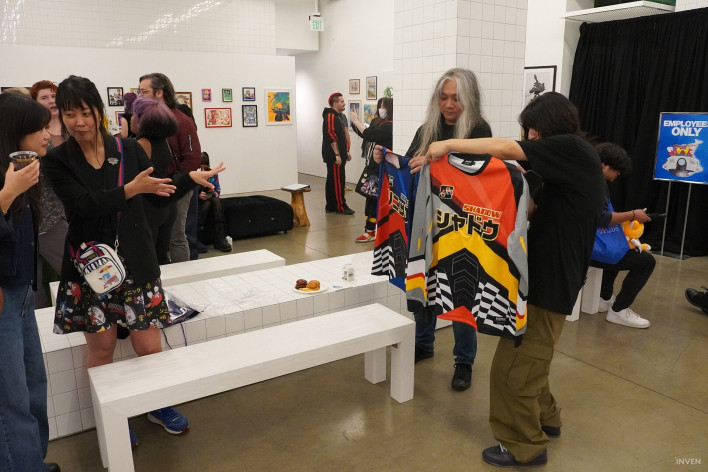
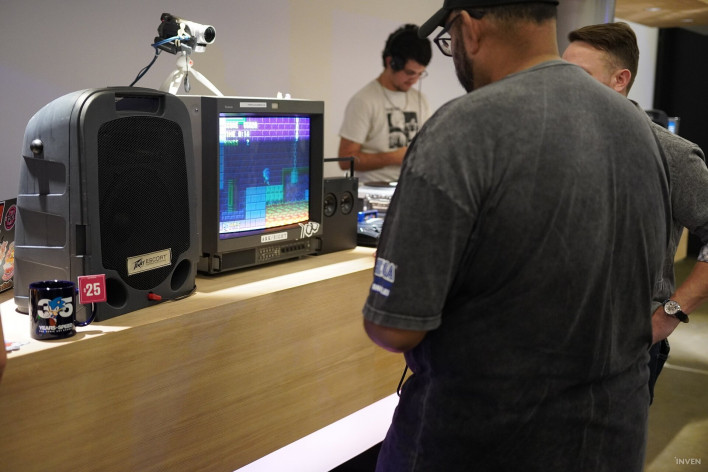
Last weekend inside ARK/8, a DJ wearing headphones worked a pair of turntables. At his side, a boxy CRT television was glowing. Visitors wearing racing jackets and Sonic caps drifted between white-tiled pillars with drinks in hand. The guest of honor was a blue hedgehog who hasn't slowed down once since debuting on the Mega Drive (released as the Genesis in North America) in 1991.
Created through a collaboration between Sega and art and collectibles studio iam8bit, "35 Years of Speed: The Sonic Art Exhibit" opened at 210 Gallery in Seattle during PAX West weekend in early September. It then moved to La Brea Avenue in Los Angeles for two days on September 26 and 27. The exhibition showcased commissioned works from dozens of artists alongside original material from Sega's archives.
Describing how the partnership began, Jon Gibson of iam8bit said, "It was a bit of a mutual love for each other." Sega was already planning a yearlong Sonic celebration, and iam8bit also had the 35th anniversary on its calendar. "The conversation just sprouted really naturally," Gibson said.
iam8bit has been staging art exhibitions since 2005, when the first show bearing its name opened. According to Gibson, over the two decades since, the company built "an immense list of artists who we love and admire." For the Sonic exhibition, the team selected its favorites from that list, going through rounds of concepts and works in progress with each artist before signing off on final pieces. The result was over 40 works across painting, sculpture, plushies, and photography.
The brief given to artists was short. "Nothing R-rated. Sonic is a family character," Gibson said. Beyond that, they were free to choose any character, zone, or era. Too much direction, Gibson explained, "starts to sanitize the intention." The only serious condition was fandom: "Don't be in this art show if you don't actually love Sonic."
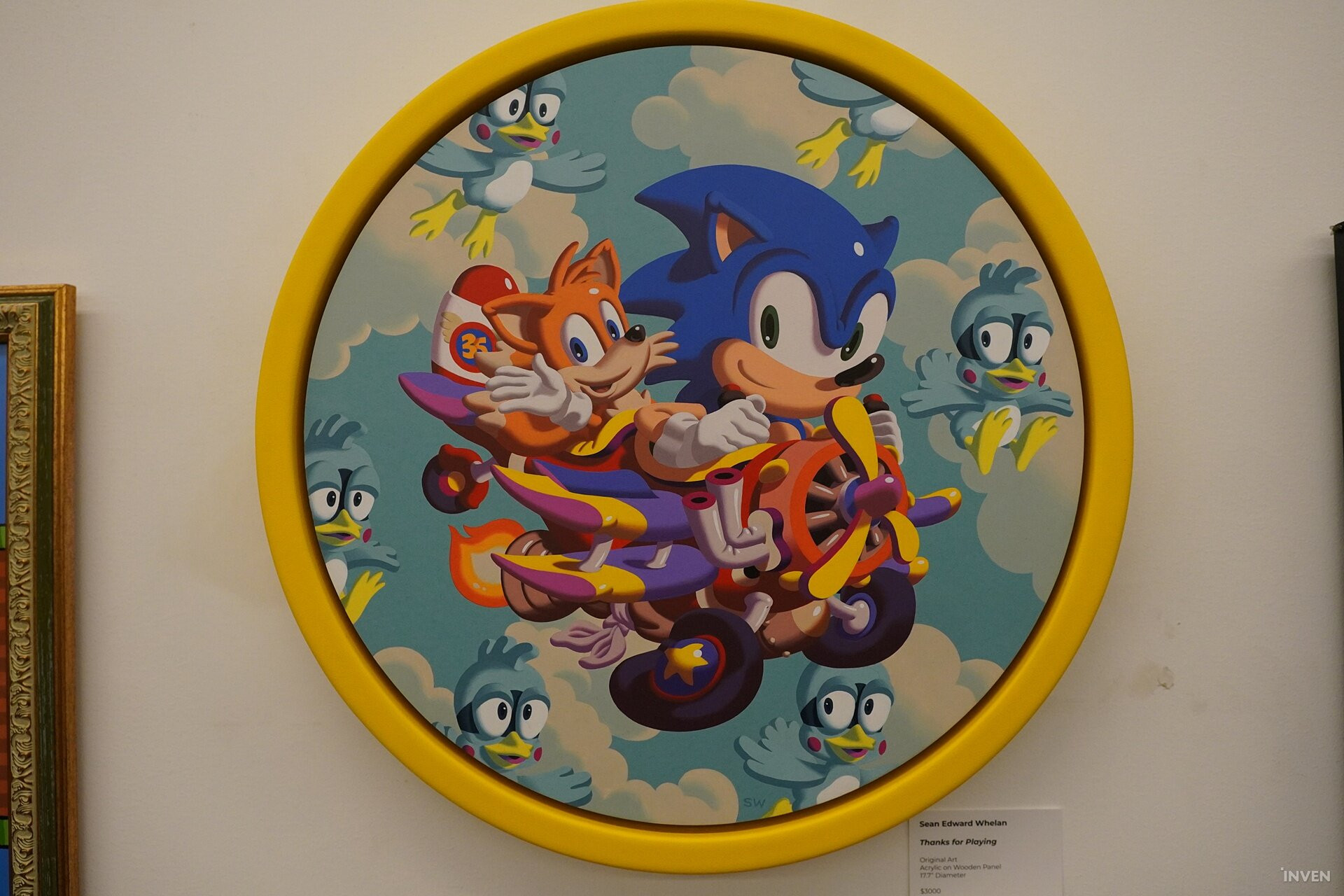
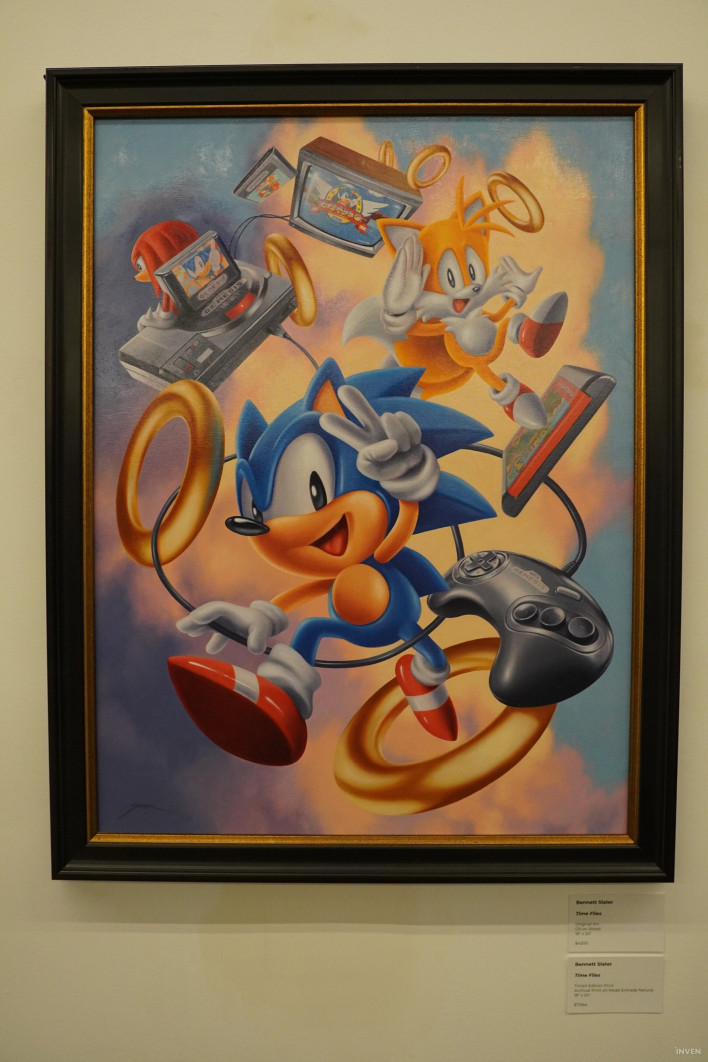
That freedom is evident on the walls. Sean Edward Whelan's "Thanks for Playing," acrylic on a round wooden panel, features Sonic and Tails riding in the Tornado biplane (with "35" painted on its tail) surrounded by a flock of wide-eyed Flickies. Nearby, Bennett Slater's oil painting "Time Flies" shows Sonic flashing a peace sign as a Genesis console, a six-button controller, cartridges, and a TV displaying the title screen tumble through orange clouds alongside Tails and Knuckles.
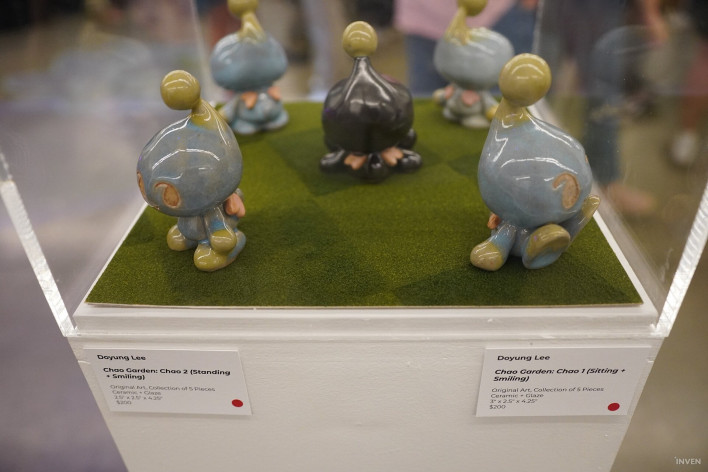
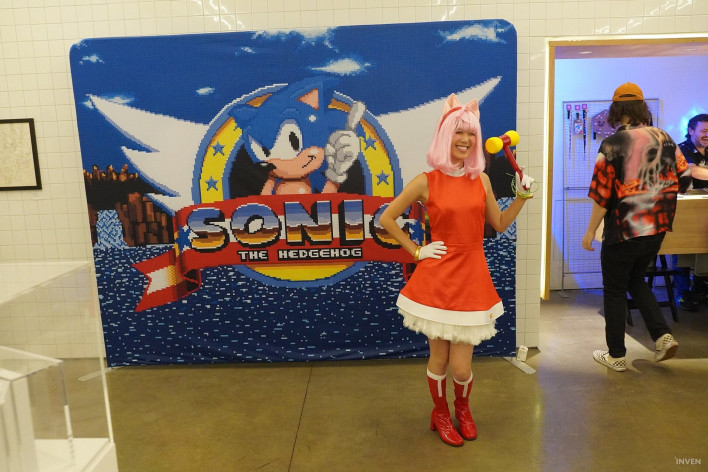
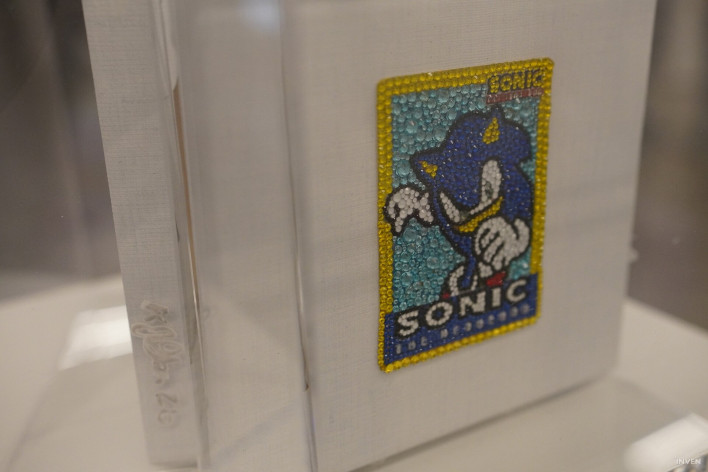
Some of the most impressive pieces were small. One ceramic work recreated a group of Chaos—the pet creatures fans have been raising since Sonic Adventure—as squat, teardrop-shaped figures made of pale clay flecked with colorful specks. Another display case held a Sonic portrait crafted entirely from rhinestones. A wall-sized pixel art recreation of the 1991 title screen naturally became a photo zone.
Materials Pulled from the Vault
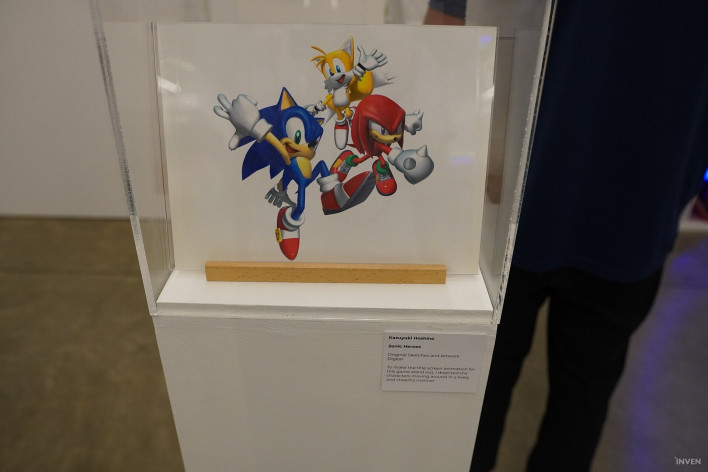
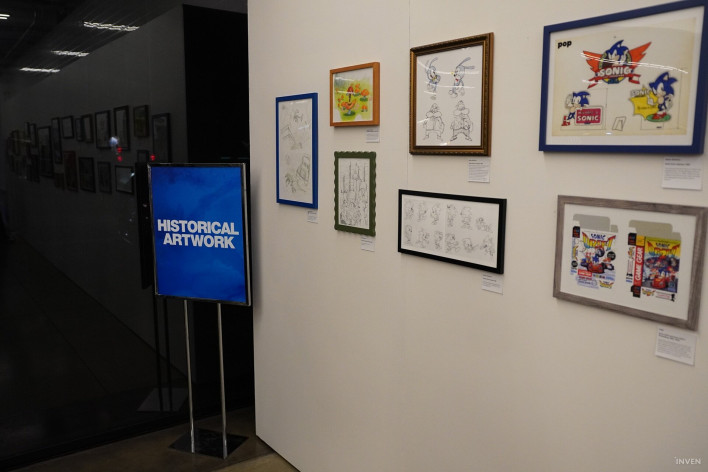
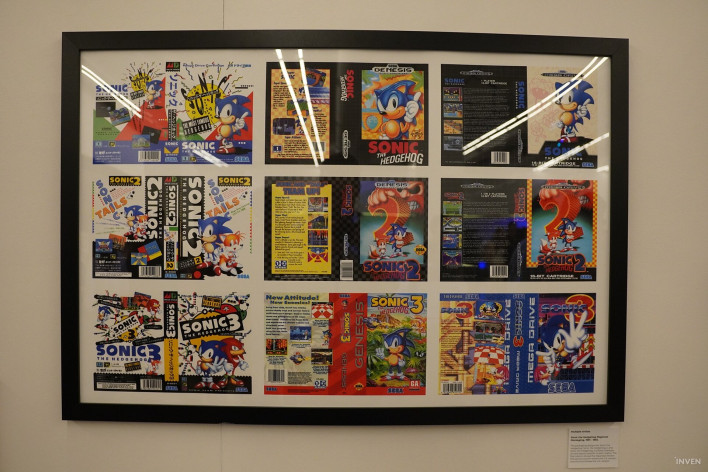
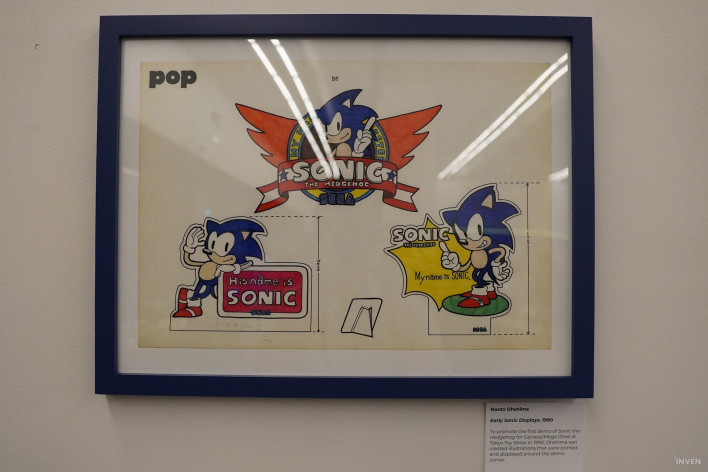
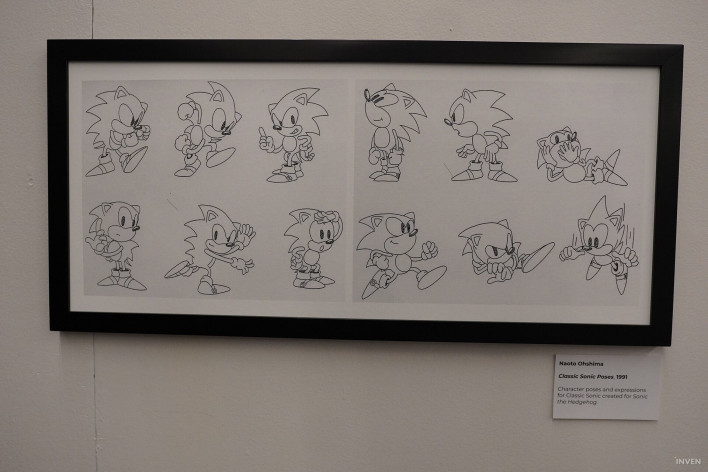
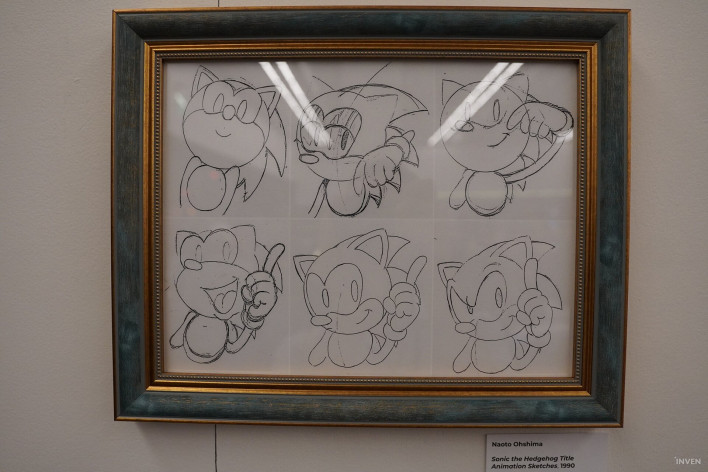
Hanging under a sign reading "Historical Artwork" was the material diehard fans came to see: rough drafts of title screens, early character designs, and box art for the Game Gear racing games Sonic Drift and Sonic Drift 2.
Access to materials like this is rarer than one might think. Gibson noted that through years of working with publishers, iam8bit learned that many publishers fail to maintain proper archives, and artwork from 20 to 30 years ago often goes missing. "Someone might have walked off with it, or there was a flood or a fire. You really never know," Gibson said. Sega's archives were an exception—they were so vast that the team could only show a small fraction.
The team did not hang the pieces chronologically. "It's more like fragments and touchpoints," Gibson said. Wall text was kept to a minimum so the artwork could speak for itself. Amanda White, co-owner and co-creative director of iam8bit, favored rough concept sketches that still bore annotations and marks of trial and error. "It feels like getting inside the creator's head," White said.
Designing the Layout
White mentioned that the hardest part of the job is balance—showing enough artwork to tell a story without letting visitors "get lost in a sea of art." The team builds scale models and does virtual walkthroughs for each gallery space in advance. "I don't want to show five extremely detailed pieces in a row," White said, so quieter works are placed between intense ones to give eyes a place to rest.
Focusing on physical, tangible art was an intentional choice. "In a digital age with Instagram, it's really hard to get a tactile sense of things," White said, emphasizing "something you can walk through and experience in person." According to iam8bit, that intention hit home. "The Seattle show was packed," White said, with visitors coming in all day, every day it was open.
Sonic Music Spanning Over 30 Years
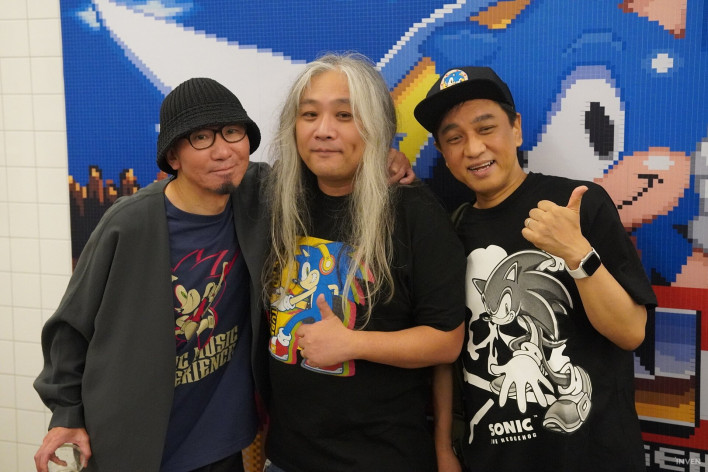
One notable guest at the event was Jun Senoue. As the sound director, composer, and guitarist for the Sonic franchise, he has been paired with Sonic's music for most of the series' history. He joined Sega in 1993 and did his first Sonic work the following year on Sonic the Hedgehog 3. This year, he composed the 35th anniversary theme song, "Speed Is My Life."
"It was a bit of a long journey," Senoue said. He credited tracks like "Escape from the City" with taking Sonic music onto concert stages outside Japan. "I was happy to perform lots of Sonic songs in front of fans all over the world," he said, adding, "I hope the world of Sonic music keeps expanding forever."
Two cities are a small footprint for a global character, and iam8bit knows it. Starting September 29 (US local time), artwork from the exhibition is on sale at iam8bit.com with worldwide shipping. Original pieces start at $40 and prints start at $15, sold as timed editions. Orders close on October 20, after which these editions will not be sold again. "It's an opportunity for everyone to take a piece of the exhibit home and put it in their living room," White said, before wrapping up the call with: "Happy birthday, Sonic."