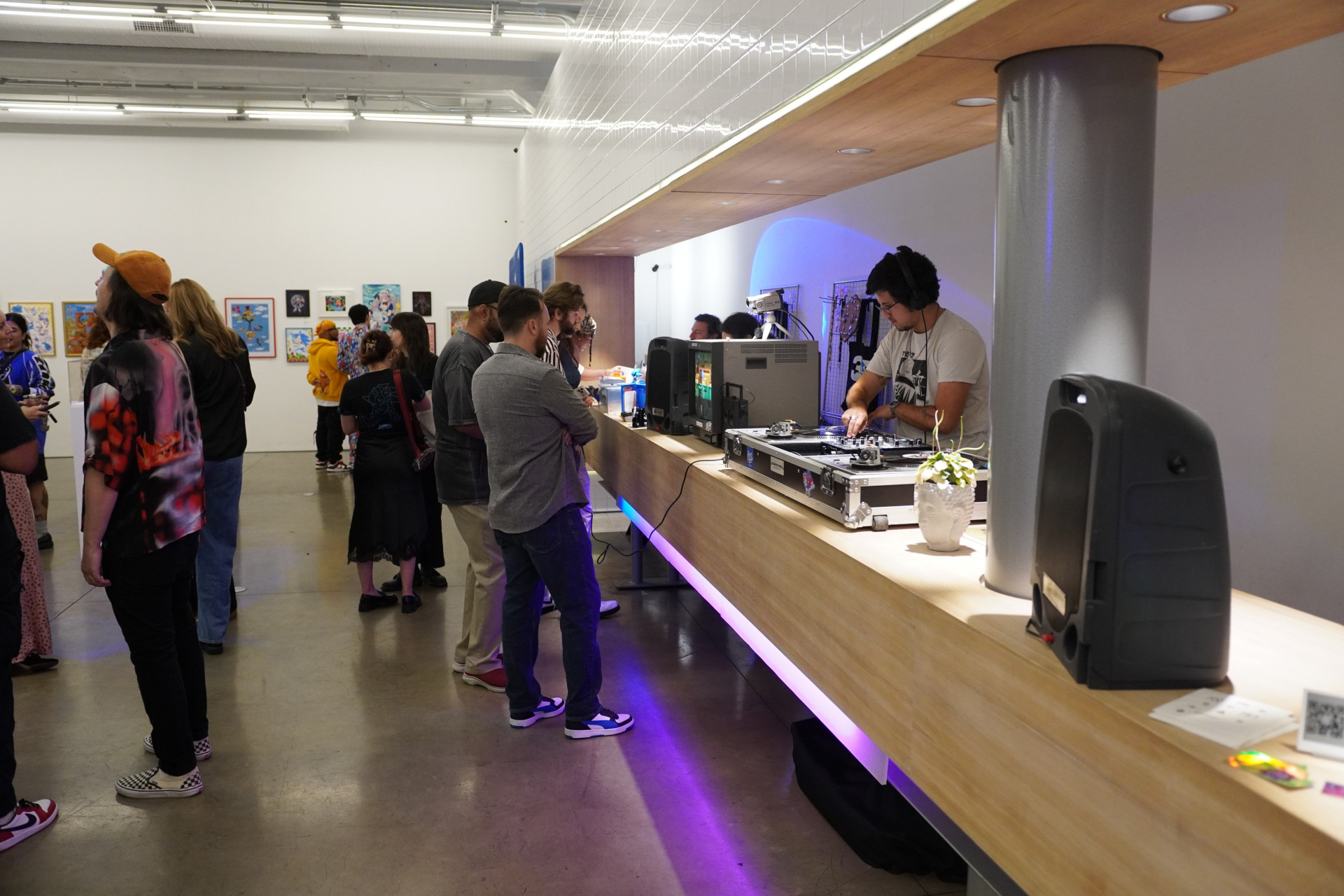
A DJ worked a pair of turntables at the back of ARK/8 last weekend, headphones on, a boxy CRT television glowing at his elbow. Around him, visitors in racing jackets and Sonic caps drifted between white-tiled pillars with drinks in hand. The guest of honor was a blue hedgehog who debuted on the Sega Genesis in 1991 and hasn't slowed down since.
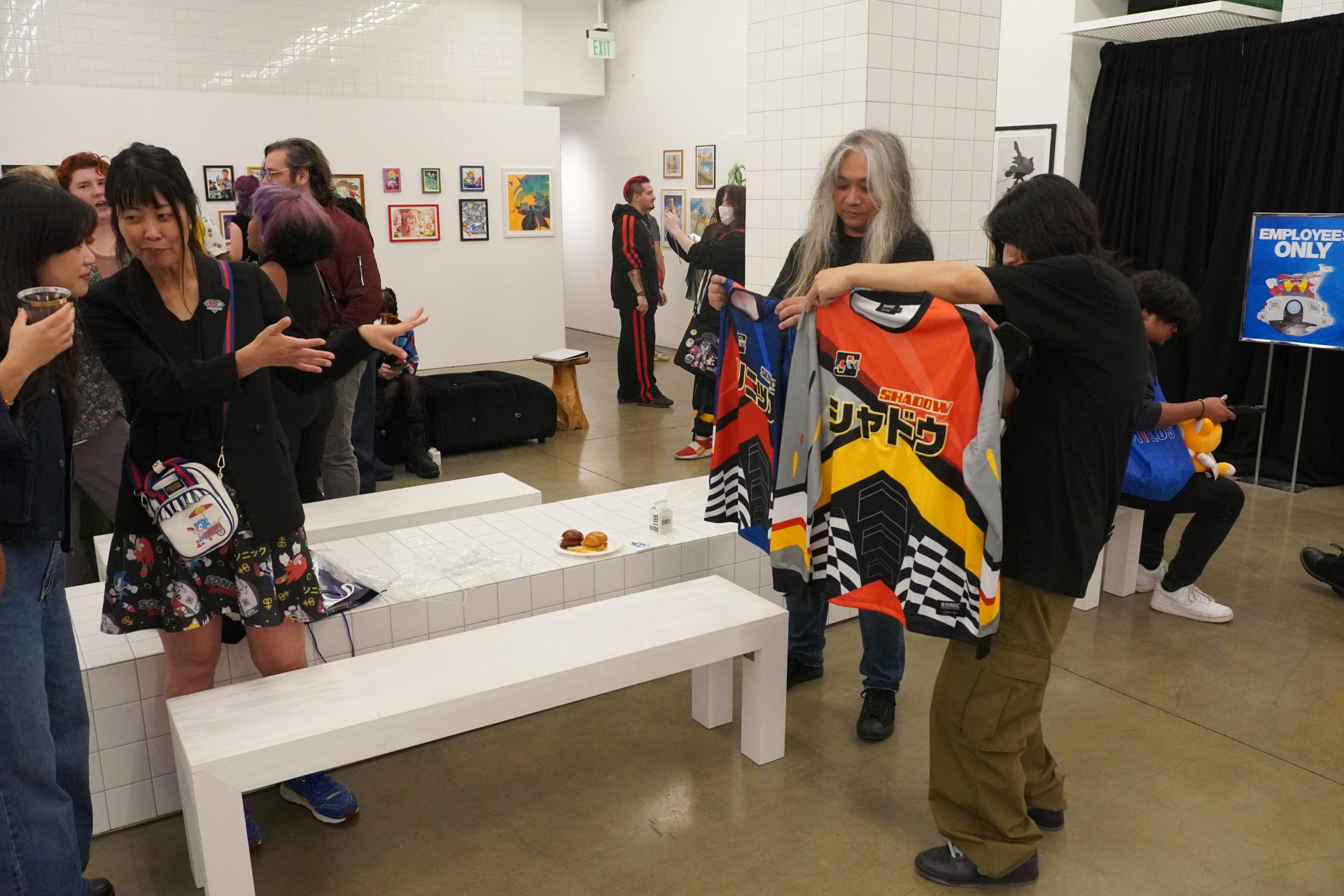
35 Years of Speed: The Sonic Art Exhibit, a collaboration between Sega and the art and collectibles studio iam8bit, opened at Seattle's 210 Gallery during PAX West weekend in early September. It then moved to La Brea Avenue in Los Angeles for two days, Sept. 26 and 27. The show paired commissioned pieces from dozens of artists with original material from Sega's archives.
"It was a bit of a mutual love for each other," said iam8bit's Jon Gibson, describing how the partnership began. Sega was already planning a yearlong Sonic celebration, and iam8bit had the anniversary on its calendar. "The conversation just sprouted really naturally," she said.
iam8bit has been staging art shows since 2005, when the first show bearing its name opened. Over the two decades since, said Jon Gibson, the company has "gathered an immense list of artists who we love and admire." For Sonic, the team picked its favorites from that list and took each artist through rounds of concepts and works in progress before signing off on final pieces. The result was a little over 40 works in paint, sculpture, plush and photography.
The brief was short. "Nothing R-rated. Sonic is a family character," Gibson said. Beyond that, artists could choose any character, zone or era. Too much direction, he said, "starts to sanitize the intention." The one real requirement was fandom: "don't be in this art show if you don't actually love Sonic."
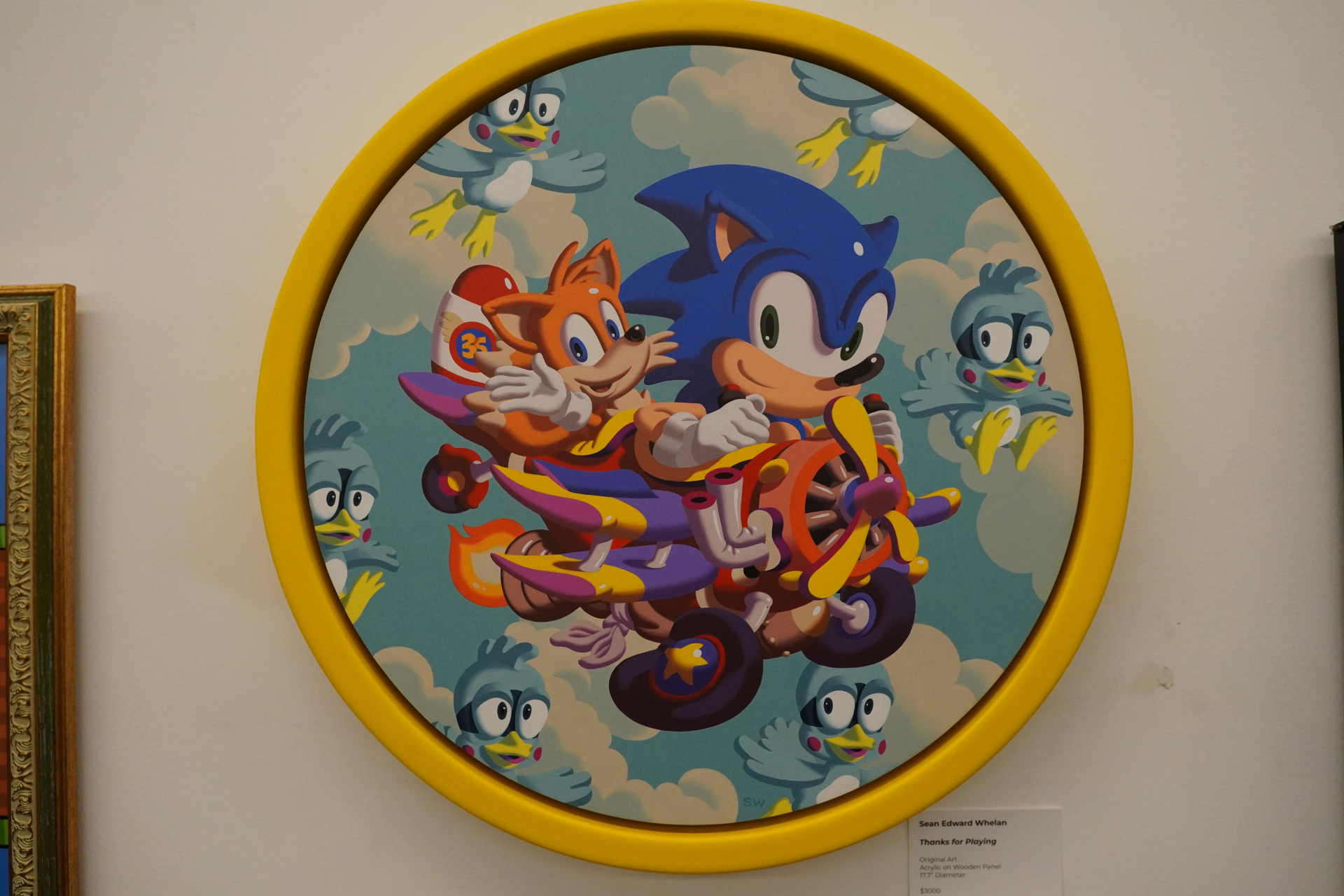
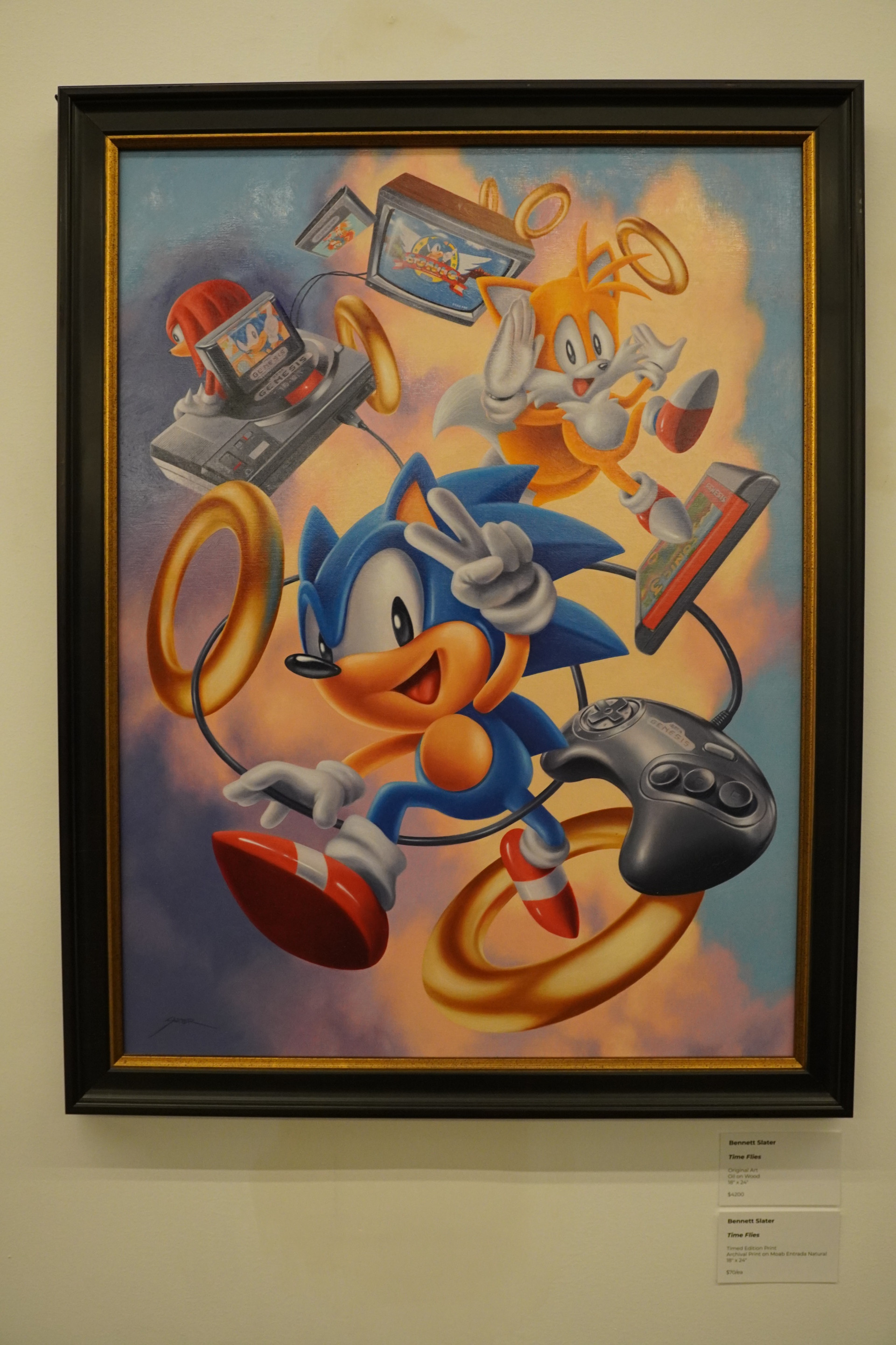
That freedom shows on the walls. Sean Edward Whelan's Thanks for Playing, acrylic on a round wooden panel, puts Sonic and Tails in the Tornado biplane (a "35" painted on its tail) amid a flock of wide-eyed Flickies. Nearby, Bennett Slater's oil painting Time Flies shows Sonic flashing a peace sign while a Genesis console, a six-button controller, cartridges and a TV displaying the title screen tumble through orange clouds with Tails and Knuckles.
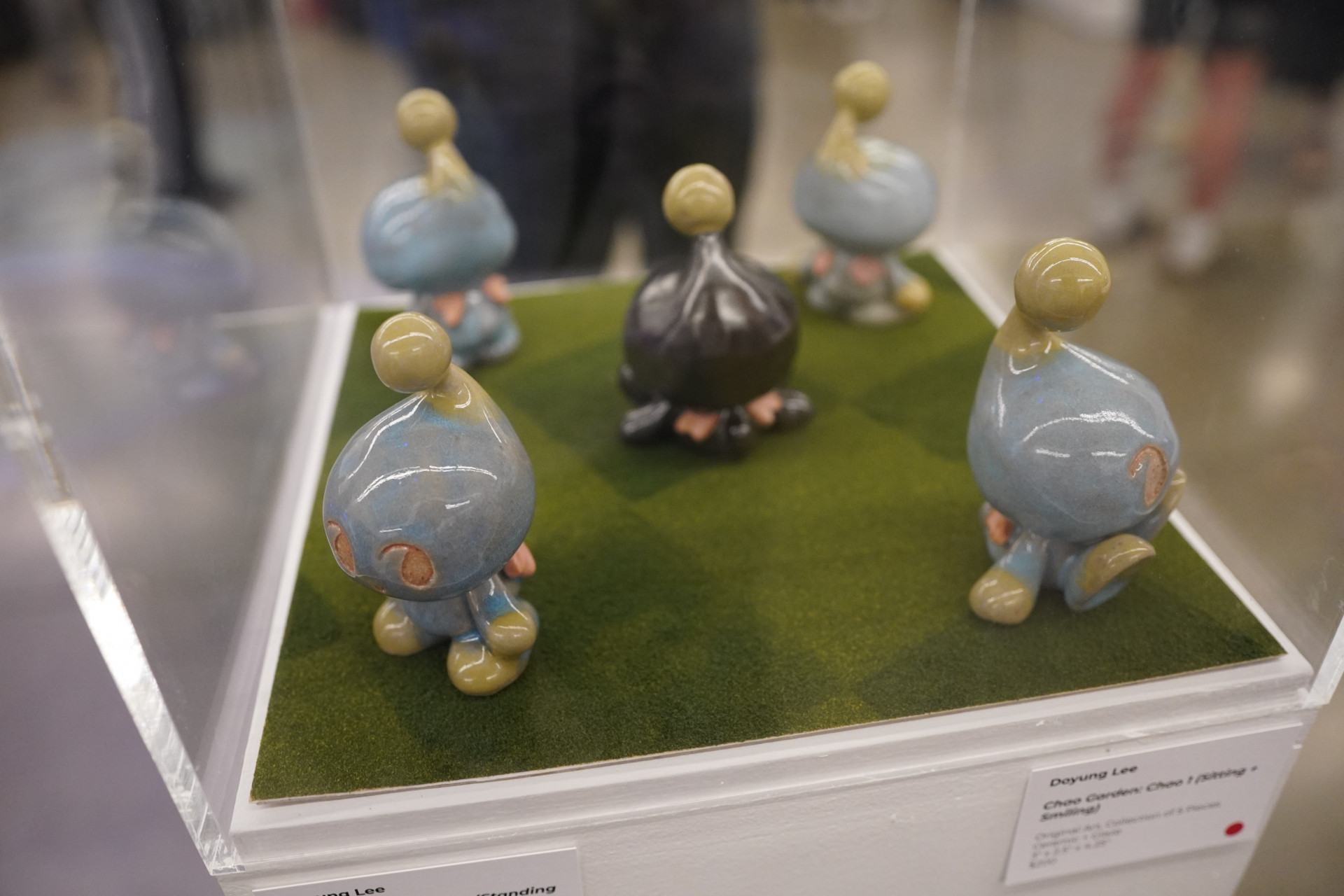
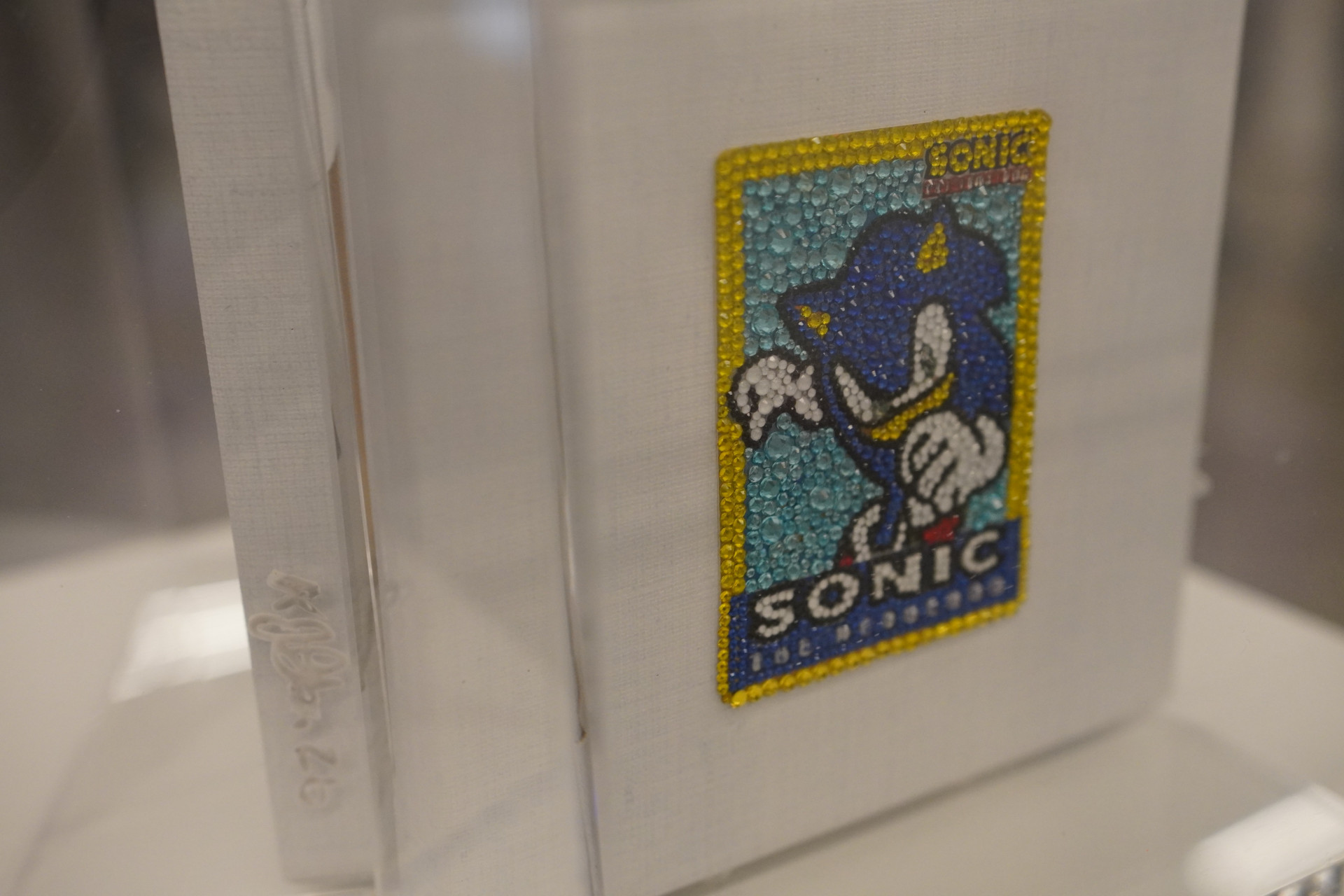
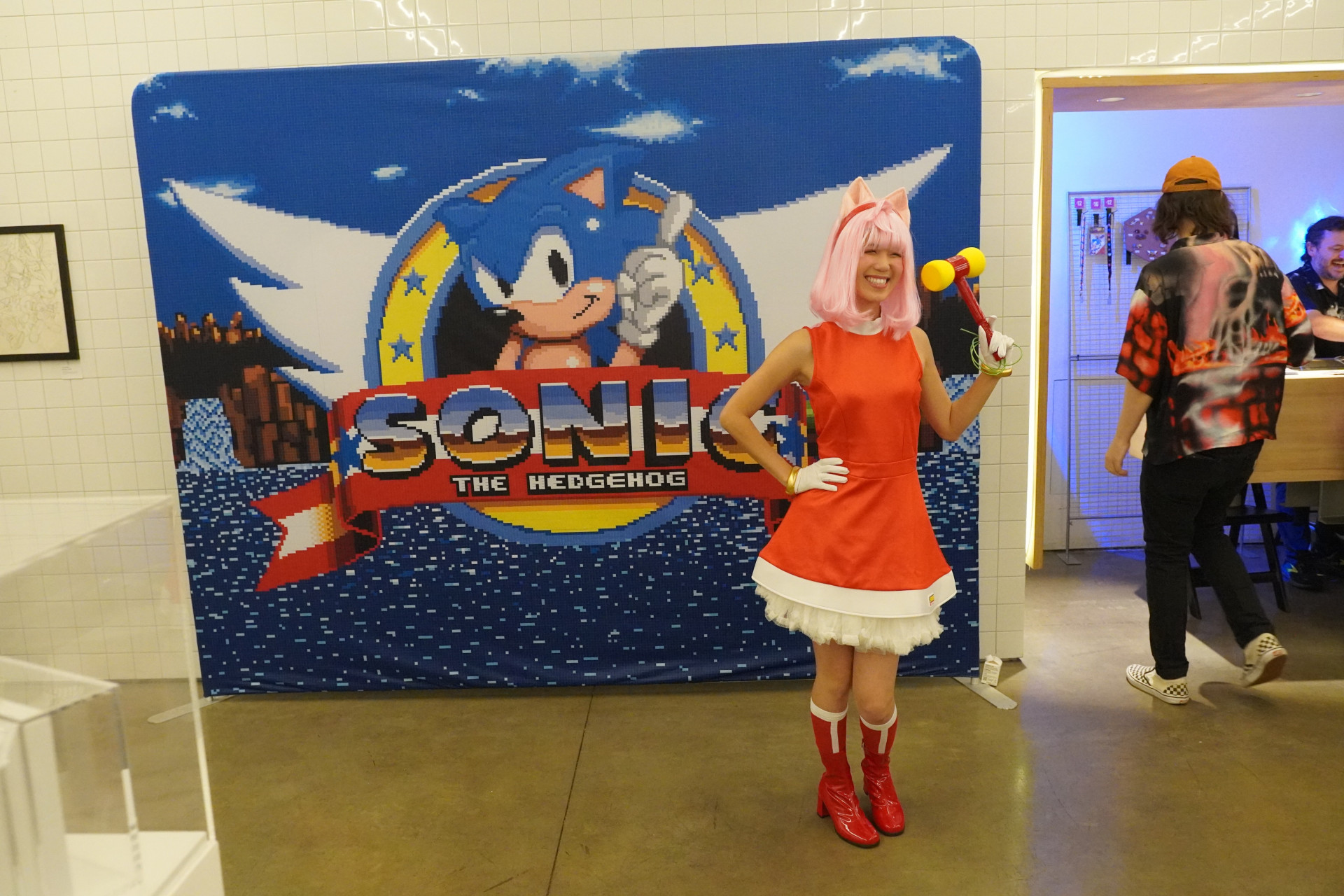
Some of the best work was small. One ceramic piece recreated a group Chaos, the pet creatures fans have been raising since Sonic Adventure, as a squat, teardrop-shaped figure in pale clay flecked with bits of color.Another case held a portrait of Sonic built entirely from rhinestones. A wall-sized pixel recreation of the 1991 title screen became the obvious photo spot.
From the vault
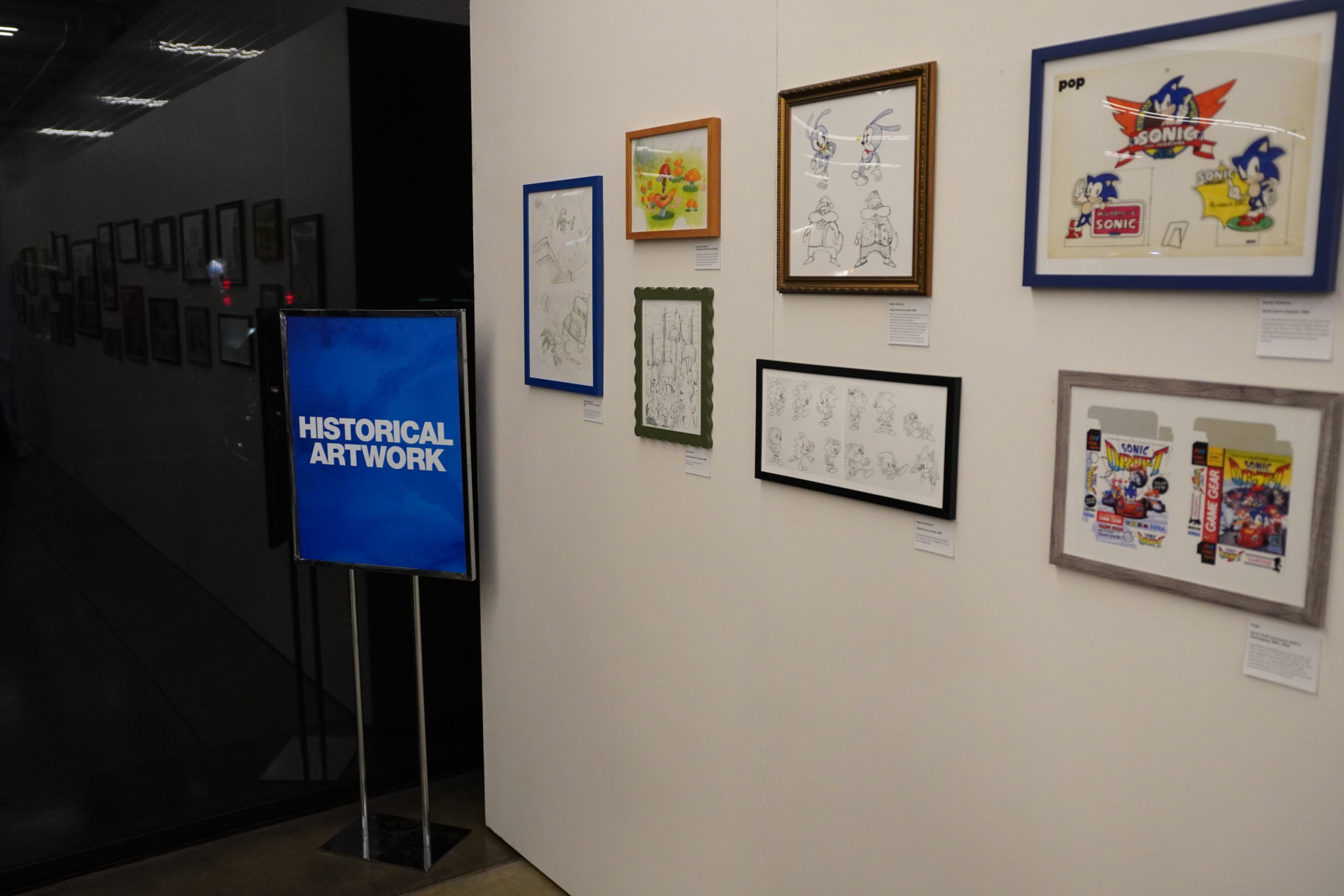
Under a sign reading "Historical Artwork" hung the material hardcore fans came for: rough drafts of the title screen, early character designs, and packaging art for the Game Gear racers Sonic Drift and Sonic Drift 2.
Getting access to material like this is rarer than it sounds. After years of working with publishers, Gibson said, iam8bit has learned that many don't keep good records, and art from 20 or 30 years ago often disappears. "Maybe people have walked off with them, maybe there was a flood or a fire, you never really know," he said. Sega's archive was the exception, deep enough that the team could show only a fraction of it.
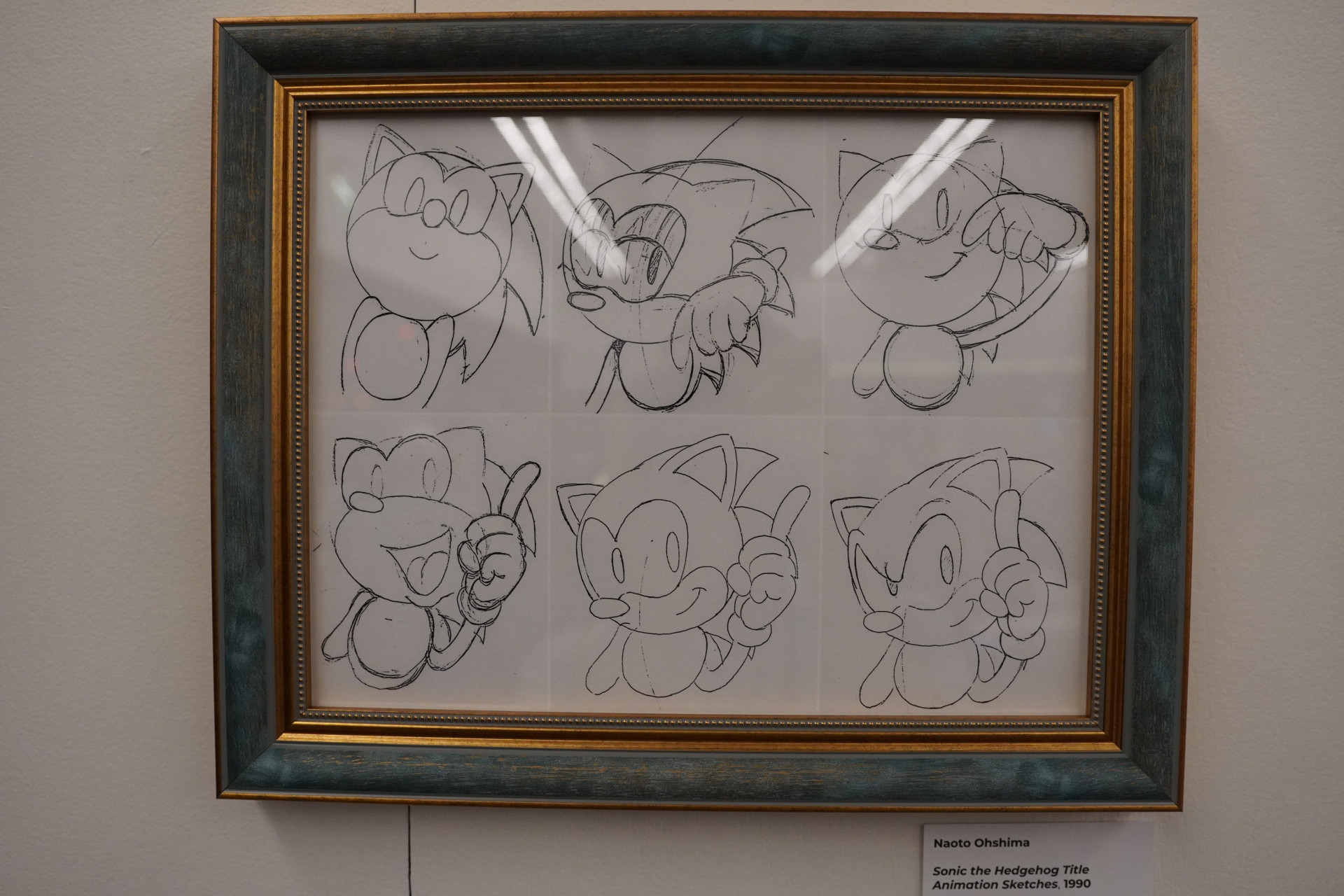
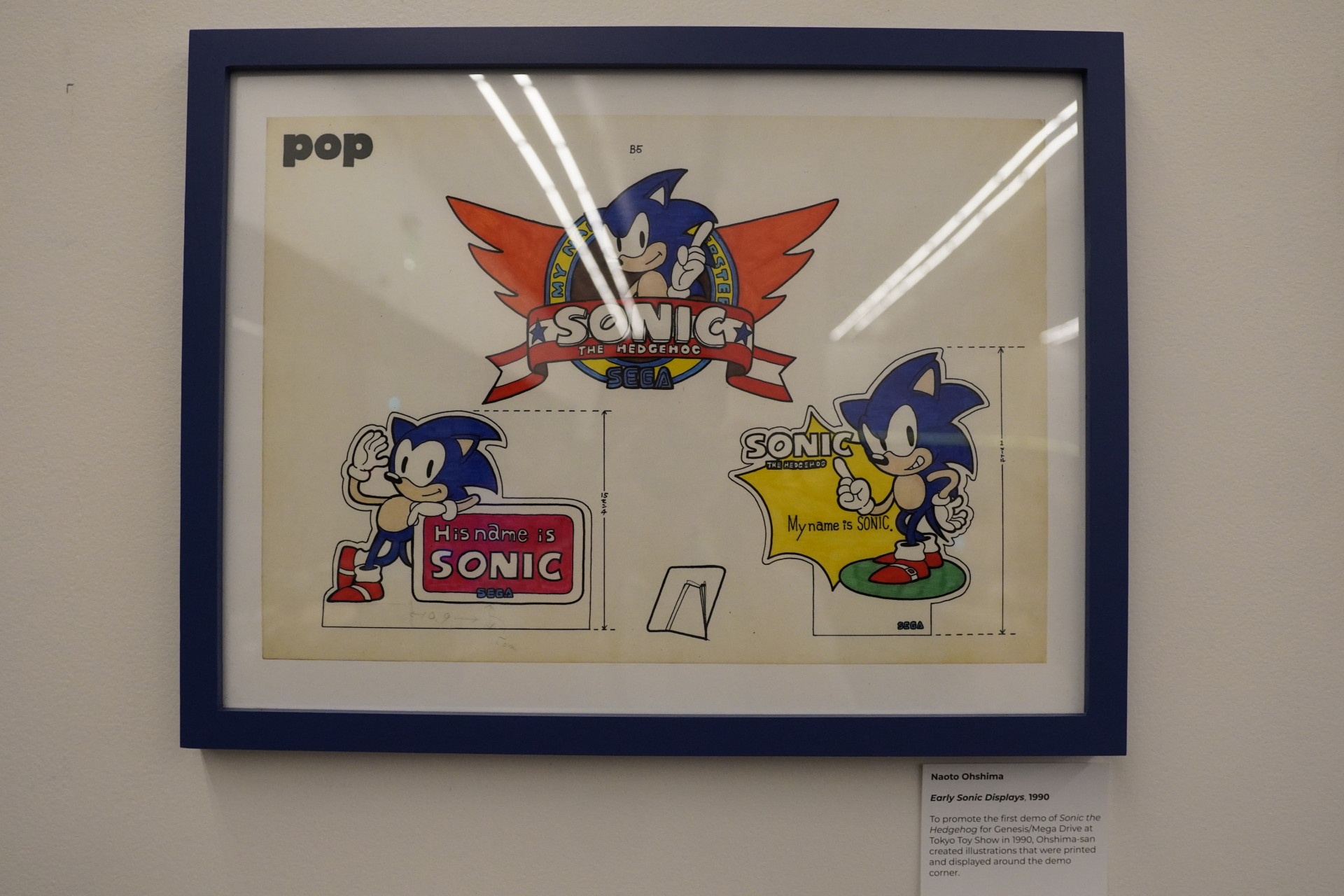
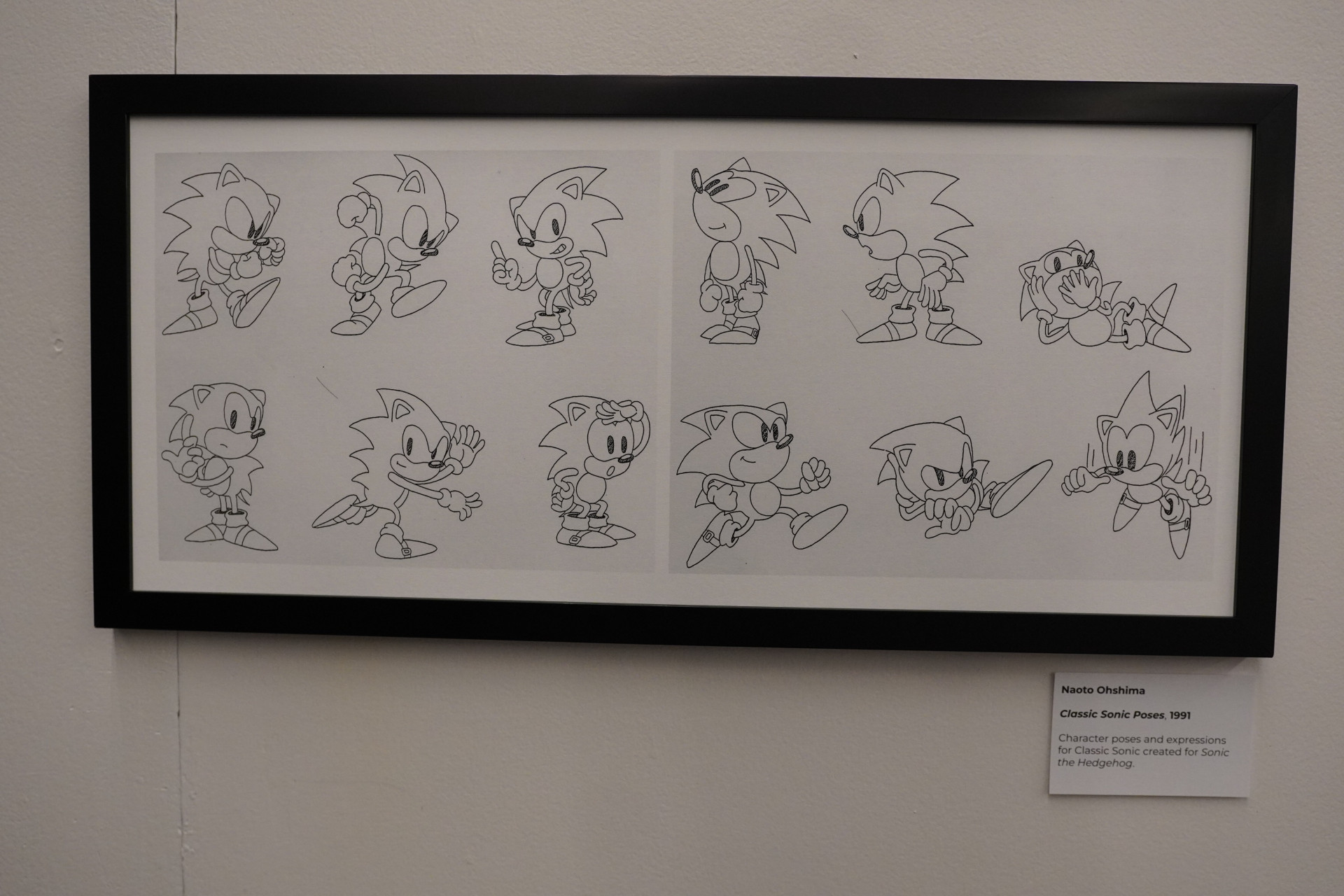
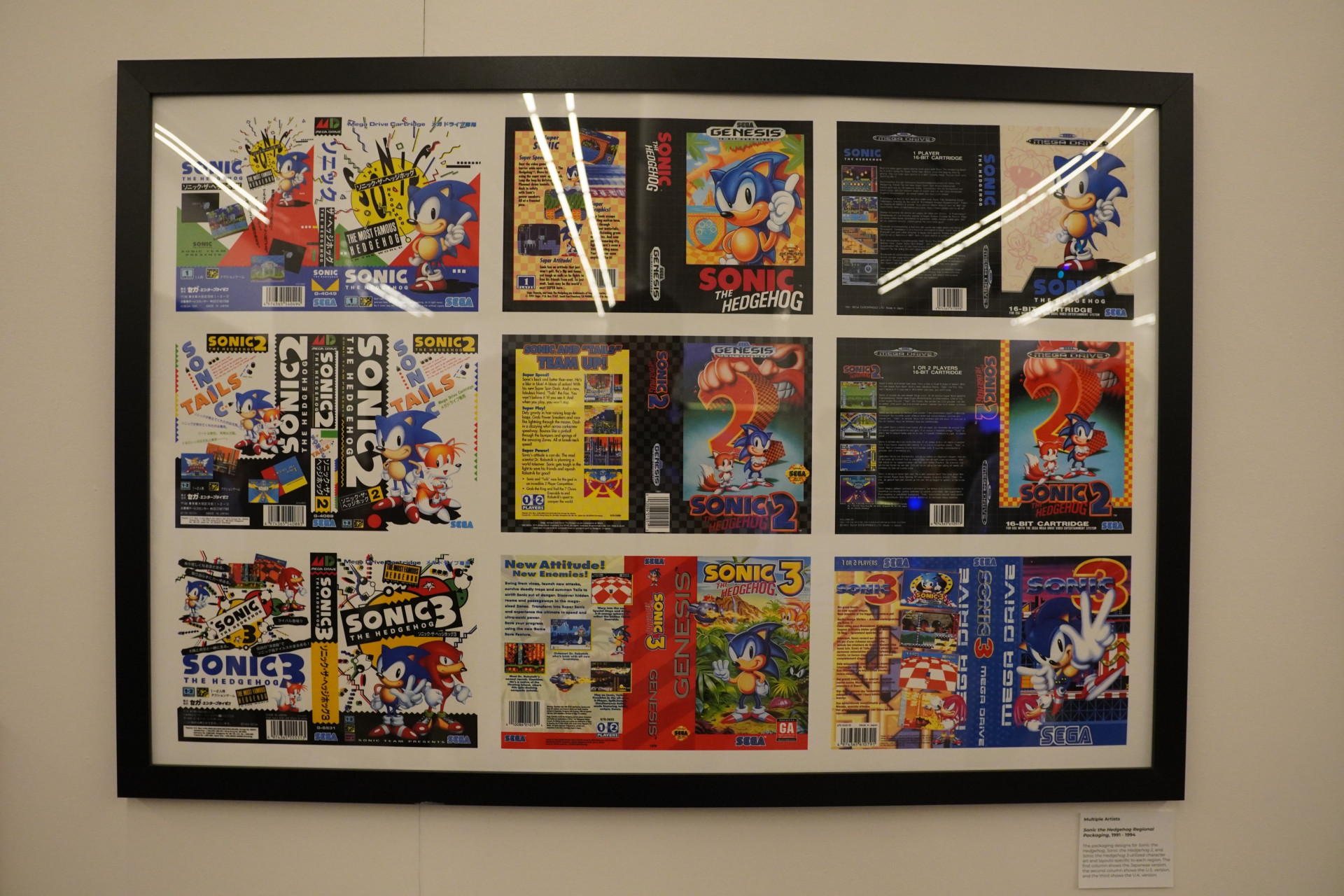
The team didn't hang the work chronologically. "It's more fragments and touch points," Gibson said, and wall text was kept to a minimum so the art could speak for itself. White's favorites were the rough concept sketches, where the annotations and false starts are still visible. "It really puts you into the headspace of the creator," she said.
Designing the walk
White said the hardest part of the job is balance: enough work to tell a story without letting visitors "get lost in the sea of art." The team mocks up each venue in advance and walks through it virtually. "You don't want to give people five hyper detailed pieces in a row," she said. Quieter work goes between intense pieces so the eye has somewhere to rest.
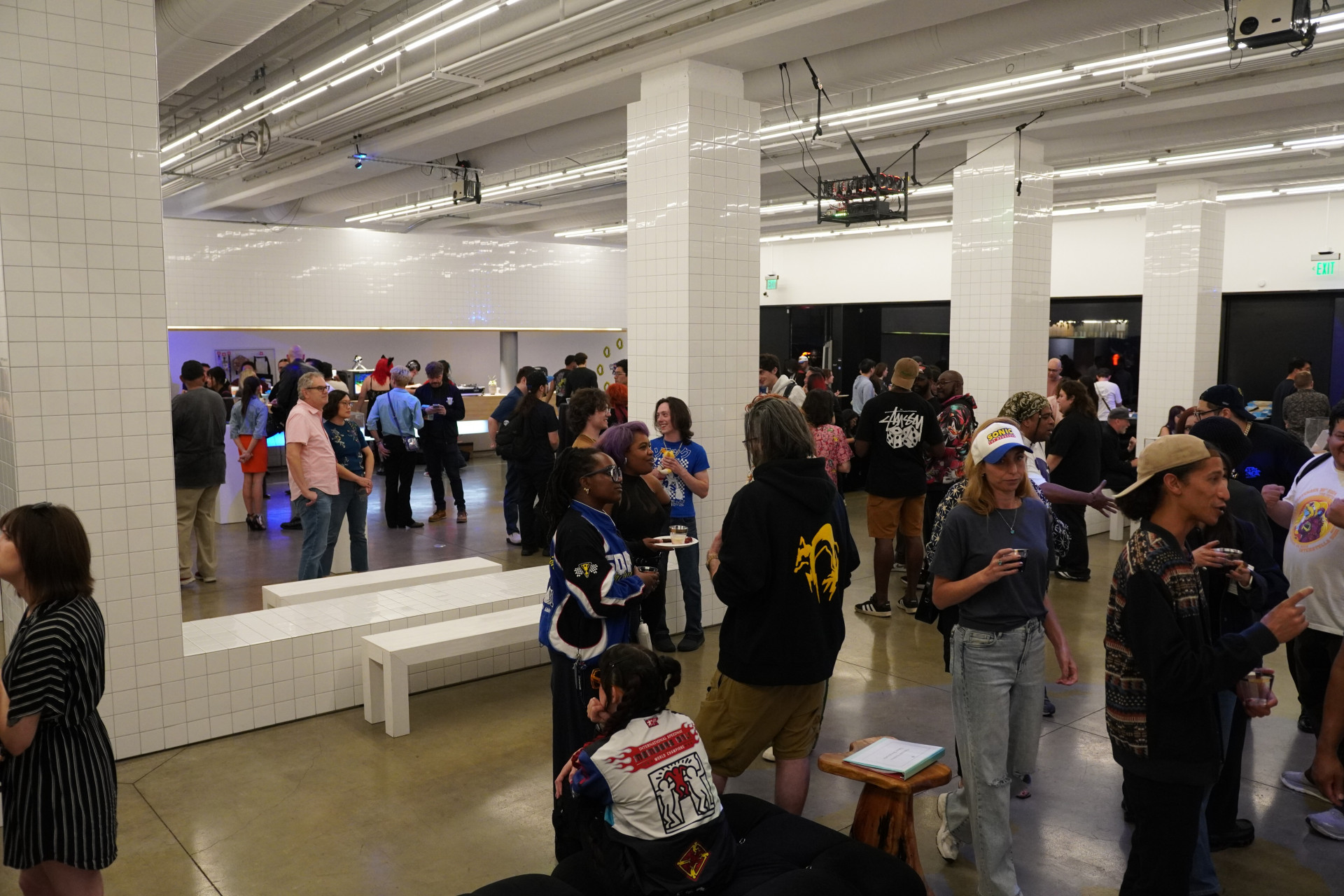
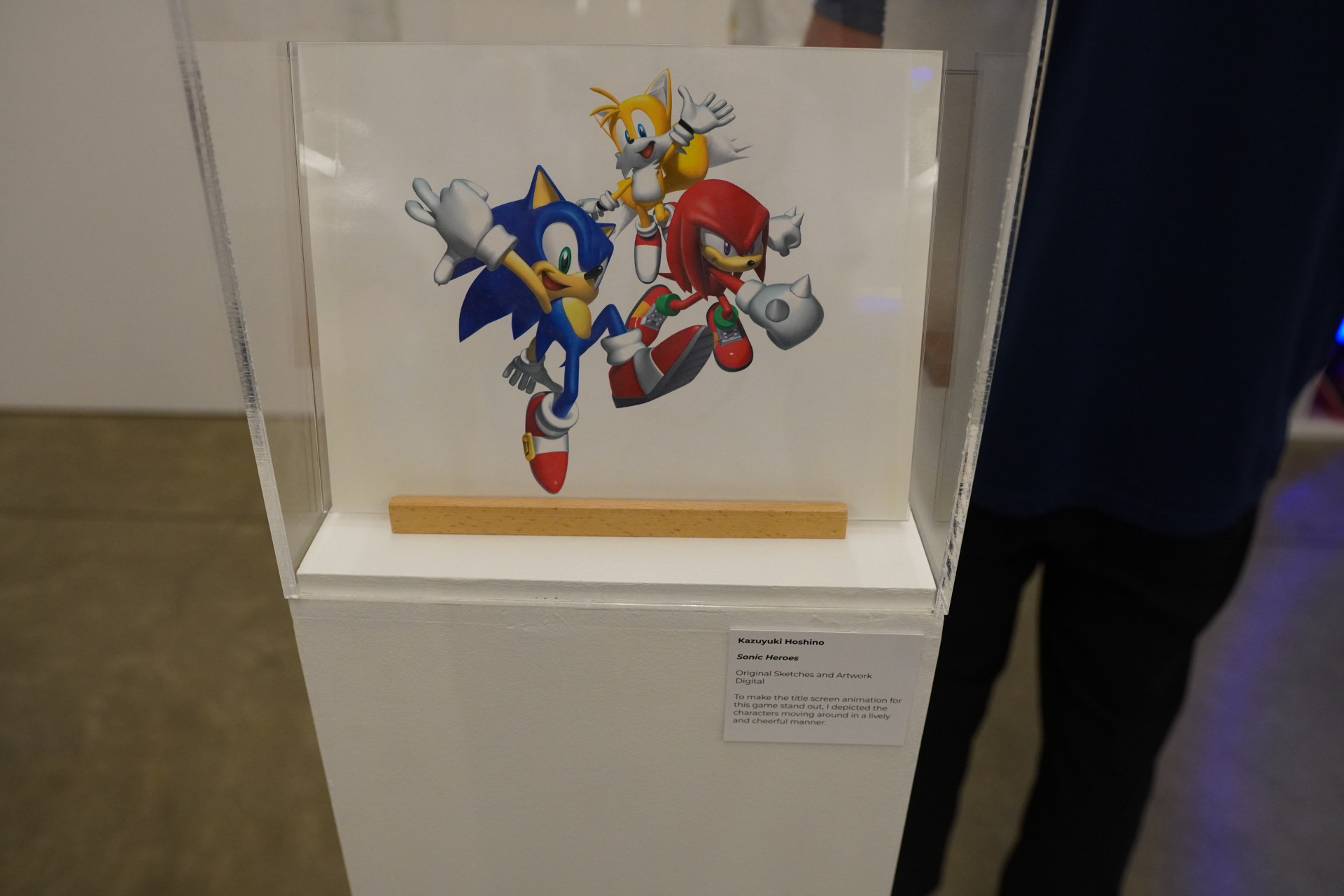
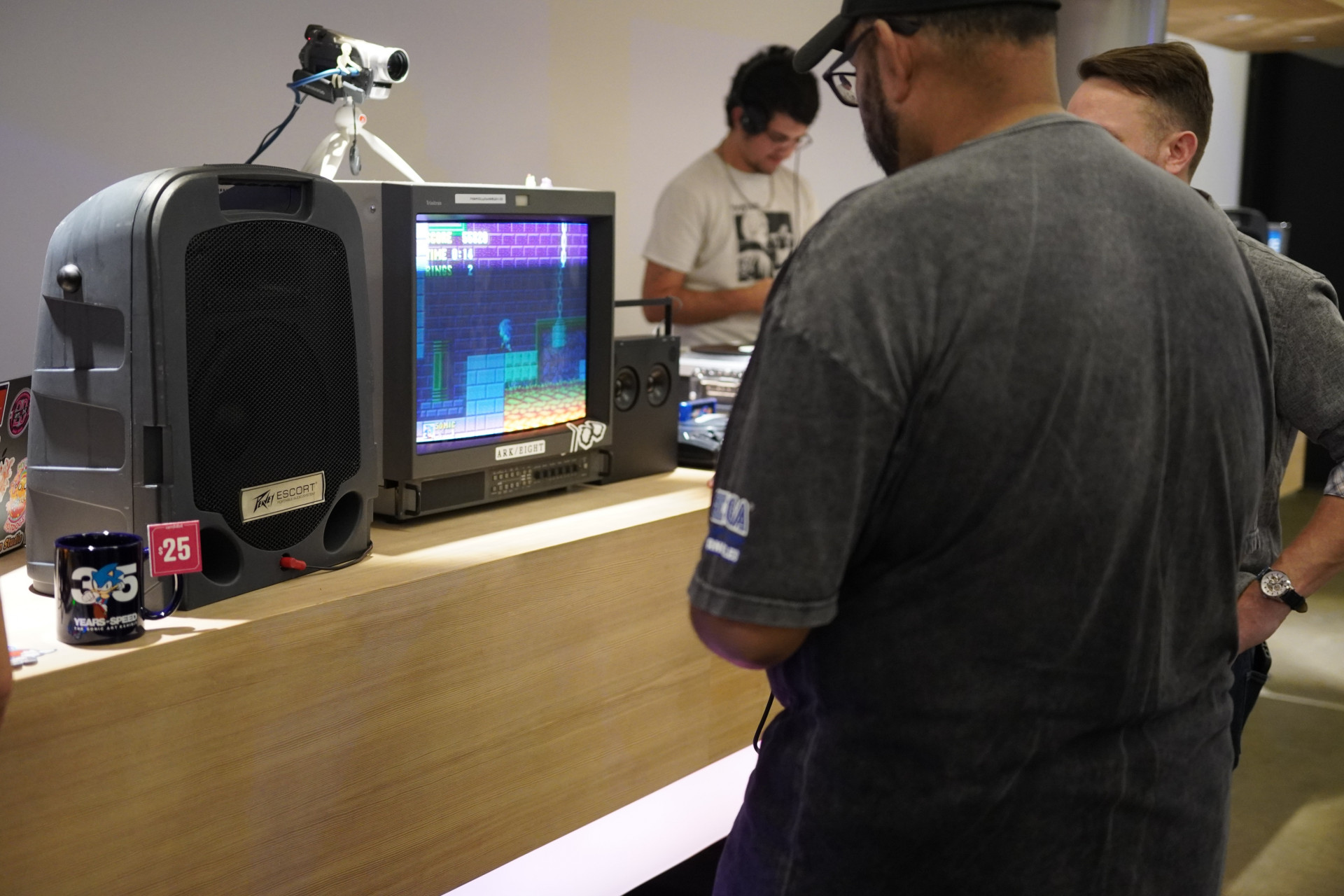
The focus on physical objects was deliberate. "In a digital age with Instagram, it's really hard to get that tactile sensibility," White said. "It's something you can walk through and experience." By iam8bit's account, it worked. "In Seattle, the show was packed," White said; people came all day, every day the doors were open.
Three decades of Sonic music
One guest of note during the event was Jun Senoue. The famous Japanese guitarist and composer has spent most of the franchise's life writing its music. He joined Sega in 1993, and his first Sonic work came the following year on Sonic the Hedgehog 3. This year he wrote "Speed Is My Life," the anniversary's theme.
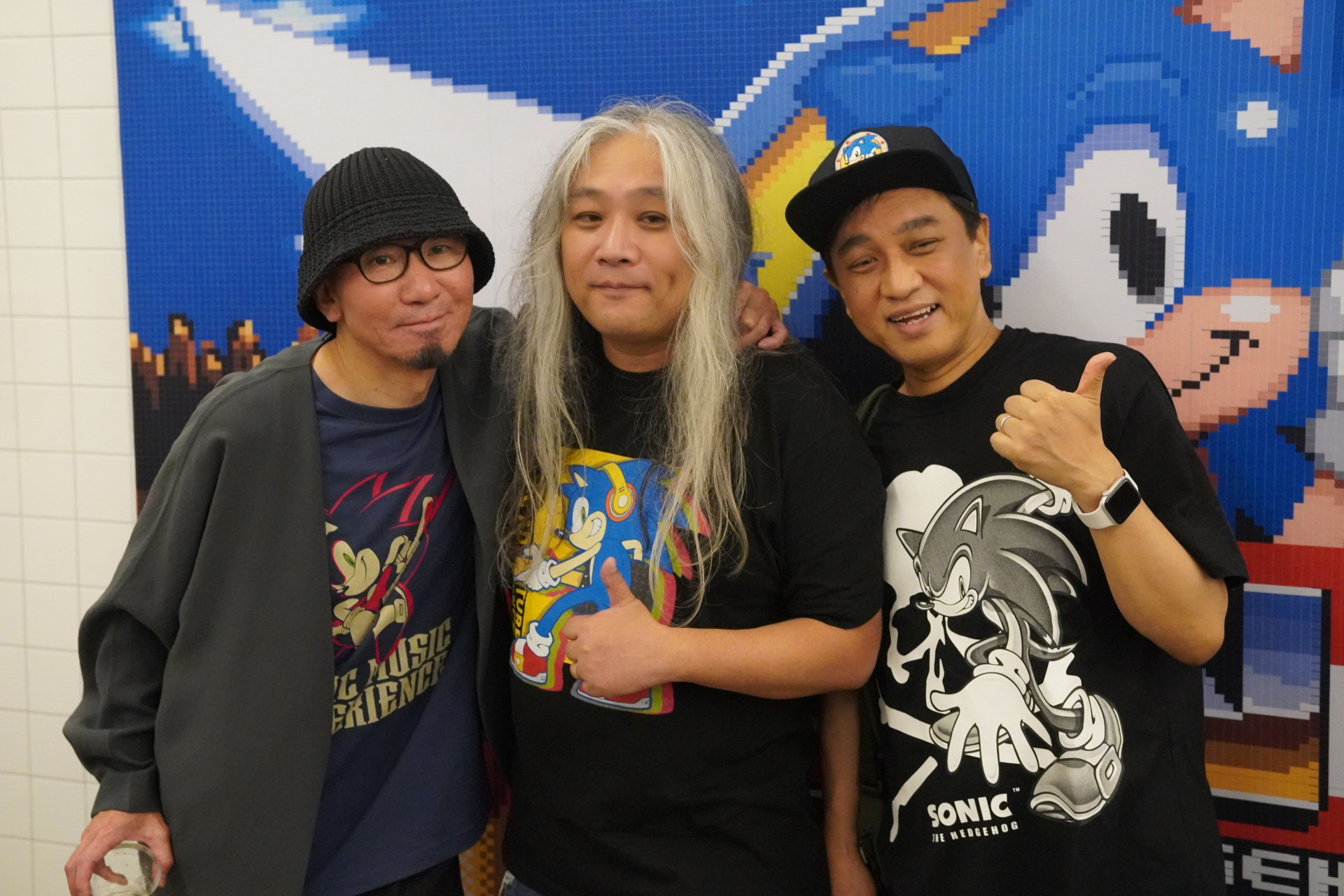
"It was a kind of a long journey," Senoue said. He credited tracks such as "Escape from the City" with carrying Sonic music to concert stages outside Japan. "It was my pleasure to perform lots of Sonic songs in front of the fans all over the world," he said. "I hope we can still expand the world of Sonic music forever."
Two cities is a small footprint for a global character, and iam8bit knows it. Beginning Sept. 29, the exhibit's art is for sale on iam8bit.com with worldwide shipping. Originals start at $40, and prints start at $15, sold as timed editions. Orders close Oct. 20, and the editions won't return after that. "It's an opportunity for everyone to take a piece of the show home and bring it into their living rooms," White said. Then, as the call wrapped up: "Happy birthday, Sonic."