Riot Games has updated VALORANT's voice chat moderation system to better catch abusive players, who speak Spanish, Portuguese and Korean.
The change arrived with Patch 13.06, according to an announcement from the developer on September 22nd. Riot said more languages would receive improvements "in the upcoming months," though it did not name which ones.
The tool in question is the Riot Voice Evaluation (RVE) system, VALORANT's in-game detection technology for voice comms. It is used to identify toxic behaviour in voice chat so Riot can penalise the players responsible.
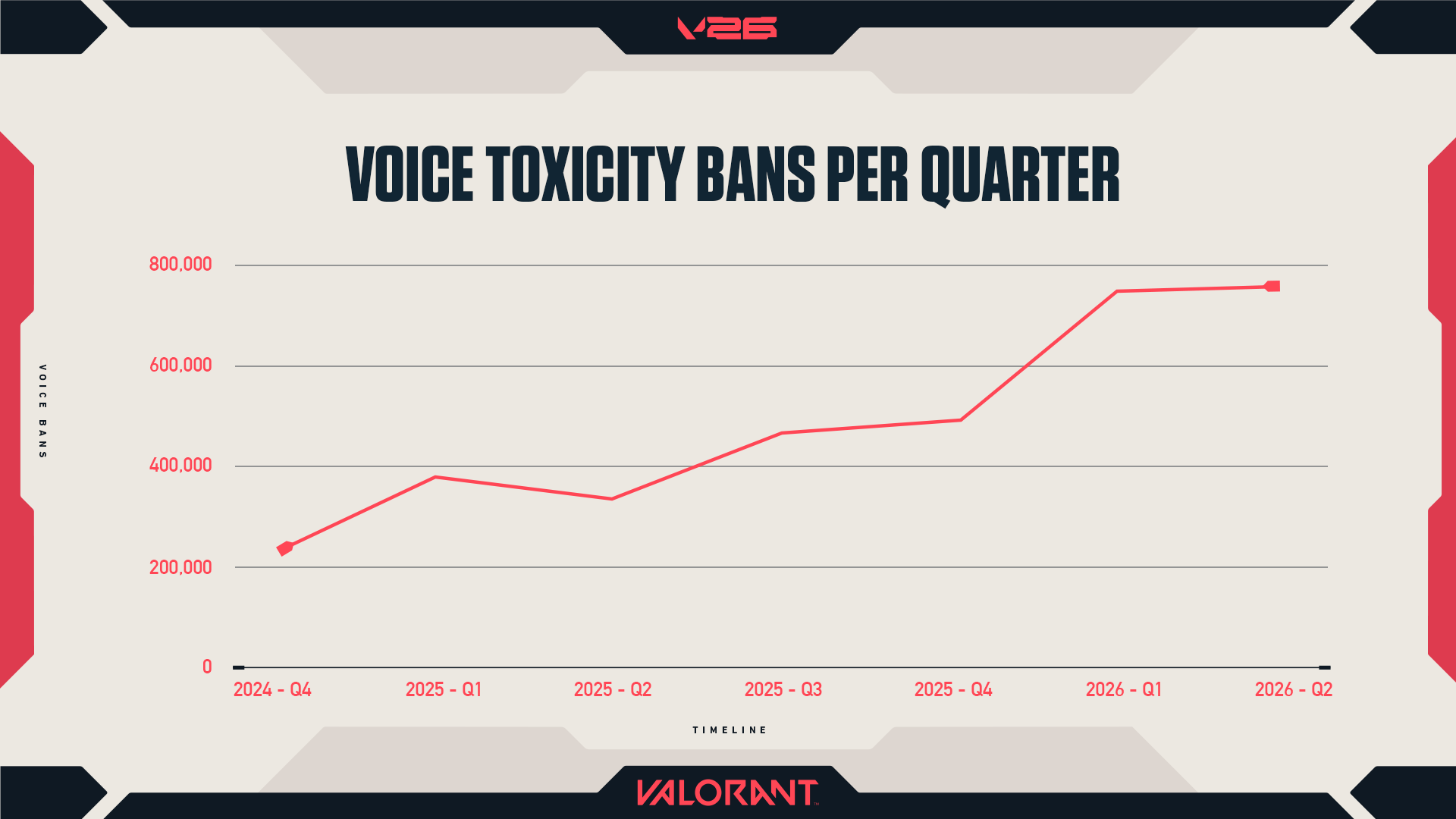
Riot claimed that improvements made to RVE over the past year have helped it identify and penalise twice as many instances of voice comms abuse. The company did not share how many penalties that figure represents, or what those penalties involved.
In the announcement, Riot explained why it was focusing on voice chat. Calling enemy positions, coordinating abilities and planning a retake all rely on it, and the developer said abuse gets in the way of that.
"We're not asking for everyone to be positive all the time," Riot wrote. It added that there is "no room for things like excessive personal attacks, threats, hate speech, and similar abuse in VALORANT."
Trash talk is still allowed
Riot stressed that RVE is not built to remove all trash talk from the game. Its rule of thumb for players was to "keep it about the game, not the person."
Questioning a teammate's decision or bantering with an opponent is acceptable, according to Riot. Repeatedly attacking another player, threatening them, targeting their identity or using slurs is not. The developer also told players to read the room: if teammates go quiet or start objecting, or if someone keeps getting reported, it's probably time to dial it back.
Players who are on the receiving end of abuse are allowed to stand up for themselves. However, Riot said self-defence "doesn't give you a free pass to respond with abuse of your own." If both sides of an argument cross the line, both can be penalised.
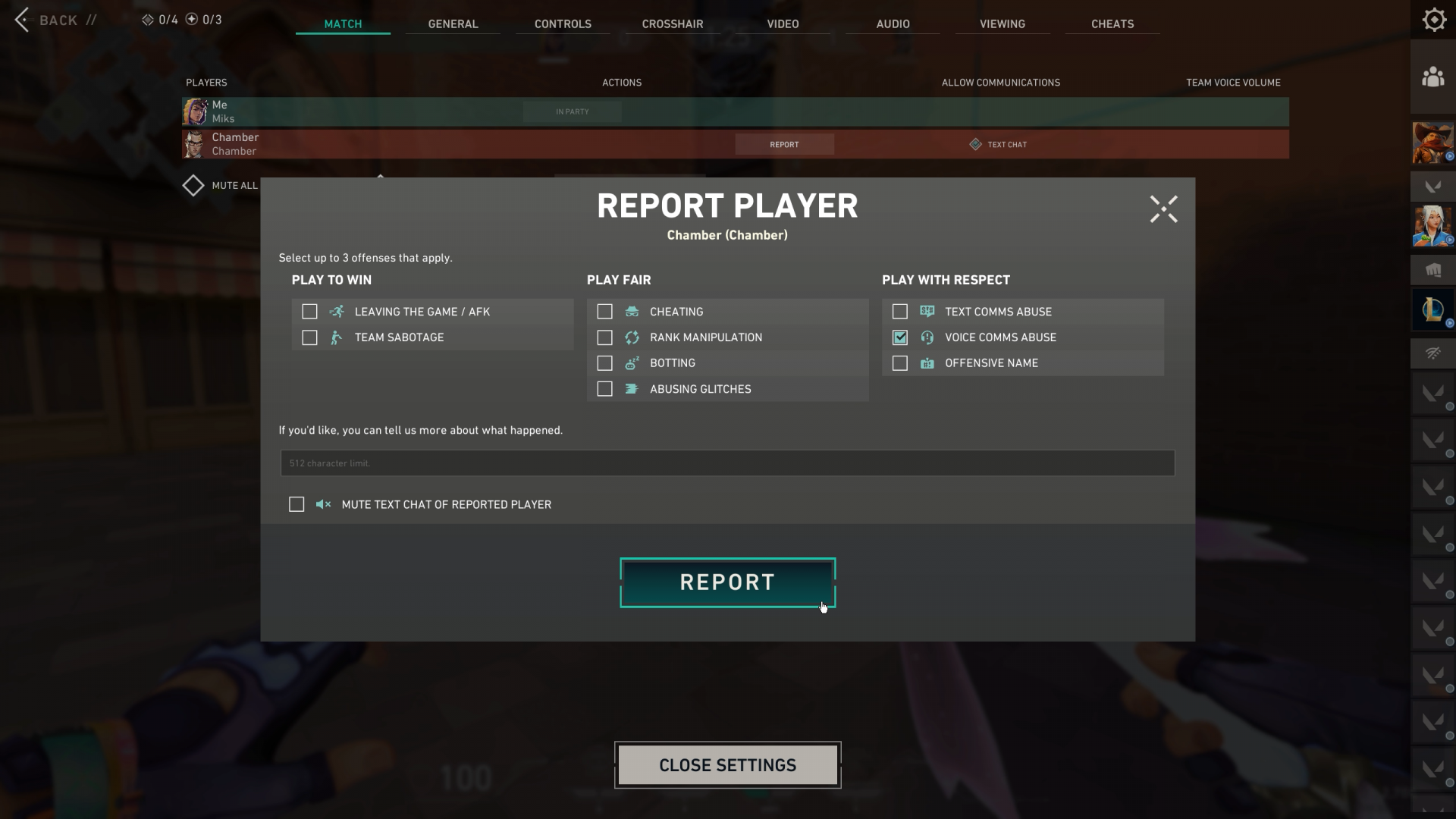
Instead, Riot urged players to use the Voice Comms Abuse category when reporting another player in-game. The company said its detection technology is "only one part of the system," and that player reports help it look into individual incidents as well as improve RVE over time.
Part of Riot's wider behaviour push
The update falls under the Riot Games Community Pact, a set of expectations the company introduced earlier this year for players across its games. The pact is summed up in four short lines: "Play to Win. Play Fair. Play with Respect. Or go play something else."
Riot, which also develops League of Legends, recently addressed the 'Play Fair' part of the pact. That included updated anti-boosting technology from its Anticheat team. Boosting is the practice of having someone else, usually a higher-ranked player, play on your account to push it up the competitive ladder. The developer admitted it "can't eliminate disruptive behavior overnight," but said it would keep investing in RVE and expanding what the system can do.