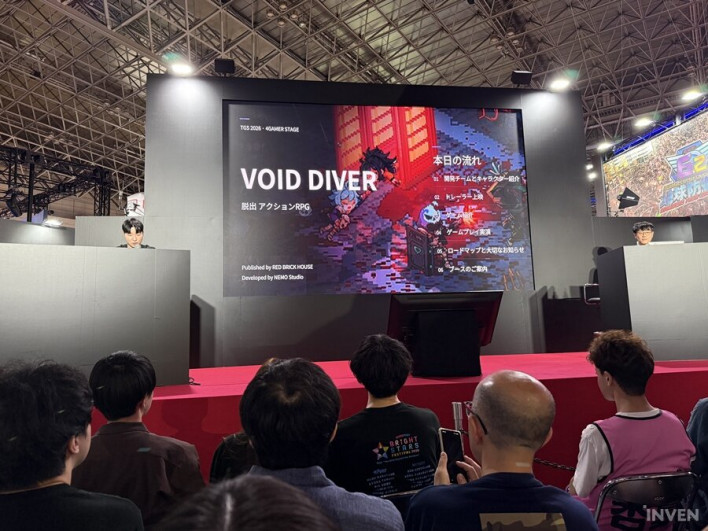
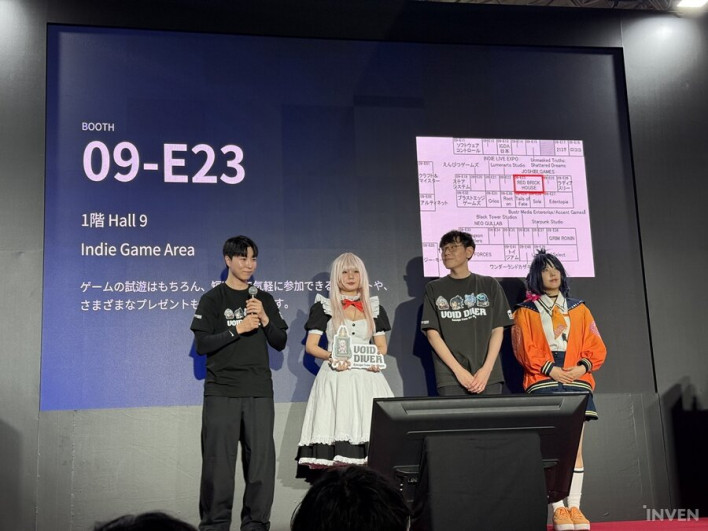
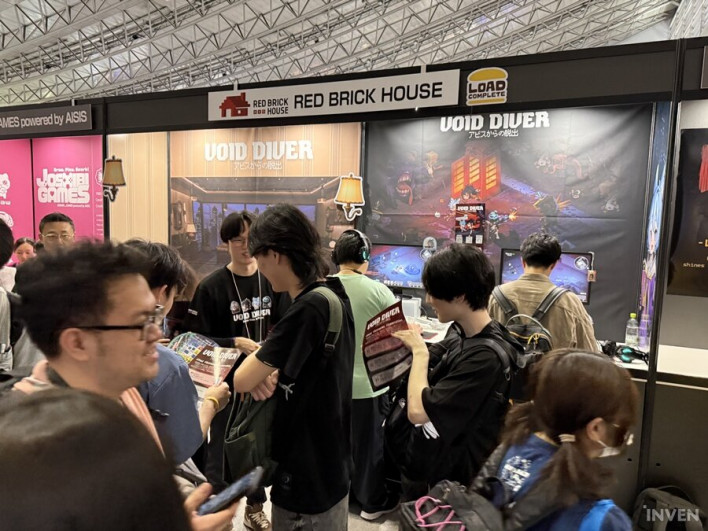
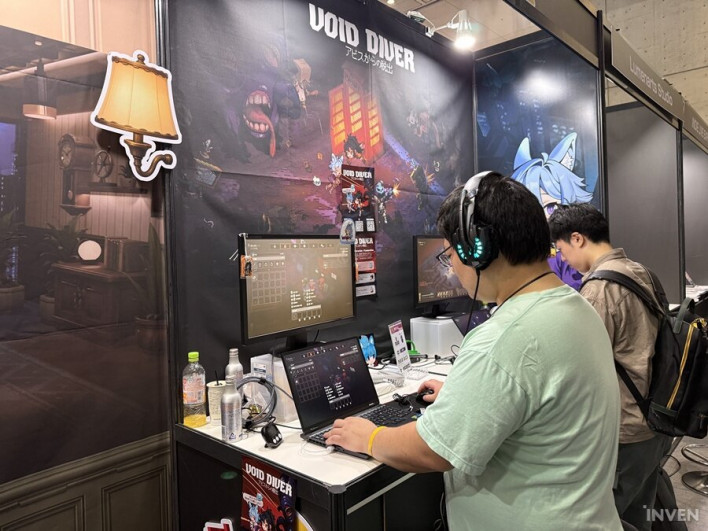
On the 19th, the third day of TGS and the first Public Day, the official release schedule and post-launch development roadmap for 'VOID DIVER: Escape from the Abyss' (hereinafter 'VOID DIVER') were revealed at the TGS 4Gamer booth.
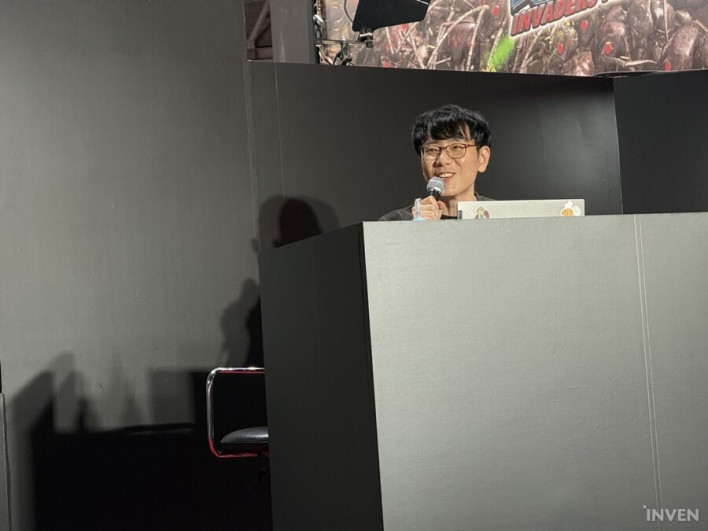
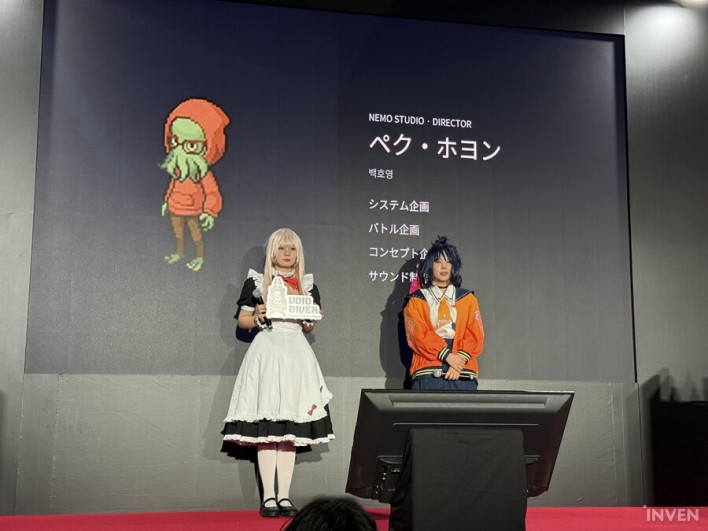
During the presentation, Producer Baek Ho-young of Studio Nemo took the stage to introduce service plans, including key content and update directions. Producer Baek shared that he personally oversees various areas of game development, from combat design to sound design, saying, "I do almost everything." He then described Studio Nemo as "a team that aims to create fun games centered around pixel art," and asked for high expectations as 'VOID DIVER' is Studio Nemo's first title.
Before the main game introduction, two cosplayers appeared on stage to introduce characters from the game. Gayoung is the first playable character in 'VOID DIVER', who heads into the dungeon to search for her missing older brother. Elara is an AI character that assists the player in various ways, appearing inside a monitor within the game.
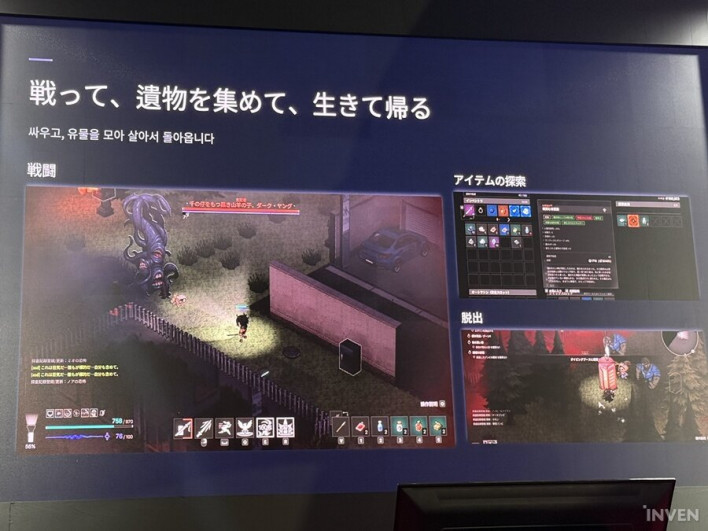
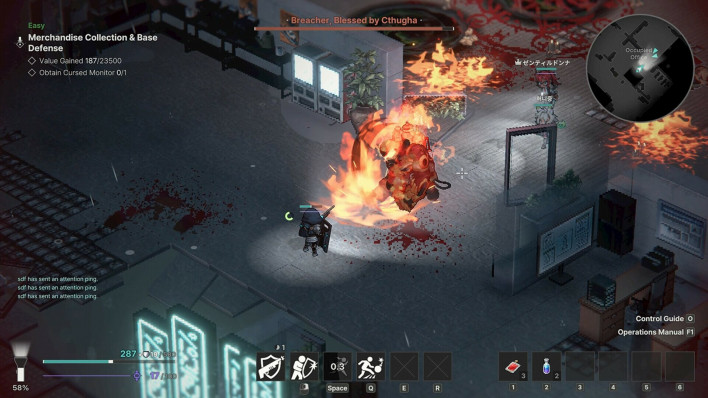
'VOID DIVER' is an extraction action RPG for up to three players, featuring 2.5D visuals and a unique worldview. Set in a world where an otherworldly realm overlapped with reality, giving birth to a massive dungeon in the center of the city, players enter the dungeon to collect relics and safely escape. Through this, they grow their characters and equipment before heading back into the dungeon in a core game loop.
The protagonist is the manager of the antique shop 'BALUSHA'. However, this is their role in the city; in the dungeon, gameplay involves commanding the Divers sent inside.
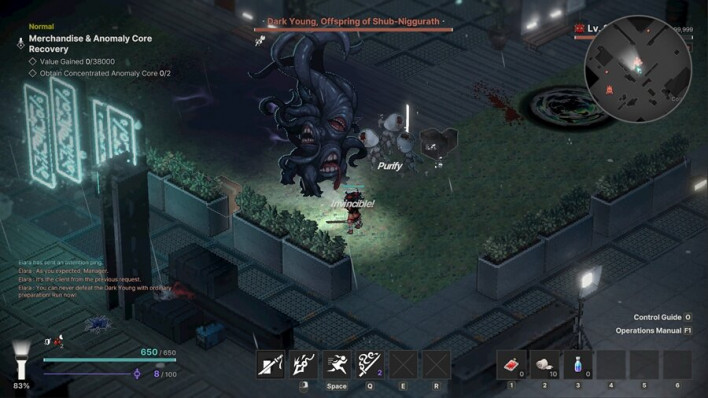
In the dungeon, players must manage three main elements: health, stress, and light source. Stress is essentially the mental fortitude required to endure the dungeon. High stress levels can trigger negative situations, such as anomalies occurring or mental breakdowns.
The light source is depicted as a flashlight or similar device. Because enemies illuminated by light become weakened, players must keep enemies within the light's range to engage in combat effectively. Conversely, taking attacks from outside the light source can result in massive damage.
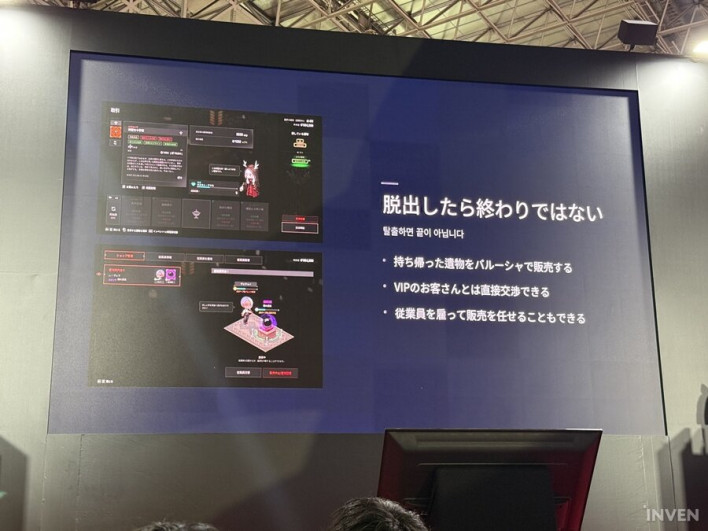
Inside the dungeon, players must manage health, stress, light source, and inventory while gathering loot before returning safely. However, simply returning alive is not everything. How profitably recovered relics are sold is equally important, representing the core business of being an antique shop manager.
There are two main ways to sell relics: negotiating prices directly with VIPs or hiring staff to manage sales.
Once money is earned, players can craft equipment or upgrade traits to challenge higher-tier dungeons. The structure is essentially a loop of farming, progression, and re-entry.
Compared to other extraction games, one of the key points of differentiation in 'VOID DIVER' is the relatively lower risk upon death. The game provides three main options regarding death penalty: from losing everything upon death, losing only a portion, to losing nothing at all, aiming to alleviate player stress.
As an extraction game, combat in 'VOID DIVER' is not solely for farming itself. Ultimately, the goal is to escape the dungeon. Therefore, rather than hunting every monster in sight, avoiding combat and looting only what is necessary can sometimes be more effective.
The game presents these choices throughout the dungeon. A wide range of enemies appears, from regular monsters that fall in a few hits to powerful boss-level monsters that are difficult to face alone, and named bosses that can be tackled solo but require preparation and time.
When encountering them, players must choose whether to fight and defeat them or avoid combat and continue farming elsewhere. While named boss-level monsters take time to kill, they offer the chance for great rewards; for regular monsters, passing by without engaging can be more efficient.
After wrapping up the game overview, Producer Baek Ho-young said, "We released the demo in January this year, and we are grateful that the response was better than expected. Wishlists have currently crossed 250,000, and we're thankful that a significant portion comes from Japan." He added, "Thanks to the steady feedback from the demo, we plan to skip Early Access and go straight to full launch. This, too, is thanks to all of you."
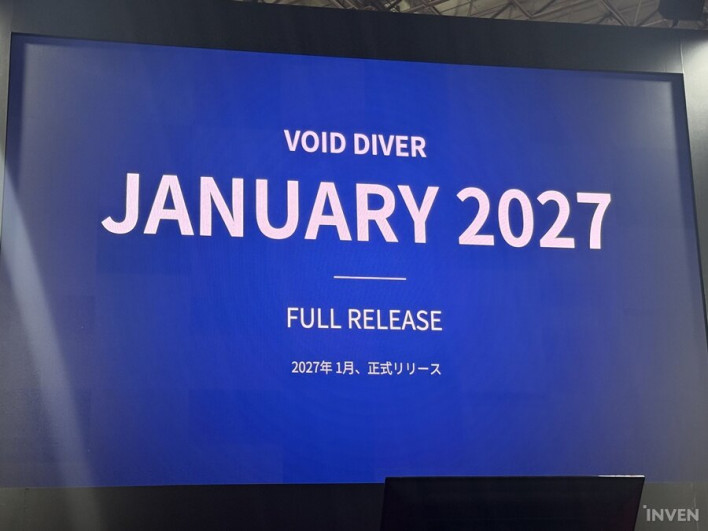
Next, the release date for 'VOID DIVER' was finally revealed. 'VOID DIVER' is scheduled for official launch in January 2027. A more specific release date will be disclosed later.
In the official release version, content will also expand significantly. Chapters leading up to the ending will be added, along with a large amount of new monsters, equipment, regions, and Divers to match.
Exclusive skills for each character will also be introduced. The system is designed so that depending on the chosen skills, the same character can offer a distinctly different gameplay experience.
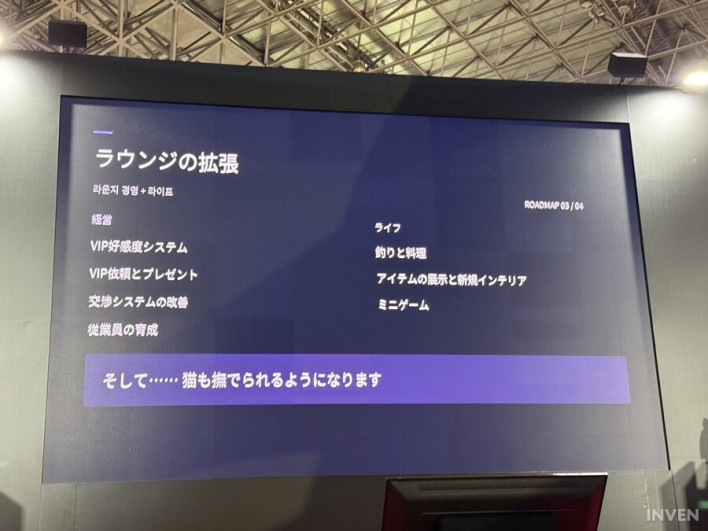
Management content is also expanding. VIP affinity will be added, allowing players to exchange gifts, and the negotiation system will be improved to be more engaging. Additionally, features such as fishing, interior decoration, and minigames will be introduced. Notably, petting cats will become possible upon full launch.
Game balance will also see improvements. Work is underway to lower initial barriers to entry, refine overall balance, and enhance quality-of-life features, with mod support also planned. Furthermore, save data from the demo will carry over to the official launch version.
Producer Baek Ho-young concluded the presentation by stating, "We are exhibiting in Hall 9 at the Indie Booth. Events are also taking place, so please stay tuned."
While the game has a bit of a Japanese anime/subculture aesthetic, it isn't centered around anime girls like typical subculture games. Announcing the release date in Japan was a bit surprising—is there a specific reason you announced it in Japan first?
“Truthfully, the reaction in Japan has been strong, and we felt presenting on a stage like TGS was meaningful in itself. We're aiming for a January release, and there aren't many major game shows leading up to it. While we could attend the Taipei Game Show in January, we decided TGS was the ideal opportunity to announce the release date.
You mentioned earlier that the response in Japan is strong. What do the numbers look like?
“Until recently, Japan's wishlist numbers were on par with China's, but recently Japan surpassed China. Right now, it's virtually our highest region.
Why do you think the reaction in Japan is particularly strong?
“I think there are elements that resonate well with Japanese player preferences. It has subculture aesthetics and offers deep gameplay systems to dive into, which seems to appeal to the Japanese audience.
The game includes elements like Cthulhu, urban legends, and Creepypastas. Do you think these genre characteristics are also well received in Japan?
“Titles featuring those themes have gained popularity in Japan recently, so personally I feel our game fits into that trend to some extent.
You took the stage yourself today and set up a demo area. How was the atmosphere at the venue?
“It was so frantic that I couldn't really look down at the crowd properly. Honestly, I was so nervous that I couldn't gauge the atmosphere well.
What kind of reactions did you notice at the booth then?
“I didn't get to observe much today, but up until yesterday, visitors played the game, were surprised by achievements like hitting 250,000 wishlists, and enjoyed playing. Many people on Discord also mentioned coming to TGS to check it out, so the reception feels quite positive.
Could you feel that players were genuinely enjoying the game?
“I was able to see visitors playing the game and collecting merchandise as rewards.
Since control skills are required, it seems difficult to show the full fun of the game in a short session—especially with progression and character growth involved.
“The baseline difficulty is somewhat high. I mentioned the initial barrier during the presentation earlier; for newcomers—even those who are good at games—dying repeatedly in the early game can happen. As a result, there were some reactions that seemed a bit disappointed after their first attempt.
Personally, watching the footage made me feel that playing together—especially co-op raiding early bosses that are hard to beat solo—seems much more enjoyable than solo play. The fun appears to double or triple when played in groups of two or three. How do you view this co-op appeal?
“I consider that one of the game's core attractions as well. There is real enjoyment in working together to overcome challenges that are tough to face alone.
Beyond 'VOID DIVER', Korean studios seem to be increasing their participation at TGS. Many Korean companies target the Japanese market first when looking toward global expansion—does 'VOID DIVER' share a similar strategy?
“Releasing on Steam inherently signifies entering the global market directly, so we feel attending shows like TGS or any other gaming event is natural.
So are you aiming primarily at the Asian market first?
“Because we are launching on Steam, where the game gains traction isn't something we can dictate solely by our intention. Having attended TGS, and being Asian developers ourselves, we felt it might be somewhat easier to cater to Asian sensibilities rather than Western ones. As mentioned earlier, the response in Japan was likely influenced by those thematic elements.
While we certainly hope for a great reception in the West as well, our expectation is that it might resonate a bit more strongly in the East.
Cthulhu serves as an important motif within your urban fantasy setting. While the Cthulhu Mythos remains relatively niche in Korea, it is fairly familiar in Japan. Did this factor into targeting the Japanese market?
“I think it had an influence. In Japan, there are many works dealing with the Cthulhu Mythos, and opportunities to encounter related content seem more frequent than in Korea.
How has the reaction to Cthulhu and similar themes been in the West?
“There is a decent response in the United States as well. The US ranks among our top three regions for wishlists, though we can't tell whether that response comes from Western players living in the US or Asian players residing there.
You mentioned urban fantasy—is the entire work built around urban fantasy, or is it centered on Cthulhu with urban fantasy elements added?
“Urban fantasy comes first. Cthulhu is simply one of the prominent monsters among those we feature. Entities like the Eight-Feet-Tall ghost also appear. Ultimately, we aimed to build a world where anything that could conceivably appear in a city is fair game.
What are your post-launch update plans? Given that monsters like Cthulhu are featured, do you plan to add new urban legends or monsters in future major updates?
“Plenty. Among the monsters we are currently preparing, many are drawn from other urban legends. Cthulhu is best understood as just one of the key motifs we utilize.
As you mentioned, taking advantage of TGS was a factor, but it also feels like you had confidence that the game would resonate strongly in Japan.
“That's a fair way to see it. We do have confidence that it can resonate well in Japan.
While the game features cute characters, the extraction genre itself is somewhat niche in Japan. What is your perspective on this?
“Our direction evolved over time as well. Extraction games are predominantly military-themed. Wanting to try something different, we blended action RPG mechanics with subculture elements and urban legends.
Because it combines various elements, we couldn't precisely predict where or how it would click. However, because of the subculture elements, we thought from the beginning that it might strike a chord in Japan. Looking at the results, there indeed seems to be solid interest in Japan.
That said, it wasn't designed from the start targeting one specific country.
At first, I thought of it as an extraction game with an urban legend twist on Monster Hunter, given that you hunt monsters and use their materials. On the other hand, the extraction genre can be difficult to sustain long-term. What are your thoughts on this?
“Ultimately, our game is not PvP. PvP games require long-term live service operations, whereas ours is a buy-to-play title where players can finish the story and move on. In that sense, we have a degree of freedom.
Not being a live service game can be seen as both a strength and a weakness.
Speaking of single-player extraction, 'Escape from Duckov' comes to mind. Did seeing its success help confirm the potential of this genre for you?
“Seeing 'Escape from Duckov' sell well made us think, 'This could work.' When we first submitted the pitch and began development, we weren't entirely confident that a single-player extraction genre could succeed. But as 'Escape from Duckov' released during our development, it proved that if executed well, the potential is there.
We actually referenced 'Escape from Duckov' a lot. It gave us confidence that single-player extraction games can generate strong interest as long as they are fun.
You mentioned aiming for a standalone, complete game rather than a live service, but some games operate in a pseudo-live service model by concluding the main story while adding major expansion content. Do you have plans for that format?
“If we can, we'd love to. If the game sells well and receives positive reception, there's no reason not to make additional content.
Finally, there are players in Korea eagerly awaiting 'VOID DIVER'. Could you share a word with Korean fans?
“Thank you for continuing to wait for us. We will do our best to deliver a polished and fun game.
Since we are a Korean studio, it's naturally easier for us to digest feedback from Korean players compared to overseas players. We are receiving a lot of feedback through various channels and working hard to craft a game that satisfies as many people as possible.
You mentioned receiving a lot of feedback. Could you share any specific cases that felt like critical issues or, conversely, particularly valuable feedback?
“One thing that immediately comes to mind is gamepad support. While we offer controller support, we initially adapted controls designed around keyboard and mouse to the gamepad.
So for gamepads, we implemented an auto-aim feature that targets nearby enemies, but in practice, that created issues. For instance, when fighting a boss, if a minor enemy moved closer than the boss, the lock-on would suddenly snap to the minor enemy. An auto-aim intended for convenience ended up functioning contrary to our intent.
Because of this, we created a new target lock-on system. Through player feedback, we realized details like this that we hadn't anticipated. Since our internal developers primarily think in terms of keyboard and mouse, it was easy to overlook elements essential for gamepad play.
This article was originally written in Korean and translated with the help of AI. It was then edited by a native English-speaking editor. All AI-assisted translations are reviewed and refined by our newsroom.
[Read Original]