Published by NC and developed by Dynamis One, the new Shin-Denki RPG 'Astraea Oratio' makes its official debut at TGS 2026. While it has drawn attention for various internal and external reasons and is currently recruiting CBT testers, this marks its first true test through actual gameplay.
With the anime subculture community keeping a close eye on the title, some held lingering doubts. NC historically had little presence in the subculture genre, and as if emphasizing "Shin-Denki"—a term mainly referenced from the early '90s to the late 2000s—the noticeable variation in art style across different factions drew mixed reactions. In particular, whereas the subculture gaming scene in the 2020s has shifted toward unifying art styles across a title—moving away from earlier trends of highlighting individual illustrators—this approach felt somewhat against the current.
Entering TGS 2026 amid these concerns, AsOra gives the distinct impression of having sharpened its blade. From the hands-on demo alone, the developers' ambitions are clearly evident: riding the nostalgia of that era and the evolution of turn-based combat to tell a story about "dreams" rooted in what they truly love.
No Room for Carelessness: Real-Time Turn-Based Combat Accelerated with ATB, Combos, Parries, and Tagging
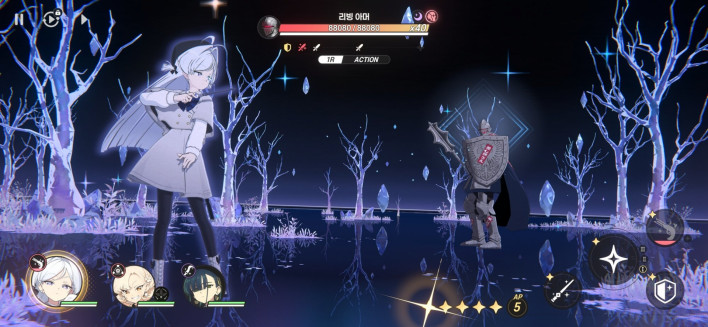
Since teaser PVs already revealed it as a turn-based RPG, readers will likely wonder how it sets itself apart from existing mobile turn-based RPGs. Modern mobile turn-based RPGs often draw from turn-based traditions to break away from simple back-and-forth trades and speed up the tempo, and AsOra follows a similar path. However, rather than relying on gaining extra turns, it references systems evolved to deliver a more real-time feel.
To explain it simply in familiar terms, much like Final Fantasy's ATB system, an action gauge appears beneath the enemy's health bar. Once filled, the enemy acts immediately—even during an ally's turn—taking the initiative. Therefore, players must use skills quickly to preemptively subdue the enemy. Going further, AsOra features a combo system that allows players to continuously attack within a single turn until AP is depleted, alongside mechanics that encourage appropriate responses to enemy actions. Normal enemy attacks can be interrupted with preemptive strikes, while heavy attacks signaled by a shield icon can be parried with well-timed counters to steal back the turn. Unblockable attacks marked in red cannot be countered, requiring players to swap in a tank or an ally with higher health to soak the damage.
Looking at basic actions, like other mobile turn-based games, combat consists of three types: basic attacks, combat skills, and ultimate skills. Among them, basic attacks and ultimate skills consume AP (which acts as skill points), while combat skills have individual cooldowns. In practice, players barrage enemies with combat skills until they go on cooldown, then switch to basic attacks to reduce combat skill cooldowns and prepare for the next assault. Ultimate skills can only be activated once their gauge is full, consuming AP without mechanics to pull turns forward like in other turn-based titles.
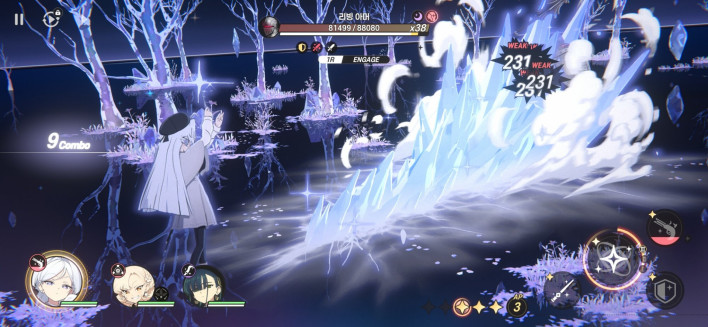
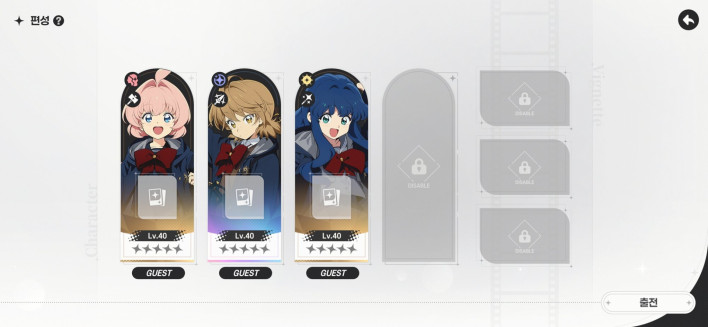
Another unique aspect is the 3-player tag-team combat structure. On the battlefield, allies and enemies fight in a 1-on-1 format. On their turn, players can tag in another character to extend combos or swap out heavily damaged characters for tactical advantage. The special skills activated during a tag-in vary by character and class, though the brief demo duration and fast-paced combat made it difficult to inspect detailed effects. Nevertheless, the demo build clearly demonstrated elements that force players to remain attentive—such as enduring tough enemies through persistent tag swaps, and area-of-effect (AoE) attacks dealing damage to benched characters.
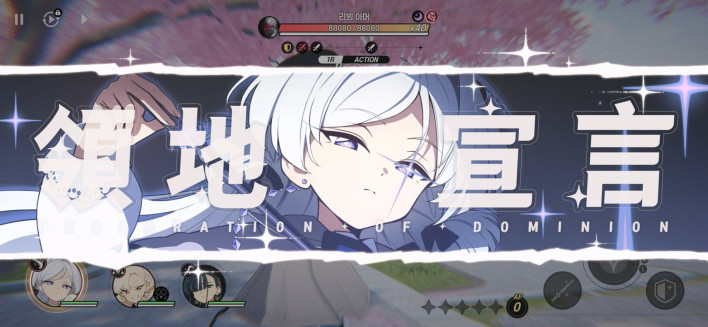
"Territory Declaration," highlighted since the initial PV, acts as a fever mode that recharges AP and resets skill cooldowns. Activation conditions vary by character and role, which was also difficult to fully parse in the demo version. However, chaining a combo by activating Territory Declaration just as AP runs out, refilling AP, and unloading basic attacks, combat skills, and ultimates felt like the satisfying execution of Modern Mode in a fighting game. Additionally, exploiting enemy elemental weaknesses to fill Break gauges faster and launch full offensives allowed players to feel the depth of tactical and strategic elements even within a short demo session.
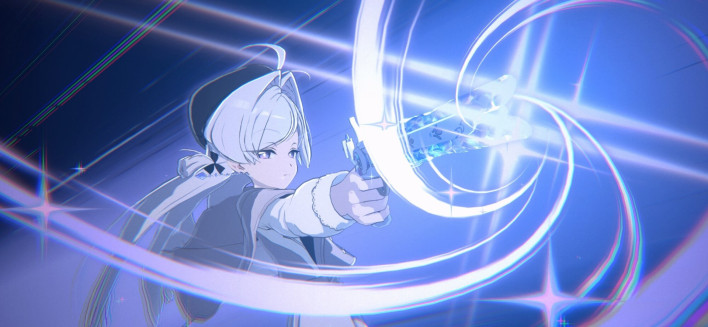
Deep Retro Sensibility Infused with Visual Novel Flair
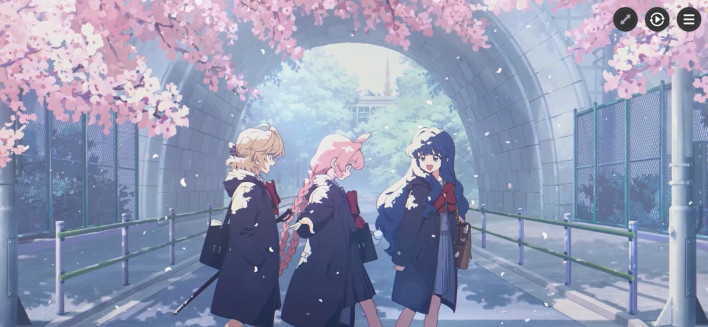
As a subculture RPG, combat is essential, but how the story and characters are presented is equally critical. Given the nature of game show demos, showing the full context is difficult, often limiting the showcase to a glimpse of narrative presentation and pacing.
In this TGS 2026 demo, the developers showcased a story snippet structured as a combat tutorial alongside Chapter 1 of the main story's opening arc, "Magical Activities of the Minato Ward Girls". The tutorial section features Yuria Kujo, a Kyoto mage who appeared like a mastermind at the end of the PV, crashing a helicopter into a barrier to intrude and battle the Minato Ward girls. After Yuria Kujo crashes through the barrier, the demo transitions directly into combat introducing AsOra's fundamental systems, followed by a standard progression of dialogue scenes and animated cutscenes.
While the broader outline might sound conventional, the dialogue details may feel somewhat unfamiliar depending on the audience. In addition to original proper nouns like Territory Declaration, terms like Shinsengumi or Mimawarigumi surface without explanation, requiring a degree of familiarity with Japanese history and culture. Attendees at the demo who were less familiar with subculture genres expressed some confusion. Given the time constraints and the local Japanese venue, the demo build felt as though it assumed prior knowledge rather than explaining every term in painstaking detail.
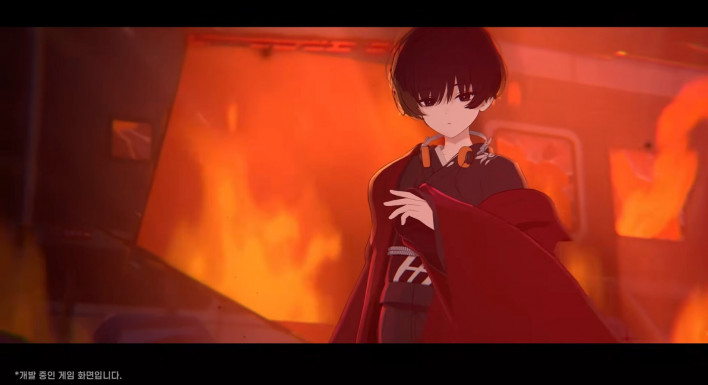
Still, because the combat tutorial follows the standard formula of mobile gaming—encountering a powerful foe early on, retreating, and transitioning into flashbacks or character dialogue—it was not difficult to grasp the big picture. More than anything, the developers' intention to strongly evoke otaku nostalgia stood out. The highlight was the closing moment, where the developer and publisher logos appeared alongside the classic Japanese broadcast voiceover, "Goran no sponsor no teikyou de okurishimasu" (Presented by the following sponsors).
The story mode following the tutorial maintained this direction. Rather than using the typical dialog box layout common in mobile RPGs, the interface adopts a classic visual novel layout with text displayed directly over background CGs. To be specific, it immediately calls to mind classics like Tsukihime or Fate/stay night. Although there is a player avatar known as the "Chief", opening the narrative not from the Chief's perspective, but through a monologue by Erin Tanaka—one of the main leads in Magical Activities of the Minato Ward Girls—left quite an impression.
Mobile hero-collector RPGs have traditionally revolved around a protagonist serving as the player's avatar. This design choice gently introduces newcomers to the world step-by-step. "Shin-Denki," however, operates differently. In this genre, occult forces and magic exist beneath the surface, unknown to ordinary people and the protagonist, until a series of incidents triggers a flood of lore and mysteries. Rather than explaining everything explicitly, readers piece the world together through events and character interactions. Set in realistic urban settings, Shin-Denki weaves real-world mythology, folklore, and occultism together rather than purely fictional concepts. Explaining every motif in detail would be tedious and pedantic; thus, the genre typically compresses lore by linking terminology and motifs directly into narrative elements.
In short, it is a genre less concerned with educating a newcomer from scratch and more focused on someone swept up in events who must learn about the world to overcome immediate crises. In some ways, it shares common ground with post-apocalyptic works inspired by late 20th-century millennial angst; however, unlike post-apocalyptic settings, Shin-Denki coexists with ordinary everyday life, allowing tone shifts into lighter atmospheres depending on the execution.
AsOra firmly conveyed this charm even within its brief demo build. From comic relief moments featuring the villainous-looking Yuria Kujo to the tonal contrast between the battle tutorial and the serene slice-of-life Chapter 0 involving Erin Tanaka and the Minato Ward girls, the core elements of Shin-Denki were distinctly captured. By combining mobile RPG conventions with classic anime tropes, visual novel story beats, and a chapter conclusion reminiscent of an anime opening theme, the demo delivered a strong first impression steeped in the nostalgia of that era.
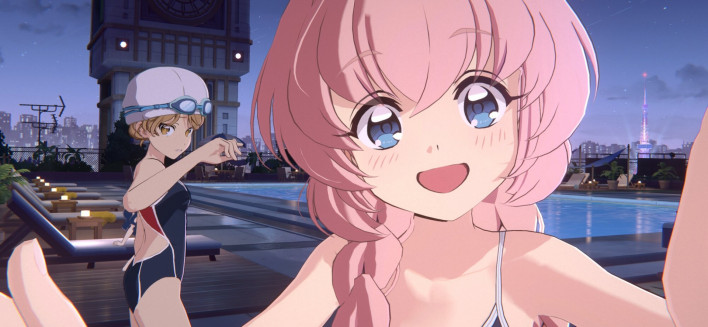
Astraea Oratio Shows True Passion and Otaku Devotion; Polishing Will Be Key
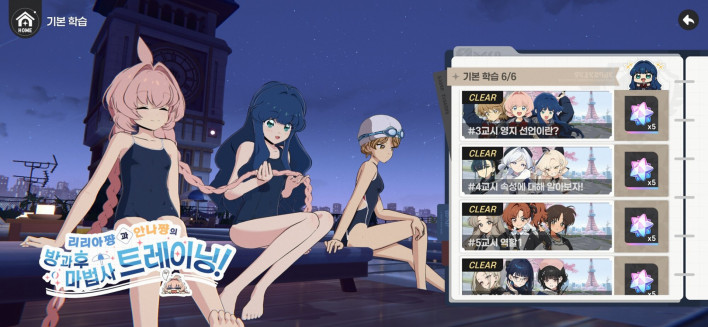
AsOra shows evident care in rediscovering elements from the '90s through the late 2000s, refining them for mobile platforms while faithfully evoking nostalgia. This makes it both welcoming and slightly concerning—much like a traditional bowl of gukbap or rich tonkotsu ramen that brings back fond, unrefined memories.
However, in actual gameplay, character modeling exhibited a strong sense of visual unity, and event CGs blended seamlessly without standing out awkwardly since their linework was less heavy than the key illustrations. Rather, UI and UX were somewhat disappointing, even for a demo build. In emphasizing concept and cinematic style, text and UI elements felt overly small and blended into the background, while combat rushed forward without giving players time to identify buffs, debuffs, or skill effects. Many elements seemed to assume that players were already experienced with game mechanics, and how audiences react to this during the demo will be critical.
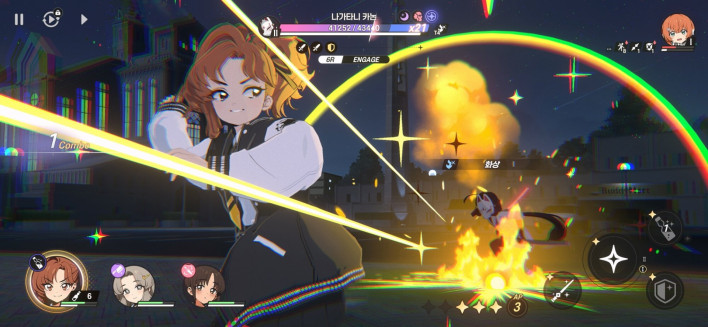
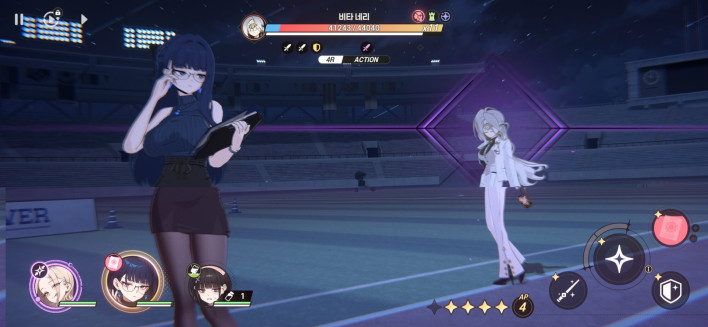
In truth, this issue is common among developers conducting external tests for the first time after long internal testing. Internal testers become accustomed to the UI and UX over time, leading developers to overlook potential pain points. While games following mainstream formats face fewer trial-and-error moments of this kind, AsOra likely experienced this because it attempts to build a new iteration based on beloved classic tropes. Consequently, while players may occasionally feel baffled, the moment a familiar flavor registers, it leaves them wanting to savor it slowly. With CBT tester recruitment open through the end of TGS 2026, it will be exciting to see what glimpse of a dream AsOra delivers after incorporating player feedback.