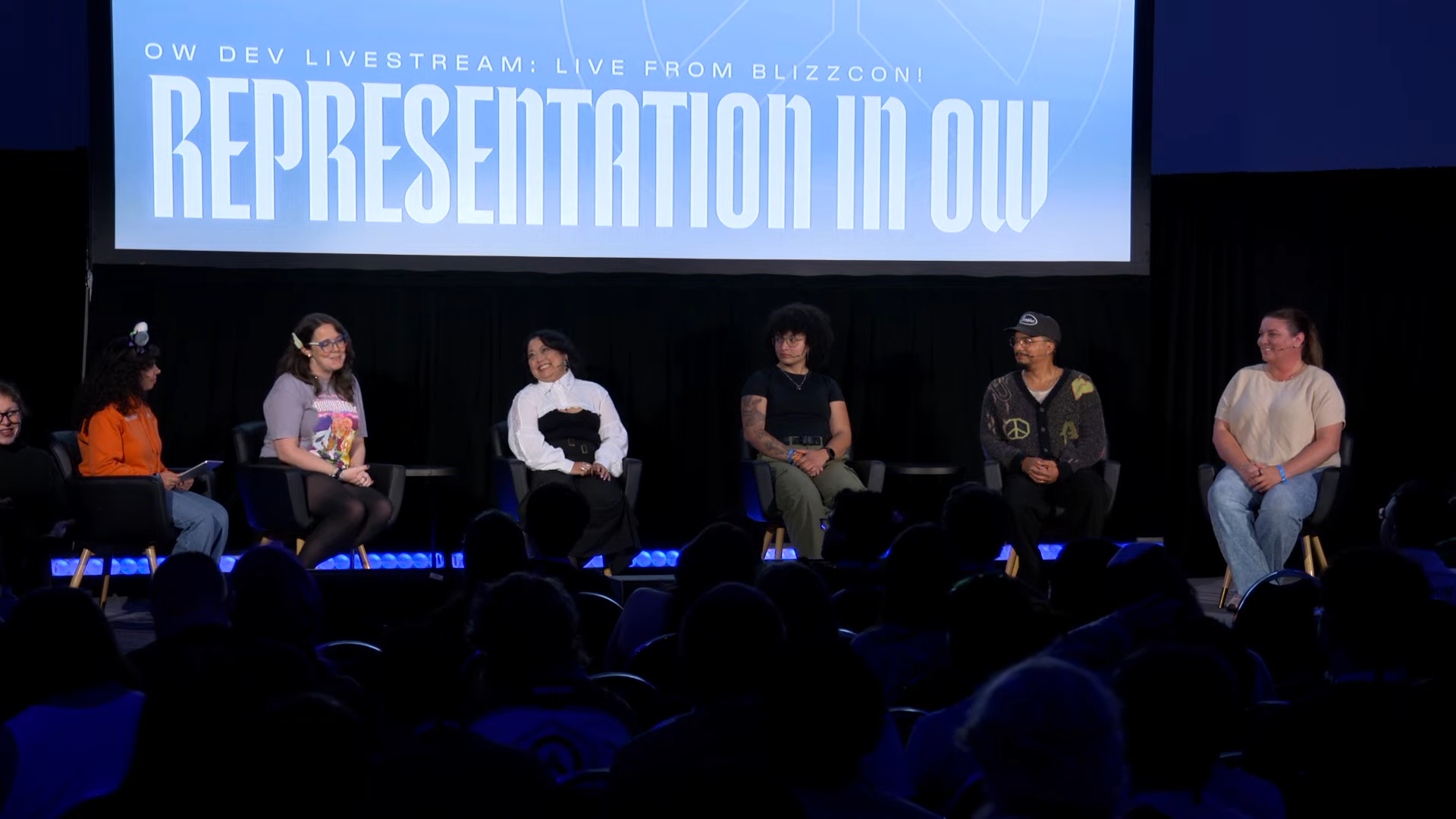
The hero and universe creation process was revealed during an Overwatch developer livestream held at the BlizzCon 2026 Legend Stage. Four developers and one esports program manager participated, sharing case studies of the research and collaboration involved in embedding specific cultures and identities into characters.
★ Session Summary
· Lifeweaver's lore was consulted with the internal LGBT network formed following the Tracer comic
· Lúcio's Portuguese voice lines were added after persistent requests from a Brazilian producer
· Venture's Mexican expressions originated from a document compiled directly by a tech artist from Mexico
· Sierra's hair animation work led to a Play of the Game scene in the LE SSERAFIM collaboration
· 20,000 to 30,000 pieces of feedback are received on Overwatch social channels daily
The participants were Content Operations Specialist Jessica DiPaola, Game Producer Myrna Sayuri Kusano, Tech Artist Ana Martinez, and Associate Director of Social Media Everson Marsh. Later in the session, Heather Mumm, who operates the esports program Calling All Heroes, joined the panel.
Internal Network Started by Tracer Comic Leads to Lifeweaver
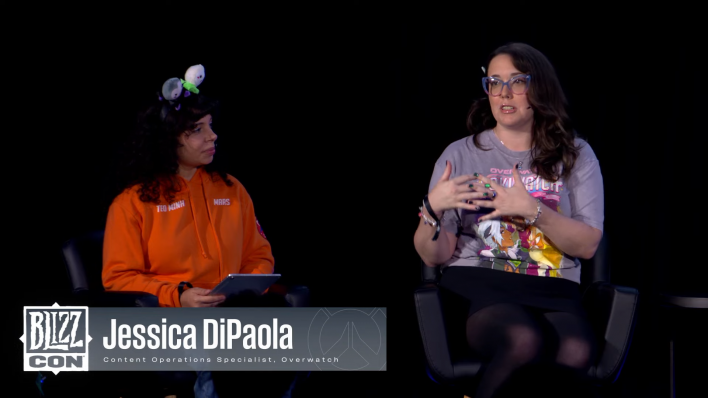
Jessica DiPaola serves as the lead for the Blizzard Irvine Campus LGBT Network. The organization originated from the Tracer comic "Reflections," released several years ago. At the time, Team 4 asked to assemble a group of developers to consult on the comic, and the people who gathered grew into the permanent network.
The same process was later applied to Lifeweaver. The dev team reached out to network leaders to discuss voice line interactions with other heroes and how to handle interactions fitting the character's identity and background. DiPaola noted that care was taken to avoid creating a character just for the sake of creating one. This work led to a nomination at the GLAAD Media Awards.
How Lúcio's Portuguese and Venture's Mexican Expressions Came to Be
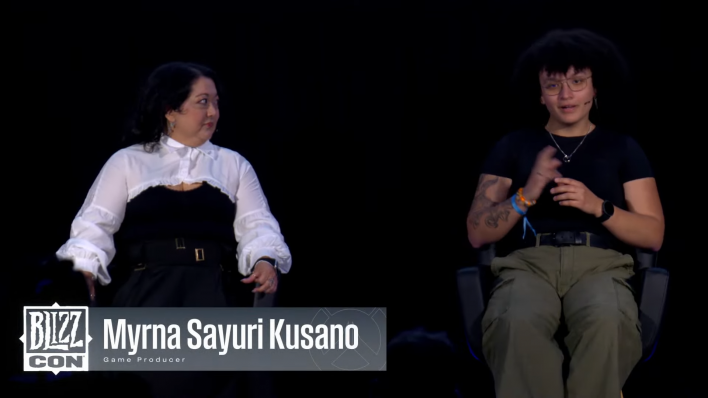
Myrna Sayuri Kusano, who grew up in Brazil, raised concerns about Lúcio having no Portuguese voice lines in original Overwatch. At the time, only a few villains spoke Portuguese, while none of the playable heroes did. After multiple discussions with the team, voice lines were eventually added. Kusano admitted that she was quite persistent and added a lighthearted apology to the staff member who had to learn Portuguese for the task.
Ana Martinez, who is from Mexico, shared a similar story. While Venture was in development, she grew close with the assigned narrative designer and offered to compile expressions used by today's younger generation. The resulting two-to-three-page document detailed expressions, translations, and real-life usage, some of which were incorporated into actual in-game voice lines.
Martinez also mentioned that Doctrine speaks Tongan, sharing that it was interesting because it was a language she had never heard before.
Sierra's Hair and the LE SSERAFIM Play of the Game
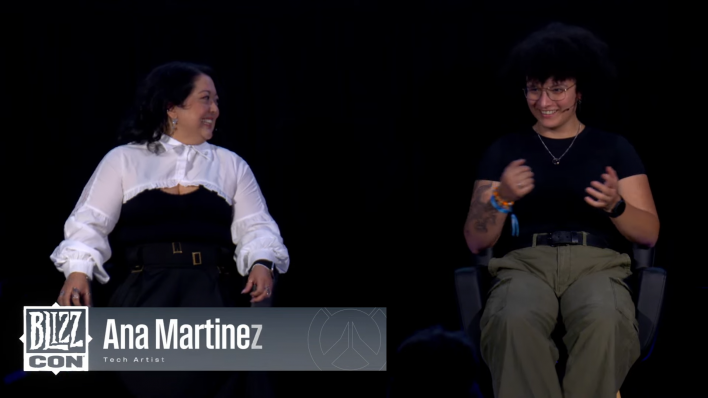
One of Ana Martinez's recent assignments was Sierra. The very first area she worked on was her hair. She explained that because Overwatch is a fast-paced game with running, jumping, and aerial movement, repeated testing was required to ensure specific details remained visible at all times.
The goal was not hyper-realistic depiction, but a feel that felt authentic. Sierra's long hair had to maintain a sense of weight without impeding movement, and players needed to recognize her by silhouette alone. Martinez stated that she established the silhouette while preserving Sierra's identity as a Black American woman. Because the engine is relatively old, work on creating new hair textures and movement was carried out alongside it.
This work yielded unexpected results elsewhere. When creating Play of the Game animations for the LE SSERAFIM collaboration, camera work was set for other heroes, but Sierra's sequence remained awkward. An animator suggested a hair-flip gesture, and that shot was chosen as the final animation.
Everson Marsh noted that during the early stages of Sierra's development, the internal Black employee network participated in consultations. Being the first Black American female hero, expectations were naturally high, particularly regarding hair rendering and texture. However, Marsh noted that because the dev team requested feedback early enough, discussions could proceed with a shared understanding of the intent and design.
20,000 to 30,000 a Day: When Does Feedback Reach the Game?
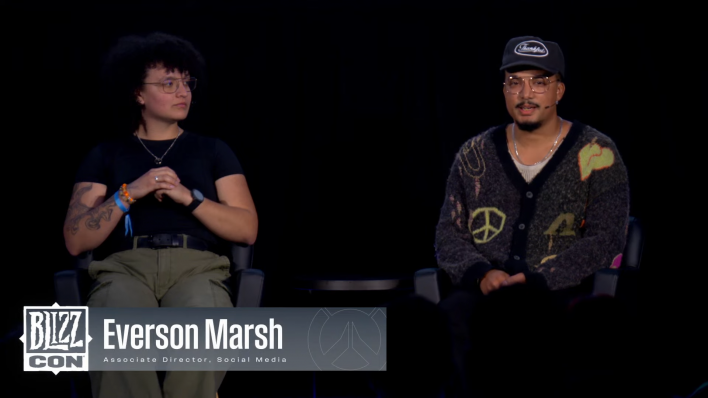
An explanation was also provided on why it takes time for feedback to make it into the live game. Ana Martinez pointed to the structure of live-game development as the reason. The process of building, getting approval, receiving feedback, and revising repeats across multiple stages and requires department sign-offs and leadership reviews, meaning progress is rarely linear.
Everson Marsh revealed that between 20,000 and 30,000 people submit feedback to Overwatch social channels each day. He explained that his role is to aggregate reactions scattered across various language regions and deliver them to the dev team. When Sierra was revealed, his team opted for a direct outreach approach to communities that had been waiting for such a hero.
The handling of negative feedback was also addressed. Marsh likened situations where a vocal minority makes significant noise to a tempest in a teapot, stating that he tries to respond in a balanced manner to both difficult conversations and positive reactions.
The Ramattra dance emote was presented as an example of community feedback being implemented. Myrna Sayuri Kusano, who leads the animation team, shared that she had been working on it for a long time. When the annual roadmap was unveiled during last February's Spotlight, the Ramattra dance was set aside and revealed in a dedicated segment at the end—a decision made to give it its own spotlight due to intense community demand. The reveal video included hundreds of request comments collected from across the internet.
Calling All Heroes Hits Year 4, Reaching Peak Concurrent Viewership of 73,000
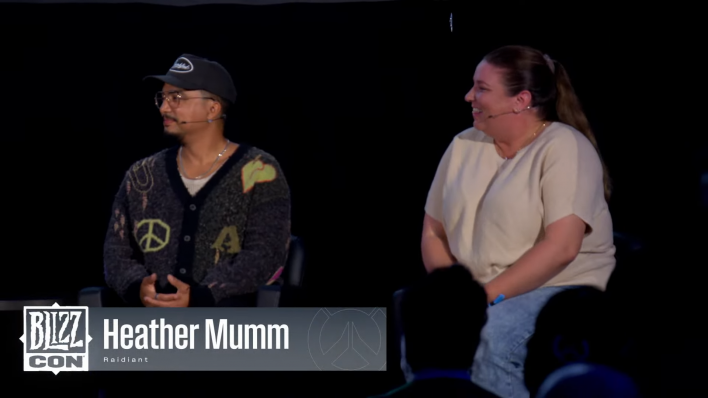
Heather Mumm joined in the second half of the panel. She is the founder and CEO of Raidiant, a former pro gamer, the first woman inducted into the Esports Hall of Fame, and an Emmy Award winner.
Calling All Heroes launched in 2022 as a pilot program. After a successful first iteration featuring several weeks of open qualifiers and playoffs, it established itself as a regular program. The community currently numbers around 7,500 members, and the championship that concluded last weekend recorded a peak concurrent viewership of approximately 73,000.
Heather Mumm emphasized that a significant portion of the tournament operators and broadcast staff came directly from the community. She noted that while she is often asked why such tournaments are necessary, they serve as a crucial stepping stone for players facing high barriers to entry, with real-world examples of participants moving on to open competitions.
The session concluded with closing remarks from each participant. Ana Martinez stated that no one is a bigger fan of Overwatch than the dev team itself, adding that even if implementation seems slow, it doesn't mean they aren't listening, and that whatever players feel about the game, there are always developers who feel the exact same way. Everson Marsh concluded by saying that no matter how tough the day is, he turns on Overwatch when he gets home, encouraging the community to keep speaking up.