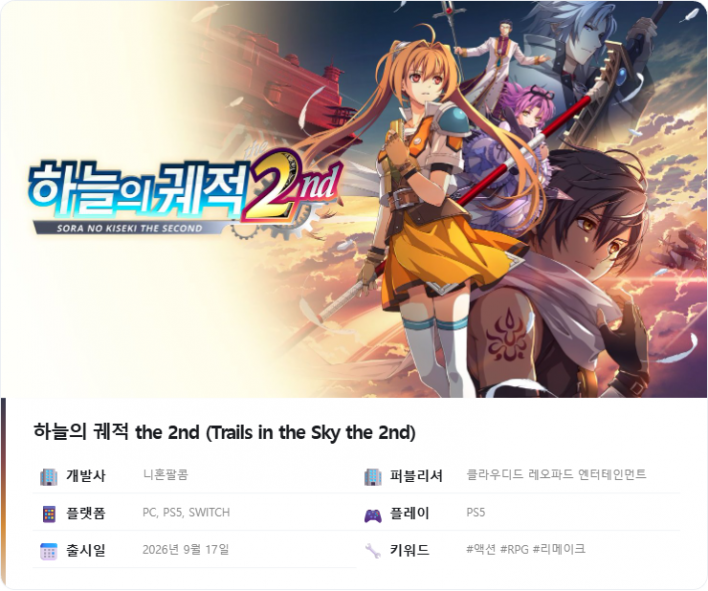
Nihon Falcom's flagship 'Trails' series, having recently passed its 20th anniversary, continues its effort to revisit its origins. Beginning with 'Trails in the Sky the 1st' released last September, its remake sequel, 'Trails in the Sky the 2nd', is set for release on September 17 following the release of its demo.
As the initial step, 'Trails in the Sky the 1st' brought together 20 years of expertise, offering fond memories for veteran fans and showing new players a harmonious blend of classic JRPG sensibility and modern design. Naturally, expectations for 'Trails in the Sky the 2nd' ran high. Returning players would be curious about how the story's main narrative is reimagined with modern graphics and scale, while those introduced through 'the 1st' would want to find out whether Estelle and Joshua will finally reunite. Building on the benchmark set by 'the 1st', 'the 2nd' delivers a deeply satisfying experience for both long-time fans and new players.
※ This review contains minor spoilers for 'Trails in the Sky the 1st' and 'Trails in the Sky the 2nd'.
Pacing UP with a Further Advanced Hybrid System

When people think of JRPGs, turn-based command combat is usually the first thing that comes to mind. From early pioneers like Dragon Quest and Final Fantasy before The Legend of Heroes, this style has become an established formula among gamers. It hasn't survived merely because of its long history or traditional status, either. Turn-based command combat delivers real catharsis by letting players maximize system mechanics, read enemy moves like chess or shogi, and methodically execute strategies to minimize party damage while defeating foes. However, because combat unfolds in turn-taking sequences, its pace is naturally slower than real-time action games, which can present a barrier to entry for some players.
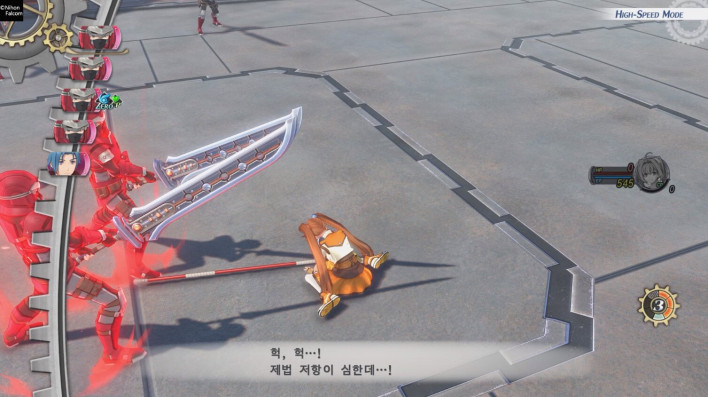

How to lower this barrier has been a major topic among modern JRPG developers, and Nihon Falcom already provided a solution starting with the 'Trails through Daybreak' series. Their answer came in the form of High-Speed Mode to accelerate gameplay, alongside 'Field Battles' that allow players to fight enemies in real-time on the field before seamlessly transitioning into Command Battles at will, rather than jumping straight into turn-based combat upon an encounter. Introduced in Trails through Daybreak, this system continued to evolve through Kai no Kiseki, Trails in the Sky the 1st, and now the 2nd, refining its polish step by step.
Even with real-time combat added, turn-based Command Battles remain the core foundation of the 'Trails' series. Consequently, Field Battles do not quite offer the full experience of a dedicated action RPG. They serve more as a prelude—using basic attacks and dodges to quickly breeze through minor skirmishes or secure an advantage before starting a Command Battle. Even as a bridge to leap straight into the climax of turn-based battles, relying solely on basic attacks and evasions over long stretches could still become repetitive. Given that Trails in the Sky the 2nd boasts an even larger scope than its predecessor, addressing this issue was essential.


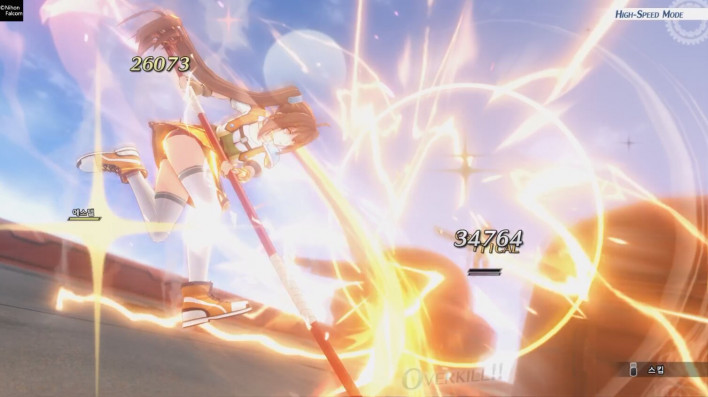
Addressing this challenge with the new 'Brave Rush' system was a masterstroke in Trails in the Sky the 2nd. By spending two Brave Gauges in Field Battles, players can execute wide-area special attacks alongside party members, allowing them to rapidly clear regular mobs without entering Command Battles at all. In Trails in the Sky the 1st, transitioning to Command Battles was virtually required past the very early game—stunning an enemy, immediately switching to Command Battle, triggering a Brave Attack, Chain, or Burst depending on gauge availability, and seizing turn order to gain the upper hand with Arts or Crafts. While that setup was already significantly faster than the series' turn-based-only era, the addition of Brave Rush accelerates early-game pacing dramatically.
In truth, as the title implies, most people playing Trails in the Sky the 2nd will have already played 'the 1st'. Having already weathered one grueling conflict before setting off again, player instinct is to get past basic tutorial sections quickly and dive into the meat of the story—or skip familiar ground fast. Capitalizing on that desire, the bold decision to let players spend Brave Gauges directly on the field from the outset—rather than forcing them into Command Battles first—pulls the progression pace forward nicely.
Thoughtful Design Touches That Maintain Momentum
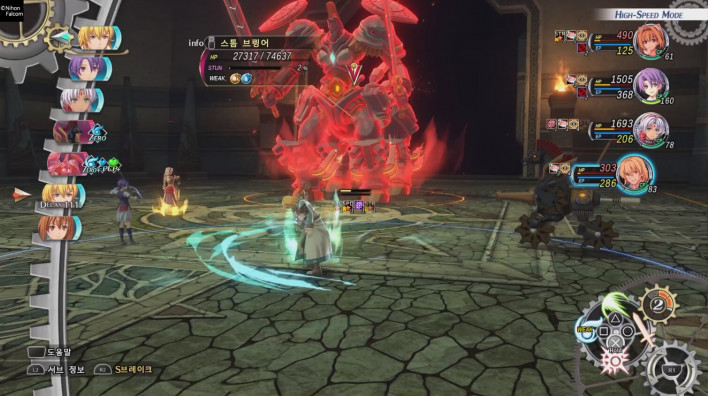

This is not to say Trails in the Sky the 2nd neglects its core turn-based Command Battles. The fast pacing applies strictly to ordinary mobs meant for grinding or notebook completion; bounty monsters and boss fights are strictly handled through Command Battles. These Command Battles incorporate mechanics refined over the series' history—such as Sub-Abilities that trigger conditionally out of turn, and finisher S-Crafts that can be unleashed instantly regardless of turn order once the gauge is full—tailored to Trails in the Sky to deepen tactical depth.
At the same time, given that Trails in the Sky the 2nd features more challenging battles than its predecessor, players might worry that buffing only the player's party could trivialize combat. Especially with Ouroboros—one of the Trails series' major antagonist factions—making their full appearance, fans will naturally be curious about how these intense showdowns were adapted into the upgraded format.
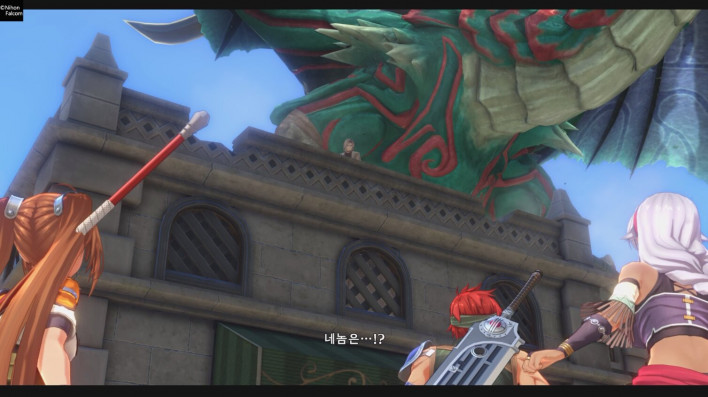
To speak to that point, Enforcers of Ouroboros employ 'Legion Boost', an ability even more devastating than the standard Rage Boost. While Rage Boost boosted stats and advanced enemy turn order before striking, Legion Boost monopolizes turn order to an almost unreasonable degree. Some Enforcers go beyond that, chaining dazzling Arts and Crafts in a relentless assault that leaves the player's party completely overwhelmed. Veterans of the original SC might fare better by preparing setups in advance, but newcomers will likely find late-game boss fights shocking. Fighting Renne, for instance, often opens with a sudden instant-death attack that wipes out a party member right out of the gate. Personally, beyond Renne, fighting the Bladelord late in the game was a major headache, as he mercilessly hijacked turns while manipulating clones and flashy Arts.
The old-school "trial-by-fire" approach was common in past eras, but today it represents a steep barrier to entry. Though intended as shock therapy to highlight the fun and importance of proper party preparation, losing party members unexpectedly without warning remains quite frustrating. However, since these challenges define character identity, toning them down carelessly was not an option.
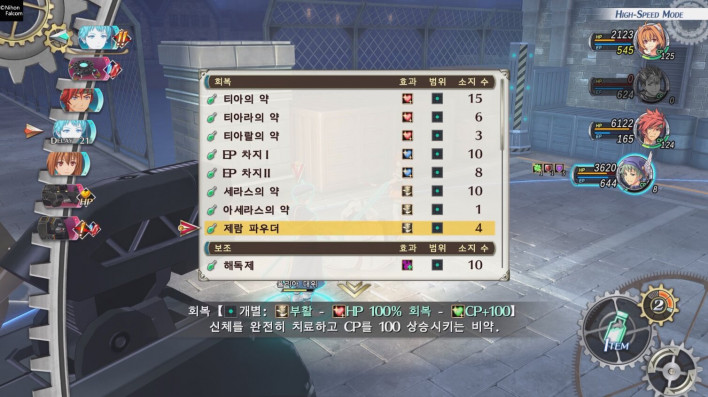
Trails in the Sky the 2nd largely resolves this difficulty spike by increasing the number of treasure chests scattered across fields, particularly those containing revival items like Zeram Powder. Revival items are quite expensive in the early-to-mid game, leaving many players underprepared, so placing them directly in players' hands helps them prepare for emergencies. Furthermore, chests containing key items are placed clearly in sight rather than hidden away, ensuring players can push forward without getting stuck until the narrative picks up steam around mid-game.

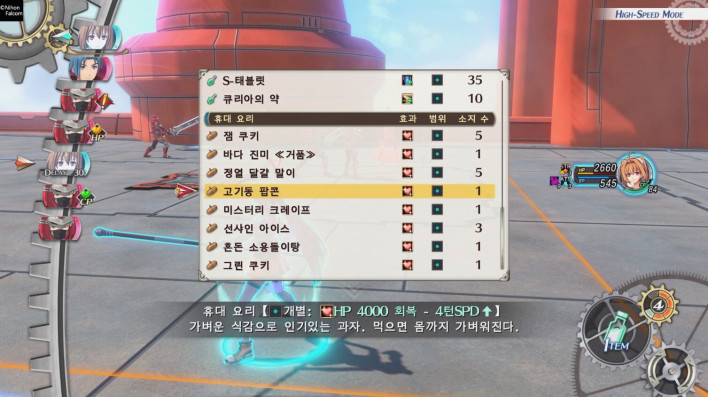
Alternatively, players can reload a previous save point and buff up using food dishes. Beyond standard recipes, dishes can occasionally yield special versions with powerful stat buffs; these effects are strong enough that encounters previously lost by a hair's breadth can be cleared smoothly after pre-buffing. Rather than adding these subtle elements as mere fluff, Trails in the Sky the 2nd weaves them meticulously into its level design, sustaining a brisk and enjoyable pace from start to finish matching its predecessor. Naturally, this allows the story—one of the Trails series' greatest strengths—to shine even brighter.
Refined Visuals and Story Direction Preserving Classic Charm
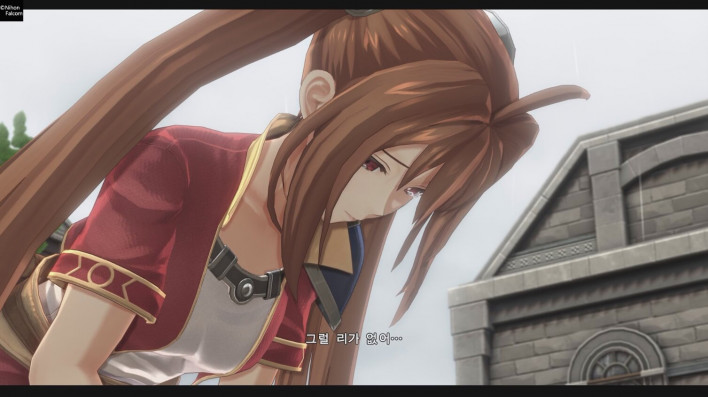
First, it is worth clarifying that playing Trails in the Sky the 1st is essential before diving into the 2nd. Rather than a standalone sequel, it directly continues the exact storyline. Therefore, playing 'the 1st' before 'the 2nd' is strongly recommended. Of course, skipping straight to part two is as rare as reading only the second volume of a novel, so this concern may be unfounded. As a courteous touch, the game provides a recap of 'the 1st' before you begin, but that alone cannot deliver the full experience. A major part of the charm in 'the 2nd' comes from revisiting locations previously explored with Joshua in 'the 1st'—this time searching for him and unraveling a new conspiracy—which evokes a nostalgic resonance.
Even without that nostalgia, 'the 2nd' is by no means an incomplete experience. In the overarching narrative, 'the 1st' served as the setup and initial development. While 'the 1st' followed the classic JRPG format—transitioning from young adventurers' fresh journeys to uncovering a grand plot—its physical scope remained modest compared to the hints dropped. It introduced characters step by step to build toward a larger scale, and 'the 2nd' finally unlocks that grand stage by systematically untangling every narrative thread.
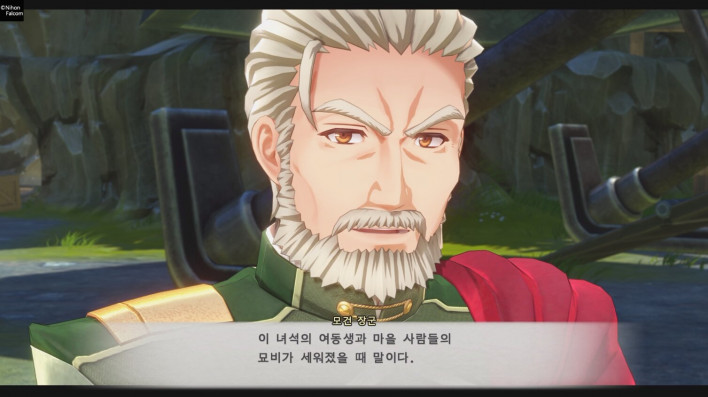
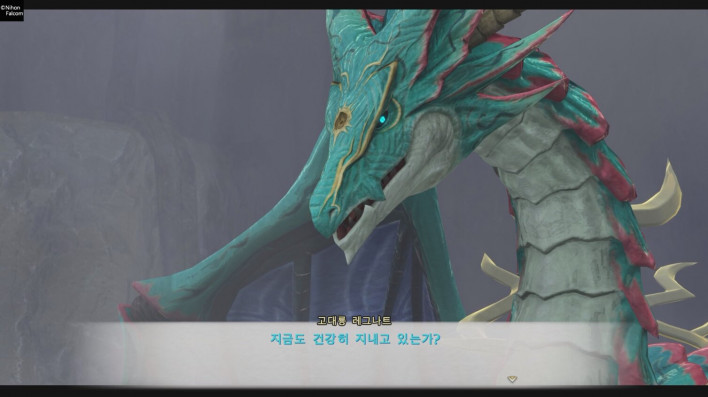
When dealing with such sweeping themes, one might worry that story sensibilities might feel dated, given the original game came out 20 years ago. Furthermore, as Estelle sets off to find Joshua, 'the 2nd' uncovers Joshua's past, along with narrative ties to war between the Kingdom and the Empire, as well as an ancient civilization. While human relationships remain timeless, political ideologies and world philosophy can feel bound to their era—and the cutscene direction even more so.
As demonstrated in 'the 1st', 'the 2nd' focuses primarily on preserving the original charm. While transitioning from past technical limitations to full 3D graphics generates excitement, it also brings concerns. In recent years, anime-style character modeling and graphical fidelity across anime-focused developers—led by Chinese studios—have advanced leaps and bounds, whereas the 'Trails' series hasn't quite kept that same pace. Although 'the 1st' successfully elevated detail and captured its signature atmosphere in full 3D, there were doubts about whether 'the 2nd' could maintain that stability during larger-scale scenes, such as airship chase sequences. Indeed, visual effects and certain elements still look somewhat unpolished in places.

Nihon Falcom addressed these limitations through smart prioritization. In cutscenes, they largely avoided particle effects unless they matched skills used in actual combat. Instead, they focused resources on key cinematic moments to capture attention. While background assets and scenery might look plain upon close inspection, players likely wouldn't notice unless replaying clips specifically for review purposes.
While playing initially, slight shortcomings remained noticeable, but as the story progressed, those concerns faded into admiration for how classic JRPG charm is rendered in modern graphics. Released just one year after its predecessor, dramatic graphical leaps were unrealistic; however, Falcom's knack for disguising rough edges while maximizing cinematic impact has improved, enabling them to handle larger, more spectacular set pieces effectively.
That impression holds until the moment the Aureole is activated, at which point the experience shifts dramatically. While overall asset quality doesn't jump exponentially, painstaking attention to detail builds a climax fitting for a final battle. This creates a thrilling momentum that carries the expanded scale of Trails in the Sky the 2nd straight through to its finale. Though instances where Cassius assists indirectly can feel somewhat brief, this was true of the original game and serves to keep the story moving rapidly without getting bogged down by tedious exposition.
More Than an Exemplary Remake: 'Trails in the Sky the 2nd'
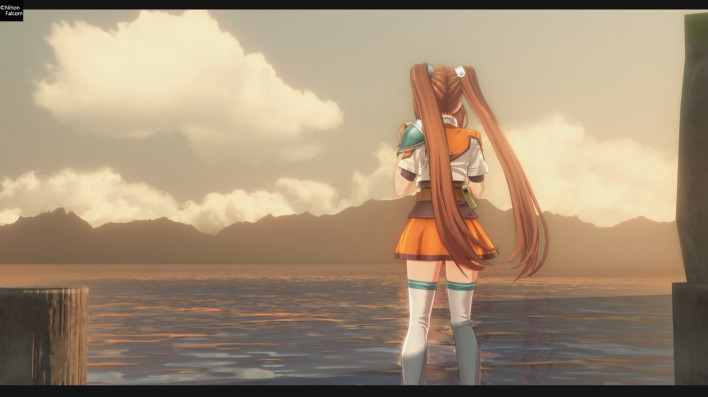
As noted in the review of Trails in the Sky the 1st, 'the 2nd' delivers another exemplary remake. Solving the difficult challenge of modernizing gameplay while preserving original sensibilities is no easy task. Going a step further, 'the 2nd' refines areas where 'the 1st' experienced trial and error, seamlessly drawing players into the narrative and mechanics of the Trails series.
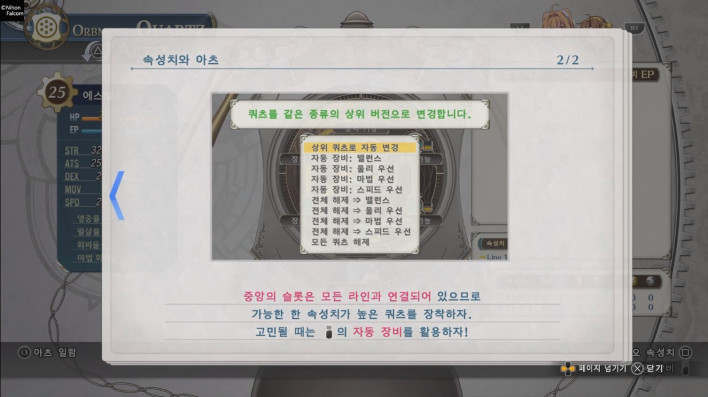
Notably, the Arts system utilizing Quartz and Orbments feels far more intuitive. Players can grasp early on how elemental value combinations and line arrangements alter available Arts, aided by acquiring various Quartz from chests. Auto-equip features introduced for players unfamiliar with the Orbment system now offer more detailed options, easing setup anxieties for beginners. Additionally, minigames like the casino and fishing, along with hidden collectibles, return intact to evoke warm nostalgia for long-time fans. Thanks to the accelerated overall pacing, even series newcomers can enjoy exploring and searching for secrets without feeling bogged down.
Despite the faster pacing, the Trails series relies heavily on narrative depth, requiring substantial time to savor fully. A first playthrough—clearing main quests alongside side quests found directly along the path—took roughly 26 hours. Yet because there were no artificial padding segments to bloat playtime, the design craftsmanship spent purely on enjoyable gameplay and story was truly impressive. While charging into fights against Renne or the Bladelord without prior knowledge led to multiple retries, beginners can generally breeze through other sections while immersing themselves in the world of Trails. Missing hidden elements along the way is a minor regret, but the robust New Game+ feature carried over from 'the 1st' eases any worries about completion.

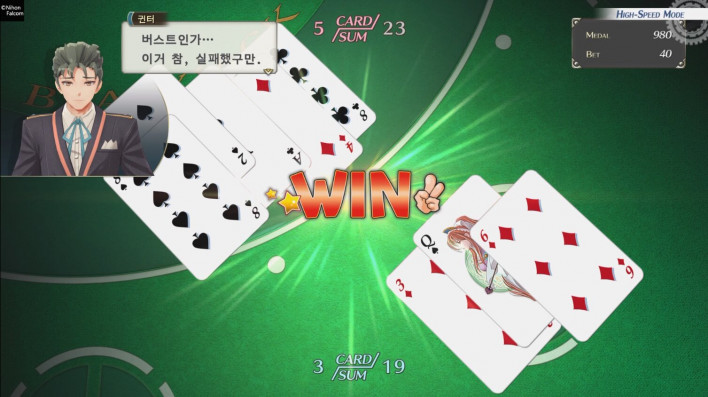
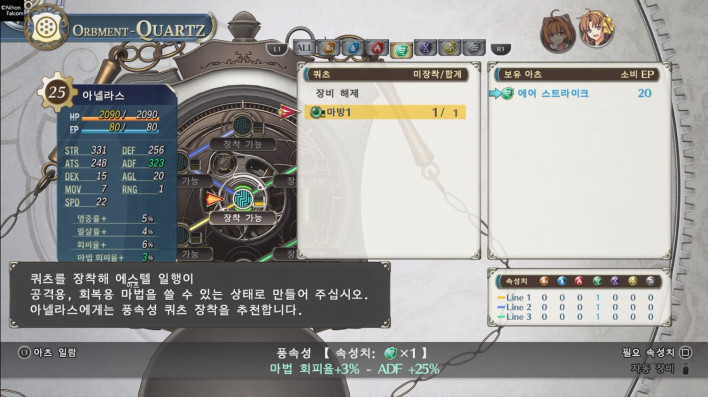
Despite the thoughtful design and attention to detail, minor flaws and inconveniences linger. While minimap and quest tracking functions exist, they offer only vague indicators that feel clunky until accustomed to. The process for inspecting enemy information retains classic menu-toggling, which may feel tedious to players unaccustomed to JRPGs. While many view these quirks as nostalgic hallmarks of classic JRPGs, individual player tolerance may vary.
Following 'the 1st', Trails in the Sky the 2nd admirably fulfills the monumental task of recreating 20-year-old nostalgia while renewing it for a modern audience—if not exceeding expectations. Beyond advancing established gameplay systems, it expertly masks technical limitations while enhancing details to propel momentum toward its climax. Though familiar tropes might occasionally seem predictable, Falcom's mastery in honoring classic sensibilities without awkward alterations converts nostalgia into a compelling experience.
Full immersion carries the prerequisite of playing at least a portion of 'the 1st', but for anyone who played 'the 1st'—or remembers the original FC—'the 2nd' acts as a virtual time machine. It stands as a masterpiece that perfectly balances nostalgic warmth with modern pacing well beyond a simple remake. It remains uncertain whether a remake of 'Trails in the Sky the 3rd' will follow, but finishing 'the 2nd' will surely leave players eagerly anticipating one. Regardless, this remake maximizes the power of a beloved classic to 120%, making it a journey well worth experiencing.
- Full 3D direction capturing classic charm and strengths
- Faster, more dynamic real-time combat pacing
- Turn-based combat highlighting strategy and setup depth
- Beginner-friendly QoL, auto-equip options, and tips
- Graphics and visual effects still fall slightly short
- Slightly dragging late-game pacing
- Playing 'the 1st' first is essential for full immersion
Review Platform: PS5 (Pre-release Build)