'Elden Ring' is a game that hardly needs an introduction. Released in 2022, the original game scored 96 on Metacritic, and with the addition of 'Shadow of the Erdtree', it solidified its place as one of FromSoftware's flagship titles. Over the past few years, gamers have endlessly praised how brilliantly it combines open-world design with traditional Souls mechanics, as well as its overwhelming boss fights and build variety.
As such, the standard for evaluating 'Elden Ring: Tarnished Edition', released on the Nintendo Switch 2, must be slightly different. The game's content hasn't changed dramatically, and we are scoring an already complete work. Evaluation of the game itself is already thoroughly established. What this review needs to examine is whether that same level of quality can be properly experienced in a new environment: the Nintendo Switch 2.
In particular, the Switch 2 version unveiled last year raised significant concerns over performance issues. What are the results after delaying the launch to polish the game? Playing 'Tarnished Edition' in practice proved far more stable than expected. The problem is that a rather wide gap exists between the fact that 'it runs well' and deciding that 'it's worth choosing this version.'
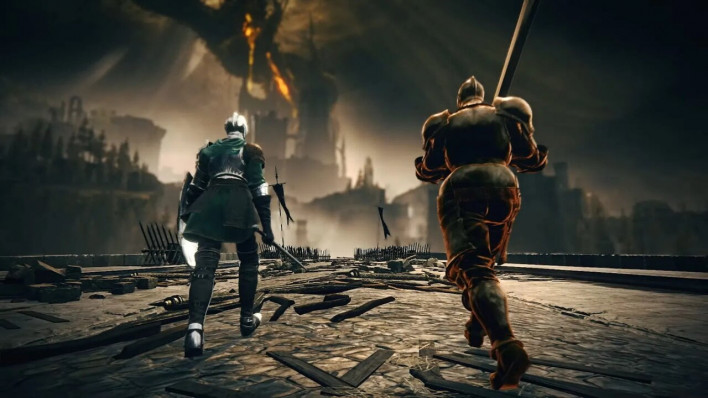
Running better than expected: The Lands Between in your hands
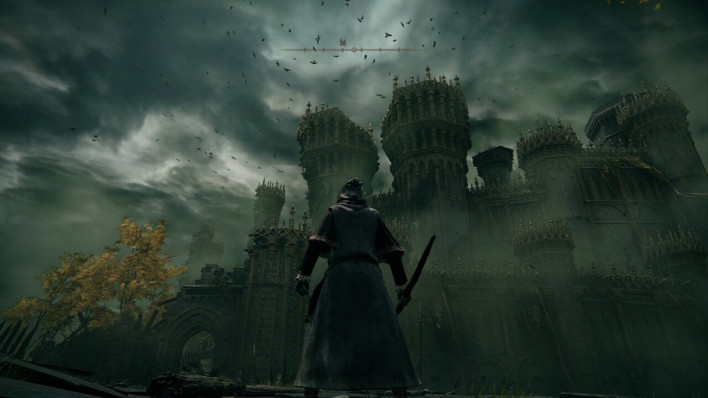
The most impressive aspect was undoubtedly handheld mode. Looking closely at the screen, textures appear somewhat rough, and compared to other platforms, the difference in graphical quality is undeniable. Nevertheless, seeing an open world of 'Elden Ring's scale running respectably on a small screen was quite impressive. Considering the device's hardware limits, it feels like it makes aggressive use of the Switch 2's performance.
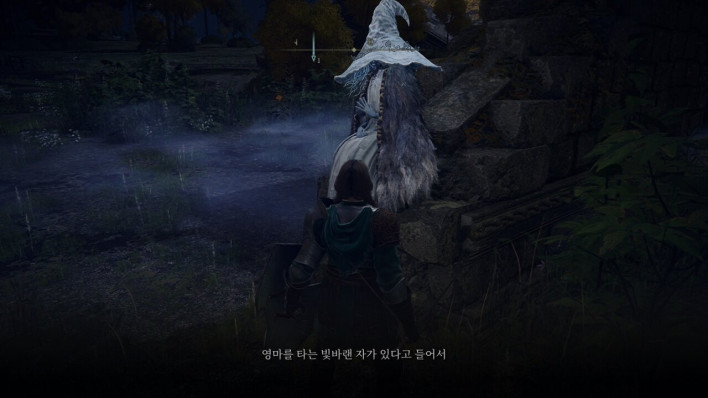

Even when starting the game, stepping out onto the golden fields of Limgrave, and confronting the infamous refund gatekeeper(?), the Tree Sentinel, screen motion remained relatively stable. Perhaps because I remembered the heavy criticism surrounding the Switch 2 version last year, the first impression was actually better than anticipated. At least while exploring the open world, my initial thought was, 'This is surprisingly playable.'
Loading times were also better than expected. Compared to PC or PS5 utilizing SSDs, wait times are certainly longer, but not to the extent that dying and restarting or fast-traveling between Sites of Grace breaks the flow. Smaller spaces like Roundtable Hold loaded relatively quickly, while traveling to vast areas like Limgrave or Liurnia of the Lakes took slightly longer. Part of it might be that I didn't set high expectations to begin with, but there were moments where loading finished surprisingly fast, catching me off guard.
Battery consumption didn't feel particularly burdensome given the massive scale of 'Elden Ring'. The battery drained at roughly the same rate as 'Splatoon Raiders', which I played recently, and depending on the situation, 'Splatoon Raiders' actually felt like it drained faster. While the Switch 2 isn't a device with abundant battery life to begin with, it isn't something that can be singled out as a problem exclusive to 'Elden Ring'.
However, the story changes slightly in docked mode. While playing becomes more comfortable thanks to a larger screen and a standalone controller, it was difficult to feel that graphics improved noticeably compared to handheld mode.
Since you still end up playing under a similar framerate environment, the biggest advantages gained in docked mode are essentially screen size and controller options. The moment you play 'Elden Ring' in front of a TV, you naturally compare it to past memories on PC or PS5, making it hard not to notice that the Switch 2 version falls behind in both graphics and motion smoothness.
A 'stable' 30 fps is still 30 fps in the end
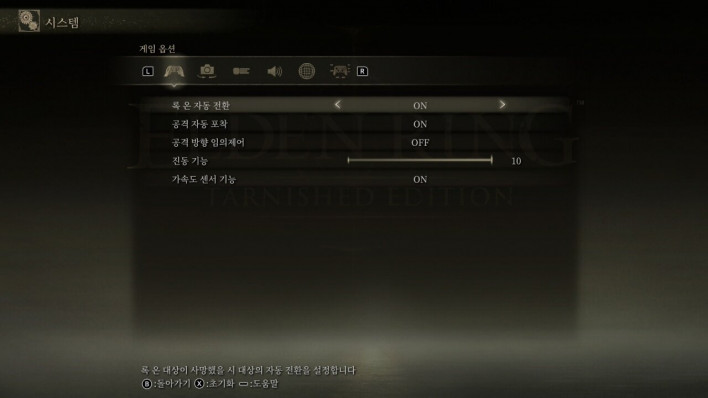
The biggest issue with 'Elden Ring' on Switch 2—and what many Tarnished still worry about—comes down to framerate. In actual gameplay, screen motion maintained a relatively stable 30 fps in most situations, and I hardly felt that sudden drops made the game unplayable. Considering the concerns raised from last year's preview build, the final result is considerably refined.
That said, the 30 fps reality doesn't disappear. Of course, humans are creatures of habit and can get used to it with prolonged play, but for someone who has already experienced a smooth 'Elden Ring' on PC or PS5, that adjustment was far from easy. While walking through fields and picking up items doesn't bother you much, the moment combat suddenly begins, the frustration resurfaces.

The difference is especially glaring in boss fights. Since launch, 'Elden Ring' has been famous for bosses utilizing delayed attack telegraphs that mess with the player's dodge timing. Waiting for an attack, rolling, and reading the boss's movement to decide your next move is an essential core of combat.

Re-encountering Margit for the first time, those signature off-beat delays felt even weirder than before. The slam attack that waits for the Tarnished to burn stamina rolling came down in slow motion, and my own dodge roll used to evade it felt equally sluggish. The actual in-game attack speed hadn't changed, but perceptually, it felt like trading blows in a world where everyone moved a step slower.
FromSoftware's signature camera motion also presents a larger drawback in this environment. When fighting up close against massive enemies with your view obstructed by their bodies, or when the camera shakes violently following a boss's movement, you must quickly rotate your perspective to assess the situation. On Switch 2, even this process felt sluggish as if the screen trailed a beat behind, making for a poor match with combat that demands precise reads on enemy actions.

It's a similar story when moving quickly on Torrent. Roaming open fields poses little problem, but when finer directional control is needed in tight terrain, the 30 fps environment combined with Joy-Con controls can become a hindrance. In Sellia, Town of Sorcery, where you must leap across rooftops to break seals, I had to watch myself fall down repeatedly after missing precise landings.
It's not unplayable. In fact, it runs much better than expected. However, in most situations, 30 fps feels like small ankle weights attached to your feet. You can run and you can fight, but the longer you play, the more conscious you become of that weight—a persistent kind of discomfort.
Playing 'Elden Ring' in bed is undeniably appealing, but...

'Portability' is the clearest differentiator for the Switch 2 version, which sacrificed graphical fidelity and framerate to get there. Playing 'Elden Ring' while leaning back on a couch or lying in bed was surprisingly satisfying. Just holding the Lands Between in your hands—a realm previously seen mostly while sitting at a desk—changes how you interact with the game.
Of course, maintaining a lying position when facing tough bosses isn't easy. After dying a few times, you naturally sit upright. On the other hand, handheld mode suited exploration remarkably well—riding Torrent across unexplored areas, searching for caves and items. There is definitely a sweet spot where moments of downtime in 'Elden Ring' align perfectly with the Switch 2's portability.
The control scheme itself isn't drastically different from other console versions, making it easy to adapt. The L1/L2 and R1/R2 buttons used most in combat weren't as uncomfortable as expected, presenting no major issues during standard combat. However, the L3 and R3 buttons felt somewhat stiff, and in situations requiring swift adjustments with small thumbsticks, lower precision compared to standard controllers was unavoidable.
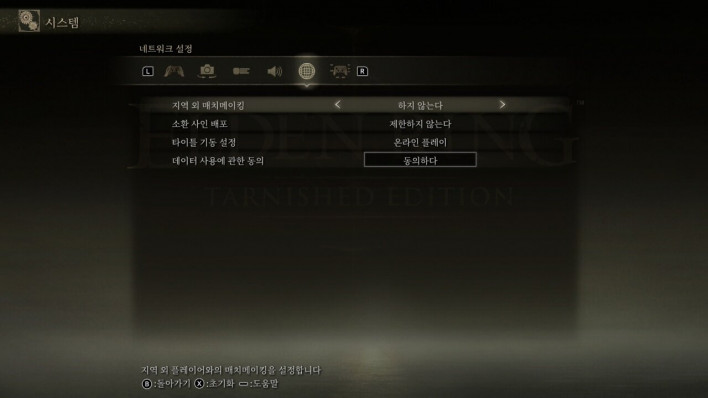
Considering its nature as a handheld console, there are aspects that prove more annoying than framerate. If you launch 'Elden Ring' in online mode (the default setting) and put the Switch 2 into sleep mode, the network connection drops, and waking the device automatically boots you back to the main menu. Given that sleep and quick resumption are fundamental to the handheld experience, this is quite a cumbersome hassle.
You can avoid this issue by changing the launch setting to offline in options, but then you must return to the main menu whenever you want to use online features. Whichever option you choose, fully taking advantage of a handheld's quick sleep-and-resume capability remains difficult. It has become a great game for portable play, but awkward friction remains when trying to pick up and play seamlessly like a true handheld title.
If asked, "Is it really worth playing on Switch 2?"
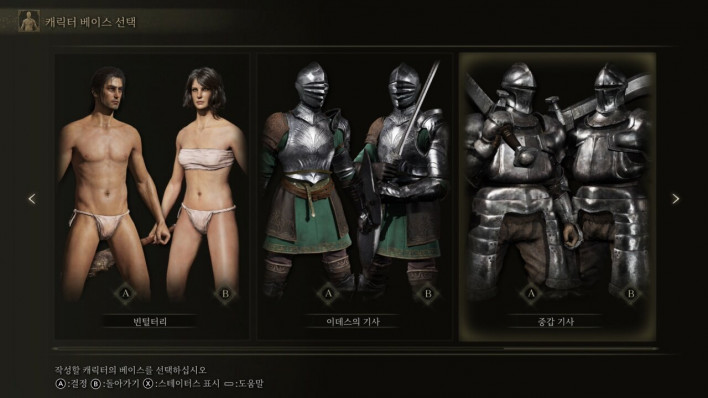
The game itself hasn't changed drastically just because it's the 'Tarnished Edition'. The additions of the Knight of Ides and Heavy Knight as starting classes offer slight variations in early build choices. For instance, selecting the Knight of Ides lets you utilize Light Greatsword class weapons before reaching the Shadow of the Erdtree expansion region.
However, these remain minor shifts during the opening stages. The numerous guides and leveling routes established since launch apply identically on Switch 2. The famous method of slaying Elder Dragon Greyoll and quickly resting at a Site of Grace to farm runes repeatedly still works. Players already familiar with 'Elden Ring' can carry over almost all of their existing knowledge.
Ultimately, evaluating the Switch 2 port leaves us with one main question: Is playing 'Elden Ring' on the go worth sacrificing graphics and settling for a lower framerate environment?
Personally, conducting this review on the couch and in bed yielded genuinely satisfying moments. Exploring broad areas or making casual character progression handheld offers a level of comfort difficult to find on other platforms. Except for specific scenarios, however, the 30 fps performance lingers as a subtle weight throughout play, and in boss fights requiring split-second reactions, that disparity is impossible to ignore.
If you have never played 'Elden Ring' before and have access to another platform, I personally recommend experiencing the Lands Between for the first time in a smoother environment. Likewise, for players who have already enjoyed the game on PC or other consoles, there isn't a compelling reason to double-dip on Switch 2 unless you have an overwhelming urge to play 'Elden Ring' anytime, anywhere. Portability creates a distinct appeal, but that advantage doesn't fully offset the visual and framerate sacrifices.
A great game and a great gameplay environment are not synonymous
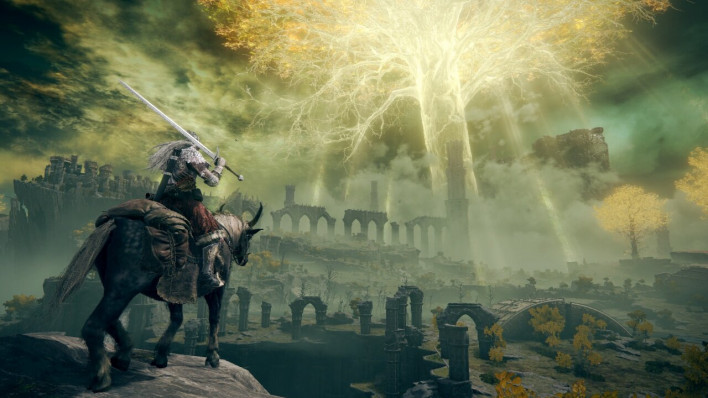
Debates surrounding framerates have persisted among gamers for decades. Opinions may vary on how perceptible the difference is beyond 60 fps. However, the gulf between 30 fps and 60 fps is far more distinct. In a game like 'Elden Ring', where reading enemy movement on screen and reacting in split seconds is paramount, that gap feels even wider.
Of course, players who aren't particularly sensitive to framerates may adjust far quicker than I did. Conversely, those accustomed to high-framerate environments might experience heightened frustration or motion sickness simply from moving the camera. This version directly demonstrates how the quality of experience for the exact same game can vary drastically depending on the platform.
'Tarnished Edition' is a well-crafted port given the hardware constraints of the Switch 2. It resolves a significant portion of the performance concerns shown last year, and roaming the Lands Between in the palm of your hands remains undeniably compelling.
'Elden Ring' remains an exceptional game on the Switch 2. However, it also clearly highlights the fact that a great game and a great gameplay environment do not always mean the same thing.
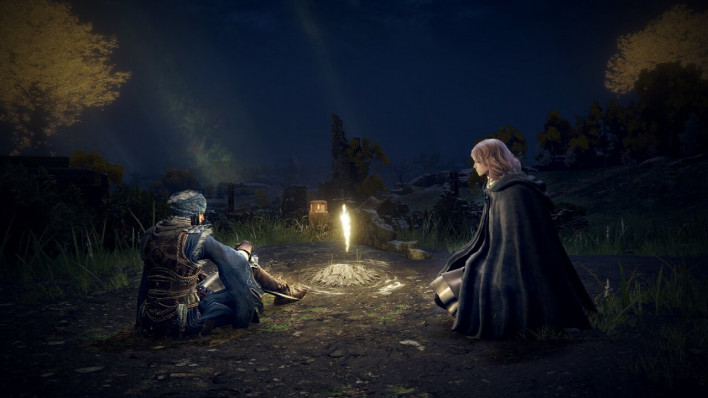

- Unexpectedly stable port quality
- Handheld convenience of 'Elden Ring' in your palm
- Decent loading times and reasonable battery drainage
- 'Elden Ring' is still 'Elden Ring'
- 30 fps limitations felt even more heavily in boss fights
- Clunky precise controls when combined with Joy-Cons
- Awkward friction between sleep mode resumption and online connectivity
Reviewed Platform: Switch 2 (Review Build)