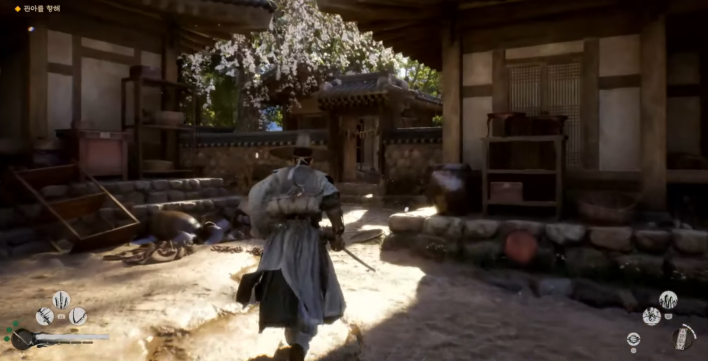
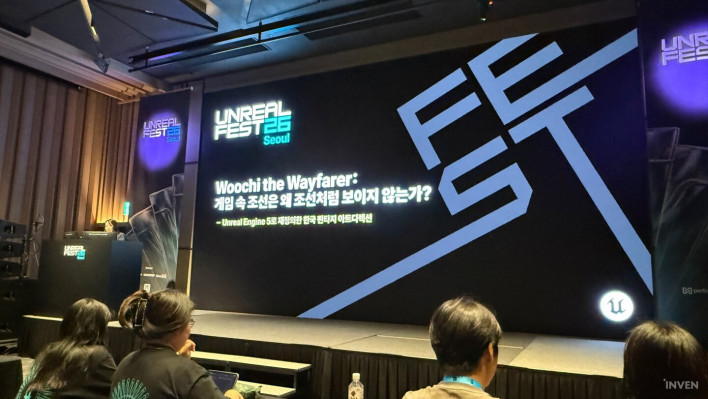
In recent years, continuous efforts have been made to faithfully express Korea's traditional aesthetic in video games. One such project, Nexon Games' 'Woochi the Wayfarer', participated with a presentation session at Unreal Fest Seoul 2026, held from August 20 to 21 at Westin Seoul Parnas.
'Woochi the Wayfarer' is a single-player action-adventure game based on the classic Korean novel 'The Tale of Jeon Woochi'. It features a world built on historical research blended with playful imagination and fantasy. Speaker Mok Young-mi, Art Director at Nexon Games, revisited various challenges encountered while striving to create a distinctly Korean game, starting with the question: "Why doesn't Joseon in games look like Joseon?"
The first threshold of Korean fantasy: Capturing the beauty of 'Hanbok'
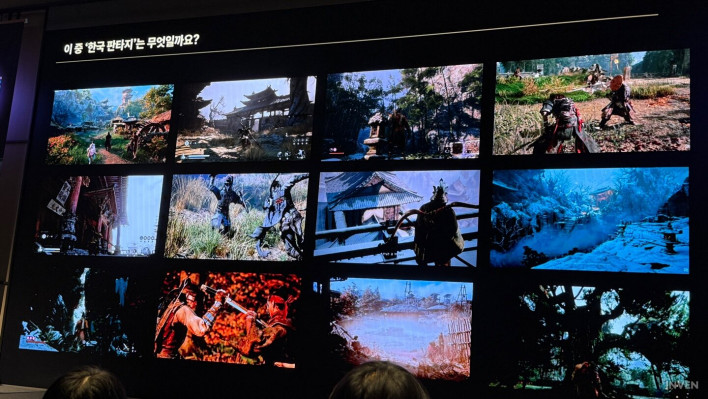
Director Mok emphasized that while Chinese-style or Japanese-style games are already widely recognized and consumed, high-quality Korean fantasy games are also being developed and prepared recently. Examples include 'Woochi the Wayfarer', 'Project TAL', and 'MOOSA: Dirty Fate'. She then posed the question: "What is Korean fantasy?" In fact, when gathering screenshots of these three titles along with Chinese developer Game Science's 'Black Myth: Wukong' and Japanese FromSoftware's 'Sekiro', the differences are not immediately obvious. While careful attention to detail reveals distinct characteristics, it is difficult at a glance to articulate what defines Korean fantasy.
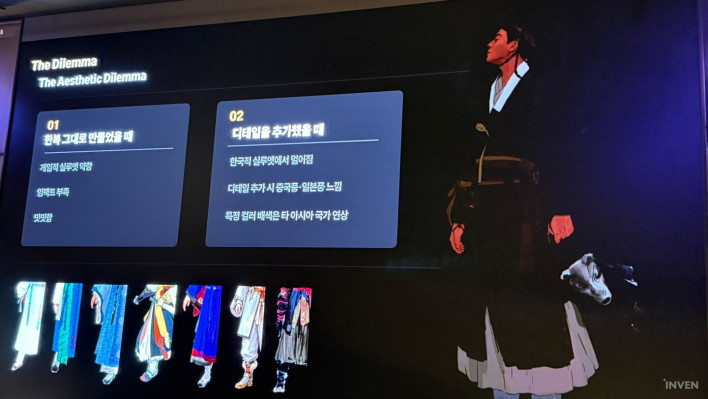
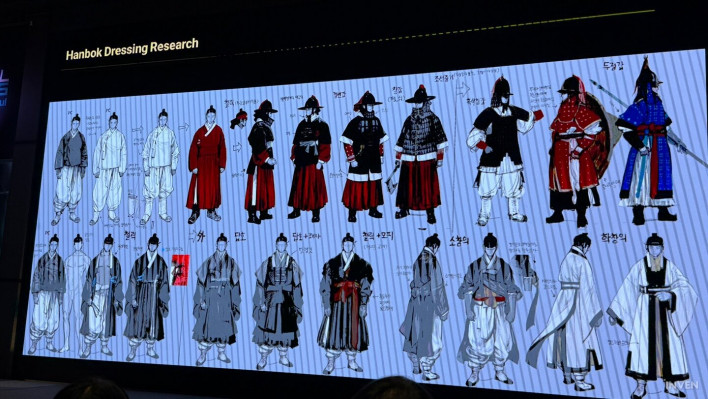
While reflecting on that question, the first obstacle encountered was 'Hanbok'. Director Mok recalled that while hanbok is stylish and elegant, it was remarkably difficult for developers to capture its true beauty. Reproducing hanbok literally resulted in a weak silhouette and a bland appearance lacking impact. On the other hand, mixing in details or fantasy elements drifted away from traditional Korean silhouettes, and adding details ran the risk of looking like Chinese or Japanese styles. Even tweaking color schemes was tricky out of fear that it might look like a style from another country, and there were almost no references to consult.
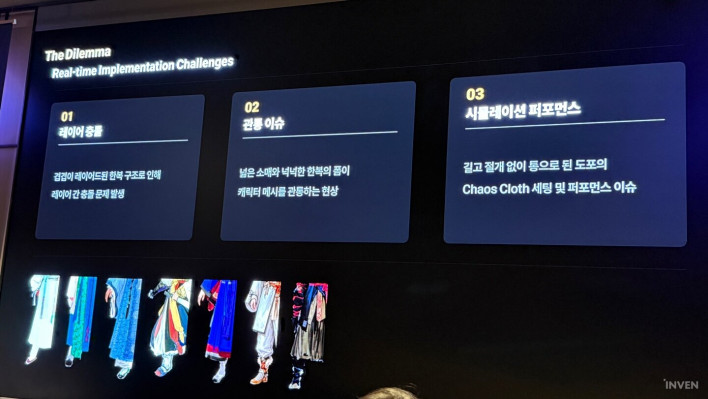
There were technical issues as well. Because hanbok is worn in layers, collision issues arose between layers, and wide sleeves with loose fits often clipped through character meshes. In terms of simulation performance, setting up Chaos Cloth for the long, seamless robe (dopo) created performance bottlenecks. Thus, the development team put in boots-on-the-ground research to find the authentic hanbok silhouette. First, they wore the garments themselves and scanned them. By wearing them in person, they checked how wide the sleeves were and how the hems swayed. During this process, in addition to official robes, they purchased garments worn by hunters and various other professions.
After examining the issue repeatedly, they concluded that approaching the design with Three Kingdoms period styles made it difficult to differentiate from Chinese clothing. Sharing similar roots made it highly likely to end up looking like generic 'Asian clothing'. Therefore, they focused on the gat (traditional hat) and dopo (robe). Director Mok believed that the wide-brimmed gat and the loose-flowing lines of the dopo represented the true Korean silhouette, and expanded suitable designs based on them.
Once the direction became clear, work proceeded accordingly. First, while maintaining loose fits and silhouettes, areas unaffected by simulation were complemented with layering. The team adhered to the principle of grounding designs in historical research while adding fantasy items, all while keeping silhouettes clean and simple. Starting with the gat and dopo, they preserved the silhouette while adding props and coloring around the waist. No matter how many details were added, maintaining the inherent silhouette of hanbok was the single most crucial factor.
Because hanbok has many layers, spacing was adjusted to reduce collisions between layers, and robe hem and sleeve simulations were restructured. They initially tried relying solely on Chaos Cloth simulation, but running every element in real time caused performance issues. While cloth simulation was natural, performance dropped. Thus, instead of applying cloth simulation to the entire outfit, they set anchor points for the silhouette using bone simulation, then applied Chaos simulation over it for subtle cloth movements. This added natural movement while achieving optimization, successfully implementing motion in-game that looks like authentic hanbok.
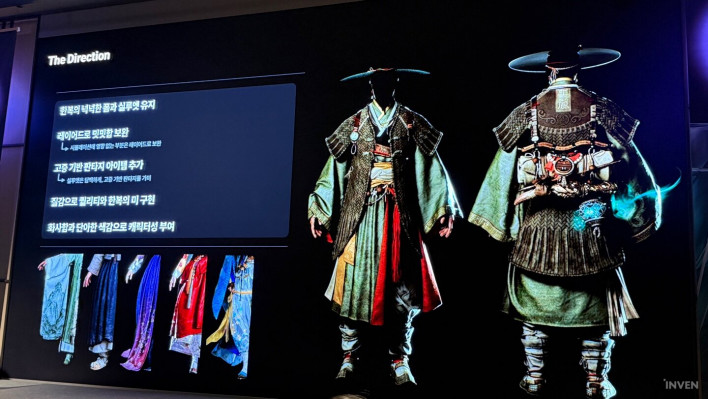
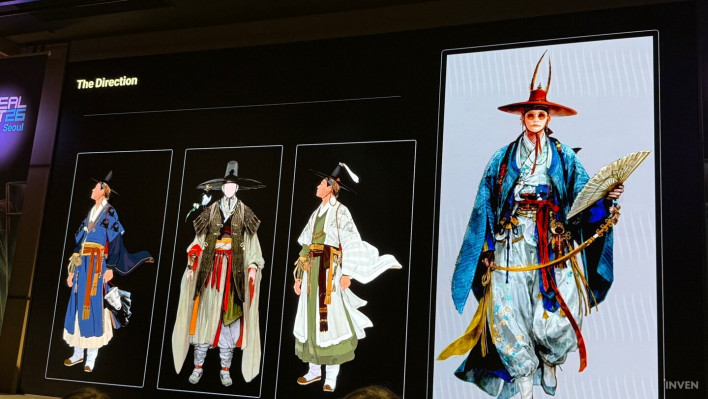
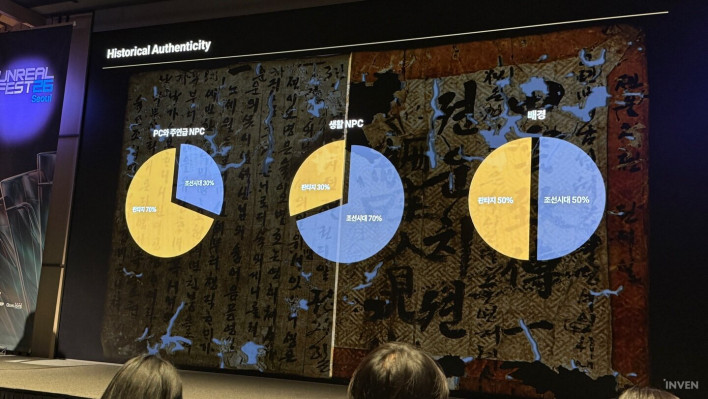
After establishing the technical framework, the key was deciding how to apply historical accuracy. Director Mok set a clear guideline: conduct thorough historical research on hanbok, but use historical accuracy as a tool to make better creative choices. Therefore, ratios between historical accuracy and fantasy were defined from the start. She judged that this would align team members with a unified direction. After much deliberation, playable characters and lead roles were set at "Fantasy 7 : Joseon 3," civilian NPCs at "Fantasy 3 : Joseon 7," and environments at "Fantasy 5 : Joseon 5," with art production following those guidelines.
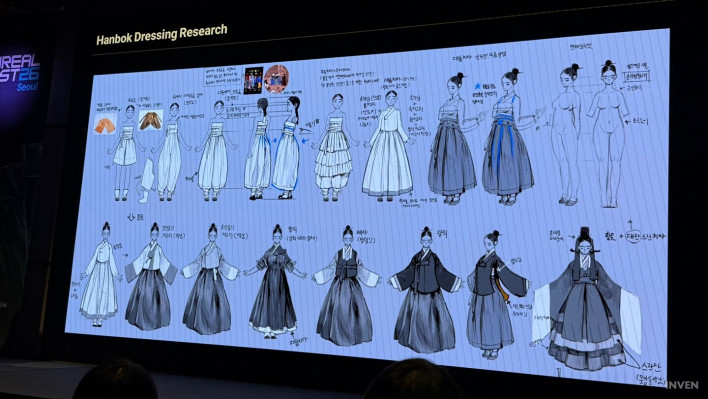
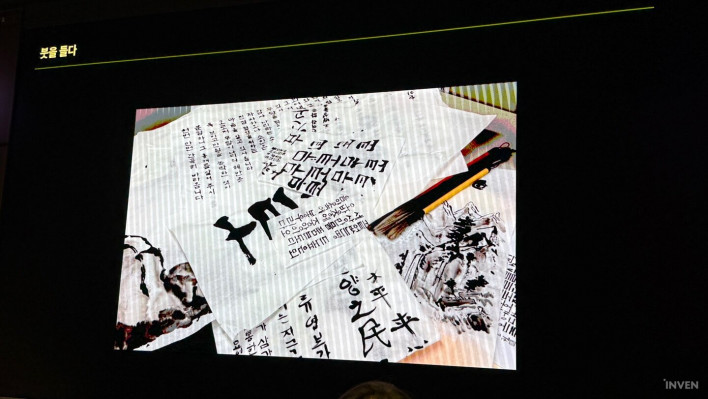
The highest priority was preventing designs from looking Japanese or Chinese. Thus, they thoroughly studied hanbok types, dressing sequences, silhouettes, and line flow. Rather than seeking perfect historical reproduction, she believed that understanding layer structures clearly was necessary to maintain consistency so that even modified or refined outfits would still look like hanbok. Furthermore, to master the elegance and expression of calligraphy lines, they tried brush calligraphy themselves and even held an in-house "Ultimate Calligraphy Contest." Starting with the concept art team, they later brought in other team members to write with real ink brushes, actively utilizing submissions from those with prior calligraphy experience.
Whose face is the face of Joseon fantasy?
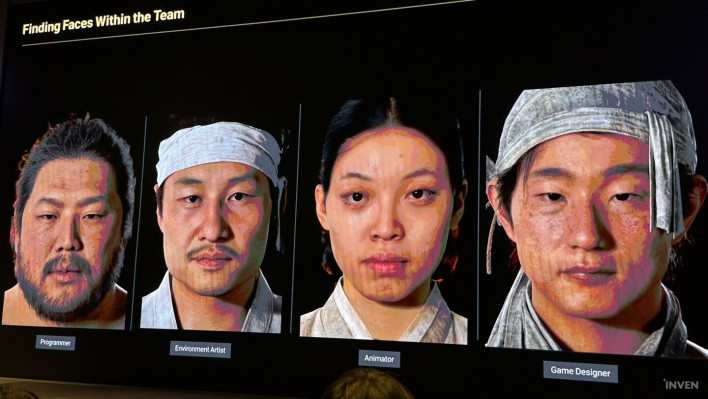
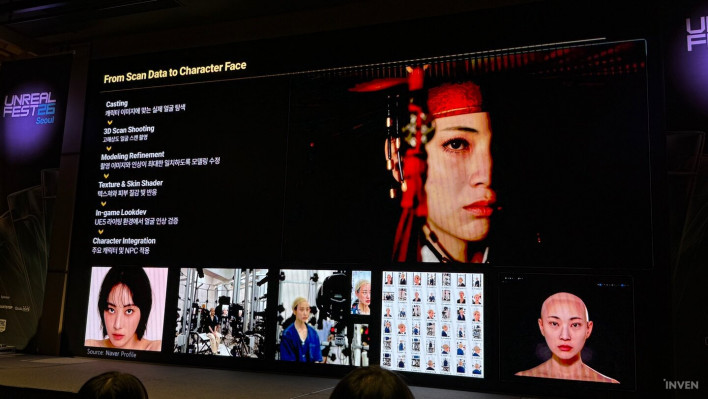
After clothing, the next issue was how to render faces. While people usually assume scanning a Korean person's face directly will capture a naturally Korean look, the initial scan results were not as expected. Through multiple facial scanning iterations, they gained experience and tuned the outputs. Then, they returned to square one, believing Joseon fantasy is truly complete only when everyday faces—commoners, government guards, noblemen (yangban), tavern keepers (jumo)—are brought to life vividly alongside the protagonist's face.
Director Mok observed her surroundings to find lively faces that naturally fit into everyday life, focusing on the varied individualities of her colleagues inside the company. She suggested an internal face scan recruitment notice, and over 100 employees volunteered. Thanks to this, various Nexon Games staff became models for NPCs, acting as guards, noblemen, tavern keepers, and even ghosts or monsters. As realistic faces that look familiar were incorporated into the game, the game world became more believable and its identity as Joseon fantasy grew distinct.
Rendering faces was not the end. Realizing through repeated scans that authentic impressions are determined by facial expressions, Director Mok utilized MetaHuman to apply realistic expressions and acting. The team is continuously striving to realize even more realistic visuals and is currently collaborating closely with the MetaHuman team. She added that details regarding this will be shared in depth when an opportunity arises in the future.
Deliberations over folk tale creatures lacking iconic imagery
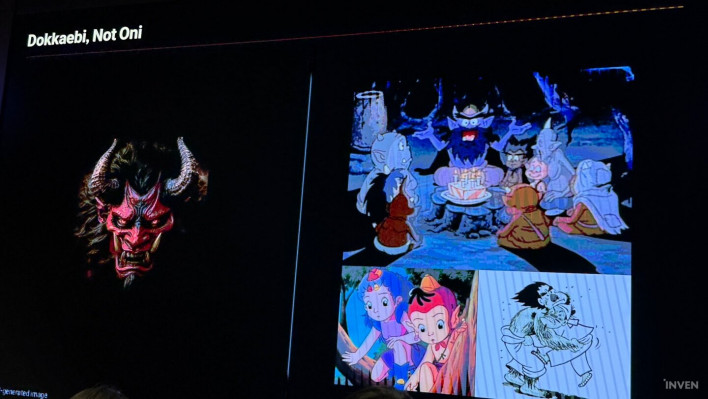
Next came deliberations on rendering monsters and various creatures from folklore. Monsters like 'Dueoksini' had not been explored deeply in popular media. While vaguely described in Korean monster encyclopedias or featured in animated shows like 'The Haunted House', they lacked a clear, iconic image that everyone instantly recognizes. Looking at it from another perspective, this meant that if someone depicted them spectacularly, it could set a new standard. Encouraged by this idea, the development team proceeded with confidence.
She named 'Dokkaebi' (goblin) as the entity that required the most thought, emphasizing the goal of clearly differentiating it from Japanese 'Oni'. While Japanese oni feel intimidating and demonic, Korean dokkaebi have been portrayed as endearing figures in old folk tales as well as classic animations like 'Kkobi Kkobi' and 'Eunbi and Kkabi's Once Upon a Time'. Stories of dokkaebi popping up on paths to challenge passersby to ssireum (Korean wrestling) matches, rewarding good people, and punishing bad people are widely known among Koreans. She explained that they contemplated various angles to convey this sentiment, adding that specific in-game appearances of dokkaebi will be revealed later.
Instead, she revealed a few examples of original creatures created for 'Woochi' based on Korean folklore motifs. Inspired by 'Geuseunsae' and the 'Sajatal' (lion mask), these entities are controlled by traditional 'Tal' masks worn on their faces or embedded within their bodies. Consequently, they were depicted with somewhat bizarre and terrifying appearances.
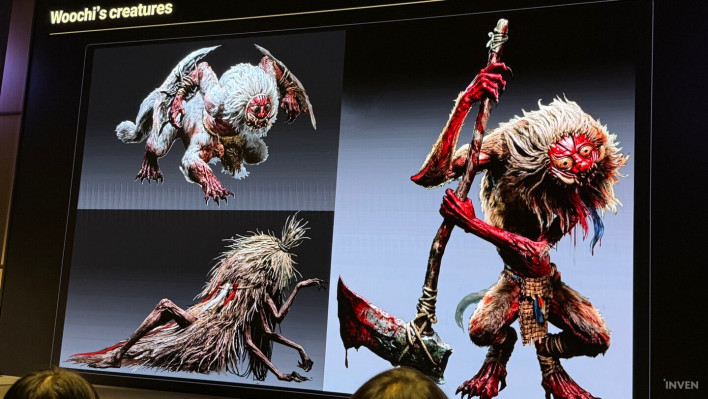
The world of 'Woochi the Wayfarer' capturing Korea's unique mountain terrain and seasonal feel
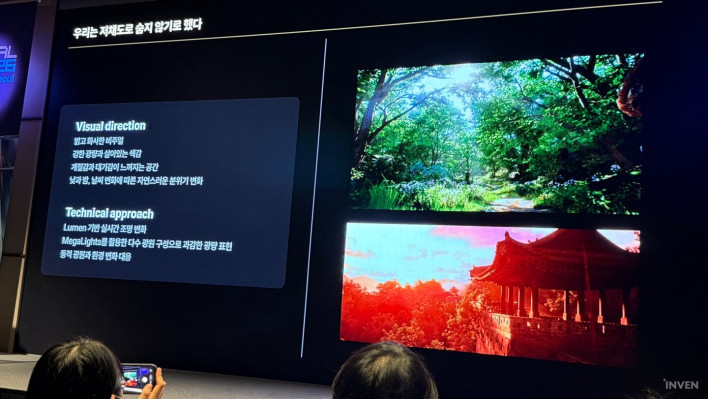
Finally, deliberations over rendering Joseon's landscapes in the game were discussed. Generally, lowering saturation and adding fog makes it easy to produce an atmospheric scene. Dark and tense scenes featuring monsters are typically approached that way. However, Director Mok did not want to represent Joseon's landscapes through that approach alone. She wanted to fully capture vibrant moods—such as Gyeongbokgung Palace on a clear day, or bright autumn leaves blending with beautiful hanbok.
Therefore, avoiding low-saturation presentation, the team aimed for bright, vibrant visuals featuring strong light intensity, vivid colors, and a clear sense of season and atmosphere. This included implementing changing moods naturally depending on day, night, and weather shifts. Setting the right tone was challenging because bright visuals expose flaws or detail limitations, but showing Korea's distinct four seasons and vivid natural colors was deemed indispensable.
To achieve this, scenes in 'Woochi the Wayfarer' were built with Lumen-based real-time lighting shifts, and MegaLights was used to place numerous light sources to express rich luminance. Rather than simply brightening the screen, the primary objective was to realize Korea's unique seasonal atmosphere interacting with natural light.
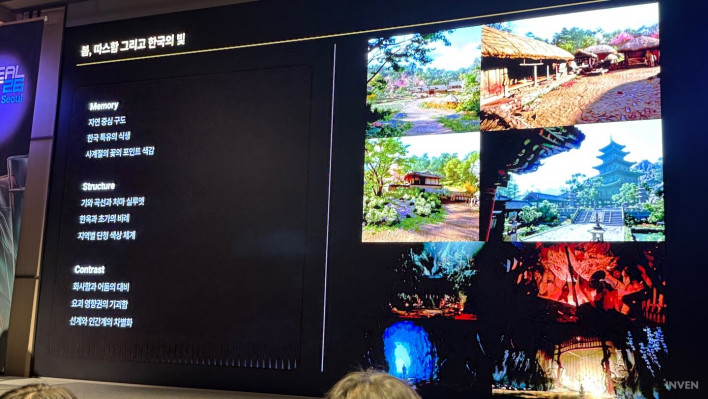
Additionally, nature-centric composition was established as the core emotion of background design. The team sought to capture landscapes changing with every season, incorporating warm, familiar elements like spring mountain ridges, hanok courtyards, and condiment jars (jangdokdae) around thatched cottages. While arranging bright tones and backgrounds in harmony to maintain flow, they designed occasional contrasts with dark, eerie scenes to deliver dramatic immersion.
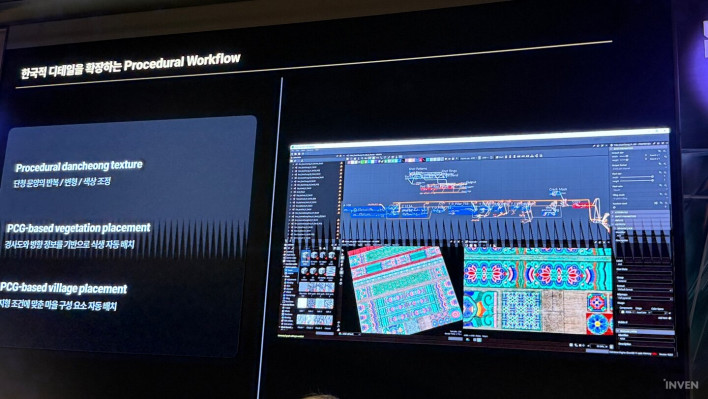
For efficient development, procedural workflows were actively adopted. Rather than painting traditional dancheong (architectural decorative coloring) and patterns by hand, they researched separating pattern elements to generate them procedurally. First, they analyzed and deconstructed various dancheong pattern layouts, redesigned them at the node level, and built a pipeline that combined them to rapidly generate diverse textures. This allowed fast production of unique dancheong patterns tailored to regional characteristics while minimizing repetitive pattern feelings. Furthermore, based on terrain slope and orientation data, Korea's unique mountain topography, building layouts, farm fields, and distant villages could be rapidly generated.
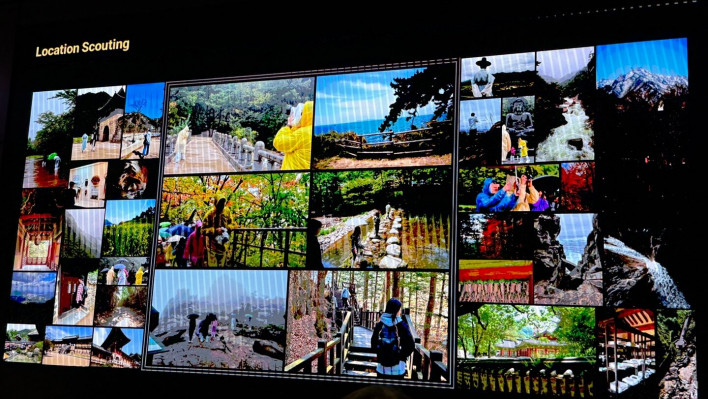
Behind these backgrounds were countless field trips. Director Mok emphasized that to fully express a Korean feel, the team had to establish its own standards and experience the atmosphere firsthand. Although some joked that they were just taking trips, time was limited, so they formed teams during business trips to travel in all directions and gather as much material as possible. She also shared an anecdote where the PR team, having accompanied them on a trip up Mount Seorak, handed their camera to the development team for subsequent trips, waving their hands and declaring they could not keep up.

The first location fully unveiled to players as a result of these efforts was 'Pyeongsan'. Serving as a core setting where shamans appear, she explained that the game implements a diverse world of Joseon fantasy where the everyday and the eerie, as well as brightness and darkness, coexist, while showcasing a snippet of in-game gameplay video.
Director Mok explained that establishing this art direction took about a year. After organizing a clear direction and historical criteria, she repeatedly communicated them to team members and kept the core grounded whenever new hires joined or when direction wavered. If the Art Director's vision wobbles, the game and art direction itself wobbles, throwing everyone into confusion. She emphasized that only after building that solid consensus did they enter full-scale data collection, feedback, and iterations, with that rigorous repetition finally establishing a shared standard for 'Woochi the Wayfarer'. Once that benchmark was set, Nexon Games' traditional workflow—setting art direction based on story and then planning backward from it—began to mesh together smoothly.
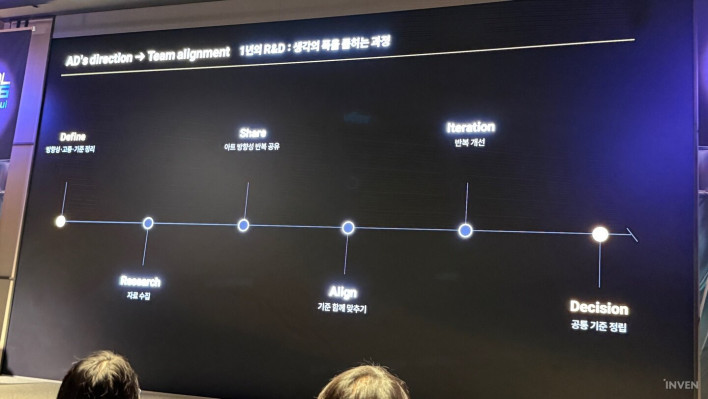
Furthermore, with established standards, team members' ideas became far more concrete and refined. When standards were vague, even brilliant ideas were often discarded because they did not fit the game's tone. However, after establishing common standards, instances of team members' ideas being implemented into the actual game increased noticeably. She also noted that when proposing new experiments, team members might look puzzled at first, but would respond that if it was the direction the AD wanted, they would adapt.
Emphasizing that mutual trust and clear benchmarks were the driving forces that moved them toward finding solutions, Director Mok once again asked, "Why doesn't Joseon in games look like Joseon?" Answering her own question with "Because there was no clear standard that would make anyone instantly recognize it as Joseon," Director Mok expressed her determination to work hard so players can rediscover Joseon inside games.
Q&A
Q. Over long development periods, there must be times when direction wavers. How did you re-establish standards?
Director Mok Young-mi: As an AD, direction almost never wavered. It might be hard to believe, but because we conducted extensive preliminary research and deep deliberation from early planning, our overall direction continued steadily without shaking. When better ideas or technologies emerged during development, we adopted them flexibly while adhering to the principle of raising quality without disrupting our existing direction.
Q. We are curious about your methodology for combat and environmental effects. Effects lean toward fantasy; how did you aim to implement them to fit the tone of Joseon fantasy?
Director Mok Young-mi: Although our game is fantasy-based, we aimed to avoid flashy effects that excessively clutter the screen. Overall, I requested maintaining a photo-realistic tone while finely polishing quality, as we viewed that as our aesthetic. However, for highly symbolic moments like Dokkaebi or mythical creatures, we boldly embraced fantasy elements to balance the pacing.
Q. The vegetation felt as if Korea's actual mountains and rivers were brought straight into the game. What aspects did you emphasize most in environmental design?
Director Mok Young-mi: The mountain topography among Korea, China, and Japan is distinctly different even when just comparing photos. China features grand, towering rock formations, as seen in Zhangjiajie or 'Black Myth: Wukong', while Japan has many rugged, deep mountain ranges. In contrast, Korean mountains have a unique softness where ridge lines are visible at a glance from afar. To evoke a feeling of "These are truly our mountains," we conducted thorough vegetation research down to every blade of grass and flower, prioritizing native Korean flora for placement in environments.
Q. How are you sensing player reactions regarding historical accuracy, and what is the response overseas?
Director Mok Young-mi: Being human, mistakes in historical accuracy can happen. We strive beforehand to avoid such errors as much as possible, and when feedback or pointers are received, we review and address them immediately. As for overseas players, few ask specific questions regarding historical accuracy itself, so it is still hard to gauge.