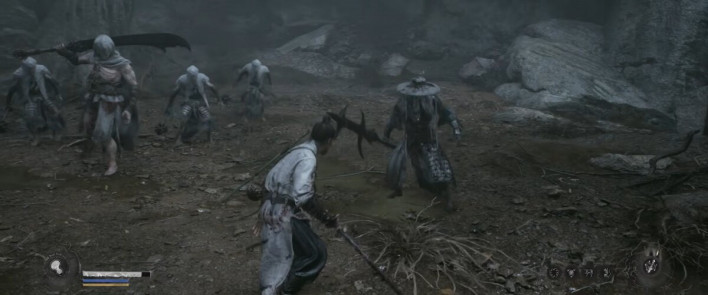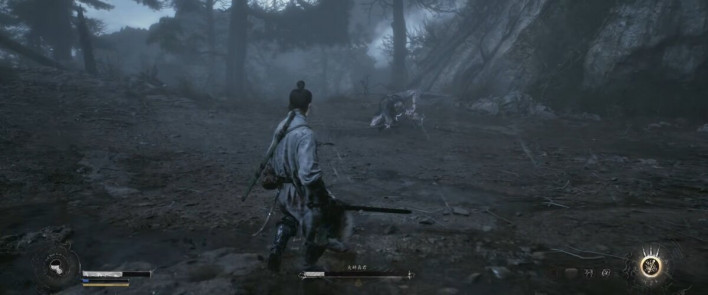
On August 20, Game Science revealed new gameplay footage for its upcoming title 'Black Myth: Zhong Kui'. As anticipation mounted for another high-quality game following its predecessor 'Black Myth: Wukong', Game Science founder Feng Ji shared 10 development principles the company has long upheld on his Weibo account, shedding light on the core game philosophy beneath the polished surface.
Feng Ji's Weibo post contained no mention of the game's story or release window; instead, it densely outlined the 10 principles the studio has consistently followed.
The first principle he highlighted is to satisfy the developers themselves first. He stated that since founding the company, he has consistently emphasized making games that developers themselves can understand, approve of, and genuinely love. In the second principle, he drew a line noting that marketability and user response cannot be ignored. However, he explained that rather than trying to satisfy everyone, it is far more efficient to first target players with similar tastes. Crucially, he clarified that this serves as a check to ensure the first principle does not turn into self-indulgence. The third principle, focus on discovering strengths rather than eliminating flaws, follows the same context. Since no flawless, perfect game exists in the world, and no game can satisfy every single player, the team must first contemplate what kind of unique experience only they can deliver.
The fourth principle is that a playable build is worth more than countless documents. Feng Ji explained that design documents and meetings can never fully convey a game's unique sense of immersion, which is why the team insists on testing builds directly, observing colleagues' reactions, and then deciding whether to finalize or discard a design. He added that whenever they reveal actual gameplay footage, their goal is to make viewers easily imagine playing it themselves the moment they watch it. The fifth principle states that fun is both the goal and the bottom line. He noted he would not elaborate at length on this point, emphasizing its meaning by stating that if an internal build is not fun enough, the studio simply repeats the cycle of researching, reflecting, learning, and redoing it from scratch.
In the sixth principle, Feng Ji stated that there is no fixed formula for beauty, noting that no style remains eternally sophisticated and no signal stays endlessly provocative. No matter how stunning an aesthetic symbol may be, repeating it inevitably causes it to lose its initial impact. Citing a conversation with a colleague in charge of audio, he shared an off-the-cuff phrase: there is no set rule for what is beautiful, nor a fixed method for creating it. The core idea is that rather than searching for a universal formula that works everywhere, developers must continuously explore modes of expression that blend craft with freshness.
The seventh principle is when there is no clear path forward, increase density. When smarter solutions are hard to come by, it is better to polish proven strengths to a higher level of execution—allocating resources toward elements that have already garnered positive feedback, such as finer particle effects, lush vegetation, varied animations, and impactful hit feedback. The eighth principle, aim for the best at the starting line, and lead at the finish line, emphasizes thoroughly analyzing flagship titles in the industry to understand what worked and what failed. Furthermore, he warned that setting a long-term goal merely to match a specific title is dangerous, stressing that while other games serve as benchmarks, the ultimate goal must be establishing one's own standard.
In the ninth principle, Feng Ji addressed early trial and error directly, noting that only when it is difficult does it become truly valuable. Initially, he thought it would suffice for a small studio to pick a familiar domain and release games slightly faster than major developers with just a touch of flair. However, the resulting products held little value, and players quickly saw through them. Reflecting on a 2019 internal company event, he summarized the studio's first five years with eight Chinese characters (东搞西搞, 投机取巧), acknowledging that they had merely dabbled in everything and relied on petty tricks. Subsequently, the company added the phrase "advancing despite knowing the difficulty" to its core values. Concluding with the tenth principle, ideology is cheap, but the action to practice it is valuable, he noted that only when mental ideology collides with reality and shatters can developers discover where their ideas diverge from the world.
Following Game Science's publication of these 10 principles, community commentary noted that their achievements were built on top of this philosophy. Ever since its first trailer reveal, 'Black Myth: Wukong' earned praise from prominent developers, including 'God of War' series director Cory Barlog. The official launch version also won global acclaim for its graphics, cinematic presentation, and deep storytelling. Furthermore, co-founder Yang Qi announced a policy to exclude generative AI during the design and asset production stages of 'Black Myth: Zhong Kui', earning praise for upholding the principle of densely refining proven methods over easy shortcuts. On the other hand, some interpreted the disclosure—amid a mix of positive and critical feedback following the game's reveal—as a self-pledge for their next project, reflecting on both accomplishments and challenges.
Game Science was founded in 2014 by former Tencent developers, including Feng Ji and Yang Qi, who joined forces. After failing to produce notable results in its early years, Game Science dove into developing an action game starring Sun Wukong. Released in 2024, 'Black Myth: Wukong' sold over 20 million copies worldwide, widely credited with rewriting the history of the Chinese console and PC gaming market. 'Black Myth: Zhong Kui' is its follow-up, featuring Zhong Kui, a figure from Chinese mythology. Industry attention is now focused on whether Game Science can once again command the market's spotlight with Zhong Kui following Wukong.


■ 10 Development Principles Revealed by Game Science's Feng Ji
1. Move yourself first
Developers themselves must create a game that they can understand and love as players. Without genuine passion, intuition dulls, and you fall behind those who build with greater enjoyment.
2. Find the overlap with the outside world
Do not stop at self-satisfaction; market data and player feedback must also be addressed. Rather than trying to satisfy everyone, it is more efficient to start with a player base sharing similar tastes and expand naturally.
3. Discovering strengths takes priority over eliminating flaws
It is better to thoroughly satisfy those who already love the work than to convince detractors. "Is there an experience that can only be had here?" is a more important question than "What is missing?"
4. A playable build is better than documentation
Documents and meetings merely explain intent; the essence of a game is the immersive experience known only by playing it directly. The feeling after hands-on play and colleagues' reactions are trusted most.
5. Fun is both the goal and the bottom line
If an internal build is not fun enough, there is only one answer: repeat the process of researching, reflecting, learning, and playing other games more.
6. There is no fixed formula for beauty
No matter how powerful an aesthetic device may be, it loses force when repeated. Rather than searching for a universal formula, developers must constantly explore new expressions combining skill and novelty.
7. When backed into a dead end, increase density
When there is no magic trick to boost competitiveness, it is rational to keep stacking polish on top of proven strengths. However, it must be a difference players can actually feel.
8. Aim for the best at the starting line, and lead at the finish line
Thoroughly study and learn from the industry's top works, but beware: if the long-term goal is "becoming similar to them," it is dangerous. Benchmarking is ultimately meant to establish your own yardstick.
9. Only when it is difficult does it become truly valuable
There are no easy opportunities in a mature market, and players quickly notice what was made taking the easy route. "Advancing despite knowing the difficulty" becomes the true moat.
10. Ideology is cheap, but action is valuable
Ideologies in one's head can be shallow or wrong; only when actual action collides with reality does what is right and wrong reveal itself. Even if shattered to pieces, pick them up again and collide once more.