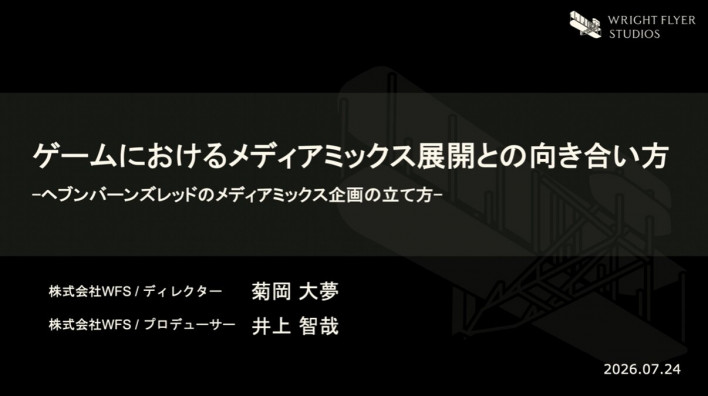
With the recent rise of subculture games, developers are increasingly expanding their intellectual property (IP) through media franchises rather than stopping at the game itself. In this context, WFS, Inc. (WFS) held a session at CEDEC 2026 today (the 24th) to discuss the media franchise expansion of its flagship title, 'Heaven Burns Red.'
Released in 2022 in collaboration with Key, a brand under Visual Arts known for its 'pretty girl' games, 'Heaven Burns Red' is a collectible RPG that follows the struggles of girls wielding the 'Seraph,' a decisive weapon used to fight the mysterious 'Cancer.' The game has been well-received for its immersive portrayal of the girls' chaotic daily lives and their desperate battle for humanity's survival, all wrapped in classic JRPG-style gameplay. WFS Director Hiromu Kikuoka and Producer Tomoya Inoue shared their experiences in adapting this IP into ASMR content and a musical.
Media Franchises: Understanding Medium-Specific Characteristics is Key
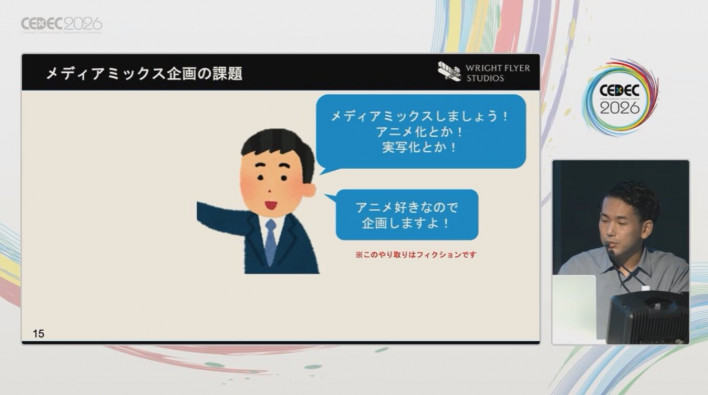
Director Kikuoka pointed out that while the term 'media franchise' is commonly used when adapting game IPs, it often overlooks the diversity of each medium. Even within broad categories like animation, live-action, novels, and manga, there is significant variety. When you drill down into sub-genres—such as TV, short-form, or theatrical animation, or live-action formats like films, musicals, and stage readings—the possibilities become even more complex.
The challenge lies not only in the sheer number of media types but also in the fact that each has its own unique characteristics and target audience. Without a deep understanding of these factors and a clear strategy for user expansion, even a successful game IP can struggle to achieve results in a media franchise format.
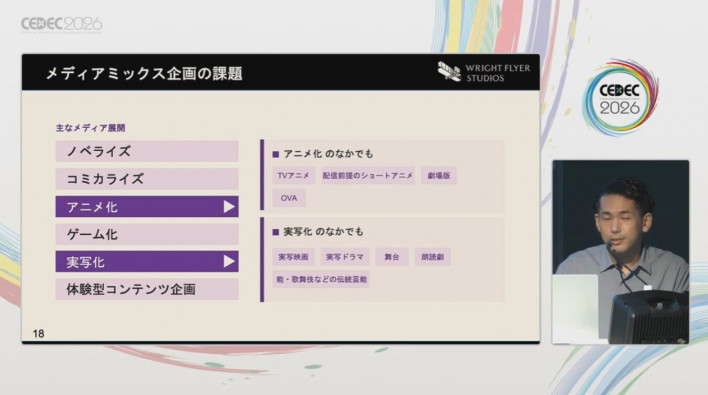
He emphasized that such attempts have existed for a long time, but in an era overflowing with user-generated content, Shorts, and OTT platforms, success is no longer guaranteed by simple expansion. In the past, fans were thrilled just by the announcement of an anime or ASMR release, but today, the sheer volume of content makes it difficult to capture the attention of fans who can easily turn elsewhere. Therefore, it is difficult to succeed without a deep understanding of the IP's unique traits and the specific medium, and without providing an optimized experience.
For a narrative-heavy IP like 'Heaven Burns Red,' the challenge was to increase the IP's value without undermining the existing world-building and character identity. Because the original story is excellent and supported by strong characters, any perceived shortcomings or contradictions would trigger significant backlash from fans. There was also the risk of creating a sense of dissonance for new users when they eventually encountered the original work.
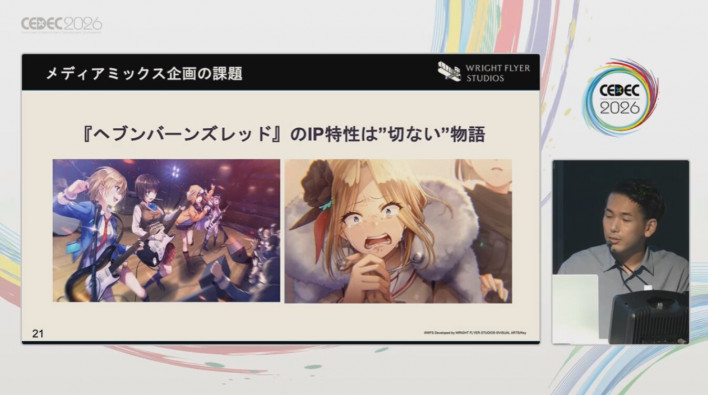
How to Create ASMR Content Without Breaking Immersion in the IP's World
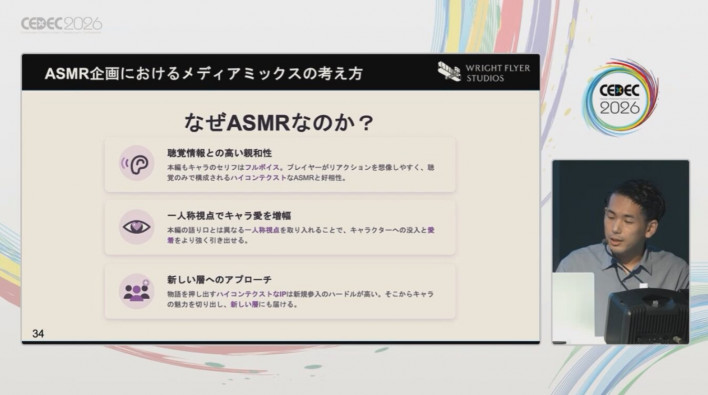
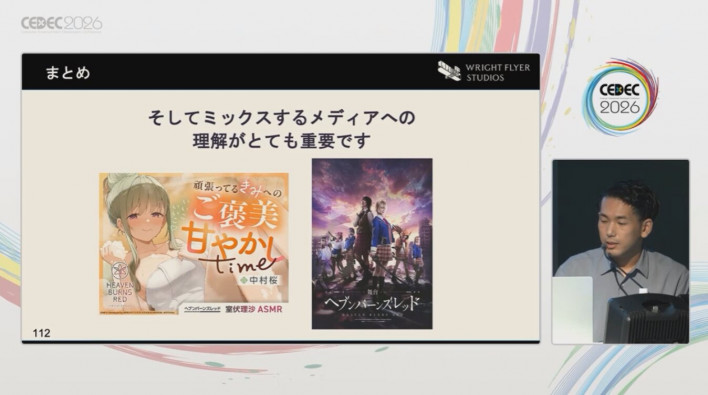
The first media franchise project chosen for 'Heaven Burns Red' was ASMR. ASMR (Autonomous Sensory Meridian Response) in the context of game franchises typically refers to content where a character whispers lines in various simulated situations to the listener.
There were two main reasons for this choice. First, they wanted to convey the charm of the characters from perspectives other than that of the protagonist, Ruka Kayamori. Second, they aimed to lower the barrier to entry for new users who might find the high-context story of 'Heaven Burns Red' intimidating. Given that the game is fully voiced, it was easy to imagine the reactions of various characters, making it a natural fit for ASMR.
Although they wanted to produce ASMR content, WFS lacked experience in the field, so they requested the project from Vivion, a company with a track record of releasing various ASMR titles on DLsite. The planning and supervision were handled by Key, the studio where original scenario writer Jun Maeda works.
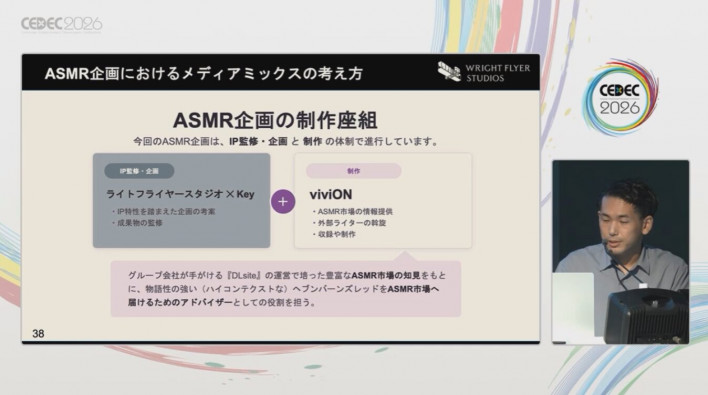
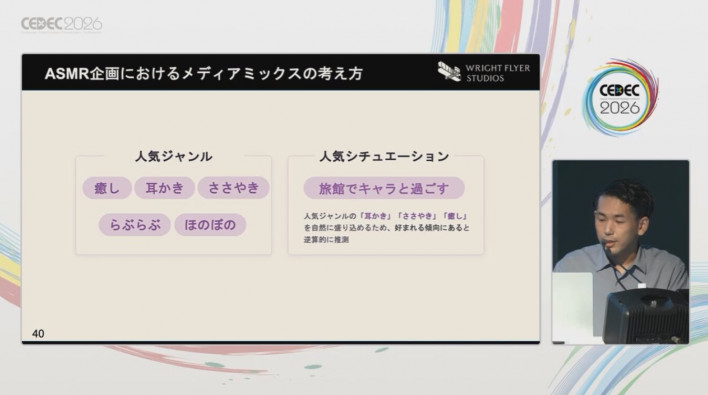
After defining these roles, they began analyzing the ASMR market and its needs. With guidance from Vivion, they identified popular genres and keywords such as healing, ear cleaning, whispering, romance, and domestic harmony. A popular scenario involved being with a character at an inn, as it easily incorporated all the aforementioned keywords.
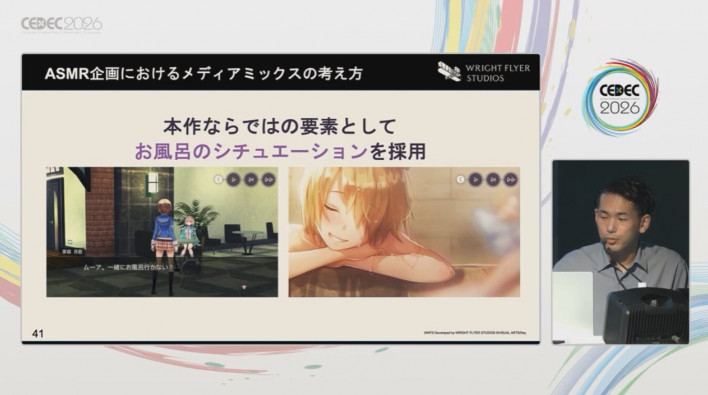
After receiving this insight, WFS and Key introduced a bathhouse scenario—a common occurrence in the original game—as a unique element for the 'Heaven Burns Red' ASMR series, applicable to all characters. This allowed the listener to experience auditory and tactile interaction with the character, adding a sense of physical closeness and the familiarity of an event that inevitably occurs in the original game's interaction system.
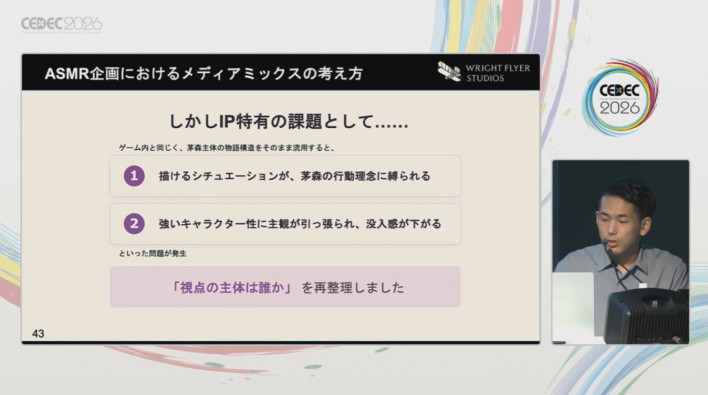
However, while the main game proceeds from Ruka Kayamori's perspective, the ASMR needed to unfold from a different viewpoint. Since Ruka is a character with a very strong personality rather than a blank-slate avatar for the user, there was a risk that the listener's emotions would not align with hers. They had to redefine the perspective so that the listener became a 'character who could plausibly be in any situation' and 'someone who could interact with the characters on a daily basis.'
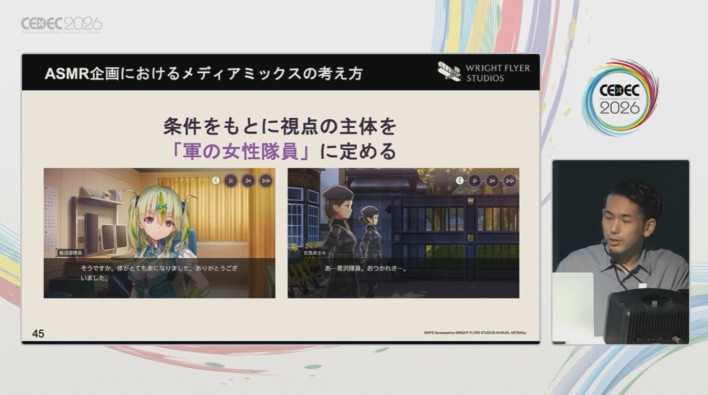
As a result, the listener was set as a female military member supporting the Seraph units. This made it natural to be with any character during operations and allowed for unrestricted conversation. It also naturally facilitated the original's poignant narrative structure, where characters quietly reveal their pasts or hidden feelings in the relaxed setting of a bath.
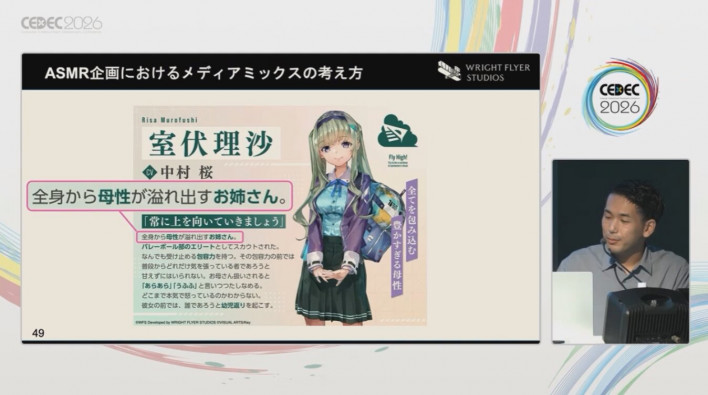
After setting the listener's role, they had to choose which characters to feature. They didn't just go by popularity; they examined which characters could naturally fit into ASMR scenarios based on the original narrative. As a result, Risa Murofushi and Isuzu Oshima were selected. Risa is known for taking care of others in the game, including a scene where she offers a lap pillow, making her a perfect fit for the 'lap pillow/care' ASMR genre. Isuzu was chosen because she has a hobby of opening doors to rooms that might hold secrets, and the act of whispering near someone's ear is a recurring theme in the game.
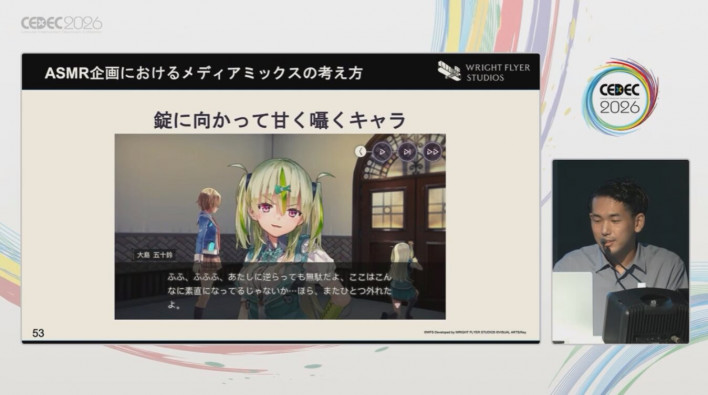
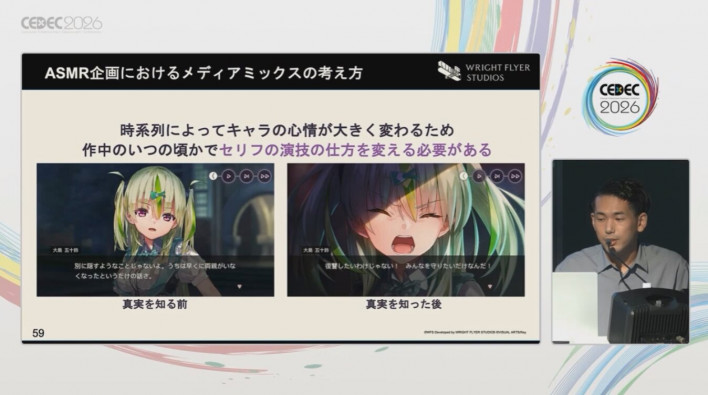
After selecting the characters, they had to reconstruct the experience from Ruka's third-person perspective into an immersive one where the listener lies down and hears the whispers of Risa or Isuzu. During this process, contextual issues arose. In one of Isuzu's ASMR tracks, she says, "I will do anything to protect my sister." While the line itself is fine, the emotional weight behind it changes drastically depending on when it occurs in the timeline. After learning a shocking truth, Isuzu says this line with clear resolve rather than a vague wish.
Like Isuzu, many other characters have lines that remain the same but carry different emotional weight after certain points in the story, making context awareness crucial. Therefore, representatives from both WFS and Key participated in the ASMR production and recording process. This allowed them to resolve contextual issues on the spot, ensuring the ASMR felt natural and true to the 'Heaven Burns Red' experience.
What is Needed for Live-Action Adaptations: Close Communication with the Original Creator
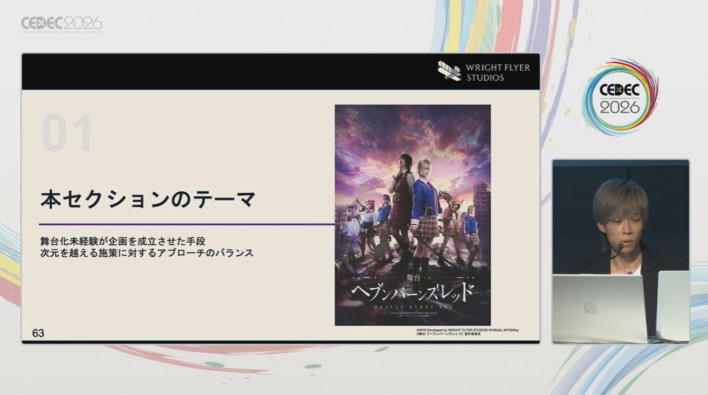
Next, Producer Tomoya Inoue took the stage to share anecdotes from the planning process of the 'Heaven Burns Red' musical. Before joining WFS, Inoue built his career in IP-related business at Nissin Dress, where he handled character IP product planning, manufacturing, and quality control. He later managed the WFS store before becoming the producer for 'Heaven Burns Red' and its musical adaptation.
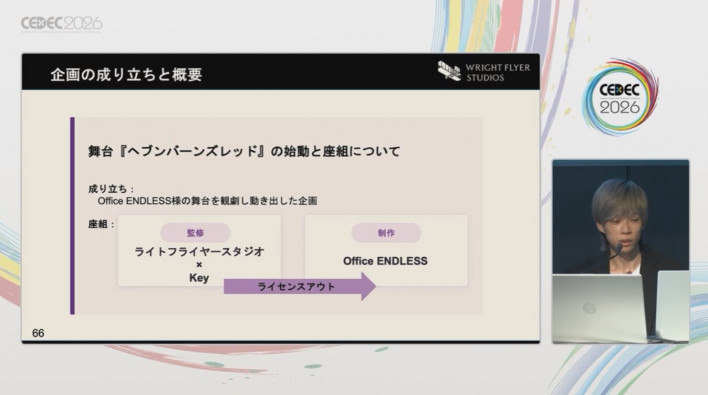
Although he had experience in IP product planning, he had no knowledge of stage direction or musicals. His priority was finding a partner company. After watching several IP-based musicals, he selected Office Endless, which had produced musicals for 'Tokyo Revengers,' 'Blue Lock,' and 'Lycoris Recoil.' The production followed a licensing model where WFS and Key, as the copyright holders, supervised the planning while Office Endless handled the production.
Once decided, they focused the planning on the 31A unit, including Ruka Kayamori. To express the fleeting and beautiful world of 'Heaven Burns Red,' they decided to cover the main story of Chapter 1 in Act 1 and Chapter 2 in Act 2. They allowed for some adaptation, considering what could and could not be expressed on stage.
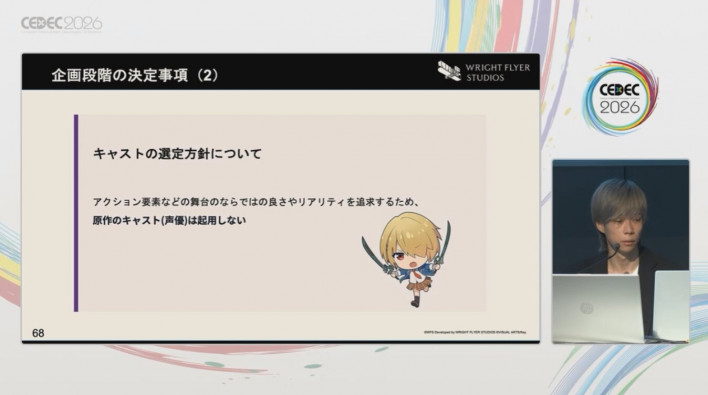
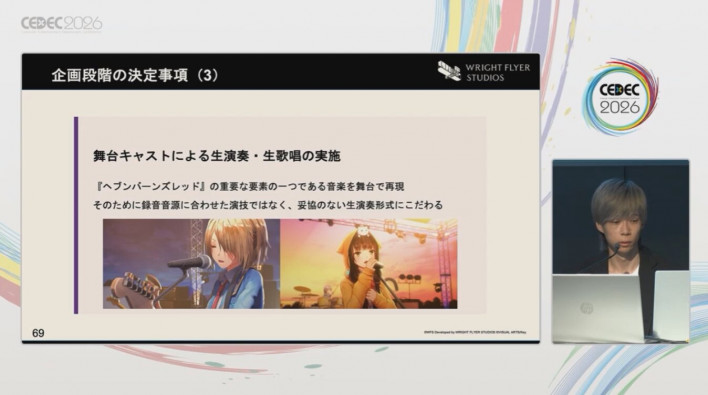
They also had to consider the characteristics of the performance and the casting. 'Heaven Burns Red' features many multi-character battles against Cancer. Since Ruka Kayamori is the former guitarist and vocalist of the legendary band 'She is Legend,' and the six members of the 31A unit reform the band, live performance was a major point. To emphasize this, they needed actors who could play instruments and sing live, rather than just lip-syncing to recorded tracks. Therefore, they decided not to use the original voice actors and instead cast actors capable of handling both action and live performance.
After that decision, Inoue coordinated between WFS, Key, and Office Endless. Defining his role as the 'original work representative closest to the production site,' he first clarified the expectations of both the IP holder and the production company. For 'Heaven Burns Red,' the key points were character and world settings, core scenarios, and performance quality. He summarized these points, adjusted expectations, and continuously reviewed tasks to ensure all parties were aligned.
He then coordinated the schedule for planning, contracting, promotion, and auditions. Due to scheduling constraints, he only personally attended the final auditions. Once casting was confirmed, they began working on costumes and the Seraph weapons. They selected fabrics that maintained the original feel while standing out on stage, and sized the Seraphs based on what the actors could realistically handle.
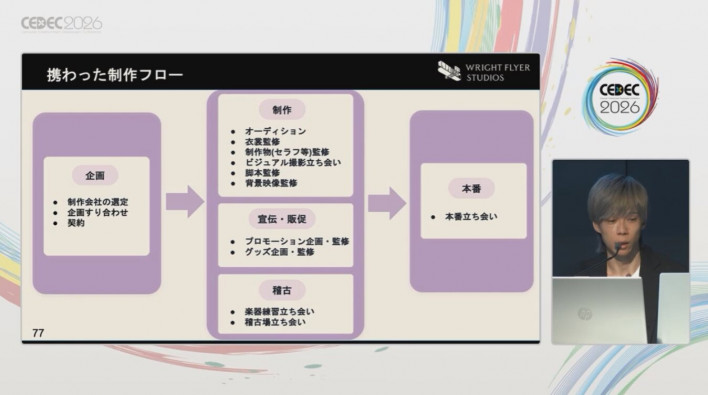
Once these tasks were partially complete, they released information via social media and began promotional activities. When costumes and Seraphs were ready, they conducted visual shoots, with WFS and Key representatives present to check gestures, expressions, and poses. They also exchanged scripts, planned merchandise, and observed the actors' instrument and vocal practice to check progress. Once the music and singing were ready, stage rehearsals began in earnest. Rehearsals lasted about a month, and Inoue checked the site almost every day.
Inoue explained that the process took 3 months for planning, 10 months for production and rehearsal, and about 2 weeks for the actual performances. Despite careful planning, problems always arise. First, the script writing and revision process took longer than expected. As a result, WFS and Key only saw the final version one month before rehearsals began, leading to an emergency situation where adjustments continued until the day before rehearsals.
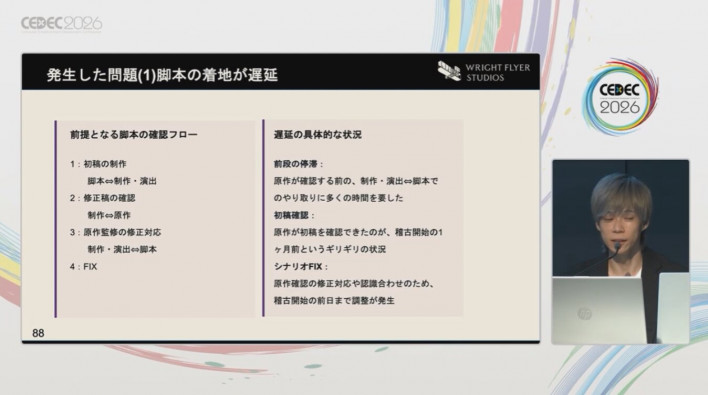
They categorized feedback into 'mandatory revisions to prevent breaking the original' and 'suggestions for better direction.' This was to ensure all feedback was applied without losing the stage's tempo. They also listened to the director's intentions for necessary adaptations when moving from screen to stage, and Inoue held a face-to-face meeting with the production team and actors the day before rehearsals to finalize the plan.
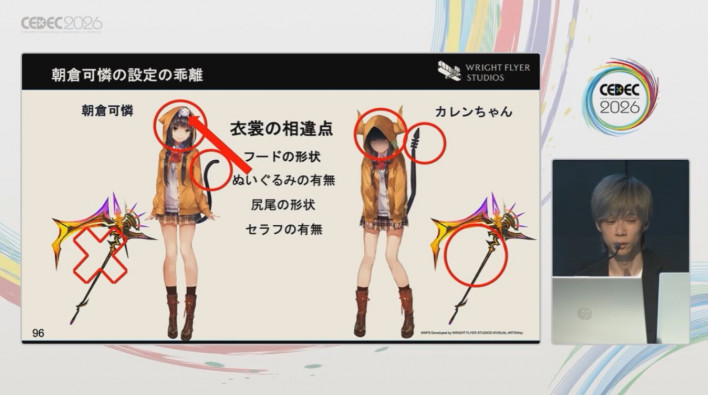
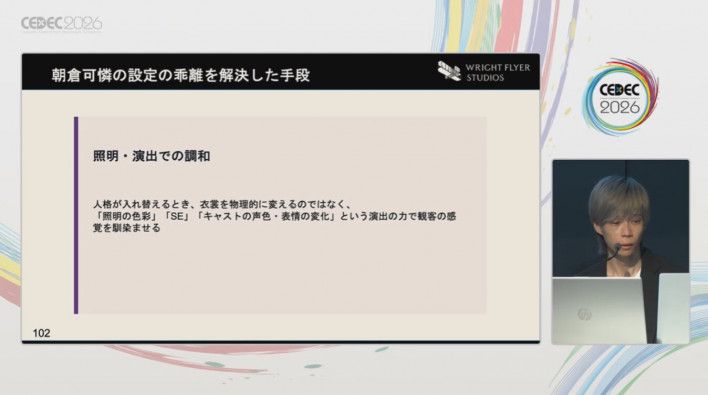
The second problem was the discrepancy with the settings. Karen Asakura has a 'Curren Chan' personality—a serial killer persona—in addition to her usual quiet self, and her costume changes slightly when she switches. As Curren Chan, the hood's collar and tail change into a devilish shape, and the doll on her head disappears. Also, since Curren Chan handles the fighting, Karen Asakura does not summon her Seraph.
However, on stage, the actor could not change costumes or pull a Seraph out of thin air during a personality switch. They realized this discrepancy during a rehearsal of an episode involving a brawl between Commander Tezuka and the 31A unit. It was a 1-on-6 fight, and the actors' performance was excellent. However, looking back, Karen Asakura was fighting with a Seraph, which contradicted the settings. Although the actor was performing as Curren Chan, the visual and setting were mismatched, creating potential dissonance for fans.
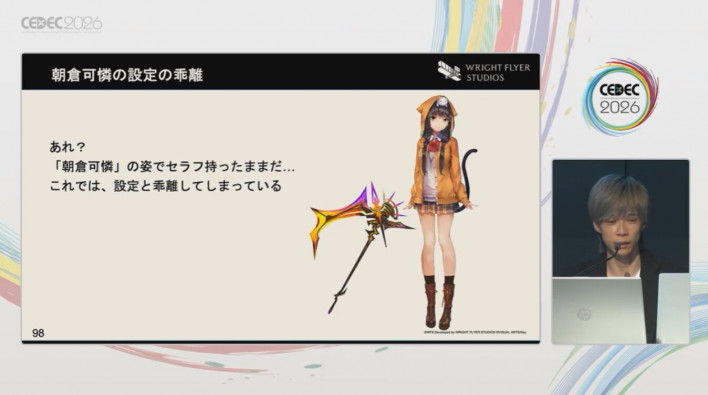
However, they couldn't simply say, "This is a setting error, please fix it," because of physical constraints and the risk of ruining the action and the overall flow. Instead, they minimized the frequency of these discrepancies and used lighting and sound effects to compensate when they were unavoidable. When Curren Chan was active, they used red lighting and ominous sound effects, combined with the actor's vocal tone and facial expressions, to maximize character identity and immersion.
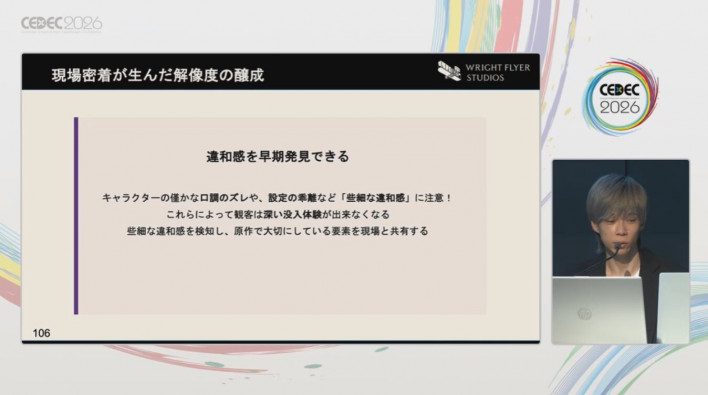
In addition, as the original work representative, he consistently checked for subtle differences in character speech and behavior that didn't fit the world-building. He didn't just point these out; he respected the professionals in each field and clearly communicated the necessary revisions and suggestions. He also identified the intentions of the stage producers and mediated between other original work representatives to ensure smooth communication. As a result, they were able to complete a performance that respected the original settings while being tailored to the stage, earning positive responses from both original and musical fans.
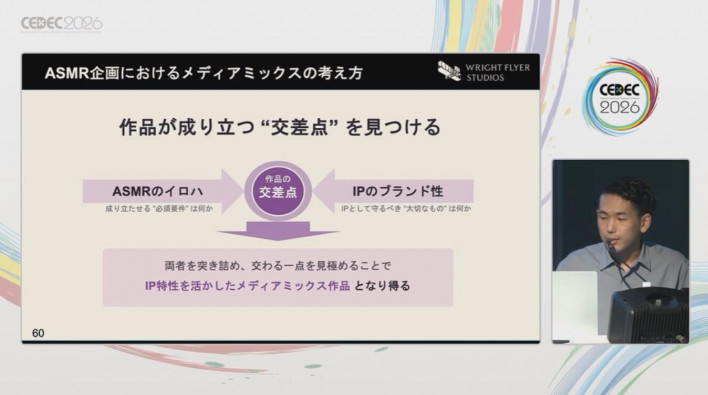
Having gone through this difficult process, he emphasized that the original creator understands the IP best. He added that it is crucial to know what is most important to the IP, maintain that core, and adjust other elements to fit the characteristics of different media. Because the delivery methods and characteristics of each medium are distinct, failing to adapt accordingly prevents the content from being effectively conveyed to users.
He reiterated that this requires respect for other media and partners, and that the original work representative must stay as close to the production site as possible. This allows for the adjustment of even the smallest details, ensuring the best media franchise results that do not break the immersion of original fans while appealing to new users. Producer Inoue and Director Kikuoka concluded the lecture by hoping that this session would be helpful to all creators striving to deliver the best media franchise works to IP fans.