Another next-generation open-world RPG, 'Silver Palace', has released a new PV ahead of its second closed beta test. While a trailer was previously released during tester recruitment back in June, it served more as a teaser for the second test by highlighting action from the male detective's perspective—which hadn't been shown much before—rather than delivering brand-new information.
Following that teaser, this newly released PV highlights noticeable improvements made since the first test. The direction of Silver Palace—which aims to blend open-world exploration, detective adventure, and action RPG elements—is also becoming increasingly concrete. Let's take a look at this roughly 2-minute-and-50-second PV and deduce what kind of experience the second test will deliver.
From Interrogations to Autopsies: A Structure True to Detective Mysteries

The biggest difference between Silver Palace and other open-world RPGs is that it positions itself as a full-fledged detective mystery adventure starring a detective protagonist. In fact, the main story of the previous CBT followed a detective returning to Silvernia to investigate the murder of a journalist who had been persistently reporting on them, only to be burned to death. During this process, players gathered clues, entered mindscapes to reconstruct crime scenes, and pieced clues together logically—hallmarks of a classic mystery drama that earned a positive response from players.
In the upcoming test, the game looks to deepen its immersion as a mystery adventure by showcasing a setup where various specialists take action rather than the detective working entirely alone. Inspector Rax, who acted rudely and questioned every detail during the last CBT, appears in a playable setup, while another uniformed female character can be seen holding profile files while interrogating a suspicious man seated across from her. Previously, police officers other than Inspector Lorne—who was an acquaintance—were wary of the protagonist, restricting investigations to a narrow scope. Now, players will be able to delve deeper into cases, heightening the satisfaction of investigation.
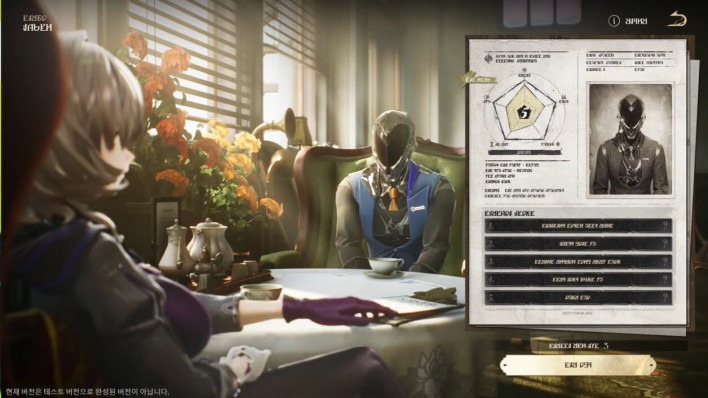
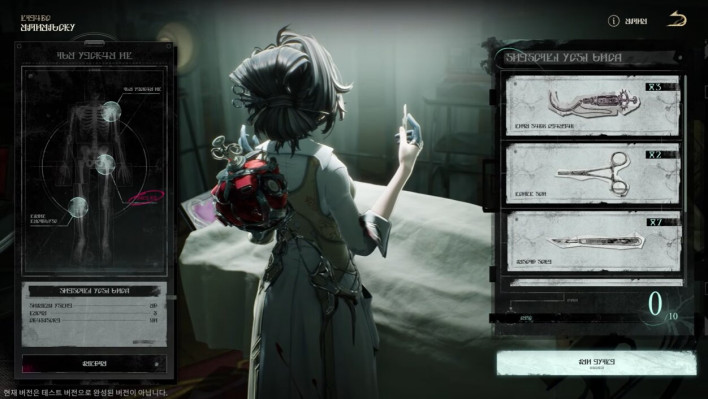
Additionally, autopsies—an indispensable element of mystery stories—stand out. Although Perso, the autopsy specialist, appeared early on, the character was previously shown mainly in combat contexts. In this PV, Perso is shown directly conducting an autopsy using various tools, such as forceps. While the autopsy scenes likely won't be hyper-realistic due to practical concerns, watching the game assemble signature mystery elements builds anticipation. From interrogations and autopsies to sneaking around to photograph subjects and gather clues—processes often glossed over as simple stealth sequences in other games—Silver Palace depicts them in rich detail. It remains to be seen how far the game will push these details to deliver a uniquely immersive mystery storyline.
An Original World Created by Reinterpreting Classical Aesthetics

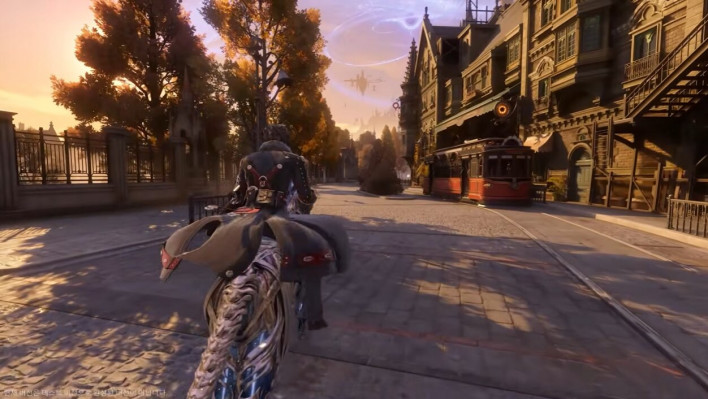
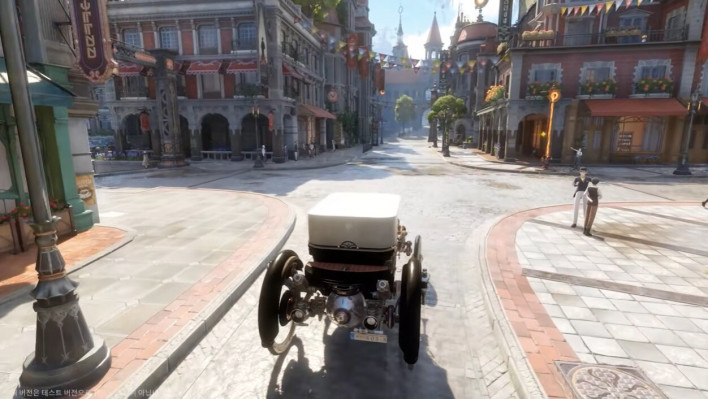
Alongside its mystery adventure design, another defining feature of Silver Palace is its distinct Victorian-inspired world. The antique architecture and well-maintained streets possess the elegance of a city pictured on a postcard bought on impulse during a trip to Europe. With dynamic weather and time of day smoothly integrated, players genuinely feel as though they are strolling through an antique city.
Sights such as soaring above the city on a Pegasus, or giant airships and similarly sized creatures floating in the sky, evoke a fairytale-like ambience. Since many elements are inspired by fairytales like "Cinderella," and fantastical enemies like werewolves and candle creatures appear, these fantastical elements blend in naturally.
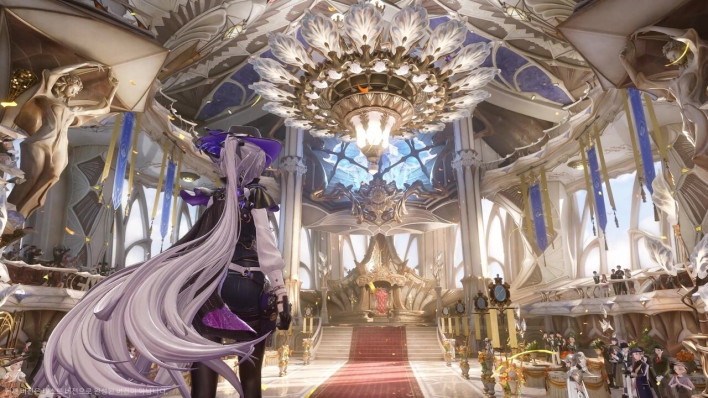
While visuals offer the most striking point of distinction, the game also differentiates itself through detailed touches in music and ambient design. Familiar classical pieces—such as Handel's "Alla Hornpipe" from Water Music, Vivaldi's "Summer" from The Four Seasons, and the 3rd movement of Beethoven's Piano Sonata No. 17 "Tempest"—were incorporated directly or rearranged to blend into the atmosphere. The background music was polished so as not to disrupt the overall mood, demonstrating high quality even during the first test phase.
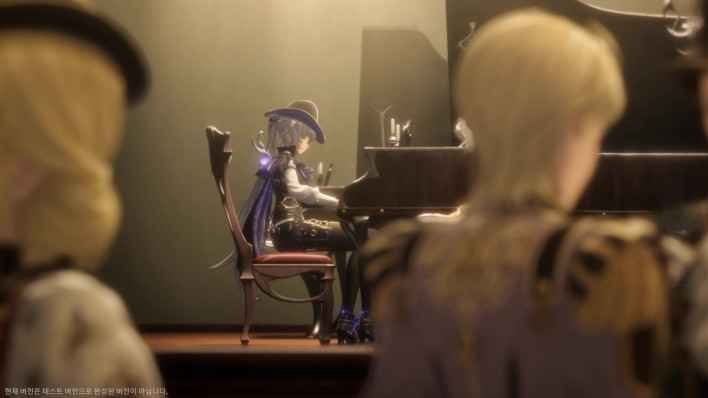
The new PV easily lives up to those expectations. The opening section, transitioning from a piano arrangement of "Habanera" from Bizet's opera Carmen to "Vieni, o guerriero vindice" from Verdi's opera Aida, evokes both classical beauty and familiar nostalgia. The subsequent tracks sustain this classical atmosphere while adjusting tempo to pace everyday content alongside tense combat sequences.
Streets, architecture, story structures, and character designs matching this ambience were clearly showcased once again. Set to the music of Carmen, an opera epitomizing the femme fatale archetype, Red Rose's provocative poses and subsequent dance felt like a metaphor for the secrets and dangers she conceals. In fact, Red Rose has consistently made secretive appearances before the detective, warning of dangers while taking amusement in the situation. Following her dance, a mysterious monologue from Red Rose ensues, leading into various aspects of the detective's daily life and combat, further enhancing immersion.
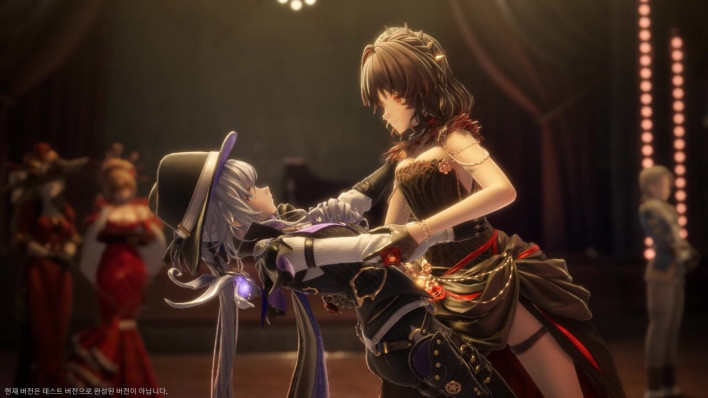


Of course, not everything adheres 100% strictly to historical classical norms. Setting aside flying Pegasi, strict historical accuracy in character design would mean revealing bare legs was considered overly immodest for women at the time. Yet the protagonist and most newly introduced female characters feature short skirts. In exchange, the design maintains a compromise by covering bare legs with stockings.
Beyond character design, elements letting players soak in a classic early-modern Western atmosphere are scattered throughout. In addition to iron horses, driving classic cars through the city, taking buses and public transit emerging in that era to view cityscapes, or securing quick cash at a pawnshop all reflect the flavor of the period.
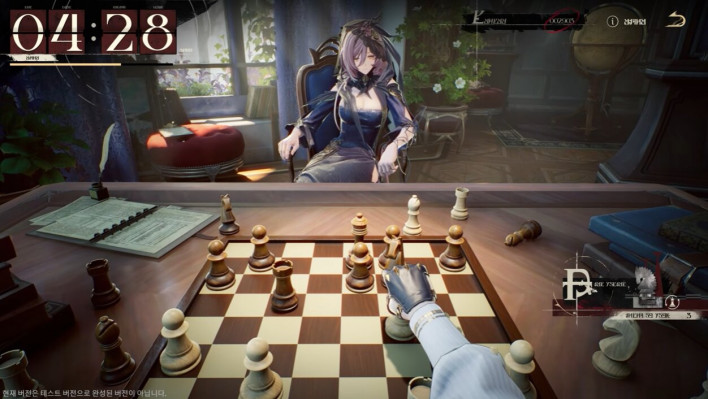
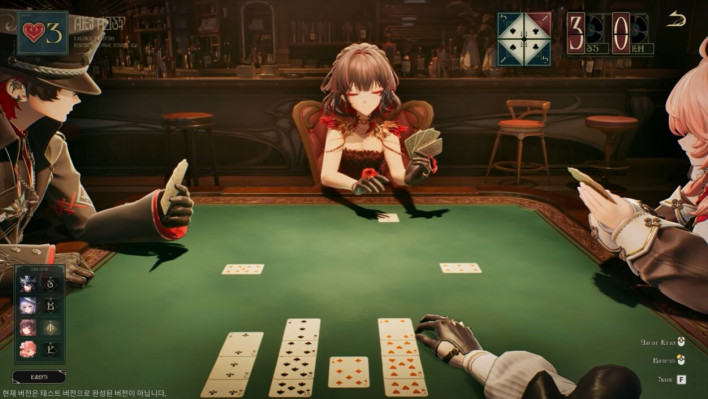
When it comes to minigames, chess is a given, but including the card game "Bridge" was particularly impressive. While overshadowed today by poker and other games, Bridge originated from 16th-century "Whist" and was widely played by high society until World War II. As such, it is an indispensable element in works set during that era. It is also a staple in detective fiction, featured prominently in works by Agatha Christie, the Queen of Crime, including her novel Cards on the Table.
However, because it requires four players, it fell behind games with fewer headcount restrictions, and today it is mostly known as a game recommended by Bill Gates or Warren Buffett. While bridge clubs exist in Korea, its popularity is lower than Mahjong. To be fair, the video did not explicitly state with 100% certainty that the game was Bridge. Yet in that brief moment, Bridge rules were clearly visible: four players split into pairs competing for points, a player winning tricks with the highest card under a heart suit, and a dummy exposing their hand without playing directly. If this minigame opens up in the upcoming test, it should offer a wonderful opportunity to savor a classic flavor.
Silver Palace Enhances Immersion with More Dynamic Staging and Varied Camera Angles

While Silver Palace has mainly drawn attention for its detective work and unique Victorian world, keeping players engaged long-term ultimately requires dynamic combat and story presentation. In live-service open-world games, combat remains core. This aspect was also well represented in the PV. Continuing from the first gameplay test video, scenes showing flashy enemy takedowns through parries and skill combos were featured throughout.
In particular, ultimate skill cutscenes executed with flashier effects and more intricate sequences stood out this time. Cutscenes shown in previous trailers and tests were impactful, but their visual effects were restrained, concentrating mainly on the moment of impact. While that can be an aesthetic choice, in Silver Palace's case, frame drops were visible even in early trailer stages, suggesting technical constraints played a role. Indeed, several characters who hadn't appeared since the first trailer reappeared in this PV. By showcasing both characters with restrained ultimate animations similar to before and characters who unleash flashy visuals from the start, optimization appears to have improved significantly.

When visual effects are mentioned, concerns might arise that cutscene staging could get buried under flashiness, but those worries seem unnecessary. Just as skill animations didn't rely solely on slathering visual effects, story cutscenes avoid over-relying on effects, using character placement, composition, and varied camera angles to heighten immersion.
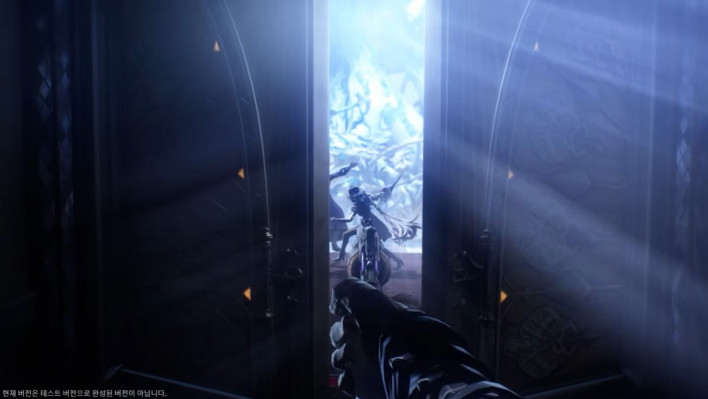
Particularly eye-catching are sections that make effective use of a first-person perspective. In this showcase video, the detective siblings endure a series of hardships, with first-person views used to intensify urgency. Examples include the younger brother (male detective) aiming a revolver through a crack in a door to help his older sister (female detective) engaged in a desperate fight against enemies, the female detective struggling in mid-air to save her falling brother, and being ambushed in a back alley before getting dragged off by gang members.

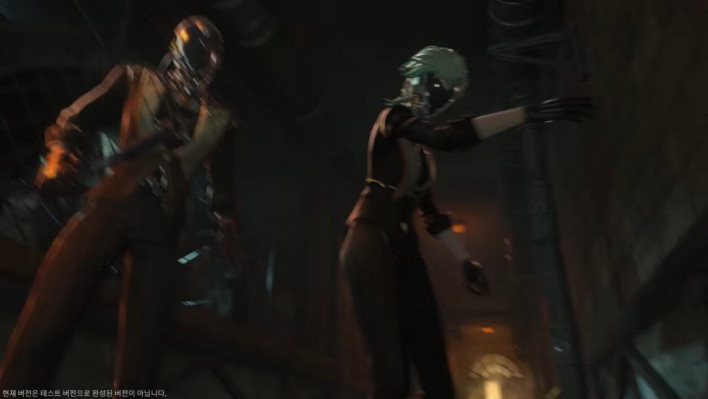
Beyond first-person scenes, tense portrayals of hardships captured from various angles serve as another key immersion point. Rather than relying on simple tropes like encountering a formidable enemy, dramatic situations stand out—such as a companion being kidnapped or escaping by crashing through a window in situations where force cannot be openly used. While protagonists in anime-style open-world games are usually depicted as overwhelmingly powerful or possessing equivalent gifts, these choices suggest that the "Detective" is in a different realm. This hints at a narrative distinct from other open-world games where characters are immediately cooperative or resolved through brute-force clashes.
Furthermore, unlike past appearances where the detective siblings appeared separately, this PV features them together, conveying a clear intent to officially roll out Silver Palace's story to players. In games where players choose a protagonist's gender within a sibling dynamic, fans naturally wonder what events led to one becoming playable while the other becomes an NPC, and what fate awaits them. This presentation signals that the game is finally ready to answer those questions.
After capturing widespread attention with its surprise reveal last year, Silver Palace has once again drawn eyes ahead of its upcoming second closed beta test by releasing a trailer that leaves much to ponder. With early signs of a promising next-generation open-world game already showing, anticipation is high to see how these elements have been refined in the second test.