To us, a convenience store is a rather hectic place—a space where countless people constantly come and go to fulfill immediate needs. Perhaps that is why in Korea and Japan, where convenience stores are ubiquitous, they are often used as settings for horror games. It might be the horror of labor that demands non-stop work, or the modern anxiety of being surrounded by a constant stream of strangers.
However, a developer from abroad viewed a rural Japanese convenience store through a different lens. It was a feeling that was beautiful and cozy, yet tinged with a hint of sadness. And that feeling was distilled into a game where you run a convenience store, but don't actually have to.
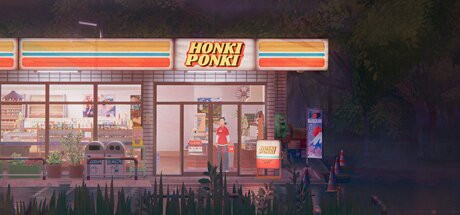
As the name 'inKONBINI' suggests, the game is set in a convenience store. The protagonist is Makoto, who takes over shifts at a small rural shop while their aunt, Hina, is away for a week. Consequently, the game features a simulation structure where various tasks required to run a store are naturally integrated.
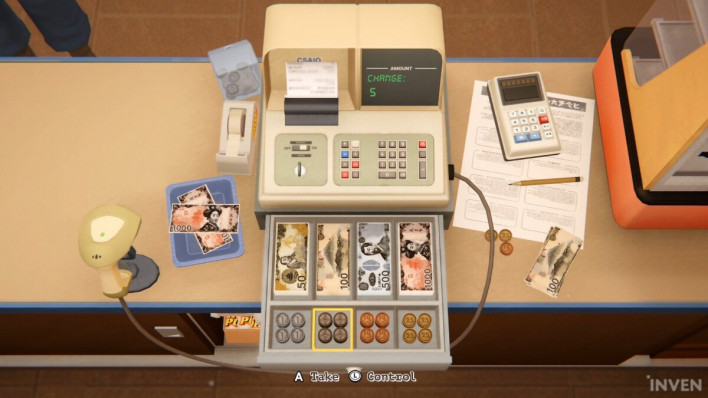


Players fetch items from the storage room and freezer, arrange them neatly on shelves, and place orders via phone when stock runs low. Since it is a small village where the owner, Hina, and the locals are on intimate terms, it is also the player's job to set aside items for regular customers. It includes many standard convenience store simulator features, such as ringing up items at the counter.
And in all these operational tasks, there is no such thing as failure.
It doesn't matter if you put frozen food in the seasoning aisle or stock items with the labels facing backward. Ignoring requests left by the day-shift worker or running out of items a customer needs doesn't cause any major issues. You can even neglect your duties to hide in the restroom, and no one will say a word.
In inKONBINI, store management is something you 'don't have to do.' The game's scope is strictly limited to the interior of the store. Since store management isn't the driving force of the gameplay, the experience is designed to progress and reach completion through the people who visit.
In reality, the core of the game is listening to the stories of the customers who visit, finding the items they want, or occasionally exchanging small talk. Once those simple tasks are done, the day comes to a calm close.
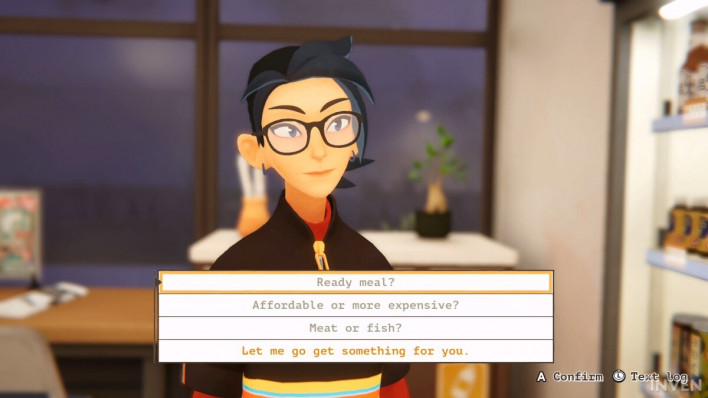
The game isn't packed with dialogue, either. Sometimes it's just a customer muttering to themselves about what to buy, or quietly approaching someone who looks restless in front of the shelves to ask if they need help with a smile. That’s about it. We aren't baristas or bartenders; we are just convenience store clerks.
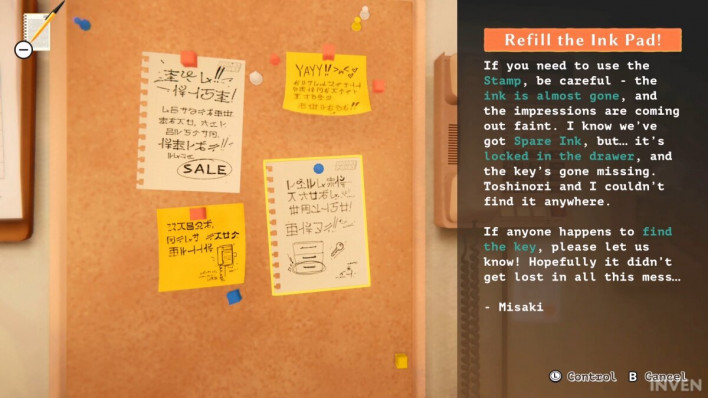
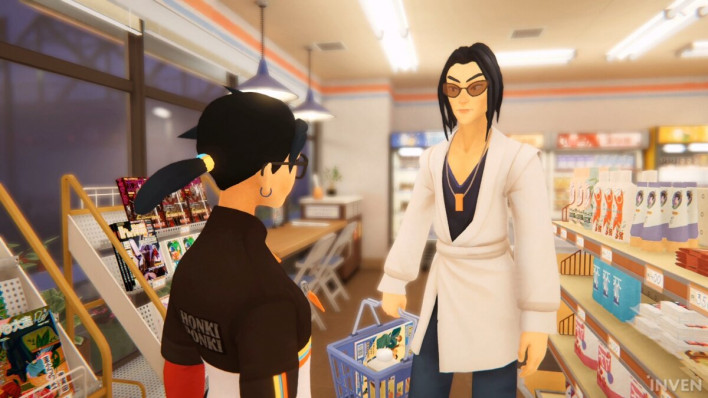
True to the protagonist's role of managing the store ©Inven You ring up customers ©Inven And perform tasks like stocking shelves, giving it the feel of a simulator ©Inven But the core is the relationships with people ©Inven Even the notes and traces left behind by people ©Inven And conversations with customers complete the game ©Inven The key is that you don't have to run it perfectly ©Inven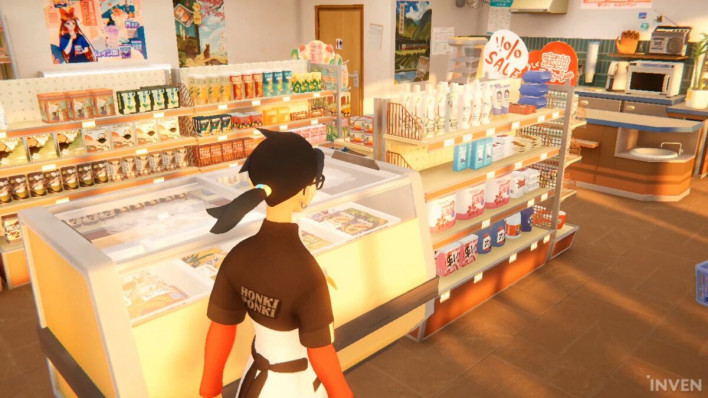
Ichigo Ichie: Even if the same people meet in the same place, this moment is not the same as any other. This encounter is unique, so we must be faithful to this irreplaceable moment. That is why the game has no timer; the day only ends when the customer leaves. It forces you to focus on the encounter itself rather than rushing through the work of running the store.
Mono no aware: The sadness of existence and encounters stems from knowing that they will eventually end. This is not merely sadness, but a sense of awe for the beauty of the present moment. In Makoto's limited time at the store, the location serves as a vessel for the warm, poignant memories and traces of the people who pass through.
Nevertheless, it is the narrative that expands the game. There are only four characters who visit the store during Makoto's shifts, and their stories change depending on how you manage the store. If you place the natto on a high shelf, a young boy named Satoshi will say he can't reach it; if you fail to stock the ramen a regular customer usually eats, they take it as a sign of impending change in their difficult life.
Store management is something that 'can change things when done,' but also creates conversation topics when left undone. Without time limits, the protagonist's day ends only when you have finished talking to customers, finding their items, and ringing them up.
inKONBINI doesn't overwhelm the player with a tidal wave of stories, nor does it force a 'correct' solution. Of course, your dialogue, the way you manage the store, and simple product recommendations can lead to major changes in a character's life. At the same time, those stories can just flow by like any other part of a mundane daily routine.
It is not a game about 'doing' things. This is both its greatest strength and its weakness. Since the impact of choices on the narrative is minimal, the experience ultimately feels fixed. Rather than a sense of achievement from changing something yourself, you are left with the feeling of having spent a quiet day.
Conversely, within that narrative that demands nothing of you, you might find something precious precisely because it is 'now.' The messages left by the previous shift, notes, the aunt's belongings, and the stories of the people all shift slightly.
If you were looking for a dense narrative or the satisfaction of efficient store management, you will inevitably be disappointed. However, the fact that this polarizing aspect is executed exactly as the developers intended is commendable. And if you are looking for 1990s nostalgia and a laid-back atmosphere, there is no better game than this.
The title 'inKONBINI' and the subtitle 'One Store. Many Stories' perfectly encapsulate the game's purpose and philosophy.
However, for those of us in the Sinosphere, the bizarre, nonsensical kanji and Japanese product names in the game feel undeniably awkward.
- Gameplay driven by a clear, unwavering philosophy
- Focus on leisure and possibility rather than the experience of failure
- Mechanics that use store management as a narrative device
- 1990s nostalgic atmosphere and sensibility
- Japanese text in the game that is painfully awkward if you know any kanji
- Regardless of the pros and cons, the lack of a Korean localization is a shame
- Choices that have little impact outside of a few specific segments
- You may end up as a bystander rather than an active protagonist
Review Platform: NSW2(1.201)