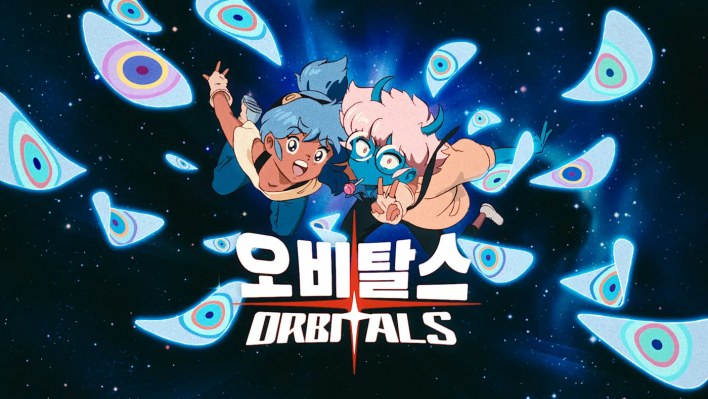
The developer Shapefarm is likely not a household name to the general public. Despite being in its 16th year—a tenure that qualifies it as a mid-sized veteran—the studio has long operated as a behind-the-scenes collaborator, focusing strictly on partnerships and outsourced production.
Notable works that have passed through their hands include 'Naruto to Boruto: Shinobi Striker' and 'Samurai Jack.' While the two titles differ in IP and genre, they share the commonality of showcasing the essence of animation-style graphics. Beyond these, Shapefarm has solidified its reputation as a skilled art house responsible for animation-style game art in collaboration with leading developers, including Cygames.
However, even for a team with such solid skills, a sense of longing had always lingered in the back of their minds: the lack of an original IP that fully captured Shapefarm's own identity. Four years ago, they finally set out to realize this long-held aspiration by beginning development on their new title, 'Orbitals.' They finally unveiled the result to the world on the stage of The Game Awards 2025.
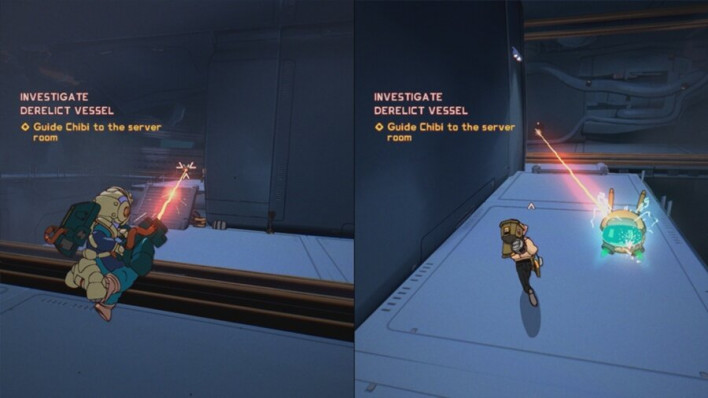
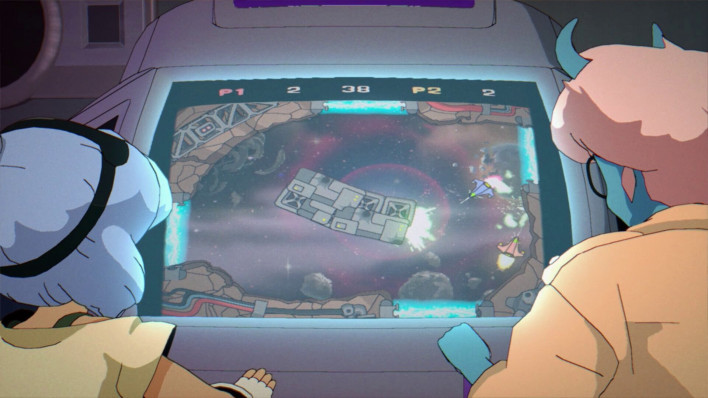
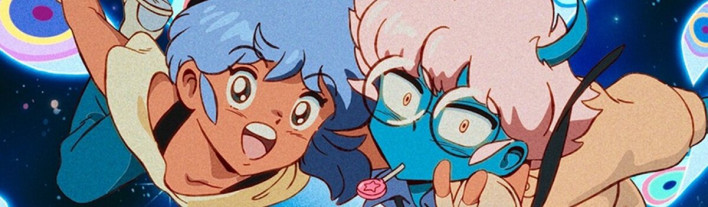
The reaction at the time of the reveal was enthusiastic. While the fact that it was a split-screen co-op game—now a genre in its own right thanks to titles like 'It Takes Two' and 'Split Fiction'—was intriguing, it was the visuals, which recreated the sensibility of 80s and 90s retro animation with near-perfection, that instantly captured the attention of gamers worldwide.
Now, public attention is shifting toward the gameplay beyond the flashy visuals. Having passed the visual test, it is time for the game to prove its value through the actual play experience. Amid this, I received a welcome invitation from the publisher, Kepler Interactive. It was an opportunity to visit Shapefarm's headquarters in Tokyo, Japan, to demo the game and have an in-depth conversation with the development team.
What kind of charm does 'Orbitals,' the ambitious project prepared by Shapefarm, hold? Through a presentation by Creative Director Marcos Ramos and Game Director Jacob Lundgren, I learned what they mean by cooperation and what kind of joy they intend to offer gamers through 'Orbitals.'
The Two Pillars Supporting 'Orbitals' - Retro Animation | 2-Player Co-op
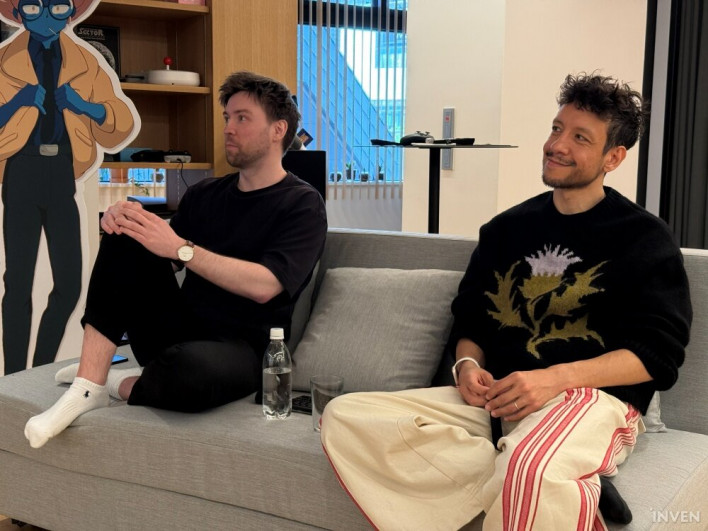
The presentation preceding the hands-on demo was led by Creative Director Marcos Ramos and Game Director Jacob Lundgren. Ramos began by introducing the company. The reason Shapefarm, which had built its skills through countless outsourced projects, started developing 'Orbitals' was clear: a long-held desire to "develop our own brand that carries our own unique color" became the starting point for the 'Orbitals' project four years ago.
Ramos identified 'retro animation-style visuals' and '2-player co-op play' as the two core pillars defining the identity of 'Orbitals.' These are not merely a list of features, but the absolute criteria for every decision made during development. "We boldly excluded elements that didn't fit this concept and built a development system with these two pillars at the center," he said, clarifying the project's direction.
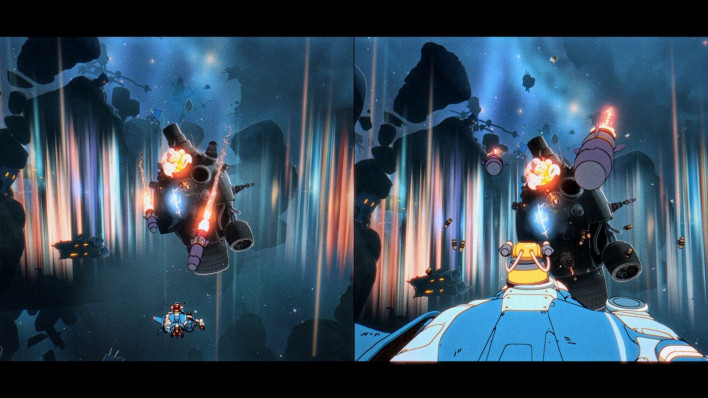
Regarding the choice of retro animation for the visuals, he recalled, "We didn't even have to think about what kind of game to make." Since they had long harbored a dream of creating an 80s-90s style animation game, it was a natural decision from the planning stage. In fact, compared to standard 3D graphics, implementing such a distinctive art style without it feeling jarring is considered a task requiring a high level of difficulty in the industry.
However, through projects like 'Naruto to Boruto: Shinobi Striker' and 'Samurai Jack,' Shapefarm has consistently accumulated know-how in applying textures and lighting to maximize the texture of 2D animation even within a 3D game engine (Unreal Engine 5) environment. Thanks to this, they were able to sublimate these visuals into their own unique strength.
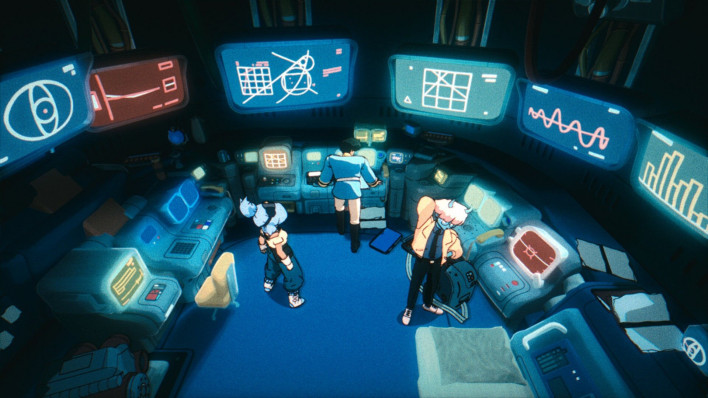
They also verified whether the visual direction was effective for an actual game. Ramos shared, "Playing the early demo myself, I became convinced that this style was the perfect fit for 'Orbitals.'" After technical confirmation, they poured their efforts into storytelling. The narrative of 'Orbitals' is closer to a classic adventure story than a grand epic. It follows the journey of protagonists Maki and Omura as they set out to protect their home amidst the crisis of a returning cosmic storm.
Explaining why they chose a structure that might seem simple, he said, "We judged that a story that anyone can easily feel excited about would resonate more than trying to make users understand complex and difficult settings." However, the narrative structure itself is by no means light. Citing 'Evangelion' as an example, he added, "We are pursuing story-building that stays in users' memories by utilizing the charm of the 'turn' (the twist)—following a typical flow in the structure of introduction, development, turn, and conclusion, but leading to unpredictable developments at certain moments."
Their affection for the characters is also special. Ramos emphasized the power of emotional connection with characters, citing the scene where Goku from 'Dragon Ball' gathers energy for the Spirit Bomb. "The reason children in the past played by imitating the Spirit Bomb in parks wasn't because the visuals were flashy, but because they were deeply immersed in the character and truly wanted him to win," he said, implying that protagonists Maki and Omura are also being crafted as attractive characters that users can genuinely empathize with.
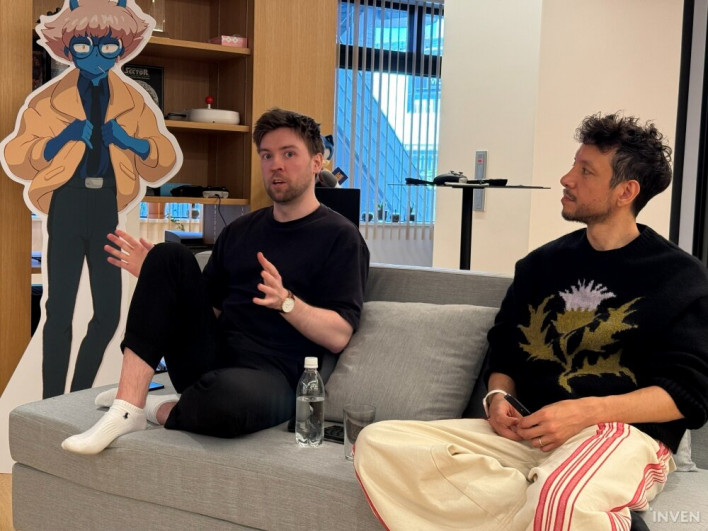
Next, Game Director Jacob Lundgren took the baton to introduce the gameplay and systems of 'Orbitals.' Above all, he put forward the value that this is "a game that cannot be enjoyed unless played by two people." Unlike most multiplayer games that keep single-player in mind and place gimmicks that can be solved alone, 'Orbitals' was built from the design stage on the premise of cooperation between only two people.
An interesting point is that Lundgren himself comes from Hazelight Studios, the developer of 'A Way Out' and 'It Takes Two,' which are called masterpieces of co-op games. Having been directly responsible for the design of those titles, he focused on creating a unique experience that goes beyond simply replicating existing success formulas while incorporating his know-how into 'Orbitals' after moving to Shapefarm.
Having made co-op games before, Lundgren's choice of the co-op genre for 'Orbitals' seems like a reasonable decision in many ways. However, there was a strategic judgment behind it, not just familiarity. He explained the reason, saying, "There are quite a few well-known co-op games from 'A Way Out' to 'It Takes Two' and 'Split Fiction,' but I still saw a lot of room for exploration for this genre and concept in the current market."
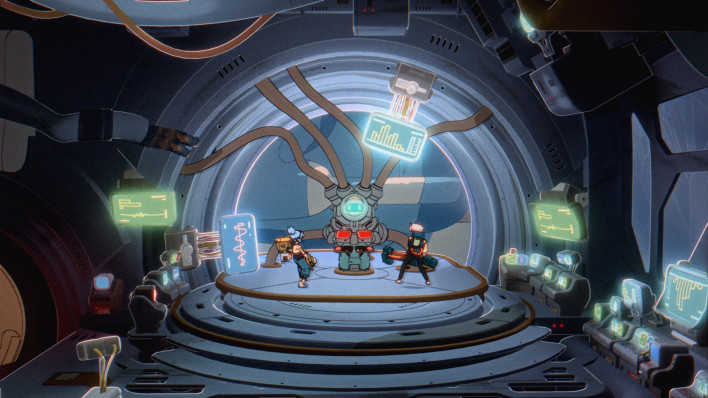
The approach to the gameplay experience is also interesting. Generally, players are expected to immerse themselves in the game world, but the direction Lundgren pursued was a bit different. What he put forward as the core is the point where communication between players occurs, beyond systematic gimmicks. He placed more weight on the conversations and interactions shared with the partner sitting next to you on the sofa than on the movements of the characters on the screen. He added that it was designed so that players can naturally project themselves onto the characters and feel a deep bond in the process of solving problems together.
The technical implementation of this philosophy is the asymmetrical experience. In 'Orbitals,' the two players, Maki and Omura, solve a single puzzle by performing different roles and experiences instead of repeating the same actions. In doing so, they avoid the 'start-stop' (or cold-stop) method often seen in other co-op games—a static structure where one person steps on a switch and waits while the other moves.
Lundgren explained, "We wanted to exclude time where one side is doing nothing and standing still," adding that the asymmetrical gameplay 'Orbitals' aims for targets a fluid flow where both players are always moving simultaneously, solving gimmicks, and even continuing conversations.

Of course, this kind of gameplay is not as easy as it sounds. This is due to the inherent threshold of the co-op element. The premise of two-player cooperation means that if one side makes a mistake, progress can be blocked. Shapefarm was also aware of these concerns. Regarding this, he revealed that they significantly lowered the barrier to entry by focusing on the process of finding solutions through communication itself, rather than difficult button controls or strict timing that rely on proficiency.
This is intended to be the perfect 'gateway' for hardcore gamers to share their hobby with family, friends, or partners who are unfamiliar with games. Stating that the goal is to provide an experience that anyone can immerse themselves in without feeling alienated, he expressed his aspirations for the direction 'Orbitals' pursues: "I hope it becomes a game where you enjoy the process of solving things by talking to each other," and "I hope anyone, regardless of whether they are a hardcore gamer or not, can enjoy the game and get fully immersed in it."