For years, European League of Legends fans had no shortage of opinions. What they lacked, increasingly, was a shared room to put them in.
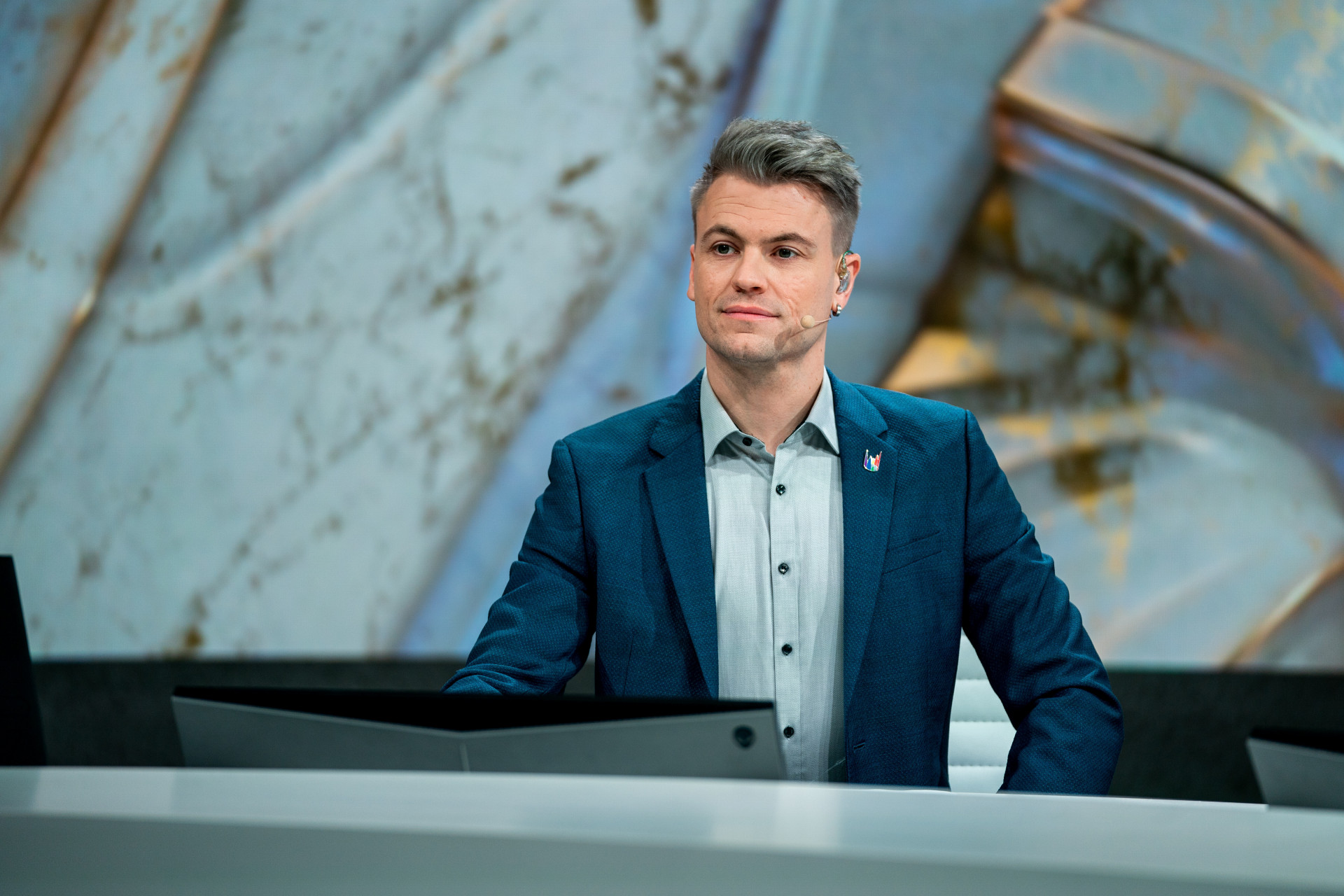
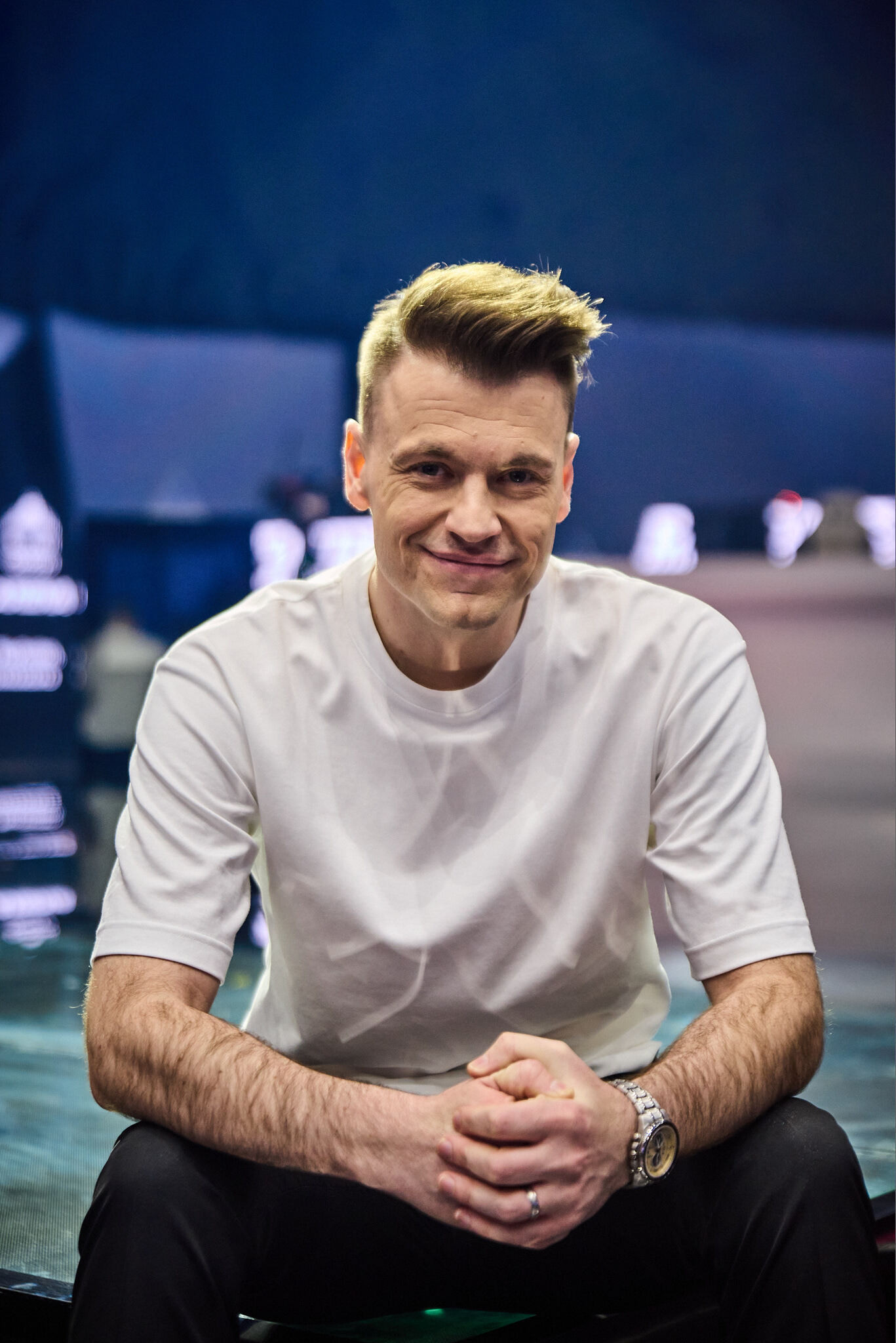
That is the space G2’s new weekly live show, HopEUm, is trying to occupy. Hosted by longtime LEC voice Trevor “Quickshot” Henry, the podcast brings together a rotating cast of co-streamers, players, and guests from across Europe to discuss the region from multiple angles at once: results, storylines, meta shifts, grievances, jokes, and the kind of hot takes that only feel natural when several communities are talking over one another in real time.
On paper, that may sound like another esports talk show. In practice, HopEUm is making a bet on something more specific: that European League of Legends does not need a single dominant voice as much as it needs a place where its many voices can collide.
That idea is what drew Quickshot in when G2 approached him ahead of the 2026 season. At the start of the year, the organisation expanded its co-streamer footprint and began looking for a project that could speak to fans across the continent rather than to one audience in isolation. For Quickshot, the appeal was immediate.
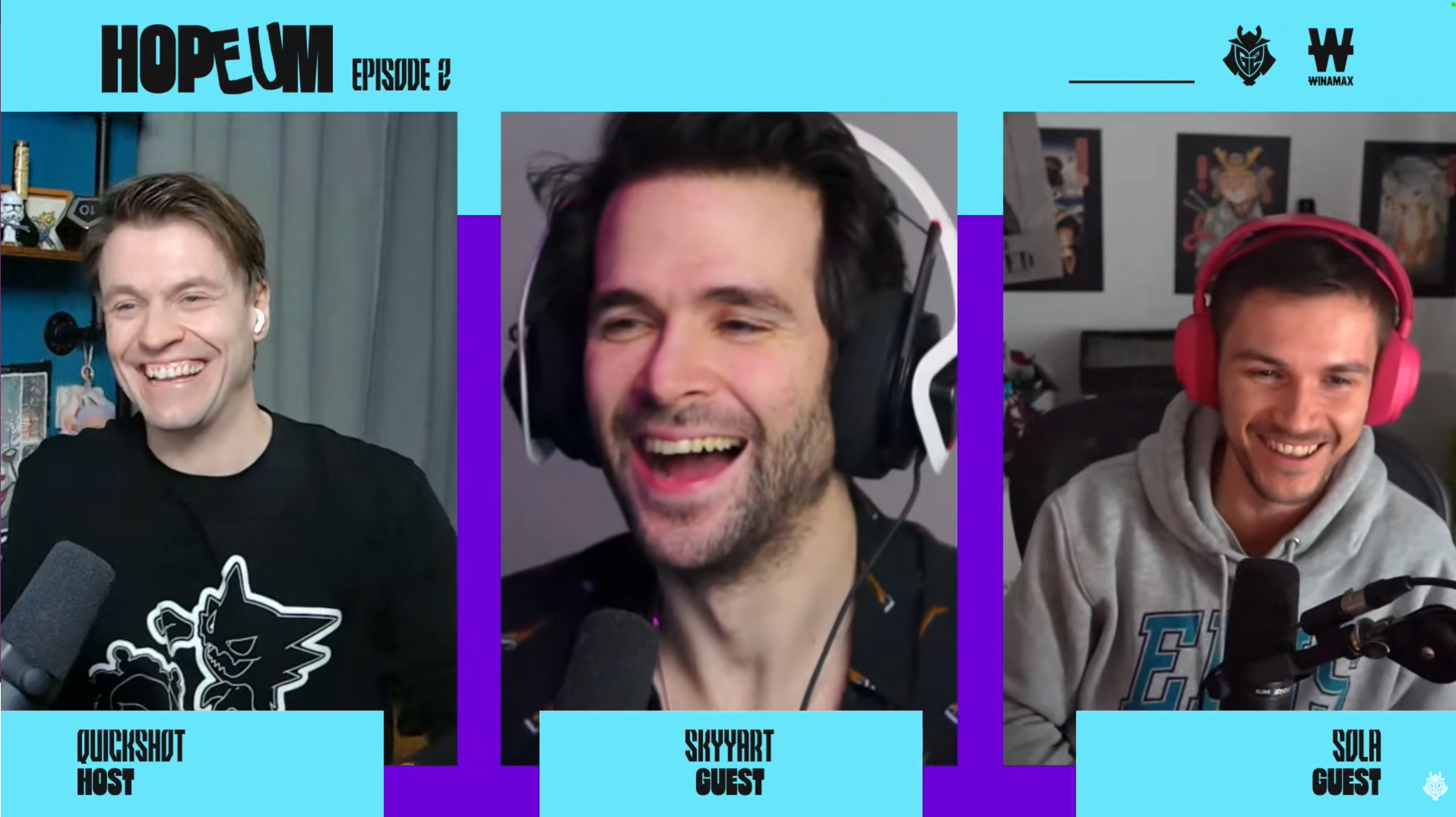
The goal, he explained, was to gather different language communities in one place and let them share perspectives not just on the game, but on the scene and the region itself. Europe has always been one of League of Legends’ most culturally fragmented major regions. Its fanbase is broad, multilingual, and often deeply rooted in national or local identities. Those communities can be passionate, enormous, and highly engaged, but they do not always overlap.
That fragmentation has also changed the way the region is watched.
For years, conversations about the LEC have often been filtered through an English-language lens, especially when broader debates about the league’s health or relevance come up. Quickshot is openly frustrated by one of the most common conclusions: that LEC viewership is simply in decline, full stop. To him, that reading misses the bigger shift. The audience has not disappeared so much as dispersed.
He points to the rise of influential personalities and regional broadcasts across Europe as evidence. English-speaking fans may cluster around figures like Marc “Caedrel” Lamont, while Spanish and French audiences have rallied around their own major names and ecosystems. The center of gravity has moved. What once flowed primarily through a main broadcast is now spread across co-streams, local communities, and creators with their own strong relationships to viewers.
That is the connective challenge HopEUm is trying to answer.
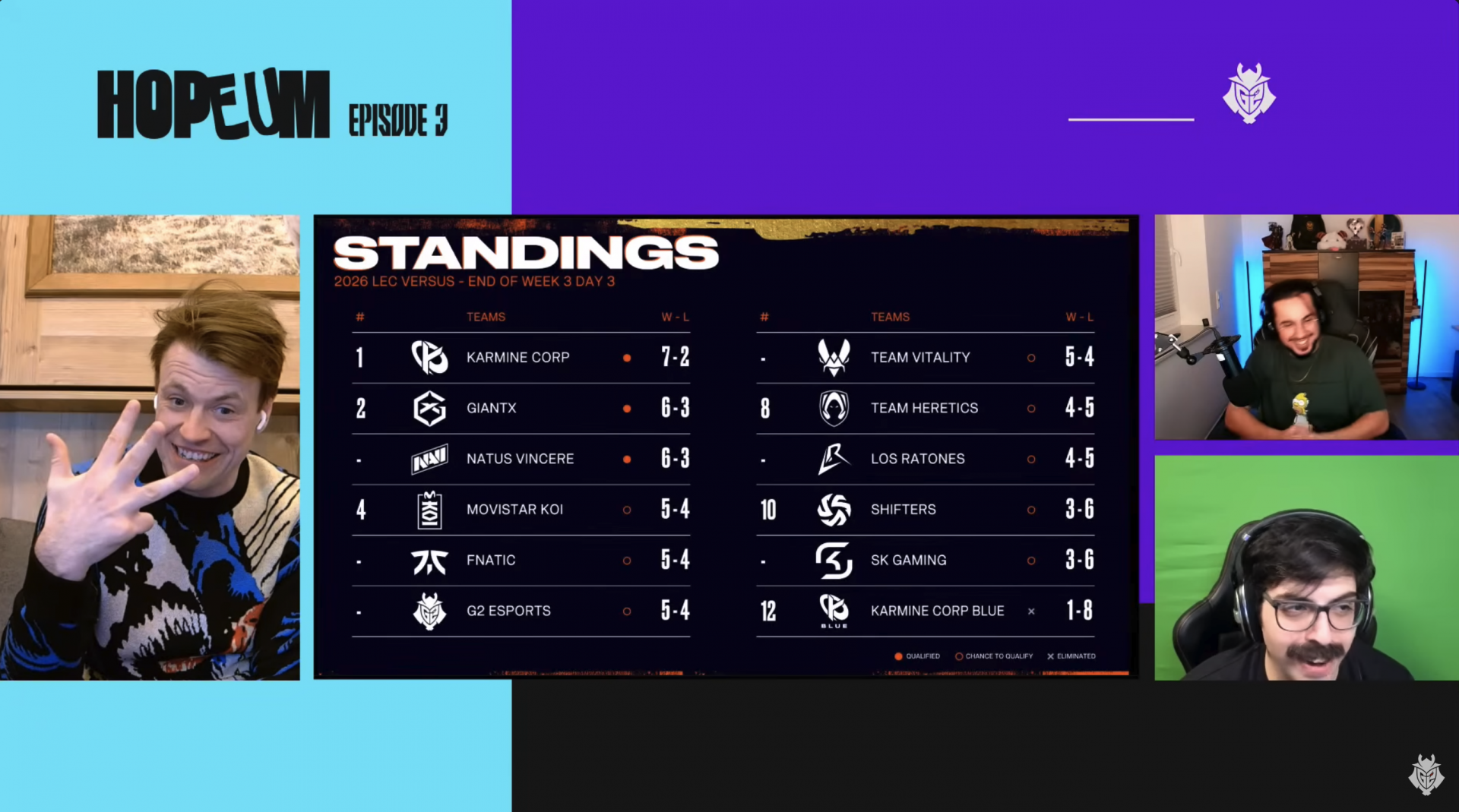
Rather than treating Europe’s League scene as one audience with a few side communities, the show is built around the assumption that those side communities are the story. Each week, Quickshot is joined by two or three of G2’s core co-streamers, including names like Sola, Send0o, Skyyart, Brizz, and Caltys. The format is intentionally loose enough to accommodate different combinations and chemistry, while the broader ambition is to make the show feel larger than any one language pocket.
That process is still taking shape. Quickshot is candid that the show is discovering its own voice in real time, in part because the cast itself is still learning how best to work together. Right now, the guiding principle is fairly simple: discuss League of Legends from a European perspective first. That can mean looking back at recent matches, forecasting future results, digging into the meta, talking business, or, as Quickshot jokingly put it, “rage baiting different regions.”
The phrasing is tongue-in-cheek, but it captures something important about the project. HopEUm is not trying to be sterile. It wants analysis, but it also wants personality. It wants community, but not at the expense of friction. It wants to feel live, opinionated, and recognizably European.
That ambition also creates one of the show’s more obvious complications: it exists under the G2 banner.
In esports, audiences are trained to be suspicious of anything that looks too close to the organisation line, and G2 is not exactly a neutral brand in the region. But Quickshot pushes back on the idea that HopEUm functions as a glorified team channel. From the outset, he said, there was an understanding that G2 coverage would take up no more than roughly a quarter of any given episode, and that there would be no restrictions on how the team could be discussed.
If anything, Quickshot suggested, he has been among G2’s harsher critics on the show’s early episodes. That stance matters. If HopEUm is going to succeed as a regional platform rather than branded content in disguise, it has to preserve the sense that honest discussion comes first.
So far, the show’s guest approach reflects that broader aspiration. While the regular structure relies on G2’s co-streamer network, HopEUm has already featured players from outside the organisation, including guests tied to Los Ratones and GiantX. Quickshot’s hope is that the platform grows into something other teams actively want to join, not because of the logo behind it, but because the conversation itself becomes worth entering.
His most ambitious version of that future sounds less like a traditional team-backed show and more like the kind of roundtable format often seen elsewhere in esports, especially in Counter-Strike. He would love, he said, to reach a point where key players from different organisations can sit down together for long-form discussions. In League of Legends, that kind of access remains relatively rare. A multi-team conversation between star mid laners, for instance, would feel novel not because the personalities are lacking, but because the ecosystem seldom creates room for them to speak together at length.
That may be the clearest expression of what HopEUm is chasing. It is not merely trying to fill airtime between match days. It is trying to create a space where European League can sound more like itself: multilingual, opinionated, occasionally messy, and more interconnected than the usual doom-and-gloom narratives allow.
For now, success is measured in simple terms. Quickshot says the honest answer is awareness and viewership. There are obvious logistical hurdles in bringing together creators with different primary audiences, different languages, and different schedules, then asking them to meet in English on a weekly basis. But that difficulty is also the point. The challenge of HopEUm is inseparable from its value proposition.
Europe’s League of Legends scene has never lacked passion. What it has sometimes lacked is a forum expansive enough to hold all of that passion at once. HopEUm is an attempt to build one live, one week at a time.
Episodes are streamed live every Tuesday on G2’s YouTube and Twitch channels. Previous episodes can be found here.

